

Matsuyama Street Food and Cheap Eats: 2026 Budget Guide
Matsuyama street food and cheap eats, mapped by neighborhood and price: Okaido snacks, Gintengai lunch sets, and Dogo sweets, all under ¥1,200.
On this page
Last updated August 2026, this guide breaks down Matsuyama street food and cheap eats by neighborhood and by price, not just by dish. Okaido, Gintengai, and Dogo each reward a different budget strategy, from street snacks under ¥500 to lunch sets between ¥800 and ¥1,200. Follow the walking order below, and a full day of eating in Ehime's capital stays well under a single restaurant dinner elsewhere in Japan.
Matsuyama Street Food and Cheap Eats: What Defines the Budget Scene
Cheap eats in Matsuyama center on three categories: mitsuhamayaki griddle snacks, nabeyaki udon bowls, and mikan-based treats. Street snacks and juice stands typically run under ¥500. A casual sit-down lunch, including tai-meshi sea bream rice or matsuyamazushi, usually lands between ¥800 and ¥1,200. Okaido and Gintengai cover fast, convenient options near the center of town. Dogo's arcade specializes in sweets and citrus snacks. Mitsuhama, near the port, keeps its griddle stalls priced for locals rather than day-trippers.
- Mitsuhamayaki: savory griddle snack, best found near Mitsuhama port
- Nabeyaki udon: hot-pot noodle bowls at Kotori, Asahi, and Mammam
- Mikan treats: juice taps and citrus sweets concentrated in Dogo Arcade
Typical Costs: What a Day of Budget Eating Actually Runs
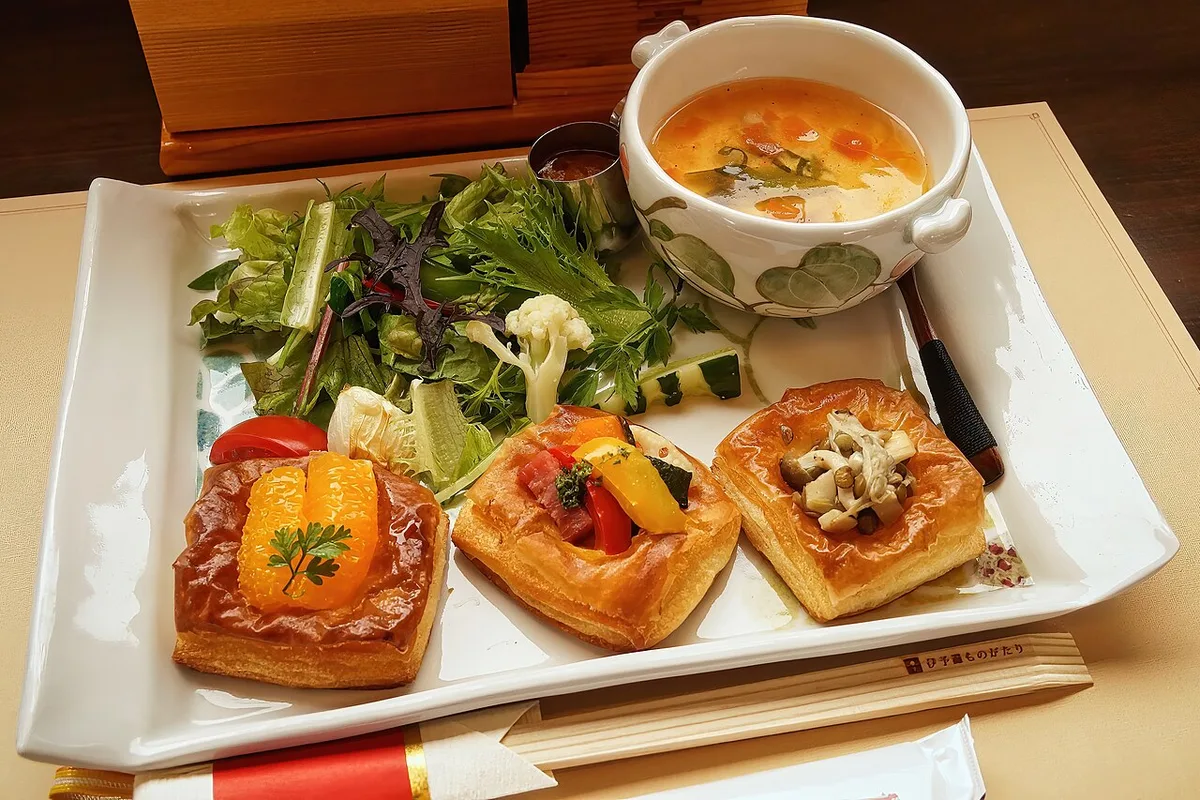
Budgeting for food in Matsuyama comes down to timing more than hunting for discounts. Lunch sets run from 11:00 AM to 2:00 PM and price the same dishes well below their dinner-menu rate. Dinner service typically starts at 5:00 PM, and many arcade shops close by 8:00 PM. The table below compares the main price bands for a single day of eating. Backpackers aiming for one or two full meals a day, filled in with snacks between, can spend the least by leaning on the under-¥500 band and the ¥800–¥1,200 lunch-set window, saving a sit-down dinner for one splurge. Some shops stop dine-in service 30 to 60 minutes before closing and shift to takeout only. That shift can start after 10:00 PM at late-night spots. Confirm last-order times before a shop's posted closing time, especially in Gintengai. Card payment works across the main arcades, but street-side mitsuhamayaki stalls are usually cash-only. Carry a mix of small yen notes and coins before heading toward the port.
Combining the under-¥500 street-snack band with an ¥800–¥1,200 lunch set and Dogo sweets yields ¥1,800 to ¥2,600 for a full day, turning timing-based budgeting from theory into a concrete daily total.
| Meal type | Where to find it | Typical price | Notes |
|---|---|---|---|
| Street snack (mitsuhamayaki, dango skewer) | Okaido stalls, Mitsuhama port | Under ¥500 | Cash only, eaten standing |
| Mikan juice, self-serve tap | Dogo Arcade, arcade souvenir corners | ¥100–¥300 | Refreshment, not a full meal |
| Nabeyaki udon | Mammam, near Dogo Onsen | Under ¥600 | Full meal, short menu |
| Casual lunch set (tai-meshi, matsuyamazushi) | Okaido and Gintengai counters | ¥800–¥1,200 | Best value 11:00 AM–2:00 PM |
| Depachika bento or bowl | Iyotetsu Takashimaya, Mitsukoshi basements | Priced per item, near the ¥800–¥1,200 range | Full meal, takeaway |
Okaido and Gintengai: Arcades for Speed and Basement Bargains
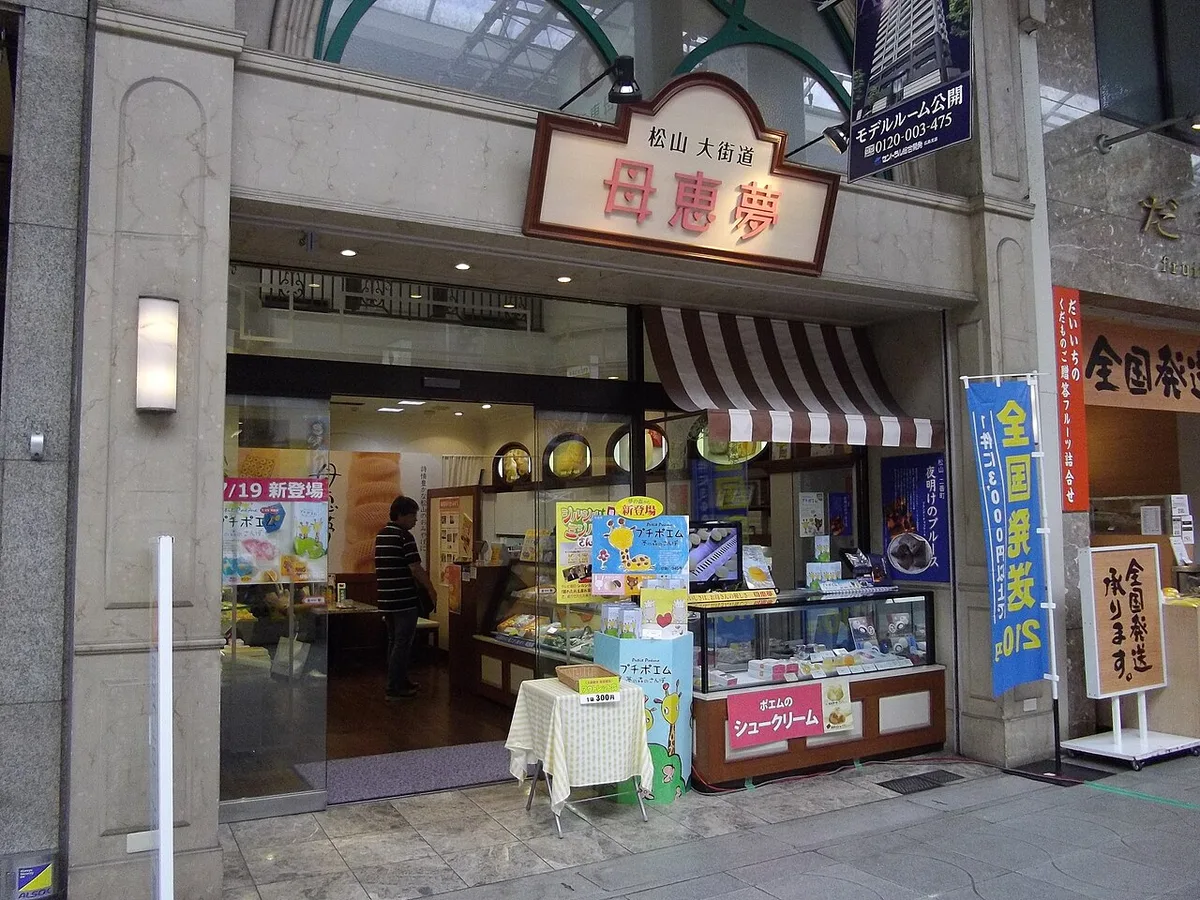
Okaido and Gintengai connect into one covered arcade running through central Matsuyama. Hanamaru Udon, a chain founded in Shikoku, is a faster and more locally rooted pick than the international fast-food names nearby. Two department-store basements, Iyotetsu Takashimaya and Mitsukoshi, sell bento boxes, sushi, and prepared dishes by the piece, useful between train connections. Matsuchika Town, an underground arcade, adds another cluster of quick counters below street level. The Matsuyama Food Guide: What to Eat in 2026 covers the full dish lineup these counters serve; this route stays focused on price and stop order.
- Okaido Shopping Arcade: Hanamaru Udon and fast-food counters under a covered walkway
- Gintengai Shopping Arcade: an extension of Okaido with cafés and snack counters
- Iyotetsu Takashimaya basement: bento and prepared-food counters
- Mitsukoshi basement: bento and sushi counters
- Matsuchika Town: underground arcade with additional quick-service counters
Mitsuhamayaki: Matsuyama's Own Griddle Snack
Mitsuhamayaki is Matsuyama's local variant of griddle-cooked batter, built on a thinner, crepe-like base than the Hiroshima or Osaka styles. Local versions often add beef tallow to the griddle for a crisper edge. Look for a flat griddle top with a thin batter round cooking under a metal press, usually set up under a simple awning rather than inside a storefront. Mitsuhama, the port district, is the place to find it made the way locals expect, distinct from versions aimed at Dogo Onsen visitors. Street-side stalls here fall into the under-¥500 snack band, and most take cash only. Treat a Mitsuhama stop as its own short trip rather than folding it into an Okaido walk.
Nabeyaki Udon: Kotori, Asahi, and the Limited-Menu Rule
Kotori and Asahi are the two shops named locally as the legends of Matsuyama nabeyaki udon. Kotori's hot-pot udon draws reservations, and paying in advance is standard practice there. Menus at both shops stay short by design, and once the day's broth runs out, service ends regardless of the clock. Arrive before the standard 11:00 AM lunch window opens if a seat at either shop matters more than flexibility. Near Dogo Onsen, Mammam serves a lighter, slightly sweet nabeyaki udon for under ¥600, with an English-language menu on hand. A local Ehime sake pairs well with either bowl; the Dogo beer and sake guide covers where to find it at arcade prices. Plan for a short menu and an early arrival rather than treating either shop as a late-lunch fallback.
The Lunch-Set Hack: Tai-Meshi and Matsuyamazushi Before 2 PM
Tai-meshi, Matsuyama's sea bream rice, carries a premium at dinner. Between 11:00 AM and 2:00 PM, several of the same kitchens serve a lunch-set version of the dish inside the ¥800–¥1,200 casual-meal band covered above. That gap between lunch and dinner pricing is the single biggest lever for keeping a Matsuyama food budget under control. Both tai-meshi and matsuyamazushi lean on Seto Inland Sea catches, so the fish stays local even at the cheapest lunch-set price point. The tai-meshi guide breaks down the sea bream preparations in more depth. Order the lunch set, not the dinner course, to stay inside the ¥800–¥1,200 band.
Matsuyama Sushi: Sweet Vinegared Rice, Two Ways
Matsuyamazushi uses a sweeter vinegared rice than most regional sushi styles. You can taste the difference at either a sit-down counter or a station bento stall. Goshiki, a set-menu restaurant near Sanbancho, serves a Matsuyama Taimeshi set alongside noodles that can be ordered hot or cold, and reviewers mark it in the affordable price tier. Casual sushi-go-round counters around Okaido offer the same style by the plate, a better fit for a smaller budget than a full set course. Eki-ben versions travel well for train journeys and cost less than a restaurant sitting, though the fish selection runs more limited than at a counter.
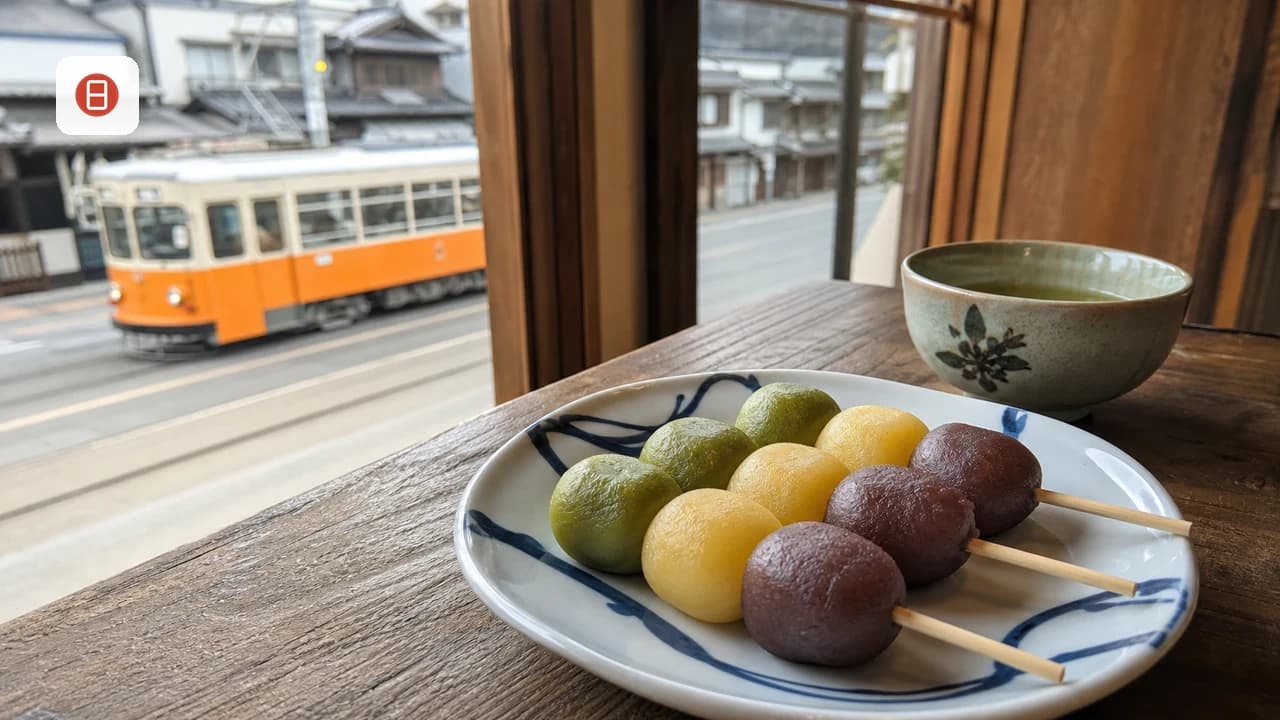
Dogo Arcade Sweets: Botchan Dango and Ichiroku Taruto
Dogo Onsen's shopping arcade is the best base for sweet, walkable snacks. Botchan Dango takes its name from Natsume Soseki's novel Botchan. The three-color skewer of rice dumplings shows up at shops throughout the arcade. Ichiroku Taruto, a rolled citrus sponge cake, works well as a walking snack because it is sold pre-sliced and needs no utensils. The Botchan Dango guide has the literary background and a shop-by-shop comparison. Dogo no Machiya, inside a renovated building in the same arcade, runs a lunch set with a drink and fries from 12:00 PM to 2:00 PM. It works as a useful backup if the dango shops have a line.
Mikan Magic: Juice Taps and Citrus Snacks on a Budget
Mikan, Ehime's signature citrus, turns up as a self-serve juice tap in several arcade corners, priced around ¥100 to ¥300 per cup depending on the stall. Local cafés cite roughly 40 citrus varieties grown across the wider Ehime region, and the mix shifts with the season from late autumn through spring. Winter and early spring bring the widest overlap, when several mikan varieties are in season at once. Farmers' stalls sell fruit and citrus snacks for less than souvenir shops aimed at day-trippers. See the mikan dessert guide for the full citrus lineup beyond the juice taps.
Cafés and Casual Bites Between Meals
A few café-style stops round out the budget map between main meals. CREPE & CAFE Hi5 serves crepes alongside juice, beer, and fries, with outdoor seating and occasional live music. Cafe Bleu in Okaido runs a picture menu covering Japanese café staples like curry, hamburger steak, and pasta. That helps if a Japanese-only menu elsewhere feels like a barrier. Mikan Cafe, in the Ochi area, specializes in shaved ice desserts built around the local citrus, a good stop on a hot afternoon between arcade sections. None of these three compete with the ¥500 street-snack band, so treat them as a mid-afternoon add-on rather than a meal replacement. Travelers who want a free charging point more than a cheap meal also use the Okaido McDonald's branch, noted in reviews for its multiple outlets and upstairs seating.
Mitsuhama and Takahama: A Dedicated Trip for Harbor Prices
Mitsuhama and neighboring Takahama sit around the port and hold the area's mitsuhamayaki stalls, according to the official city tourism board's eating list. Mican Park, also in the Takahama-Mitsuhama area, adds citrus shopping worth combining with a stall visit. Pair the stop with a broader look at port-area sights if time allows. Treat this as a separate outing from the Okaido-to-Dogo route below, since it sits away from the main covered arcades. Bring cash, since small griddle stalls in this part of town rarely take cards.
Festival Season: Stall Prices Without the Restaurant Markup
Matsuyama's arcades add extra food-stall rows during spring and autumn festival weekends. Expect stall versions of mitsuhamayaki, dango, and citrus treats priced closer to the street-snack band than a restaurant menu. These festival stalls give a low-cost way to sample several dishes in one visit, rather than committing to a single restaurant's full-price version. Exact festival dates shift by year, so check the Okaido and Dogo arcade associations' postings locally before planning around one.
A Budget Walking Order: Okaido to Gintengai to Dogo
A full day of eating works best in a fixed order, since it matches shop hours to appetite. Start in Okaido for a fast breakfast or snack, move into Gintengai for the lunch-set window, and finish in Dogo for sweets and an onsen stop. Dogo Onsen's bathhouse itself is covered separately in the Matsuyama attractions guide. Treat Mitsuhama as a separate half-day trip rather than folding it into this route. Stops one, three, and five below add up to roughly ¥1,800 to ¥2,600 for the day, before counting the Dogo sweets in between.
- Okaido Arcade, morning: coffee and a quick bite from Hanamaru Udon or a depachika counter, roughly ¥500 to ¥800
- Gintengai Arcade, late morning: browse toward the lunch-set window before 2:00 PM
- Lunch, 11:00 AM to 2:00 PM: a tai-meshi or matsuyamazushi lunch set for ¥800 to ¥1,200
- Dogo Arcade, afternoon: Botchan Dango skewers and Ichiroku Taruto as walking snacks
- Dinner, from 5:00 PM: nabeyaki udon at Kotori or Mammam, budgeting for a shorter menu and a possible early sellout
Goshiki Somen: A Five-Colored Ehime Noodle Lunch
Goshiki somen is a distinctive Ehime noodle dish that makes a light, inexpensive alternative to heavier rice bowls and udon. The thin somen strands are served in five colors, giving the dish its name and making it easy to spot on local set menus.
Look for it at Goshiki near Sanbancho, where somen can be ordered hot or cold alongside Matsuyama taimeshi. A simple lunch set is usually a better-value choice than an evening meal. Cold somen suits humid weather, while the hot version works when you want something more comforting.
For a budget-focused order, choose a noodle set rather than adding several side dishes. It offers a local specialty without committing to a seafood dinner course.
- Best timing: lunch, before the 2:00 PM set-menu window ends
- Best fit: a lighter meal between arcade snacks and Dogo sweets
- Useful pairing: Matsuyama taimeshi when sharing or ordering a set
Frequently Asked Questions
Is eating street food while walking common in Matsuyama?
Eating while walking is generally avoided in Japan, and Matsuyama follows the same norm. Most stalls provide a small standing area or a nearby bench. Plan to pause at the stall rather than carrying food through the arcade.
What are the cheapest eats near Matsuyama Station?
Eki-ben, station bento boxes, are the fastest cheap option right at Matsuyama Station. Iyotetsu Takashimaya and Mitsukoshi basement counters downtown also serve bento and prepared dishes by the piece for a sit-down alternative.
Are there vegetarian or vegan budget options in Matsuyama?
SOHSOH, a vegetable-forward set-meal restaurant previously in Okaido, was listed as permanently closed in a March 2026 review update. Check current status before planning around it. Ask arcade set-meal counters to hold the meat or fish component instead, since several Okaido and Gintengai lunch sets build around a rice-and-vegetable base.
How much cash should you carry for street stalls?
Small yen notes and coins cover most mitsuhamayaki stalls and mikan juice taps, since both run cash-only. Cards work at the main arcades, department-store basements, and most sit-down restaurants.
Is Dogo more expensive than Okaido for food?
Dogo leans toward sweets and citrus snacks priced in the same under-¥500 band as Okaido's street food. Sit-down meals near Dogo Onsen, including lunch sets at places like Dogo no Machiya, sit in a similar ¥800–¥1,200 range to Okaido and Gintengai.
Do the Okaido and Gintengai arcades take credit cards?
Card payment is common at chain restaurants, department stores, and most sit-down counters in both arcades. Street-side snack stalls and small stand-up counters are more likely to be cash-only, so keep some yen on hand even inside the arcades.
Which neighborhood should you start with for the best value?
Start in Okaido or Gintengai if the goal is speed and the widest range of price points in one covered arcade. Choose Dogo first instead if sweets and a post-meal onsen soak matter more than variety.
Free guide: Japan's Hidden Gems
12 under-the-radar places beyond Tokyo & Kyoto — with the best season to visit each and a local tip you won't find in the guidebooks.
You might also like


Continue reading
More guides you'll find useful


