Tokyo Winter Illumination Guide: Best Spots, Dates and Hours for 2026
A neighborhood-by-neighborhood guide to Tokyo winter illumination spots for 2026, with dates, hours, and which ones are free.
On this page
Last updated September 2026, this guide maps every major Tokyo winter illumination by district and season. Marunouchi's champagne-gold trees near Tokyo Station anchor one route, and Shibuya's blue-lit Ao no Dokutsu tunnel anchors another. Roughly a dozen large-scale displays run between November and March, and most charge nothing, so the main task is choosing two or three to combine into one evening.
Tokyo Winter Illumination Quick Answer: What's On and Where
Tokyo's illuminations open on a staggered calendar. Some start as early as November 4; others run into March or later. Most stay lit nightly from about 17:00 until 22:00 or 23:00, and nearly every one of them charges no admission. New to the city? Start with Tokyo's core attractions to see which illumination cluster sits closest to your itinerary. This spoke sits inside our wider Tokyo Christmas season coverage, which pairs markets, lights, and seasonal food together.
Most venues stay open until 22:00 or 23:00, but Yomiuriland closes much earlier at 16:00 to 20:30 (until 21:00 some days).
- Marunouchi Illumination: Nov 13, 2025-Feb 15, 2026, Naka-dori Street near Tokyo Station, free
- Shibuya Ao no Dokutsu (Blue Cave): Dec 4-25, 2025, near NHK Shibuya, free
- Tokyo Midtown Christmas: Nov 13-Dec 25, 2025, Roppongi's Midtown Garden, free
- Yomiuriland Jewellumination: Oct 23, 2025-Apr 5, 2026, ¥1,800 admission
Tokyo Winter Illumination by Month: A Season Comparison
Rather than one fixed season, Tokyo's illuminations overlap across four rough windows, each with its own weather, crowd level, and venue lineup. This table groups them so you can match a visit date to what's actually running.
| Period | Typical Evening Temp | What's Running | Crowd Level | Typical Cost |
|---|---|---|---|---|
| Early season (November) | 8-12°C (46-54°F) | Tokyo Midtown, Roppongi Keyakizaka, Yebisu Garden Place, Tokyo Dome City, Hibiya, Skytree Town | Light | Free |
| Peak season (Dec 1-25) | 5-9°C (41-48°F) | Marunouchi, Shibuya Blue Cave, Omotesando, Christmas Markets, nearly every venue at once | Heaviest, especially weekends and Dec 24 | Free, except Yomiuriland (¥1,800) and Ashikaga Flower Park (¥1,400) |
| Post-Christmas (January) | 2-8°C (36-46°F) | Meguro-gawa, Marunouchi, Yebisu, Yomiuriland continue; several December-only venues close | Light | Free |
| Late season (Feb-Mar) | 5-10°C (41-50°F) | Marunouchi, Shinjuku Minamillumi, Yebisu Garden Place, Tokyo Dome City tail end | Lightest | Free |
Marunouchi and Hibiya: Near Tokyo Station
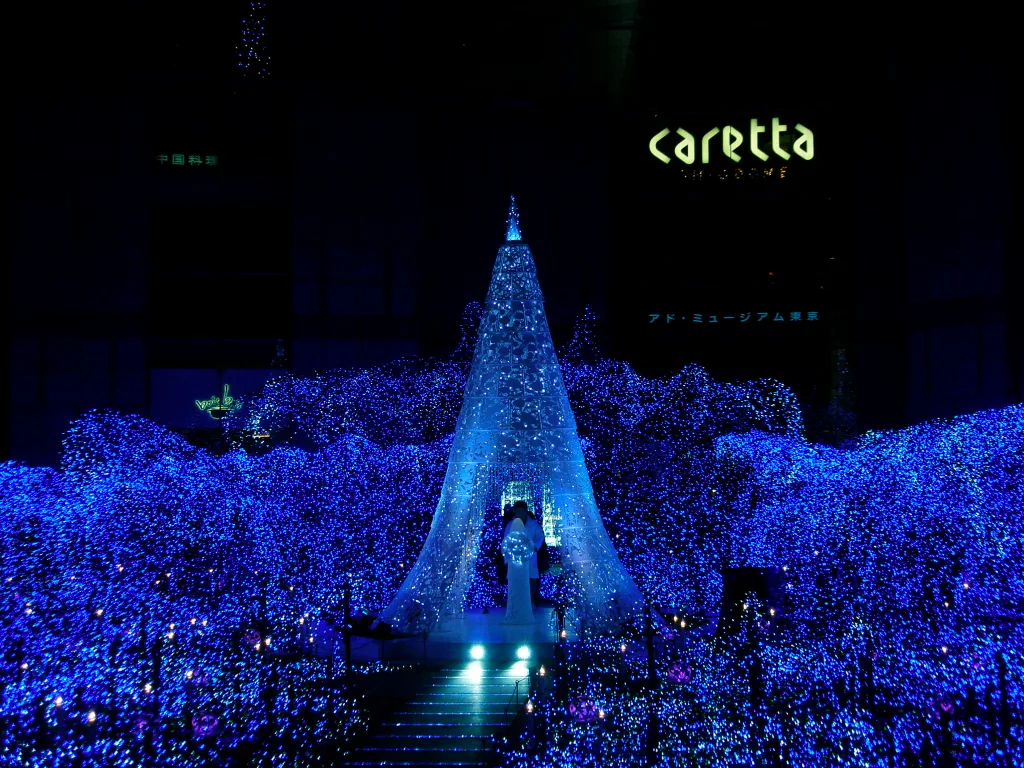
Marunouchi Naka-dori Street runs champagne-gold lights from November 13, 2025 through February 15, 2026. Displays run roughly 16:00 to 23:00, until midnight in December, between Tokyo Station and the Imperial Palace Gardens. Hibiya's Magic Time Illumination covers a similar window, November 13, 2025 to February 28, 2026, along Hibiya Nakadori Street from about 16:00 to 23:00. Its 2025 theme draws on Zootopia 2 characters and adds a new silver "ETERNAL HEART TREE." Marunouchi and Hibiya sit in the same district near Tokyo Station, so both fit into one evening without a train transfer in between. For tree counts, market stalls, and photo spots, see the dedicated Marunouchi Illumination guide. Check the Marunouchi area's official site for confirmed dates closer to the season.
Roppongi, Azabudai Hills and Mohri Garden
Tokyo Midtown Christmas runs November 13 to December 25, 2025, about 17:00 to 23:00, free, with fir trees wrapped in gold lights across Midtown Garden. A separate "Walkway of Light" display continues past Christmas through February 23, 2026. Roppongi Hills' Keyakizaka Street runs its own tree tunnel from November 4 to December 25, 2025, also 17:00 to 23:00 and free. Roppongi Christmas Market joins from November 22, running 11:00 to 21:00. Azabudai Hills, at the base of Japan's tallest skyscraper, lights its Central Green from November 22 to December 25, 2025, between 11:00 and 21:00. Grouped in the same district, Mohri Garden pairs white and champagne-gold lights with pond reflections. It runs November 14 to December 25, 2025, 17:00 to 23:00, free. Check the Tokyo Midtown official site once next season's dates post.
Shibuya, Harajuku and Omotesando
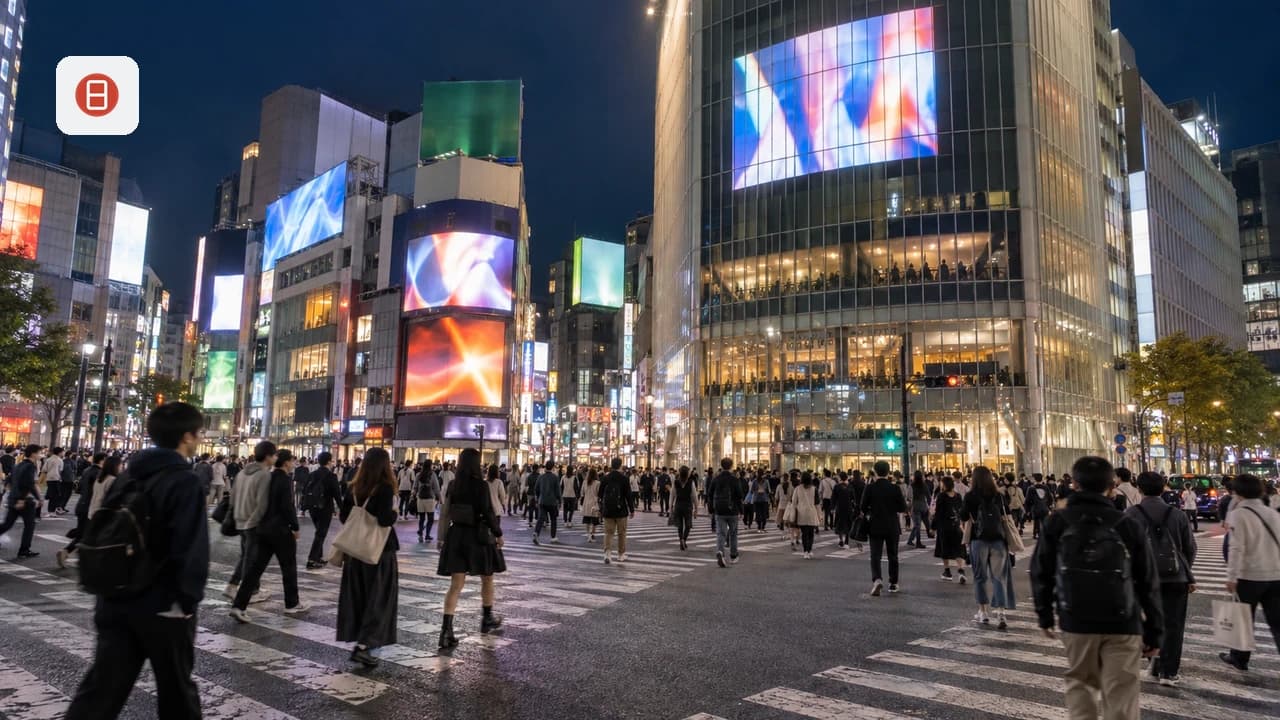
Shibuya's Ao no Dokutsu, or Blue Cave, lights a roughly 250-meter stretch near NHK Shibuya in blue LEDs from December 4 to 25, 2025, nightly 17:00 to 22:00, free. One competitor guide flags it as especially crowded on weekends, so a weeknight visit, or arrival before 18:00, means a shorter wait. Full crowd-timing advice lives on the dedicated Shibuya Blue Cave guide. In the same Shibuya-to-Omotesando corridor, Omotesando's zelkova trees between Harajuku and Omotesando stations run LED lights from December 1 to 28, 2025, sunset until about 22:00, also free.
Shinjuku Minamillumi
Shinjuku's "Minamillumi" display wraps the station's south side from November 12, 2025 to February 15, 2026, lit nightly from about 17:00 to 24:00, starting at 16:30 in December. Free throughout, it spreads across Shinjuku Southern Terrace, Shinjuku Mylord, and Takashimaya Times Square, each with its own lighting theme. It works best as an add-on for anyone already routing through Shinjuku Station rather than a stand-alone trip.
Ebisu, Meguro and Nakameguro
Yebisu Garden Place runs its winter lights from November 8, 2025 to March 1, 2026, nightly 16:00 to 23:00, free. Its centerpiece is a 10-meter tree and a Baccarat chandelier display. A Christmas market there runs daily until December 25, about 17:00 to 20:00 on weekdays and from noon on weekends. In the same district, the Meguro-gawa Minna no Illumination strings roughly 2 kilometers of pink LEDs along the river between Gotanda and Osaki stations. It runs December 5, 2025 to January 31, 2026, 17:00 to 22:30, free.
Odaiba and Tokyo Dome City
Decks Odaiba keeps its lights on year-round, sunset until roughly 24:00, free, anchored by the Daiba Memorial Tree with views toward Tokyo Tower and Rainbow Bridge. Tokyo Dome City's Snow Dome City display runs November 17, 2025 to around March 1, 2026, from 17:00 to 24:00, also free. This 2025 edition marks its 21st year and scales up from 650,000 to 1,000,000 lights, with a 15-meter main tree carrying about 250,000 color-changing LEDs. Interactive buttons trigger color changes on some displays, making this one of the more hands-on stops for families.
Tokyo Skytree Town and Tokyo Tower
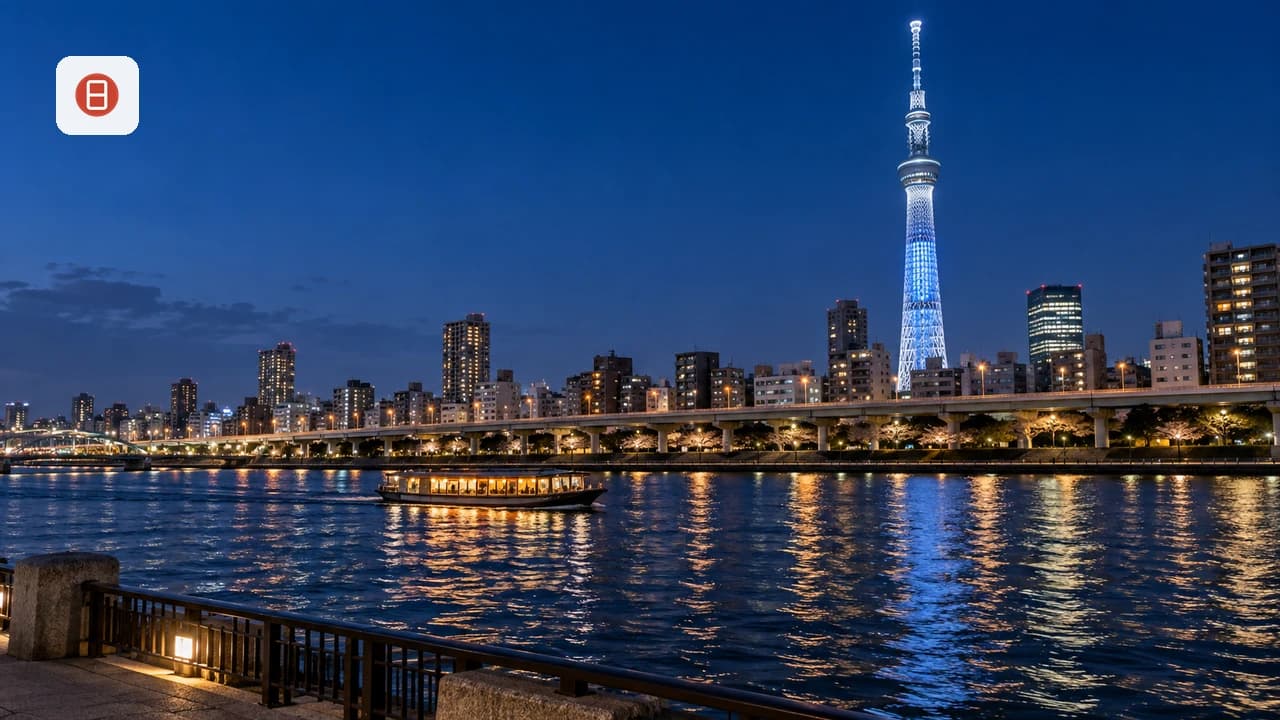
Tokyo Skytree Town's Dream Christmas runs November 6 to December 25, 2025. Its Sky Arena and Soramizaka are lit from about 17:30 to 22:00, alongside a food-and-drink Christmas market. One competitor mentions a discount of up to ¥400 on advance tickets. That appears tied to Skytree observation-deck admission rather than the ground-level illumination, so confirm which ticket it covers before buying. Tokyo Tower is a separate landmark in Minato, not Sumida, with its own Winter Fantasy display starting November 17, 2025. About 43,000 LEDs mark the Little Twin Stars characters' 50th anniversary this year. Go Tokyo's official tourism guide confirms that anniversary tie-in for 2025.
Tokyo's Christmas Markets
Tokyo Christmas Market runs November 21 to December 25, 2025, across two venues, Meiji Jingu Gaien Stadium and Shiba Park, each keeping separate hours and both built around a 14-meter German Christmas pyramid. Admission and stall details for each venue appear on the Tokyo Christmas Market official site. Roppongi's smaller Christmas Market, covered above, adds a second option on the same trip. Stall lineups and food details live on the dedicated Tokyo Christmas Market guide. Tokyo's broader seasonal events calendar covers what else overlaps with the illumination season.
Beyond Central Tokyo: Yomiuriland, Yokohama and Ashikaga Flower Park
Yomiuriland's Jewellumination runs October 23, 2025 to April 5, 2026, closed select days, about 16:00 to 20:30 (until 21:00 some days), with ¥1,800 admission covering the amusement park's rides and grounds. It's the one major display charging a flat gate fee rather than free entry, and it sits outside central Tokyo in Inagi. Two Illumination Day Trips from Tokyo: Best Winter Light Displays Within Reach extend the season further out. Yokohama's Milight and Yoru no Yo displays light Minato Mirai and the waterfront through winter. Full details on both live on the dedicated Yokohama winter illuminations guide. Ashikaga Flower Park's Flower Fantasy, in Tochigi, runs October 18, 2025 to February 15, 2026. Admission is ¥1,400 for adults and ¥700 for children, across roughly 5 million lights. For more options, Winter Day Trips From Tokyo Travel Guide rounds up further routes.
Costs and Tickets: What's Free vs Paid
Free general admission covers nearly every illumination above. That includes Marunouchi, Roppongi, Azabudai Hills, Shibuya's Blue Cave, Omotesando, Shinjuku, Ebisu, Meguro-gawa, Odaiba, and Tokyo Dome City's Snow Dome display. The season's price range still swings from ¥0 at those venues to ¥1,800 for a full Yomiuriland ticket. Ashikaga Flower Park sits in between, at ¥1,400 for adults and ¥700 for children. Sources disagree on Tokyo Mega Illumination's admission, so confirm directly with the venue before budgeting for it. With free options outnumbering paid ones by a wide margin, an evening built entirely around no-cost illuminations is realistic. 15 Best Free Things to Do in Tokyo 2026 rounds up more no-cost options to fill the rest of the day.
How to Plan a Winter Illumination Evening
Most displays switch on at dusk, between 16:00 and 17:30 depending on the venue, so arriving right at opening avoids the thickest crowds that build by 19:00. Evenings in December typically hover around 6°C (43°F), dropping toward 2°C (36°F) on the coldest January nights. A coat, scarf, and gloves matter more here than on a daytime walk. Two to three illuminations in the same district make a realistic single evening without needing a fourth stop. Marunouchi and Hibiya work as one pair; Roppongi, Azabudai Hills, and Mohri Garden work as another. Tokyo's trains generally stop running between roughly midnight and 1am, so check the last train on your line before lingering past 23:00.
January nights drop to 2°C (36°F); Meguro-gawa's December 5, 2025 to January 31, 2026 run illuminates the coldest months.
Where to Stay and How to Get Around
Staying near Tokyo Station or Shinjuku Station puts most of these illuminations within a single train line's reach. Marunouchi, Ebisu, Meguro, and Shibuya all sit on or near the JR Yamanote Line loop circling central Tokyo. Meguro-gawa's illumination itself runs along the river between Gotanda and Osaki stations, both Yamanote Line stops, making it an easy add-on for anyone staying along that loop. Christmas Eve is widely treated as the most romantic night of the year in Japan, similar to Valentine's Day in the West. Central rooms book up fastest in the days beforehand. A single central base, rather than switching neighborhoods nightly, cuts down on last-train stress during the coldest weeks.
Mistakes to Avoid
A few planning mistakes repeat across visitor guides and are easy to avoid with some forethought.
- Assuming every illumination is free: Yomiuriland (¥1,800) and Ashikaga Flower Park (¥1,400 adults, ¥700 children) are confirmed exceptions.
- Confusing Tokyo Skytree Town with Tokyo Tower: they sit in different districts, Sumida and Minato, with separate light displays.
- Visiting Shibuya's Blue Cave on a weekend evening without expecting crowds: a weeknight or an arrival before 18:00 is calmer.
- Treating 2025-2026 dates as fixed for next season: venues typically confirm exact dates only a few months ahead.
- Losing track of the last train while lingering past 23:00, since many central lines stop for the night around midnight.
Tokyo Mega Illumination at Oi Racecourse
Tokyo Mega Illumination turns Oi Racecourse in Shinagawa into a large walk-through evening display. It is a useful choice for visitors who want a destination-style event rather than a short street-lighting walk.
The grounds combine large light sculptures, tunnel-style installations, and displays that draw on Japanese scenery. The scale also makes it a better fit for families than compact city-centre illuminations.
Use Oi Keibajo-mae Station on the Tokyo Monorail for the most direct approach. Tachiaigawa Station on the Keikyu Main Line is another practical option, with a longer walk.
- Allow extra time for entry and the walk back to the station.
- Check the event calendar before travelling, as opening nights can vary.
- Confirm admission directly with the venue before budgeting, since published guides have reported conflicting information.
Pair it with an Odaiba evening only if you are comfortable using taxis or carefully timed public transport. It is less convenient to combine with Marunouchi or Shibuya.
Frequently Asked Questions
Which Tokyo winter illuminations are free, and which cost money?
Marunouchi, Roppongi Hills, and Azabudai Hills charge nothing, and neither do Shibuya's Blue Cave, Omotesando, or Shinjuku's Minamillumi. Ebisu Garden Place, Meguro-gawa, Odaiba, Tokyo Dome City, and Skytree Town's ground-level display are free too. Yomiuriland's Jewellumination is the clearest paid exception, at ¥1,800 for park admission. Ashikaga Flower Park's Flower Fantasy, a day trip in Tochigi, charges ¥1,400 for adults and ¥700 for children. Tokyo Mega Illumination's admission is disputed between sources, so confirm pricing with the venue directly.
What months do Tokyo's winter illuminations run?
Start dates range from as early as November 4 for Roppongi Hills to as late as December 5 for Meguro-gawa. Most run through December 25, but several extend well past it. Marunouchi runs to February 15, 2026; Yebisu Garden Place and Tokyo Dome City run to around March 1, 2026; and Yomiuriland continues all the way to April 5, 2026. Visiting outside the December peak, aim for late January or February, when Marunouchi, Minamillumi, and Yebisu are still running with smaller crowds.
Which Tokyo illumination is best for a first-time visitor with one evening?
Marunouchi or Shibuya's Blue Cave work well as a single anchor when time is short, since both are compact, free, and close to a major train station. Its champagne-gold Naka-dori stretch pairs with a walk through Hibiya, while the Blue Cave pairs with a stop in Omotesando along the same corridor. Either route fits into one evening without extra train transfers between stops.
Can you visit multiple Tokyo illuminations in one night, and which pair well by location?
Yes, pairing two or three illuminations in the same district is realistic, since most switch on at dusk and stay lit until at least 22:00 or 23:00. Marunouchi pairs with Hibiya, Roppongi Hills pairs with Azabudai Hills and Mohri Garden, and Shibuya's Blue Cave pairs with Omotesando. Crossing to a different part of the city, such as adding Odaiba or Yebisu to a Marunouchi evening, works better as its own night.
Which Tokyo illumination gets the most crowded, and when should you go instead?
Shibuya's Ao no Dokutsu, or Blue Cave, is flagged by local guides as especially crowded on weekend evenings during its December 4-25, 2025 run. A weeknight visit, or arrival before 18:00 on any night, generally means a shorter wait near NHK Shibuya. This same logic applies to any free, compact illumination close to a major station during the two weeks before Christmas.
Are any of Tokyo's winter illuminations worth a day trip outside the city?
Yokohama's Milight and Yoru no Yo displays are the closest day-trip option, covered in full on the Yokohama winter illuminations guide. Ashikaga Flower Park's Flower Fantasy, in Tochigi, adds roughly 5 million lights from October 18, 2025 to February 15, 2026, for ¥1,400 adult admission. Both trips work as a full-day add-on rather than a quick evening stop, so budget transit time accordingly.
Free: The Tokyo Essentials guide
Top things to do, where to stay, a perfect day plan, getting around, and the best time to go — a Tokyo mini-guide you can take offline.
You might also like
Continue reading
More guides you'll find useful