8 Best Onsen in Japan: Top Hot Springs and Ryokans for 2026
Compare the best onsen in Japan by region and budget, from Hakone's 85-minute train ride to remote Nyuto Onsenkyo, plus etiquette and cost tips for 2026.
On this page
Last updated September 2026, this guide narrows down the best onsen in Japan by traveler type, region, and price instead of generic buzzwords. Priorities range from private open-air tubs with kaiseki dinners to public bathhouse crawls in rented yukata to remote snow-country soaks reached by mountain roads. Onsen use naturally heated mineral water, while a sento simply heats tap water in town.
Choosing Your Onsen Experience: Public Baths, Ryokans, and Private Baths
Every onsen trip starts with one choice between a day-use public bath and an overnight ryokan stay. A public bathhouse charges a simple entry fee and asks for about an hour of your time. An overnight ryokan wraps the bath into a full stay, usually with a multi-course kaiseki dinner and breakfast included. Many ryokans also offer a day-use plan that includes the bath and a meal without a full overnight booking. Weekday visits generally mean shorter waits at popular public baths than weekend ones. Couples and travelers with tattoos should look specifically for a kashikiri, or private, bath. Kashikiri baths rent by the half-hour or hour and bypass any no-tattoo policy at the shared bath. Reserve a kashikiri slot in advance during peak weekends, since availability is limited and books out early. Water chemistry also varies by region. Zao's water runs highly acidic, a trait prized for its scrubbing effect on skin. Ureshino in Kyushu is known instead for a smoother, alkaline soak often marketed for skin care. Browse the wider set of onsen towns across Japan before narrowing to a region below.
The Access vs. Atmosphere Trade-off
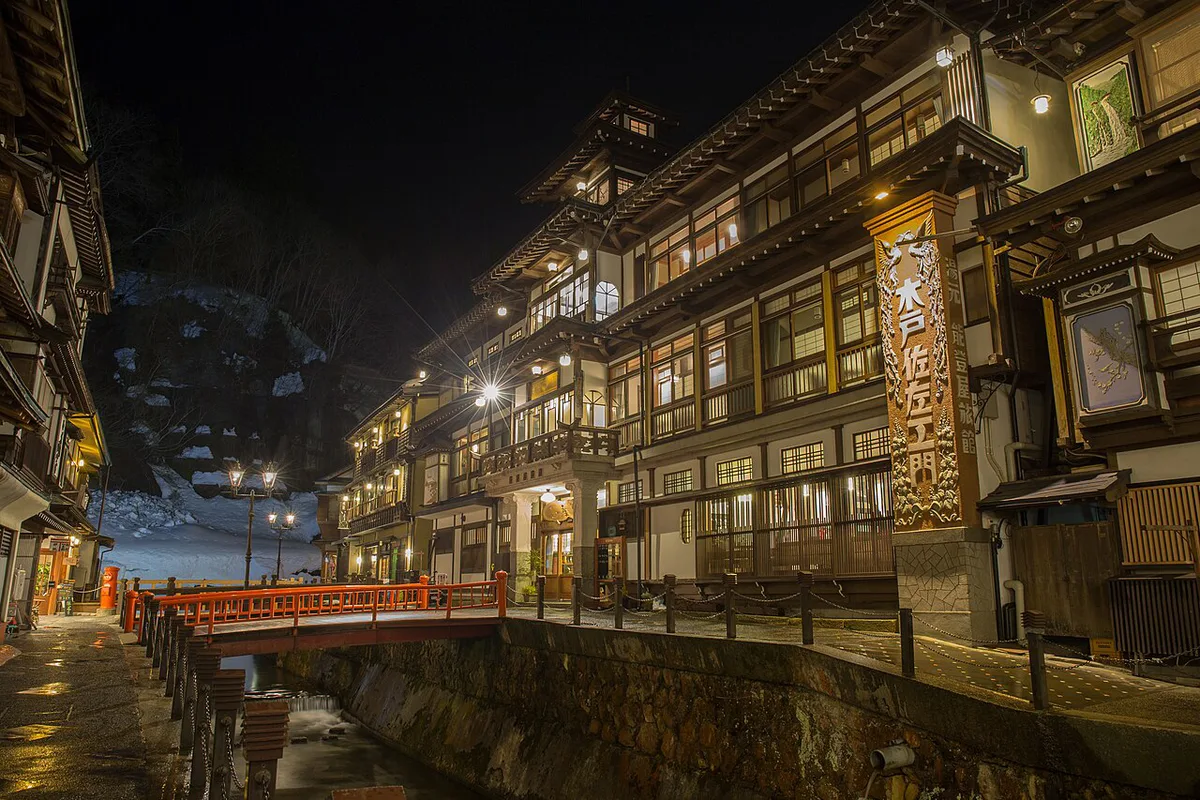
Every onsen town sits somewhere on a line between easy access and deep atmosphere, and it helps to know where before booking. Hakone and Arima sit at the accessible end. Both are under two hours from a major city and run frequent train service. Nyuto Onsenkyo and the Iya Valley sit at the opposite end, reachable only by a long drive or a multi-leg transit connection through rural roads. The trade-off is real. Easy-access towns get crowded on weekends and holidays. Remote towns reward the extra travel time with a quieter bath and a more rustic ryokan. Neither approach is wrong, and many multi-week trips end up including one of each type. Decide which side of that line matters more before picking a region, since it shapes the rest of the itinerary.
8 Best Onsen in Japan by Region
The eight destinations below span four regions, grouped by realistic travel windows from Japan's major hubs. Kanto's Hakone and Kusatsu are both feasible as a long day trip or single overnight from Tokyo. Kansai's Arima and Kinosaki work the same way from Osaka and Kobe, with Arima the shorter run of the two. Tohoku and Hokkaido hold the two most remote picks, Nyuto Onsenkyo and Noboribetsu, both built around volcanic valleys rather than town centers. A third Tohoku option, Ginzan Onsen, suits travelers who want lantern-lit streets rather than deep remoteness. Kyushu closes the list with Beppu and Kurokawa, two very different sides of the region's onsen culture. Each entry below notes at least one concrete planning detail, whether a transit time, a price, or a specific water type, so the choice is not just a name on a map.
Hakone sits about 85 minutes from Tokyo on the Romancecar, making it ideal for adding one overnight to a standard Tokyo-Kyoto-Osaka trip without backtracking.
- Hakone Onsen, Kanagawa
- Hakone is the most convenient onsen base near Tokyo, reachable in about 85 minutes via the Romancecar limited express train.
- Many ryokans and day-use baths face Mount Fuji on clear days, which makes this the pick for a short trip with a big view.
- See the full Hakone onsen guide for specific ryokan picks. It also covers which bath views actually deliver on clear-day promises.
- Kusatsu Onsen, Gunma
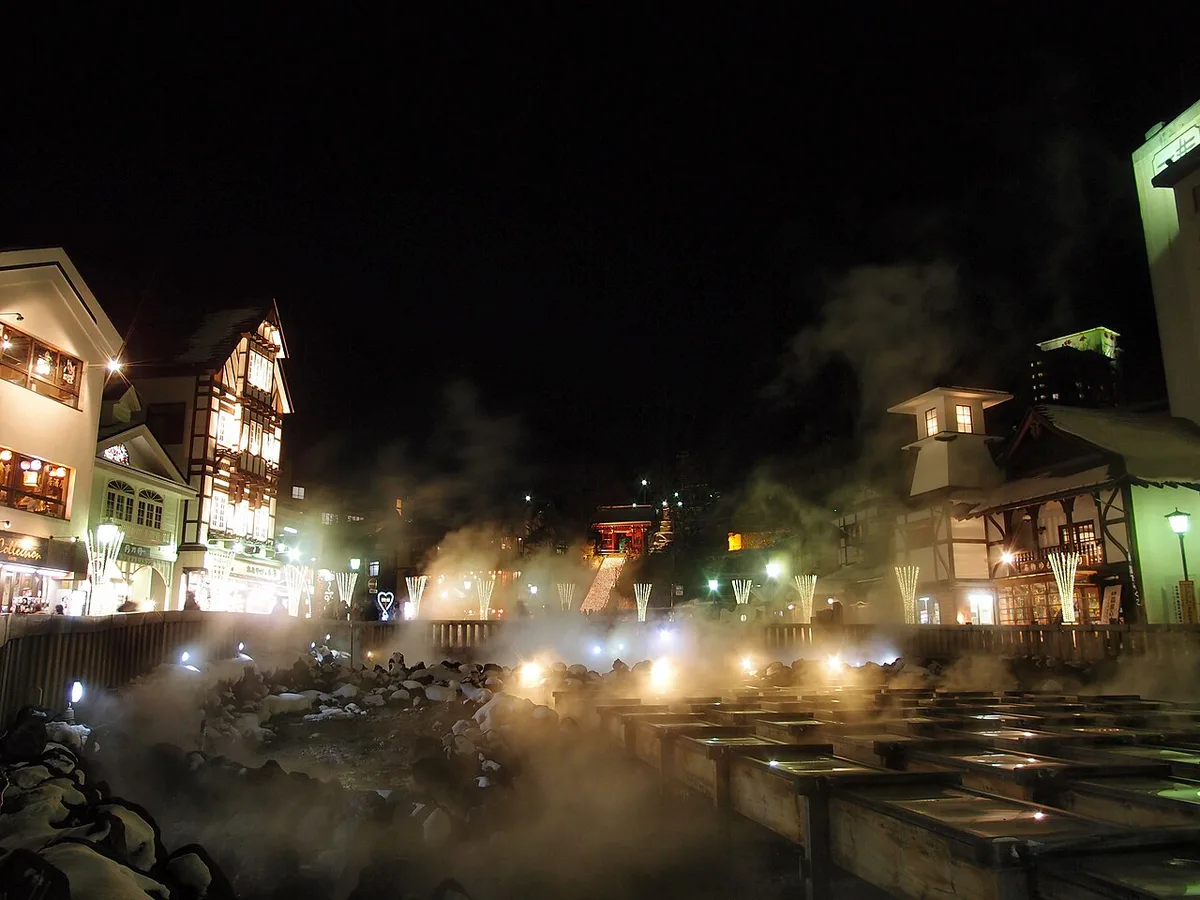
- Kusatsu built its reputation on yumomi, a traditional performance where staff stir and cool the naturally scalding spring water with long wooden paddles.
- Its water output and mineral strength rank among the country's strongest, according to the Kusatsu Onsen Tourism Association.
- The Kusatsu Onsen attractions guide covers specific bathhouses and walking routes around the central yubatake field.
- Arima Onsen, Hyogo
- Arima is one of Japan's oldest hot spring towns and sits within easy day-trip range of both Osaka and Kobe.
- Its baths run on two distinct waters, an iron-rich gold water called kinsen and a carbonated silver water called ginsen.
- Plan the visit with the Arima Onsen day trip guide for train connections and bathhouse hours.
- Kinosaki Onsen, Hyogo
- Kinosaki is built for soto-yu, public bathhouse hopping in a rented yukata and wooden sandals along the canal street.
- The town sits about 2.5 hours from Osaka via limited express train. Current soto-yu hours and yukata rental fees are listed by the Kinosaki Onsen Tourism office.
- The Kinosaki Winter Crab and Kani Kaiseki (2026) covers the seasonal food pairing. Pair it with the best time to visit Kinosaki guide for month-by-month planning.
- Nyuto Onsenkyo, Akita
- Nyuto Onsenkyo is a cluster of rustic ryokans deep in Akita's mountains, known for milky, sulfur-blue water and thatched-roof buildings.
- Winter turns the outdoor baths into a snow-ringed soak. The best time to visit Akita guide covers road conditions by season.
- Ryokan picks are covered in the Nyuto Onsen Guide: How to Visit Akita's Most Famous Secret Hot Springs. For current access notes, check the Nyuto Onsen Association directly.
- Noboribetsu Onsen, Hokkaido
- Noboribetsu draws its water from Jigokudani, a volcanic valley that feeds the town's baths with several distinct mineral types.
- This is one of Hokkaido's best-known hot spring bases, good for pairing a soak with a Sapporo or Lake Toya itinerary.
- The Noboribetsu attractions guide covers the hell-valley walking trail. Other island stops are in the 10 Best Hokkaido Onsen Resorts to Visit (2026 Guide).
- Beppu Onsen, Oita
- Beppu produces more hot spring water than any other town in Japan, and its geothermal areas are nicknamed jigoku, or "hells," for their steaming, mineral-stained pools.
- Book a private, tattoo-friendly soak by reserving a kashikiri bath rather than counting on the shared baths. The Beppu onsen etiquette guide covers which houses allow tattoos.
- Overnight stays near the hells circuit are listed in the best ryokan in Beppu guide.
- Kurokawa Onsen, Kumamoto
- Kurokawa keeps a cohesive, old-world look, with wood-fronted ryokans lining a narrow river gorge and little modern signage.
- It pairs well as a Kyushu add-on with Beppu or Yufuin, since Yufuin itself sits near Beppu.
- Ryokan capacity is limited in this small town, so reserve as early as you can, especially in snow season.
Iya Valley: A Remote Onsen in Shikoku Worth the Detour
Shikoku's Iya Valley in Tokushima Prefecture rewards travelers willing to drive a mountain road for a cliffside soak. Hotel Iyaonsen sits deep in the valley, reached by cable car down to riverside outdoor baths after guests change into kimono and slippers. This is the highest-effort, highest-reward pick on this list, and it will not suit a rushed itinerary. Most visitors reach the valley by rental car rather than train, based on typical routings from Shin-Kobe. Book well ahead for weekends, since remote ryokans like this one carry limited availability by nature of their size.
- Drive time
- Expect about four hours of driving from the Shin-Kobe area to reach the valley floor.
- Highway tolls
- Tolls run close to ¥10,600 each way, based on a recent visitor's toll receipts along the route.
- Road conditions
- Single-lane sections mark the final ascent, with a sheer 250-foot drop on one side and blind curves marked only by aging mirrors.
- Where to stay
- A night at Hotel Iyaonsen with dinner and breakfast for two runs about $1,300 at the top end, and rooms include a private outdoor bath.
Essential Onsen Etiquette Before You Soak
Onsen rules are consistent nationwide, and knowing them before arrival keeps the visit smooth. Bathing happens without clothing in the shared baths, and swimsuits are not permitted in nearly all traditional facilities. Wash and rinse completely at the shower stations before stepping into the shared water. Keep the small cotton towel out of the water once you're bathing. Most bathers set it on the side of the bath or fold it on top of the head. Long hair should be tied up and kept out of the water. Photography inside the bathing area is not appropriate at any traditional onsen. Tattoo policies vary by property, and many still bar visible tattoos from shared baths. Some regions also restrict when guests can bathe, so check posted hours at each facility rather than assuming round-the-clock access. Booking a kashikiri, or private, bath is the most reliable workaround, since it sidesteps the shared-bath policy entirely. House rules in full detail are in the Onsen Etiquette Guide: 8 Rules for Bathing at a Japanese Hot Spring. Yufuin, near Beppu in Kyushu, publishes some of the clearest visitor guidance on this topic. Check-in norms specific to that town are in the Yufuin etiquette tips. Pair it with the best public onsen baths in Yufuin guide if a day-use stop there is part of the plan.
What an Onsen Stay Costs in 2026
Onsen spending ranges from pocket change to a genuine splurge, and knowing the tiers in advance prevents a surprise on the final bill. A basic public bathhouse charges around ¥500 for an hour of soaking. An overnight ryokan stay with a private bath and kaiseki dinner can reach ¥100,000 or more for two, depending on the property and season. At the very top of the market, suites at properties like Bessho Sasa or Hotel Kaneyamaen near Mt. Fuji run from $500 to $1,300 or more per night for two people, meals included. Hotel Iyaonsen in the Iya Valley sits near that same ceiling, at roughly $1,300 a night for two with breakfast and dinner. Peak season, including New Year and Golden Week, typically pushes ryokan rates toward the higher end of each tier. Weekday stays and shoulder-season months like June or November often price closer to the lower end instead. Budget travelers can still get the experience cheaply by sticking to public baths and day-use passes rather than an overnight stay. A simple rule of thumb helps here. Treat the public-bath tier as a taste test, and save the luxury suite tier for one splurge night on a longer trip.
Remote properties like Hotel Iyaonsen in Iya Valley cost $1,300 nightly—matching the luxury tier and requiring hours of driving beyond Kinosaki's convenient 2.5-hour access from Osaka.
| Tier | Example | Price for two |
|---|---|---|
| Public bath entry | Stand-alone onsen or sento | ¥500 |
| Ryokan overnight, private bath | Mid-range properties nationwide | up to ¥100,000+ |
| Luxury private-bath suite | Bessho Sasa, Hotel Kaneyamaen | $500–$1,300+ per night |
| Remote cliffside ryokan | Hotel Iyaonsen, Iya Valley | about $1,300 per night |
Fitting an Onsen Stop into a Tokyo-Kyoto-Osaka Itinerary
A standard first Japan trip runs Tokyo, Kyoto, and Osaka over about two weeks, and an onsen night slots in without much detour. Add Hakone between Tokyo and points west, since it sits on a direct rail line and needs only one extra night. Add Arima or Kinosaki near the Kyoto-Osaka leg instead, since both are reachable from that base without backtracking. Travelers with more time can swap one Kansai night for Kurokawa or Beppu, using Fukuoka as the flight hub instead of doubling back through Osaka. Save Nyuto Onsenkyo or the Iya Valley for a second trip, or for travelers who have already covered the standard route and want a slower, more remote week. Reference the Japan Travel Guide: Plan Your Trip with Expert Tips & Itineraries for the fuller day-by-day structure this section assumes.
Best Time to Go and How to Book
Winter and spring frame the two best windows for an onsen trip, each with a different draw. Snow-country towns like Nyuto pair outdoor bathing with falling snow, a combination sometimes paired with a warm drink after the soak. Spring brings sakura season to onsen towns nationwide, with bloom timing tracked town by town rather than on one national date. Ski resorts near towns like Zao let visitors combine a day on snow with an evening soak, a pairing several ryokan operators market directly. International travelers usually book name-recognition properties through global aggregators. Smaller ryokans, especially remote ones, often only take reservations through Japanese-language booking sites or by phone. Build a realistic route by slotting one onsen stop into a longer trip rather than treating it as a separate vacation. A common pattern anchors Hakone or Arima onto a Tokyo-Kyoto-Osaka route, since both are short detours from the bullet-train line. Confirm reservation policies directly with the ryokan when booking during peak weekends or national holidays.
Frequently Asked Questions
What is the best onsen in Japan for a first-time visitor?
Hakone is the easiest first stop, since it's about 85 minutes from Tokyo on the Romancecar limited express and offers both public baths and overnight ryokans. Kinosaki is a strong second choice for a slower, walkable town, reached in roughly 2.5 hours from Osaka. Both towns let visitors sample the ryokan and public-bath formats before committing to a more remote destination like Nyuto or Kurokawa.
Are onsens in Japan tattoo-friendly?
Policy varies by property, and many traditional shared baths still turn away visible tattoos. Some Beppu and Hakone properties are more relaxed, but this changes often enough that it's worth checking current policy directly before a visit. The reliable workaround is booking a kashikiri, or private, bath, which sidesteps the shared-bath rule entirely and works well for couples too.
How much does an onsen trip in Japan cost?
Costs span a wide range depending on format. A single public bath entry runs around ¥500. An overnight ryokan stay with a private bath and dinner can reach ¥100,000 or more for two. At the luxury end, suites at properties like Bessho Sasa or Hotel Kaneyamaen run from $500 to $1,300 or more per night for two, meals included.
What should travelers bring to an onsen?
Bring a small towel if the property doesn't provide one, plus a plastic bag for wet items afterward. Soap and shampoo are supplied at most shower stations, so heavy toiletries aren't necessary. Bathing suits stay in the bag, since nearly all traditional onsen require full nudity in the shared baths.
When is the best time to visit an onsen town in Japan?
Winter is the classic season, when snow-country baths like Nyuto pair steam and falling snow for a dramatic soak. Spring sakura season is the second major draw, with bloom timing tracked town by town rather than on a single national date. Summer works too for remote mountain towns like Kurokawa, where the elevation keeps daytime heat manageable.
Can you visit multiple onsen towns in one Japan trip?
Yes, especially if the route already passes through Tokyo, Kyoto, and Osaka. Hakone or Arima can be added as a single-night detour without much extra transit time. Reaching two remote picks, like Nyuto and Kurokawa, in one trip usually means dedicating extra travel days, since they sit in different regions with no direct connection between them.
Is it better to stay in Tokyo or in an onsen town?
Staying in an onsen town, even for one night, adds a different pace than a city hotel. Tokyo covers sightseeing and food efficiently, while an onsen night adds the ryokan meal service and the bath itself. Most first-time itineraries benefit from at least one onsen night rather than skipping it entirely for more city time.
Explore Japan's Onsen Towns
Go deeper into Japan's hot-spring regions, from famous streetscapes and volcanic valleys to bathing customs and remote mountain ryokan.
Iconic Onsen Towns
- Onsen Towns in Japan: A 2026 Guide to Choosing Your Hot Spring Town
- 10 Best Hokkaido Onsen Resorts to Visit
- 10 Best Onsen & Ryokan in Hakone
- Kusatsu Onsen Travel Guide
- Ginzan Onsen Travel Guide
- 12 Best Things To Do In Noboribetsu
Kyushu Hot Spring Country
- 10 Rules for Traditional Onsen Etiquette in Beppu
- 10 Best Ryokan in Beppu
- Yufuin Onsen Etiquette
- Public Onsen in Yufuin
Kinosaki & the Kansai Onsen Circuit
Remote & Rustic Baths
- Nyuto Onsen Guide: How to Visit Akita's Most Famous Secret Hot Springs
- Best Time To Visit Akita: Your Seasonal Travel Guide
- Arima Onsen 1-Day Trip From Kobe Travel Guide
Bathing Know-How
Free guide: Japan's Hidden Gems
12 under-the-radar places beyond Tokyo & Kyoto — with the best season to visit each and a local tip you won't find in the guidebooks.
You might also like

Continue reading
More guides you'll find useful