Nyuto Onsen Guide: How to Visit Akita's Most Famous Secret Hot Springs
Compare Nyuto Onsen's seven ryokan, learn the bus route from Tazawako Station, and see how the ¥2,500 Yumeguri Pass works before you book your stay.
On this page
Last updated September 2026, this guide breaks down nyuto onsen, Akita's cluster of seven rustic ryokan tucked into Towada-Hachimantai National Park above Lake Tazawa. It's one of the entries in our roundup of Japan's best onsen towns. Below you'll find a ryokan-by-ryokan comparison, the exact bus stops and shuttle costs, and what the Yumeguri Pass covers before you book a stay.
What Is Nyuto Onsen? Akita's Seven-Ryokan Hot Spring Village
Nyuto Onsen sits inside Towada-Hachimantai National Park in Semboku City, Akita Prefecture, at roughly 1,970 feet elevation. Its name comes from the shape of nearby Mount Nyuto, not from the milky color of the water. Seven independently run ryokan plus one modern annex, Yamanoyado, make up the village, and most also welcome day-trip bathers for a fee. Tsurunoyu is the oldest of the group, with baths and thatched-roof buildings dating back more than 300 years to the Edo period. Hikers on the Mount Nyuto trail can also reach a free, unstaffed outdoor bath called Ippon-matsu Onsen, though there's no changing room there. The village sits above Lake Tazawa, Japan's deepest lake, which makes an easy pairing for a longer Akita itinerary. Kusatsu and Kinosaki concentrate their baths around a single walkable district; the Kusatsu Onsen Tourism Association promotes exactly that kind of central bathing plaza. The village instead spreads its ryokan across a forested mountainside connected by an infrequent shuttle bus. It's worth comparing against other onsen towns across Japan before you decide where to base your trip.
Choosing Your Ryokan: The Seven Springs of Nyuto Onsen Compared
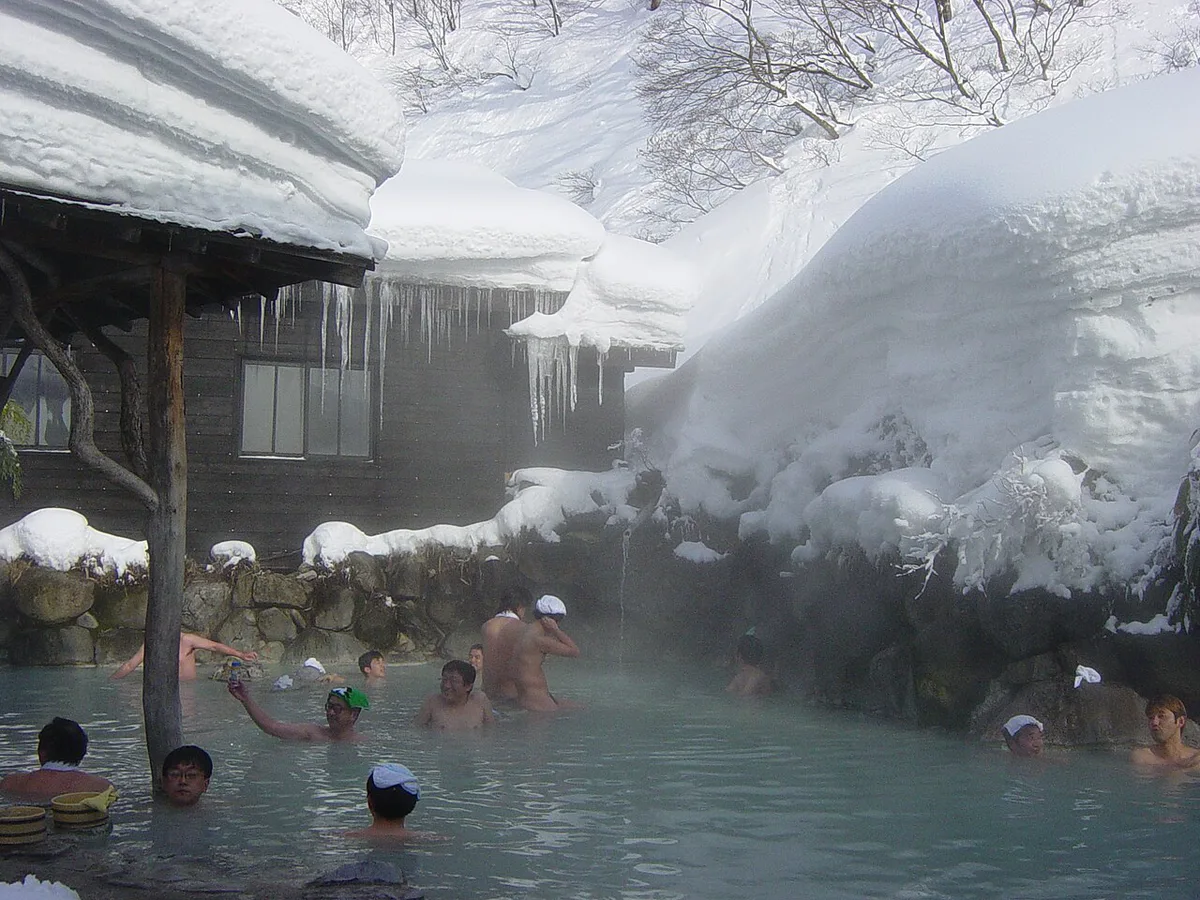
Every ryokan in Nyuto Onsen draws from its own spring, so the water color, mineral mix, and atmosphere shift from one inn to the next. Use the table below to match a bath to what you actually want, rather than picking names at random. Tsurunoyu's large outdoor bath is the one most photos show, a milky, sulfur-white pool framed by thatched roofs and snow. Ganiba's forest bath sits about 164 feet from the main building, screened by trees on three sides. Magoroku reopened with a renovated interior in 2025 and sits a short uphill walk off the main road, between Ogama and Kuroyu. Kuroyu closes for the entire winter, typically from November to mid-April, depending on snowfall and snowmelt timing. Overnight rates vary widely across the village. Ogama is the least expensive, at around ¥11,000 to ¥13,000 per person with two meals. Magoroku's renovated rooms run the highest, at about ¥45,000 to ¥60,000 per person. Tsurunoyu itself charges roughly ¥10,000 to ¥20,000 per person including two meals. Yamanoyado, the modern annex, sits about 0.9 miles down the road from the original Tsurunoyu building but shares access to its baths. Mineral profiles differ by ryokan, from Kuroyu's simple sulfur spring to Magoroku's radium-rich water. Both are promoted for traditional wellness benefits, a common claim across Japan's onsen towns rather than a medical guarantee. For a similarly compact alternative in a different region, see our guide to Hakone's onsen scene.
Tsurunoyu's roughly ¥10,000 to ¥20,000 per person including two meals rate demands booking the first of each month for stays six months out, filling within days.
| Ryokan | Best For | Day-Use Price | Day-Use Hours | Closed |
|---|---|---|---|---|
| Tsurunoyu | History and the iconic milky mixed-gender bath | ¥700 | 10:00-15:00 | Mondays (outdoor bath only) |
| Yamanoyado | Modern comfort near Tsurunoyu | Overnight only | — | — |
| Kuroyu | Rustic atmosphere and black eggs | ¥800 | 9:00-16:30 (11:00 Wed) | Nov-mid April (season) |
| Taenoyu | Couples and waterfall views | ¥1,000 | 10:30-15:00 (entry until 14:00) | Tuesdays |
| Ganiba | A secluded forest bath | ¥800 | 9:00-16:00 | Wednesdays |
| Ogama | Schoolhouse architecture and a footbath | ¥600 | 9:00-16:30 | Thursdays |
| Magoroku | Mineral water, renovated 2025 | ¥700 (1 bath) / ¥3,000 (all) | 10:00-14:30 (exit by 15:00) | Fridays |
| Kyukamura Nyuto Onsenkyo | Families and step-free access | ¥800 | 11:00-15:00 (17:00 for pass holders) | — |
How to Get to Nyuto Onsen from Tokyo and Tazawako
From Tokyo, the Akita Shinkansen reaches Tazawako Station in just under three hours. Ugo Kotsu's Nyuto Line bus runs roughly once an hour from Tazawako Station, and the ride takes about 50 to 55 minutes for around ¥800 to ¥950 depending on your stop. The Nyuto Line bus stops near most ryokan directly, but not Tsurunoyu, Kuroyu, or Magoroku, which each require an additional walk or shuttle. Travelers flying in can connect via the Akita Airport Liner, a reservation-based shuttle from Akita Airport. Drivers can reach the village via National Route 341 and Akita Prefectural Roads 127 and 194. Free parking lots sit near each ryokan, including directly in front of both Tsurunoyu and Yamanoyado. Check current fares and timetables on the Nyuto Onsen Association site before you travel, since rural bus schedules shift with the season. If you're still building the rest of the trip, our broader Japan trip planning guide covers regional rail passes and routing.
Navigating the Village: The Yumeguri Pass and Shuttle Bus
Getting off the bus is not the end of the journey. Each ryokan has its own last-mile route. Kinosaki Onsen takes a different approach, where the Kinosaki Onsen Tourism office promotes a walkable circuit between bathhouses instead of a shuttle system. If that in-town walking style appeals more, the Kinosaki's seasonal timing guide breaks down that comparison. Shuttle timetables at Nyuto can shift with the season, so confirm current times when you check in.
The Yumeguri Pass—¥2,500 for staying guests, covers the shuttle plus one bath entry at each of the seven ryokan—adds cost to nightly rates starting ¥11,000–¥13,000 per person.
- Tsurunoyu: get off at Tsurunoyu Onsen Iriguchi and walk about 45 minutes, or use the Arupa Komakusa stop (about 35 minutes, around ¥750) for a staying-guest shuttle pickup arranged in advance.
- Magoroku and Kuroyu: ride to the final Nyuto Onsen stop, then walk 10 to 15 minutes; Kuroyu can arrange a guest pickup there too.
- In-village shuttle: Yumeguri-go runs between all seven ryokan about every two hours.
- Day shuttle pass: ¥1,000, transport only.
- Yumeguri Pass: ¥2,500 for staying guests, covers the shuttle plus one bath entry at each of the seven ryokan.
Onsen Etiquette: Mixed Bathing and Milky Waters
Several of Nyuto Onsen's outdoor baths are mixed-gender, including Tsurunoyu's well-known milky pool. Gender-separated indoor baths are also available at most ryokan, so mixed bathing is never the only option. Rinse off at the washing area before stepping into any bath, a standard rule across Japanese onsen. Towel policies vary by inn, so check the signage at each bath or ask staff rather than assuming one rule applies everywhere. For a fuller etiquette rundown, including how to wash before soaking, see the general onsen etiquette rules. Similar mixed-bathing customs come up elsewhere in Japan; the onsen etiquette notes for Beppu cover comparable ground.
Seasonal Guide: When to Visit Nyuto Onsen
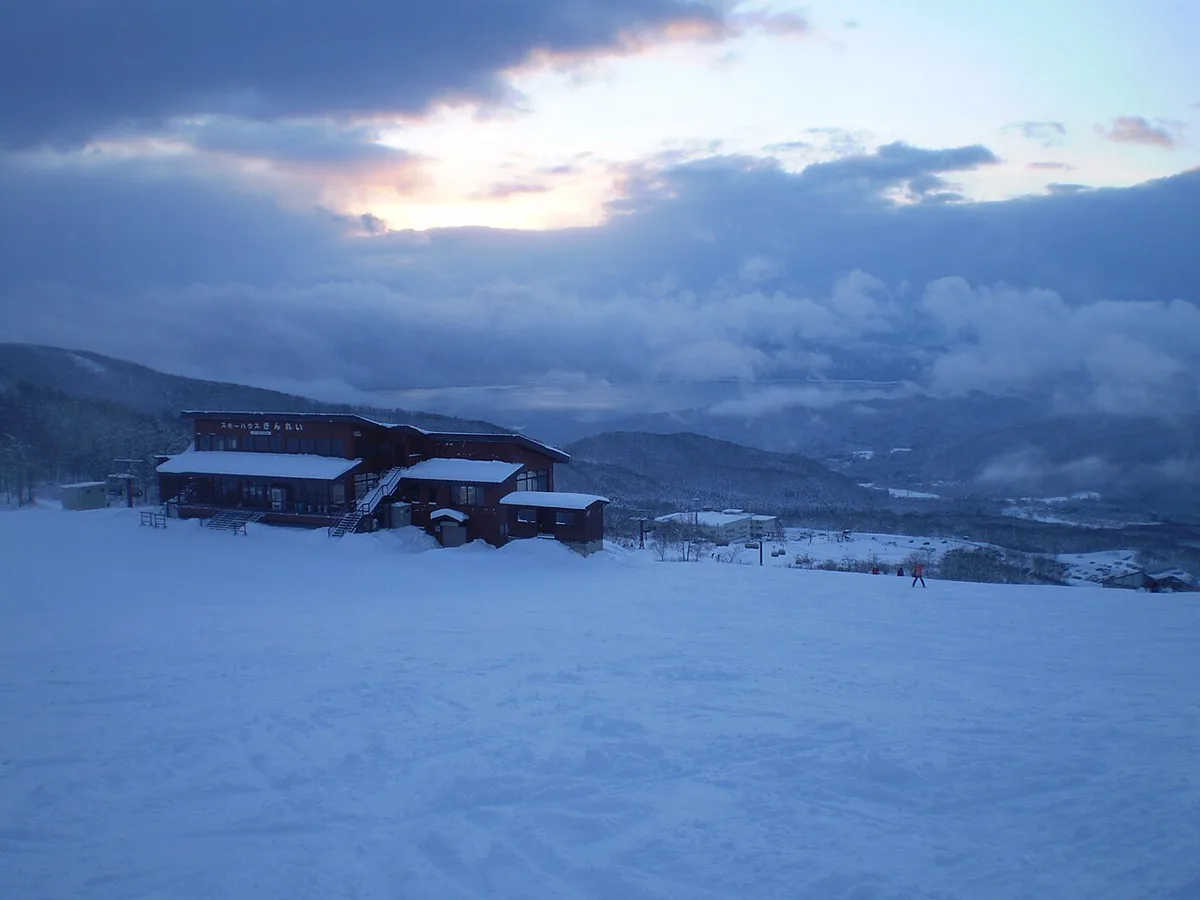
Winter brings the heaviest snow, often piling several feet deep around the ryokan by January and February. Kuroyu closes for the season during this stretch, typically from November to mid-April. Beech forest around Ganiba and Magoroku turns deep red in autumn and green through spring and summer, so the same bath looks different depending on when you visit. Elevation near 1,970 feet keeps the snow around longer than in lower-lying parts of Akita. For a month-by-month breakdown of weather and crowds, check the seasonal guide to Akita. A similarly lantern-lit winter town appears in the Ginzan Onsen guide, if you want that atmosphere elsewhere in Tohoku.
Sample Itinerary: Day Trip vs Overnight Stay
A day trip to Nyuto Onsen is possible but tight, since the hourly bus schedule limits you to one or two baths before the last bus back. Staying overnight is worth the cost, because Tsurunoyu's yamanoimo nabe, a mountain yam hot pot served beside a sunken hearth, is only served to overnight guests. If a single afternoon soak fits your schedule better, a shorter Arima Onsen day trip covers a lower-effort alternative near Osaka.
- Morning: take the Akita Shinkansen from Tokyo to Tazawako Station, about 3 hours.
- Early afternoon: bus to Taenoyu for a day-use soak, ¥1,000, open 10:30 to 15:00.
- Evening: continue by bus or shuttle to Tsurunoyu for an overnight stay and the hot pot dinner.
Booking Tips, Winter Closures, and What to Pack
Tsurunoyu is the hardest reservation in the village. Bookings open on the first of the month for stays six months out, and popular dates fill within days. Several ryokan also close weekly for cleaning, on top of Kuroyu's full winter closure. Snow near 1,970 feet of elevation makes the walking routes genuinely difficult from around December through March. Pack waterproof, grippy boots for the 45-minute walk to Tsurunoyu or the shorter walks to Magoroku and Kuroyu, plus warm layers for the wait between buses. A lightweight headlamp helps for early checkout walks before sunrise in midwinter, when daylight is short at this latitude. Carry some cash as backup, since payment options at small rural ryokan can vary.
- Taenoyu: closed Tuesdays
- Ganiba: closed Wednesdays
- Ogama: closed Thursdays
- Magoroku: closed Fridays
- Kuroyu: reduced hours until 11:00 on Wednesdays, closed entirely from November to mid-April
- Tsurunoyu: outdoor bath closed to day-trippers on Mondays
Frequently Asked Questions
What does the name Nyuto Onsen mean, and is the water actually milky?
Nyuto Onsen translates roughly to nipple hot spring, a reference to the shape of nearby Mount Nyuto rather than the water's appearance. Tsurunoyu's signature outdoor bath genuinely runs milky white from sulfur minerals, but several other ryokan in the village have clear water instead.
How do you get from Tazawako Station to Nyuto Onsen?
Ugo Kotsu runs an hourly bus from Tazawako Station that reaches the village in about 50 to 55 minutes for around ¥800 to ¥950. Staying guests headed to Tsurunoyu can instead get off at the Arupa Komakusa stop for a courtesy shuttle pickup, arranged in advance with the ryokan.
Is Nyuto Onsen open during winter?
Most of the village stays open through the snow season, though Kuroyu Onsen closes entirely from November to mid-April. Heavy snowfall can also make the walking routes to Tsurunoyu, Magoroku, and Kuroyu slower, so budget extra time.
What is the Yumeguri Pass, and is it worth buying?
The Yumeguri Pass, called yumeguri-cho, costs ¥2,500 and is sold only to guests staying overnight at their ryokan. It covers the in-village shuttle plus one bath entry at each of the seven ryokan. A separate ¥1,000 day pass covers the shuttle only, without bath entries, for visitors who are not staying overnight.
Which Nyuto Onsen ryokan should you book first?
Tsurunoyu is the obvious pick for its history and the milky outdoor bath, but it also books out fastest. Reservations open on the first of the month for dates six months ahead, so decide early if a specific week matters.
Do you have to bathe naked, or can you wear a swimsuit at Nyuto Onsen?
Standard Japanese bathing etiquette applies, so swimsuits are not part of the norm in the baths themselves. Towel policies at the mixed-gender pools vary by ryokan, so check posted signage or ask staff, and see the onsen etiquette guide for general rules that apply across Japan.
Can you drive to Nyuto Onsen, and is parking available?
Yes, the village is reachable by car via National Route 341 and Akita Prefectural Roads 127 and 194. Free parking lots sit near each ryokan, including in front of Tsurunoyu and Yamanoyado, though winter driving conditions call for snow tires or chains.
Free guide: Japan's Hidden Gems
12 under-the-radar places beyond Tokyo & Kyoto — with the best season to visit each and a local tip you won't find in the guidebooks.
You might also like


Continue reading
More guides you'll find useful