Onsen Towns in Japan: A 2026 Guide to Choosing Your Hot Spring Town
Compare the best onsen towns in Japan by region, access time, and tattoo-friendly baths, from Kusatsu and Hakone to Kinosaki, Kurokawa, and Nyuto in 2026.
On this page
Last updated September 2026, this guide compares the best onsen towns in Japan by region, access time, and bathing style so you can match a hot-spring town to your itinerary and budget. Hakone works as an easy day trip from Tokyo, while Ginzan and Nyuto reward travelers willing to add an overnight stay off the main rail lines. For first-time visitors, Hakone, Kinosaki, and Kusatsu cover the most ground with the least logistical risk.
How to Choose Among Japan's Onsen Towns
Start with your home base. Tokyo-side trips favor Kusatsu, Hakone, Ikaho, and Shima. Kyoto and Osaka trips favor Kinosaki and Arima. Kyushu and Tohoku towns such as Kurokawa, Nyuto, and Ginzan sit further out and usually need a dedicated overnight. Hakone and Arima also work well as day trips. Ginzan, Kurokawa, and Nyuto reward an overnight stay instead, since the travel time makes a rushed visit impractical. Additional towns beyond this comparison appear in the best onsen in Japan overview. Half-board ryokan stays that include dinner and breakfast are the norm rather than room-only bookings. Published 2026 plans at Kinosaki Onsen range from ¥14,300 to ¥28,200 per person a night, depending on the room and whether a Tajima beef course is included. Most ryokans charge per person and set a two-guest minimum per room. Solo travelers should confirm booking policies directly with the property before reserving.
| Town | Region | Vibe | Access from Major Hub | Best For |
|---|---|---|---|---|
| Kusatsu | Gunma (Kanto) | Steaming yubatake field, strongly acidic water | About 3-4 hours from Tokyo by train and bus | Therapeutic soaking |
| Hakone | Kanagawa (Kanto) | Resort-style, Mt. Fuji and Lake Ashi views | 85 minutes from Shinjuku via Odakyu Romancecar | Easy Tokyo day trip |
| Ikaho & Shima | Gunma (Kanto) | Quiet mountain valleys, fewer crowds | Under 2 hours from Tokyo by train and bus | Avoiding crowds |
| Kinosaki | Hyogo (Kansai) | Yukata strolling, 7 walkable public baths | 2.5-3 hours from Kyoto or Osaka by train | Tattoo-friendly bathing |
| Arima | Hyogo (Kansai) | Historic kinsen and ginsen mineral waters | Short train and cable-car ride from Kobe or Osaka | Kansai day trip |
| Ginzan | Yamagata (Tohoku) | Taisho-era gas-lit streets, winter snow | Overnight trip; book 6+ months ahead for winter | Winter photography |
| Kurokawa | Kumamoto (Kyushu) | Rustic rotenburo-hopping village | Overnight from Kyushu hubs | Outdoor bath hopping |
| Nyuto | Akita (Tohoku) | Rustic, milky-blue hot springs | Overnight; onsen shuttle links 7 facilities | Winter hot-spring seekers |
| Noboribetsu | Hokkaido | Geothermal Jigokudani, or Hell Valley | Overnight from Sapporo | Geothermal scenery |
The Best Onsen Towns Near Tokyo: Kanto Region
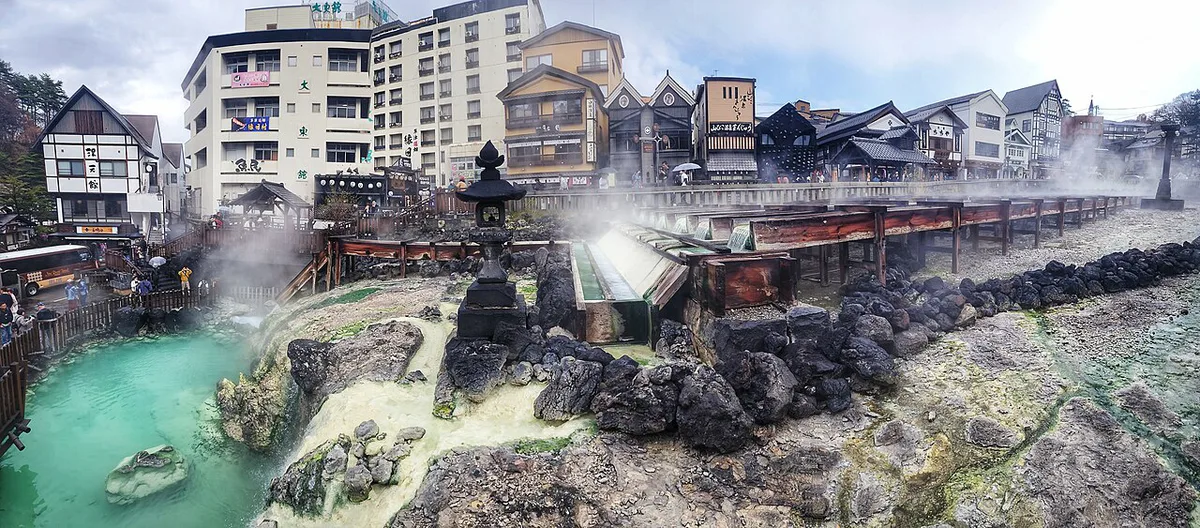
Kusatsu Onsen sits in Gunma Prefecture, roughly three to four hours from Tokyo by train and bus. Its centerpiece is the yubatake, an open-air field where hot spring water flows out of the ground and cools before distribution to the town's baths. Local yumomi performances demonstrate the traditional method of stirring the water to lower its temperature without diluting the minerals. Sai-no-Kawara Park adds another steam field nearby, with wells where hot water surfaces and flows off as a warm stream. Kusatsu's water is strongly acidic. Travel agents have ranked it Japan's top hot spring for eighteen consecutive years. General visitor information on the yubatake and local baths is available from the Kusatsu Onsen Tourism Association. Buses from Naganohara-Kusatsuguchi Station take about twenty-five minutes to reach the town center, so plan for that connection rather than a direct walk. For the Sai-no-Kawara Park steam field and nearby ski access, see the Kusatsu onsen attractions guide. A ski resort also operates on the edge of town each winter, giving Kusatsu a second season beyond summer soaking. Hakone, in Kanagawa Prefecture, is the most convenient onsen town on this list. Odakyu's Romancecar reaches Hakone-Yumoto Station in about eighty-five minutes from Shinjuku Station, and a Hakone Free Pass covers most local transport once you arrive. Atmosphere is the trade-off. Hakone leans resort-style, with Lake Ashi cruises and Owakudani volcanic scenery, rather than the traditional-village feel of Kusatsu or Kinosaki. Many visitors see Hakone and Mount Fuji as a same-day trip from Tokyo. An overnight stay adds access to private baths for those with more time. Specific ryokan with kashikiriburo, or private rental baths, appear in the best onsen in Hakone guide for travelers who prefer to skip the communal bathhouses. Beyond the baths, the Hakone Open-Air Museum and Hakone Shrine round out a full day of sightseeing. Ikaho and Shima Onsen sit further into the Gunma mountains and see fewer overseas visitors than Kusatsu or Hakone. Ikaho centers on a steep stone staircase lined with shops and foot baths, while Shima sits in a quieter mountain valley. Each is reachable from Tokyo in under two hours by a combination of shinkansen and local train or bus.
Hakone's 85 minutes from Shinjuku via Odakyu Romancecar makes it Tokyo's easiest day trip, yet it trades the traditional village atmosphere of Kinosaki or Ginzan for resort-style scenery and Lake Ashi cruises.
- Kusatsu: yubatake field and acidic waters; buses from Naganohara-Kusatsuguchi Station take about 25 minutes.
- Hakone: 85 minutes from Shinjuku via the Odakyu Romancecar; the most convenient Tokyo day trip.
- Ikaho and Shima: under two hours from Tokyo, with fewer crowds than Kusatsu or Hakone.
The Best Onsen Towns Near Kyoto and Osaka: Kansai Region
Kinosaki Onsen, in Hyogo Prefecture, is the clearest answer to the tattoo question in this guide. All seven of its public bathhouses are tattoo-friendly, a detail confirmed by Kinosaki Onsen Tourism. Guests typically receive a yukata and a bathhouse pass from their ryokan, then walk between baths along the canal-lined main street. Kinosaki traces its onsen culture back roughly 1,300 years, and its compact, walkable layout means you rarely need a taxi or bus between baths. Trains from Kyoto or Osaka take about two-and-a-half to three hours, making Kinosaki a realistic overnight rather than a rushed day trip. Winter visits pair the baths with Tajima beef and Sea of Japan snow crab. Seasonal detail on that menu lives in the Kinosaki Winter Crab and Kani Kaiseki (2026). Shoulder-season crowd comparisons appear in the best time to visit Kinosaki guide. Arima Onsen, also in Hyogo, ranks among Japan's oldest hot spring towns and is known for two mineral waters, kinsen ("gold") and ginsen ("silver"). It sits close enough to Kobe and Osaka for a day trip. Train and cable-car connections are detailed in the Arima onsen day trip guide. Choosing between Kinosaki and Arima comes down to pace. Kinosaki asks for an overnight yukata stroll. Arima suits a Kansai day trip built around Kyoto or Osaka sightseeing.
Kinosaki's 2.5-3 hours from Kyoto or Osaka by train necessitates an overnight stay, uniquely rewarded by all seven public bathhouses being tattoo-friendly for evening canal-side soaking.
Destination Onsen Towns Worth the Extra Travel Time
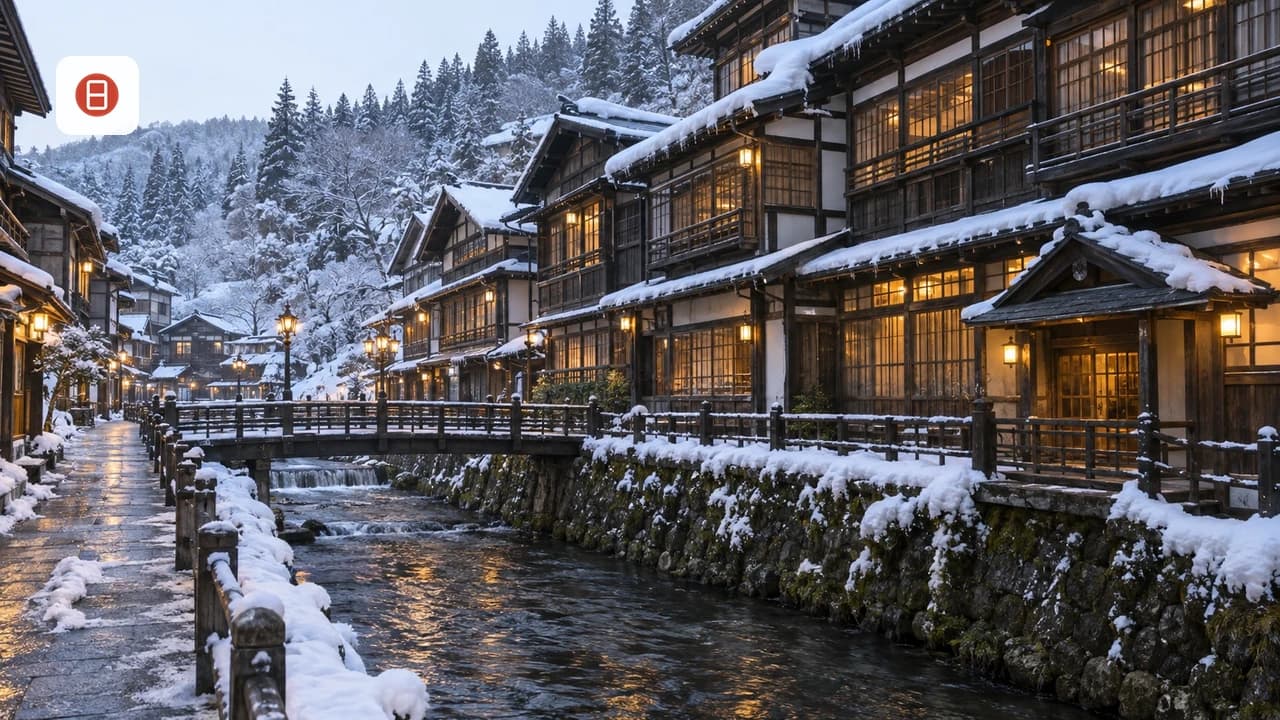
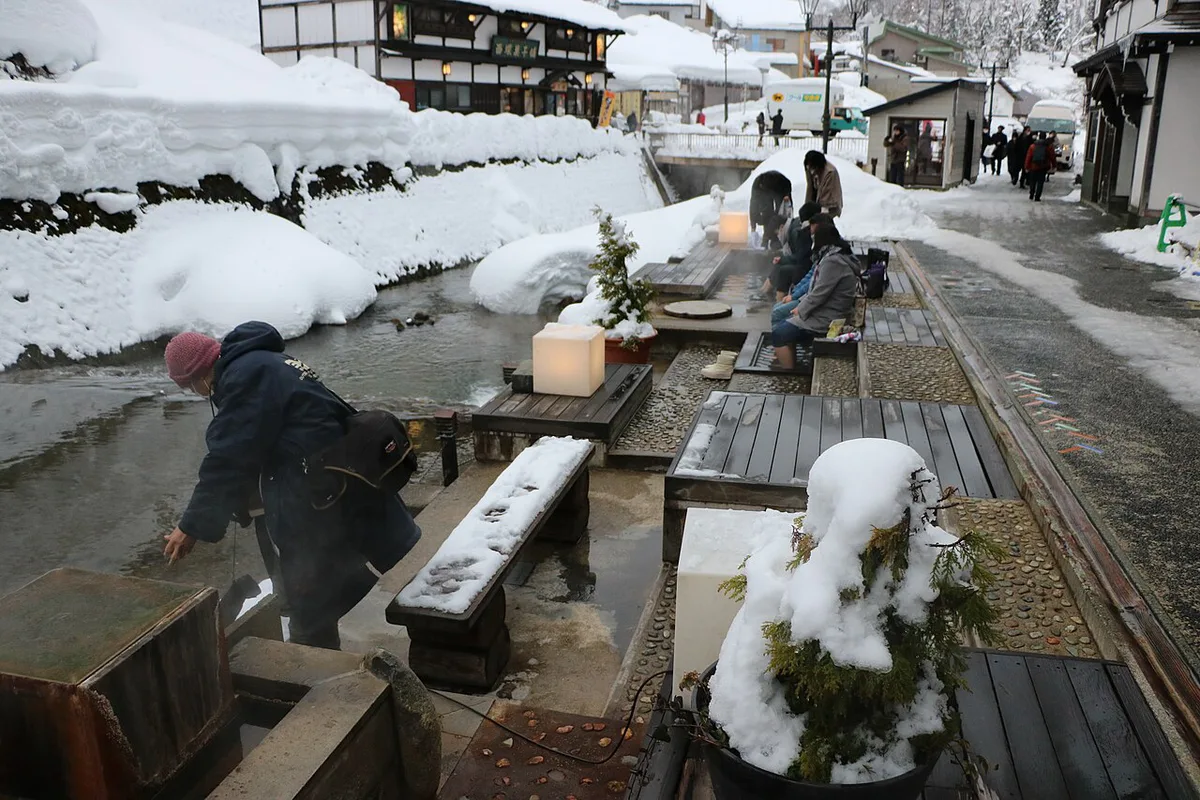
Ginzan Onsen, in Yamagata Prefecture, is built around a row of wooden, Taisho-era ryokan lit by gas lamps at night, especially striking with snow on the ground. Winter demand is intense enough that securing a room often requires booking six months or more in advance. Ginzan works only as an overnight stay, given its distance from Tokyo and Sendai. Photography tips and access notes for the town appear in the Ginzan onsen attractions guide. Kurokawa Onsen, tucked into the Kyushu mountains of Kumamoto Prefecture, centers on rotenburo, or outdoor baths, built into the surrounding forest. A nyuto tegata, a wooden pass sold around town, covers entry to three different outdoor baths at participating ryokan. Onsen-boiled eggs are a common snack while wandering between baths in the village. Nearby Kyushu towns extend the trip. Beppu is known for geothermal "hells" and steam-cooked food. Etiquette specifics for its baths sit in the Beppu onsen etiquette guide. Ryokan picks appear in the best ryokan in Beppu guide. Yufuin, closer to Beppu, pairs its baths with the walkable Yunotsubo shopping street. Bathing manners for Yufuin are covered in the Yufuin Onsen Etiquette: A 2026 Guide for Travelers. Specific bathhouse picks appear in the best public baths in Yufuin guide. Nyuto Onsen, in Akita Prefecture, is built around seven onsen facilities, each drawing water from its own source, according to the Nyuto Onsen Association. Tsurunoyu, the most photographed of the seven, is known for milky, pale-blue water. An onsen-hopping shuttle connects the facilities, so a rental car is not required once you arrive. Akita's snow season runs long. Road and rotenburo timing get mapped out in the best time to visit Akita guide. Individual ryokan and the shuttle route are covered in the Nyuto Onsen Guide: How to Visit Akita's Most Famous Secret Hot Springs. Noboribetsu Onsen, in Hokkaido, sits beside Jigokudani, or "Hell Valley," a geothermal field of steaming vents and mineral pools meant for viewing rather than bathing. Regional access and seasonal notes for Hokkaido's hot springs appear in the 10 Best Hokkaido Onsen Resorts to Visit (2026 Guide). Town-specific listings sit in the Noboribetsu attractions guide.
- Ginzan Onsen (Yamagata): Taisho-era streets; winter rooms often need booking 6 or more months ahead.
- Kurokawa Onsen (Kumamoto): the nyuto tegata pass covers 3 outdoor baths.
- Nyuto Onsen (Akita): 7 onsen facilities linked by an onsen-hopping shuttle.
- Noboribetsu Onsen (Hokkaido): geothermal Jigokudani, or Hell Valley, for viewing rather than bathing.
Onsen Etiquette and Booking Logistics
Tattoos remain the biggest single obstacle for many travelers weighing onsen towns in Japan. Kinosaki is the most reliable option because all seven of its public bathhouses admit visitors with tattoos. Elsewhere, a private kashikiriburo, or reservable indoor or outdoor bath, sidesteps the issue entirely, since it is rented by the room rather than shared. Full guidance on covering smaller tattoos and on which regions remain stricter is covered in the Onsen Etiquette Guide: 8 Rules for Bathing at a Japanese Hot Spring. Washing at the low stools and shower stations before entering any communal bath is non-negotiable. Swimsuits are not permitted in traditional baths, and small hand towels should stay out of the water, usually folded on top of the head or set aside. A cold glass of milk after the bath is a well-known custom at many ryokan and public bathhouses. Communal baths are typically phone-free zones, in keeping with the quiet, unhurried pace ryokan hosts try to maintain. For booking, Rakuten Travel's Japanese-language site frequently lists more onsen ryokan inventory than international booking platforms, particularly for smaller family-run properties. Half-board plans, with dinner and breakfast included, are worth choosing over room-only rates, since many onsen towns have limited restaurant options once shops close for the evening.
Planning Your Onsen Soak
One to two nights is the sweet spot for most onsen towns, long enough to soak more than once without rushing the kaiseki dinner. Autumn foliage and winter snow are the two peak seasons across these towns, since both pair well with the visual contrast of steam rising against cold air. Winter also means the tightest ryokan availability, particularly at Ginzan and Nyuto, so lock in dates as early as the six-month mark discussed earlier for Ginzan. Combining a Kanto stop like Hakone with a Kansai stop like Kinosaki works well on one trip, since both sit along major rail corridors. Building an onsen town into a wider Japan itinerary is easier with a full trip outline. Rail passes and routing between regions are covered in the Japan Travel Guide: Plan Your Trip with Expert Tips & Itineraries.
Ryokan Stay vs. Public Bath Visit: Which Experience Fits Your Trip?
A ryokan stay is the fuller onsen-town experience. You check in during the afternoon, change into a yukata, bathe before dinner, and return for another soak after breakfast. Half-board plans also solve the dinner question in small towns where restaurants close early.
A public-bath visit is better when the town is close to your base or you want to control costs. Hakone and Arima suit this approach, since visitors can arrive, soak, eat, and leave without moving luggage. Kinosaki also lets overnight guests bath-hop easily, but its evening canal stroll feels more complete with a room in town.
- Choose a ryokan for remote towns, kaiseki meals, and an unhurried evening.
- Choose a day visit for Hakone or Arima when your itinerary is tight.
- Ask whether a ryokan has private kashikiriburo if communal bathing is unsuitable.
Check each facility's daytime entry hours before traveling. Some ryokan limit outside visitors when baths are busy or reserve certain baths for overnight guests.
Frequently Asked Questions
Which onsen town in Japan is best for first-time visitors?
Hakone, Kinosaki, and Kusatsu cover the widest range of experiences with the least travel risk. Proximity to Tokyo makes Hakone the easiest first stop, Kinosaki offers tattoo-friendly public bathing, and Kusatsu delivers a strongly therapeutic soak. Any of the three works well as a first onsen town.
Which onsen towns in Japan are tattoo-friendly?
Kinosaki Onsen is the standout choice, since all seven of its public bathhouses admit guests with tattoos. Elsewhere, a private kashikiriburo bath rented by the room sidesteps the restriction at almost any onsen town. Checking policy directly with a specific ryokan is still worthwhile, since rules can vary by property.
Can you visit an onsen town as a day trip from Tokyo or Kyoto?
Hakone works well as a day trip from Tokyo, reachable in about 85 minutes via the Odakyu Romancecar. Arima Onsen is a similarly workable day trip from Kyoto or Osaka. Kusatsu and Kinosaki sit far enough from those cities that an overnight stay makes more sense. Ginzan, Kurokawa, and Nyuto are even further out and are not realistic day trips.
How much does a ryokan stay cost in an onsen town?
Half-board ryokan plans, which include dinner and breakfast, commonly run from roughly ¥14,300 to ¥28,200 per person a night based on published 2026 plans at Kinosaki Onsen. Pricing depends heavily on room type, season, and whether a specialty dinner such as Tajima beef is included. Most ryokans charge per person rather than per room and often set a two-guest minimum.
Do you need to book onsen towns far in advance?
Ginzan Onsen in winter is the clearest example, with rooms often booked six months or more ahead. Nyuto Onsen sees similarly high winter demand in Akita Prefecture. Rakuten Travel's Japanese-language site is worth checking alongside international platforms, since it often carries more inventory for smaller ryokan.
Free guide: Japan's Hidden Gems
12 under-the-radar places beyond Tokyo & Kyoto — with the best season to visit each and a local tip you won't find in the guidebooks.
You might also like


Continue reading
More guides you'll find useful