Onsen Etiquette Guide: 8 Rules for Bathing at a Japanese Hot Spring
Learn onsen etiquette before your soak: washing rules, tattoo policies, the towel rule, and how a sento differs from a traditional Japanese onsen in 2026.
On this page
Last updated September 2026, this onsen etiquette guide walks you through the exact sequence at a Japanese hot spring, from the shoe locker to the shower stool. The rules exist for one practical reason: everyone shares the same water, so cleanliness and quiet protect the next bather's experience. Most facilities forgive an honest mistake quickly, so treat the ritual as a set of habits to learn rather than a test to fail.
Onsen vs Sento: What You're Bathing In and Why the Rules Matter
An onsen draws its water from a natural volcanic spring; a sento heats ordinary tap water for use in a neighborhood bathhouse. Both follow the same core etiquette once you're inside, but the setting differs. Onsens sit inside ryokan, resorts, or dedicated hot spring towns built around the mineral water itself. Sentos serve a local neighborhood the way a laundromat or corner store does, with regulars who visit several times a week. Either way, you're sharing a tub with strangers, so the rules protect the water for whoever soaks after you. Swimsuits are generally left out of the bathing area itself, partly for hygiene. Communal nude bathing also has centuries of tradition behind it in Japan. Once everyone is undressed, differences in job title or income disappear for the length of a soak. That shared vulnerability is part of why the etiquette matters so much to regular bathers. Before a first Japan trip, planning a first-time Japan itinerary should include at least one hot spring stop. It's one of the easiest ways to slow down between train rides and temple visits. For a broader starting point on where to go, the best onsen in Japan covers regional picks beyond what fits in this guide.
The Onsen Flow: From Shoe Locker to Bath
This sequence rarely changes between a countryside ryokan and a city hot spring resort. Learning it once means you can walk into almost any facility in Japan and know what to do next. Follow it in order and you'll match everyone else in the room.
- Locate the entrance curtains: red or the kanji 女 marks the women's bath, blue or 男 marks the men's.
- Remove your shoes at the entrance and store them in the small locker provided; slippers carry you across the tatami to the changing room.
- Undress completely in the changing room and place your clothes in a basket or locker. Swimsuits and underwear stay out of the bathing area.
- Carry only the small hand towel into the bathing room. Wallets, phones, and everything else stay behind in the changing room.
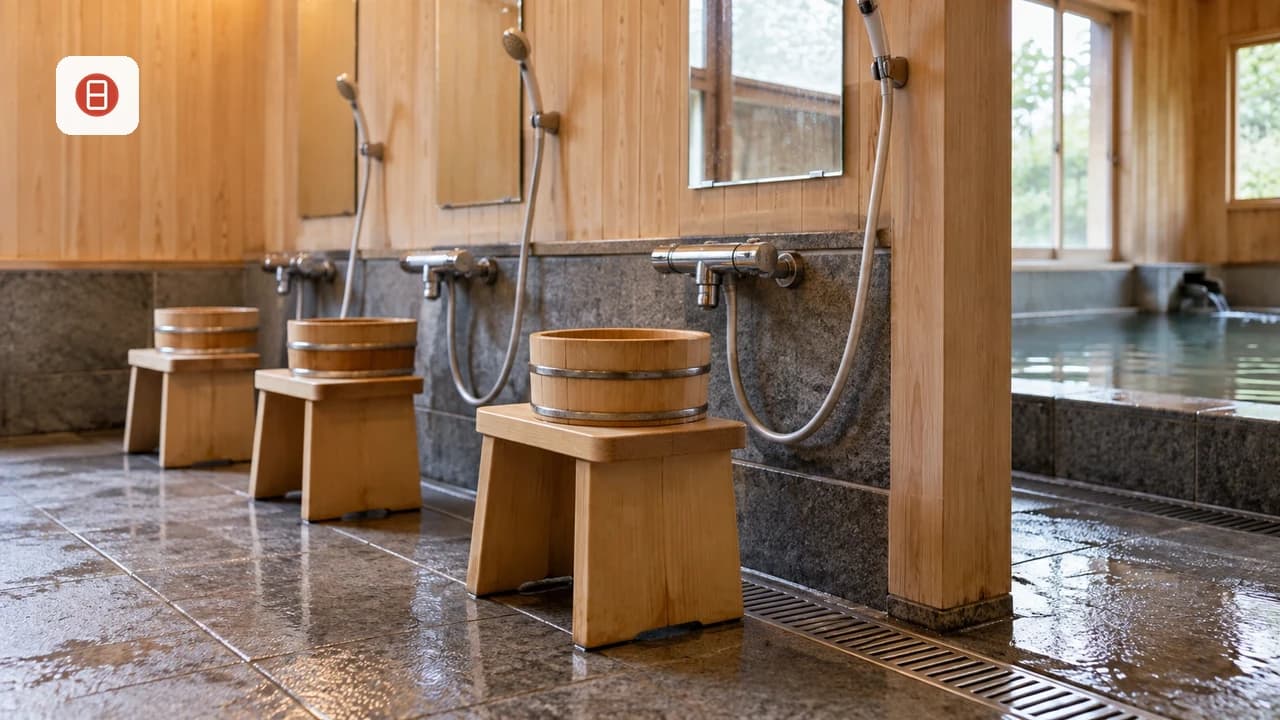
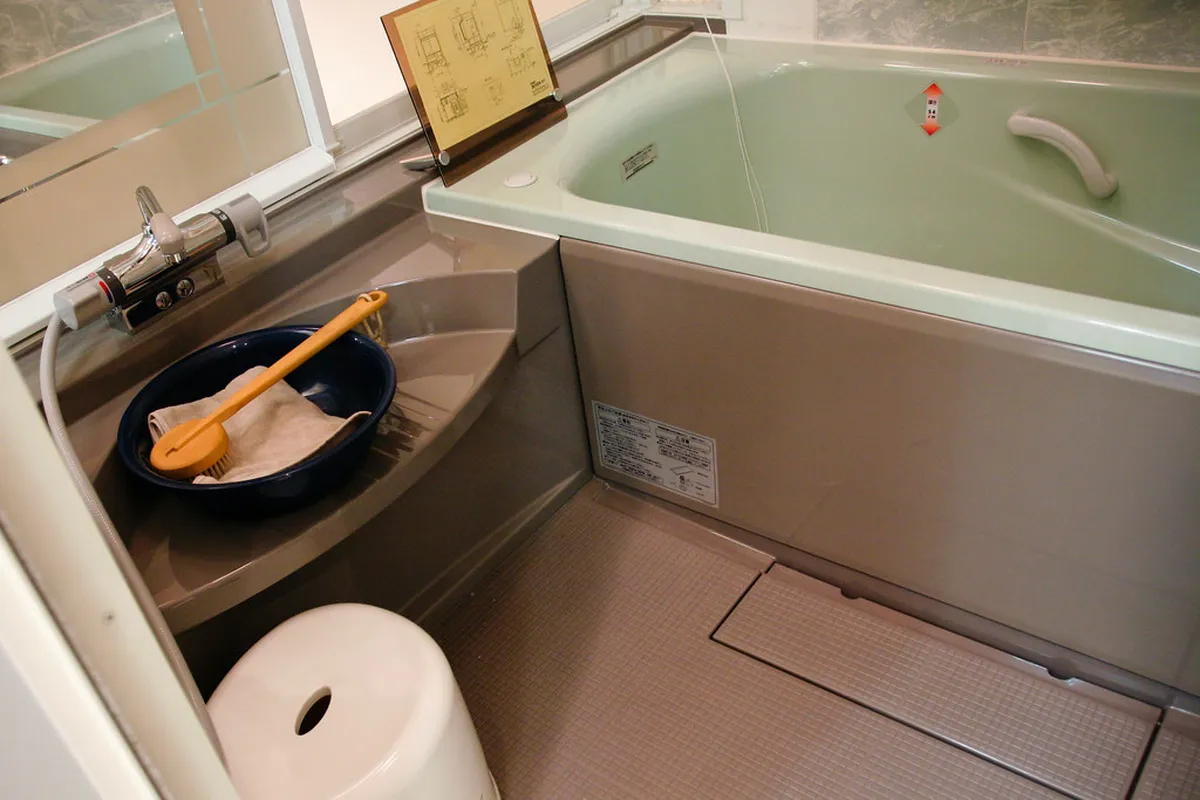
- Sit on the low stool at the washing station and rinse your entire body with the shower or a bucket before you approach the tub.
- Rinse away every trace of soap and shampoo. Nothing should follow you into the shared water.
- Pour a few scoops of hot water over your shoulders and legs before stepping in. This kakeyu step lets your body adjust, since the water typically runs 104°F to 111°F.
The 8 Golden Rules of Onsen Etiquette
Most onsens still expect full nudity and have traditionally restricted visible tattoos, so research your chosen onsen in advance if either point concerns you. These eight habits cover what trips up first-time visitors most often.
Water typically runs 104°F to 111°F, so gradually acclimate before entering and keep soaks brief to avoid dizziness or heat exhaustion.
- Keep your towel out of the bath water. Balance it on your head or set it on the edge of the tub instead.
- Tie up long hair before you get in, so it never touches the water.
- Lower your voice. Onsens are for soaking, not for swimming, splashing, or diving.
- Skip the bath if you've been drinking. Hot water plus alcohol raises your risk of dizziness and fainting.
- Dry off with your small towel before you step back onto the changing room mats, so you don't track water across the floor.
- Leave cameras and phones in the locker. Photography is not allowed in bathing or changing areas, out of respect for other guests' privacy.
- Check the tattoo policy before you visit. Some facilities remain nude-only and tattoo-restricted, while others allow a small tattoo under a waterproof sticker or offer a private bath instead.
- Stay out of the water if you have an open wound, a fever, or a health condition that heat could worsen. Keep any single soak to about 20 to 30 minutes.
Special Considerations: Tattoos, Private Baths, and Bathing with Kids
Tattoo policies vary by facility rather than by any single national rule. A waterproof sticker can cover a small design at many onsens that otherwise restrict tattoos. Facilities that allow this typically cap the covered area at about 4 by 6 inches, or 10 by 15 centimeters. Larger pieces usually mean booking a kashikiri, a private rental bath reserved for your own group instead of the shared bath. Kashikiri baths are normally booked in advance through the ryokan's front desk. They're charged per room rather than per person, for a fixed block of time you agree on when you book. Beppu's hot spring district has its own Beppu tattoo and bathing guide if you want facility-level detail before you travel. Families should expect an age cutoff for children bathing on the opposite-gender side. That cutoff varies by facility and by prefecture, so confirm it locally rather than assuming one national age applies. Younger children often bathe with either parent regardless of the child's gender, up to that posted cutoff. Bring a small towel for them too, and expect the same hygiene rules to apply before they get in.
What You'll Pay: Sento vs Onsen Price and Service
Budget is often the real difference between the two. A neighborhood sento typically charges around ¥500 per visit and expects you to bring your own soap and shampoo. Onsens usually run ¥1,500 or more and provide toiletries, towels, and a more resort-like setting. Neither price buys different etiquette; both still require a full wash before you get in.
| Feature | Sento | Onsen |
|---|---|---|
| Typical entry price | ¥500 | ¥1,500 and up |
| Water source | Heated tap water | Natural hot spring water |
| Toiletries | Bring your own soap and shampoo | Usually provided at the washing station |
| Typical setting | Local neighborhood, everyday use | Ryokan, resort, or dedicated hot spring town |
After the Soak: Rest, Rehydrate, and Ryokan Habits
Most hot spring facilities include a rest area, or yasumidokoro, with tatami mats or reclining chairs where bathers cool down after a soak. Rehydrating matters more than it might seem, since hot mineral water pulls fluid out of your body faster than a regular shower. A cold bottle of coffee-flavored milk is a common post-bath drink at many onsen and sento vending machines. It's part of a long-running bathhouse tradition, not a health requirement. Rest areas share the same quiet expectations as the bathing room itself, so keep conversations low and save phone calls for the lobby. If you're staying at a ryokan, such as one in Beppu's ryokan district, wear the provided yukata to and from the bath rather than street clothes. Walk slowly through shared hallways in a yukata, since the fabric and the wooden sandals both take some getting used to.
Limit soaks to 20 to 30 minutes, then rest and rehydrate since hot mineral water dehydrates faster than regular water.
Where to Practice Onsen Etiquette: Japan's Hot Spring Towns
Once the routine feels familiar, regional onsen towns are where it's worth applying. For a fuller regional map before you commit to an itinerary, see Japan's best onsen towns.
- Kusatsu, Gunma: known for strong-smelling sulfuric water and the yubatake channel that cools it before it reaches the baths. Its Kusatsu onsen district is compact enough to cover on foot in a day. The Kusatsu Onsen Tourism Association publishes current local bathing rules worth checking before a visit.
- Kinosaki, Hyogo: built around seven public bathhouses connected by a canal, visited one after another in a yukata. Winter adds its own etiquette layer around Kinosaki's winter crab season bathing crowds. Check the best time to visit Kinosaki before booking. The Kinosaki Onsen Tourism site lists current bathhouse hours.
- Nyuto Onsen, Akita: seven ryokan scattered inside Towada-Hachimantai National Park, with a bathing history that traces back more than 350 years. The Nyuto Onsen Guide: How to Visit Akita's Most Famous Secret Hot Springs covers which ryokan allow day visitors. Pair it with the best time to visit Akita for foliage timing. The Nyuto Onsen Association site lists seasonal closures.
- Ginzan Onsen, Yamagata: a small gaslit hot spring street best explored on foot; see the Ginzan Onsen attractions guide for what's nearby.
- Noboribetsu, Hokkaido: one of the region's best-known hot spring resort towns, with the Noboribetsu attractions guide covering the sulfur valley walk above town. Pair it with the wider 10 Best Hokkaido Onsen Resorts to Visit (2026 Guide) if you're routing a longer island trip.
- Hakone, Kanagawa: mixes traditional nude bathing with theme-park style facilities that run separate swimsuit zones. Its best onsen picks break down which is which.
- Beppu and Yufuin, Oita: two Kyushu hot spring towns close enough to combine in one trip. Yufuin's onsen etiquette tips cover its smaller public bathhouses. For specific facilities, Yufuin's best public onsen baths lists current options.
- Arima Onsen, near Kobe: one of the region's oldest hot spring towns and an easy day trip from the Kansai cities. An Arima Onsen 1-Day Trip From Kobe Travel Guide fits well alongside a Kyoto or Osaka itinerary.
How to Use the Small Towel for Modesty
The small hand towel serves two jobs: modesty while walking and drying before you return to the changing room. Carry it loosely in front of your body as you walk from the changing room to a shower station or the bath. This is normal for first-time visitors who feel exposed.
Do not wrap it around your waist or wear it in the water. Before entering the tub, place the towel on your head or leave it on a clean, dry spot beside the bath. It must not touch the shared water.
Use the towel after your final soak to wipe your body before stepping onto the changing-room floor. It will not make you fully dry, but it prevents dripping across the mats. Finish drying with your larger towel once you are back at your locker.
Frequently Asked Questions
Can you wear a swimsuit at a Japanese onsen?
Traditional onsens expect full nudity, and swimsuits generally stay out of the bathing area. Theme-park style facilities such as Hakone Kowakien Yunessun typically run separate swimsuit and nude-bathing zones, so check the specific facility's current policy before you go.
What should you do if you feel lightheaded in the bath?
Get out of the water slowly and sit down at the edge rather than standing up fast. Splash cool water on your body or sip a drink, and wait until the dizziness passes before you stand. Keeping each soak to about 20 to 30 minutes lowers the risk of this happening in the first place.
Do you need to bring your own soap and shampoo?
It depends on where you're bathing. Most onsens supply soap, shampoo, and a razor at the washing station, while sentos more often expect you to bring your own toiletries or rent a basic set at the counter.
What's the difference between a sento and an onsen?
A sento heats ordinary tap water and mainly serves a neighborhood as an everyday facility, typically for around ¥500. An onsen draws from a natural hot spring and usually costs ¥1,500 or more, often inside a ryokan or dedicated resort.
Can you go to an onsen if you have tattoos?
It depends on the facility. Some onsens still bar visible tattoos from shared baths, while others allow a small tattoo covered with a waterproof sticker or offer a private bath instead. Facilities that permit stickers typically cap the covered area at about 4 by 6 inches, so larger pieces usually mean booking a private soak instead.
Can you bring your phone or camera into the bathing area?
No. Phones, cameras, and any recording device stay in your locker or basket in the changing room. Photography is not allowed once you're in the bathing or changing area, since other guests are unclothed and privacy matters.
Free guide: Japan's Hidden Gems
12 under-the-radar places beyond Tokyo & Kyoto — with the best season to visit each and a local tip you won't find in the guidebooks.
You might also like


Continue reading
More guides you'll find useful