New Year's Eve in Tokyo: What to Expect and Where to Go (2026 Guide)
Plan New Year's Eve in Tokyo for 2026: what's open, what's closed, and how to choose between shrine traditions, free events, and ticketed countdowns.
On this page
Last updated September 2026. New Year's Eve in Tokyo offers three distinct paths: shrine-centered countdowns, ticketed club parties, and free public events. Each option suits a different kind of traveler, from families following the traditional hatsumode shrine visit to nightlife-focused visitors booking a Shibuya countdown club. This guide compares costs, closures, and transit so you can choose a plan before December 31, 2026 arrives.
Is New Year's Eve in Tokyo Worth It?
Yes, New Year's Eve in Tokyo is worth building a trip around if you plan for the holiday's closures instead of fighting them. Most shops, restaurants, and offices close from December 31 through January 2, and sometimes January 3. Hotels, convenience stores, shrines, and public transport all keep running throughout. See the full Tokyo in Winter: What to Expect, What to Do, and How to Plan overview for how the holiday fits into the wider season. If you're still choosing dates, the Best Time To Visit Tokyo Month By Month 2026 guide compares December against Tokyo's other seasons. For a first visit, pairing one free event with a shrine stop the next morning covers both sides of the experience without overloading the night.
How Japan Traditionally Celebrates New Year's
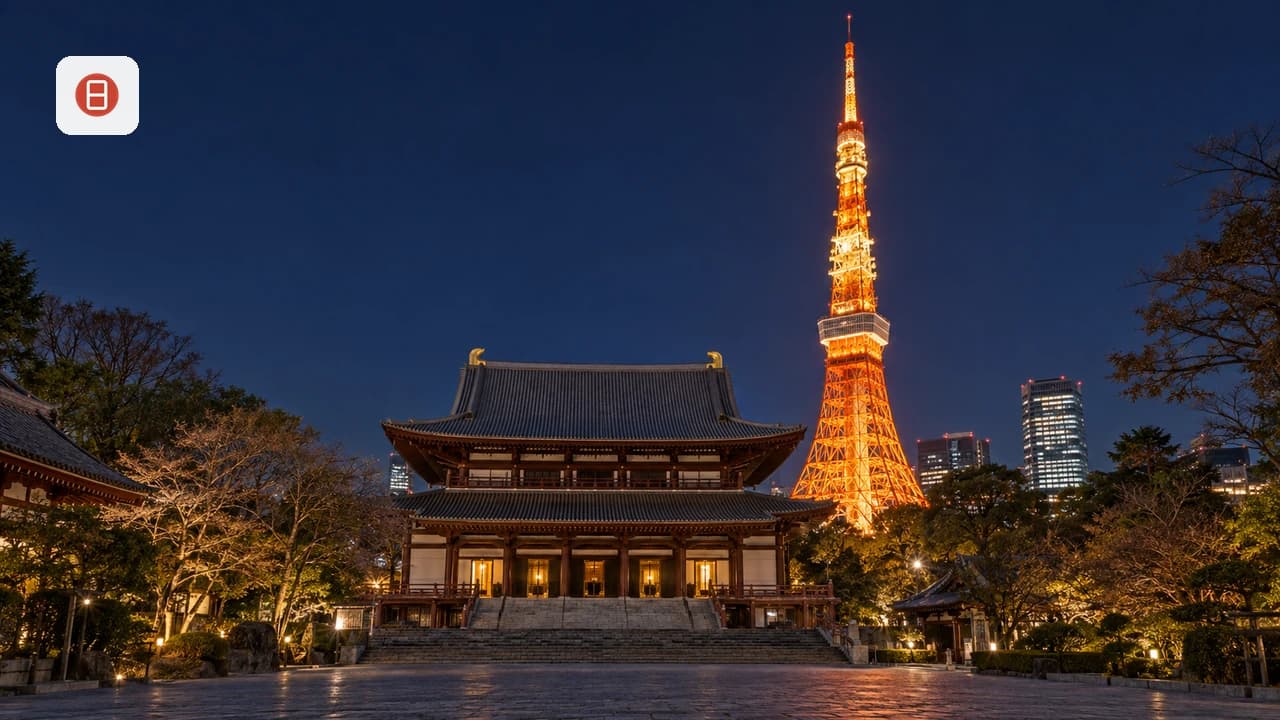
Japanese New Year's traditions center on family, not fireworks. Many households share osechi ryori, a multi-course assortment of preserved dishes, on the evening of December 31 or during the day on January 1. Visitors without a home kitchen can buy a ready-made osechi assortment at a department store food hall in the days before December 31, then eat it at a hotel. Luxury hotels also serve special multi-course dinners on December 31 for travelers who want a sit-down meal instead. After the meal, some Tokyoites walk to a neighborhood temple for joya-no-kane, a bell-ringing ceremony rung 108 times to represent worldly desires. Temples across the city, including Zojo-ji Temple, hold joya-no-kane ceremonies that welcome the public. The other core ritual is hatsumode, the year's first shrine visit, which many people make anytime between the night of December 31 and January 3. Meiji-jingu and Asakusa-jinja draw the largest hatsumode crowds among Tokyo's shrines and temples. At any shrine, drawing an omikuji fortune slip costs ¥100.
What's Open and What's Closed Over the New Year Holiday
Tokyo's holiday shutdown runs longer than a typical public holiday elsewhere, so plan meals and errands around it. Check Tokyo in December: A Complete 2026 Travel Guide for the weather and pre-holiday crowds building toward December 31. Once the calendar flips, Tokyo in January: Weather, Events, and What to Know Before You Go details how the closures ease and hatsumode crowds continue through the first week. When a restaurant is closed, convenience stores and hotel restaurants are the most reliable options. Department store basement food halls reopen on January 2, a few days before most supermarkets restock on January 3 or 4.
| Category | Status | Typical Dates |
|---|---|---|
| Post offices, banks, public offices | Closed | Dec 31 - Jan 2 (sometimes Jan 3) |
| Restaurants and shops | Closed | Dec 31 - Jan 2 (sometimes Jan 3) |
| Supermarkets | Closed | Reopens Jan 3-4 |
| Department stores | Limited | Closed Dec 31 afternoon - Jan 1; basement food floors reopen Jan 2 |
| Museums, galleries, sento | Closed | Dec 31 - Jan 2 (sometimes Jan 3) |
| Public transport, taxis | Open | Runs throughout |
| Hotels, ryokan, guesthouses | Open | Runs throughout |
| Shrines and temples | Open | Busiest Dec 31 night - Jan 3 for hatsumode |
| Hospitals | Open | Runs throughout |
| Convenience stores, fast food | Open | Runs throughout |
Where to Spend New Year's Eve in Tokyo: Shrines, Free Events, and Ticketed Parties
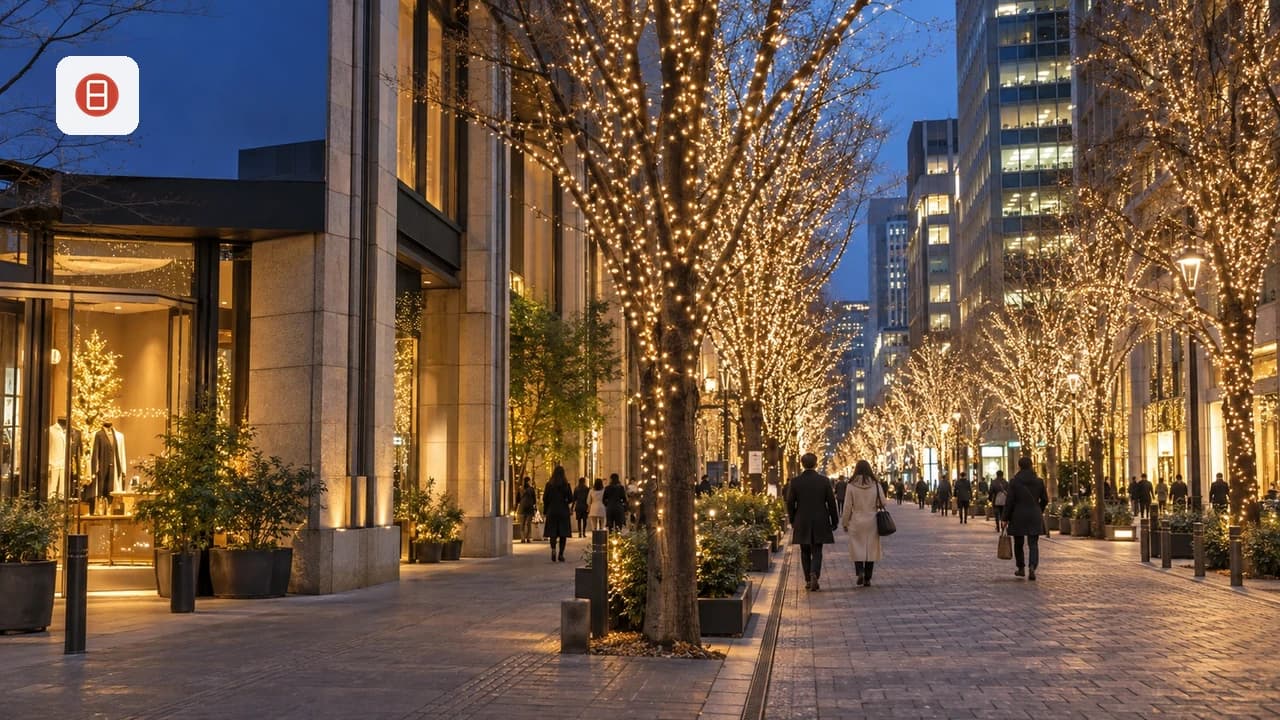
Shrine countdowns, free public events, and ticketed club parties cover most of what Tokyo offers on December 31. Families and first-time visitors generally do best joining a hatsumode crowd at a major shrine, since it's free, safe, and steeped in tradition. Nightlife-focused travelers head to Shibuya or Ebisu, where clubs run countdown parties with DJs and live sets into the early morning. Four of the season's best-known countdown parties, Womb, Circus, OR, and TKNC, all operate in the Shibuya nightlife district, so moving between them is realistic if one line looks too long. Budget-minded travelers who still want a public spectacle can register for the free Happy New Year Tokyo projection-mapping show, which has recently projected onto the Tokyo Metropolitan Government Building. It's one of several options on Tokyo's free activities list that work well when paid attractions are closed for the holiday. Check Go Tokyo's official event listings for this year's registration window and confirmed run time before you count on a spot. Tokyo's largest informal gathering point, the Shibuya Scramble Crossing, has had its official countdown canceled in recent years, with organizers covering the Hachiko statue to discourage crowds. Confirm the current-year status before treating it as your main plan, since the intersection still fills with pedestrians regardless of any organized event. Roppongi's Tokyo Midtown also runs winter illuminations most seasons. Confirm this year's dates on the official Tokyo Midtown site if you want a low-key stop before a countdown venue. For the full year-round lineup beyond New Year's, browse Tokyo's events calendar.
- Families and first-timers: hatsumode at Meiji-jingu or Asakusa-jinja, free and traditional.
- Nightlife travelers: a ticketed club countdown in Shibuya or Ebisu.
- Budget and free-event travelers: Happy New Year Tokyo's projection mapping, with pre-registration required.
- Travelers who want to skip crowds: a neighborhood temple's joya-no-kane instead of Shibuya Scramble Crossing.
Cost and Access Comparison Across New Year's Eve Options
Prices below reflect the most recently published season. They tend to hold steady year to year, but confirm current tickets and hours on each venue's page before booking for December 31, 2026. As a rule, festival-scale events and the countdown cruise sell out fastest, sometimes before the holiday arrives. Walk-up club nights like TKNC and OR usually still have room at the door. TKNC's walk-up price makes it the cheapest ticketed option below, while the Makuhari Messe festival is the most expensive by a wide margin. Book the premium options, the Makuhari Messe festival and the harbor cruise, several weeks ahead. Everything else on the list is realistic to decide on the day.
An omikuji fortune slip at any shrine costs just ¥100, the cheapest option compared to Tokyo's ticketed venues starting at ¥1,900.
| Option | Area | Recent-Season Hours | Recent-Season Price |
|---|---|---|---|
| Happy New Year Tokyo (projection mapping) | Tokyo Metropolitan Government Building | 10 p.m.-12:10 a.m. | Free, pre-registration required |
| TKNC Countdown | TK Shibuya | 10 p.m.-4:30 a.m. | Up to ¥1,900, drinks included |
| OR Countdown | Miyashita Park, Shibuya | 8 p.m. onward | ¥3,000-¥3,500 |
| Unit New Year's Eve Party | Daikanyama | 9 p.m. onward | ¥4,500-¥5,200 |
| Circus Tokyo Countdown | Shibuya | 10 p.m. onward | Around ¥4,377 at the door |
| Liquidroom New Year Festival | Ebisu | 8 p.m. onward | ¥6,000-¥7,600 |
| Womb New Year Countdown | Shibuya | 10:30 p.m.-4:30 a.m. | ¥6,000-¥8,000 |
| Countdown Japan festival | Makuhari Messe | Dec 27-31 | ¥15,000-¥53,000 |
| Tokyo Bay countdown cruise | Hinode Pier | 10:40 p.m.-1:10 a.m. | ¥22,000-¥25,000 |
| Yokosuka Countdown fireworks | Yokosuka | 6 p.m.-1 a.m. | Free |
| Yokohama fireworks and Chinatown countdown | Yokohama | Fireworks from ~7 p.m., ~5-min midnight display | Free |
Day-Trip Alternative: Yokohama's Fireworks and Countdown
Yokohama offers a free alternative when Tokyo's ticketed parties feel like too much commitment or Shibuya's crowds sound exhausting. The city's regular fireworks display gets a special midnight showing on New Year's Eve, launching from the Osanbashi and Shinko piers starting around 7 p.m. That countdown blast lasts about five minutes. Yokosuka runs its own countdown further down the coast, with roughly 500 fireworks between 6 p.m. and 1 a.m., a longer show than Yokohama's five-minute midnight burst. In Yokohama's Chinatown, two temples, Kuan Ti Miao and Mazu, run separate countdown celebrations with lanterns and lion dances. All of it is free, and the crowds tend to be lighter than Shibuya's club district. Since many of Tokyo's own restaurants and shops close from the afternoon of December 31, treating Yokohama as an escape valve also solves the where-to-eat problem for the night. See Winter Day Trips From Tokyo Travel Guide for more escapes from the holiday shutdown.
Yokohama's free fireworks last about five minutes at midnight, while Yokosuka's 500 fireworks continue for seven hours between 6 p.m. and 1 a.m.
Where to Stay and How to Get Around on New Year's Eve Night
Hotels, ryokan, and guesthouses all stay open through the New Year holiday, unlike most restaurants and shops. Basing yourself in Shibuya or Ebisu puts you within walking distance of the night's biggest countdown parties, cutting out any need to catch a last train home. A base near Harajuku puts Meiji-jingu within easy reach instead, if a shrine visit matters more than nightlife. A base in Asakusa works well too, since Asakusa-jinja sits next to Senso-ji Temple. Public transport and taxis keep operating throughout the holiday period. Platforms and shrine approaches get considerably more crowded around midnight and during the first three days of January. Pack for Tokyo's December weather if you'll be queuing outdoors at a shrine or waiting for fireworks, since standing outside after dark gets cold fast. Confirm exact conditions with the Japan Meteorological Agency forecast in the days before your trip.
Mistakes to Avoid on New Year's Eve in Tokyo
A few planning mistakes come up often among visitors spending New Year's Eve in Tokyo for the first time.
- Restaurants often close early on December 31 evening, so treat convenience stores and hotel restaurants as the reliable fallback, not a backup plan.
- Shibuya Scramble Crossing should not be your only plan. The official countdown has been canceled in recent years, and organizers have covered the Hachiko statue in past seasons.
- The countdown cruise and the Makuhari Messe festival both sell out fast; book several weeks ahead rather than waiting until December.
- Happy New Year Tokyo is free, but registration is required; a walk-up does not guarantee entry.
- Supermarkets typically stay closed until January 3 or 4, so pack backup snacks for the days right after the holiday.
- Do not expect fireworks over central Tokyo itself. The city rarely holds its own New Year's fireworks, so Yokohama and Yokosuka are the better bets for a fireworks-centered night.
Frequently Asked Questions
Is Shibuya Scramble Crossing still hosting a New Year's countdown in 2026?
The official Shibuya Scramble Crossing countdown has been canceled in recent years, and organizers have covered the Hachiko statue to discourage large gatherings there. Confirm the current-year status before making it your main plan, since the intersection still fills with pedestrians on the night regardless of any organized event.
How much do Tokyo's New Year's Eve club parties cost?
Recent-season prices ranged from about ¥1,900 at walk-up-friendly clubs like TK Shibuya to ¥6,000-¥8,000 at bigger venues such as Womb and Liquidroom. The multi-day Makuhari Messe festival costs considerably more, from roughly ¥15,000 to ¥53,000 depending on the day. Verify current-year pricing on each venue's ticket page before committing.
What stays open in Tokyo over the New Year holiday?
Shrines, temples, and hotels all stay open over the New Year holiday. So do convenience stores, fast-food restaurants, and public transport. Most shops and restaurants close from December 31 through January 2, and sometimes January 3. Banks and museums follow the same closure window. Department store basement food floors are a useful exception, reopening on January 2 while the main floors stay shut through January 1.
Should families visit Tokyo shrines on New Year's Eve or wait until January 1?
Either works, since hatsumode traditionally happens anytime from the evening of December 31 through January 3. Visiting late on December 31 means joining the joya-no-kane bell-ringing crowds, while a January 1 or 2 visit skips the midnight crush but keeps the festive atmosphere. Meiji-jingu and Asakusa-jinja are the two most-visited options for a first shrine visit in Tokyo.
Is Yokohama a good alternative to Tokyo for New Year's Eve?
Yes, particularly if free fireworks without club crowds sound better than a ticketed party. Yokohama's midnight fireworks display runs about five minutes from the Osanbashi and Shinko piers, and Chinatown adds free countdown celebrations at two temples. It also solves Tokyo's own restaurant closures, since the trip doubles as a night out.
Do you need to book Tokyo's New Year's Eve club parties in advance?
Advance booking matters most for high-demand events. The countdown cruise and the multi-day Makuhari Messe festival have both sold out before the holiday in recent seasons. Walk-up-friendly clubs such as TKNC and OR usually still have space at the door, though arriving early avoids the longest queues.
What should you pack for a Tokyo New Year's Eve countdown?
Pack warm layers for standing outside at a shrine or waiting for fireworks after dark. Check the Japan Meteorological Agency forecast a few days out, since conditions shift quickly in late December. A portable phone charger also helps if you're out past midnight and relying on transit apps to get back to a hotel.
Free: The Tokyo Essentials guide
Top things to do, where to stay, a perfect day plan, getting around, and the best time to go — a Tokyo mini-guide you can take offline.
You might also like
Continue reading
More guides you'll find useful