Korankei Travel Guide 2026: Timing, Access, and Asuke's Old Town
Plan a 2026 trip to Korankei Gorge in Aichi: maple-season dates, bus routes from Nagoya, Asuke's historic townscape, food picks, and mistakes to avoid.
On this page
Last updated September 2026, this guide covers Korankei, a maple-lined gorge in Toyota City, Aichi Prefecture. Roughly 4,000 maple trees line the Tomoe River valley here, and color usually peaks in mid to late November. Reaching it from Nagoya takes about two hours each way, so this guide weighs that travel time against the payoff and covers festival dates, bus routes, and the Asuke Historic Townscape next door.
Korankei at a Glance: What It Is and Whether It's Worth the Trip
Korankei is a maple gorge cut by the Tomoe River at the base of Mt. Iimori, inside Asuke-cho in Toyota City, Aichi Prefecture. About 4,000 maple trees cover the valley, planted gradually since 1634 when Kojakuji Temple's 11th head priest began the practice. Japan's official tourism site profiles the valley among the country's signature autumn-color destinations. Mt. Iimori itself rises 254 meters and takes roughly 15 minutes to climb for a panoramic view over the gorge. Round-trip travel from central Nagoya runs close to four hours door to door. Treat this as a half-day or full-day trip rather than a quick stop. The payoff is strongest in November. Outside maple season, Korankei is a quieter river valley with fewer specific reasons to visit. This guide suits travelers who already know Nagoya's headline sights and want a trip built around real logistics, not just photos.
Timing Your Visit: The Korankei Maple Festival
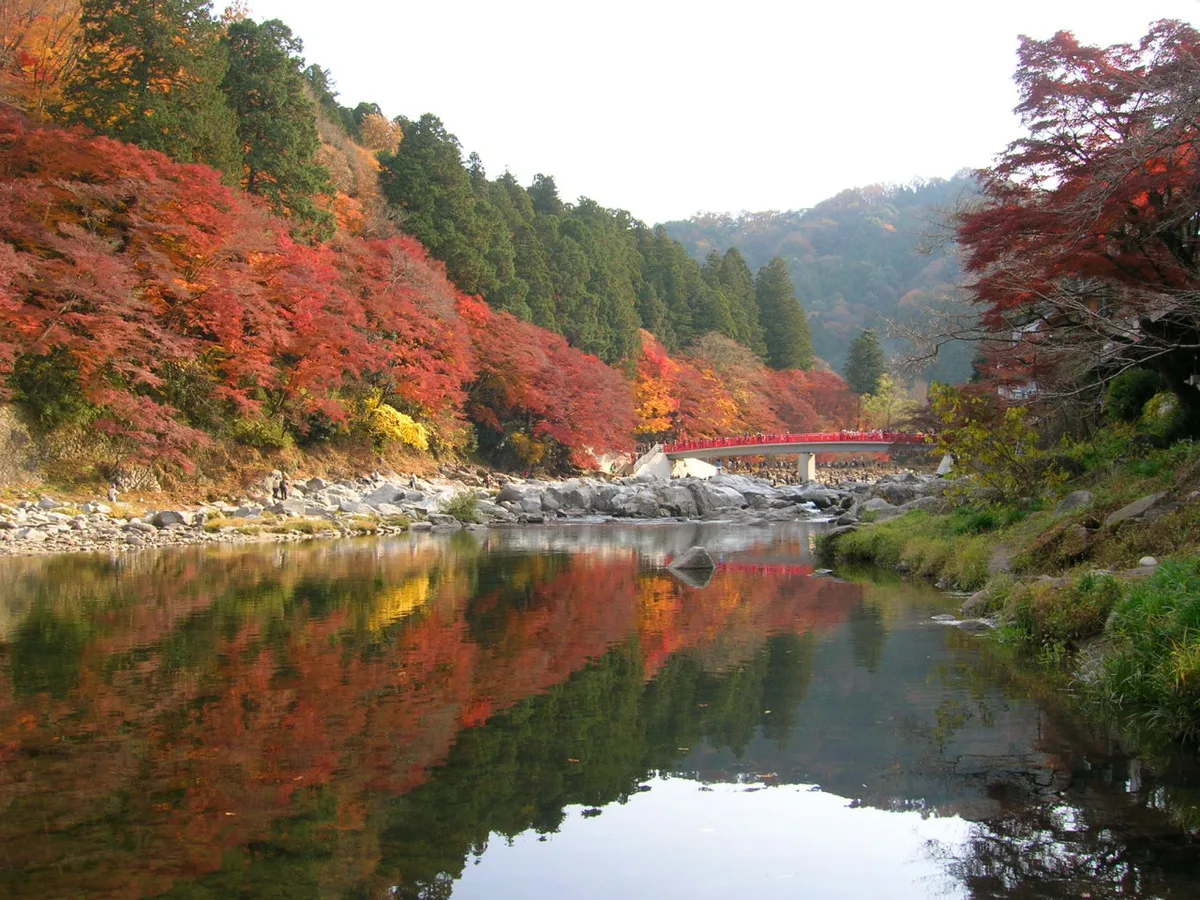
Korankei's 2026 Maple Festival runs November 1 through November 30, matching the gorge's usual mid-to-late-November color peak. Weekday mornings draw the lightest crowds; weekend afternoons fill the riverside paths and the parking lots behind them. Nightly illumination lights Mt. Iimori from sunset until 21:00 for the entire festival month, turning the maples gold against the dark ridge. Evening visitors can add a wish candle to the riverbank displays for 500 yen per candle on illumination weekends. Check the site's Nagoya Weather By Month Travel Guide breakdown before booking, since conditions shift from year to year. Aichi's regional tourism guide is worth a scan too, for festival updates closer to your travel dates. Late in November, the Obara Shikizakura grove pairs winter cherry blossoms with the last of the maple color. Some Nagoya bus tours cover both stops on the same day. For broader seasonal planning, see the Best Time to Visit Nagoya 2026: 10 Seasonal Tips and Insights guide, which covers this shoulder-season overlap in more depth. Momiji Festival is one of several major seasonal events around the city; the Nagoya Festivals Guide: 8 Key Insights for Travelers tracks the rest of the year's calendar. Spring brings light-purple katakuri blooms to Mt. Iimori's northwest slope in March. Fresh greenery fills the valley through summer, when locals cool off in the river shallows. Winter turns the gorge quiet, with occasional snow framing the vermillion Taigetsukyo Bridge, and Asuke Hachimangu Shrine hosts a Nanakusa Festival in January.
Top Things to Do in Korankei Gorge
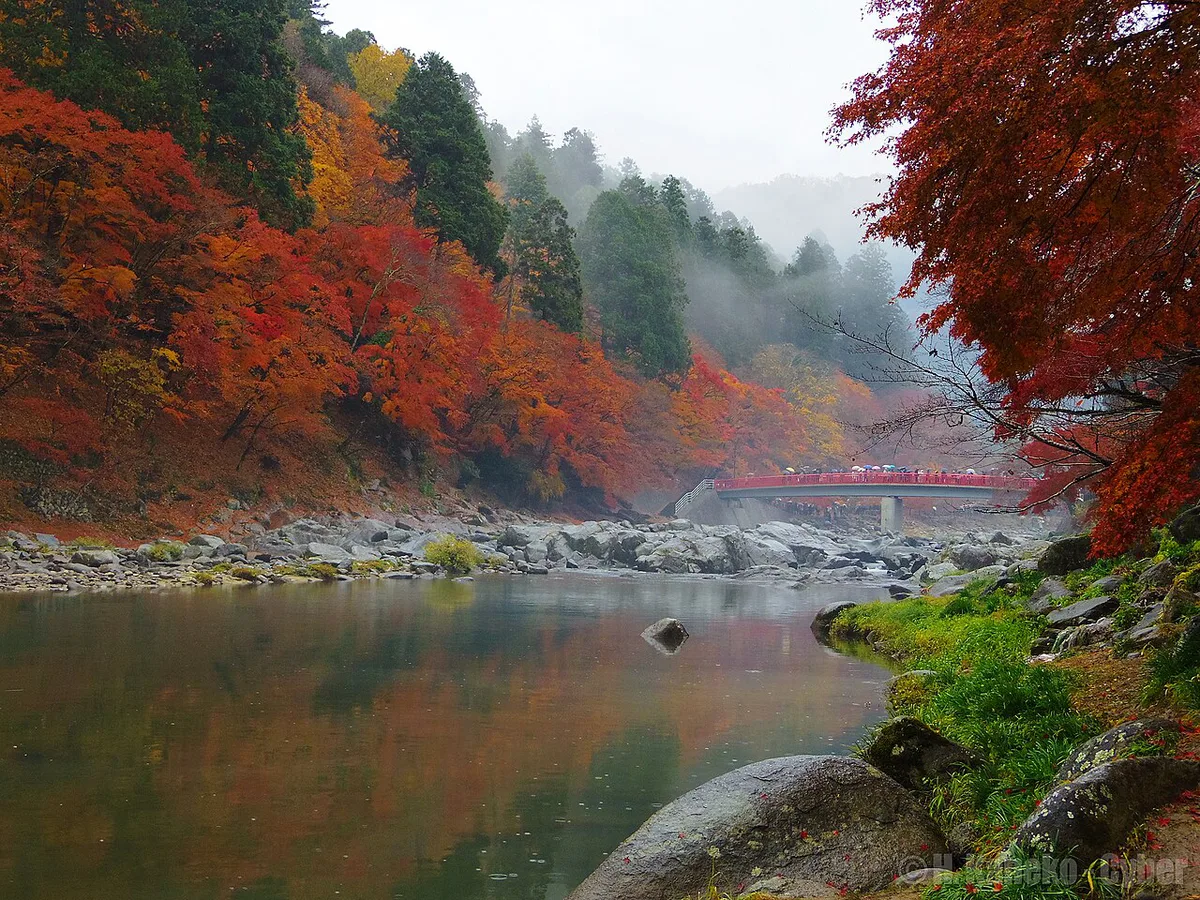
Four stops anchor a visit to the gorge itself, each reachable on foot from the main riverside path. The best color usually appears along paths on the western and southern sides of Mt. Iimori, the same stretch that includes Taigetsukyo Bridge.
- Taigetsukyo Bridge: the vermillion arch over the Tomoe River and the gorge's most-photographed span.
- Kojakuji Temple: built in 1427 at the foot of Mt. Iimori. Its 11th head priest, San-ei, began planting maples along the approach in 1634, creating today's tunnel of leaves. About 1,000 bamboo lanterns line this same approach on illumination weekends, 18:00 to 20:30.
- Mt. Iimori: a 254-meter rise with a roughly 15-minute climb to panoramic views over the valley and river.
- Sanshu Asuke Yashiki: a living-history museum open 9:00 to 17:00, with last entry at 16:30. It's closed Thursdays outside Golden Week and November. Admission is 300 yen, and workshops include hand-weaving, indigo dyeing, and straw-sandal making.
Exploring Asuke Historic Townscape
A short walk from the gorge leads into Asuke's old town, and it rewards travelers who budget time beyond the maples. In 2011, the district became the first area in Aichi Prefecture named an Important Preservation District for Groups of Traditional Buildings, protecting roughly 2 kilometers of Edo-era streets. Castle enthusiasts comparing options closer to downtown should read the Nagoya Castle guide for the city's better-known rebuild.
- Asuke Castle: a reconstructed mountaintop keep at 301 meters, about a 40-minute walk from the gorge. Restoring a mountaintop castle is rare in Japan, and this keep was rebuilt after an archaeological excavation confirmed its original layout.
- Former Suzuki Residence: a merchant house built in 1776 and now a national Important Cultural Property, with 16 original buildings still standing on the property.
- Asuke Hachimangu Shrine has been venerated since the town's days as a rest stop for travelers. It's known locally for amulets said to protect healthy feet, and its main hall is a national Important Cultural Asset.
- Hirose Shigemitsu Cutlery: a blacksmith shop operating for more than 200 years. Visitors can hammer a letter-opener knife from a nail under the current, seventh-generation smith.
- Asuke Blacksmith Live Cafe: food paired with evening live music inside a working smithy-style space near the historic townscape.
- Manlyn Bookstore and Kura no Naka Gallery: a book-and-coffee stop along the old road through Asuke.
What to Eat: Korankei's Local Delicacies
Asuke's food identity centers on mountain-village staples rather than city dining, and most of it clusters around Sanshu Asuke Yashiki and the riverside path. None of these spots require a reservation for a quick bite, though Ichinotani gets busy during peak illumination evenings.
- Gohei-mochi: a grilled rice cake on a skewer, coated in a sweet-salty miso glaze and the regional specialty most guides mention first.
- Ayu shioyaki: salted, grilled sweetfish from the Tomoe River, served at Sanshu Asuke Yashiki's on-site restaurant alongside the gohei-mochi.
- Hinoki Teahouse and Katakago Cafe: both sit inside Sanshu Asuke Yashiki's gates, with Katakago roasting its own coffee beans on-site.
- ZiZi Workshop: a short walk from the gorge, selling handmade hams and sausages made with a range of spices.
- Korankei Ichinotani: a riverside restaurant inside the gorge itself, open since 1965.
- Kawamuraya Nichigetsu Monaka: a confectionery making its adzuki-bean wafer sandwiches since 1916, a short walk from the gorge.
Logistical Survival Guide: Getting There and Around
Two train-and-bus routes cover most visitors, and a guided bus tour covers the rest. Parking near the gorge is limited during festival weekends, which is part of why guides recommend public transit or a tour bus over driving. Both routes originate near JR Nagoya Station, so the choice mostly comes down to which line connects best with your accommodation. Route A, via Higashi-Okazaki, is the more common choice and runs frequent buses, though it sees more traffic than Route B. Route B, via Toyota-shi Station, has a shorter bus leg and suits travelers already based in eastern Nagoya. Either public-transit route costs under 2,000 yen one-way. The guided tour's 9,000 yen fee is mostly a convenience premium for guaranteed seating and the Obara stop. On peak weekends, traffic can add one to two hours onto either bus ride, so build that into a return-train or dinner-reservation schedule. The Meitetsu Kanko Bus tour departs Nagoya at 8:30 and returns around 16:20, with a light meal included and a stop at Obara Shikizakura. Booking that tour guarantees a seat during the weekends when public buses run standing-room only. Travelers basing themselves in the city can cross-reference the wider Nagoya attractions guide for pairing options on non-Korankei days. Those splitting a week between nature and film sets often add the Ghibli Park from Nagoya Guide: 10 Essential Tips to the same itinerary. A four-hour round trip can feel like too much for one day. Consider the closer Nabana no Sato Guide: Illumination Dates, Tickets, and Getting There from Nagoya instead, a nighttime alternative nearer the city. Nabana no Sato itself is run by Nagashima Resort, a hot-spring and shopping complex south of Nagoya. Travelers staying into late November or December should also read Nagoya in Winter: A Practical Guide to Weather, Festivals, and Snow Day Trips for what changes once the leaves are down.
Four hours door to door from Nagoya plus Sanshu Asuke Yashiki's last entry at 16:30 requires arriving before 9:00 AM to see both the maples and the museum.
| Route | Path | Total Time | Approx. Fare |
|---|---|---|---|
| Route A | Meitetsu Nagoya Line to Higashi-Okazaki Station, then Meitetsu Bus to Asuke/Korankei | About 1 hr 40 min | ¥1,700 |
| Route B | Subway/Meitetsu to Toyota-shi Station, then Meitetsu Bus to Asuke/Korankei | About 2 hr | ¥1,800 |
| Guided tour | Meitetsu Kanko Bus day tour from Nagoya Station's Meitetsu Bus Center | About 7 hr 40 min round trip | ¥9,000 |
Mistakes to Avoid in Korankei
A handful of avoidable mistakes account for most of the frustration travelers report about Korankei, and most come down to timing.
- The traffic trap: arriving at midday on a peak-season Saturday risks bus jams that add one to two hours to the ride. Arrive before 9:00 AM, or wait until after the tour buses leave in late afternoon.
- No cash: many food stalls and small shops in Asuke are cash-only. Carry yen rather than counting on cards.
- The last-bus miscalculation: illumination runs until 21:00, but the last return bus may leave earlier. Check the return schedule before wandering off for the night views.
- Skipping Asuke entirely: many day-trippers see only the bridge and turn back, missing the historic townscape and its castle, shrine, and merchant houses.
Frequently Asked Questions
How long should you plan to spend at Korankei?
Budget four to six hours for the gorge, Sanshu Asuke Yashiki, and a walk through Asuke's old town. Add another two hours each way for the trip from Nagoya, so most travelers treat this as a full-day outing.
What's the best way to get to Korankei from Nagoya?
Train plus bus covers it. Via Higashi-Okazaki Station, the trip runs about 1 hour 40 minutes. Via Toyota-shi Station, it runs about 2 hours. A Meitetsu Kanko Bus tour also runs direct from Nagoya Station for travelers who want a guaranteed seat during peak weekends.
Is there an entrance fee for Korankei?
The gorge itself is free to enter. Sanshu Asuke Yashiki charges 300 yen admission, and parking near the gorge is paid during the festival period.
When is peak autumn color at Korankei?
Color typically peaks in mid to late November, matching the 2026 Maple Festival dates of November 1 through 30. Nightly illumination runs from sunset until 21:00 during that same window.
Can you combine Korankei with Obara Shikizakura in one trip?
Yes, late-November timing overlaps both events, and some Meitetsu Kanko Bus day tours stop at Obara Fureai Park before continuing to Korankei. Independent travelers can do the same pairing by car or taxi, though public transit between the two takes extra planning.
What should you pack for a day at Korankei?
Mornings and evenings near the river run cool even in a mild Nagoya November, so layers help. Comfortable walking shoes help on the gravel paths around Kojakuji and the climb up Mt. Iimori. Cash covers most food stalls and the Sanshu Asuke Yashiki admission fee.
Free: The Nagoya Essentials guide
Top things to do, where to stay, a perfect day plan, getting around, and the best time to go — a Nagoya mini-guide you can take offline.
You might also like

Continue reading
More guides you'll find useful