Nabana no Sato Guide: Illumination Dates, Tickets, and Getting There from Nagoya
Plan a nabana no sato visit with 2026 illumination dates, ticket prices, the yen voucher system, and the fastest bus and train routes from Nagoya.
On this page
Last updated September 2026, this nabana no sato guide covers ticket prices, illumination dates, and the fastest route from Nagoya Station. Nabana no Sato is Kuwana City's flower park inside Nagashima Resort, just across the Mie-Aichi border from Nagoya. Its winter light show uses 5.8 million LEDs spread across flower gardens, an open-air onsen, and a rotating observatory.
What Is Nabana no Sato?
Nabana no Sato covers about 230,000 square meters of gardens, greenhouses, and lakeside paths inside Nagashima Resort. The park sits in Kuwana City, Mie Prefecture, on the Mie side of the Mie-Aichi border. It sits roughly 35 minutes from Nagoya Station by direct bus. Flowers rotate through four seasons here, and begonias, tulips, hydrangeas, and cherry blossoms each take a turn as the headline bloom. A traditional Japanese Garden and an Andes-themed greenhouse round out the grounds. Restaurants and shops line a central lake at the heart of the park, giving the walking loop a natural midpoint to pause. Free outdoor foot baths and the separate Satonoyu onsen give visitors a place to warm up between garden sections. From mid-October through late spring, the grounds add a nighttime illumination built from 5.8 million LEDs. A walk-through corridor called the Tunnel of Light anchors the display. Pair the visit with a morning at Nagoya Castle before heading south. For the rest of the city's sights, check the Nagoya attractions guide.
Seasonal Highlights Beyond the Winter Illumination
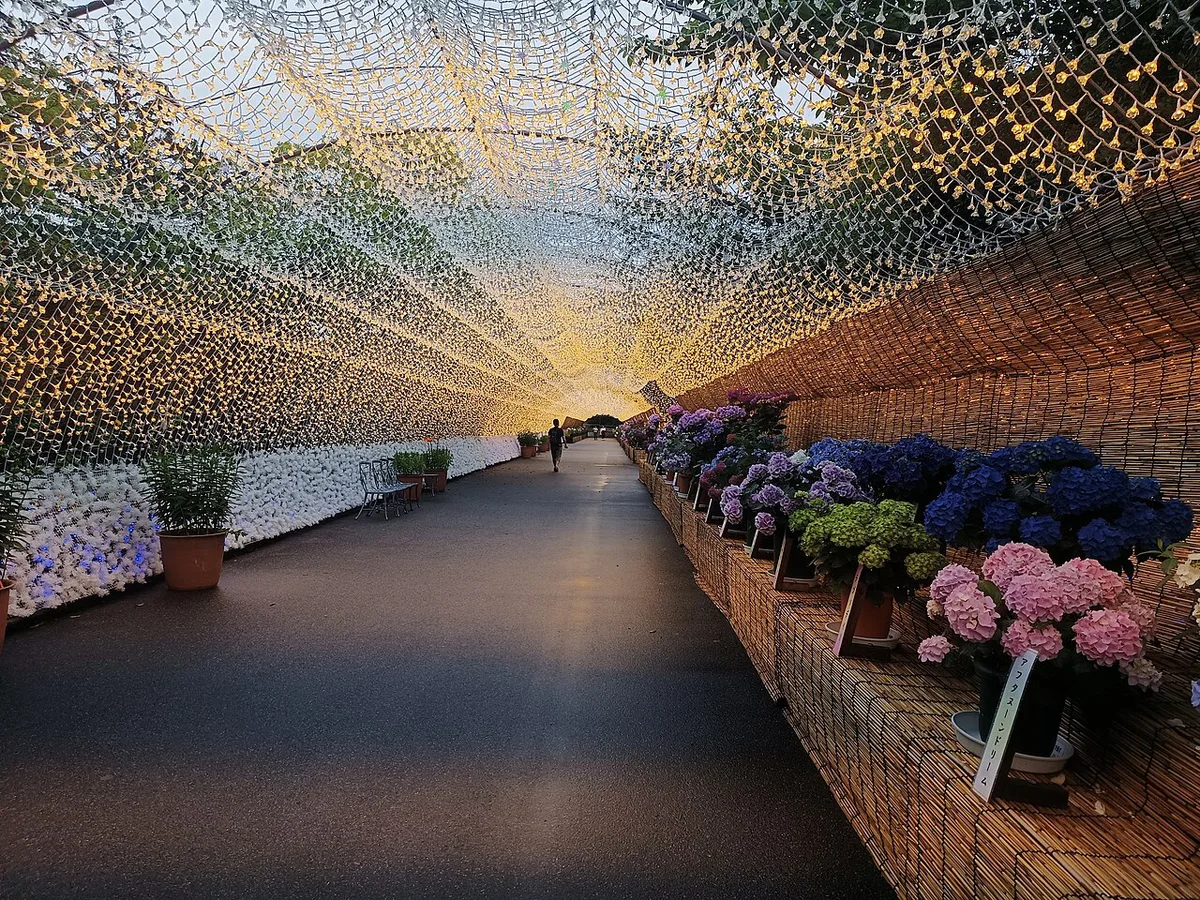
Nabana no Sato keeps a flower calendar that runs well beyond the winter illumination. Spring brings plum and cherry blossoms alongside tulip and nemophila fields, often called baby blue eyes. Hydrangeas take over first in summer, with irises and dahlias following through the humid months. Autumn adds turning maples and late-season flowers as the park shifts toward its light-up season. A rose garden within the grounds also opens seasonally in spring and autumn. The garden layout keeps each seasonal section separate, so a single loop through the grounds naturally moves between blooms without backtracking. City-wide festival dates for those same weeks are listed in the Nagoya Festivals Guide: 8 Key Insights for Travelers. Travelers who want mountain foliage instead of a flower park can compare notes with Korankei's maple valley. Indoors, the Begonia Garden holds more than 12,000 flowering plants on display all year, regardless of the outdoor season.
- Spring: plum blossoms, cherry blossoms, tulips, and nemophila fields.
- Summer: hydrangeas first, then irises and dahlias through the humid months.
- Autumn: turning maples and late-blooming flowers lead into the light-up season.
- Year-round: the indoor Begonia Garden displays more than 12,000 flowering plants.
Inside the Winter Illumination: Tunnel of Light and Fuji Island
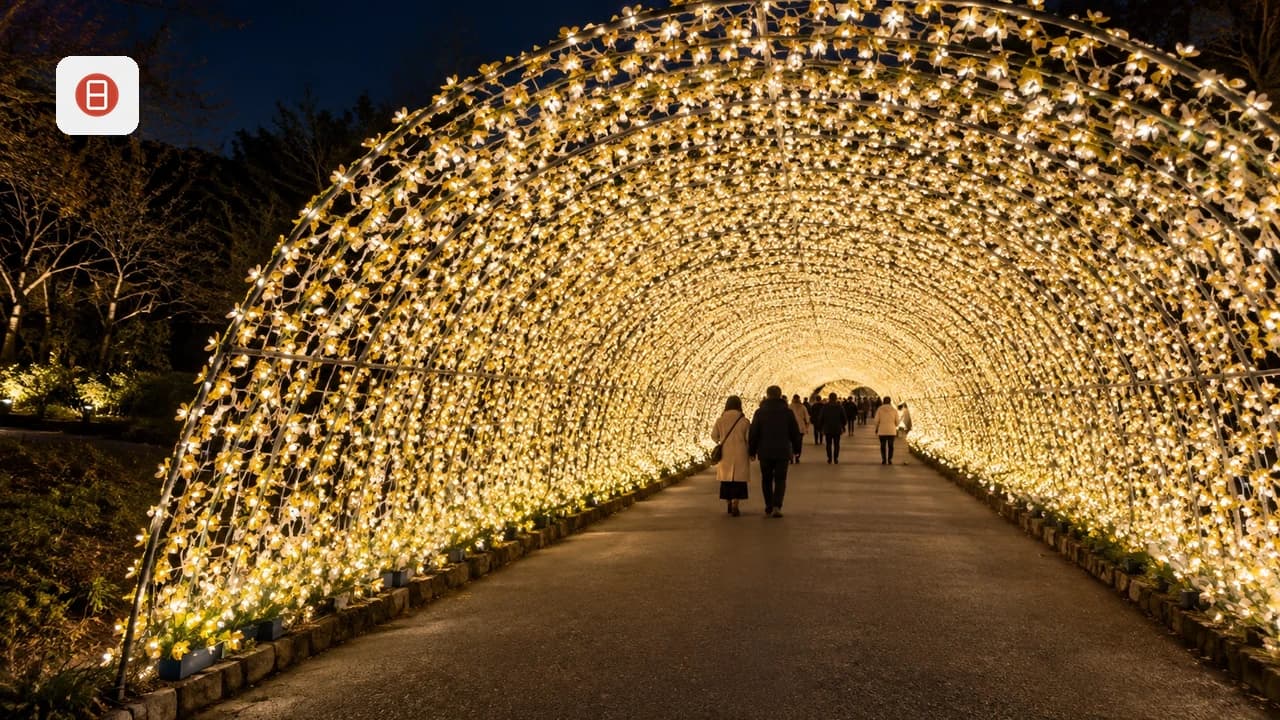
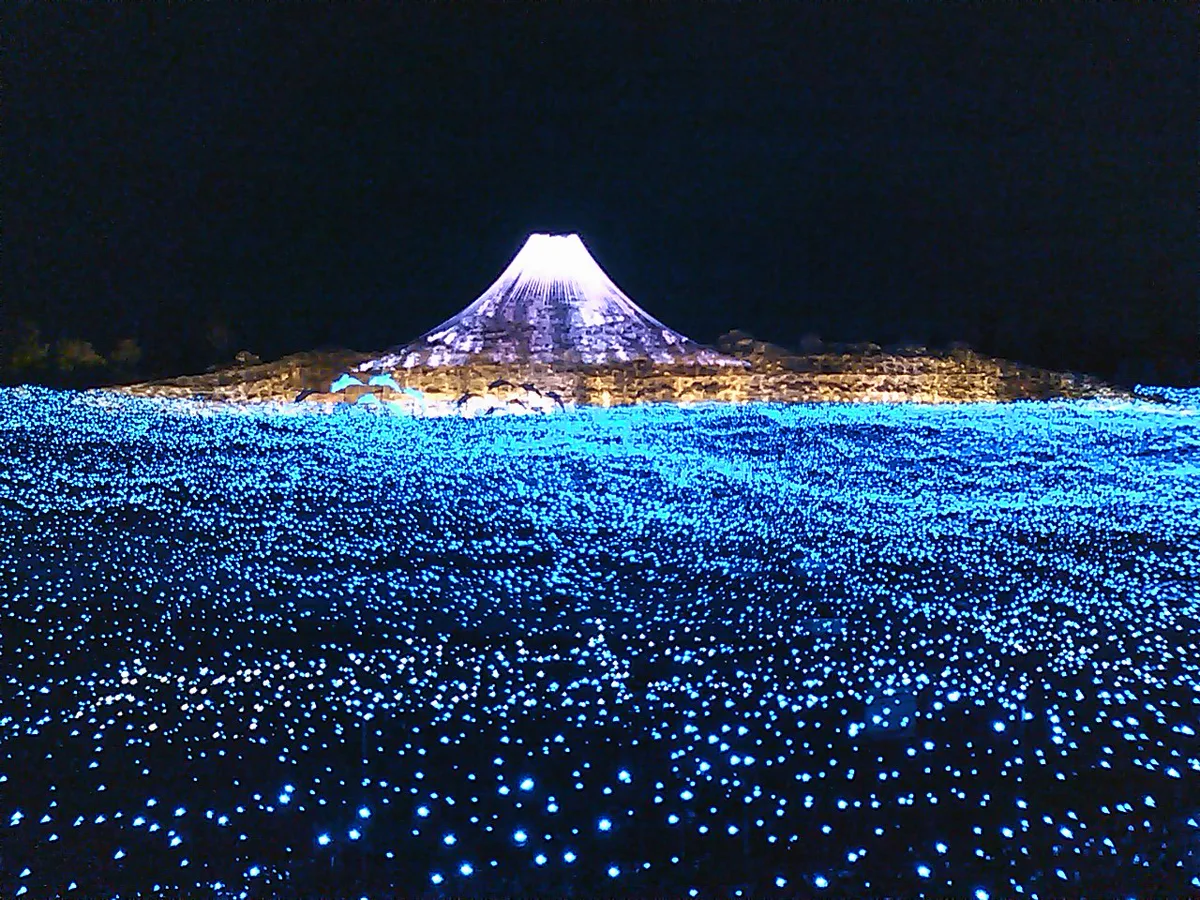
The winter illumination is Nabana no Sato's best-known season, running from mid-October into late spring each year according to the Japan Travel park listing. A 200-meter Tunnel of Light corridor forms the signature photo stop, lit end-to-end in shifting colors. A separate installation called the Cloud of Lights adds another lit section beyond the tunnel. One major garden area gets rebuilt as a themed light display each season, and the theme changes annually. For a wider view, Fuji Island lifts visitors 45 meters above the gardens on a rotating observation deck. That ride adds an extra fee on top of standard park admission. Seating and snack service stay available at the observatory deck itself. Evening crowds cluster hardest near the tunnel entrance and the themed garden, so the quieter greenhouse sections stay easier to move through even at peak hours.
- Past illumination themes have included Nature, Waterfalls, Aurora, and Kumamoto Castle.
- Confirm the current year's theme on the Nagashima Resort official site before visiting.
- Fuji Island's 45-meter observation deck gives a 360-degree view of the grounds.
Getting to Nabana no Sato from Nagoya
Four practical routes connect Nagoya to Nabana no Sato, each suited to a different kind of traveler. Meitetsu's direct bus leaves from the Meitetsu Bus Center at Nagoya Station and takes about 35 minutes. That makes it the simplest option for anyone without a rail pass. Kintetsu Line trains run to Kintetsu Nagashima Station, followed by a shuttle bus that covers the last leg in about 10 minutes for roughly ¥220 per person. A taxi from the same station costs about ¥970 one-way, a reasonable option for a small group splitting the fare. Travelers connecting straight from a flight can take a direct bus from Chubu Centrair Airport, a roughly 50-minute ride that skips central Nagoya entirely. Drivers on the expressway should take the Wangan-Nagashima or Nagashima interchange, where on-site parking covers both tour buses and about 3,000 regular cars. Highway drivers coming from the Nagoya side typically merge onto local expressways before reaching either interchange, adding a small buffer to the estimated drive time. Travelers coming from the Kansai side of Japan can also reach the park by JR or Kintetsu Line from Tsu Station in about 50 minutes. Return buses and trains run on similar schedules in the opposite direction, so build a similar travel-time buffer for the trip back to Nagoya.
| Route | Travel Time | Approx. Cost |
|---|---|---|
| Meitetsu Bus from Nagoya Station | ~35 minutes | One bus fare |
| Kintetsu Line + shuttle bus | 10-min shuttle leg | ~¥220 shuttle fare |
| Taxi from Kintetsu Nagashima Station | Short ride | ~¥970 one-way |
| Direct bus from Chubu Centrair Airport | ~50 minutes | One bus fare |
Address, Hours, and Parking
Nabana no Sato's official address is 270 Komae, Nagashima-cho, Kuwana-shi, Mie-ken, useful to plug directly into a car navigation system or ride-share app. Standard opening hours run from 9:00 to 21:00 on weekdays, though the park adjusts hours seasonally around the illumination and flower calendars. On-site parking covers both tour buses and about 3,000 regular cars, so arriving by car rarely means circling for a spot even on illumination nights. Ride-share pickup near the main entrance is straightforward given the size of the on-site parking area. The park's phone line, +81-594-41-0787, does not take English-language inquiries, so email or the official website works better for questions.
Tickets, Costs, and the 1,000 Yen Voucher System
Admission to Nabana no Sato changes with the season, so the exact yen amount is worth checking before departure. Outside the illumination period, the Nagashima Resort official site lists standard entry at around ¥1,500 per adult. During the winter light-up, published rates have run roughly ¥2,300 to ¥2,500 per adult, reflecting the added illumination program. Entry prices can shift again year to year, so cross-check the figures above against the official site before finalizing a travel date. Every ticket, regardless of season, comes bundled with ¥1,000 in vouchers. That value splits into two ¥500 coupons redeemable inside the park. Spend them where the value is highest rather than letting them expire unused. Nagashima Beer Garden accepts them toward its sit-down local-brew menu. Sit-down counters across the park's eight restaurants, serving Japanese, Chinese, and Western dishes, take them as well. Gift shops near the main gate are the easiest fallback if dining plans do not line up with voucher timing. Keep the ticket stub handy, since some counters ask to see it before accepting a voucher. Visiting between December 23 and 25 requires buying tickets in advance, since the gate does not sell same-day entry across those three dates.
December 23 through 25 requires advance tickets and draws the season's heaviest crowds, so plan carefully if booking those dates.
| Season | Adult Admission | Included Voucher |
|---|---|---|
| Outside illumination season | ~¥1,500 | ¥1,000 (two ¥500 coupons) |
| Winter illumination season | ~¥2,300-¥2,500 | ¥1,000 (two ¥500 coupons) |
Is Nabana no Sato Worth the Trip?
The value of the detour to Kuwana depends on travel style more than budget. Crowd-averse travelers should treat weekends with caution. Local accounts describe weekends, especially the pre-Christmas stretch, as the busiest days of the season. Anyone tracking a strict no-extra-fees budget may want to skip the Fuji Island surcharge and stay at ground level. Photographers, couples, and families based in Nagoya get the clearest payoff from an evening built around the Tunnel of Light and the themed garden. Solo travelers on a tight schedule may prefer folding the visit into a broader Nagoya itinerary rather than dedicating a full evening to Kuwana alone. Budget 2 to 3 hours inside the park itself. Add about 1.5 hours of total travel time each way from central Nagoya. Checking the Best Time to Visit Nagoya 2026: 10 Seasonal Tips and Insights guide first helps line up the trip with clearer skies and lighter crowds.
Timing Your Visit: The Sunset Strategy and Crowd Patterns
Arrive 30 to 60 minutes before the official lighting-up time to see the flower gardens in daylight before the LEDs take over. Checking sunset time for the visit date helps calibrate that arrival window more precisely, since lighting-up time typically follows shortly after dusk. Photographers gravitate toward the Tunnel of Light right at lighting-up time, so arriving slightly earlier secures a clearer sightline before the crowd thickens near the entrance. Weekends, especially the weeks around December, draw the heaviest crowds of the entire illumination run. A weekday evening spreads the walking loop out more comfortably and cuts down on wait times at the tunnel entrance.
Arriving 30 to 60 minutes before lighting-up gives photographers time before crowds arrive, but Meitetsu's 35 minutes from Nagoya Station means leaving much earlier than you might initially plan.
Dining, Layers, and Other Practical Notes
Restaurants inside the park fill up fast in the minutes right after lights-on. Eat either just before that rush or well after it clears to skip the wait. Vending machines and covered rest areas near the main gate offer a faster option for anyone who would rather not wait for a table at all. Nagashima sits in open, waterside terrain, and winter nights there run noticeably colder than downtown Nagoya. Layer up beyond what feels necessary in the city center, since the gardens offer little shelter from the wind. The Nagoya Weather By Month Travel Guide guide is worth checking before packing for the trip. Broader cold-weather planning for the rest of the stay sits in the Nagoya in Winter: A Practical Guide to Weather, Festivals, and Snow Day Trips guide.
Nearby Stops to Round Out a Nagashima Resort Day
Nabana no Sato sits inside the larger Nagashima Resort complex, so one visit can easily expand into a full day. Nagashima Spa Land, the resort's amusement park, sits within the same complex for travelers who want rides before or after the gardens. Mitsui Outlet Park Jazz Dream Nagashima adds an afternoon of shopping on the same grounds. Combining the flower park with the amusement park or the outlet mall works best when starting the illumination-side visit no later than late afternoon. Travelers stacking multiple day trips from Nagoya often pair this one with the Ghibli Park day trip guide for a two-attraction week.
Frequently Asked Questions
How much does it cost to visit Nabana no Sato?
Prices shift with the season, so confirm the current year's rate before departure. Nagashima Resort's official site lists roughly ¥1,500 per adult outside the illumination period. During the winter light-up, published rates have run closer to ¥2,300 to ¥2,500. Every ticket includes ¥1,000 in vouchers split into two ¥500 coupons.
When does the Nabana no Sato winter illumination run?
Winter illumination typically starts in mid-October and continues into late spring. Exact opening and closing dates shift slightly year to year, so check the official Nagashima Resort site before booking transport. Weekends and the weeks around Christmas draw the heaviest crowds of the season.
What is the fastest way to reach Nabana no Sato from Nagoya?
Meitetsu's direct bus from Nagoya Station is the fastest single-transfer option at about 35 minutes. Kintetsu Line trains plus a 10-minute shuttle bus work well for anyone holding a Kintetsu rail pass. Travelers arriving by air can also take a roughly 50-minute direct bus from Chubu Centrair Airport.
Can the included ticket vouchers be spent on food?
Yes, the ¥1,000 in vouchers included with every ticket work at most sit-down restaurants inside the park. That includes Nagashima Beer Garden and the park's eight Japanese, Chinese, and Western dining counters. Gift shops near the main gate accept the vouchers too, which helps if dining plans and voucher timing do not line up.
Is Nabana no Sato worth visiting outside the winter illumination?
Yes, the flower calendar runs year-round with a different headline bloom each season. Spring brings cherry blossoms and tulips. Summer brings hydrangeas, irises, and dahlias. The indoor Begonia Garden stays open year-round with more than 12,000 flowering plants, regardless of the outdoor season.
How much time should visitors plan for a Nabana no Sato day trip?
Budget 2 to 3 hours to walk the gardens and see the illumination itself. Add roughly 1.5 hours of total travel time each way from central Nagoya. A full day that also folds in Nagashima Spa Land or the outlet mall next door can easily run 6 hours or more.
Does Nabana no Sato require advance tickets?
Standard visits generally do not require advance booking outside specific blackout dates. December 23 through 25 is the exception. The gate sells no same-day tickets during that window, so buy in advance for those three dates.
Free: The Nagoya Essentials guide
Top things to do, where to stay, a perfect day plan, getting around, and the best time to go — a Nagoya mini-guide you can take offline.
You might also like


Continue reading
More guides you'll find useful