

Tokoroten in Enoshima: Where to Find the Island's Seaweed Jelly Noodles
Find tokoroten in Enoshima: where to eat it on Benzaiten Nakamise-dori and near the Iwaya Caves, what it costs, and how the tentsuki press works.
On this page
Last updated July 2026. Tokoroten enoshima means cold agar-jelly noodles pressed from tengusa seaweed and served tart with vinegar and soy sauce. Stalls along Benzaiten Nakamise-dori sell it in paper cups, and quieter teahouses near the Iwaya Caves offer a seated version with water views.
What Is Tokoroten? Enoshima's Seaweed Jelly Noodle Tradition
Enoshima is a small island in Sagami Bay, part of Fujisawa city in Kanagawa Prefecture, and the center of the Shonan beach resort area. The island draws day-trippers largely for its beaches and closeness to Tokyo and Yokohama, with tokoroten stalls fitting into that same summer visit. Tokoroten is a chilled, noodle-like dish pressed from set agar jelly, made by boiling tengusa seaweed until it thickens. Tengusa grows along the Shonan coast, the stretch of Sagami Bay that includes Enoshima. Fishermen there have long harvested it for tokoroten. Records place tokoroten in Japan for roughly a thousand years. The dish is thought to have arrived from China during the Nara period. It became a common summer snack during the Edo period, sold near workshops and festival stalls. Tokoroten can also be served hot, as a warm solution instead of a set jelly. Enoshima's summer stalls sell the cold version almost exclusively. The texture holds firmer than Western gelatin desserts. The noodles arrive cold, making them a practical stop after the climb up Enoshima's stone steps. Tokoroten sits within a wider lineup of Enoshima food specialties sold along the same streets.
Where to Eat Tokoroten on Enoshima
Benzaiten Nakamise-dori carries the highest concentration of tokoroten stalls on the island. This stone-paved street runs from the bronze torii at the entrance toward the shrine's vermilion torii and Zuishinmon gate. Vendors here sell tokoroten already seasoned in disposable cups, meant to be eaten standing while browsing other stalls. The same stretch carries tako senbei street food, so budget a few extra minutes to compare both. Traditional teahouses sit further along, toward the Iwaya Caves at the island's far end. These chaya serve tokoroten at low tables, often with a water view, closer to the pace of Enoshima's ocean-view cafes. Choose Nakamise-dori for a fast bite between stalls, or a teahouse for a seated rest before or after the caves.
- Short on time: pick a Nakamise-dori stall for a cup you can eat while walking.
- Want a seat and a view: pick a teahouse near the Iwaya Caves.
- Curious about the tentsuki press: ask at a teahouse, since presses show up there more often than at walk-up stalls.
A Walking Route From the Bronze Torii to the Teahouses Near Iwaya Caves
The route from the island's entrance to the Iwaya Caves passes every major tokoroten stop in order, which makes it easy to plan around. Tokoroten availability is densest right after the bronze torii, then thins out until the teahouses reappear near the caves.
- Cross the Enoshima Bentenbashi bridge from the mainland side onto the island.
- Pass through the bronze torii, where Benzaiten Nakamise-dori's stalls begin, tokoroten included.
- Continue to the vermilion torii and Zuishinmon gate, marking the entrance to Enoshima Shrine.
- Pass Hetsunomiya, Nakatsunomiya, and Okutsunomiya, the shrine's three sub-shrines, as the path climbs higher.
- Reach the quieter teahouses toward the island's far end, near the Iwaya Caves, where seated tokoroten service is more common.
The Tengusa Connection: From Shonan Coast to Your Cup
Tengusa is the seaweed behind tokoroten, and it grows on rocky seabeds along the Shonan coast around Enoshima. Harvesters gather it in warmer months, then dry and boil it to release its natural agar. The boiled liquid gets strained and left to cool, setting into a firm block. That block becomes the jelly a tentsuki press later turns into noodles. Modern commercial agar, sold as kanten, is now mostly made from a related seaweed called ogonori rather than tengusa. Tokoroten served fresh on Enoshima keeps the older, more direct link to the coastline outside the shrine gates. Unlike gelatin desserts made from animal collagen, tokoroten's agar base comes entirely from seaweed. That plant origin is part of why the texture holds firmer than typical gelatin. Jelly firmness also varies by shop, since boiling time for the tengusa is not identical everywhere.
Kanto-Style Tokoroten: What the Vinegar and Soy Sauce Taste Like
Enoshima follows the Kanto region's tokoroten tradition, where the seasoning is savory rather than sweet. Expect vinegar and soy sauce, not the sweet kuromitsu syrup used in the Kansai region. Order at any Enoshima stall or teahouse and the savory version arrives by default. Ask before eating if you want the sweeter Kansai style, since staff may not offer kuromitsu without a request.
- Vinegar and soy sauce: the standard savory base
- Karashi mustard: sometimes added on the side
- Shredded nori: a common topping for extra flavor
- Kuromitsu syrup: the sweet Kansai-style version, not the local default
How to Use a Tentsuki Press for Fresh Tokoroten Noodles
Some stalls and teahouses on Enoshima let you watch or try a tentsuki, a wooden press with a grid of small holes at its base. Watching the extrusion is one of the more tactile food moments on the island. The noodles form in seconds rather than arriving pre-cut.
- Staff pack a block of set agar jelly into the tentsuki's chamber.
- A handle on top pushes a plate down through the chamber.
- The jelly is forced through a grid of small holes at the base.
- Thin strands land directly in a serving cup, ready to season with vinegar and soy sauce.
Tokoroten Prices, Best Season, and Avoiding Crowds
A cup of tokoroten on Enoshima typically runs ¥300 to ¥600, depending on the stall and portion size. That places it toward the lower end of Enoshima's budget eats for a day trip. Availability peaks during the summer months, when the cold, tart snack sells as relief from the heat and the climb. Some stalls scale back or close outside peak season. Check current hours locally before planning a visit around one specific shop. Crowding is a real factor during Golden Week, in late April and early May. Nakamise-dori has been reported jammed with visitors during the Midori no Hi holiday. Arriving on a weekday morning improves the odds of a seat at a teahouse near the caves. Menus at small stalls are often Japanese-only, so pointing at a sample display or photo helps when ordering.
At ¥300 to ¥600 per cup, tokoroten ranks as Enoshima's most affordable snack but pairs best with heartier options like shirasu on rice, given the mostly-water-jelly composition of a single cup.
Tokoroten vs Other Enoshima Snacks
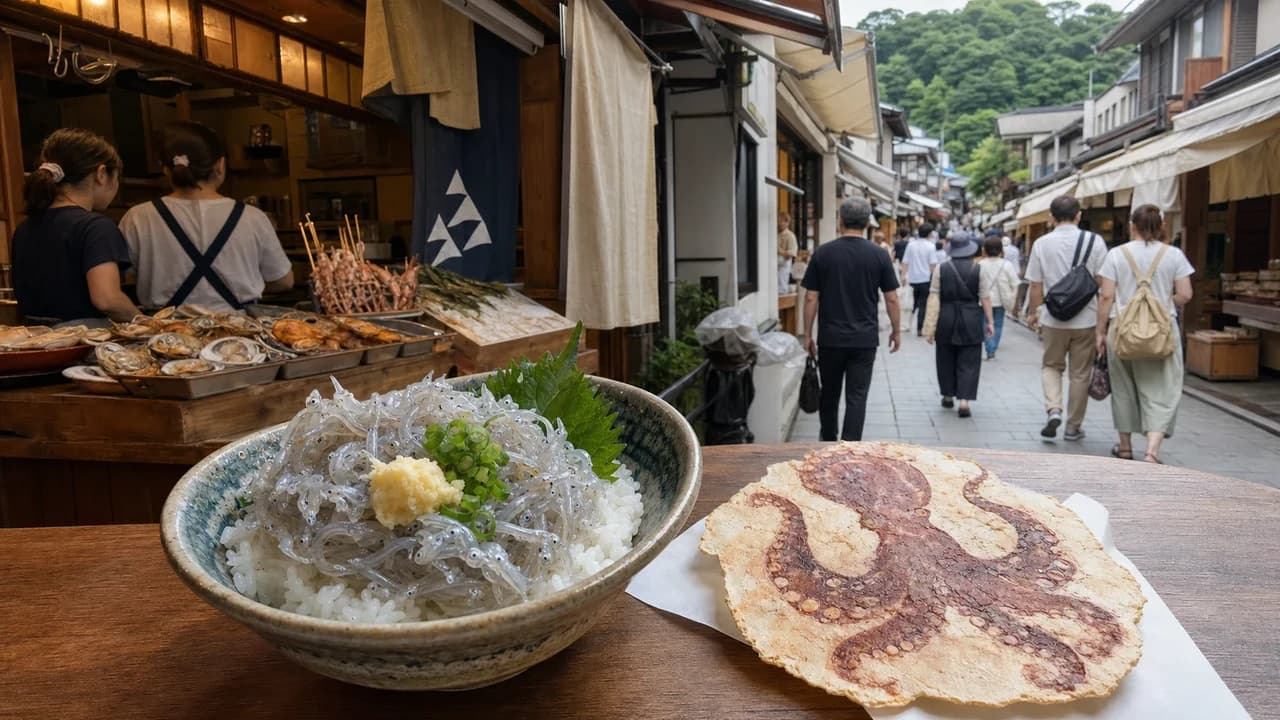
Tokoroten is the lightest of Enoshima's signature snacks, built for cooling down rather than filling up. Tako senbei is a whole baby octopus pressed flat and grilled to a cracker. It delivers a crunchy, salty contrast and travels well in the hand. Shirasu is the tiny whitebait the Shonan coast is known for. It shows up on rice bowls, toast, and bread, making a heavier stop than the other two snacks. Grilled seafood skewers, sold from the same stretch of stalls, add a hot, smoky option beside these three cold and crisp choices. Pair a tokoroten break with a stop at Enoshima's shirasu specialties for a fuller meal. Save the heaviest options for one of the island's seafood restaurants away from the stalls.
| Snack | Texture | Flavor | Best For |
|---|---|---|---|
| Tokoroten | Cold, jelly noodles | Tart, savory (vinegar and soy) | Cooling off after the climb |
| Tako senbei | Crisp, pressed cracker | Salty, umami | Eating on the move |
| Shirasu | Soft whitebait, on rice or bread | Savory, briny | A heavier, fuller stop |
Getting to Enoshima for a Tokoroten Food Walk
Katase-Enoshima Station, on the Odakyu line, is the most direct arrival point from central Tokyo, reached via a transfer at Fujisawa Station. The Enoshima Electric Railway, known as Enoden, offers an alternate route into the area. Current schedules are worth checking before travel. From either station, walk to the Enoshima Bentenbashi bridge and cross onto the island itself. The bronze torii marks the start of Benzaiten Nakamise-dori, where the tokoroten stalls begin. If you're planning a full day, check the Enoshima Day Trip From Tokyo Travel Guide guide for train timing. Routing through Kamakura first? Check the Enoshima From Kamakura Day Trip Travel Guide guide for combining both stops.
Pairing Tokoroten With Enoshima's Other Sights
A tokoroten stop fits naturally into a longer walk through Enoshima's other landmarks. Past the vermilion torii and Zuishinmon gate sits Enoshima Shrine Travel Guide. The Zuishinmon gate is built to evoke Ryugu-jo, the mythical underwater palace from local legend. Further along, the Enoshima Sea Candle Travel Guide observation tower gives an elevated view over Sagami Bay. Heading toward the far end of the island? Treat a teahouse tokoroten as a rest stop. That works well before or after exploring the caves there. If there's time for one more stop, add the Enoshima Aquarium Travel Guide, on the mainland side near Katase. For a fuller list of what else the island offers, check the general 10 Best Things to Do in Enoshima (2026 Travel Guide) guide before mapping out the day.
For trip-planning details, see Tokoroten.
Frequently Asked Questions
What does tokoroten taste like on Enoshima?
Expect a tart, savory bite rather than a dessert. Enoshima follows the Kanto region's style, seasoned with vinegar and soy sauce, sometimes with mustard and nori. That contrasts with the sweet kuromitsu syrup used in the Kansai region.
How much does tokoroten cost on Enoshima?
A cup typically runs ¥300 to ¥600 at stalls and teahouses on the island. Exact pricing varies by shop and portion, so checking the menu board before ordering is worth the extra minute.
Nakamise-dori or a teahouse: where's the better spot to try tokoroten?
Choose Nakamise-dori stalls for a fast snack between shops, served already seasoned in a cup. Choose a teahouse near the Iwaya Caves for a seated rest with a water view. Some teahouses also let you press your own noodles with a tentsuki.
Can visitors use the tentsuki press themselves?
Some stalls let customers push the handle and extrude the jelly through the press's grid. Staff usually pack the jelly block and season the noodles afterward, so ask when ordering if trying the press matters.
When is the best time to visit for tokoroten?
Summer months are peak season, when the cold snack sells as relief from the heat and the climb. Golden Week, in late April and early May, brings heavy crowds to Nakamise-dori. A weekday visit improves the odds of a seat.
What is tokoroten actually made from?
Tokoroten is made from tengusa seaweed, boiled until it releases natural agar, then set into a jelly block. That block gets pressed into noodle strands, traditionally with a tentsuki press. Tengusa grows along the Shonan coast, the same stretch of Sagami Bay that includes Enoshima.
Is tokoroten enough for a full meal, or just a snack?
Tokoroten works best as a light snack or rest stop, not a full meal, since a single cup is mostly water and jelly. Pair it with a heavier stop, such as shirasu on rice or a seafood plate, to cover an actual meal.
Do Enoshima's tokoroten stalls take credit cards?
Small stalls along Nakamise-dori often expect cash, since not every stand has a card reader. Teahouses are more likely to accept cards, but confirming before ordering avoids a last-minute walk to a cash machine.
Free guide: Japan's Hidden Gems
12 under-the-radar places beyond Tokyo & Kyoto — with the best season to visit each and a local tip you won't find in the guidebooks.
You might also like


Continue reading
More guides you'll find useful


