
10 Best Things to Do in Enoshima (2026 Travel Guide)
Discover the best things to do in Enoshima with our top picks, insider tips, and practical advice for a memorable island adventure in 2026.
On this page
Enoshima Island sits just over an hour from central Tokyo, but it feels far removed from the city. The island packs a surprising range of experiences into a very small footprint: a three-part shrine dedicated to Benzaiten, a lighthouse observation tower with views across Sagami Bay to Mount Fuji, ancient sea caves connected to dragon legends, and some of the freshest shirasu (whitebait) in Kanagawa. This guide covers everything you need to plan a smooth day trip in 2026, with current prices and practical timing advice.
Key Takeaways
- Quick Pick: The Enoshima Sea Candle offers the best panoramic views, especially at sunset.
- Best for Families: Enoshima Aquarium provides interactive fun for all ages.
- Best Free Activity: Explore Chigogafuchi Abyss for dramatic cliffside scenery.
- Essential Tip: Purchase an Enoshima 1-Day Pass for cost savings on attractions and the Escar.
Getting to Enoshima
Enoshima is easily accessible from central Tokyo in about 70 to 90 minutes. The simplest route is the Odakyu Line from Shinjuku Station. Take a Rapid Express or Express train towards Fujisawa Station (approximately 60 minutes), then board the local train for the final three stops to Katase-Enoshima Station. A one-way ticket from Shinjuku costs ¥630. Aim to arrive by 10:00 to give yourself a full day without rushing.
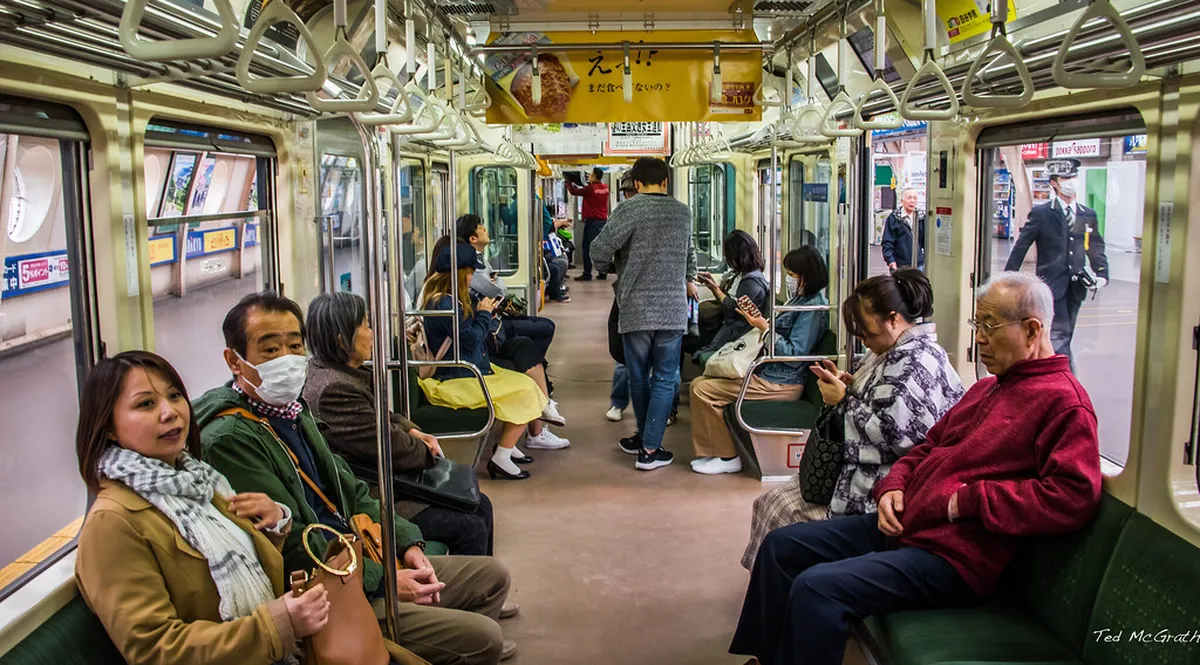
The more scenic alternative is the Shonan Monorail. Take a JR train from central Tokyo to Ofuna Station (¥800, around 40 minutes — covered by the JR Pass). From Ofuna, the Shonan Monorail runs 10 km to Shonan-Enoshima Station in about 15 minutes for ¥310. This is no ordinary rail line: the carriages hang suspended below the elevated track, passing within metres of rooftops and roads. It is worth doing at least one direction just for the experience.
From Katase-Enoshima or Shonan-Enoshima Station, it is about a 10-minute walk to the island bridge. There are coin lockers at Katase-Enoshima Station for storing bags, but they fill up quickly on weekends. Once on the island, everything is walkable. Expect significant stair climbing — comfortable shoes are essential.
The Enoshima 1-Day Pass: What It Actually Covers
Before you pay for anything on the island, understand the pass structure. The Enoshima 1-Day Pass costs ¥1,000 per adult and covers three things: the Enoshima Escar (outdoor escalator series), entry to Samuel Cocking Garden, and entry to the Enoshima Sea Candle observation deck. Bought separately, these would cost ¥360 for the Escar plus ¥200 for the garden plus ¥300 for the tower — a total of ¥860. The pass saves about ¥140 but more importantly removes the friction of buying tickets at each stop.
If you plan to visit the Iwaya Caves, those cost an additional ¥500 on top of the pass. The Hetsunomiya inner hall (first shrine) is ¥200 extra. The Goshuin stamps at the shrine cost ¥300–¥500 each and are not included. Budget around ¥2,000–¥2,500 per person for a thorough exploration of the island's paid sites.
One important detail most visitors miss: entry to Samuel Cocking Garden is free during the day, but after 17:00 the garden charges a separate admission for evening illuminations (seasonal, typically November). If you plan to catch the sunset illuminations, buy your daytime garden ticket when you first arrive and ask staff about the evening ticket — you cannot re-enter on the standard pass after dark.
Enoshima Shrine and Benzaiten Nakamise Street
Enoshima Shrine is not a single structure but a complex of three sub-shrines spread across the island, all dedicated to Benzaiten — the goddess of everything that flows, including water, music, and love. The first, Hetsunomiya, is at the top of Benzaiten Nakamise Street and houses a seated Benzaiten statue in an octagonal hall (¥200 entry). A small pond with a dragon statue sits nearby; visitors wash coins in the spring water for good fortune. The pink wooden ema tablets hanging from a nearby tree are for luck in love — Enoshima draws many young couples for this reason.
Benzaiten Nakamise Street itself is worth slowing down for. The covered shopping lane runs from the bridge entrance up to the first shrine and is lined with shops selling octopus crackers, shirasu croquettes, and Enoshima-themed souvenirs. Most shops open around 09:00 and close by 18:00. Arrive early on weekdays to walk it without crowds; on weekend afternoons it can become slow-moving.
Collect a Goshuin (official red seal stamp) from the Goshuin office near each sub-shrine. The stamps are hand-written in calligraphy and cost ¥300–¥500 each — a meaningful keepsake rather than a mass-produced souvenir. The Goshuin office operates during shrine hours (08:30–17:00). If you do not own a Goshuincho (stamp book), you can purchase one at the shrine for around ¥1,000–¥1,500.
The Enoshima Escar, Samuel Cocking Garden, and Sea Candle
The Enoshima Escar is a series of four outdoor escalator sections that carry you up the northern side of the island. Walking the stone steps takes about 20 minutes; the Escar covers the same ascent in 4 minutes. A single section costs ¥100, or ¥360 for all four (included in the 1-Day Pass). Note that there are no downhill escalators — the return is on foot via winding paths. The escalators are helpful on a hot day or if you have limited mobility, but skipping the steps entirely means missing some of the island's best intermediate viewpoints.
Samuel Cocking Garden, at the top of the hill, was established by a 19th-century British merchant who purchased much of the island in his Japanese wife's name. Entry is ¥200 (included in the 1-Day Pass). The garden has seasonal flower displays — early February sees Kawazu cherry blossom; spring brings camellia and other flowering trees. Inside the garden, Lon Cafe serves what it claims to be Japan's first creme brûlée French toast, and the terrace looks out over Sagami Bay.
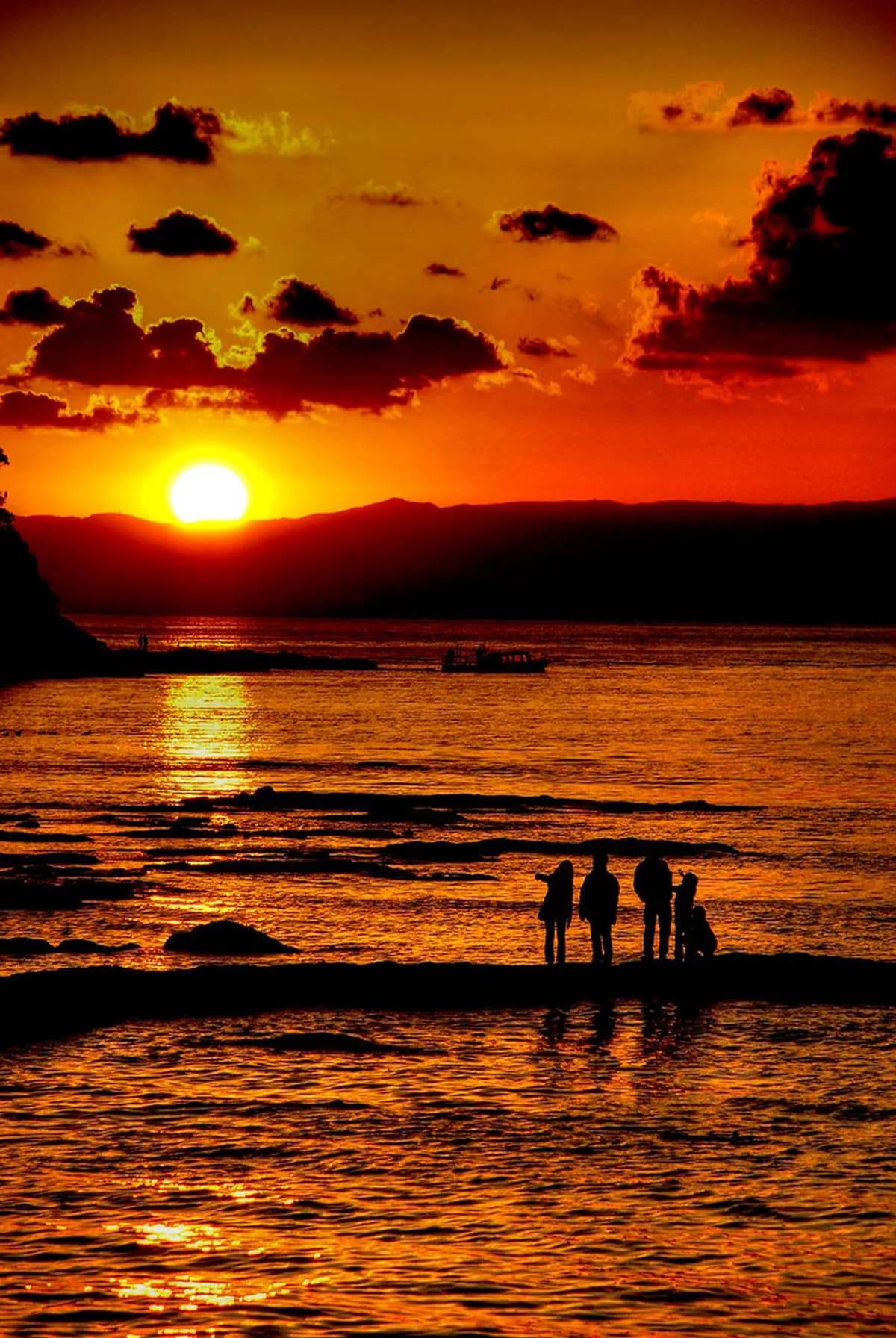
The Enoshima Sea Candle stands 60 metres tall and 120 metres above sea level inside the garden. It provides 360-degree panoramic views of Sagami Bay, the Izu Peninsula, and on clear days, Mount Fuji to the northwest. Entry is ¥300 separately or included in the 1-Day Pass. The tower opens at 09:00 and closes at 20:00 (last entry 19:30), with extended hours in summer. Sunset views from the tower are exceptional — plan to arrive at least 30 minutes before sunset if that is your goal.
Iwaya Caves
The Iwaya Caves occupy the far western end of the island and require descending roughly 250 steep steps from the shrine area. The caves were originally carved by wave erosion over thousands of years, then elevated above sea level by seismic activity. Admission is ¥500 for adults (or included in the 1-Day Pass). The caves are typically open from 09:00 to 17:00, but they close during high surf, stormy weather, and for periodic safety inspections — check the Fujisawa city tourism site before your trip, particularly in autumn and winter when closures occur.
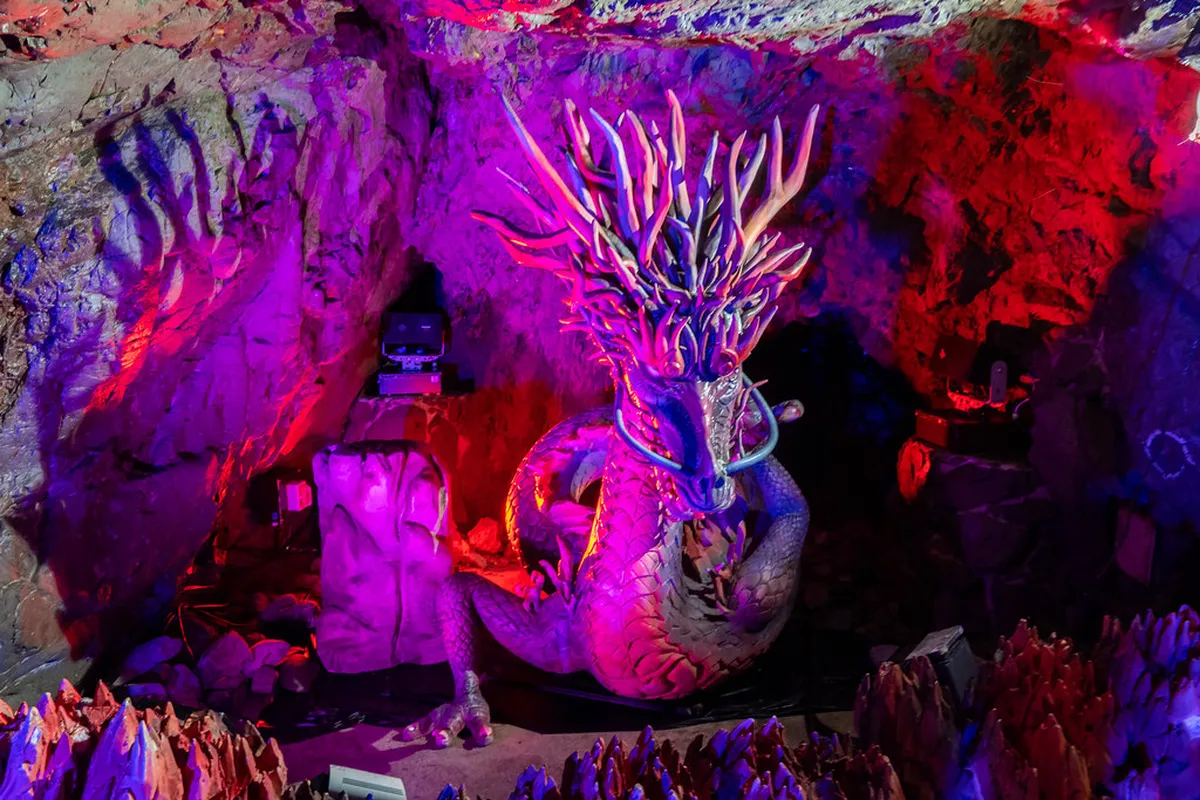
Upon entering the first cave, staff hand you a small candle. Most of the tunnel is lit, but the candle helps when you move deeper into the narrower side chambers. The first cave divides into two forks: one lined with statues of island goddesses, the second shorter and housing a statue of Amaterasu. The second cave is dedicated to the island's central legend — a dragon who terrorised mainland villagers, fell in love with Benzaiten when she caused the island to rise from the sea, and was ultimately redeemed, turning to stone and becoming a guardian of fishermen. A pond and illuminated dragon statue sit at the back of this cave. The purple lighting is theatrical, but the mythology behind it is genuinely interesting.
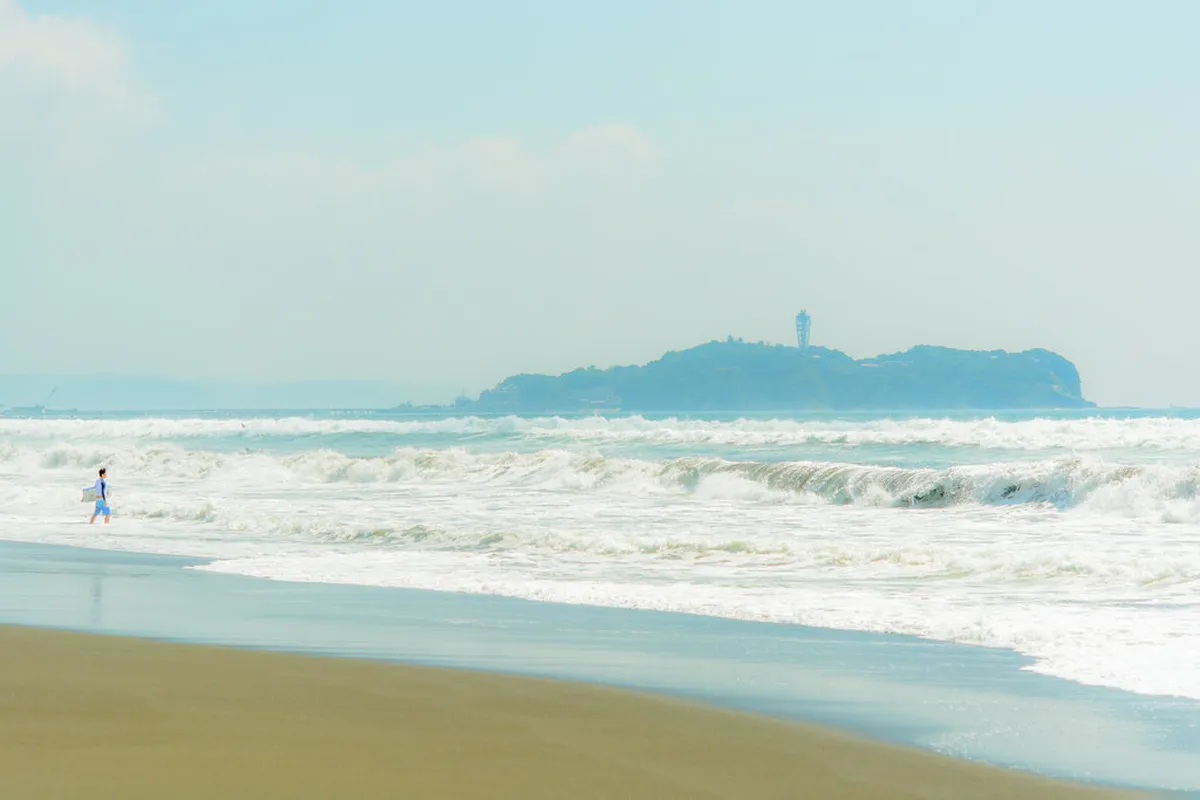
Allow around 20–30 minutes inside. The descent is steep and the caves are narrow in places — not suitable for visitors with significant mobility limitations. After exiting, the Chigogafuchi plateau just beyond the caves offers some of the island's most dramatic coastal scenery. Flat rock shelves sit just above the water line, and on clear days Mount Fuji is visible from here. Entry is free.
Enoshima Aquarium
Shin-Enoshima Aquarium (Enosui) sits on the mainland side near Katase-Enoshima Station, not on the island itself. It makes a natural first or last stop for the day. The aquarium specialises in the marine life of Sagami Bay and is well regarded for its large main tank, jellyfish displays, and dolphin and sea lion shows. Admission is ¥2,500 for adults, ¥1,300 for children aged 3–15. Hours are typically 09:00–17:00 on weekdays and until 20:00 in summer — check the official site for seasonal variations. You can book an Enoshima Aquarium ticket in advance on KKday to skip the queue.
If you are visiting with children, the aquarium is genuinely the best use of a couple of hours near Enoshima. The dolphin show stadium is large and the viewing is good from most seats. Build it into the start or end of your island itinerary rather than the middle — the aquarium is physically separate from the island and doubling back mid-day wastes walking time.
Shirasu and Eating on Enoshima
Shirasu — tiny whitebait caught fresh from Sagami Bay — is the island's defining food. During the fishing season (roughly March to December, with a ban from mid-January to mid-March), restaurants serve both nama-shirasu (raw whitebait) and kama-age shirasu (boiled). A shirasu-don (rice bowl topped with whitebait) costs ¥1,000–¥1,800 at most island restaurants. Out of season, only the boiled version is available. If you see a sign saying "nama-shirasu ari" (raw shirasu available today), that is a reliable freshness signal.
For views alongside your meal, Uomi-tei on the hillside is consistently recommended for its shirasu-don with a clear-day Mount Fuji backdrop. Lunch hours run approximately 11:00–15:00 and it fills up quickly. Enoshima-tei, a simpler spot nearer the Inner Shrine, is another reliable choice with ikura-shirasu (salmon roe and whitebait) rice bowls. For something different, Lon Cafe inside the garden is the only option for French toast; Cafe Madu near the Inner Shrine offers savoury crepes and curry for those who prefer non-seafood options.
Ryukoji Temple and the Enoden Viewpoint
Ryukoji Temple sits just off the island on the mainland, a short walk from Enoshima Station on the Enoden line. It is a significant Nichiren Buddhist temple built on the site where the monk Nichiren was said to have been miraculously spared execution in 1271 — a bolt of lightning reportedly struck the executioner's sword. The five-story pagoda and grounds are well maintained and free to visit. The main hall is open daily from 09:00 to 16:00.
The real draw for many visitors is the Enoden itself. This narrow-gauge tram line has run between Enoshima Station and Kamakura Station since 1902, and it passes through some genuinely cinematic scenery — tight residential streets, level crossings, and beachfront stretches along Shichirigahama. Catching a shot of the tram passing the temple grounds is a popular photography spot. If you plan to continue to Kamakura, the Enoden is the connection. If you are doing an Enoshima day trip from Kamakura, this is where your day begins or ends.
Practical Tips for Visiting Enoshima in 2026
Timing matters more on Enoshima than at most Tokyo day-trip destinations. The island is compact and its main street narrows significantly. On weekend afternoons from spring through autumn, Benzaiten Nakamise Street becomes genuinely congested. Arriving before 10:00 on a weekday gives you the shrines largely to yourself. If you cannot avoid a weekend visit, arriving early and working your way to the caves first (before the main crowd reaches that end of the island) improves the experience considerably.
The Enoshima Escar only goes uphill. When descending from the garden area, you walk down via path and stairs — budget 15–20 minutes for the descent to the main shopping street. The caves close without warning in rough weather and during safety inspections; they are also temporarily closed for structural assessment periodically, so verify the status on the official Fujisawa tourism site before making them central to your plan. If you want to stay overnight, IZA Enoshima Guest House and Bar near the island is a well-regarded budget option that books out quickly in summer.
Enoshima and Kamakura are often combined into a single long day. The Enoden tram connects both locations in about 25 minutes. Trying to do both thoroughly in one day is ambitious — most visitors who attempt it end up rushing at least one location. If your priority is depth over breadth, treat each as its own day trip from our Tokyo day trips guide base.
Frequently Asked Questions
What are the main attractions in Enoshima?
The main attractions in Enoshima include the Enoshima Shrine complex, the Enoshima Sea Candle with its panoramic views, and the mystical Iwaya Caves. Additionally, the Enoshima Aquarium offers engaging marine life exhibits. These sites provide a comprehensive overview of the island's appeal.
Is it better to stay in Kamakura or Enoshima?
Choosing between Kamakura and Enoshima depends on your preferences. Kamakura is ideal for history buffs and temple enthusiasts, offering a more traditional Japanese experience. Enoshima is better for those seeking seaside charm, unique island exploration, and ocean views. Many visitors opt for a day trip to Enoshima from Tokyo, or combine both destinations.
Can you walk around Enoshima Island?
Yes, Enoshima Island is very walkable, and exploring on foot is highly recommended to discover its charm. While there are some uphill climbs, the Enoshima Escar provides convenient escalator access to the main attractions. Comfortable shoes are essential for navigating the island's paths and steps, especially if you plan to visit all the key sites.
Enoshima Island rewards visitors who take their time. The shrine complex, Sea Candle, and Iwaya Caves are the headline draws, but the shirasu lunch with a Mount Fuji view, the suspended monorail ride from Ofuna, and the quiet cliffs at Chigogafuchi are what most visitors remember longest. Plan to arrive early, pick up the 1-Day Pass at the base of the Escar, and work your way to the caves before the afternoon crowds arrive.
Explore More Enoshima Guides
In-depth guides for planning your Enoshima trip.
Browse the Enoshima attractions hub for detailed visitor guides:
- Enoshima Shrine Visitor Guide: Your Perfect Day Trip Itinerary
- Enoshima Sea Candle Visitor Guide & Day Trip Itinerary
- Iwaya Caves Visitor Guide: Plan Your Trip to Enoshima's Ancient Sea Grottoes
- Enoshima Aquarium (Enosui) Visitor Guide & Day Trip Itinerary
- Benten Bridge Visitor Guide: Plan Your Enoshima Day Trip
Free guide: Japan's Hidden Gems
12 under-the-radar places beyond Tokyo & Kyoto — with the best season to visit each and a local tip you won't find in the guidebooks.
You might also like


Continue reading
More guides you'll find useful


