

Enoshima Island, a scenic escape near Tokyo, holds a captivating secret: the ancient Iwaya Caves (江の島岩屋). These sea-carved grottoes at the island's southern tip offer a rare combination of natural drama, candlelit atmosphere, and centuries of spiritual history. This visitor guide covers everything you need to plan a smooth 2026 trip.
The caves have drawn pilgrims, warrior-monks, and curious travelers for well over a thousand years. They are the most talked-about single stop on Enoshima, and with good reason. The combination of carved rock passages, illuminated dragon shrines, and ocean legends is unlike anything else in the Kamakura–Shonan region.
What Are the Enoshima Iwaya Caves? (History & Facts)
The Enoshima Iwaya Caves (江の島岩屋) are naturally formed sea caves at the southern tip of Enoshima Island in Fujisawa City, Kanagawa Prefecture. Wave erosion carved these passages over millennia, and humans have been entering them for at least 1,400 years. Their address is 2 Enoshima, Fujisawa City, Kanagawa 251-0036.
Historical records trace the caves' religious significance to the mid-6th century. Emperor Kinmei (欽明天皇) is said to have enshrined a deity here, an event that marks the founding of nearby Enoshima Shrine (江島神社). During the Kamakura period (late 12th to early 14th century), the caves became a key training ground for Shugendō (修験道) ascetics, whose practice blended Shinto beliefs with mountain Buddhism.
The site comprises two distinct caverns. The First Cave extends 152 meters deep into the rock. The Second Cave reaches 56 meters. Together they represent the most intact example of sacred sea-cave worship in the Kanto region, and both are included in the same admission ticket.
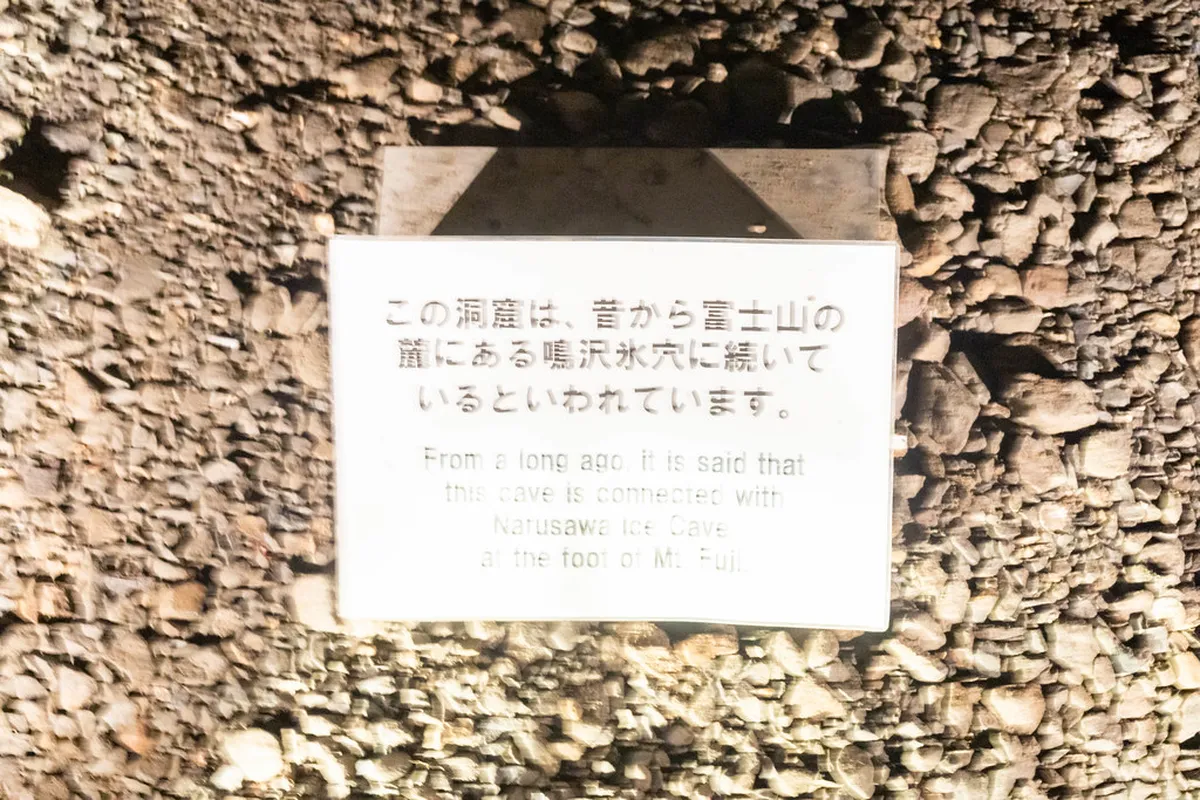
One detail most visitors miss: the First Cave is itself divided into a left-hand passage and a right-hand passage. Local legend holds that the deepest point of the left-hand passage connects underground to the Narusawa Ice Cave (鳴沢氷穴) on Mt. Fuji — a claim that underscores the mythological scale these caves occupy in Japanese religious imagination. At the back of the right-hand passage sits the site traditionally identified as the birthplace of Enoshima Shrine itself.
Highlights: A Journey Through Light and Echoes
At the First Cave entrance, staff hand you a lit candle to carry through the passage. This is not a gimmick — the main tunnel is genuinely dark, and the candle's soft glow against wet rock walls creates an atmosphere that torches and phone screens cannot replicate. The sound of dripping water and distant wave rumble add to the sensory depth.
Stone altars and ancient Buddhist carvings line the First Cave walls, thought to be remnants of early ritual use by monks and pilgrims. A statue of Kobo Daishi (空海), the revered founder of Shingon Buddhism, stands in one alcove. These donated stone figures are now classified as important cultural heritage by Fujisawa City. Follow the right-hand fork to reach the cave's deepest ceremonial space, traditionally called the birthplace of Enoshima Shrine.
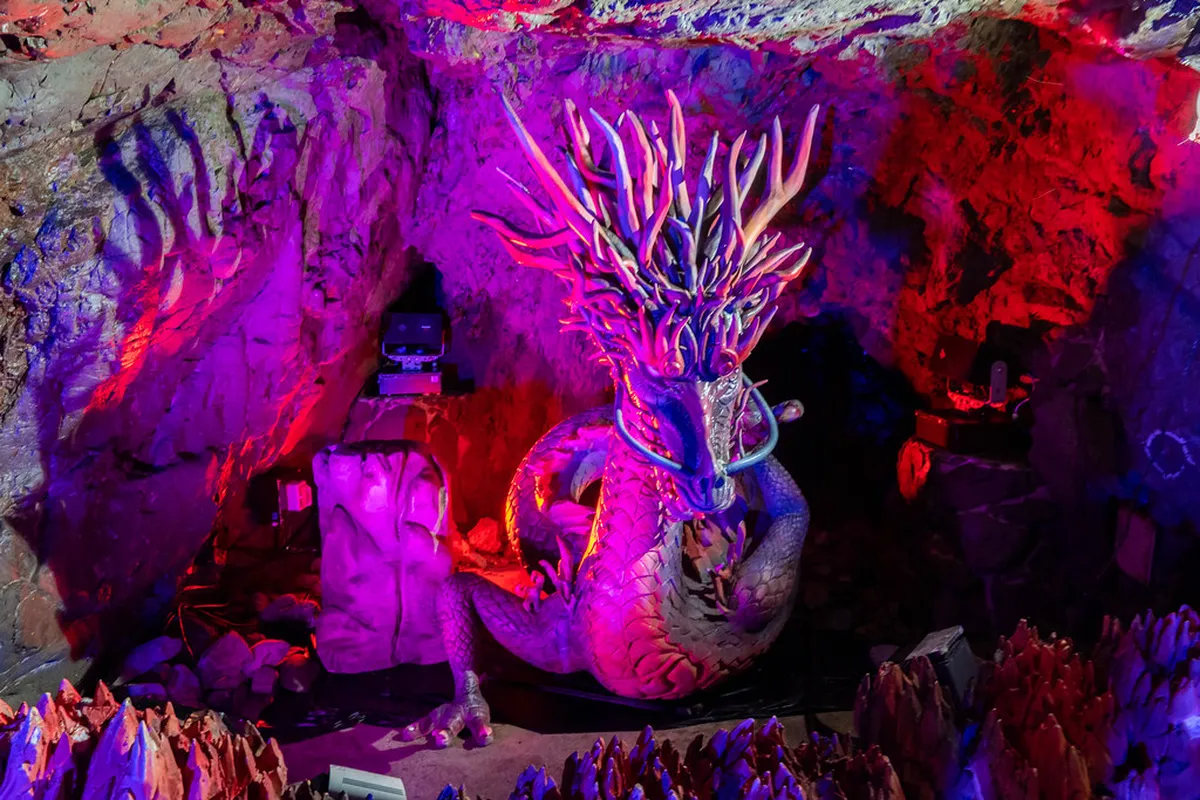
The Second Cave is shorter at 56 meters but atmospherically distinct. Sound effects and LED lighting illuminate a dragon deity statue, bringing the five-headed dragon legend to life. The blend of mythological storytelling and rock-cave setting makes this chamber the most photographed spot in the complex.
Both caves maintain a cool temperature year-round, typically several degrees cooler than the island surface. On humid summer days this alone makes the admission worthwhile.
Inside the Caves: Time Needed, Footing and Accessibility
Plan on roughly 30 to 45 minutes for the two caves. Allow longer on busy days, because the passages become single-file and visitors queue at the narrow points. The 152-meter First Cave takes most of that time. The 56-meter Second Cave is quicker, even if you stop for the dragon display.
Underfoot and overhead
- Wet, uneven rock. The floor is damp year-round and the steps are irregular. Wear shoes with real grip, not smooth-soled sandals or heels.
- Low ceilings in places. Watch your head, especially if you are tall, and keep one hand free for the walls.
- Dim light. A phone torch is a poor substitute for the candle you are given, and you will need both hands for the steps.
- Cool air. The interior stays cooler than the surface, so a light layer helps in winter and after a rainy walk.
Accessibility
The cave approach involves stairs, and the passages themselves are uneven. Wheelchairs and strollers are not practical inside, and visitors with knee or balance problems should go slowly. Families with small children should hold hands through the narrow sections. If you only need a view of the coast, the rocky shoreline outside the entrance can be enjoyed without entering the caves.
Most visitors can get through the caves comfortably with sturdy shoes and a bit of patience, even if they are not hikers. Treat the spiritual setting with respect: keep your voice low and do not touch the votive figures along the walls.
Spiritual Significance and Legends of Iwaya Caves
The Iwaya Caves are considered the spiritual origin point of Enoshima Shrine, dedicated to the goddess Benzaiten. She is revered in both Shinto and Buddhist traditions for music, water, and good fortune. The caves are still treated as sacred ground, not merely a tourist sight.
The founding legend tells of a five-headed dragon that terrorized the Sagami Bay region, devouring children and flooding the land. A heavenly maiden — identified as Benzaiten — descended from the sky, and the dragon, transformed by her presence, pledged to protect the island rather than destroy it. This story explains both the island's formation and the protective role the caves played for centuries.
The caves also served as a site of prayer for Minamoto no Yoritomo (源頼朝), the first shogun of the Kamakura Bakufu. He came here before his northern campaign to seek divine blessing. This visit is documented in the Azuma Kagami (吾妻鏡), one of Japan's most important medieval chronicles, which gives the caves an unusually strong paper trail for a spiritual claim.
Kobo Daishi and the monk Nichiren are both said to have conducted extended retreats here. The stone votive figures they and later pilgrims donated now form a gallery inside the First Cave that doubles as a folk-art collection spanning the Edo period onward.
Access and Opening Hours
The caves are located at the far southern end of Enoshima Island. From central Tokyo, the fastest route is the Odakyu Romancecar or Odakyu Limited Express from Shinjuku to Katase-Enoshima Station (片瀬江ノ島駅) on the Odakyu Enoshima Line — around 60–70 minutes and roughly ¥600–900 depending on the service. From Kamakura, take the Enoden (Enoshima Electric Railway) to Enoshima Station, a 25-minute ride for ¥260. Both stations are a 10-minute walk from Benten Bridge, the main gateway onto the island.
Once on the island, the caves are a further 35-minute walk from the bridge, passing through souvenir streets and the shrine complex. The Enoshima Escar — a series of outdoor escalators — reduces the uphill section significantly and is worth the small fee if you have luggage or tired legs.
For a more scenic approach, take the Bentenmaru (べんてん丸) ferry from the dock near Benten Bridge. The 10-minute ocean crossing brings you directly to the cave area and gives clear views of the coastline and, on a clear winter day, Mt. Fuji. Note that Bentenmaru departures are irregular — they depend on tide and passenger demand, so confirm timing at the dock on the day rather than planning a tight connection around it.
Admission costs ¥500 for adults (13 years and older) and ¥200 for children aged 7–12. Groups of 20 or more receive a 20% discount. Opening hours are generally 09:00–17:00, though they shorten in certain seasons (often closing at 16:00 in winter). The caves are open year-round but may close or alter hours during typhoons or severe weather. Always check the official Fujisawa tourism website for the most current schedule, including last entry times, before traveling.
Best Time to Visit Iwaya Caves
The caves are open year-round and each season offers something different. Autumn (September to November) and winter mornings are the best combination: smaller crowds, the chance of a clear Mt. Fuji view from Chigogafuchi just beyond the caves, and the cool cave interior actually feels comfortable rather than cold. Spring cherry blossom season (late March to mid-April) brings heavy footfall to the whole island, so expect waits.
Weekday mornings shortly after the 09:00 opening are the quietest window. Weekends, public holidays, Golden Week (late April to early May), and the Obon period (mid-August) are the four high-traffic periods when the cave passages themselves can become single-file queues. If your schedule puts you in one of these windows, arriving right at opening is the most effective mitigation.
Summer visits are perfectly viable — the cave interior is naturally cool, making it a welcome break from August heat. Evening access is limited by the closing time, but Enoshima's illumination events (particularly around winter holiday season) can make a late-afternoon cave visit part of a longer island evening. Rainy days are also surprisingly good: the island crowds thin and the cave rock takes on a deeper, more saturated color under moisture.
Local Eats and Seasonal Experiences Around Enoshima
Shirasu (しらす) — tiny whitebait caught in Sagami Bay — is the defining food of Enoshima. You can eat it raw (nama-shirasu, 生しらす) on a rice bowl from roughly May to December when fishing is open, or boiled (kamaage-shirasu, 釜揚げしらす) year-round. The raw version is only available when fishing boats have run that morning; restaurants on the main Benzaiten Nakamise shopping street will post signs if they have it. It is worth checking before you commit to a sit-down lunch.
Tako senbei (たこせんべい), octopus crackers made by pressing a whole small octopus onto a hot iron plate, is the island's most popular walking snack. Stalls near Benten Bridge sell them for a few hundred yen. The press takes about 30 seconds and is worth watching. Seaside cafes toward the southern end of the island offer ocean views with coffee or soft drinks at reasonable prices — a useful stop before or after the cave visit.
Seasonal events include summer beach festivals at Katase-Nishihama beach near the island entrance, and winter illumination displays along the island's main shopping street. The Enoshima Fireworks festival, typically held in late summer, is visible from the cave approach path on clear nights. Check local event listings closer to your 2026 travel dates as schedules are confirmed annually.
Nearby Attractions: Sights and Shrines Within Walking Distance
Immediately beyond the Iwaya Caves exit, a short coastal path leads to Chigogafuchi (稚児ヶ淵), a flat rocky shoreline at the island's western tip. The views here — dramatic sea stacks, crashing Pacific swells, and on clear winter mornings a snow-capped Mt. Fuji floating above the horizon — are among the best free viewpoints in the greater Tokyo area. Public restrooms at Chigogafuchi include a baby-changing table and ostomate-friendly facilities; they keep the same opening hours as the caves.
The Ryuren no Kane (龍恋の鐘), or Bell of the Dragon's Love, stands near the cliff path between the caves and Chigogafuchi. Built in 1996 to commemorate the island's founding dragon legend, it is a popular couples' spot: tradition holds that ringing the bell and attaching a padlock inscribed with your names to the wire fence nearby binds the couple in eternal love. The bell has appeared in several Japanese films and TV dramas.
The Enoshima Shrine complex, comprising three sub-shrines dedicated to Benzaiten, sits midway along the island and is best visited before heading to the caves. The vermilion torii gates and wooded grounds provide a strong contrast to the raw coastal scenery at the island's tip. Bring cash for the offertory box and for the small garden gates if you detour into Samuel Cocking Garden.
The Enoshima Sea Candle, the island's lighthouse and observation tower, offers 360-degree views including direct sightlines to Mt. Fuji. It is combined with Samuel Cocking Garden in a joint ticket. The Enopass bundle (Escar + Sea Candle + Garden) is worth buying if you plan to use more than one of those three, and can be purchased at the Escar entrance near Benten Bridge.
Who Should Visit: Tailored Experiences for Every Traveler
History and culture travelers will find the caves unusually well-documented for a natural site. The Azuma Kagami reference, the Shugendō training connection, and the votive statue gallery inside the First Cave give history buffs something to dig into beyond the standard myths. Reading about Minamoto no Yoritomo's visit before you go makes walking the same passage considerably more interesting.
Families with children are well accommodated. The candle at the First Cave entrance makes young visitors feel like proper explorers rather than passive sightseers. The dragon statue in the Second Cave — lit up and accompanied by sound effects — tends to produce strong reactions from children aged 5 and up. The path to the caves is mostly paved and manageable, though the final approach from the island surface involves steps; strollers are impractical beyond the Escar.
Couples naturally gravitate toward the Ryuren no Kane bell and the sunset views at Chigogafuchi. An afternoon arrival — caves at 14:00, Chigogafuchi at 15:30, Ryuren bell at sunset — is a well-worn romantic itinerary that works because the light at the cliff face is at its best in the final hour before close. Solo travelers seeking reflection find that a weekday morning visit produces genuine solitude in the deeper cave passages, which is rare in a place this close to Tokyo.
Practical Tips for a Smooth Iwaya Caves Visit
Wear shoes with a grip. The cave floor is uneven, often damp, and slopes in places. Sandals and smooth-soled dress shoes become uncomfortable quickly once inside. The paths around Chigogafuchi are rocky too, so comfortable walking shoes are the single most useful preparation for the southern end of the island.
If you plan to combine the caves with the Sea Candle and Samuel Cocking Garden, buy the Enopass at the Escar entrance early in the day. It covers the Escar, the Garden, and the Sea Candle observation deck and typically saves money versus paying for each separately. The caves themselves are not included in the Enopass — you pay ¥500 separately at the cave entrance.
Plan a logical route to avoid backtracking: cross Benten Bridge, take the Escar up, visit Enoshima Shrine, continue south to the Sea Candle and Garden, then walk all the way to the caves and Chigogafuchi at the island's far tip. Return via the Bentenmaru ferry if it is running, or retrace the main path. This direction keeps the climb to the Escar section, leaving the rest as a gradual descent toward the sea.
Check the weather the morning of your visit, especially if you intend to use the Bentenmaru ferry. Ferry services suspend in high winds or rough seas without advance notice. Tidal conditions can also affect cave access near the entrance — the caves occasionally close early if high tides push seawater up the entrance path. A quick check of the Fujisawa City tourism site before departing Tokyo takes two minutes and can save a wasted journey.
Frequently Asked Questions
How long should I spend at Iwaya Caves?
You should plan to spend about 30 to 45 minutes exploring both Iwaya Caves thoroughly. A quicker visit can be done in 15 minutes if you are short on time. However, allowing more time lets you appreciate the details and legends within.
Is Enoshima Cave worth visiting?
Yes, Enoshima Cave is definitely worth visiting for its unique blend of natural beauty, ancient history, and spiritual legends. The candle-lit experience and connection to Enoshima's founding myths make it a distinctive attraction. It offers a different perspective on the island's rich heritage.
What are the Iwaya Caves known for?
The Iwaya Caves are known for their natural sea-carved formations, their deep spiritual significance as a birthplace of Enoshima Shrine, and their connection to the goddess Benzaiten and the five-headed dragon legend. They also served as a training ground for famous Buddhist monks. These caves are a key part of Enoshima Island's cultural identity.
What is the admission fee for Iwaya Caves?
The admission fee for the Iwaya Caves is ¥500 for adults (13 years and older). Children aged 7-12 years old can enter for ¥200. These fees grant access to both the First and Second Caves. Always confirm current prices on the official tourism website.
The Iwaya Caves offer a profound glimpse into Enoshima Island's natural and spiritual past. From ancient legends to serene candle-lit passages, they provide a unique travel experience. This Iwaya Caves visitor guide helps you navigate your journey with ease.
As you plan your visit, remember the practical tips and explore the nearby attractions. The island's charm extends far beyond these mystical grottoes. Let the magic of Enoshima create lasting memories for you.
To verify current details, consult the Iwaya Caves on Wikipedia and Iwaya Caves official site.