

Enoshima Shrine Travel Guide
Plan enoshima shrine with top picks, neighborhood context, timing tips, and practical booking advice for a smoother trip.
On this page
Enoshima Shrine — formally Enoshima Jinja — is the main reason most visitors cross the bridge to this small Sagami Bay island, 50 minutes south of Tokyo by train. The complex consists of three sub-shrines spread along the island's spine: Hetsunomiya, Nakatsunomiya, and Okutsunomiya. Each enshrines one of the three daughters of the sea god Watatsumi — Tagitsu-hime, Ichikishima-hime, and Tagitsu-hime in older records — collectively worshipped as the goddess Benzaiten (Benten). Walking between all three takes roughly two hours at a relaxed pace and doubles as a complete island tour.
The shrine grounds are open daily 08:30–17:00. Entry to the outer grounds is free. The Hetsunomiya inner sanctuary charges 150 JPY to see the Hadaka Benten (naked Benten) statue. That is the only paid section of the shrine complex itself. Everything else — the courtyards, approach paths, and views — costs nothing. Address: 2-3-8 Enoshima, Fujisawa City, Kanagawa. Phone: 0466-22-4020.
The Three Shrines: What Each One Offers
The pilgrimage route begins at the large bronze torii gate near the island entrance. Walk up Benzaiten Nakamise-dori, a covered shopping street lined with shirasu and abalone stalls, and you reach the first red torii gate marking Hetsunomiya. This shrine was established in 1206, reconstructed in 1675, and renovated in 1976. Inside the octagonal building sits one of Japan's three most venerated Benten statues — the Hadaka Benten, a wooden image carved in the goddess's naked form, associated with music and wealth. The 150 JPY admission to see it is optional; the courtyard around it is free.
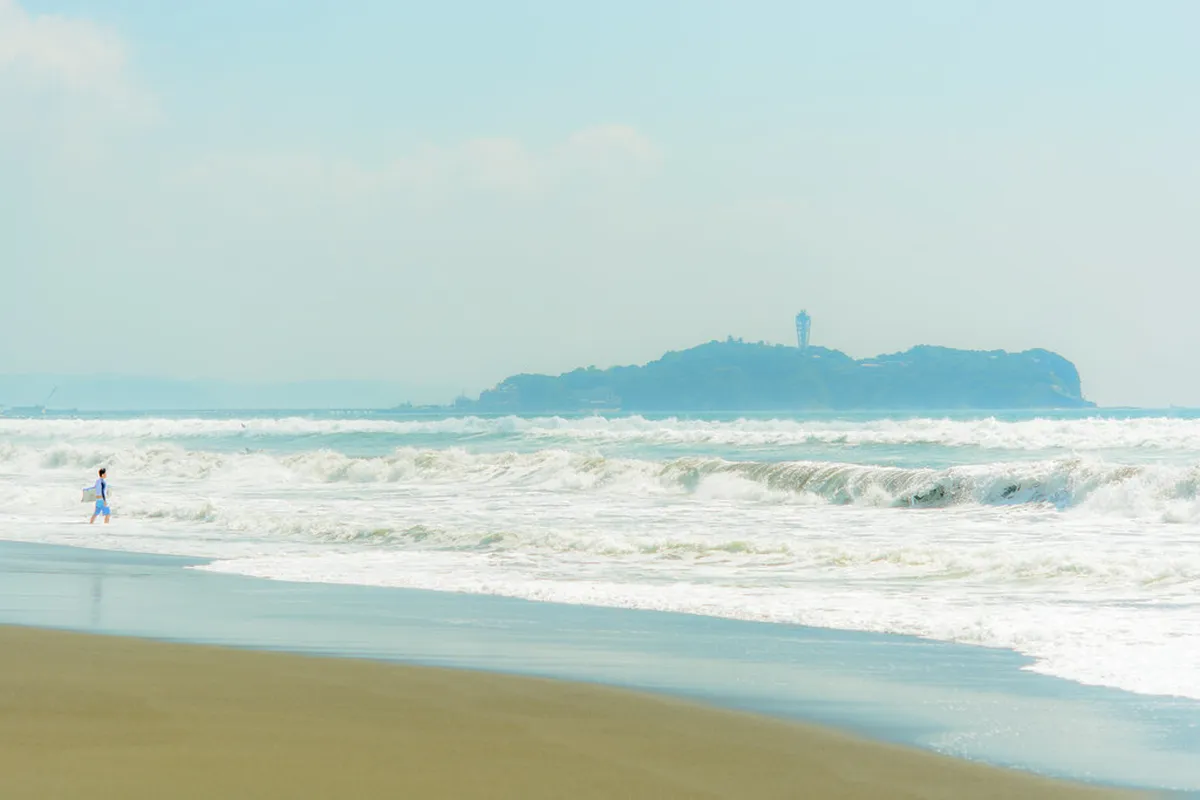
Continue three minutes past Hetsunomiya and you arrive at Nakatsunomiya, the second sub-shrine. Its vivid vermilion building dates to 853, though the present structure is a later reconstruction. This section feels quieter than the entrance area and is often photographed for its striking color against the surrounding pine trees. A further 12-minute walk brings you to Okutsunomiya at the far end of the island, closest to the sea cliffs. This was historically a Saraswati shrine before being incorporated into the Enoshima Jinja complex. The original building was lost in 1841 and rebuilt the following year. Few visitors push this far, so you will often find it genuinely uncrowded.
The walk between all three shrines is not flat. There are sustained staircase climbs between the entrance and Nakatsunomiya. The Enoshima Escar — a three-section outdoor escalator — runs parallel to the main path and costs 360 JPY for the full ride uphill. It is available in the uphill direction only; you walk down. It is worth the money if you are carrying a bag, visiting in summer heat, or have mobility concerns.
Benten, Wealth Rituals, and What Visitors Actually Come For
Benzaiten is unusual among Japanese deities because she bridges arts, music, and wealth simultaneously. At Hetsunomiya, some visitors wash coins or paper bills in the shrine's small pond near the entrance — a practice borrowed from Zeniarai Benzaiten shrines elsewhere in Kanagawa (notably in Kamakura) and carried informally to Enoshima by repeat pilgrims who consider it auspicious for business fortune. The shrine does not officially advertise this, but you will see people doing it, particularly on weekday mornings.
The shrine also draws couples who tie ema (wooden wish plaques) shaped like candles to the dedicated rack near Nakatsunomiya. The candle motif echoes the nearby Sea Candle observation tower and symbolizes a wish for enduring love. This is entirely free. Omamori (protective charms) sold at the shrine office near Hetsunomiya cost 500–800 JPY and come in Benten-specific designs not available at most other shrines in Japan — a genuine differentiator if you are looking for shrine souvenirs.
Cultural Context: Enoshima's Place in Japanese Spirituality
Enoshima Shrine traces its founding legend to 552 CE, when the goddess Benzaiten is said to have descended onto a newly risen island to subdue a five-headed dragon. This origin story — which links the island's sudden geological appearance to divine intervention — is illustrated in painted scrolls kept at the shrine. The shrine thus sits at the intersection of Shinto belief, esoteric Buddhist influence (Benzaiten entered Japanese religion via Hindu and Buddhist routes), and local Sagami Bay folklore.
The Samuel Cocking Garden, a few minutes past Hetsunomiya, was originally a private botanical garden built in the late Meiji era by an Irish merchant. It now forms a public park around the base of the Enoshima Sea Candle Travel Guide observation tower. The garden's Western architecture amid a traditional shrine island is genuinely unusual — it reflects the Meiji-era openness to foreign influence that reshaped coastal resort towns like Enoshima. Entry is 200 JPY for the garden alone, or bundled in the Enopass.
If you want deeper historical context before your visit, the Enoshima Island Spa complex at the far end of the island near Okutsunomiya has a small exhibit on the island's geological and religious history. It is not a formal museum, but the illustrated panels are worth a ten-minute look. For a dedicated local museum, Fujisawa City Museum (on the mainland, a short bus ride away) covers the shrine's full historical record.
Outdoor Highlights Around the Shrine Route
The Iwaya Caves sit at the island's western tip, a ten-minute walk past Okutsunomiya. These sea caves extend roughly 152 metres into the cliff and contain small stone sculptures of Benzaiten, dragons, and Buddhist figures placed over centuries by pilgrims. The caves are lit with lanterns and the passage narrows in places — crouching is required. Admission is 500 JPY. They are the most direct connection to the island's ancient cave-shrine origins, predating all three above-ground sub-shrines.
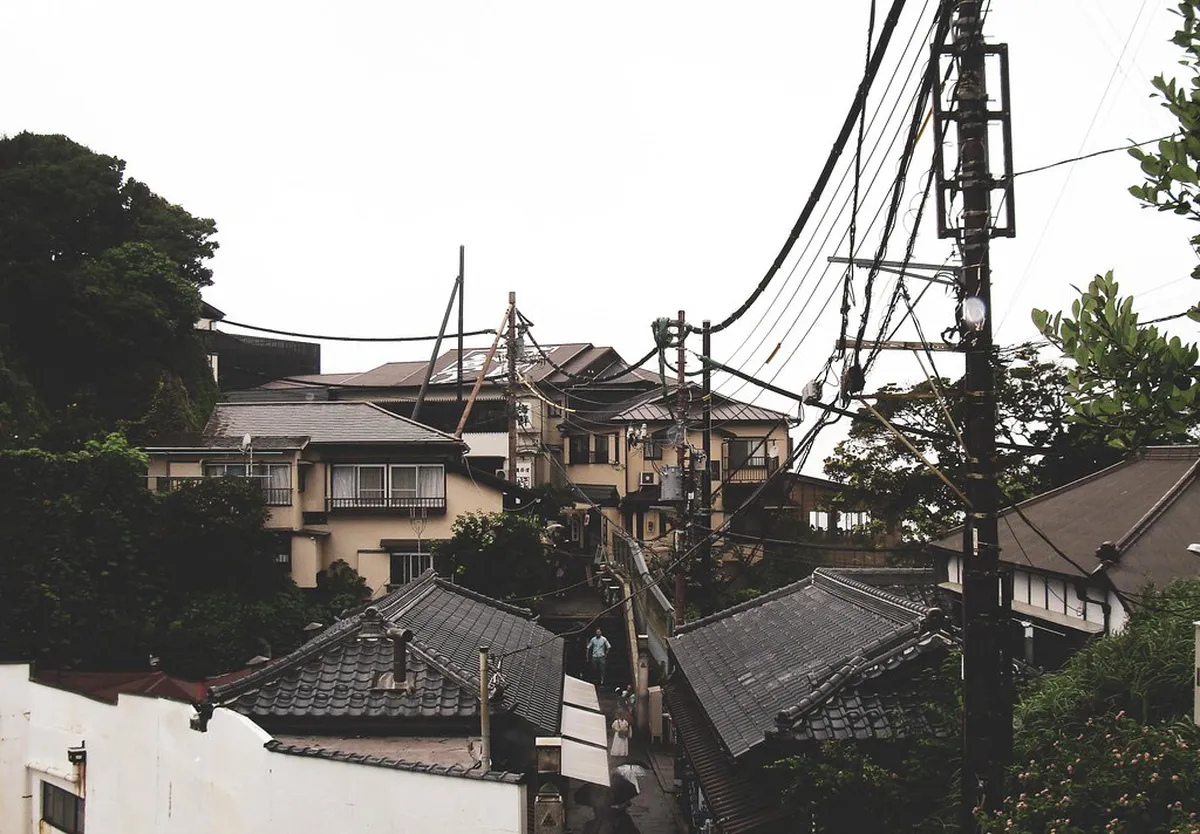
From the Iwaya Cave exit you can board the Enoshima Bentenmaru, a small passenger boat that ferries visitors back to the island entrance in about ten minutes. This is the cleanest way to loop the island without retracing steps: walk the shrine route from east to west, end at the caves, take the boat back. The boat runs when weather permits and costs around 400 JPY one way. Check the whiteboard at the Iwaya Cave exit for the day's sailing schedule, as strong swell sometimes suspends service.
The coastal paths on the island's south side between Nakatsunomiya and the caves offer views across Sagami Bay toward the Izu Peninsula. On clear mornings — typically between October and March — Mount Fuji is visible above the horizon to the northwest. The Samuel Cocking Garden provides the most reliable elevated viewpoint for this shot. Arrive by 09:00 to get the view before sea haze builds.
Visiting on a Budget and with Children
The shrine route itself is low-cost. Outer grounds: free. Hetsunomiya inner sanctuary: 150 JPY. Enoshima Escar escalator: 360 JPY total. Iwaya Caves: 500 JPY. Samuel Cocking Garden + Sea Candle: 500 JPY combined. The Enopass bundled ticket (available at the island entrance, ~1,000 JPY for adults) covers the Escar, Garden, Sea Candle, and a discount on Enoshima Aquarium Travel Guide. If you plan to visit two or more of those, the Enopass pays off immediately.
Families with children do well on this island. The Bentenmaru boat ride is popular with young children — short enough not to be boring, sea-facing enough to feel like an adventure. The Iwaya Caves require some ducking and are dark in places, which most children over five find exciting rather than frightening. The aquarium has touch pools and dolphin shows. The main shrine approach along the shopping street has multiple stalls selling grilled octopus, soft-serve ice cream, and seaside snacks, all priced under 500 JPY.
The one family logistics note: the island's uphill sections push strollers off the main route. The Escar handles this partly, but the final stretch to Okutsunomiya involves stairs with no escalator bypass. For visitors with very young children in strollers, the practical scope is Hetsunomiya to Nakatsunomiya, then the Samuel Cocking Garden and Sea Candle — a complete and satisfying two-hour circuit.
How to Plan Your Visit in 2026
The fastest route from Tokyo is the Odakyu Enoshima Line from Shinjuku to Katase-Enoshima Station (about 65 minutes, no transfer, ~900 JPY). Alternatively, the Shonan Monorail from Ofuna or the Enoshima Electric Railway (Enoden) from Kamakura (14 minutes, 260 JPY) work well if you are combining Enoshima with a Kamakura day. The island entrance is a five-minute walk from any of these stations across the Enoshima Benten-bashi bridge.
Arrive before 10:00. Weekends from spring through autumn bring heavy crowds to the main shopping street by mid-morning, and the Escar queues can reach 20 minutes. Weekday mornings are significantly quieter. The shrine office near Hetsunomiya sometimes runs special nighttime illuminations in summer (July–August) and winter (December); check Enoshima Shrine's official site for the 2026 schedule closer to your travel date, as dates vary year to year.
Wear comfortable shoes — you will climb several hundred steps across the island even with the Escar. Bring cash: several stalls on the Nakamise-dori street and the Iwaya Cave admission desk do not accept cards. A full visit — all three shrines, the caves, the Bentenmaru return, and the Sea Candle — takes three to four hours. If you have only two hours, focus on Hetsunomiya, Nakatsunomiya, and the Samuel Cocking Garden, and save the caves for a separate visit. Check out our full planning guide: Enoshima Day Trip From Tokyo Travel Guide.
Practical Shrine Details at a Glance
Address: Enoshima Jinja, 2-3-8 Enoshima, Fujisawa City, Kanagawa 251-0036. Phone: 0466-22-4020. Hours: daily 08:30–17:00. The outer grounds and approach paths are accessible any time of day, but the inner sanctuaries close at 17:00. Photography is permitted throughout the grounds; do not photograph worshippers during active prayer without permission.
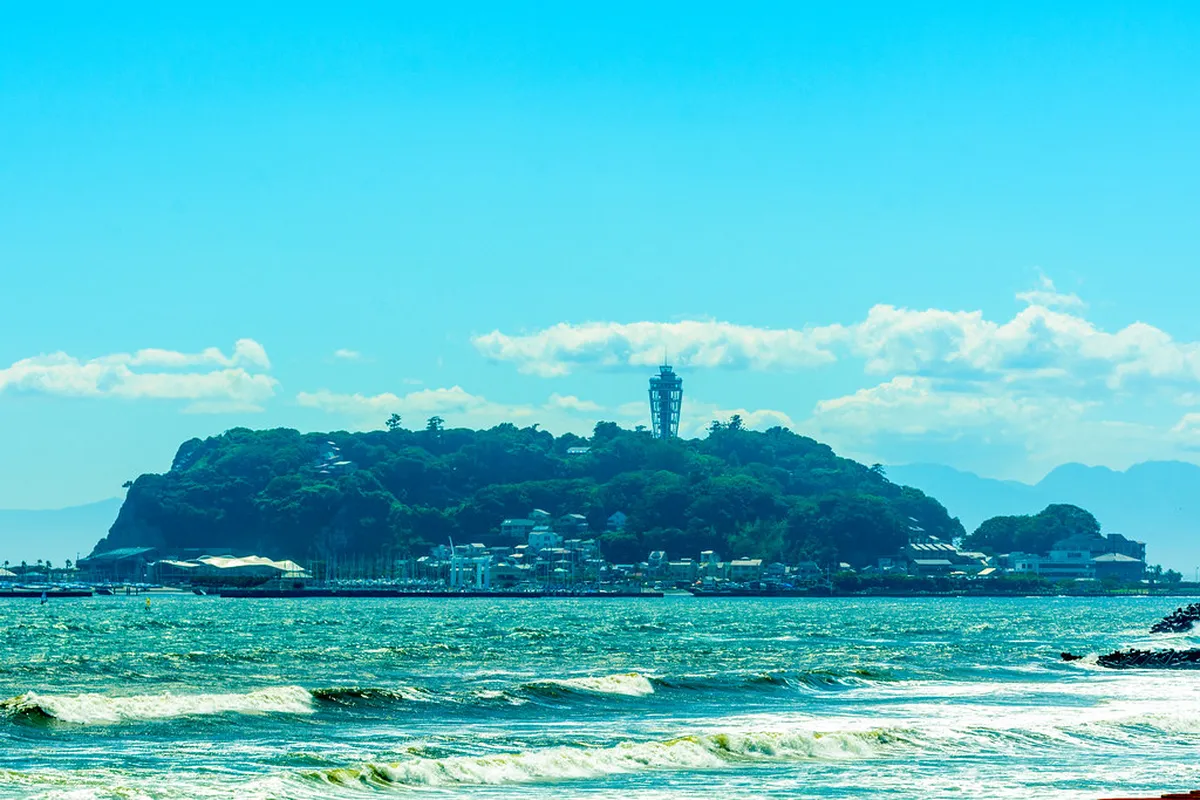
The shrine has a small dedicated parking area but reaching it by car on weekends is slow — the island's access road backs up significantly. Public transport is the recommended approach for almost all visitors. The nearest convenience store (FamilyMart) is on the mainland side of the bridge, not on the island itself. Stock up on cash and sunscreen before crossing.
For food, the island's shirasu (whitebait) dishes are the local specialty. Shirasu-don (rice bowls topped with raw or cooked whitebait) costs 1,000–1,500 JPY at most restaurants along the main street. A guide to Enoshima shirasu covers the best spots in detail. The seafood stalls closer to the shrine entrance are cheaper than the sit-down restaurants further along the route.
Frequently Asked Questions
What is Enoshima Shrine known for?
Enoshima Shrine is primarily known for honoring Benten, the goddess of music, entertainment, and good fortune. It is a complex of three distinct shrines: Hetsunomiya, Nakatsunomiya, and Okutsunomiya. The shrine also offers stunning views of the Sagami Bay and Mount Fuji.
Is it worth going to Enoshima?
Yes, Enoshima is definitely worth visiting for its unique blend of natural beauty, cultural sites, and spiritual atmosphere. It offers a refreshing escape with attractions like the Sea Candle, Iwaya Caves, and the Enoshima Aquarium. It makes an excellent day trip from Tokyo.
What does Enoshima mean in Japanese?
In Japanese, "Enoshima" (江の島) literally translates to "picture island" or "estuary island." The name reflects its scenic beauty and its location near an estuary. It aptly describes the picturesque qualities of the island.
How long does it take to visit Enoshima Shrine?
Visiting the Enoshima Shrine complex and exploring the main parts of the island typically takes about 2 to 3 hours. This estimate includes walking between the three shrines and enjoying the surrounding views. Allow more time if you plan to visit other attractions like the Sea Candle or Iwaya Caves.
Enoshima Shrine rewards visitors who go beyond the first red torii gate. The full three-shrine circuit, the Iwaya Caves, and the Bentenmaru boat return create a self-contained island loop that takes roughly three hours and costs under 2,000 JPY all-in. The shrine's Benten focus — arts, music, wealth — gives it a cultural character distinct from most Shinto sites in the greater Tokyo area. Combine it with a Kamakura morning for a full Kanagawa day trip, or visit standalone from Shinjuku when you want something more immersive than a city park.
For tickets, hours and visitor details, see our Enoshima Shrine Visitor Guide: Your Perfect Day Trip Itinerary and Enoshima attractions hub.
Free guide: Japan's Hidden Gems
12 under-the-radar places beyond Tokyo & Kyoto — with the best season to visit each and a local tip you won't find in the guidebooks.
You might also like


Continue reading
More guides you'll find useful

