Ishite-ji Temple Travel Guide: Matsuyama, Japan
Visiting Ishite-ji temple in Matsuyama? Get the history behind its name, top highlights, access from Dogo Onsen, and tips for a smooth 2026 visit.
On this page
Ishite-ji temple sits in eastern Matsuyama, just up the road from the hot spring district of Dogo Onsen. Pilgrims have walked through its striking Nio-mon gate for centuries, since it holds a place as Temple 51 on the Shikoku 88-temple pilgrimage. This guide walks through the temple's history, its main highlights, and the practical details you need for a 2026 visit.
Few visitors expect a National Treasure gate, a dim mantra-filled cave, and a centuries-old legend all inside one temple compound. We cover how the temple got its unusual name and what to see across the grounds. We also explain how to reach it on foot or by tram from central Matsuyama.
Last updated July 2026.
History and Origins of Ishite-ji Temple
Local records trace Ishite-ji back to the year 728, when it was first built as a temple called Anyo-ji. It later took the name Ishite-ji, which translates roughly to stone hand temple, for reasons tied to a local legend. Today it ranks as Temple 51 on the Shikoku 88-temple pilgrimage, a circuit walked by pilgrims for well over a thousand years.
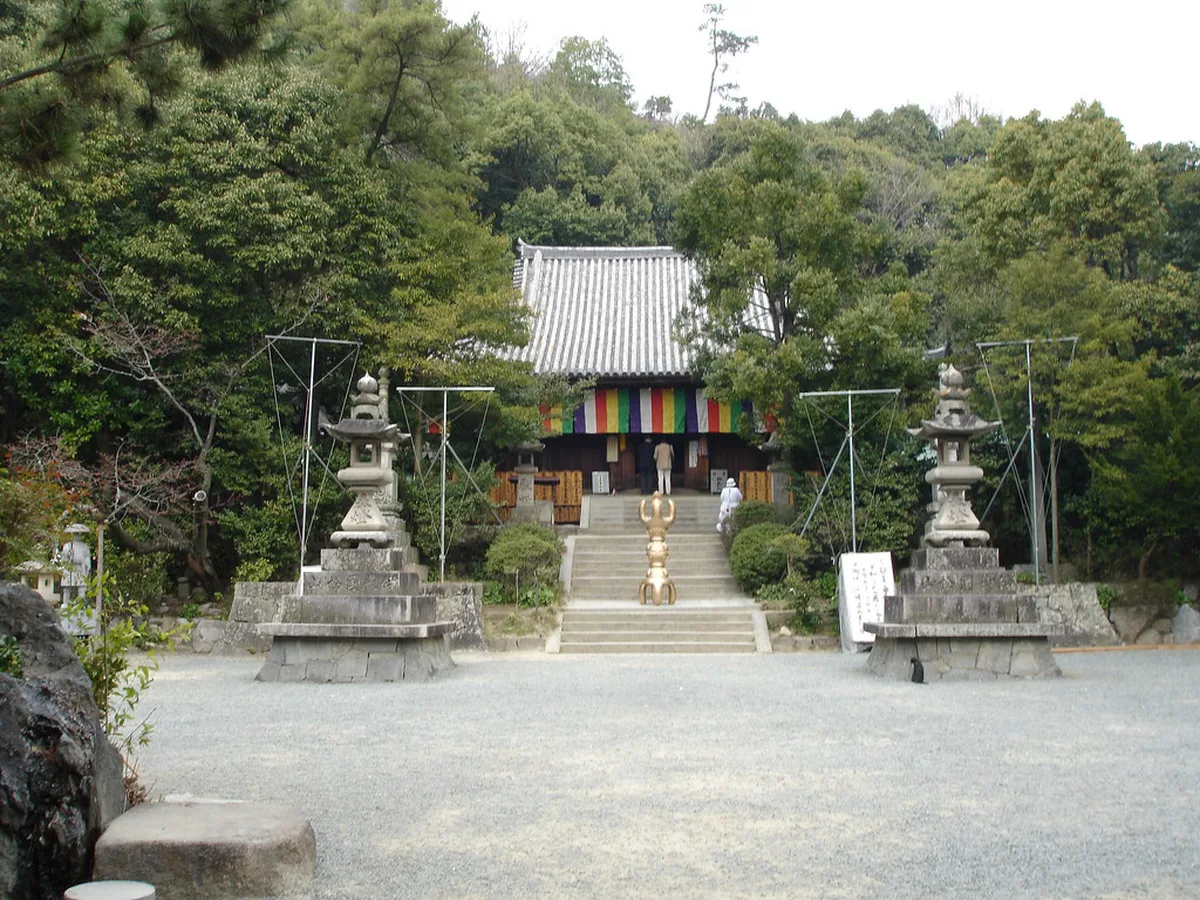
The pilgrimage traces back to the monk Kukai, also known by his posthumous title Kobo Daishi, who founded the Shingon school of Buddhism. Ishite-ji keeps close ties to that history, and its buildings reflect centuries of rebuilding after fires and earthquakes. Visitors today still see monks conducting rituals inside the main hall, alongside pilgrims moving through on their own 88-temple journey.
The temple's Nio-mon gate dates to 1318 and now holds status as a National Treasure of Japan. Guardian statues stand inside the gate, watching over everyone who passes beneath its heavy wooden beams. That level of protected heritage is rare, and it sets Ishite-ji apart from many smaller temples along the route.
Highlights of Ishite-ji: What to See on the Grounds
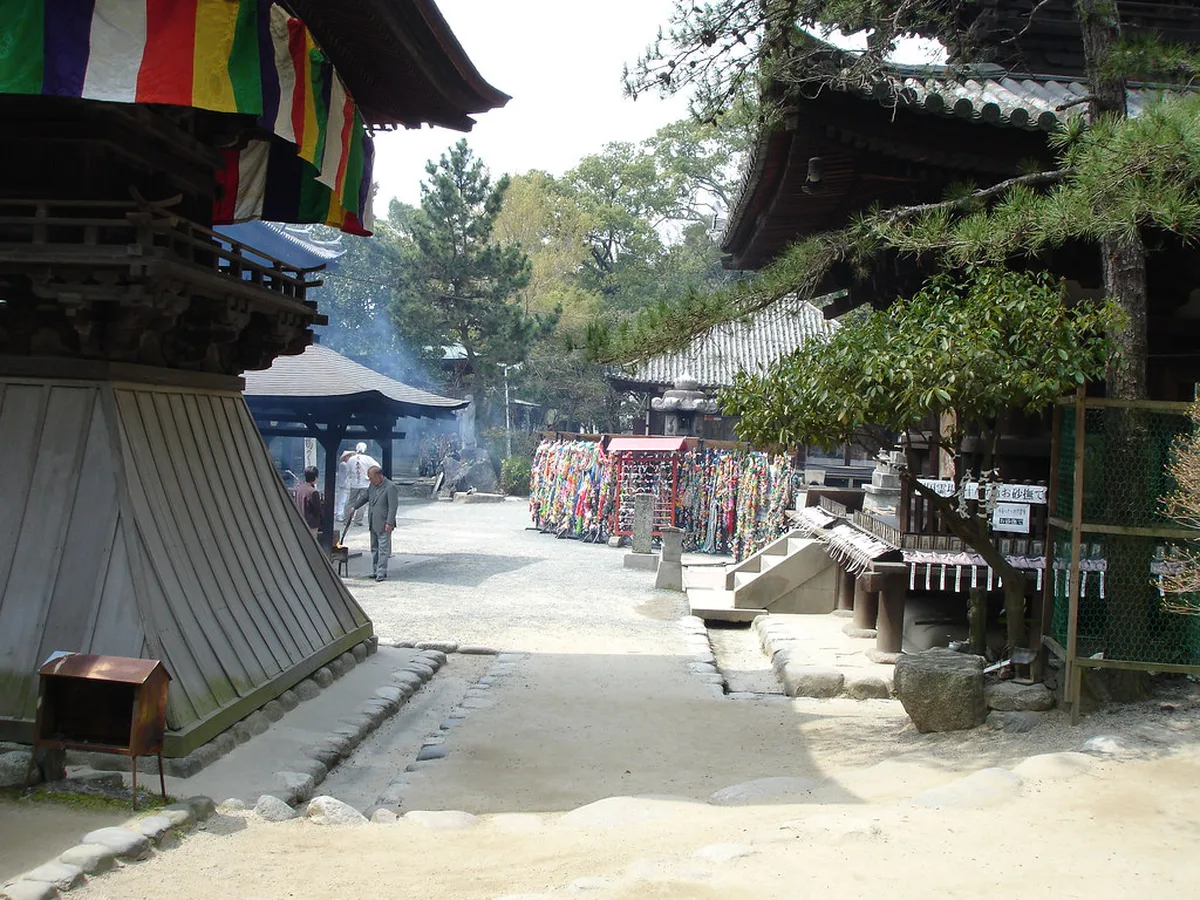
Beyond the Nio-mon gate, a three-story pagoda rises above the temple courtyard as one of several Important Cultural Properties on site. The pagoda's weathered wood and layered roofline make it a favorite photo stop for visitors walking the grounds. Nearby stands the main hall, where incense smoke drifts across a courtyard shared by pilgrims and day-trip visitors alike.
Behind the main hall, a dim tunnel called the Mantra Cave winds through rows of small Buddhist statues lit by candlelight. Recorded chanting echoes along the passage, giving the walk a hushed, almost meditative feel that differs from the open courtyard outside. Most visitors need only a few minutes to pass through, though the experience tends to stick with people long after they leave.
A separate Treasure Hall displays temple artifacts collected across the centuries, from carved statues to pilgrimage-era documents. The temple sits close enough to Dogo Onsen that many visitors pair both stops into one relaxed afternoon. Street stalls along the approach add a final layer of local color before or after your visit.
- Nio-mon Gate
- This wooden gate dates to 1318 and holds status as a National Treasure.
- Guardian statues flank the entrance and have watched over pilgrims for centuries.
- Three-Story Pagoda
- The pagoda counts among several Important Cultural Properties spread across the grounds.
- Its weathered wood and layered roof make it a favorite spot for photos.
- Mantra Cave
- A dim tunnel behind the main hall holds rows of small Buddhist statues.
- Recorded chanting plays along the passage, creating a quiet, meditative walk for visitors.
- Treasure Hall
- Historic artifacts and pilgrimage-era documents sit on display inside this separate hall.
- A modest additional fee usually applies, so check current signage before entering.
The Mantra Cave behind the main hall offers a uniquely meditative experience — recorded chanting echoes along the dim passage lined with small Buddhist statues, creating a memorable walk that usually takes just a few minutes.
A Story That Still Lives in Stone: The Ishite Legend
According to local legend, a wealthy landowner named Emon Saburo once turned away a wandering monk begging at his gate. That monk was Kukai, and after Emon Saburo refused him several times, misfortune struck his family one after another. Grief-stricken and repentant, Emon Saburo set out walking around Shikoku in search of the monk to ask forgiveness.
The story says Emon Saburo circled the island many times without success, until he collapsed near this very temple. Kukai finally appeared at his side, and Emon Saburo died soon after, holding a small stone in his closed hand. When the stone opened, it reportedly bore an inscription naming his rebirth, and the temple kept it as a relic.
That relic gave the temple its current name, since Ishite roughly means stone hand in Japanese. Many historians treat Emon Saburo's journey as the symbolic origin of the entire 88-temple Shikoku pilgrimage tradition.
Getting to Ishite-ji from Matsuyama and Dogo Onsen
Most travelers reach Ishite-ji after first arriving in central Matsuyama, whether by train, ferry, or plane through Matsuyama Airport. Our guide on how to get to Matsuyama covers routes from Okayama, Hiroshima, and Tokyo in more detail. From the city center, the temple sits within easy reach on foot or by local tram.
The simplest route runs through Dogo Onsen, since Ishite-ji sits roughly a kilometer away, about a 15 to 20 minute walk. Travelers staying near the hot springs often combine both stops into one unhurried morning or afternoon outing. For wider trips across the city, our guide to getting around Matsuyama breaks down the local tram network and fares.
Drivers can reach the temple in roughly 10 minutes from Matsuyama City Station, with parking available near the grounds. Buses also run toward the area, though walking from Dogo Onsen usually feels just as quick and far more scenic.
Planning Your Visit: Hours, Cost, and Time to Budget
Entry to the main temple grounds costs nothing, which makes Ishite-ji an easy stop for families watching their travel budget. The separate Treasure Hall usually charges a modest fee, so check current signage or the official pilgrimage site before you go. Grounds generally stay open from early morning into early evening, but schedules can shift, so confirm the current hours in advance.
Plan for about 30 to 60 minutes if you only want to see the gate, pagoda, and main hall. Add the Mantra Cave and Treasure Hall to your walk, and that budget stretches closer to 60 to 90 minutes. Families with young children can still manage the visit comfortably, since the paths stay flat and the loop stays short.
A handful of small shops line the approach, selling local treats such as taruto, Ehime's rolled sponge and red bean cake. Our our Matsuyama food guide lists more spots to try regional dishes once you head back toward the city center. Pilgrims dressed in white, carrying wooden staffs, often stop at these same stalls between temple visits.
Many visitors base themselves near Dogo Onsen, since it sits within easy walking distance of both the temple and the hot springs. Our guide to where to stay in Matsuyama compares neighborhoods for travelers weighing budget against convenience.
If you would rather book lodging directly, you can find stays near Ishite Tera Temple through a hotel search covering the Ehime area. Compare a few options before you commit, since rates near Dogo Onsen shift with the season and with local festival dates.
Nearby Spots and Day Trip Ideas Around Ishite-ji
Ishite-ji works well as one stop in a longer loop around eastern Matsuyama, rather than a single isolated visit. Isaniwa Shrine sits a short walk away, known for its striking stacked gate and hillside setting above Dogo Onsen. Dogo Onsen Honkan, one of Japan's oldest public bathhouses, makes a natural follow-up stop after the temple grounds.
Pilgrims continuing the Shikoku route often walk on toward Taisan-ji, Temple 52, set among quiet hills outside the city. That stretch takes a few hours on foot, so most casual visitors treat it as a separate day trip rather than an add-on. Our day trips from Matsuyama guide lays out other options if you have an extra day in Ehime.
For a more flexible plan, you can also find things to do near Ishite Tera Temple and book activities ahead of your trip. Combining a few of these stops turns a single temple visit into a fuller half-day or full-day outing around Matsuyama.
- Isaniwa Shrine
- This hillside shrine sits a short walk from Ishite-ji near Dogo Onsen.
- Its stacked gate structure draws visitors interested in local shrine architecture.
- Dogo Onsen Honkan
- This historic public bathhouse ranks among Japan's oldest working hot spring buildings.
- Many visitors soak here right after finishing their temple visit nearby.
- Taisan-ji Temple, Number 52
- Pilgrims continuing the Shikoku route often walk here after leaving Ishite-ji.
- The temple sits among quiet hills, a few hours away on foot.
Best Time to Visit and Visitor Etiquette at Ishite-ji
Late March into early April brings cherry blossoms around the Nio-mon gate and the three-story pagoda, a stretch many photographers treat as the best window for shots against the temple's older wood and stone. Mid-November through early December brings a similar rush for autumn foliage, when the color contrast against the historic buildings draws its own crowd. Outside those two windows, the grounds tend to stay noticeably quieter.
Wear shoes you can walk in comfortably, since the Mantra Cave floor is dark and the footing turns uneven in places. Some areas of the grounds restrict photography, so check posted signage before raising a camera near the Treasure Hall or inside the cave. Pilgrims and worshippers use the grounds daily for prayer, so keep voices low and give people room at the main hall to do so undisturbed.
Photography is restricted in some areas — check posted signage before raising a camera, especially near the Treasure Hall and inside the Mantra Cave. Wear comfortable walking shoes, as the cave floor is dark and uneven in places.
Frequently Asked Questions
What does the name Ishite-ji mean?
Ishite roughly means stone hand, a name tied to the legend of Emon Saburo, who died near the temple holding an inscribed stone. Kobo Daishi is said to have appeared to him before his death, tying the story to the wider Shikoku pilgrimage. The temple has kept the relic and the name ever since.
Is it free to visit Ishite-ji temple?
Yes, the main temple grounds are free to enter, including the Nio-mon gate, pagoda, and main hall. The separate Treasure Hall usually charges a modest fee, so check current signage before you go. Budget roughly 30 to 90 minutes depending on how much you explore.
How do I get from Dogo Onsen to Ishite-ji?
Ishite-ji sits about a kilometer from Dogo Onsen, roughly a 15 to 20 minute walk through the hot spring district. Many visitors combine both stops in one relaxed outing, since the route stays flat and easy to follow. Local buses and taxis also cover the short distance if you prefer not to walk.
What is the Mantra Cave at Ishite-ji?
The Mantra Cave is a dim tunnel behind the main hall, lined with small Buddhist statues and recorded chanting. Most visitors need only a few minutes to walk through, though the quiet, candlelit passage tends to stay memorable. It offers a different mood than the open courtyard outside.
What else can I see near Ishite-ji during a trip to Matsuyama?
Isaniwa Shrine and Dogo Onsen Honkan both sit within easy walking distance of the temple grounds. History fans often add Matsuyama Castle to the same day, since our tips for visiting Matsuyama Castle covers tickets and access from the city center. Together these stops make a full day around eastern Matsuyama.
Ishite-ji rewards a visit with layers most travelers do not expect from a single temple stop. A National Treasure gate, a candlelit cave, and a centuries-old legend all sit within one modest compound near Dogo Onsen. Pair it with the hot springs, a nearby shrine, or a slice of Ehime's rolled taruto cake for a fuller afternoon.
Confirm current hours and any Treasure Hall fees before you go, since schedules can shift year to year. With a little planning, Ishite-ji fits easily into a 2026 trip through Matsuyama, whether you arrive on foot, by tram, or by car.
Use our Matsuyama travel hub for the wider city overview.
Free guide: Japan's Hidden Gems
12 under-the-radar places beyond Tokyo & Kyoto — with the best season to visit each and a local tip you won't find in the guidebooks.
You might also like


Continue reading
More guides you'll find useful