

Day Trips From Matsuyama: 2026 Travel Guide
Plan the best day trips from Matsuyama in 2026, from Shimanami Kaido cycling to Uchiko, Ozu, and a Miyajima ferry crossing across the Inland Sea.
On this page
Matsuyama sits on Shikoku Island as a comfortable base for exploring Ehime Prefecture beyond its own city limits. JR Matsuyama Station and the nearby Matsuyama Kanko ferry port connect the city to castle towns, cycling routes, and neighboring Honshu. This guide covers real day trips from Matsuyama, with typical travel times instead of exact schedules that change often.
We focus on five routes: cycling near Imabari, old-town Uchiko, castle-town Ozu, pottery-focused Iyo and Tobe, and a Setouchi ferry to Hiroshima. Each sits within roughly one to two hours of central Matsuyama by train, bus, or boat. Our guide to reaching Matsuyama covers flights, trains, and ferry routes if you have not arrived yet.
Last updated July 2026.
Planning Day Trips From Matsuyama: Station and Rail Passes
Most day trips start at JR Matsuyama Station, the city's hub for JR Shikoku limited express trains. Trams and buses reach Dogo Onsen and Matsuyama Castle from the station in about ten to fifteen minutes. Because those sights sit inside the city, treat them as a warm-up rather than one of your day trips.
Getting around the city itself is straightforward once you learn the tram loop and the Iyotetsu rail network. Our guide to getting around Matsuyama breaks down tram fares and station transfers in full. Save that page for local transport, and use this guide for the trips beyond the city limits.
For the routes below, a regional rail pass can trim costs across several separate train tickets. The ALL Shikoku Rail Pass covers JR Shikoku lines used for the Uchiko, Ozu, and Iyo routes here.
- Imabari and the Shimanami Kaidō cycling route
- Reach Imabari in about forty-five to seventy minutes by train or highway bus.
- Cycle a chain of bridges over the Seto Inland Sea toward Onomichi in Hiroshima.
- Uchiko's preserved wax-merchant old town
- Reach Uchiko in about one hour by train, changing once at Iyo-Ozu Station.
- Wander the Yokaichi quarter and step inside the restored Uchiko-za kabuki theatre.
- Ozu, the castle town on the Hiji River
- Reach Ozu in about one hour by train, usually changing at Iyo-Ozu Station.
- Tour the reconstructed castle keep, then walk down to the riverside Garyu Sanso villa.
- Iyo and Tobe for pottery and a seaside train stop
- Reach Iyo and Tobe in about thirty to fifty minutes by local train or bus.
- Browse hand-thrown Tobe-yaki pottery, or ride the coastal line to Shimonada Station.
- A ferry day trip to Hiroshima and Miyajima
- Plan on seventy to ninety minutes each way by high-speed ferry from Matsuyama Kanko Port.
- Reach the Peace Memorial Park or Miyajima's floating torii gate with an early start.
| Destination | Travel Time | How to Get There | Key Highlight |
|---|---|---|---|
| Imabari / Shimanami Kaidō | 45–70 min | Direct train or highway bus | 70-km cycling route across island bridges |
| Uchiko | 1 hour | Train (change at Iyo-Ozu Station) | Edo-Meiji wax-merchant old town, kabuki theatre |
| Ozu | 1 hour | Train (usually change at Iyo-Ozu Station) | Reconstructed castle keep, Garyu Sanso villa, cormorant fishing |
| Iyo / Tobe | 20–50 min | Local train or bus | Hand-thrown pottery workshops, Shimonada coastal station |
| Hiroshima / Miyajima | 70–90 min | High-speed ferry | Peace Memorial Park, floating torii gate at Itsukushima Shrine |
Imabari and the Shimanami Kaidō Cycling Route
Imabari sits about forty-five to seventy minutes from Matsuyama by direct train or highway bus. Rental shops near the Sunrise Itoyama terminal by Imabari Station rent bicycles by the day. A refundable deposit plus a modest daily fee, often one to two thousand yen, covers most bikes.
The full Shimanami Kaidō route runs about seventy kilometers from Imabari to Onomichi in Hiroshima Prefecture. Riders can drop bikes at Onomichi and head back by bus or ferry, or simply reverse the ride. A full crossing usually takes six to eight hours with photo stops, so start by mid-morning at the latest.
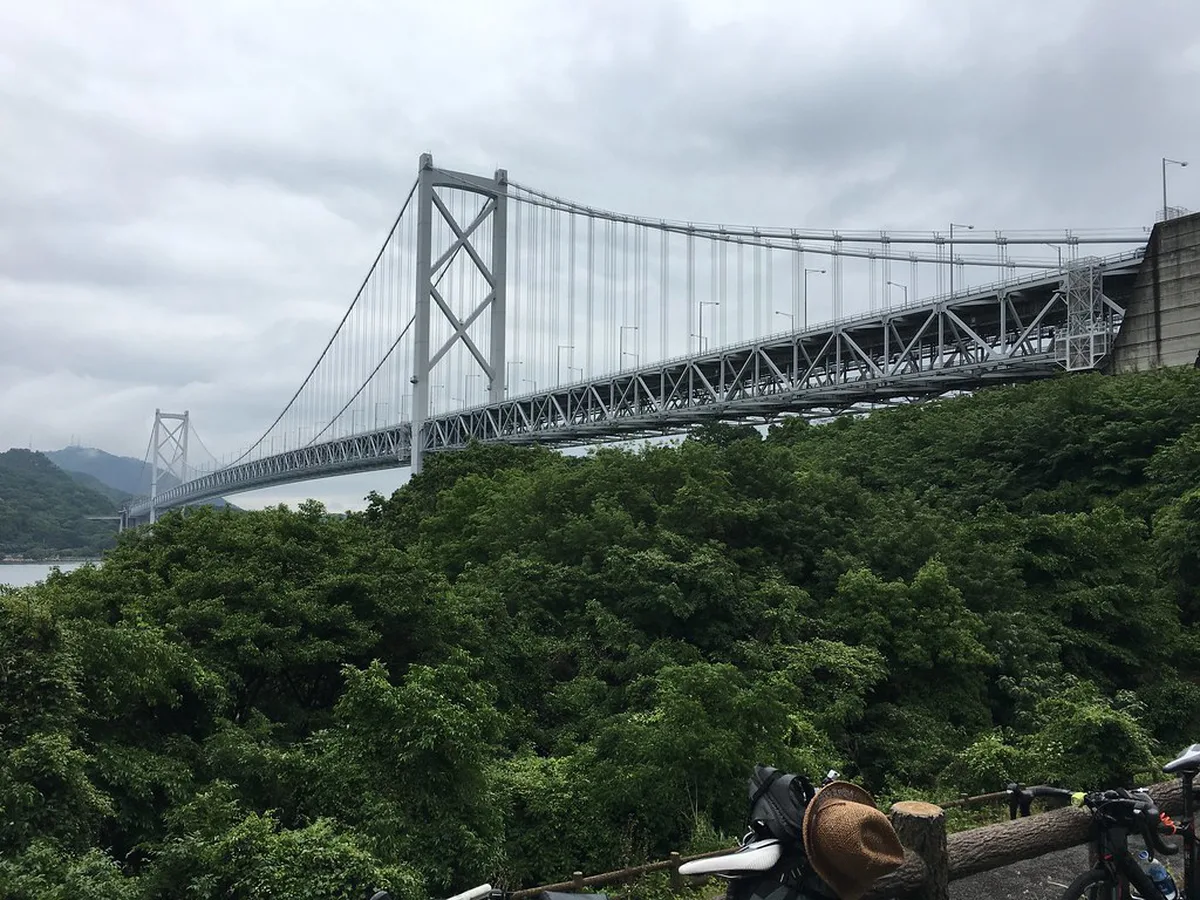
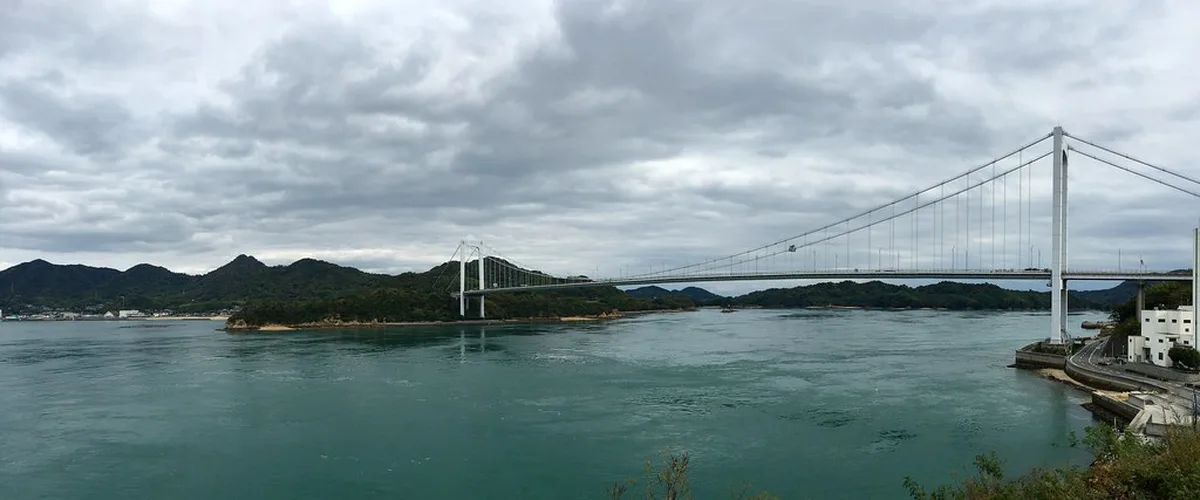
Travelers short on time can ride only as far as Oshima Island and turn back before lunch. That shorter loop still crosses the Kurushima-Kaikyō Bridge, one of the longest suspension bridge systems anywhere. Spring and early autumn tend to bring cooler, calmer riding weather than the humid peak of summer.
Book bike rentals at least a day ahead during spring and autumn peak season. Start your ride by mid-morning to complete the full 70-kilometer route with photo stops before sunset.
Uchiko's Preserved Wax-Merchant Old Town
Uchiko sits roughly one hour from Matsuyama by train, with a change at Iyo-Ozu Station. The town grew wealthy during the Edo and Meiji periods from producing vegetable wax and washi paper. That wealth built the merchant houses that still line the Yokaichi historic district today.
The Uchiko-za theatre, built in 1916, once staged kabuki and still hosts occasional kabuki and puppet shows. Entry runs a modest few hundred yen, and a self-guided visit takes about thirty to forty minutes.
A short walk away, the Kamihaga Residence preserves a wax-merchant family's home and wax-processing workshop. Exhibits explain how wax was pressed, dyed, and shipped, adding texture to the town's quiet streets. Budget around two hours total for Uchiko-za, the Kamihaga Residence, and a slow walk through Yokaichi.
Ozu, the Little Kyoto of the Hiji River
Ozu sits about one hour from Matsuyama, usually reached by changing trains at Iyo-Ozu Station. Locals call it the little Kyoto of Iyo, thanks to its castle, old quarter, and river views. The reconstructed castle keep, rebuilt in 2004 from historic photographs, overlooks the Hiji River below.
Downstream from the castle, the Garyu Sanso villa sits on a quiet bend of the same river. Its teahouse-style buildings blend into the hillside so well that architects still study the design. From June through September, boats on the Hiji River carry out traditional cormorant fishing after sunset.
Ozu is also known for tonkurimabushi, a pork and chestnut dish built around the local chestnut harvest. Our the Ehime food guide covers where to try regional dishes like this closer to the city. For seasonal Ehime recipes and ingredient notes, Ehime Kitchen ef is a handy reference before you travel.
Traditional cormorant fishing (ukai) runs June through September after sunset on the Hiji River. Book boat tours in advance, as spots fill quickly during peak season.
Iyo and Tobe for Pottery, Plus Shimonada Station
Iyo City sits just south of Matsuyama, about twenty to thirty minutes away by local train or bus. Neighboring Tobe town has produced Tobe-yaki pottery for more than two centuries, prized for its blue-and-white glaze. Workshops near the Tobe Ceramics Museum let visitors watch potters at the wheel and browse finished pieces.
From Iyo, the JR Yosan Line's coastal branch runs through Shimonada, once called Japan's closest station to the sea. Choosing the seaside route through Nagahama instead of the inland line adds time but rewards riders with ocean views. Photographers often plan around sunset, when light over the Iyonada Sea turns the platform gold.
Spring brings canola flowers near Shimonada, while clear winter days offer sharp views across the water. Our guide to the best time to visit Matsuyama covers seasonal weather across the wider region. Trains along this branch run only a few times a day, so check the timetable before you plan around it.
Crossing the Seto Inland Sea to Hiroshima and Miyajima
High-speed ferries leave Matsuyama Kanko Port for Hiroshima several times a day, crossing the Seto Inland Sea. The crossing usually takes seventy to ninety minutes, weather permitting, landing near central Hiroshima.
From the Hiroshima side, most travelers head straight to the Peace Memorial Park and Museum in the morning. A streetcar and short ferry ride then reach Miyajima, home to the floating torii gate at Itsukushima Shrine. Tide timing matters on Miyajima, since the torii gate sits in shallow water at low tide.
Fitting both Hiroshima and Miyajima into one day from Matsuyama makes for a long, full schedule. Travelers who prefer a slower pace sometimes stay one night in Hiroshima and return the next day. Either way, confirm ferry departure times in advance, since schedules shift slightly between seasons.
Frequently Asked Questions
How many day trips can I realistically fit in from Matsuyama?
Most visitors manage one day trip per day, since travel time both ways can reach two to three hours. Pairing a half-day cycling loop near Imabari with a relaxed evening back in Matsuyama works better than rushing two full destinations. Focus on one region per day for a more comfortable pace.
Do I need a car for these day trips from Matsuyama?
No, trains, trams, and buses reach every destination in this guide, including Imabari, Uchiko, Ozu, and Iyo. A rental car helps mainly on the Shimanami Kaidō route if you skip cycling and prefer scenic stops by road. For most travelers, public transport plus a rental bicycle covers these routes comfortably.
What is the best season for a Shimanami Kaidō cycling day trip?
Spring and early autumn bring cooler temperatures and calmer winds, making the cycling route more comfortable than midsummer. Summer heat and humidity can slow riders down, especially across the exposed bridge sections. Winter days stay quieter but shorter, so plan an earlier start if you cycle then.
Should I stay overnight for the Hiroshima and Miyajima day trip?
A single day works if you leave Matsuyama early and plan the return ferry before evening. Travelers who want a slower pace at the Peace Memorial Park or Miyajima's shrine often prefer an overnight stay instead. If you keep your base in Matsuyama, our guide to where to stay in Matsuyama covers convenient neighborhoods for early departures.
Matsuyama works well as a base because so many different day trips branch out from it. Cyclists, castle fans, pottery enthusiasts, and travelers chasing a coastal train ride all find a fitting route. Pick one or two routes, rather than trying to fit all five into a single visit.
If you are still shaping your trip, our Matsuyama itinerary guide shows how to combine these routes with city sights. Booking transport a day ahead during spring and autumn helps, since those seasons draw the most visitors. Whichever route you pick, JR Matsuyama Station remains the easiest point to return to each evening.
Pair this with our main Matsuyama attractions guide to plan the rest of your trip.
To round out a Shikoku itinerary, cross the island to the Pacific coast and explore things to do in Kochi — castle town of the samurai hero Sakamoto Ryoma.
Free guide: Japan's Hidden Gems
12 under-the-radar places beyond Tokyo & Kyoto — with the best season to visit each and a local tip you won't find in the guidebooks.
You might also like


Continue reading
More guides you'll find useful


