What to Eat in Tokushima: 12 Local Foods
What to eat in Tokushima: pork-bone ramen, Awa beef, Naruto sea bream, and Iya soba, with 2026 prices, hours, and where to find each dish.
On this page
Last updated August 2026, this guide covers what to eat in Tokushima across three areas: Tokushima City, the Naruto coast, and the Iya Valley. Formerly Awa province, the prefecture pairs pork-bone ramen with sea bream from the Naruto Strait and buckwheat noodles from its mountain villages. Twelve dishes below list price, hours, and access, since some sit near Tokushima Station and others require a longer trip into the mountains.
Tokushima's Food Regions: City, Coast, and Mountains
Tokushima sits on the island of Shikoku and was once called Awa province. Three landscapes shape its food. Yoshino River valley feeds rice paddies and citrus groves around Tokushima City. Naruto Strait's fast currents run along the coast, famous for whirlpools and sea bream. West of the city, the Iya Valley climbs into steep mountains where buckwheat replaces rice. Prioritize three dishes first: Tokushima ramen, Awa beef, and Naruto sea bream. Tokushima City alone counts more than 100 ramen shops, according to Tokushima's tourism office. The rest of this guide covers the other nine specialties, grouped so you can plan meals around wherever you're already headed.
Sudachi: The Citrus Behind Tokushima's Flavor
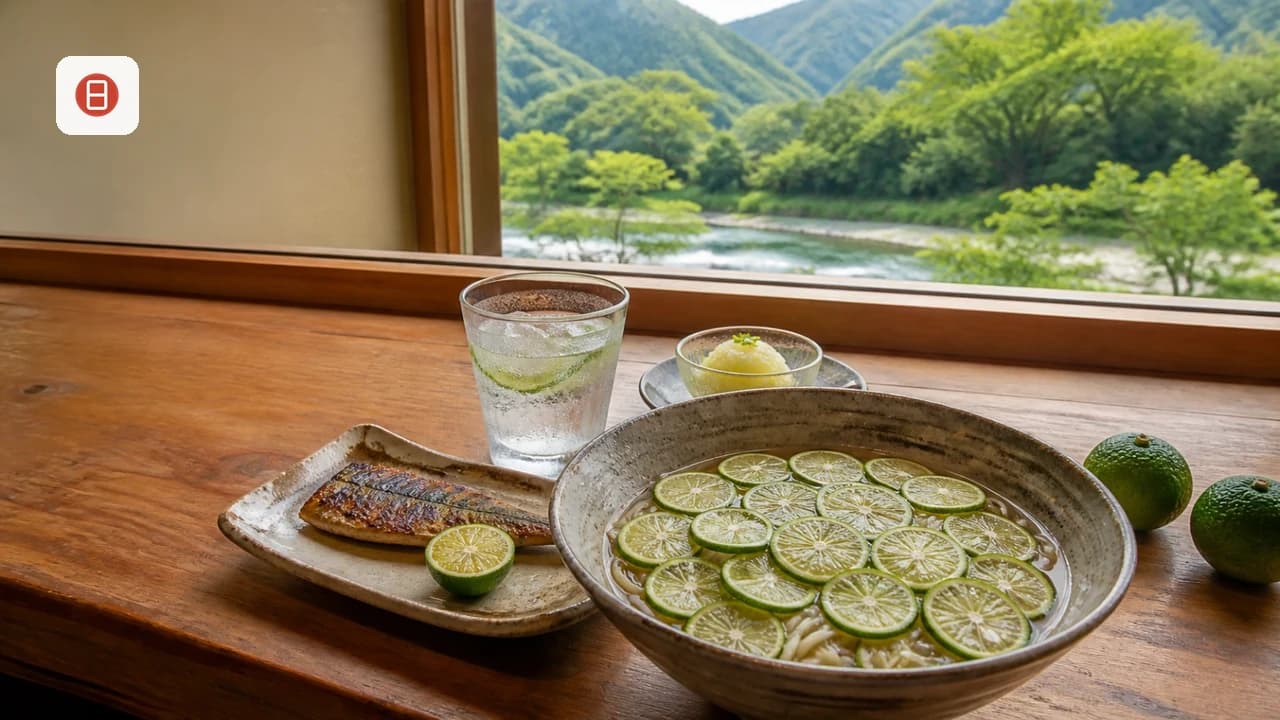
Sudachi citrus shows up in Tokushima cooking before you ever sit down to a full dish. Tokushima grows an estimated 90% of Japan's sudachi crop, and cooks squeeze it over ramen, grilled fish, and dipping sauces. The fruit is sharper and more acidic than yuzu or lemon, with a fine pulp. Tokushima's official tourism site describes it as a strong, aromatic flavor in any dish. Local producers also bottle it into juice and alcoholic drinks. For where the fruit grows and how cooks use it, see the sudachi growing guide.
What to Eat in Tokushima: The Full List of 12 Local Specialties
Each entry below names a dish, where to find it, and who it suits best. Prices are listed in yen only. Confirm current hours before you visit, since small restaurants change schedules often.
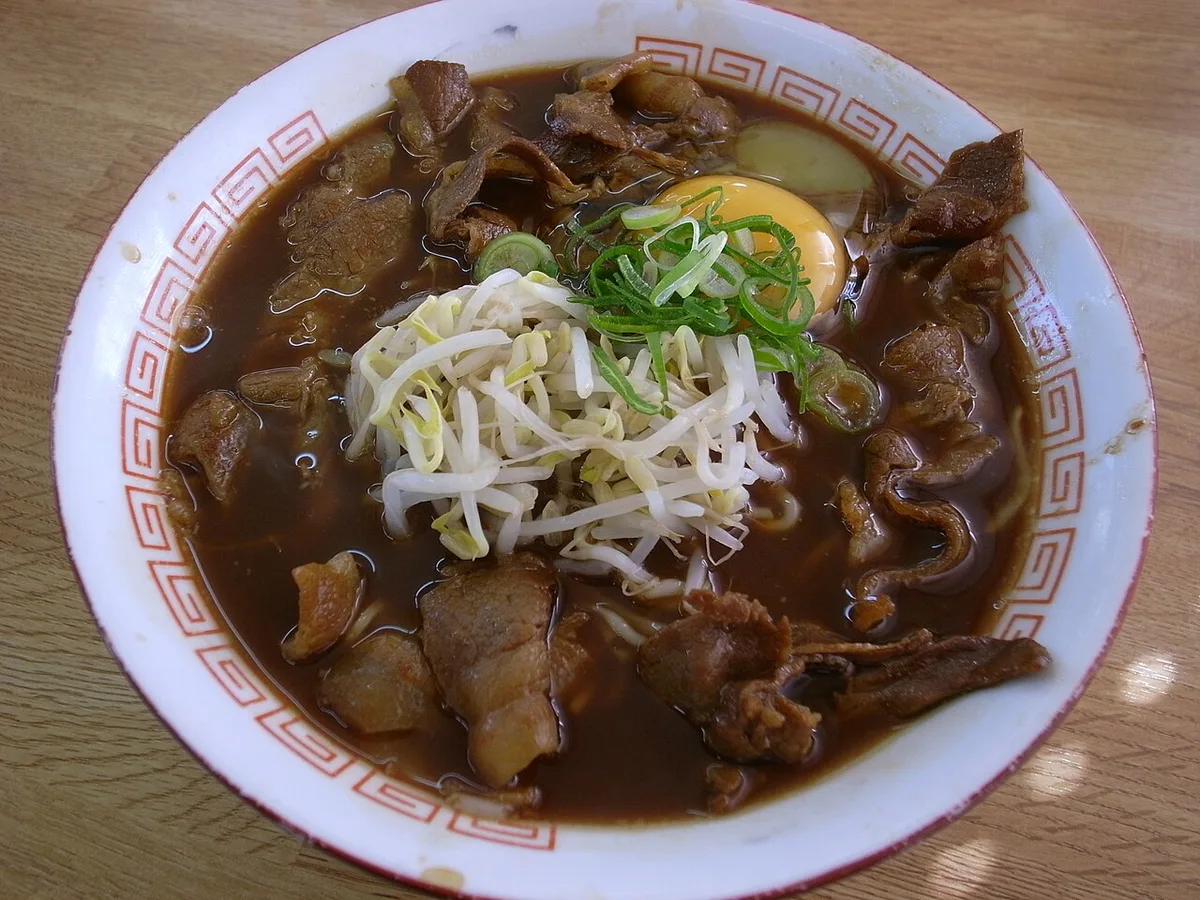
- Tokushima Ramen (Brown Broth)
- Order the brown broth version: pork-bone stock darkened with soy sauce, topped with pork, bean sprouts, green onion, and, at some shops, a raw egg.
- A side of rice is a common pairing. Raw or undercooked egg carries foodborne-illness risk, so ask to omit it or request a cooked alternative if pregnant, immunocompromised, elderly, or serving a young child.
- Inotani Ramen and Todai Ramen are long-running shops in Tokushima City; confirm branch hours before visiting. See the Tokushima Ramen Guide 2026: Brown, White, and Yellow Styles Explained for more picks.
- Awa Beef (Wagyu Steak & Shabu-Shabu)
- Awa beef comes from a bloodline of Tokushima black cattle and grades 4 or higher on Japan's official marbling scale.
- Expect deep marbling and a sweet finish, served simply as steak or folded into a shabu-shabu hot pot.
- Save it for a celebration meal in Tokushima City, since a formal course can run toward ¥10,000, well above a bowl of ramen. Best for: a splurge dinner or special occasion.
- Awa Odori Chicken (Yakitori Skewers)
- This local chicken has reddish flesh, relatively low fat, and a firm bite; its name plays on the Awa Odori festival.
- Domannaka near Tokushima Station serves the chicken as skewers. For more shops and cuts, see the Awa Odori chicken guide.
- Confirm the current menu, service window, closing day, and reservation policy directly before visiting.
- Awa Bancha Tea
- This coarse green tea goes through a distinct fermentation step that most Japanese bancha skips, producing a tangy, slightly sour cup.
- Tokushima's mild climate suits the tea bushes, and the prefecture's tourism office credits the climate for its aromatic quality.
- Look for it bottled or loose-leaf in Tokushima City shops as a pairing for heavier dishes like ramen or beef. Best for: a non-alcoholic pairing or a packable souvenir.
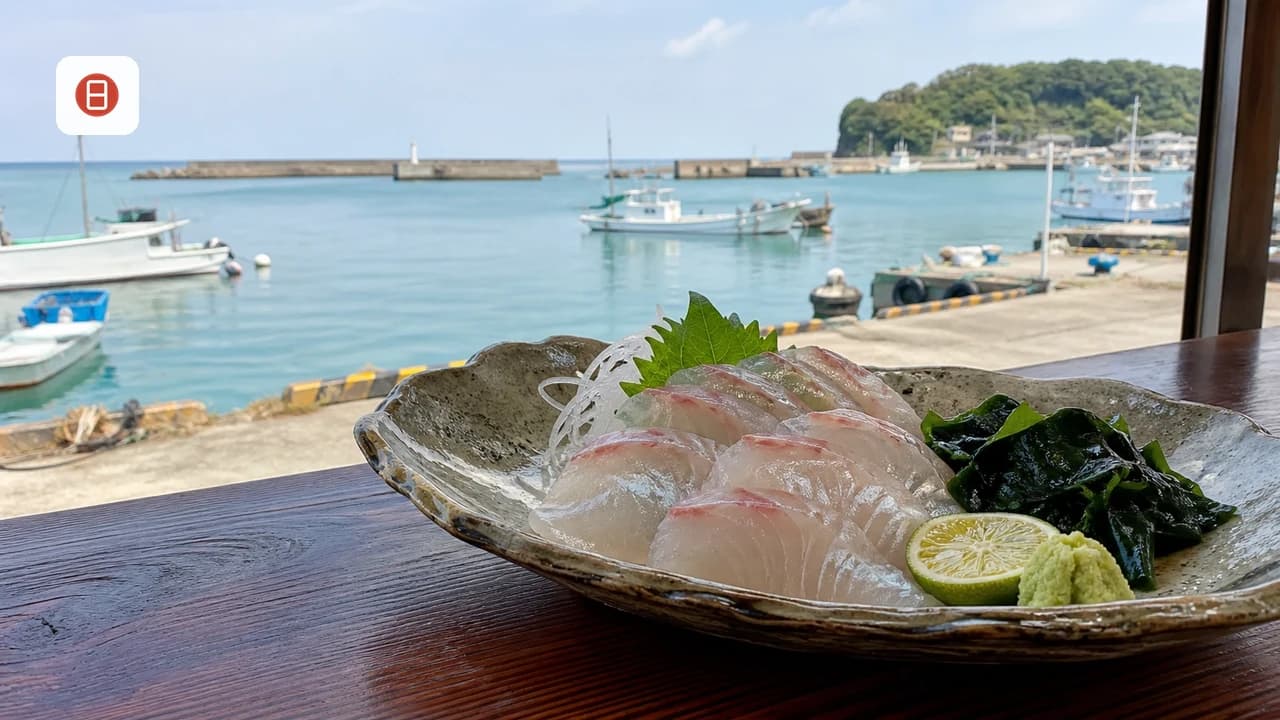
- Naruto Tai / Tai Meshi (Sea Bream with Rice)
- Naruto Strait's fast currents are associated with the fish's firm texture, and spring catch is marketed as sakura-dai.
- Order tai meshi, sea bream cooked with rice so its flavor carries through the pot. The full sea bream guide covers more preparations and where to find them.
- Arata near JR Tokushima Station has offered courses featuring local dishes, but current contents, price, hours, and booking terms should be confirmed directly. Best for: a sit-down dinner near the station.
- Kaizoku Ryori (Pirate-Style Seafood BBQ)
- This grilling style traces back to divers and fishermen cooking their catch straight on the beach, using mollusks, lobster, shrimp, abalone, and scallops.
- You'll find it around Tokushima's ports and beaches, including southern coast towns like Kaiyo and Mugi, or at ryokan inns that serve it without requiring an overnight stay.
- It works well as a shared, hands-on meal for groups. Best for: a coastal detour with a car.
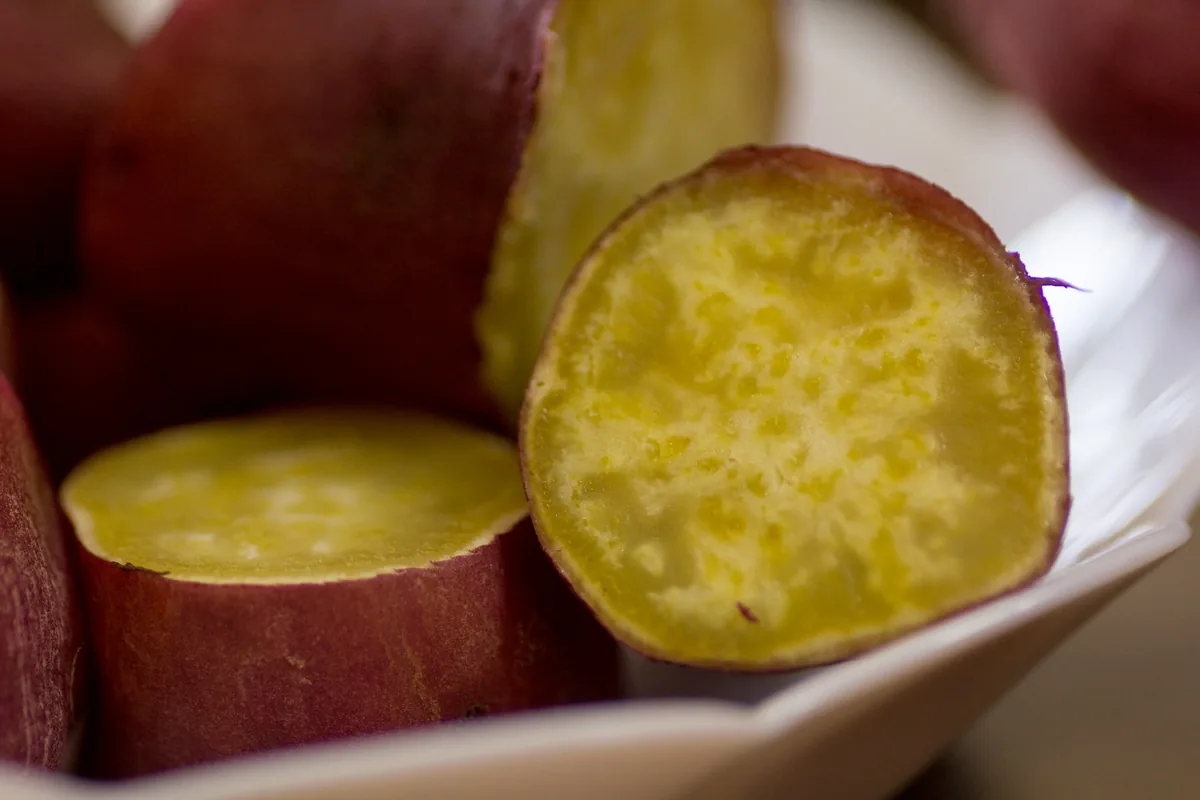
- Naruto Kintoki (Sweet Potato Sweets & Snacks)
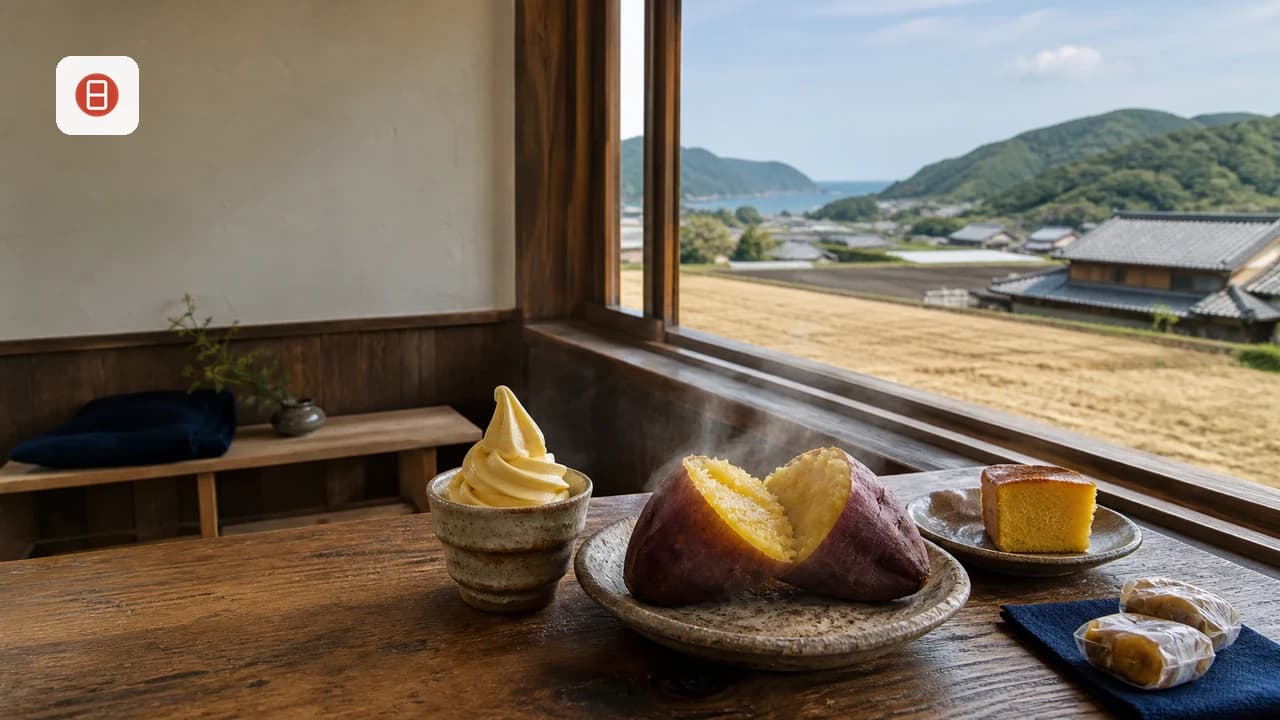
- Grown in Naruto's sandy coastal soil, this sweet potato has a dry, chestnut-like texture instead of the stringiness common in other varieties.
- Street vendors sell it fried or boiled, and dessert shops turn it into pudding and ice cream. See the Naruto Kintoki Sweet Potato Desserts: A Tokushima Guide (2026) for where to find each version.
- It makes an easy snack between sightseeing stops on the Naruto coast. Best for: families and casual snacking.
- Iya Soba (Mountain Buckwheat Noodles)
- Iya Valley is known for short, rustic buckwheat noodles; recipes and the proportion of buckwheat vary by kitchen.
- Iya Bijin is a ryokan and soba restaurant; check its current menu and service hours before making the trip.
- Reaching Iya generally means a rental car or a scheduled bus from Tokushima City; check current routes before planning the trip.
- Dekomawashi (Skewered Potato, Tofu & Konjac)
- Skewers of goushiimo potato, iwa tofu, and konjac are basted in miso and grilled over charcoal, a signature Iya Valley dish.
- The name comes from deko, the puppet dolls of Awa Ningyo Joruri theater, since the turning skewers resemble a spinning puppet head. That puppet tradition is performed at the Awa Jurobe Yashiki theater elsewhere in the prefecture.
- Takimi Shokudo, about a 10-minute walk from Iya Kazurabashi Bridge, serves it daily from 8am to 5pm with irregular closures. Best for: pairing food with the vine bridge visit.
- Sobagome Zosui (Buckwheat Porridge)
- Sobagome are buckwheat seeds boiled and dried whole, then simmered into a simple porridge with no added thickeners.
- Local legend ties the dish to the Taira clan, who reportedly made it every New Year's Day to remember the life they left behind after the Genpei War.
- It stands in for rice, which is historically hard to grow in Tokushima's mountain terrain. Best for: a light, warming meal in the Iya Valley.
- Tarai Udon (Wooden-Tub Noodles)
- Thick noodles are cooked and served in a large wooden tub called a tarai, then dipped in a savory broth.
- Awa City, along Route 318, has several shops built around this dish, including Tarai Udon Niimiya.
- Confirm Niimiya's current price, hours, closing day, and operating status before driving there.
- Handa Somen (Thick Dried Noodles)
- Handa somen is thicker and chewier than standard somen, made with Yoshino River groundwater and dried in cold wind off the Shikoku Mountains.
- It shows up on soba and udon restaurant menus across the prefecture, usually served cold with a simple dipping sauce.
- It pairs well as a lighter add-on if you've already ordered tarai udon or ramen elsewhere. Best for: noodle enthusiasts rounding out a meal.
Best For: A Quick Decision Matrix
Some of these dishes sit five minutes from Tokushima Station. Others need a car and a half-day commitment. Use this matrix to match each dish to the trip you're already planning, then check the food map below for how to group stops by region.
Awaodori chicken is available outside the August festival period, but individual restaurant menus, prices, and opening days change. Confirm the current listing before making a special trip.
| Dish | Best For | Access |
|---|---|---|
| Tokushima Ramen | Budget, easy dinner | Tokushima City, no car needed |
| Awa Beef | Splurge, celebration | Tokushima City, no car needed |
| Awa Odori Chicken | Casual dinner, nightlife | Tokushima City, no car needed |
| Awa Bancha Tea | Pairing, souvenir | Tokushima City, no car needed |
| Naruto Tai / Tai Meshi | Sit-down dinner | Tokushima City, no car needed |
| Kaizoku Ryori | Coastal detour | Car recommended, southern coast |
| Naruto Kintoki | Snacking, families | Naruto coast, easy day trip |
| Iya Soba | Worth the trek | Car or scheduled bus into Iya Valley |
| Dekomawashi | Food-plus-culture stop | Car recommended, Iya Valley |
| Sobagome Zosui | Light, warming meal | Iya Valley |
| Tarai Udon | Groups, families | Awa City, Route 318, car recommended |
| Handa Somen | Add-on dish | Widely available, no car needed |
Where to Eat by Region: A Food Map
Group your meals by geography to save time. Tokushima City covers ramen, Awa beef, Awa Odori chicken, and Awa bancha tea, all reachable on foot from Tokushima Station. The Naruto coast adds sea bream, kaizoku-style seafood, and Naruto Kintoki sweets, alongside whirlpool sightseeing; pair a coastal food stop with other Tokushima attractions in the area. West of the city, the Iya Valley holds soba, dekomawashi, and sobagome zosui, though getting there takes a car or a longer bus ride. Awa City, along Route 318, is the place for tarai udon, and it sits roughly between the city and the mountains.
Tokushima Food Prices in 2026
Prices below reflect restaurant listings current as of this update, in Japanese yen only. Small, family-run shops adjust menus and hours often, so treat these figures as a planning baseline. The ramen and Awa beef rows are general market ranges rather than one restaurant's exact menu, since prices vary shop to shop.
| Dish | Restaurant | Price |
|---|---|---|
| Tarai udon | Tarai Udon Niimiya, Awa City | Check current menu |
| Awaodori chicken skewers | Domannaka, Tokushima City | Check current menu |
| Iya soba set | Iya Bijin, Iya Valley | Check current menu |
| Local-course dinner | Arata, Tokushima City | Check current menu |
| Ramen bowl | Citywide | Inexpensive meal; price varies |
| Awa beef course | Steakhouses and ryotei, Tokushima City | can reach ¥10,000 or more |
When to Visit for Each Dish: A Seasonal Note
Timing shifts a few of these dishes noticeably. Naruto sea bream carries the most fat, and the best texture, in spring. Naruto Kintoki sweet potatoes peak in autumn, right after harvest. Hamo, a daggertooth pike conger eel found along the coast, rounds out the seasonal picture in early summer and late autumn, often served as tempura or in a hot pot. The Awa Odori festival fills Tokushima City every August around the Obon holiday, and the Awa Odori Kaikan hosts related performances year-round if you miss the festival dates. Sobagome zosui traditionally appears around New Year's Day, tied to the Taira clan legend behind the dish.
Dietary Notes: What's Vegetarian-Friendly in Tokushima
Most of Tokushima's signature dishes center on meat, pork broth, or seafood, so vegetarian options take planning. Tokushima ramen is generally pork-based, while Naruto Tai and Kaizoku Ryori are seafood dishes. Tarai udon, Iya soba, and sobagome zosui can contain fish stock. Plain Naruto Kintoki or fresh sudachi begins with a plant ingredient, but desserts, drinks, sauces, and shared preparation vary. Confirm the finished item rather than treating any category as reliably plant-based.
Tokushima produces more than 90% of Japan's sudachi. The fruit itself is plant-based, but bottled sauces and prepared dishes can contain fish stock, soy, wheat, or other allergens, so check the finished item.
How This Guide Was Verified
Food availability, access details, seasonal rules, and the time-sensitive claims in this guide were checked on August 22, 2026 against the official sources below. Independent restaurant menus, prices, opening days, and sell-outs can change, so confirm the operator's same-day notice before making a special trip.
Explore food in other cities
Frequently Asked Questions
What are the essential foods to try in Tokushima?
Prioritize the three most distinctive dishes: Tokushima ramen, Awa beef, and Naruto sea bream. Each represents a different part of the prefecture, from the pork-bone ramen shops of Tokushima City to the sea bream caught in the Naruto Strait.
Do you need a car to eat Iya Valley specialties like Dekomawashi and Iya soba?
A car makes the trip easier, since Iya Soba and Dekomawashi are served at restaurants like Iya Bijin and Takimi Shokudo deep in the mountains. A scheduled bus can work too, but check current routes and timetables before planning the day.
What's the etiquette for eating Tokushima ramen?
Order a side of rice with your bowl and dip the pork slices into the raw egg topping, the standard way locals finish the dish. Most shops serve the brown, pork-bone style by default, though white and yellow broth versions also exist.
When is the best time to eat Naruto sea bream?
Spring is the peak season, when the fish carries more fat and a more tender texture. You can order it year-round as tai meshi, cooked whole with rice, at restaurants like Arata near Tokushima Station.
How much should you budget for meals in Tokushima?
A bowl of ramen or a tub of tarai udon costs well under ¥1,000, while a sit-down course built around Awa beef or tai meshi can run ¥3,500 to ¥10,000 or more. Mixing casual noodle stops with one or two sit-down courses keeps a full day of eating affordable.
Explore Tokushima Food and Dining
Use these guides to compare local dishes, dining areas and practical food experiences in Tokushima.
Food and Dining Guides
Free guide: Japan's Hidden Gems
12 under-the-radar places beyond Tokyo & Kyoto — with the best season to visit each and a local tip you won't find in the guidebooks.
You might also like


Continue reading
More guides you'll find useful