
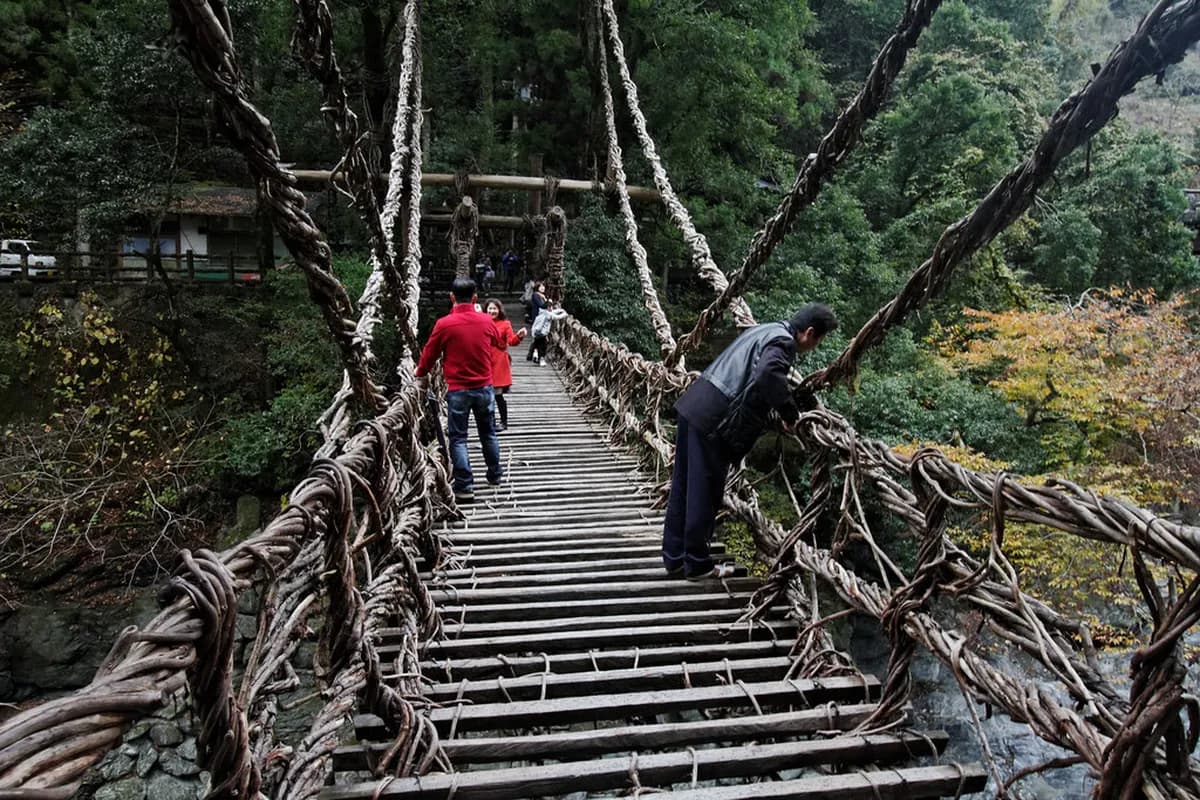
Iya Kazurabashi is the best-known vine bridge in Tokushima's Iya Valley: a 45-meter, two-meter-wide suspension bridge woven from mountain vines and set 14 meters above the Iya River. For a 2026 visit, treat it as a short but high-impact stop that needs careful timing because buses are limited, roads are narrow, and peak-season queues can slow the crossing.
This Iya Kazurabashi Vine Bridge visitor guide keeps the focus on the attraction itself. It explains how the single Iya Kazurabashi compares with the Oku-Iya Double Vine Bridges, how to reach the site from Oboke Station, what to pair nearby, and which planning mistakes to avoid.
Use this page to decide whether the main bridge is enough for your itinerary or whether the deeper Oku-Iya bridges, Nagoro Scarecrow Village, Oboke Gorge, and the Peeing Boy Statue deserve extra time. The practical details below are organized for visitors planning an actual day in the valley.
Introduction to Iya Valley and the Vine Bridges
The Iya Valley, nestled in Tokushima Prefecture on Shikoku, offers a rare look at mountain Japan. It is known for steep gorges, clear rivers, old hamlets, and legends tied to the defeated Heike Clan. The valley's remoteness is part of the appeal, but it also means transport planning matters more than it does at many major Japanese attractions.
The vine bridges, known as Kazurabashi, are the valley's most iconic sights. They are not long walks or full-day attractions by themselves; the main bridge crossing takes only a few minutes. The value comes from the setting, the bridge's folk-cultural history, and the way it links naturally with Biwa Waterfall, Oboke Gorge, and deeper Oku-Iya.
According to the Iya Valley overview on Wikipedia, the area once had many vine bridges, but only three remain in Iya today. The main Iya-no-Kazurabashi is the easiest to reach, while the Oku-Iya Double Vine Bridges sit farther into the valley near the base of Mt. Tsurugi.
What are the Iya Kazurabashi Vine Bridges?
The Iya Kazurabashi Vine Bridges are traditional suspension bridges made from hardy mountain vines. Legend says they were built by the Heike Clan so they could be cut down quickly if pursuers entered the valley. Another story connects their origin to Kobo Daishi, the Buddhist monk associated with many Shikoku pilgrimage traditions.
The official Miyoshi City tourism listing for Iya-no-Kazurabashi describes the main bridge as woven from about six tons of vines, completely rebuilt every three years, and designated as a National Important Tangible Folk Cultural Property. Modern safety reinforcement is hidden within the traditional-looking structure, so the bridge can feel rustic without being unmanaged.
Walking across is intentionally thrilling. The bridge sways, the handrails feel flexible, and the wooden slats leave open gaps to the river below. Move slowly, keep both hands free, and avoid stopping mid-bridge for long photo sessions when people are queued behind you.
Iya Kazurabashi Bridge (Single Vine Bridge): Visitor Information
The Iya Kazurabashi Bridge is the largest and most popular of the vine bridges. It spans 45 meters across the Iya River, 14 meters above the water. This bridge is a must-see for most Iya Valley visitors.
The bridge gently sways as you walk across its two-meter width. Its convenient location makes it easily accessible for many travelers. Expect some crowds, especially during peak tourist seasons.
The cost to cross the single vine bridge is 550 yen for adults and 350 yen for children. It typically operates from sunrise to sunset, but always check for current hours. For official access notes, parking details, and severe-weather closure warnings, use the Miyoshi City tourism listing for Iya-no-Kazurabashi.
Oku-Iya Kazurabashi Bridges (Double Vine Bridge): Visitor Information
The Oku-Iya Kazurabashi Bridges consist of two separate crossings, known as the Husband and Wife bridges. The Husband bridge measures 44 meters, while the Wife bridge is 22 meters long. These bridges offer a more secluded experience.
They are located about 30 kilometers east of the single bridge, requiring an hour's drive on winding mountain roads. This remote setting provides a quieter atmosphere and fewer crowds, but it is a poor fit for a rushed public-transport itinerary. Plan it as a separate stop and read our Oku-Iya Double Vine Bridges guide if you are continuing deeper into the valley.
The entrance fee for the double vine bridge area is also 550 yen for adults and 400 yen for children. Like the single bridge, they are generally open from sunrise to sunset. Verify operating hours before your visit to avoid disappointment.
Single vs. Double Vine Bridge: Which Should You Visit?
Choosing between the single and double vine bridges depends on time, transport, and crowd tolerance. If you are using buses or visiting Iya Valley as a short side trip, the single Iya Kazurabashi is the practical choice. If you have a rental car, an early start, and interest in the quieter side of the valley, the Oku-Iya bridges are more rewarding.
The single bridge is the classic photo stop and pairs easily with Biwa Waterfall and Oboke Gorge. The double bridges feel more adventurous because the drive is longer, tour traffic is lighter, and Nagoro Scarecrow Village fits naturally on the same route.
| Choice | Best For | Main Trade-Off |
|---|---|---|
| Single Vine Bridge | First-time visitors, bus travelers, short itineraries | More convenient, but busier at peak times |
| Oku-Iya Double Vine Bridges | Self-drivers, overnight visitors, quieter scenery | More atmospheric, but much farther from Oboke and the main bridge |
For most 2026 visitors, the best plan is to visit the single bridge early, then decide whether the rest of the day has enough margin for Oku-Iya. Do not underestimate the 30-kilometer mountain-road gap between the two bridge areas.
How to Get to the Iya Kazurabashi Vine Bridges
Reaching the Iya Valley vine bridges requires more planning than the crossing itself. Most visitors travel by car because it gives enough flexibility for viewpoints, lunch, Biwa Waterfall, and possible onward travel to Oku-Iya. Renting a car from Takamatsu, Tokushima, Kochi, or another Shikoku base is the easiest way to build a full valley day.
For public transport, take the JR Dosan Line to Oboke Station. From there, local buses connect to the single Iya Kazurabashi Bridge. The bus ride from Oboke Station to Kazurabashi-Yumebutai takes about 30 minutes, and the official tourism guidance notes that the bridge is about a five-minute walk from the bus stop and municipal parking area.
Check the return bus before you leave Oboke Station, not after you arrive at the bridge. Services are limited, and missing the last practical return can turn a simple visit into an expensive taxi problem. Reaching the Oku-Iya Double Vine Bridges by public transport is more challenging; consider a rental car, taxi arrangement, or guided tour for that option.
Drivers should expect narrow mountain roads, blind curves, and occasional slow traffic near the bridge entrance. Use the Kazurabashi Yumebutai area as the main parking reference, allow time to walk from the lot, and avoid blocking local roads for photos.
Best Time to Visit Iya Kazurabashi in 2026
The best time to visit Iya Kazurabashi in 2026 is a weekday morning or late afternoon in spring or autumn. April to May brings fresh greenery, while October to November is the strongest foliage window. These are also popular periods, so arrive early if you want a quieter crossing and cleaner photos from the road bridge viewpoint.
Expect heavier crowds during Golden Week, Obon, weekends with good weather, and autumn holiday periods. Summer can be lush but humid, with rain that makes wooden surfaces feel less secure underfoot. Winter is quieter, but snow or icy patches can affect the deeper roads toward Oku-Iya.
Nearby Attractions: Scarecrow Village (Nagoro)
Nagoro Scarecrow Village is a unique and fascinating stop in the Iya Valley. This village is populated by hundreds of scarecrows, each representing a former resident or an imagined village scene. It offers a poignant and surreal look at rural depopulation in mountain Japan.
The village is about 10 minutes by car from the double vine bridges. It is also roughly 3.4 kilometers before reaching the Oku-Iya bridges. Treat it as an Oku-Iya stop, not a quick add-on from the single Iya Kazurabashi if you are relying on buses.
Wander through the village and discover scarecrows in various poses and settings. They depict daily life, from farmers in fields to students in classrooms. Keep the visit respectful: people still pass through the area, and the village is not a theme park.
Nearby Attractions: Peeing Boy Statue (Shoben-ko)
The Peeing Boy Statue, or Shoben-ko, is a small but famous landmark in Iya Valley. It stands on a cliff edge above a dramatic gorge and recalls a local story of boys testing their courage.
This statue is located approximately 9 kilometers from the single Iya Kazurabashi Bridge. The drive takes about 30 minutes on narrow, winding roads. Visiting requires a dedicated detour from the main bridge, so it makes more sense for self-drivers than for a tight bus itinerary.
The views from the statue's location are spectacular, but parking and roadside space are limited. Stop only where it is safe, watch for oncoming vehicles, and avoid building your whole day around this one photo point unless gorge views are a priority.
Nearby Attractions: Biwa Waterfall
Just beyond the exit of the Iya Kazurabashi Vine Bridge lies Biwa Waterfall. The official Miyoshi tourism page places it about 50 meters to the left after crossing the bridge and describes a 40-meter cascade. It is the easiest nearby add-on because it requires no extra transport.
The waterfall is accessible on foot from the single vine bridge area. Its natural setting provides a calmer contrast to the bridge crossing, and it is a useful place to pause before returning toward the parking area or bus stop.
The surrounding area is lush with greenery, especially vibrant during spring and summer. Take some time to appreciate the cool mist and the sounds of nature, but keep your schedule realistic if you need to catch a return bus from Kazurabashi-Yumebutai.
Other Things to See and Do in Iya Valley
Beyond the vine bridges, Iya Valley offers many other attractions and activities. Explore the stunning Oboke Gorge, known for dramatic rock formations and river scenery. A gorge cruise pairs well with the main bridge if you are building a one-day route around Oboke Station.
Traditional farmhouses, hot spring inns, local soba, grilled river fish, and mountain viewpoints add depth to the valley. The Iya Valley is more satisfying when you treat Kazurabashi as one anchor stop rather than the only reason to come.
Consider visiting the Oku-Iya Double Vine Bridges if you have more time. These offer a more remote and equally memorable experience, especially for travelers staying overnight or self-driving across the valley.
Planning Your Visit: Practical Tips and Costs
When planning your Iya Kazurabashi Vine Bridge visit, wear comfortable, sturdy shoes. The wooden slats have gaps, and the bridges can sway, so secure footwear is essential. Avoid loose items that might fall through the gaps, and keep phones or cameras strapped before stepping onto the bridge.
The best time to visit is during spring (April-May) or autumn (October-November) for pleasant weather. These seasons offer beautiful foliage or vibrant greenery. Summer can be hot and humid, while winter brings cold temperatures and occasional snow.
Entrance fees are 550 yen for adults and 350-400 yen for children at both the single and double bridges. Parking is available near both sites, usually for a small fee (around 500 yen). Allow at least an hour for each bridge experience, plus travel time. For official visitor information, check the Iya-no-Kazurabashi page from Miyoshi City tourism.
Common mistakes to avoid in 2026 include arriving without checking the return bus, assuming the single and double bridges are close together, trying to fit every Iya landmark into a half-day without a car, and reaching the bridge at midday during major holiday periods. The crossing is one-way, so take your photos before entering or from the road bridge viewpoint rather than trying to reverse course.
Accommodation Options in Iya Valley
Iya Valley offers a range of accommodation, from traditional ryokans to guesthouses. Staying overnight allows for a more immersive experience of the valley's tranquility and makes the Oku-Iya Double Vine Bridges more realistic. Book in advance, especially during spring greenery, autumn foliage, and Japanese holiday periods.
Many ryokans feature natural hot springs, perfect for relaxing after a day of exploration. Some accommodations are near the vine bridges, offering convenient access. Others are nestled deeper in the valley for travelers who want quiet evenings and early starts.
Consider staying around Oboke, Nishi-Iya, or Kazurabashi-Yumebutai for easier access to public transport and the single bridge. More secluded options provide unique stays in renovated farmhouses. Research options to find the right base for your Iya Valley trip.
Guided Tours vs. Self-Exploration
Deciding between a guided tour and self-exploration depends on your comfort with rural transport. Guided tours offer convenience, transport, and context, which can be useful if you do not want to drive in Japan or need to connect several Iya Valley stops in one day.
Self-exploration provides flexibility to set your own pace and adjust for weather, crowds, and road conditions. Renting a car allows you to stop at viewpoints and attractions at your leisure. However, navigating the winding mountain roads can be challenging, and drivers should avoid overloading the itinerary.
If time is limited, a tour can keep the day efficient. For a deeper experience, self-driving and staying overnight are often better. Motorcycle travelers should allow extra daylight, carry rain gear, and treat narrow Iya roads as scenic mountain routes rather than fast transit roads.
Extending Your Trip: Day Trips and Further Exploration
Consider extending your trip beyond the immediate Iya Kazurabashi area if you have more than a day. Oboke Gorge is the easiest extension because it connects well with Oboke Station and the main approach to the valley. Deeper Oku-Iya is better suited to self-drivers or overnight visitors.
For motorcycle enthusiasts, the roads through Iya Valley and Shikoku offer memorable riding, but the same curves that make the route scenic also slow the day down. Build in daylight, fuel, weather, and rest stops rather than measuring the route only by distance.
Awajishima, known for onions and coastal scenery, works better as a separate Shikoku or Kansai extension than as a same-day add-on from Kazurabashi. The broader Shikoku region, including pilgrimage routes and mountain towns, rewards travelers who give the island more than a single attraction stop.
Conclusion: Making the Most of Your Iya Valley Adventure
Visiting the Iya Kazurabashi Vine Bridge is most rewarding when you plan it as part of the valley, not as an isolated photo stop. The crossing is brief, but the setting, the Heike legends, Biwa Waterfall, and the wider gorge scenery make it one of Shikoku's most distinctive attractions.
For a short 2026 itinerary, prioritize the single bridge, Biwa Waterfall, and Oboke Gorge. With a car and more time, add Nagoro, the Oku-Iya Double Vine Bridges, and an overnight stay. The main mistake is trying to cover the whole valley on a loose schedule without checking roads, buses, and daylight.
Use the practical details above to match the visit to your transport style. With a realistic plan, Iya Kazurabashi becomes a memorable entry point into one of Japan's most atmospheric mountain valleys.
Frequently Asked Questions
How much does it cost to cross the Iya Kazurabashi Vine Bridge?
Crossing the Iya Kazurabashi (Single Vine Bridge) costs 550 yen for adults. Children's tickets are 350 yen. The Oku-Iya Double Vine Bridge area also charges 550 yen for adults and 400 yen for children. These fees support the bridges' maintenance and reconstruction efforts.
How to get to Iya Kazurabashi Vine Bridge by public transport?
To reach the Iya Kazurabashi Vine Bridge by public transport, first take a train to Oboke Station. From Oboke Station, local buses run directly to the Kazurabashi-Yumebutai bus stop, which is near the single bridge. The bus journey typically takes about 30 minutes. Check bus schedules in advance, as services can be infrequent.
How much time should you plan for visiting the Iya Kazurabashi Vine Bridge?
Plan at least one hour to visit the single Iya Kazurabashi Bridge and its immediate surroundings. This allows time for crossing, taking photos, and exploring nearby Biwa Waterfall. If visiting the Oku-Iya Double Vine Bridges, allocate a half-day due to the longer travel time. Consider an overnight stay to fully experience the Iya Valley.
Are the vine bridges safe to cross?
Yes, the vine bridges are managed as visitor attractions and regularly rebuilt every three years using fresh vines. For a 2026 visit, check official notices before going after severe weather. While they sway and have gaps, this is part of their traditional design and thrill. Handrails provide extra stability for walkers.
Visiting the Iya Kazurabashi Vine Bridge is most rewarding when you plan it as part of the valley, not as an isolated photo stop. The crossing is brief, but the setting, the Heike legends, Biwa Waterfall, and the wider gorge scenery make it one of Shikoku's most distinctive attractions.
For a short 2026 itinerary, prioritize the single bridge, Biwa Waterfall, and Oboke Gorge. With a car and more time, add Nagoro, the Oku-Iya Double Vine Bridges, and an overnight stay. The main mistake is trying to cover the whole valley on a loose schedule without checking roads, buses, and daylight.
Use the practical details above to match the visit to your transport style. With a realistic plan, Iya Kazurabashi becomes a memorable entry point into one of Japan's most atmospheric mountain valleys.
Planning the rest of your trip? See our things to do in Iya Valley, Iya Kazurabashi guide and Tokushima region guide.