Iya Valley Vine Bridge Travel Guide
Visit the Iya Valley vine bridge in Tokushima: ticket prices, opening hours, how to get there by car or bus, and essential tips for crossing safely.
On this page
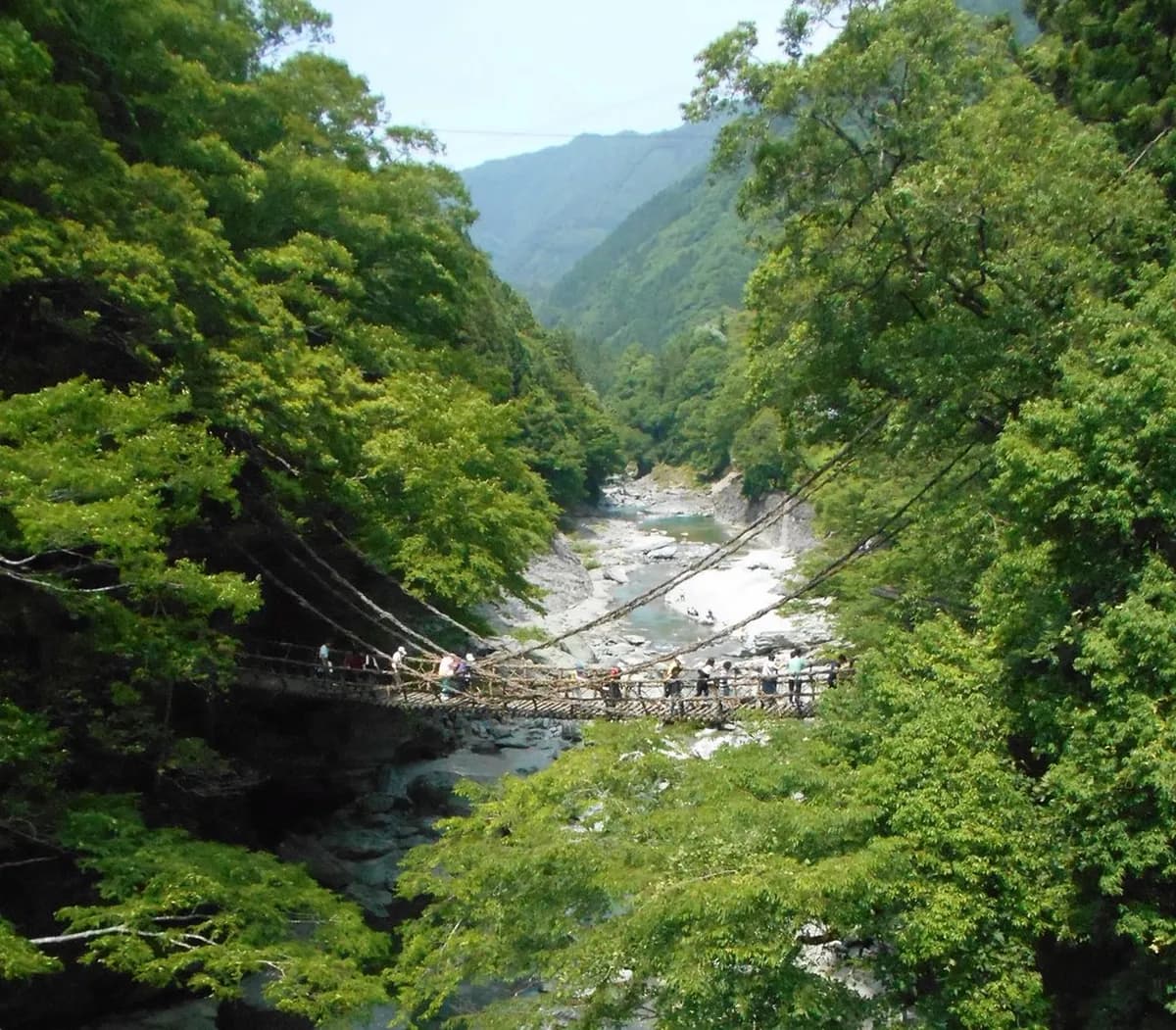
Deep in Tokushima Prefecture on Shikoku island, the Iya Valley vine bridge draws visitors into one of Japan's most dramatic river gorges. Woven from mountain vines and suspended above the rushing Iya River, these kazura bridges are unlike anything else in the country. The gorge walls rise steeply on all sides, and the wooden walkway sways noticeably underfoot.
This guide covers ticket prices, opening hours, how to reach both bridge sites, and what to see nearby on the same day. Whether you are day-tripping from Kochi or building this into a wider Shikoku loop, the bridges reward every bit of the journey.
What Are the Iya Valley Vine Bridges?
Good to know
Plan your visit to Iya Valley with these useful official and local resources:
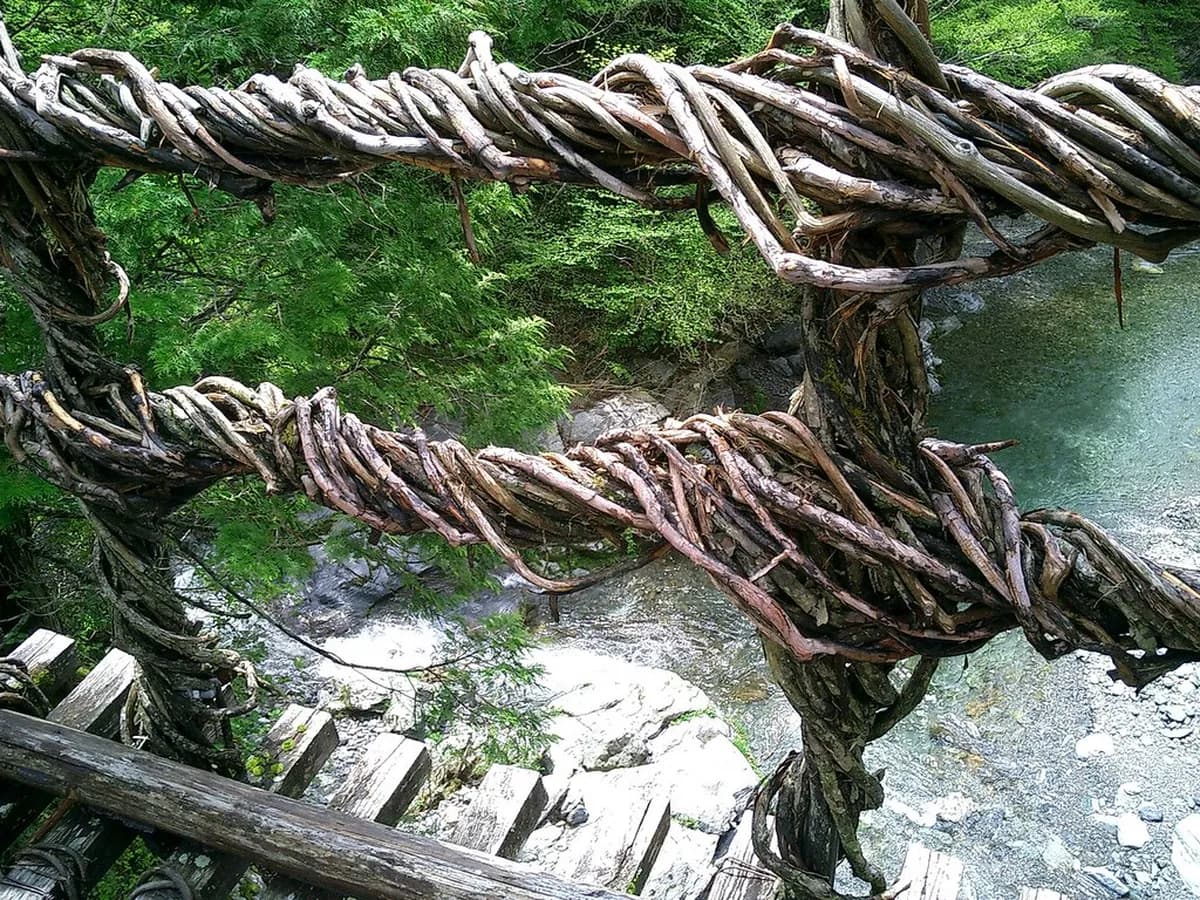
For centuries, residents of Iya Valley wove bridges from wild katsura vines to ford the river rushing through the gorge below. Of the thirteen that once spanned the valley, only three survive today as protected cultural landmarks. All three are open to the public and sit at the heart of Iya Valley sightseeing itineraries across Tokushima.
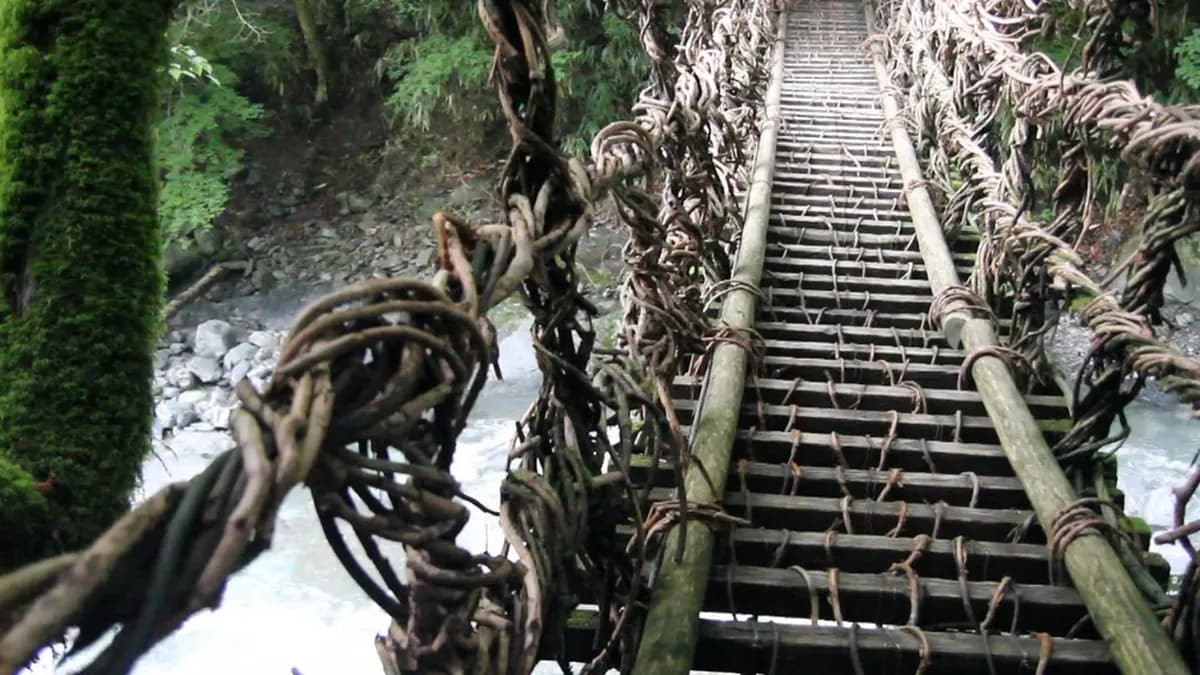
Hidden steel cables now run through the vine wrapping on each bridge, and the structures are fully rebuilt every three years. Crossing is thrilling rather than genuinely dangerous for a healthy adult, though the bridges do sway and creak underfoot. Securing loose items before you step on is essential, as anything dropped into the river below cannot be retrieved.
The Single Vine Bridge: Tickets and Tips
The Single Vine Bridge, known as Iya no Kazurabashi, is the most accessible and most visited of the three kazura spans. It stretches 45 metres across the gorge and hangs 14 metres above the river. A paved road bridge sits directly behind it, giving a clear elevated view of the vine structure.
Tour groups frequently arrive at the single bridge in the mid-morning, creating queues that stretch back to the ticket booth. Letting a large group cross first and then stepping on gives you the bridge largely to yourself for photos.
A short walking path below the bridge leads to a picturesque waterfall and flat river boulders popular with photographers. The Kazurabashi Yumebutai rest area opposite the parking lot sells regional Tokushima snacks and hosts a small exhibit on vine bridge maintenance.
- Entrance fee and opening hours
- Adults pay 550 yen to cross and children pay 400 yen.
- The bridge is open daily from sunrise to sunset throughout the year.
- Parking in the lot directly beside the bridge costs 300 yen per vehicle.
- Tips for a smoother visit
- The crossing runs one way only, so take your photos from the near side before stepping on.
- Arriving before 9am or after 3pm on weekdays avoids the heaviest tour-group traffic.
- Keep all loose items such as hats, sunglasses, and phones secured in a bag before crossing.
The Double Vine Bridges and Nagoro Scarecrow Village
The Oku-Iya Double Vine Bridges sit 30km deeper into the valley, roughly one hour by twisting mountain road from the single bridge. The Male bridge stretches 44 metres and stands 12 metres above the water, while the Female bridge spans 22 metres. One 550-yen ticket covers entry to both bridges plus the rope-pull Monkey Cart, making this noticeably better value than the single crossing.
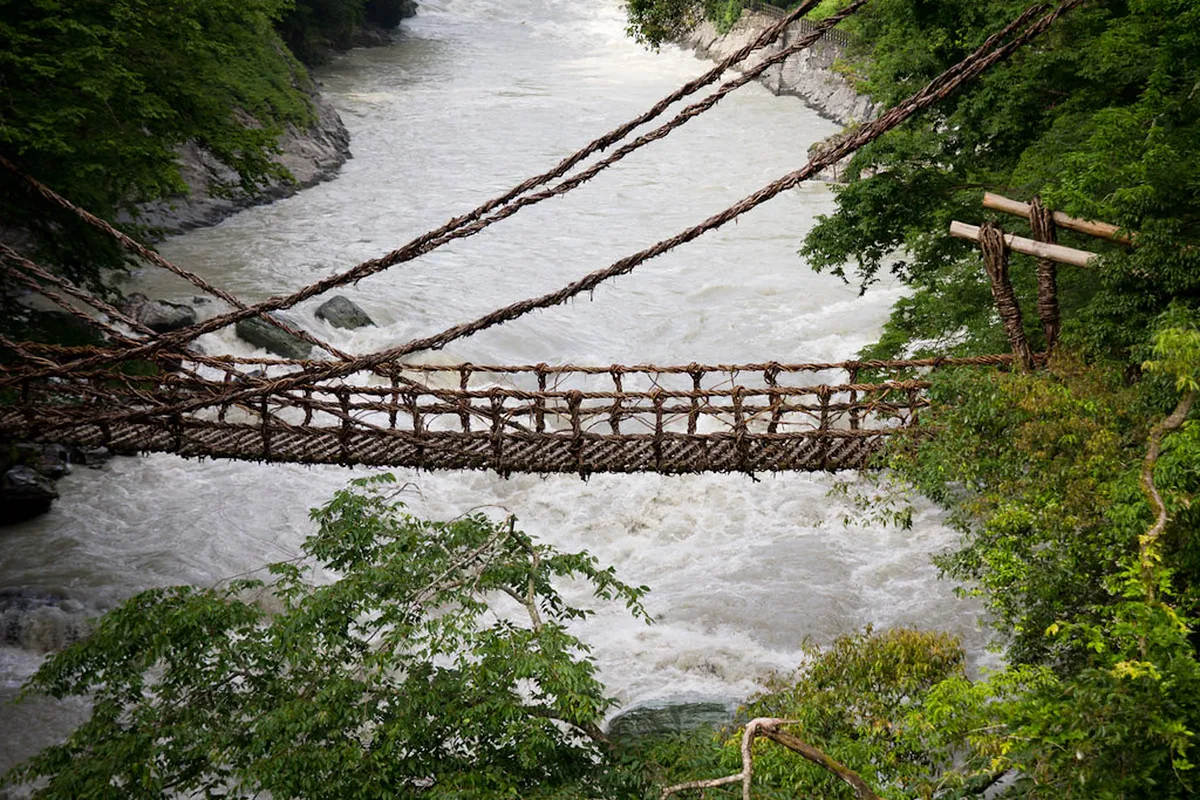
Crowds here are much thinner than at the single bridge, and the area includes riverside picnic tables and clear upstream views. In autumn the gorge maple trees turn deep red above the turquoise river, making October one of the most scenic times to visit.
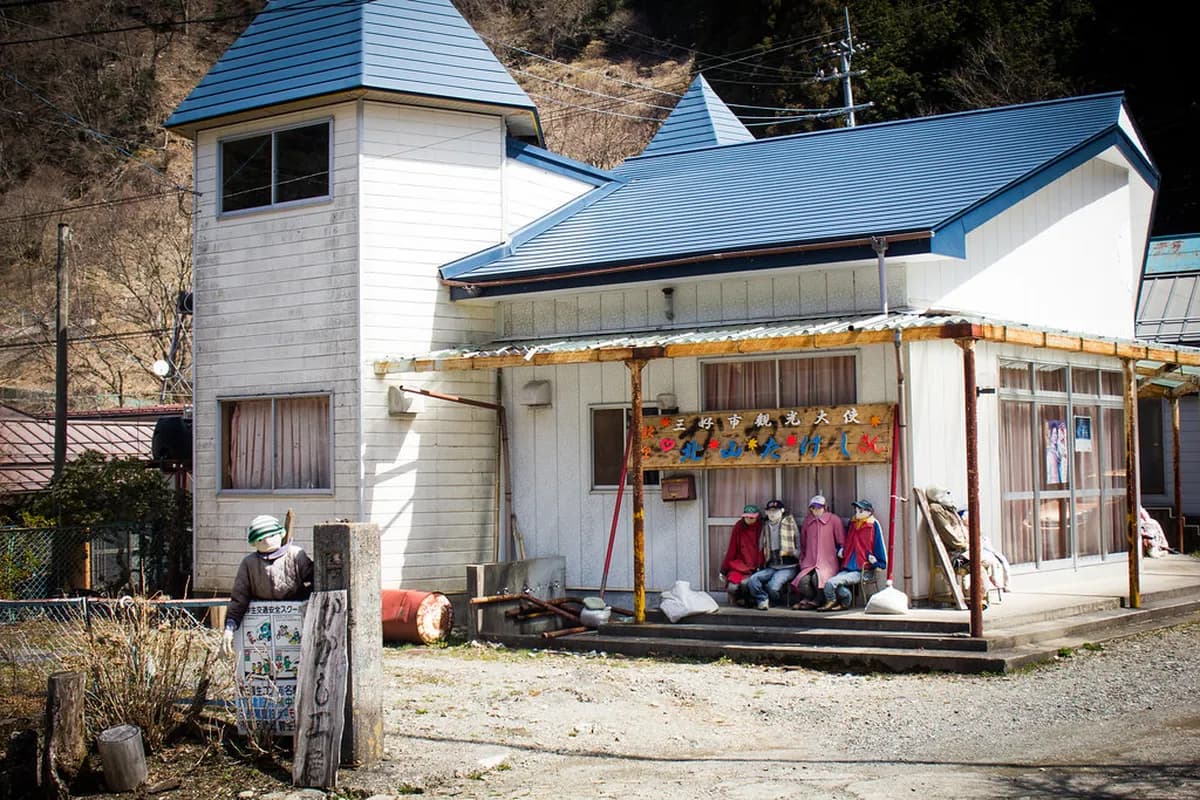
On the road toward the double bridges, the Nagoro Scarecrow Village sits just 3.4km before the bridge entrance and is free to enter. Over 300 life-sized scarecrows posed as bus passengers, farmers, and schoolchildren populate this tiny settlement of fewer than 30 living residents. Each figure was modelled on a former neighbor by local artist Tsukimi Ayano, making the village both playful and quietly poignant.
Allow 20 to 30 minutes to walk through the settlement before continuing to the double bridges. Parts of the road are narrow, allowing only one car through at a time, so drive slowly and be ready to reverse into a passing bay.
How to Get to the Iya Valley
Public transport into the Iya Valley is extremely limited, and a rental car is the most practical way to reach both bridge sites. Of Shikoku's main cities, Kochi offers the shortest drive at around 1 hour 20 minutes to the single bridge. Tokushima takes roughly 1 hour 45 minutes, Takamatsu about 2 hours, and Matsuyama around 2 hours 15 minutes by car.
For those without a car, a local bus from Awa-Ikeda Station to the bridge area takes about 30 minutes. From the bus stop, the bridge is a 3km walk requiring 50 to 60 minutes, or a short taxi ride. The complete guide to getting to Iya Valley covers bus schedules, car hire tips, and driving advice for the narrow mountain roads.
Where to Stay and What Else to See
Miyoshi city is the closest overnight base, with ryokan and hotels within a 30-minute drive of both bridge sites. Kochi works well as a day-trip base and offers far more dining and accommodation variety. Some traditional thatched farmhouses in Ochiai Village, a National Heritage Area between the two bridge sites, also rent rooms.
The Iya Valley accommodation guide compares budget guesthouses, riverside onsen inns, and farmhouse stays across all price ranges. Booking several weeks ahead is strongly advised from late September through November, when autumn colour season draws its heaviest visitor numbers.
The oboke gorge, about 20km from the single bridge, takes roughly 30 minutes through dramatic marble canyon scenery. The Peeing Boy Statue, perched on a cliff edge 9km from the single bridge, makes a fun short detour on the way back toward Kochi.
For active travelers, a 1-day Yoshino River rafting course pairs well with a morning vine bridge visit. The Yoshino River runs close to the valley and offers some of the most exciting whitewater paddling in Shikoku.
Frequently Asked Questions
How scary is the Iya Valley vine bridge to cross?
The vine bridges are designed to feel unsettling: the wooden slats have deliberate gaps, and the structure sways as you walk. Hidden steel cables make them structurally safe for healthy adults, and they are rebuilt every three years. Most visitors cross without difficulty, though those with a strong fear of heights may prefer to admire the bridge from the road crossing nearby.
How much does it cost to cross the Iya vine bridge?
Crossing the single vine bridge (Iya no Kazurabashi) costs 550 yen for adults and 400 yen for children, with parking at 300 yen. The double vine bridges charge the same 550-yen adult rate, but that ticket covers both spans and the rope-pull Monkey Cart, making it better value. Always verify current prices before your visit, as rates may be updated.
Can you visit both vine bridges in one day?
Visiting both bridge sites in a single day is possible but requires a car. The single and double bridges are about 30km apart via winding mountain roads, taking roughly one hour to drive. Budget three to four hours total for both stops, including a free visit to the Nagoro Scarecrow Village located 3.4km before the double bridges.
What is the best time to visit the Iya Valley vine bridge?
Spring (April to May) and autumn (October to November) are the most rewarding seasons. Spring brings fresh green foliage to the gorge, while autumn delivers vivid red maples above the turquoise river. Summer is warm and humid but the gorge stays cool. Winter snowfall can affect driving on the mountain roads leading to the double bridges.
The vine bridges of Iya Valley rank among the most atmospheric sights in Shikoku, rewarding the mountain drive with history and rare scenery. Combining the single bridge, the Nagoro Scarecrow Village stop, and the double bridges makes for a memorable full day out. Most visitors leave wishing they had allowed more time in the valley.
Book accommodation and car hire well ahead when visiting during autumn leaf season. Confirm bridge hours on official Tokushima tourism channels before heading out, as occasional closures do occur.
Free guide: Japan's Hidden Gems
12 under-the-radar places beyond Tokyo & Kyoto — with the best season to visit each and a local tip you won't find in the guidebooks.
You might also like
Continue reading
More guides you'll find useful