Nagoro Scarecrow Village Travel Guide
Plan your nagoro scarecrow village visit: discover Tsukimi Ayano's story, key sights, workshop details, and how to get there from Oboke or Osaka.
On this page
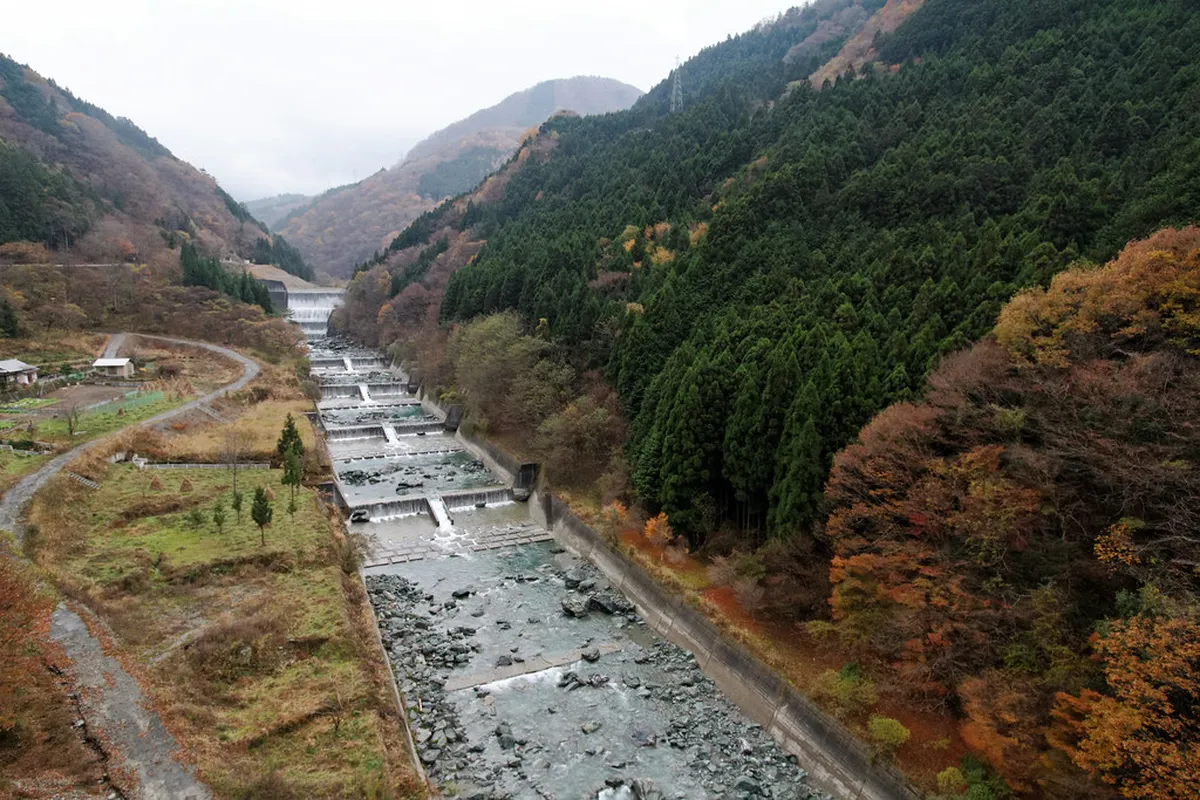
Deep in Tokushima Prefecture, the hamlet of Nagoro is one of the most unusual places in rural Japan. Life-size handmade dolls outnumber the human residents by roughly ten to one, filling roadsides, fields, and the old school. Most visitors combine it with other iya valley on a day trip from Oboke Station.
Nagoro's population has fallen below 30, and no child has been born here in more than 20 years. Artist Tsukimi Ayano responded by spending two decades crafting dolls representing the people who once lived here, as documented by Tokyo Weekender. Admission is free, and the village is small enough to walk in under an hour.
What Is the Nagoro Scarecrow Village?
Good to know
Plan your visit to Iya Valley with these useful official and local resources:
Tsukimi Ayano grew up in Nagoro but moved to Osaka as a young woman, returning in 2002 to care for her father. She came back to a village that had emptied out after the nearby dam that employed most residents was automated. Her first creation was a simple scarecrow placed in the vegetable field beside her roadside home.
That first doll was realistic enough that passing drivers would often wave at it, thinking it was a real person. Inspired by that small joke, Ayano-san began making figures to represent the former residents she remembered. Each one is recorded in her handwritten Scarecrow Registry with a name, age, sex, and personal backstory.
By 2026, the village holds close to 400 dolls arranged in scenes of everyday life: farming, fishing, and waiting at the bus stop. Ayano-san builds each figure head-first using cloth, cotton, rolled newspaper, wire, and salvaged clothing. Up close the workmanship is striking — and more than a little unsettling, which seems very much the point.
What to See When You Visit Nagoro
The dolls spread along a 150-metre stretch of Route 439, between the Nagoro Lower Bus Stop and the bridge leading to the old school. Walking that road slowly and reading the small signs near each figure takes about 30 to 45 minutes. Most visitors enter from the lower end and work uphill past the river, the fields, and the roadside houses.
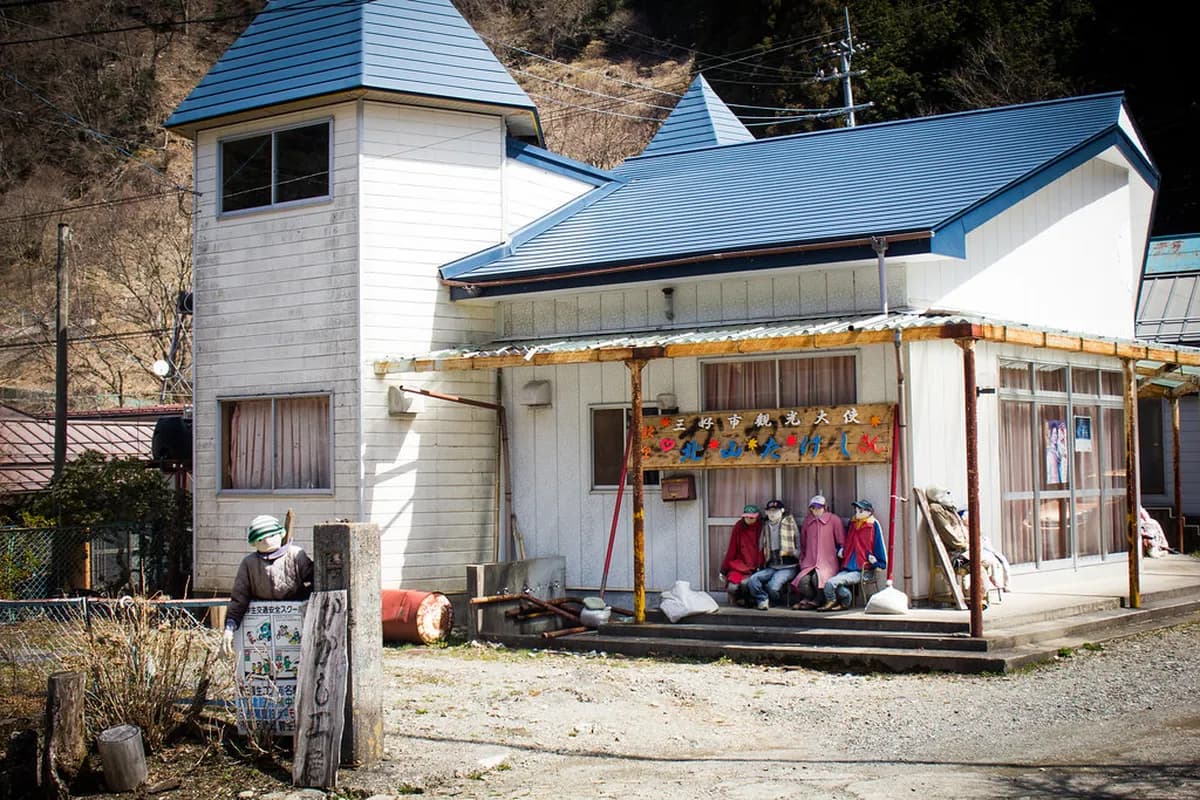
Two buildings along the route deserve extra time whenever they happen to be open. The old Kindergarden with its blue pointed roof serves as Ayano-san's workshop and is typically unlocked during the day. Across the bridge, the former Elementary School has two floors of classrooms and a gym packed with hundreds of scarecrow students. The school is usually open on weekends and holidays but stays closed on weekdays.
Handicrafts made by Ayano-san are displayed throughout the village beside small honesty boxes. Wooden shoehorns, miniature doll pairs, and other keepsakes are priced modestly and ready to take away. At the upper parking lot, a welcome center lets visitors collect a special kakashi stamp to mark the visit.
- Key stops along the village route
- The lower bus stop marks the start of the main 150-metre scarecrow stretch.
- The old Kindergarden with its blue roof is Ayano-san's workshop, usually open during the day.
- The former Elementary School is open on weekends and holidays, with two floors of classrooms.
- The upper parking lot has a welcome center where you can collect a free kakashi stamp.
- Public toilets are available near both the lower bus stop and the Mt Miune trailhead.
Scarecrow Festival and Making Workshops
Each year on the first Sunday of October, Nagoro hosts a small outdoor festival in honor of its dolls. The day opens with food stalls and a mochi-maki rice cake throwing event, then moves into a photo competition. The top prize is a one-of-a-kind scarecrow made personally by Ayano-san, with judging typically around 2 to 3 pm.
For a hands-on experience, Ayano-san runs three-hour Scarecrow Making Workshops at the old Kindergarden. A regularly scheduled class runs on the fourth Wednesday of every month from April through November. It lasts three hours, runs from 1:00 pm to 4:00 pm, and costs ¥3,000 per person. Private sessions can be arranged by calling Ayano-san directly, though she speaks Japanese only, so a Japanese-speaking contact is helpful.
For the latest schedule and any closure dates, check the IyaTime website before your visit. Visiting in autumn lines up the festival with the valley's foliage season, making October an especially atmospheric time to plan the trip.
How to Get to Nagoro Village
Nagoro sits along Route 439 in a valley so remote that the nearest grocery store is a 40-minute drive away. A rental car gives the most flexibility and is strongly recommended for reaching the village without stress. For full transport options, our guide to getting to Iya Valley covers train, bus, and car-rental routes in detail.
Travelers without a car can take the Nanpu Limited Express from JR Okayama Station to JR Oboke Station. The journey takes about 1 hour 40 minutes and costs roughly ¥5,000 each way. From Oboke, a private taxi is the most practical option and companies like Kazurabashi Taxi offer tours bookable in English. A local municipal bus does connect Oboke to Nagoro but requires a transfer and runs on limited schedules that rarely align with train arrivals.
Combine Nagoro with the Oku-Iya Vine Bridges
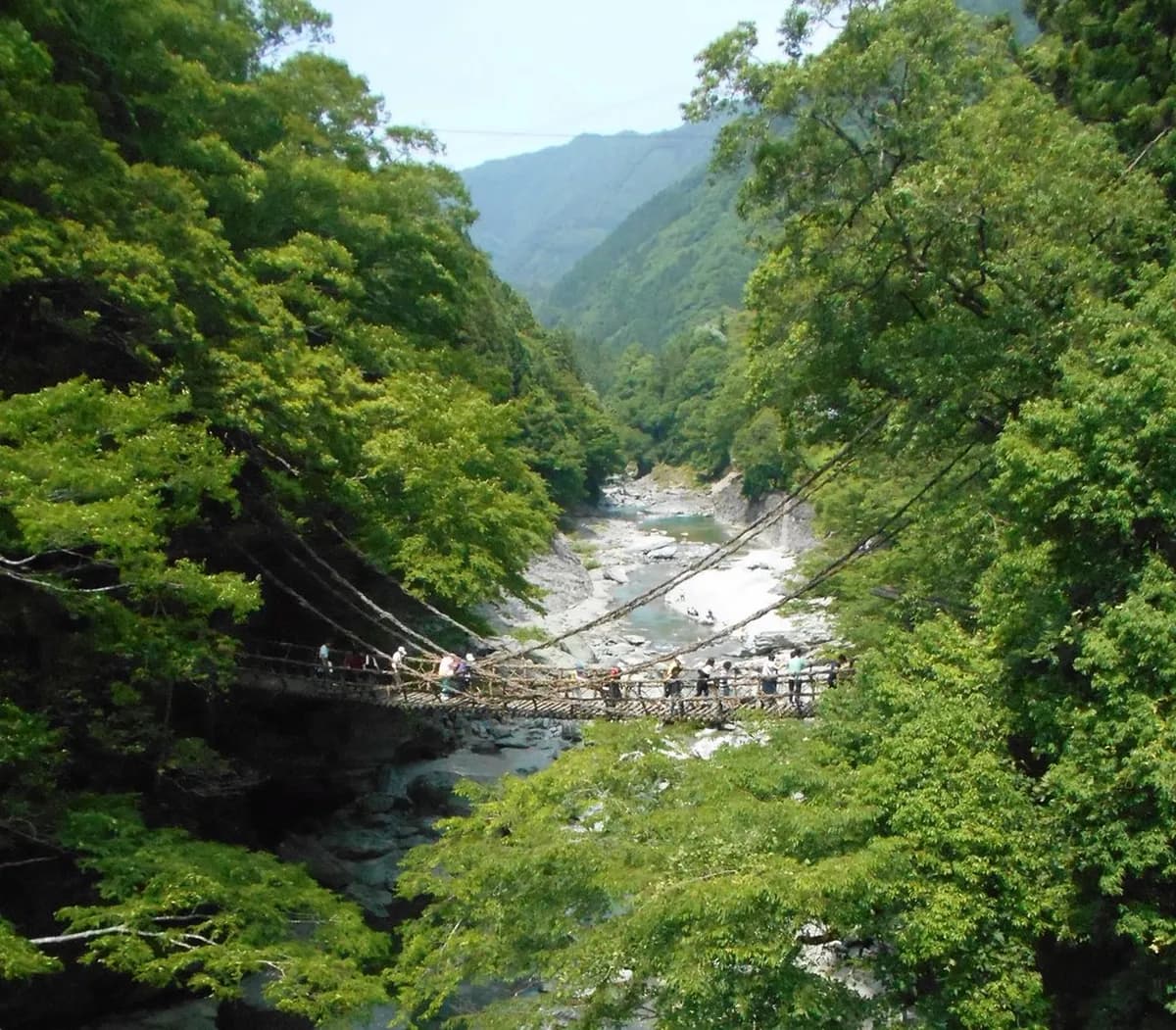
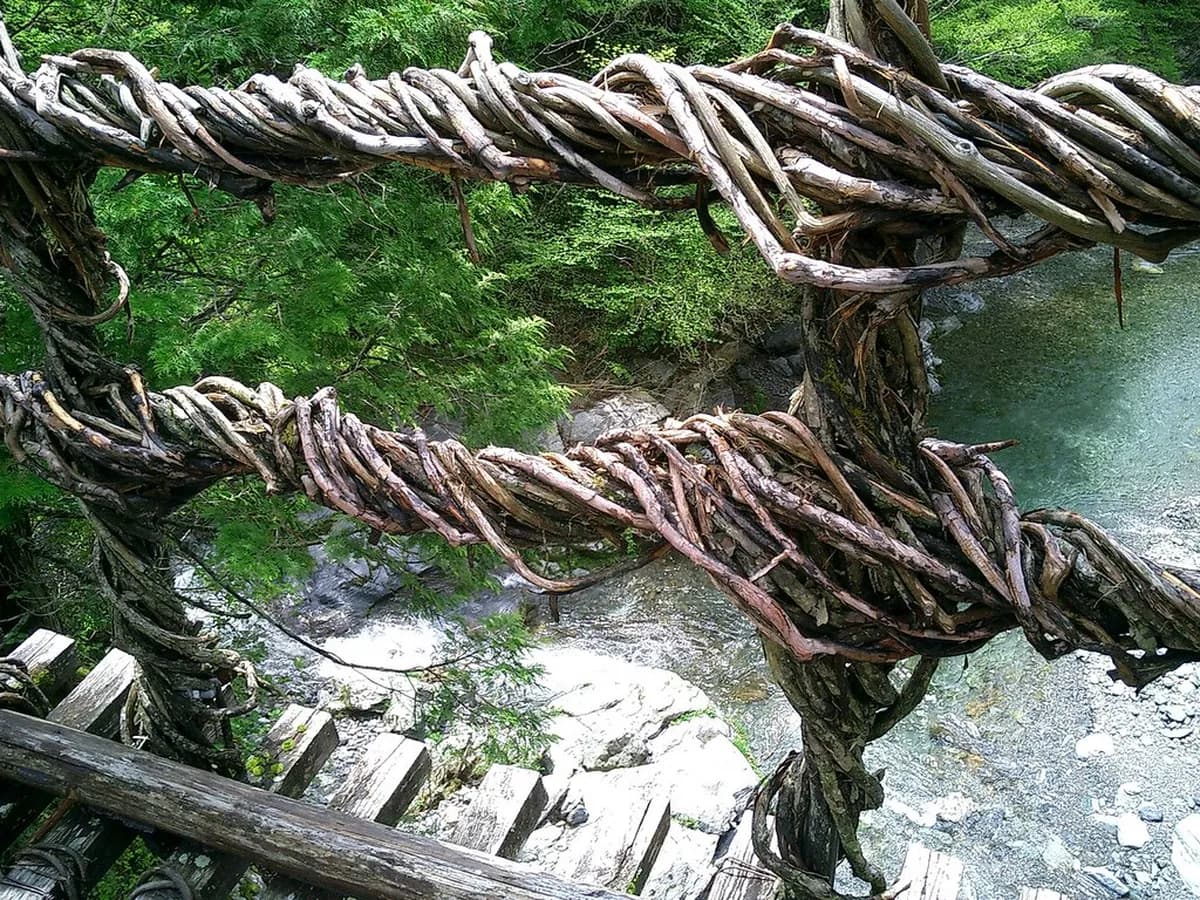
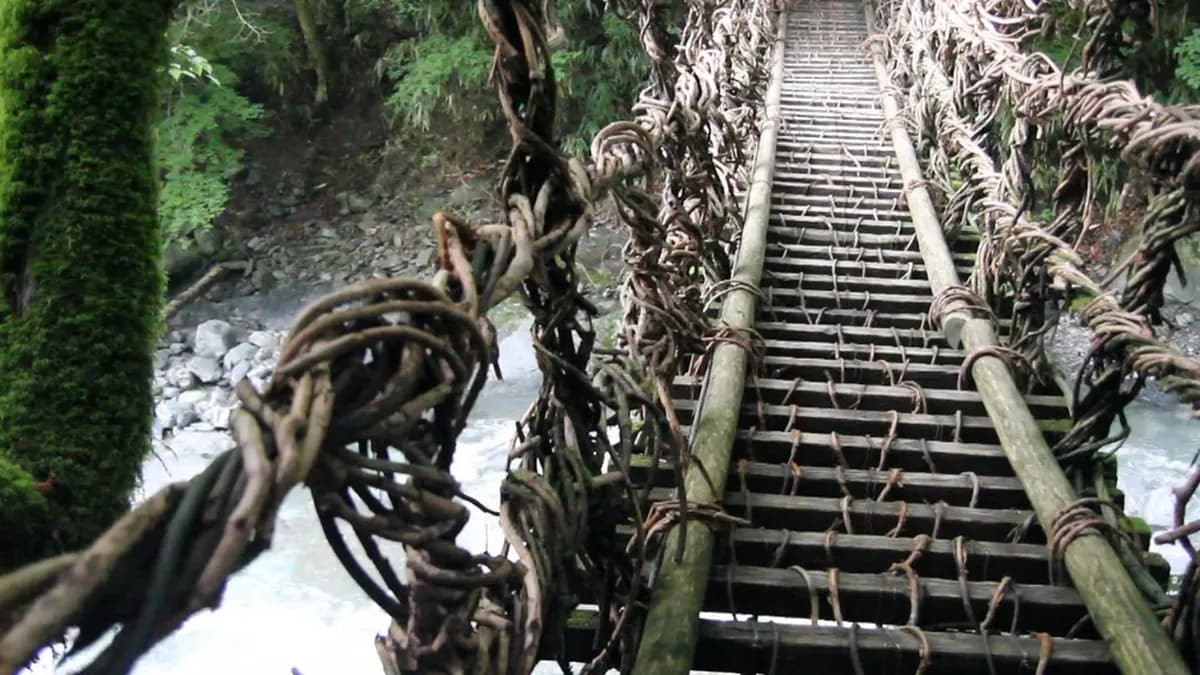
Nagoro sits only 3.4 kilometres from the Oku-Iya Double Vine Bridges, roughly a six-minute drive along Route 439. The vine bridges are the more photogenic stop, strung across the Iya River gorge and open to walk without a guide. On days when the local bus operates as far as Niju Kazurabashi, it is also possible to walk between the two sites in about an hour.
Staying overnight turns a rushed half-day into something far more rewarding. Several traditional guesthouses and onsen ryokan operate within the valley. Booking a night means you can arrive at Nagoro early, before tour groups reach the village. For lodging and onsen options nearby, see our Iya Valley onsen and accommodation guide.
Frequently Asked Questions
Is Nagoro Scarecrow Village free to visit?
Visiting Nagoro is completely free. Ayano-san maintains the village through scarecrow-making workshops priced at ¥3,000 per person and handicraft sales at honesty boxes throughout the hamlet. Buying a keepsake or joining a workshop is a meaningful way to support her work directly.
How many scarecrows are in Nagoro village?
By 2026, close to 400 life-size scarecrows are recorded in Ayano-san's Scarecrow Registry, each assigned a name, age, and personal backstory. Fewer than 30 human residents remain in the village, meaning the dolls outnumber living inhabitants by roughly ten to one.
How do you get to Nagoro village from Osaka or Tokyo?
From Osaka, take the Shinkansen to Okayama, then transfer to the Nanpu Limited Express heading to JR Oboke Station. The Okayama to Oboke leg takes about 1 hour 40 minutes and costs roughly ¥5,000 each way. A private taxi from Oboke to Nagoro is the most reliable final connection.
When is the Nagoro Scarecrow Festival?
The Nagoro Scarecrow Festival is held each year on the first Sunday of October. Events include food stalls, a mochi-maki rice cake throwing event, and a photo contest with prizes judged around 2 to 3 pm. The top prize is a custom scarecrow made by Tsukimi Ayano herself.
Nagoro Scarecrow Village is one of the few places in Japan that is simultaneously eerie, beautiful, and deeply moving. Tsukimi Ayano's decades-long project is not just folk art but a quiet meditation on rural depopulation and the need to remember. Planning a few extra hours here turns a curiosity stop into one of the most memorable parts of any Iya Valley trip.
Free guide: Japan's Hidden Gems
12 under-the-radar places beyond Tokyo & Kyoto — with the best season to visit each and a local tip you won't find in the guidebooks.
You might also like

Continue reading
More guides you'll find useful