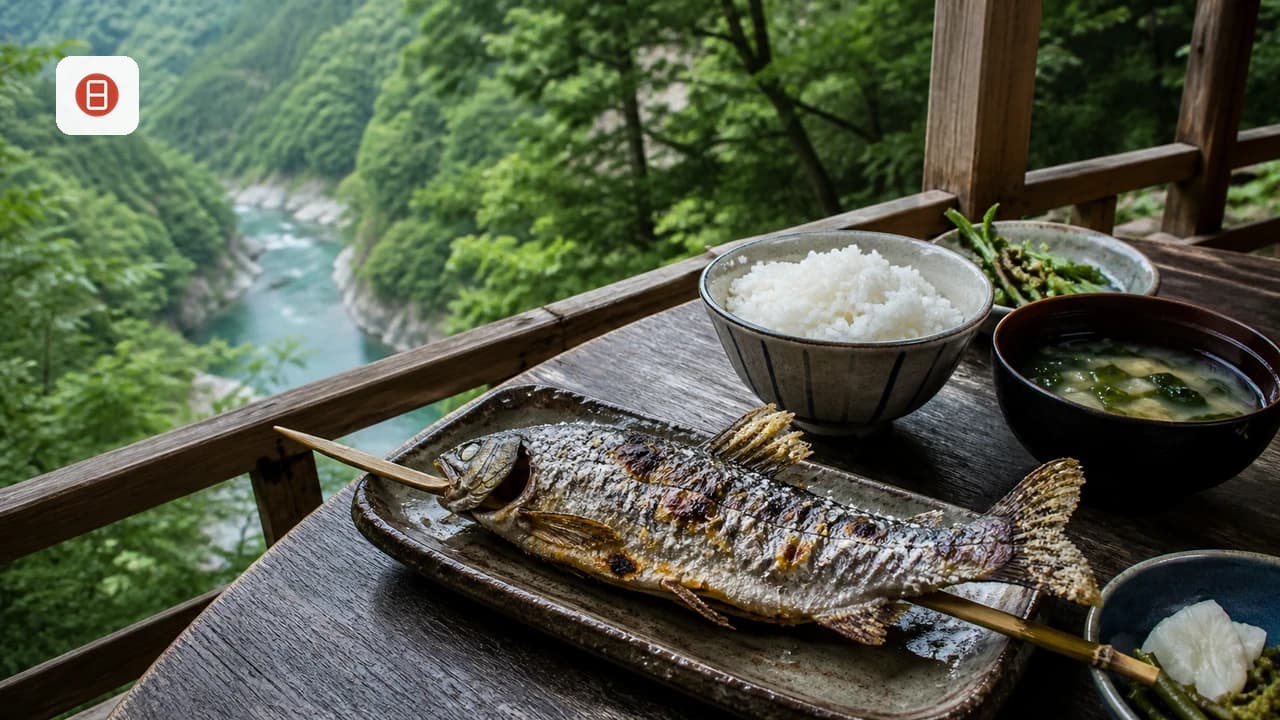
7 Best Places to Eat in Iya Valley: A Guide to Remote Dining
Where to eat in Iya Valley, ranked: 7 restaurants and cafes serving Iya soba, dekomawashi, and hirara-yaki, with 2026 hours, prices, and dinner logistics.
On this page
Last updated August 2026: where to eat in Iya Valley splits cleanly into two categories, roadside lunch counters and ryokan-run dinners. This guide ranks seven restaurants, cafes, and grocery stops across Nishi-Iya, Oku-Iya, and the Oboke Gorge area, each with verified hours and prices. Pair it with the logistics section below before you drive in, since most kitchens here close well before a typical city dinner hour.
The Remote Dining Reality: What to Expect in Iya Valley
Dining in the Iya Valley follows a strict daily rhythm shaped by its remote geography. Independent restaurants and roadside stalls handle lunch, typically opening around 11am and closing by 4pm or 5pm. Dinner works differently. Most freestanding kitchens shut for the evening, so an overnight stay at a ryokan or guesthouse becomes the main route to a hot meal after dark. A handful of exceptions stay open into the evening, and this guide flags each one below. If a booking isn't locked in for dinner, plan to eat at the accommodation instead of hunting for a restaurant after 5pm. For a broader overview of the valley's food culture, see the Iya Valley food guide.
Many restaurants close in the afternoon. The current Miyoshi tourism listing gives Yanamoto approximate hours of 10:00-22:00, but do not treat that as a daily walk-in guarantee; confirm the opening day and evening service directly. Verify Onomiya separately before relying on it for dinner.
The Iya Valley Big Three: Soba, Dekomawashi, and Hirara-Yaki
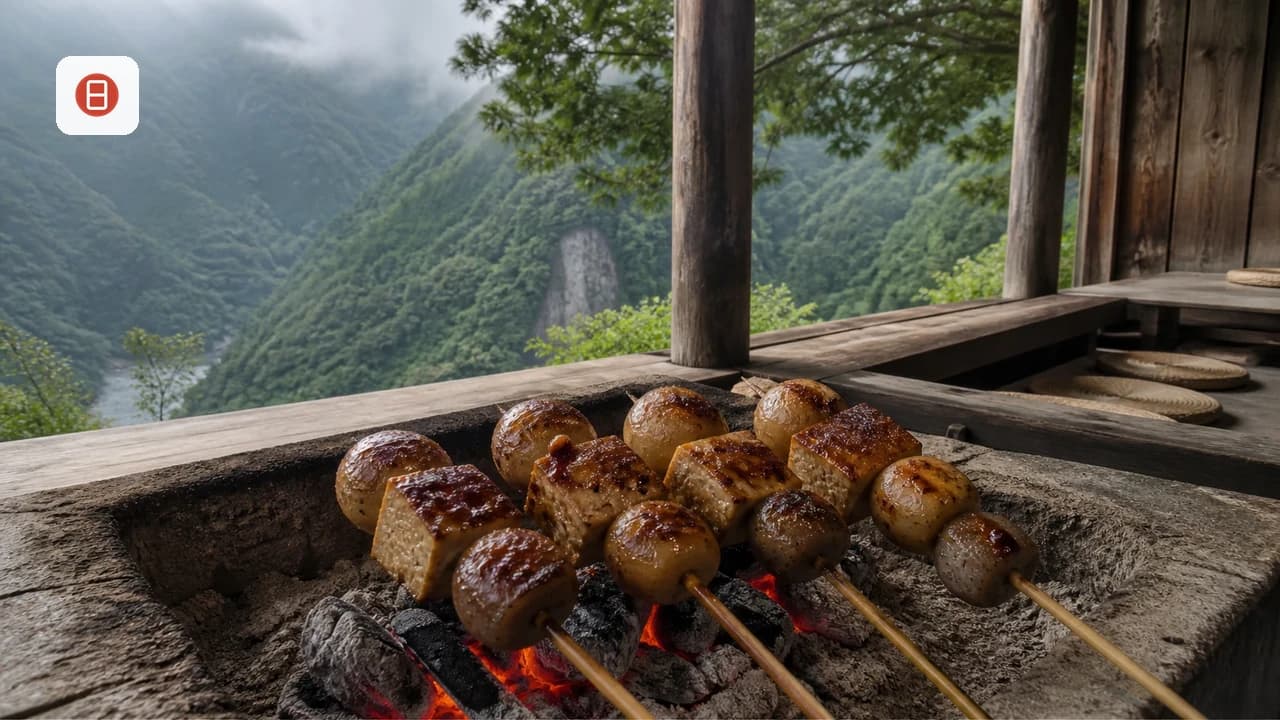
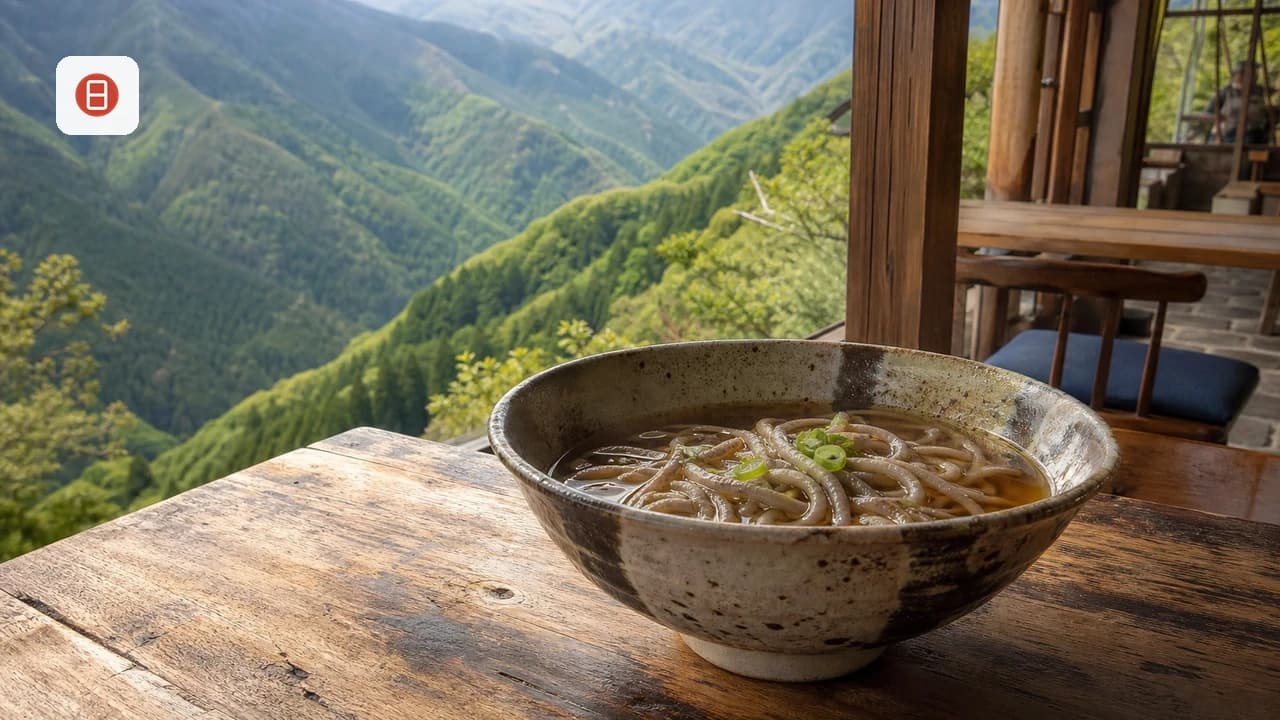
Three dishes define the Iya Valley table, and each one shows up repeatedly on this list. Iya soba is 100 percent buckwheat, mixed only with mountain spring water and cut into short, thick noodles by hand. For the full noodle-making process and where to book a cutting class, see the Iya soba cooking class guide. Dekomawashi skewers stack stone tofu, konnyaku, and a whole Iya potato, then get glazed in sweet miso and roasted over charcoal. The dekomawashi history guide covers why the dish is shaped like a wooden doll. Hirara-yaki, the valley's flat-stone stew, needs a miso wall built around a heated stone slab and a longer cook time than a walk-in lunch allows. Most restaurants that serve it ask for advance booking rather than taking walk-ins.
7 Best Places to Eat in Iya Valley
These seven spots cover every cluster of the valley, from the Nishi-Iya vine bridge area to the Oboke Gorge and the Mt Tsurugi summit trail. Hours and specialties are listed for each so a stop can be timed around driving distances.
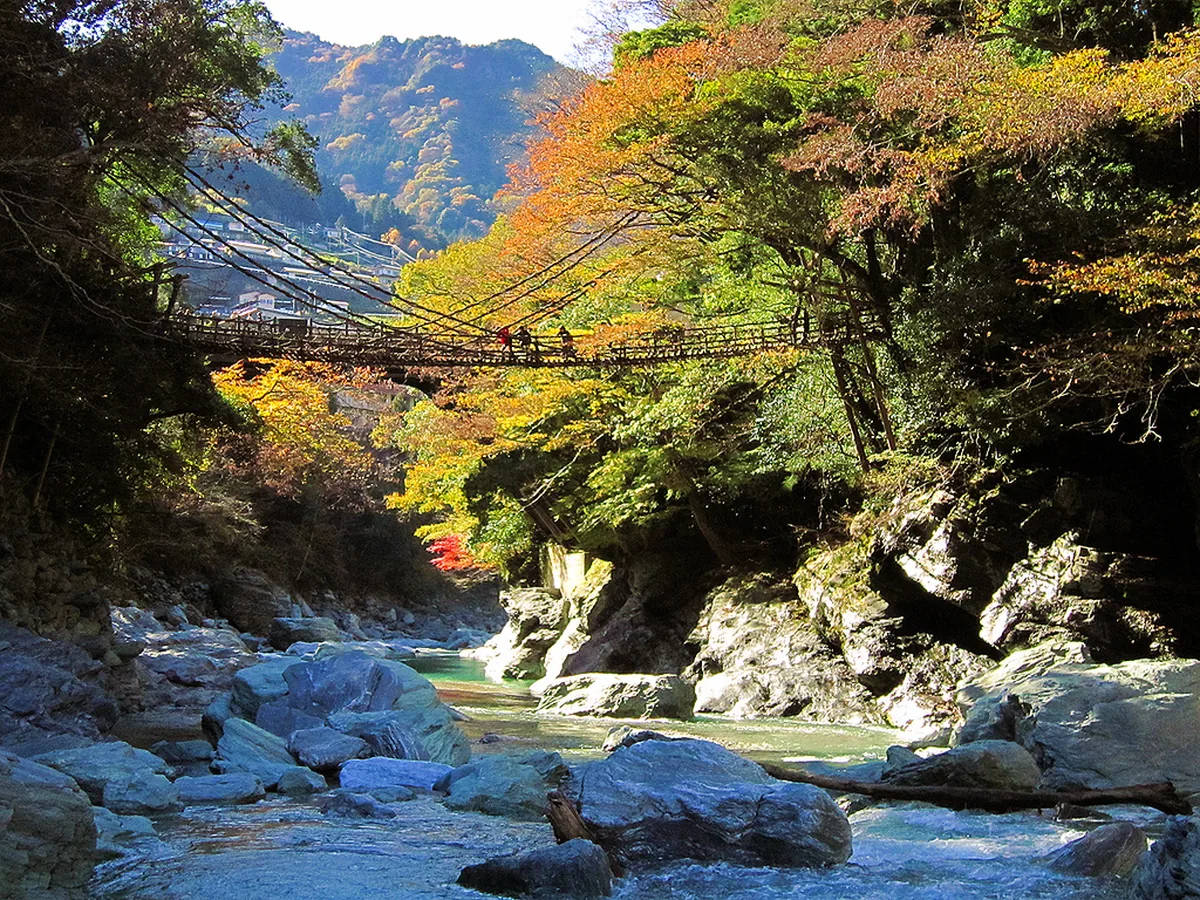
- Senkichi (Nishi-Iya)
- Hand-cut Iya soba noodles made from buckwheat and mountain spring water only, no wheat flour filler.
- Open 11am to 4pm, closed Thursdays, and closed entirely from December through February.
- A soba set typically runs ¥1,000 to ¥1,500, in line with the valley's other noodle shops.
- Kazurabashi Arcade (Nishi-Iya)
- A row of small vendors between the main parking area and Biwa Waterfall selling dekomawashi, skewered river fish, and soba.
- Most stalls run roughly 9am to 5pm and are open most days of the week.
- Pair the stop with nearby Kazurabashi vine bridge sightseeing, and expect to pay ¥500 to ¥1,500 per skewer or bowl.
- Iya-Soba Momiji-Tei (Oboke)
- A dedicated buckwheat-noodle restaurant in Yamashiro, within Miyoshi City, listed on the city's official tourism site.
- Reach it at 0883-84-1117, and confirm current hours before driving out since independent shops adjust seasonally.
- Combine it with a stop at Oboke Gorge for river views before or after the meal.
- Yanamoto Restaurant (Oku-Iya)
- Hand-made udon and soba alongside Iya dishes and grill-table okonomiyaki.
- The current tourism listing gives approximate hours of 10:00-22:00; confirm the opening day, last order, and whether evening service is available before driving out.
- The okonomiyaki grill tables make it a possible casual dinner stop when current service is confirmed.
- Onomiya (Nishi-Iya)
- An izakaya-style set-meal restaurant across from the Kazurabashi Hotel, with an English menu.
- Open 11am to 10pm, closed Wednesdays, one of the few Nishi-Iya kitchens still serving after 5pm.
- Expect set meals with several side dishes, plus beer, sake, and shochu as the main drink options.
- Boke Mart and Cafe (Oboke)
- A grocery store a few dozen meters from JR Oboke Station stocking local tofu, fresh konnyaku, and the oversized fried tofu called boke-age.
- Open 8am to 6pm, closed Sundays.
- The cafe across the road serves drinks and light meals, useful for a quick lunch between train connections.
- Tsurugisan Hutte Restaurant (Mt Tsurugi)
- A mountain-hut restaurant at the summit of Mt Tsurugi serving hot meals, coffee, and beer to hikers.
- Open daily 6am to 8pm, but only from late April to mid-November.
- Guesthouse rooms are attached, so a meal here pairs naturally with an overnight stay before or after the climb.
Mountain Bounty: Local Ingredients Worth Ordering by Name
Beyond the big three, several ingredients turn up across Iya's menus and are worth ordering by name rather than guessing from a Japanese-only menu.
- Iwa-dofu (stone tofu)
- Pressed into bricks dense enough that it was traditionally carried by rope instead of a container.
- Served in soups, on the grill, or raw with ginger, wasabi, and soy sauce.
- Look for it on menus at Yanamoto, Senkichi, and the Kazurabashi Arcade stalls, usually as a side or a grilled skewer base.
- Ayu and amego (river fish)
- Sweetfish and salmon trout from the Iya and Yoshino rivers, salt-crusted and skewered so the body curves as if swimming.
- Usually roasted whole over charcoal rather than filleted.
- The Iya Valley River Fish Guide: Amego, Ayu & Hirara-yaki Tips covers where to find both in season.
- Wild game (gibier)
- Boar (shishi) and deer (shika) from local hunts, sold as sliced, frozen packs and house-made sausage at the Hunter's Butchery in Oku-Iya's Tochinose district.
- Hours vary with hunting activity.
- Late morning, roughly 10am to 11am, tends to be the most reliable window to find it open, and calling ahead helps since English is limited.
- Soba-gome (buckwheat porridge)
- The whole buckwheat kernel simmered into a thick porridge with shiitake, sansai, and chicken, distinct from soba noodles.
- A homestay staple that also turns up on restaurant and hotel menus across the valley.
- A filling option for a lunch that lands outside standard restaurant hours.
Sake, Bancha, and Iya's Drinking Traditions
Awa-Ikeda anchors the valley's drinking culture. Local tourism listings count three sake breweries in Ikeda, each operating for more than a century. The breweries draw on rice grown along the wider Yoshino River plain and spring water from the surrounding hills. Ikeda traditionally hosts the Shikoku Sake Festival each February, though the exact date shifts yearly, so confirm it with Miyoshi's tourism office before building a trip around it. Iya bancha tea follows its own process. Fresh leaves are picked each spring, then roasted in cast iron pots. Workers knead the still-warm leaves by hand on woven mats. They finish with a couple of days drying in the sun. At larger gatherings, look for the valley's shared-cup drinking custom, where an empty cup passes to another person to be filled and returned rather than refilled by its owner.
What Iya Valley Dining Costs in 2026
Budget by meal type rather than by restaurant, since the split between casual and formal dining is sharp.
Evening ryokan dinners start at ¥4,000 and up versus ¥500–¥1,500 for roadside lunch—a gap reflecting early restaurant closures by 4pm or 5pm, making early timing or half-board bookings essential for evening meals.
| Meal type | Typical price |
|---|---|
| Roadside soba or a dekomawashi skewer | ¥500–¥1,500 |
| Hirara-yaki or a ryokan half-board dinner | ¥4,000 and up |
The Dinner Gap: Why You Need a Ryokan Half-Board Booking
If lodging isn't booked with dinner included, options after dark are close to nonexistent outside Awa-Ikeda town. Most roadside restaurants and arcade stalls close by mid-afternoon, well before a typical dinner hour. Booking half-board, meaning breakfast and dinner served at the accommodation, is the standard workaround across the valley's ryokans and guesthouses. The Iya Valley ryokan meals guide breaks down what a half-board dinner typically includes. Guesthouses in Oku-Iya sometimes serve dinner to non-guests, but only by advance reservation, so call ahead rather than showing up.
Grocery Stores and Self-Catering Stops
Self-catering fills the gap on days without a ryokan booking, and a few stops cover most of the valley.
- 7-Eleven near Frespo (Awa-Ikeda)
- Open 24 hours, tucked behind the Frespo shopping center a few hundred meters from JR Awa-Ikeda Station.
- The most reliable late-night or early-morning stop in the area.
- SunShine Supermarket (Awa-Ikeda)
- A full grocery store near the local hospital, a short drive from Frespo, with a broader selection than the convenience stores.
- Lawson Oboke
- Open 24 hours inside the West-West service area on Route 32.
- Stocks bentos, drinks, and snacks, with an English-language ATM on site.
- Boke Mart (Oboke)
- Open 8am to 6pm, closed Sundays, a few dozen meters from JR Oboke Station.
- Carries local tofu, konnyaku, and prepared take-out food.
- Furutani Shop (near Oboke)
- The largest grocery store for the area, a couple hundred meters up the Route 319 turn-off from Route 32, near JR Awa-Kawaguchi Station.
- Okazaki Shouten (Nishi-Iya)
- About 50 meters past the Kazurabashi bus stop on Route 32, generally the best grocery option in Nishi-Iya even though selection stays limited.
- Go early in the day if hoping to find local tofu in stock.
Common Mistakes to Avoid When Dining in Iya Valley
A few planning errors account for most disappointing meals in the valley.
- Arriving after 5pm without a reservation
- Most independent restaurants close for the day by then.
- A ryokan half-board booking is the fallback for dinner, not a backup restaurant, so lock it in before arrival.
- Expecting city-style sushi or ramen
- Iya's kitchens run on mountain and river ingredients: buckwheat, tofu, konnyaku, river fish, and wild game.
- Plan to try dekomawashi, hirara-yaki, or soba-gome porridge instead of searching for familiar city-style options.
- Underestimating drive times between food stops and sights
- Nishi-Iya, Oboke, and Oku-Iya are separated by winding mountain roads.
- Pair a meal stop with whichever sightseeing cluster is already on the day's route, rather than backtracking across the valley.
- Ordering only familiar-looking dishes
- Skipping soba-gome porridge and hirara-yaki misses two dishes that rarely appear outside this valley.
- Ask staff which items are regional specialties if the menu isn't clear, since many roadside spots don't post English translations.
How This Guide Was Verified
Food availability, access details, seasonal rules, and the time-sensitive claims in this guide were checked on August 22, 2026 against the official sources below. Independent restaurant menus, prices, opening days, and sell-outs can change, so confirm the operator's same-day notice before making a special trip.
Frequently Asked Questions
What time do restaurants in the Iya Valley close?
Most independent restaurants close between 4pm and 5pm, since dinner in the valley runs almost entirely through ryokans and guesthouses. A few spots, including Yanamoto Restaurant and Onomiya, stay open into the evening for walk-in meals.
Is there a 24-hour convenience store near Iya Valley?
Yes. A 7-Eleven behind the Frespo shopping center in Awa-Ikeda is open 24 hours, close to JR Awa-Ikeda Station. Lawson Oboke, inside the West-West service area on Route 32, is also open around the clock.
What's the difference between soba noodles and soba-gome?
Soba noodles are cut from ground buckwheat dough and pure spring water. Soba-gome uses the whole buckwheat kernel instead, simmered into a thick porridge with shiitake, sansai, and chicken.
Where can visitors buy wild game in Iya Valley?
The Hunter's Butchery in Oku-Iya's Tochinose district sells sliced, frozen deer and boar, plus house-made sausage. Hours shift with hunting activity, and late morning, roughly 10am to 11am, tends to be the most reliable window. Calling ahead is worth it since English is limited.
Do you need a reservation for hirara-yaki?
Yes, most restaurants that serve hirara-yaki request advance booking because the miso-walled stone stew takes longer to prepare than a standard lunch order. Walk-in availability is rare.
Free guide: Japan's Hidden Gems
12 under-the-radar places beyond Tokyo & Kyoto — with the best season to visit each and a local tip you won't find in the guidebooks.
You might also like

Continue reading
More guides you'll find useful