Dekomawashi in Iya Valley: Tokushima's Miso Skewers
A practical 2026 guide to dekomawashi in Iya Valley: what the dish is, where to find it near the Kazurabashi bridge, and how to plan your visit.
On this page
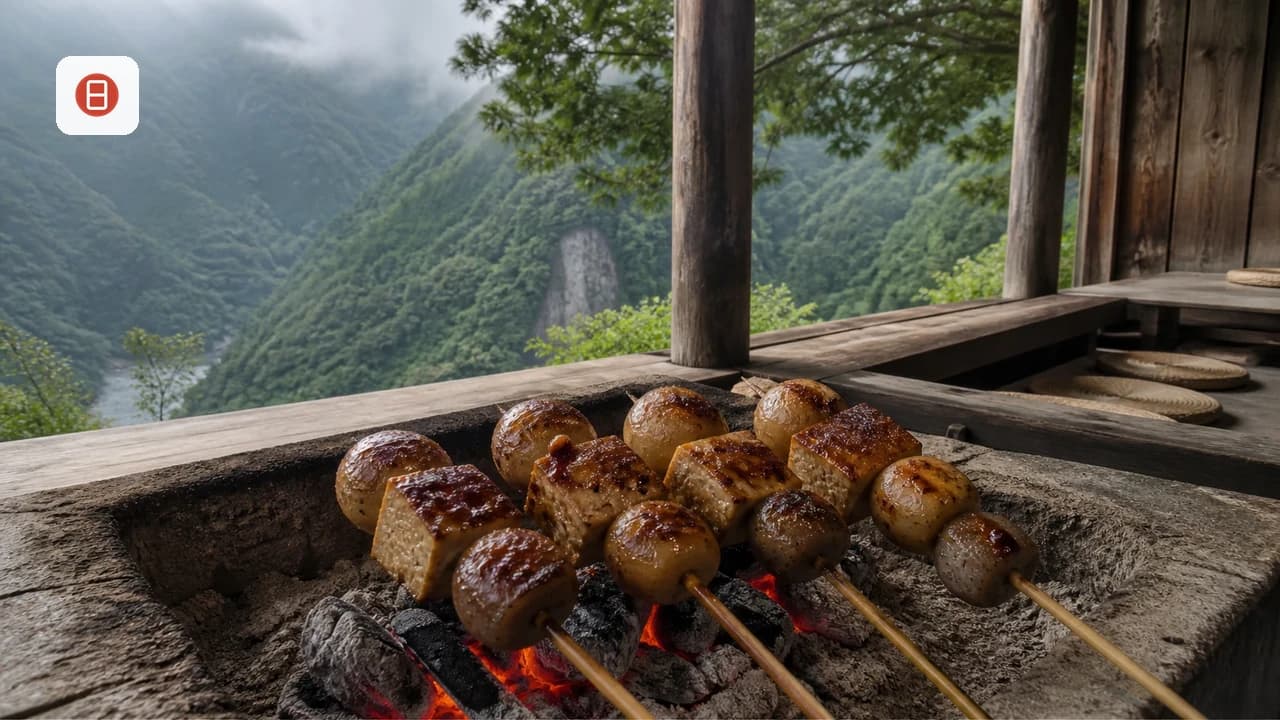
Last updated August 2026. Dekomawashi in Iya Valley is a skewer of Goushi-imo potato, dense Iya-tofu, and local konnyaku. Vendors grill it over charcoal and brush it with a sweet-savory miso glaze. It is one of the valley's most distinctive farmhouse foods, sold from roadside stalls and served at ryokan tables across the Miyoshi City mountains. This guide explains what the dish is, where to find it near the Kazurabashi Vine Bridge, and how to plan a visit around it.
What Is Dekomawashi? An Iya Valley Specialty
Dekomawashi stacks three ingredients on a single skewer, and each layer contributes a distinct texture. Together they explain why the dish holds together over open flame instead of falling apart the way a softer piece of dengaku tofu might.
Where standard miso dengaku usually glazes a single ingredient such as tofu or eggplant, dekomawashi's three-ingredient stack is a specifically Iya Valley combination. That is part of why locals treat it as its own dish rather than a variation on a broader Japanese snack. Cooks brush the stacked skewers with a regional miso paste, balanced between sweet and salty, then rotate them slowly over glowing charcoal. Watching the skewers turn over an ash-filled hearth is part of the appeal. Miso on the surface blisters and darkens unevenly as it caramelizes. You will likely notice the smell of grilling miso and charcoal smoke before the stall itself comes into view. Skewers are usually served hot, straight off the grill, rather than plated to cool first, so the miso crust stays slightly sticky and the interior stays warm. For a wider view of what the region eats beyond this one skewer, the Iya Valley food guide covers the rest of the valley's specialties.
- Goushi-imo: a small, hardy potato grown on Iya Valley's steep, high-altitude slopes, valued for a dense, waxy texture that holds its shape on the skewer.
- Iya-tofu: a stone-pressed tofu, firmer than standard silken or momen tofu, which is why it stays on the skewer through grilling instead of crumbling.
- Konnyaku: a chewy, low-moisture block that adds textural contrast between the soft potato and the firm tofu.
The Story Behind the Name: Puppets, Hearths, and a Mountain Kitchen
The name dekomawashi combines two ideas. Deko refers to the wooden puppets used in Awa Ningyo Joruri, Tokushima's traditional puppet theater. Mawashi means to turn or rotate. Skewers spun slowly over the coals resemble those puppets being worked by a puppeteer's hands, which is where farmhouse cooks are said to have drawn the name. Awa Ningyo Joruri remains tied to Tokushima Prefecture's broader cultural identity, and the puppet imagery behind the dish's name reflects that overlap between food and performance tradition in this part of Shikoku.
The dish grew out of irori hearth cooking, the sunken open fireplace at the center of a traditional Iya Valley farmhouse. A farmhouse irori burned wood or charcoal continuously through the day, which made it a natural spot to cook whatever ingredients were on hand rather than a special preparation reserved for guests. Steep gorges and thin mountain soil long isolated the valley from the rest of Shikoku, which is why writers often describe it as one of Japan's remaining mountain frontiers. Potatoes, tofu, and konnyaku were ingredients a mountain household could reliably grow or make itself. Skewering them over the hearth turned a subsistence meal into a dish now served to visitors. Some ryokan and roadside stalls still grill over a real irori-style hearth rather than a modern grill, keeping the cooking method close to its farmhouse origin.
Where to Eat Dekomawashi Near the Kazurabashi Vine Bridge
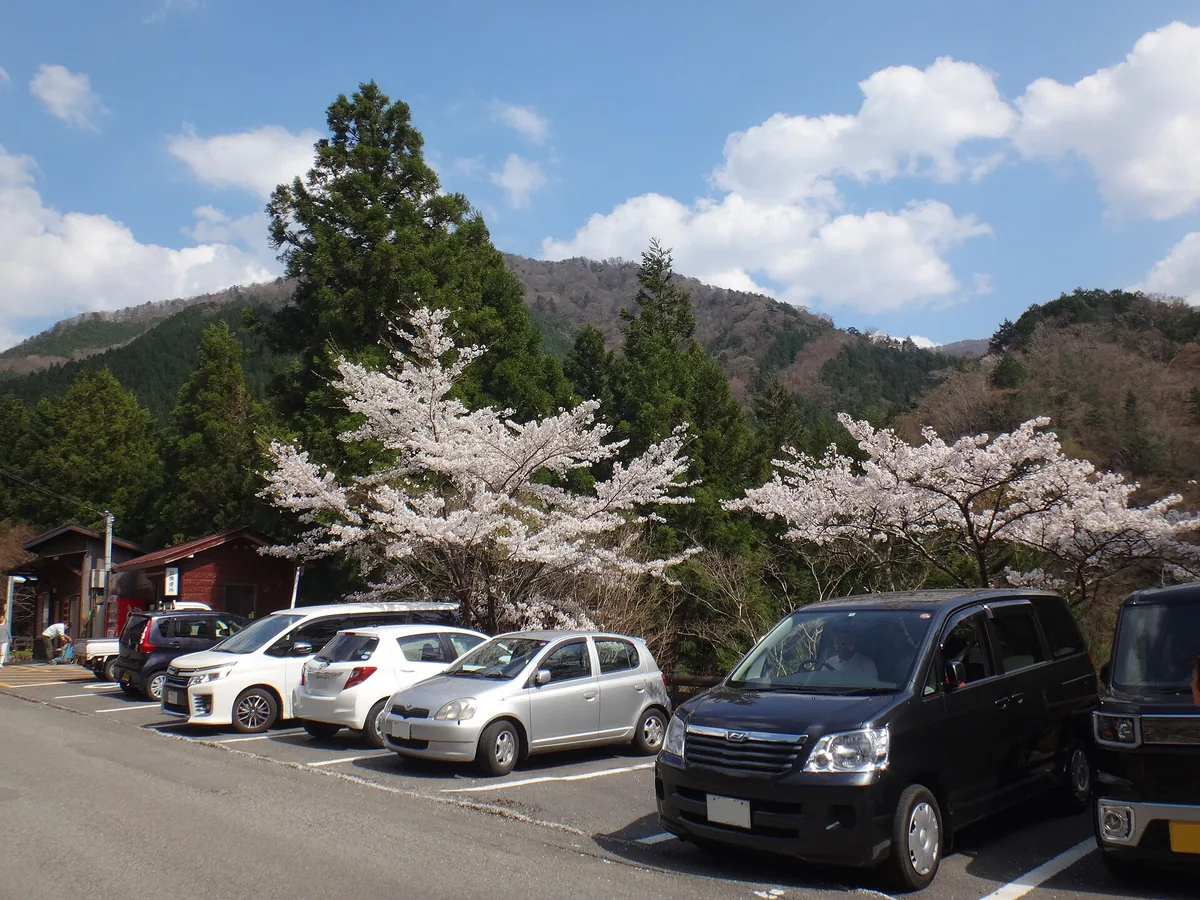
Dekomawashi's most accessible vendors sit near the entrance to the Kazurabashi Vine Bridge, one of the valley's main sightseeing stops. Street-side stalls here grill skewers to order over charcoal braziers, and the smell of grilling miso is often the first sign you have arrived. Because the bridge itself can only be crossed on foot across a narrow gorge, most visitors browse the stalls before or after the crossing rather than treating the food as a separate errand. Buying at a stall is quick. Pick a skewer, eat standing or on a nearby bench, then continue toward the bridge. Because each stall is independently run, small differences in glaze recipe or grill timing are normal from one vendor to the next. Signage at each stall is typically simple, hand-painted or hand-written, rather than uniform, so look for smoke and the grill itself rather than a matching storefront design. For a fuller picture of which stalls tend to be open and how to plan the stop into a day trip, see the Iya Valley dining logistics guide.
Dekomawashi at a Ryokan Table
Ryokan across the valley also serve dekomawashi, usually as one course within a multi-course kaiseki-style dinner rather than as a standalone street snack. A kaiseki-style dinner typically layers several small courses across an evening, and dekomawashi tends to appear as one savory course among others rather than the centerpiece. Plated versions tend to arrive on a smaller skewer, styled alongside river fish, mountain vegetables, and rice, and eaten with chopsticks at a table instead of on the move. Pace and setting are the real trade-off, not the dish itself. A stall skewer suits a quick stop between sightseeing, while a ryokan version suits an evening meal built around the valley's other specialties. Because a ryokan dinner is generally reserved in advance, dekomawashi served this way comes as part of a set menu rather than something ordered individually the way a street skewer is. What else typically appears on that table is covered in the Iya Valley ryokan meals guide.
Cost, Payment, and What to Expect to Pay
Dekomawashi is priced and sold as a snack, not a full meal. A single skewer generally costs less than a bowl of soba or a river fish set at a sit-down restaurant. Because the dish is sold as street food rather than through a fixed-menu restaurant, individual vendors set their own prices rather than following a valley-wide standard. Two vendors a short walk apart can charge slightly different rates for what looks like the same skewer. Street vendors near the Kazurabashi Vine Bridge are cash-only in many cases, so carry yen in small bills before heading to the stalls. Ryokan versions are billed as part of the room or dinner rate rather than priced individually. Card payment is more likely to be accepted at a ryokan front desk than at a roadside stall. Prices at individual stalls can shift year to year, so confirm the current rate directly with the vendor or check with the Miyoshi City tourism association before your trip.
Pairing Dekomawashi with Other Iya Valley Flavors
Dekomawashi is one part of a broader Iya Valley food trio. Many travelers pair a skewer with a bowl of Iya buckwheat soba for a fuller lunch. Others add a plate of grilled river fish, typically amago or ayu depending on season, for a heartier stop. Combining a skewer with either dish gives a broader sense of what Iya Valley farmhouses have historically eaten, from mountain-grown starches to hearth-grilled protein. Choosing between a quick skewer and a full sit-down meal usually comes down to how much time is left in the day and how much walking the next stop involves. That decision is laid out in more detail in the Iya Valley dining logistics guide, including which stops work best on a tight schedule.
Planning Your Visit: Season, Access, and Dietary Notes
Outdoor charcoal grilling is easiest to find during the warmer months and around the autumn foliage season, when stalls near the Kazurabashi Vine Bridge see the most foot traffic. Some vendors scale back or close during the coldest winter weeks, so confirm which stalls are actually operating before making a special trip in deep winter. Summer brings long daylight hours for exploring before or after eating. Autumn foliage season draws heavier crowds around the bridge, so expect a longer wait at the stalls during peak weeks. Parking near the bridge tends to fill up on peak foliage weekends, so arriving earlier in the day improves the odds of a nearby space. Getting to the vendor cluster works best by car, since the valley's local bus routes run on limited daily schedules. A taxi or ryokan shuttle is a reasonable backup if you are not driving yourself. If you are staying at a ryokan in the valley, ask the front desk about shuttle timing before planning around public transit. Comfortable walking shoes help too, since the approach to the stalls and the bridge itself involves uneven ground.
Ask before assuming the dish is vegetarian. Miso glaze at many stalls is built on a traditional dashi stock, which commonly includes bonito flakes or other fish-based ingredients. Vegetarian and vegan travelers should ask each vendor directly whether a dashi-free glaze is available. Practices vary stall to stall, and a menu description alone will not settle it.
Why Dekomawashi Belongs on Every Iya Valley Itinerary
Dekomawashi packs the valley's food story into a single skewer. Mountain-grown potatoes, dense local tofu, and a miso glaze come together, cooked the way farmhouses have long done it over an open hearth. It travels well for sightseeing, since you can eat one standing near the Kazurabashi Vine Bridge and keep moving toward the next stop. Because the dish is inexpensive and quick to eat, it fits easily into an itinerary that also includes river viewpoints, gorge trails, and other valley stops. Working it into a broader day makes planning easier too. The Iya Valley attractions guide is a useful starting point for building a full day around the bridge, the gorge viewpoints, and other valley landmarks. A skewer works well as the stop in between.
How This Guide Was Verified
Food availability, access details, seasonal rules, and the time-sensitive claims in this guide were checked on August 22, 2026 against the official sources below. Independent restaurant menus, prices, opening days, and sell-outs can change, so confirm the operator's same-day notice before making a special trip.
Frequently Asked Questions
What does dekomawashi taste like?
Expect a smoky, caramelized miso crust over a soft potato center and a firm tofu layer, with the konnyaku adding a chewy contrast. The glaze balances sweet and salty rather than leaning purely savory. Charcoal grilling adds a light char that plain miso dengaku from other regions typically lacks. Potato inside the skewer stays dense rather than fluffy, closer to a roasted new potato than a baked one.
Is dekomawashi vegetarian or vegan?
Not automatically. Many miso glazes are built on a traditional dashi stock that includes bonito flakes. Stalls sometimes share a grill with skewers containing fish or other animal products. Ask each vendor directly about the glaze ingredients and grill setup if you are vegetarian or vegan, since practices vary from stall to stall. A menu description alone is unlikely to settle the question, so confirm before ordering.
How much does a skewer of dekomawashi cost?
A single street-side skewer is priced as a snack, generally less than a bowl of soba or a river fish set at a sit-down restaurant. Exact prices are set stall by stall rather than standardized across the valley, and they can shift year to year. Confirm the current rate with the vendor directly, or check with the Miyoshi City tourism association before you go.
Where is the best place to try dekomawashi?
Day-trippers have the easiest access at the vendor cluster near the entrance to the Kazurabashi Vine Bridge, where several stalls grill skewers to order. Ryokan across the valley also serve dekomawashi as part of a multi-course dinner. That is a good alternative if you would rather sit down for a full meal instead of eating on the move.
What's the difference between dekomawashi and regular miso dengaku?
Standard miso dengaku usually glazes a single ingredient, often tofu or eggplant, then grills it. Dekomawashi stacks three Iya Valley ingredients, Goushi-imo potato, Iya-tofu, and konnyaku, on one skewer. That three-ingredient combination, plus the puppet-inspired name, is part of why the valley treats dekomawashi as its own dish rather than a regional variant of dengaku.
Can you find dekomawashi outside the Iya Valley?
Dekomawashi is closely associated with the Iya Valley's farmhouse cooking tradition. It is not a dish you should expect to find as a standard menu item much beyond Tokushima Prefecture. Trying it here, especially near the Kazurabashi Vine Bridge, is worth building into an Iya Valley visit specifically.
Free guide: Japan's Hidden Gems
12 under-the-radar places beyond Tokyo & Kyoto — with the best season to visit each and a local tip you won't find in the guidebooks.
You might also like


Continue reading
More guides you'll find useful