Iya Soba Restaurants and Soba-Making Guide
This Iya soba guide covers where to eat 100% buckwheat noodles, how to book the Atelier Tsuzuki experience, and 2026 prices from ¥800 to ¥4,500.
On this page
Last updated August 2026, this Iya soba guide covers where to eat 100% buckwheat noodles, how to book the soba-making experience at Atelier Tsuzuki, and what each option costs. The noodles are cut without any binding flour, which makes them break more easily than the springier soba served across most of Japan. The sections below walk through pricing, transit from JR Oboke Station, and the mistakes that catch first-time visitors to Higashi-Iya.
What Makes Iya Soba Different From Other Japanese Noodles
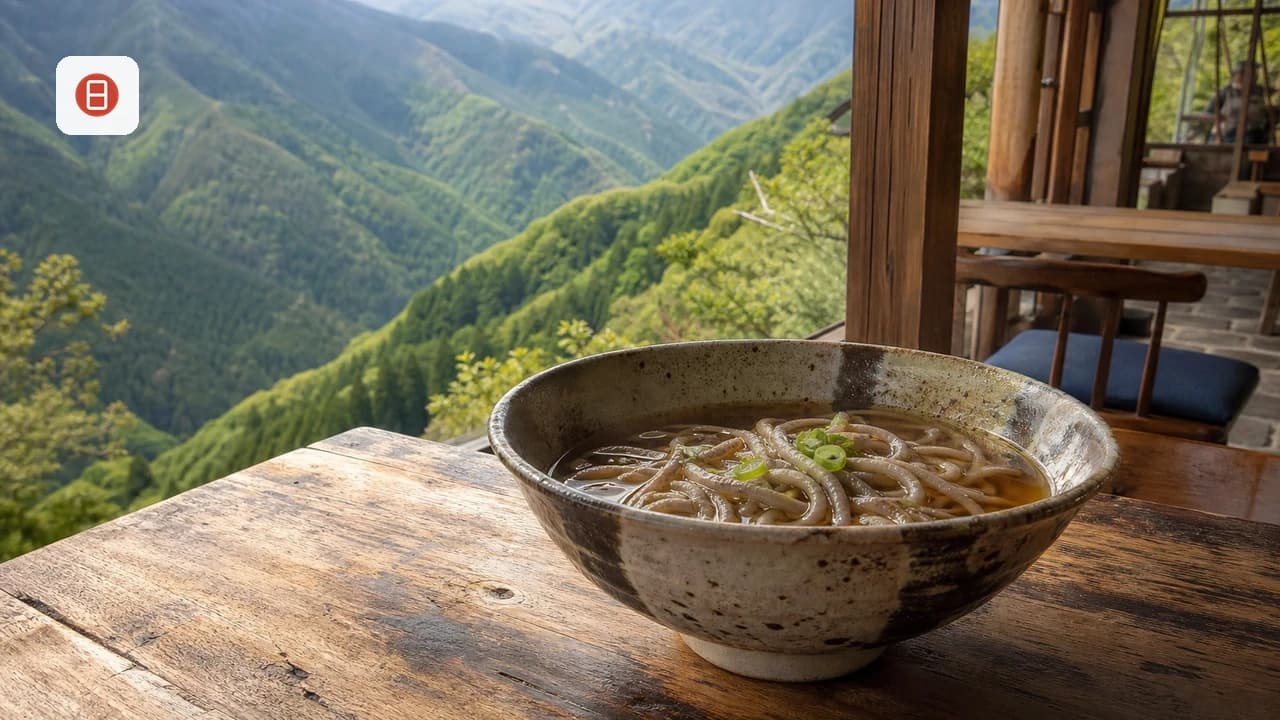
Most soba elsewhere in Japan is cut with wheat flour blended in, which gives the noodles stretch and a smooth bite. Iya soba skips that step. It is made from 100% local buckwheat flour, a style the Ministry of Agriculture, Forestry and Fisheries records as soba-kiri. That means the noodles are cut rather than stretched, coming out thick and short. Without a binding flour, the dough holds together less easily, so the strands break more often than at a typical noodle counter elsewhere. Locals treat that brittleness as proof the noodles are genuinely ju-wari, or 100% buckwheat, rather than a blend.
This dish has a specific origin story tied to the valley's geography. According to the same MAFF record, the Heike clan settled in Iya after their defeat in the Genpei War and began growing buckwheat on the valley's steep slopes, since rice needs flatter, wetter ground than the terrain allows. Buckwheat needed a shorter growing season and less level land, so it became the region's staple crop and eventually its best-known dish. Fresh water from the valley goes into both the dough and the dashi, and the broth layers dried sardines, kombu, and bonito flakes rather than relying on one stock alone. A secondary specialty, sobagome-zousui, uses the buckwheat seeds whole in a rice-like porridge instead of milling them into noodles.
Serving style matters as much as the noodle itself. Cooked strands go into a bowl and get a warm dashi poured over them just before eating, rather than a separate dipping sauce the way cold soba is often served elsewhere. Typical toppings include deep-fried tofu, fish paste (kamaboko), green onion, and, at some tables, wild vegetables gathered from the surrounding mountains.
Where to Eat Iya Soba in the Valley
Iya-Soba Momiji-Tei is the most straightforward sit-down option, listed by the Miyoshi City tourism office near Oboke rather than deep in Higashi-Iya. It suits visitors who want a bowl without booking a workshop or arranging transport into the upper valley. Momiji-Tei is one part of a wider Iya Valley dining scene built around mountain vegetables, river fish, and skewer-grilled dishes, and it works well as a lunch stop before or after visiting the gorge. Contact the restaurant directly at 0883-84-1117 to confirm current hours, since small valley restaurants can adjust their schedules on short notice outside peak travel dates.
Restaurant bowls cost ¥800–¥1,200 and require no advance booking, taking just 20–40 minutes, while the workshop option takes about 2 hours and costs significantly more but includes hand-cut noodles to take home.
Beyond Momiji-Tei, expect small, family-run soba counters near Iya's vine bridges. These shops keep irregular hours and rarely publish schedules online, so confirm opening times locally through the Miyoshi City Tourist Information Center before making a special trip. Pair a soba stop with the Kazurabashi vine bridge, since both sit within the same stretch of the valley and a short walk covers each.
The Traditional Soba-Making Experience at Atelier Tsuzuki
Atelier Tsuzuki, in Higashi-Iya, runs the valley's best-known soba-making workshop. Guests grind their own buckwheat kernels into flour on a stone mortar, or ishi-usu, before kneading, rolling, and cutting the dough by hand. Nishi-Awa Tourism Area describes a folk-song atmosphere inside a traditional house with an open hearth, and lunch is served in that same space rather than a separate dining room. Nishi-Awa's own trip-planning site places the activity within the Mt. Tsurugi and Oku-Iya area, alongside other mountain-based experiences.
Though Atelier Tsuzuki accepts children age 3 and up for its workshop, the meal-only option exists for those who prefer to skip the hands-on milling and kneading stages.
Atelier Tsuzuki offers a soba-making experience in Higashi-Iya, but activity length, included dishes, group rules, dietary accommodations, and take-home portions can change. The current Miyoshi tourism directory confirms the venue and contact details without supporting every older package detail previously quoted here. Ask the operator what the current plan includes before coordinating a return bus or car trip around it.
How to Use This Iya Soba Guide: Costs, Booking, and Timing
Budget differently depending on whether the plan is a bowl of soba or the full making experience. The table below compares the two options, using prices published by the Nishi-Awa Tourism Area for the workshop and typical valley pricing for a restaurant bowl.
The meal-only option skips the hands-on milling and kneading entirely, so it suits travelers short on time or traveling with young children who may not want to grind flour by hand. The full experience is the only option that includes a take-home portion of hand-cut noodles.
Reserve Atelier Tsuzuki in advance and confirm the current cutoff directly rather than relying on an older 5:00 PM or 6:00 PM deadline. The current Miyoshi tourism listing gives the venue's contact number as 0883-88-5625. Ask at the same time about price, group size, dietary requests, payment methods, and what is included.
| Option | Time Required | Cost | Level of Engagement |
|---|---|---|---|
| Standard restaurant bowl (e.g., Momiji-Tei) | 20–40 minutes | ¥800–¥1,200 | Order and eat; no advance booking needed |
| Atelier Tsuzuki: meal or activity plan | Confirm when booking | Confirm current price | Ask which meal and soba-making components are currently offered |
Getting to Higashi-Iya and Oboke: Transit Logistics
Access to Iya soba splits into two different trips. Oboke, home to Momiji-Tei, sits close to JR Oboke Station and needs no special planning. Higashi-Iya, where Atelier Tsuzuki operates, is farther into the mountains and needs either a rental car or a specific bus connection. Atelier Tsuzuki's address is 84-1 Wakabayashi, Higashi-Iya, Miyoshi City, useful for GPS navigation or for a taxi driver unfamiliar with the workshop's English name.
By car, Atelier Tsuzuki is roughly 35 minutes from JR Oboke Station under normal conditions. Bus fares and departure times change, so use the current Miyoshi tourism timetable for the Wakabayashi stop instead of relying on an older ¥1,000 fare or a fixed trip time. Service is infrequent, so plan the return before leaving Oboke.
Missing the midday bus back from Wakabayashi can add hours to a day trip, so plan the return leg before arriving. For a fuller breakdown of car rental options and connecting routes, see the valley dining logistics guide.
| Direction | Departure Times |
|---|---|
| To Wakabayashi | Check the current official timetable before travel |
| From Wakabayashi | Check the return timetable before leaving Oboke |
Step-by-Step: How Traditional Iya Soba Is Made
Making noodles the traditional way starts with sifting buckwheat flour, then adding water gradually while mixing it in by hand. Kneading comes next, repeated until the dough forms a firm ball, since there is no wheat flour to help it hold together. That step is what makes ju-wari soba noticeably harder to work than blended styles. Once workable, the dough is rolled to about 2mm thick, folded in two, and cut into strips roughly 2mm wide.
At Atelier Tsuzuki, milling adds a stage most visitors never see elsewhere: grinding raw buckwheat kernels into flour on a stone mill before kneading even begins. Cut noodles boil for 2 to 3 minutes, then get rinsed under cold water and drained. Dashi is built separately by soaking kombu and dried sardines for 2 to 3 hours, bringing the mixture to a boil, then adding bonito flakes and straining the broth. Soy sauce and mirin go into the finished dashi before it is poured hot over the noodles, topped with sliced kamaboko, deep-fried tofu, and green onion. A reference recipe published by MAFF, scaled for four servings, gives a sense of proportions:
- Buckwheat flour: 300g
- Water for the dough: 160ml
- Kamaboko (fish paste): 40g
- Deep-fried tofu: 2 pieces
- Green onion: 20g
- Dashi water: 1,400ml with 20g dried sardines and 8g kombu
- Bonito flakes: 20g; soy sauce 80ml; mirin 20ml
Beyond the Noodle: What to Pair With Iya Soba
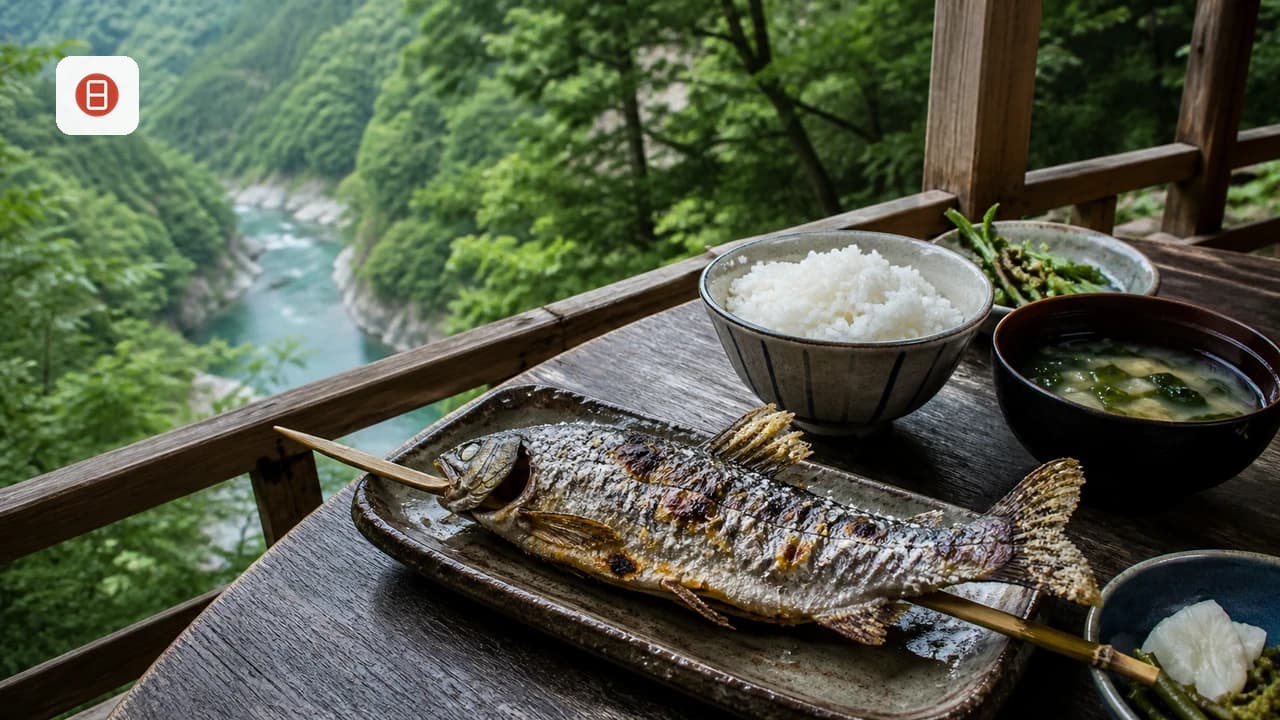
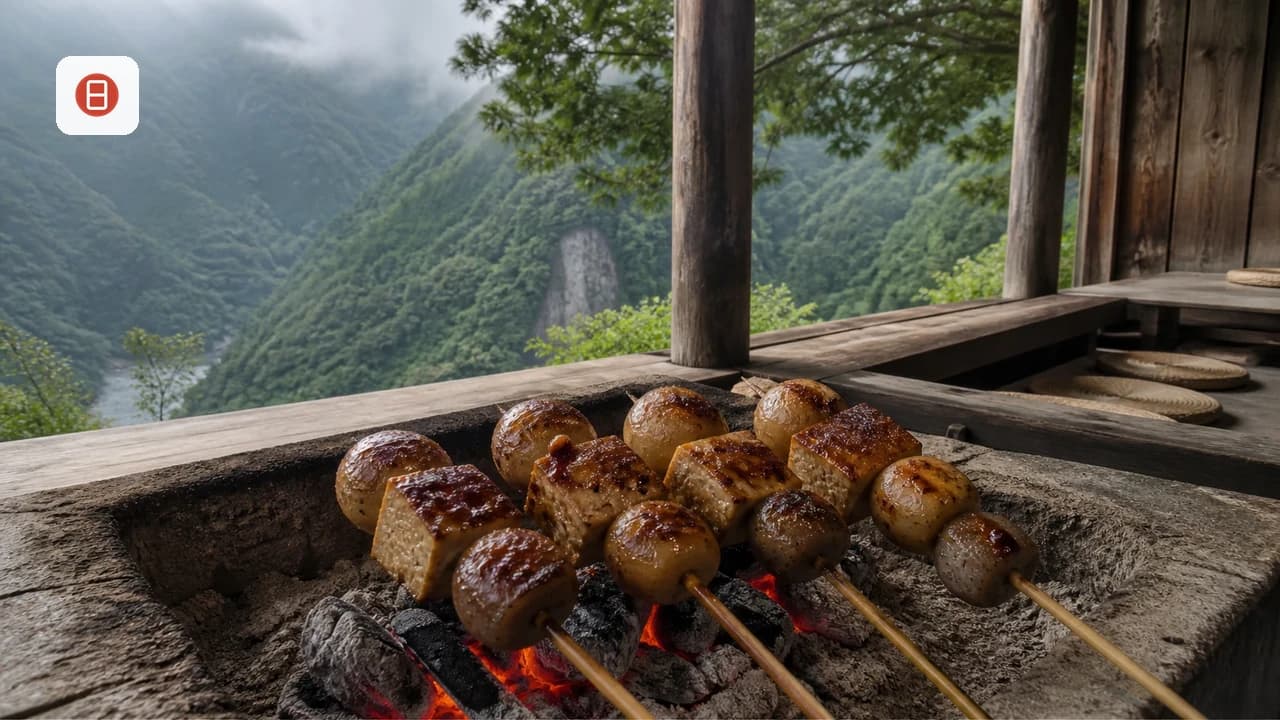
A soba lunch in the valley rarely arrives alone. Many sets pair the noodles with skewered potato and tofu, a valley specialty grilled over an open flame. Restaurants near the gorge also serve grilled river fish alongside the noodles. The river fish guide covers what is typically on the menu and when it is in season. Miyoshi City's broader gourmet scene extends past soba into skewer-grilled dishes and river-caught fish, most of it concentrated in the Oboke-Iya tourist corridor.
Overnight guests often encounter soba folded into ryokan dinner sets rather than ordered as a stand-alone dish. Sobagome-zousui, the whole-grain buckwheat porridge described earlier, shows up on some of the same menus as a lighter alternative to noodles, particularly in cooler months.
Mistakes to Avoid When Planning an Iya Soba Trip
A few planning gaps come up repeatedly for first-time visitors.
- Booking too late: Atelier Tsuzuki requires advance contact, but the cutoff should be confirmed directly rather than inferred from older listings.
- Assuming card payment: most remote soba counters and the workshop itself operate cash-only, so bring yen in small denominations.
- Ignoring bus timing: Wakabayashi service is limited and can change, so use the current official timetable in both directions.
- Visiting off-season for flavor: buckwheat is harvested in October after an August sowing, and shin-soba, or new-season soba, is considered the strongest window for flavor shortly after harvest.
How This Guide Was Verified
Food availability, access details, seasonal rules, and the time-sensitive claims in this guide were checked on August 22, 2026 against the official sources below. Independent restaurant menus, prices, opening days, and sell-outs can change, so confirm the operator's same-day notice before making a special trip.
Frequently Asked Questions
What does Iya soba taste like compared to regular soba?
Because it is 100% buckwheat with no binding flour, Iya soba has a firmer, more brittle bite than the springier soba served in most of Japan. They're also shorter and thicker, since the dough is harder to stretch without wheat flour holding it together.
How much does the Atelier Tsuzuki soba-making experience cost?
Confirm the current price and included meal directly with Atelier Tsuzuki. The current Miyoshi tourism directory confirms the venue and contact number but does not support relying on the older ¥4,500 activity and ¥1,700 meal-only figures.
How do you get from JR Oboke Station to the soba workshop?
The drive to Atelier Tsuzuki in Higashi-Iya is roughly 35 minutes under normal conditions. For public transport, use Miyoshi tourism's current timetable for the Wakabayashi stop; do not rely on an older ¥1,000 fare or a fixed three-departure schedule.
Do you need to book the soba-making experience in advance?
Yes. Contact Atelier Tsuzuki in advance at the number in the current Miyoshi tourism directory and confirm the deadline, package, group rules, and price directly.
When is the best time to eat Iya soba?
Buckwheat is harvested in October after an August sowing, and the shin-soba, or new-crop soba, period shortly after harvest is generally considered the peak for flavor. Iya soba is also served at valley festivals and gatherings throughout the year, so it isn't limited to a single season.
Can children take part in the soba-making workshop?
Yes, Atelier Tsuzuki accepts children age 3 and up. The workshop also requires a minimum of two participants per booking, with groups capped at 15.
Free guide: Japan's Hidden Gems
12 under-the-radar places beyond Tokyo & Kyoto — with the best season to visit each and a local tip you won't find in the guidebooks.
You might also like


Continue reading
More guides you'll find useful