
Iya Valley River Fish Guide: Amego, Ayu & Hirara-yaki Tips
Find Iya Valley river fish: where to eat salt-grilled amego and ayu, how hirara-yaki works, and the dining logistics for a 2026 Tokushima gorge trip.
On this page
Last updated August 2026, this guide breaks down Iya Valley river fish: the salt-grilled amego and ayu served across Tokushima's remote mountain gorge. Two species dominate local menus, cooked over charcoal using techniques tied to the Heike clan who settled the valley in the 12th century. Below, find where to eat them, how hirara-yaki stone-cooking works, and the seasonal and logistical trade-offs behind a trip built around this specialty.
Iya Valley River Fish: Amego, Ayu, and the Heike Legacy
Amego and ayu are the two fish most often associated with Iya Valley river-fish cooking. Amego is a landlocked trout, while ayu is a separate sweetfish species. A restaurant menu does not necessarily identify whether a fish is wild or farmed, so ask the venue if sourcing matters to you. The valley splits into two halves. Nishi-Iya, the western section, has easier road access and most of the tourist infrastructure. Higashi-Iya, also called Oku-Iya, sits deeper in the mountains with fewer roads and a more traditional feel.
The Heike clan's late 12th century refuge established cooking traditions that persist in today's Iya Valley fish stalls and ryokans, where salt-grilled amego and hirara-yaki stone-broth remain direct descendants of subsistence cooking.

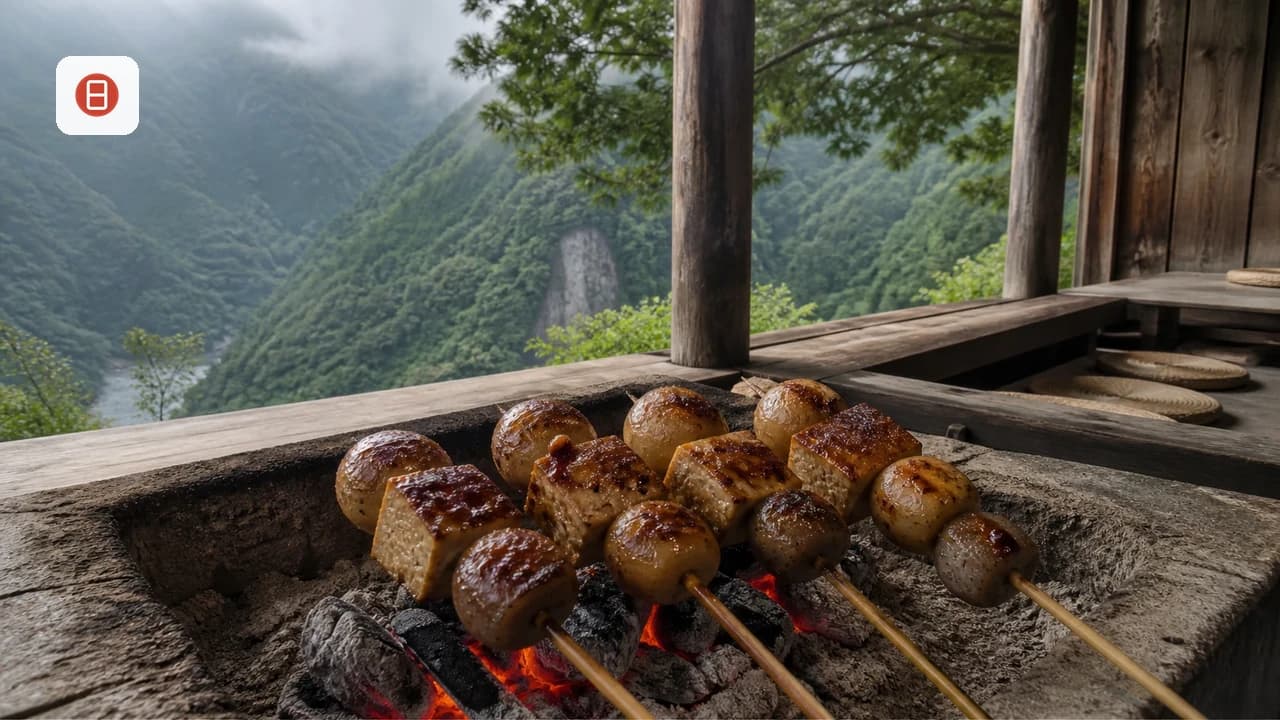
Cooking these fish ties directly to local history. The Taira, or Heike, clan reportedly fled into this gorge after losing the Genpei War to the Minamoto clan in the late 12th century. Their descendants' subsistence cooking still shapes the menu today. Inside a traditional thatched farmhouse, the sunken irori hearth is the visual anchor of that legacy. Fish are skewered in a ring around the embers as they slowly cook. Only three of the valley's original thirteen vine bridges remain today, a visible reminder of the same Heike-era isolation that shaped these food traditions. The Iya River itself runs roughly 50 km from headwaters near Mt Tsurugi to its confluence with the Yoshino River. For the broader picture, see the guide to Iya Valley's food scene.
Salt-Grilled Shioyaki and Stone-Cooked Hirara-yaki
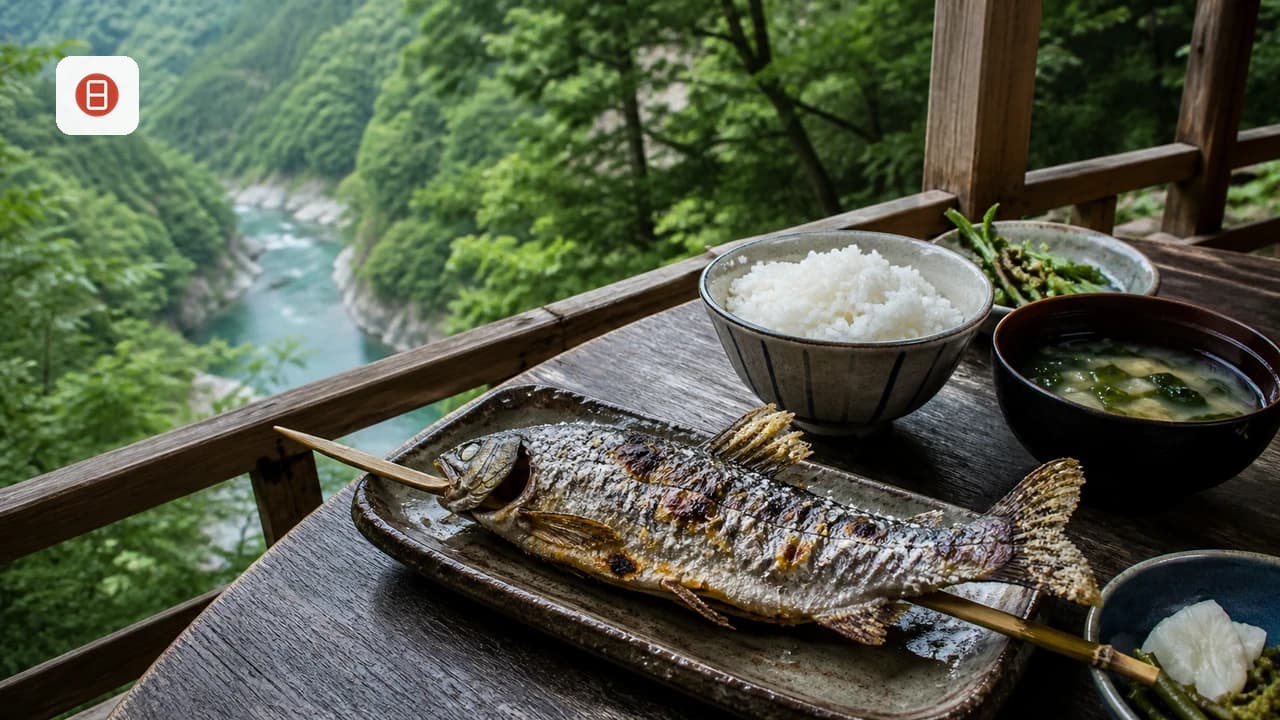
Shioyaki, or salt-grilling, is the fastest way to taste river fish here. Skewers run through each fish in a gentle S-curve, mimicking a swimming position so the flesh cooks evenly over charcoal. Cooks pack extra salt onto the fins and tail before grilling. That coating protects the thin parts from scorching and leaves a crisp, edible finish. Diners typically eat the fish whole, working from head to tail rather than filleting it. Long, slow grilling over an open hearth softens the smaller bones and fins enough to chew. Local etiquette calls for returning the emptied bamboo skewer to the bin provided at the stand rather than leaving it behind.
Hirara-yaki is the valley's more elaborate specialty, and its name comes from hirara, a flat stone. Cooks build an oval wall of miso paste, mixing red and white miso, around the edge of a heated stone or griddle. Amego, tofu, potatoes, onion, and konnyaku then simmer inside that ring in a sake-based broth that slowly absorbs flavor from the miso walls. Traditional accounts describe this dish cooked directly on a heated stone. Many restaurants today use an iron griddle instead, so it is worth asking a specific venue which method it uses before booking. Hirara-yaki serves a group from one shared pot. Most restaurants offer it as a set meal or festival dish rather than a quick individual order. Hirara-yaki also appears more often around the valley's summer festivals, held on the weekends before and after the mid-August Obon holiday, when a shared stone-cooked meal suits large gatherings.
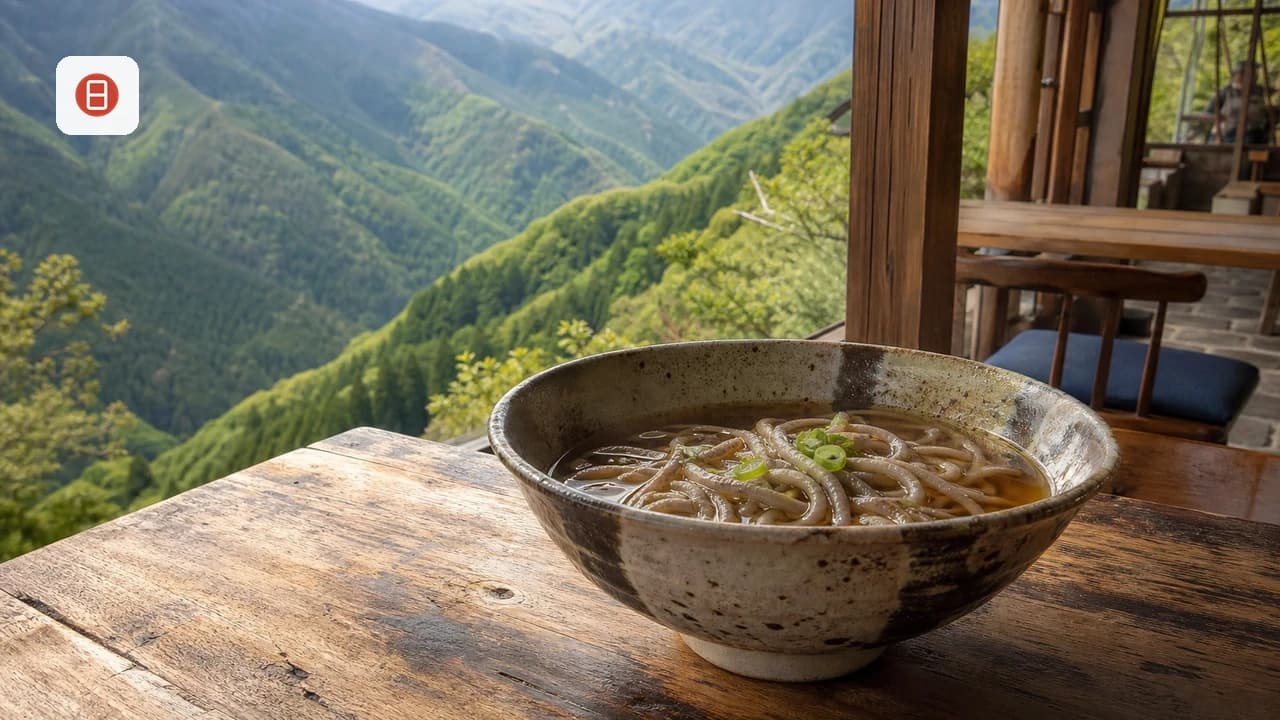
Alongside grilled fish, the standard side dish is dekomawashi, a skewer of roasted potato, tofu, and konnyaku. For the starch course, most tables pair the fish with Iya's hand-cut soba noodles rather than rice. The valley's terrain historically favored buckwheat over paddies.
Where to Find River Fish: Roadside Stalls, Ryokans, and Iya Onsen
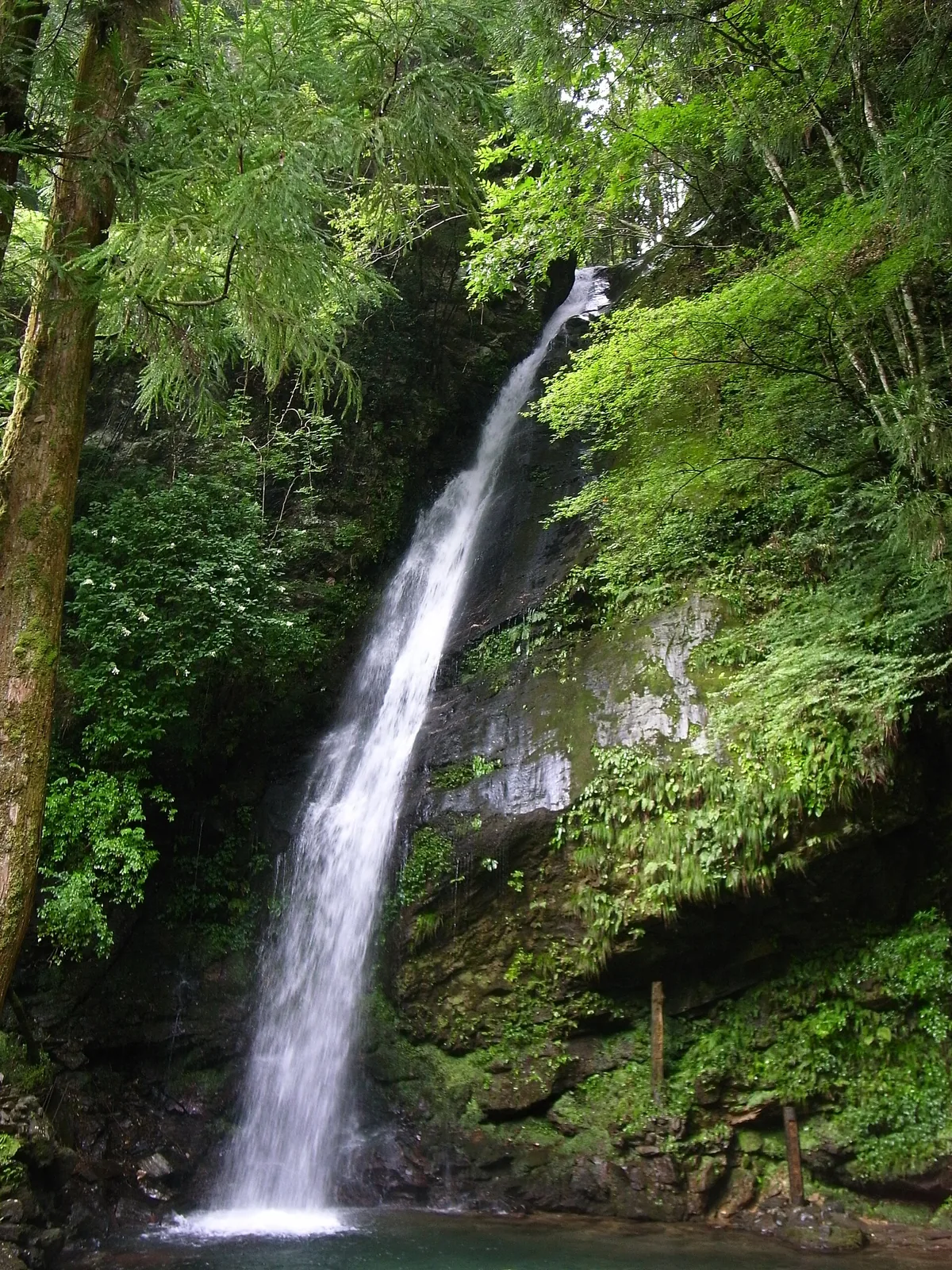
Roadside stalls cluster in Nishi-Iya, close to the main Iya-no-Kazurabashi vine bridge, where admission runs ¥550 for adults and ¥350 for children. These stalls sell fast, affordable, salt-grilled skewers, making them the easiest option for a grab-and-go bite between sightseeing stops. Biwa Waterfall sits near the same bridge, making it easy to pair a quick fish stop with a short walk to see it. Kazurabashi-tei, a restaurant inside the Kazurabashi Yumebutai rest stop, is a dependable stop near the bridge, with hours that tend to match what is listed online, unlike many smaller valley eateries. Senkichi, a well-known lunch spot near the bridge, also serves iwa-dofu and other Iya specialties alongside its soba. Nishi-Iya also has easier road access than Higashi-Iya, so it suits travelers on a tighter schedule or without a rental car.
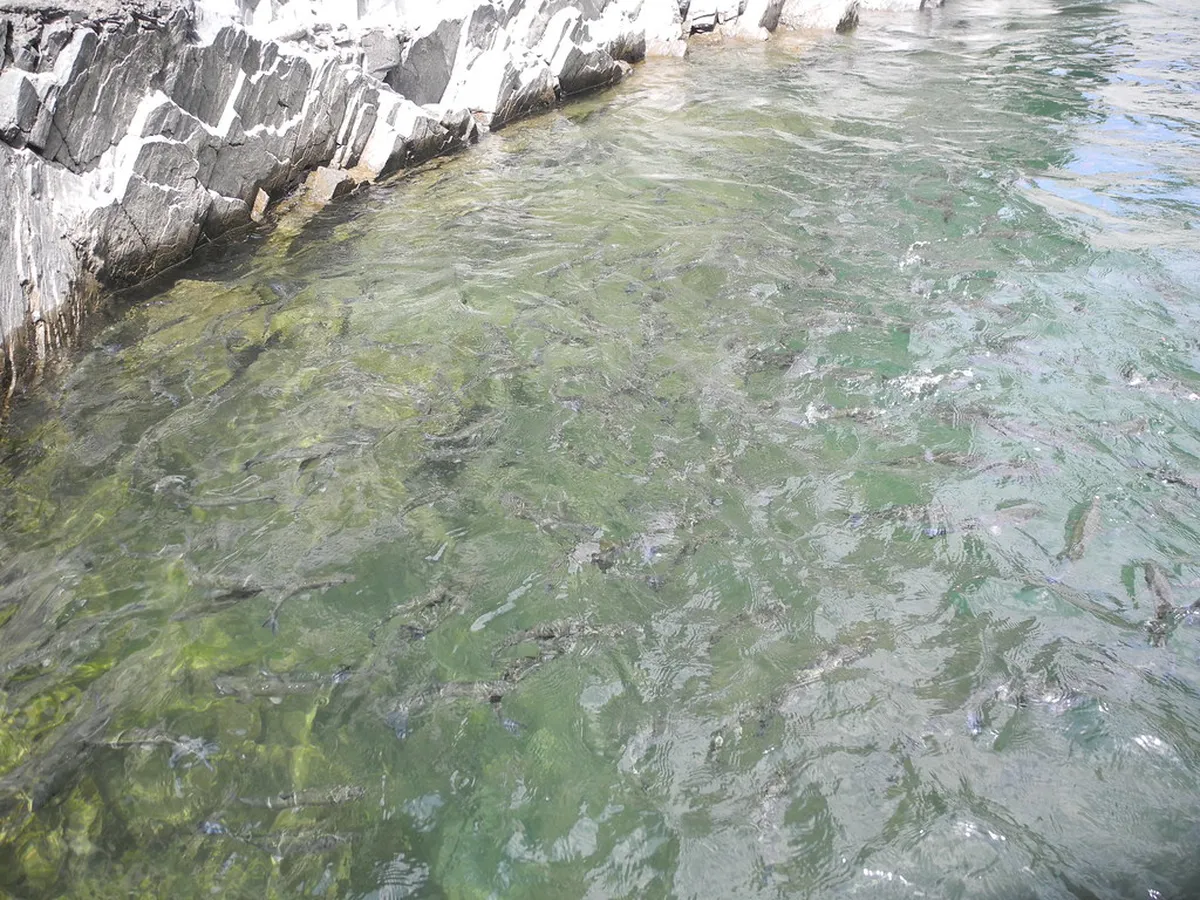
Higashi-Iya, the valley's eastern, more secluded half, is where the full hirara-yaki experience tends to live. Many restaurants there treat it as a special or group order rather than a walk-up snack. Booking ahead through a ryokan's set dinner plan is the more reliable route. Most valley accommodations offer full-board plans bundling breakfast and dinner, which is the simplest way to guarantee a hirara-yaki seating without arranging it separately. Posted opening hours are not always accurate at small valley restaurants, so calling ahead or arriving earlier in the day improves the odds of a table. Roads into Higashi-Iya are narrower and quieter, and the trade-off for that extra effort is a more traditional, less commercial dining setting.
The Iya Onsen area offers a third option. Dinner here comes with a view over the gorge. Hotel Iya Onsen pairs its baths with a kaiseki-style dining plan built around local ingredients. That plan typically includes river fish alongside the wild game and mountain vegetables the valley is known for. Fish-focused stops here work well paired with the nearby Peeing Boy statue, a short distance from the hotel. Both appear in the guide to Iya Valley's attractions.
Getting to the Iya Valley for a River Fish Trip
Distance is the main planning factor. Iya Valley sits roughly three hours from Osaka or Kyoto by rail, changing at Okayama Station onto the Dosan Limited Express toward Awa-Ikeda or Oboke Station. Bus and guided-tour options exist too, each with different costs and time trade-offs. The table below compares the main ways in.
The 20 km old Iya Highway's one-lane cliffside stretch is the real barrier between quick Nishi-Iya stall stops and Higashi-Iya's reserved hirara-yaki dinners, making logistics define which experience is accessible.
Driving gives the most flexibility for reaching remote Higashi-Iya fish spots. Route 32's old Iya Highway is a roughly 20 km, mostly one-lane cliffside stretch that demands slow, cautious driving. A newer tunnel now bypasses much of that route toward Oboke, though the old road stays open for travelers detouring to the Peeing Boy statue. Expressway tolls between major cities and Shikoku range roughly from ¥2,500 to ¥10,000 depending on the route. Renting a car with an ETC toll card, which typically costs around ¥1,000, can lower that total. Convenience stores thin out once inside the valley. Oboke has the closest one, so stock up on drinks and snacks there before heading toward Higashi-Iya's fish stops.
Cash matters as much as transport mode. Many roadside fish stalls, guesthouses, and small restaurants in the valley are cash only. ATMs cluster at a handful of post offices in Higashi-Iya, Ochiai, Nishi-Iya, and Oboke. For more on cash handling and driving conditions, see the valley's dining logistics guide.
| Mode | Approx. Time | Approx. Cost | Notes |
|---|---|---|---|
| Train via Okayama | About 3 hours from Osaka/Kyoto | Varies by rail pass | Change to the Dosan Limited Express at Okayama Station |
| Hankyu Bus (Osaka Umeda–Awa-Ikeda) | About 4 hours | ¥5,000 one-way | Local bus onward costs about ¥600 |
| JR Shikoku Bus (Osaka/Kyoto–Miyoshi) | Check current timetable | ¥5,000 one-way | Fewer daily departures than the train |
| Oboke-Iya Sightseeing Tour | 6 hours | ¥9,200 adult / ¥8,900 child | Includes lunch and an Oboke Gorge cruise |
| Taxi by the hour | Flexible | From ¥4,900/hour | Most flexible for remote Higashi-Iya stops |
When to Visit for River Fish Season
Amego and ayu availability varies by venue and season. Roadside stalls may reduce hours or close in winter, so confirm both the fish and the opening day before making a special trip. Early summer offers a lush landscape, while autumn adds foliage to the same grilled-fish stops. Winter travel carries a separate risk: narrow mountain roads can ice over and some routes may close during heavy snow, so check local road information. For a quick taste, a day trip built around one confirmed Nishi-Iya stall can work. A full hirara-yaki dinner suits an overnight stay better, since ryokans commonly arrange it as a pre-booked meal rather than a walk-in order.
Mistakes to Avoid When Chasing River Fish in Iya Valley
A few planning missteps repeat often for first-time visitors chasing this specialty. Keep these in mind before locking in an itinerary.
- Do not assume that an amego is wild-caught or farmed unless the venue identifies its source; ask directly if that distinction matters.
- Do not arrive at a remote Higashi-Iya restaurant in early afternoon without a reservation. Posted hours often run shorter than search results suggest.
- Do not skip nearby sights while fish-hunting. Biwa Waterfall sits near the main vine bridge, and the Peeing Boy statue is a short distance from the Iya Onsen area.
- Do not rely on cards. Rural stalls and guesthouses are frequently cash only, and reliable ATMs cluster at specific post offices.
- Do not expect a walk-up hirara-yaki order. Most restaurants prepare it only for pre-arranged groups or set dinner plans.
- Do not assume every hirara-yaki uses a stone. Ask ahead if a heated stone versus an iron griddle matters, since many places now use griddles.
How This Guide Was Verified
Food availability, access details, seasonal rules, and the time-sensitive claims in this guide were checked on August 22, 2026 against the official sources below. Independent restaurant menus, prices, opening days, and sell-outs can change, so confirm the operator's same-day notice before making a special trip.
Frequently Asked Questions
What is the difference between amego and ayu in the Iya Valley?
Amego is a landlocked trout, while ayu is a separate sweetfish species. Both may be served salt-grilled whole. Ask the restaurant about current availability and sourcing rather than assuming that a particular fish is wild or farmed.
Can you get hirara-yaki without booking ahead?
Rarely. Hirara-yaki serves a group from one shared pot of miso broth, so most restaurants treat it as a set meal or festival dish. Reserving through a ryokan's dinner plan is the more reliable way to try it.
Is river fish available in the Iya Valley in winter?
Availability drops between December and March, when many roadside stalls reduce hours or close. Ryokan kitchens are more likely to stay open, but confirming ahead is worth it during the colder months.
Should you visit Nishi-Iya or Higashi-Iya for river fish?
Nishi-Iya has easier road access and roadside stalls near the main vine bridge, which suits a quick stop. Higashi-Iya is quieter and better suited to a reserved hirara-yaki dinner, though its roads are narrower and take longer to drive.
Do Iya Valley fish stalls and restaurants accept credit cards?
Not consistently. Many rural stalls, guesthouses, and small restaurants remain cash only, and ATMs are limited to a handful of post offices around the valley. Carrying enough cash before arriving is the safer plan.
What food pairs traditionally with Iya Valley river fish?
Dekomawashi, a skewer of potato, tofu, and konnyaku roasted with miso, is the standard side dish. Iya's hand-cut soba noodles are the traditional starch, since the valley's terrain historically suited buckwheat better than rice.
How much does a salt-grilled fish skewer cost at a roadside stall?
No valley-wide official price applies: each vendor sets its own rate, and availability can change by season. Check the current stall price directly; the vine bridge admission fee is unrelated and should not be used to estimate food prices.
Is Iya Valley worth visiting as a day trip just for the fish?
A day trip works for a quick salt-grilled stop near a Nishi-Iya stall and the main vine bridge. Experiencing a full hirara-yaki dinner realistically calls for an overnight stay, since ryokans book it as a pre-arranged evening meal rather than a walk-in order.
Free guide: Japan's Hidden Gems
12 under-the-radar places beyond Tokyo & Kyoto — with the best season to visit each and a local tip you won't find in the guidebooks.
You might also like

Continue reading
More guides you'll find useful


