

Ginzan Onsen Lunch and Soba: Where to Eat
Where to eat Ginzan Onsen lunch and soba in 2026: Izu no Hana vs Soba Tokoro Takimitei, hours, prices, wait times, and how to get there.
On this page
Last updated August 2026, this guide covers Ginzan Onsen lunch and soba options for travelers working around the town's small dining rooms and short opening windows. Two restaurants anchor the decision: Izu no Hana in the town center, and Soba Tokoro Takimitei above it near Shirogane Falls. Expect a wait around midday, and learn each restaurant's rules before you go.
Ginzan Onsen Lunch and Soba: The Two Places to Know
Yamagata soba is thicker and firmer than soba from many other regions, often served as ita-soba on a shallow cedar board. Ita-soba's board format traces to local gatherings, where it was traditionally served to large groups at once. Izu no Hana specializes in a hot or cold eggplant soba set paired with oshin meshi, a radish-and-rice dish named for the NHK drama Oshin. Soba Tokoro Takimitei, inside the Takimikan ryokan, makes 100% buckwheat juwari soba from Obanazawa flour and pairs it with a Shirogane Falls view. Location drives the trade-off: town-center convenience at Izu no Hana, or an uphill walk and waterfall scenery at Takimitei. Travelers prioritizing convenience and lower effort should default to Izu no Hana; those willing to walk uphill for scenery should choose Takimitei. This lunch-focused breakdown complements the wider Ginzan Onsen food guide, which also covers breakfast, dinner, and snacks.
| Restaurant | Signature Dish | View | Lunch Hours | Closed Days |
|---|---|---|---|---|
| Izu no Hana | Deep-fried eggplant and grated daikon soba with oshin meshi | Second-floor town view | 11:00 AM–2:30 PM | Wednesdays, plus occasional temporary closures |
| Soba Tokoro Takimitei | 100% buckwheat (juwari) soba from Obanazawa flour | Shirogane Falls | 11:30 AM–1:30 PM Mon–Sat; 11:00 AM–2:00 PM Sun | Not fixed — confirm before visiting |
Why Seating Is So Limited in Ginzan Onsen
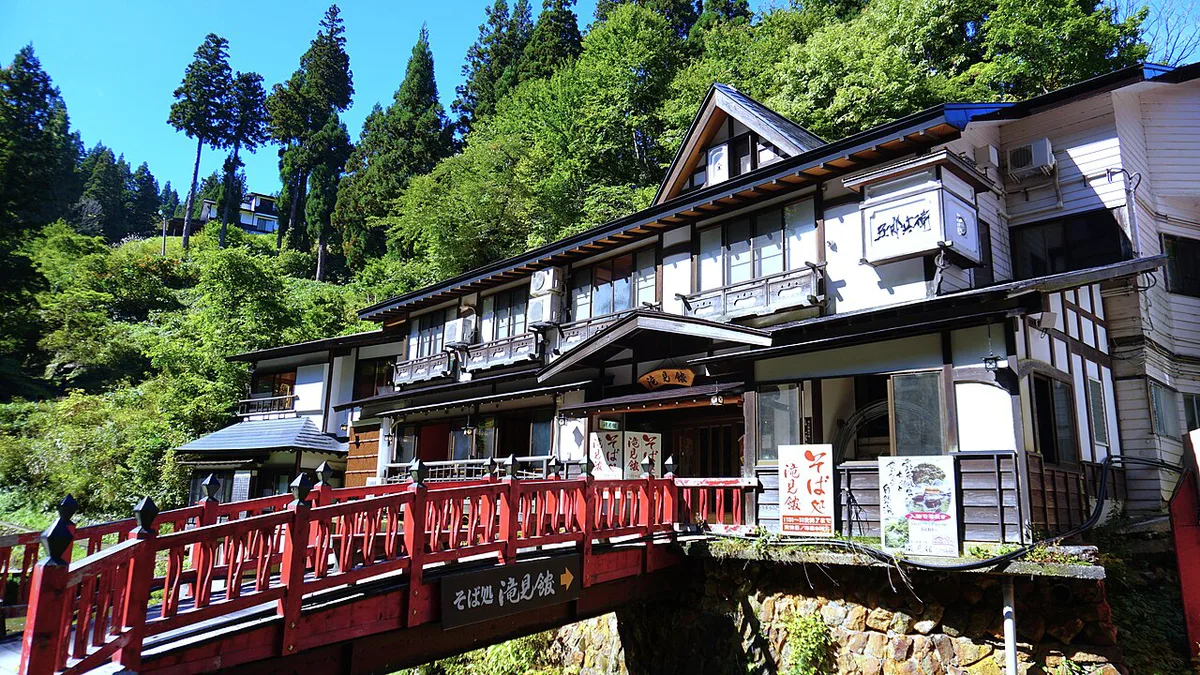
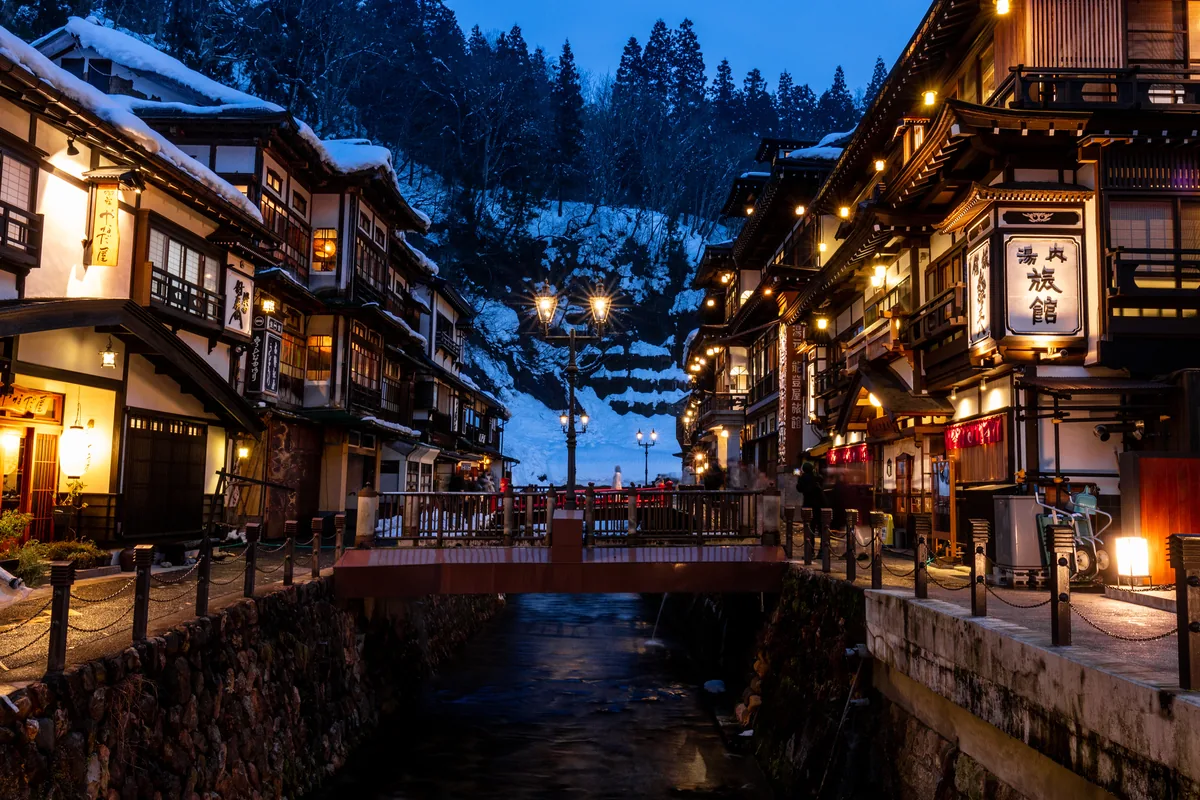
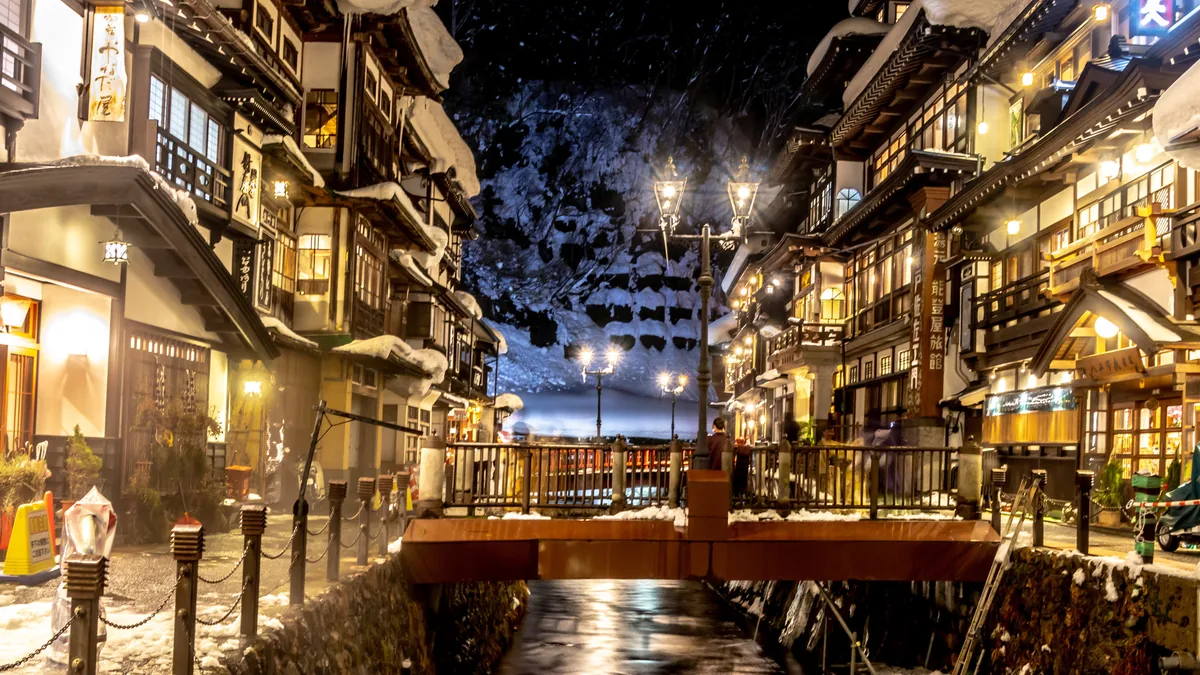
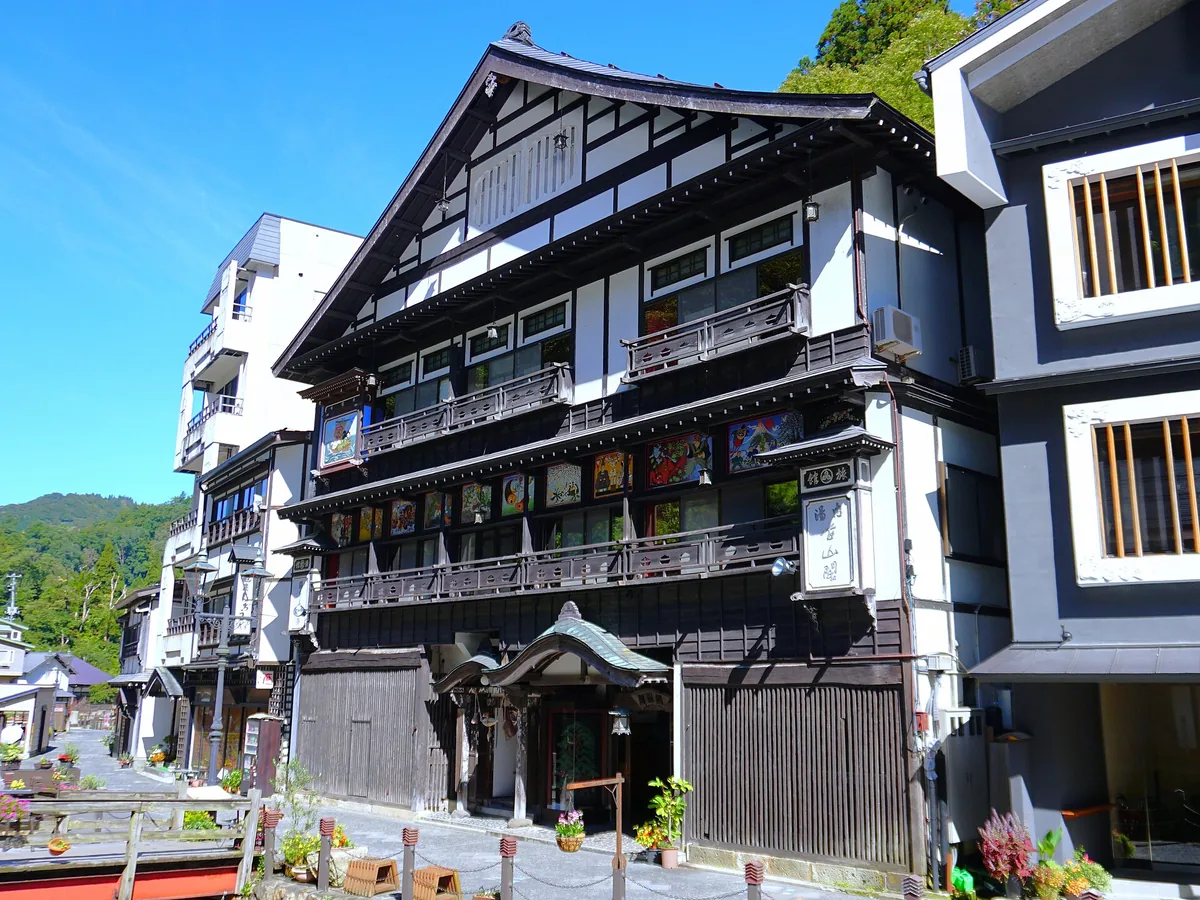
Ginzan Onsen's dining rooms stay small because the town itself is small. Ryokans and restaurants occupy wooden buildings built from the late Taisho period through the early Showa period, structures raised for lodging rather than high-volume dining. Izu no Hana operates from a renovated 140-year-old merchant house, and Soba Tokoro Takimitei seats guests inside the working ryokan Takimikan. Neither was designed around turning over dozens of covers an hour, which is why a small lunch room can mean a real wait once the 11:30 AM rush hits. The hot spring traces to the Edo period, when the area operated as a silver mine before the mine closed and ryokans grew up around the natural spring water. A flood destroyed much of the original town in 1913, and the wooden buildings visitors see today date from the rebuilding that followed.
Izu no Hana: Eggplant Soba and River Views in the Town Center
Izu no Hana opened in 1952 near the entrance to Ginzan Onsen. It later moved into a renovated 140-year-old merchant house inside the hot spring town, with upstairs seating that looks out over the Ginzan River. Its signature order is deep-fried eggplant with grated daikon soba, served hot or cold. It comes paired with oshin meshi, a mix of chopped radish leaves and pickled vegetables named for the NHK drama Oshin. Beyond soba, the kitchen also serves ramen, rice bowls, and tempura, plus a soba soft-serve ice cream topped with brown sugar syrup and soybean flour.
When Izu no Hana has a wait, its sister takeout counter, Wamoyo, sells sweets a short walk away for eating while you stroll. Check the current discount and Wamoyo schedule before relying on them. Izu no Hana's official information identifies guest parking spaces 22 through 26 in the shared area.
- Lunch (soba menu): 11:00 AM–2:30 PM
- Cafe (dessert menu, including soba soft serve): 2:30 PM–6:00 PM
- Reservation-only evening menu: 5:00 PM–7:00 PM, last order 6:30 PM
- Regular closed day: Wednesday, with occasional temporary closures
- Payment: Visa, Mastercard, Amex, JCB, and Diners accepted, plus electronic money
Soba Tokoro Takimitei: The Waterfall-View Soba Room
Soba Tokoro Takimitei operates inside the Takimikan ryokan, whose predecessor was itself a soba restaurant. Its kitchen mills, makes, and boils 100% buckwheat juwari soba from Obanazawa flour to order. Seating overlooks Shirogane Falls, part of the same sightseeing area covered in the Shirogane Falls and Kote-e guide. Takimikan sits an 8-minute walk uphill from the main town center, so day-trippers should budget extra time getting there and back.
Tabelog reviewers rated it 3.53 out of 5 from 98 reviews at last check. The waterfall view draws frequent mentions, but ratings shift over time — treat the score as a general signal, not a fixed number.
- Hours: Monday–Saturday 11:30 AM–1:30 PM; Sunday 11:00 AM–2:00 PM
- Closed days: not fixed — confirm with the restaurant before visiting
- Average spend: ¥1,000–¥1,999 per meal, per Tabelog reviewer data
- Payment: credit cards not accepted; electronic money and QR payments accepted
- Reservations: listed as unavailable — plan to walk in
What to Order at Each Restaurant
Ordering gets easier once you know which dishes each kitchen is known for. At Izu no Hana, the deep-fried eggplant and grated daikon soba is a signature option, often paired with oshin meshi. Mori soba, ita-soba, rice bowls, and tempura broaden the menu. At Soba Tokoro Takimitei, the focus is 100% buckwheat juwari soba. People with a buckwheat allergy should not treat ramen or udon as a safe substitute: Izu no Hana's official guidance asks buckwheat-allergic customers, including those considering udon, not to dine there.
- Izu no Hana picks: deep-fried eggplant soba (hot or cold), oshin meshi set, thin ita-soba, soba soft-serve ice cream
- Izu no Hana cafe-hour picks: soba soft-serve in a wooden masu box, soba shiratama zenzai, seasonal masu box parfait
- Soba Tokoro Takimitei picks: 100% buckwheat juwari soba, mori soba, hot soup soba
Beyond Soba: Other Reliable Yamagata Lunch Options
Yamagata beef shows up on several ryokan lunch sets, prized for its fine marbling and rich fat. Obanazawa beef, a local Yamagata beef line, is raised over a longer growing period because of the region's wide temperature swings. Imoni, a taro-and-beef stew simmered in soy sauce and sugar, is a fall-and-winter specialty and won't typically appear on menus outside that season. Fruit desserts follow the harvest, and Yamagata's Sato Nishiki cherry season, roughly mid-June to early July, is the window to watch for cherry-based parfaits and shaved ice. Obanazawa produces more soba than anywhere else in Yamagata Prefecture, a difference locals attribute to a roughly 40°C (104°F) swing between summer and winter temperatures. Yamagata Prefecture posts some of the country's highest ramen spending. A Ministry of Internal Affairs and Communications survey found Yamagata households spent more per year eating out for ramen than any other prefecture, in both 2022 and 2023. Obanazawa's own take, often called Chinese soba, includes a chilled version called hiyashi ramen, served cold with vegetables on top. For a walk-and-eat option between meals, see the Haikara-san curry bread guide. For a fuller dessert lineup, check the cafes and sweets guide. Travelers with a rental car can skip the town's midday wait entirely at Obanazawa Soba Road, a lineup of more than ten soba shops reached by taxi from Ginzan Onsen.
Yamagata's roughly 40°C (104°F) temperature swing between seasons produces Obanazawa's exceptional soba, the thickest and firmest style in the region, often served on cedar boards.
New Soba Season: What Changes in October
Yamagata's new soba harvest typically arrives in the fall, and Ginzan Onsen marks it with a New Soba Festival around October. Restaurants hold back the year's freshly harvested buckwheat until after the festival, so soba ordered in the weeks right after tends to be the season's first batch. Check the current festival date before an October trip, since timing shifts year to year.
Timing and Access: When to Eat and How to Get There
Most lunch kitchens in Ginzan Onsen open at 11:00 AM, and arriving by 10:45 AM improves your odds of a first-round seat. The peak window, roughly 11:30 AM to 1:30 PM, can mean waits close to an hour given how few seats the town holds. Kitchens generally stop taking lunch orders by 2:00–2:30 PM, so a late arrival often means cafe-menu items rather than a full soba set. With only about five daily runs, missing the return bus can mean a long wait, so confirm the schedule before you commit to a late lunch. Guests staying at Takimikan, home to Soba Tokoro Takimitei, can also use the inn's free shuttle bus, about 30 minutes from Oishida Station.
Soba Tokoro Takimitei sits an 8-minute walk uphill from town center; budget extra arrival time since the 10:45 AM arrival window is essential to beat the 11:30 AM to 1:30 PM peak-wait period.
Guests staying overnight typically eat a kaiseki dinner at their own ryokan. See the ryokan kaiseki dinner guide for that side of the meal plan. Day-trippers need a separate dinner plan before the last bus out. The dinner without a ryokan stay guide covers that timing.
- JR Oishida Station to Ginzan Onsen: about 40 minutes via the Hanagasa Bus, which runs roughly 5 times a day
- Yamagata Airport to Ginzan Onsen: about 1 hour 15 minutes via the Delicious Yamagata Airport Sightseeing Bus, no reservation needed
- Alternative: the Delicious Yamagata Airport Sightseeing Liner taxi, reserved online by 5:00 PM the day before travel
Know Before You Go: Ginzan Onsen Dining Rules to Avoid Mistakes
A handful of house rules catch first-time visitors off guard, especially at Izu no Hana. Izu no Hana notes it has no English-speaking staff, so consider preparing an allergy note in Japanese or using a translation app before you sit down.
- Full party required: Izu no Hana seats you only once everyone in your group has arrived
- Groups: Izu no Hana may not be able to seat you if your party size grows after you're shown to a table
- No seat swapping: seating is assigned at random, and window seats aren't guaranteed unless you request one in advance
- One dish per person: shared plates aren't accommodated at Izu no Hana
- Phone calls: Izu no Hana asks diners to step outside rather than use speakerphone at the table
- Walk-in only: Soba Tokoro Takimitei lists reservations as unavailable, and most lunch counters in town skip advance bookings
- Card acceptance varies: Izu no Hana takes major credit cards, but Takimitei does not, so carry cash as backup even where e-money and QR payments work
- Non-smoking: Soba Tokoro Takimitei is listed as non-smoking throughout
- Buckwheat allergy: Izu no Hana asks affected customers not to dine there, even if they intend to order udon; choose another venue rather than relying on a non-soba dish
How This Guide Was Verified
Food availability, access details, seasonal rules, and the time-sensitive claims in this guide were checked on August 22, 2026 against the official sources below. Independent restaurant menus, prices, opening days, and sell-outs can change, so confirm the operator's same-day notice before making a special trip.
Frequently Asked Questions
What is the best place for soba in Ginzan Onsen?
For town-center convenience, Izu no Hana serves eggplant soba a short walk from most ryokans. For a waterfall view, Soba Tokoro Takimitei serves 100% buckwheat soba above the town, an 8-minute uphill walk away.
Do you need a reservation for lunch in Ginzan Onsen?
No. Soba Tokoro Takimitei lists reservations as unavailable, and most lunch spots in town operate walk-in only. Arrive close to the 11:00 AM opening to improve your chances of a seat.
What time should you arrive to avoid a long wait?
Aim to arrive by 10:45 AM, ahead of the 11:00 AM opening most kitchens follow. The busiest window runs from 11:30 AM to 1:30 PM, with waits that can approach an hour.
Is Yamagata soba different from soba elsewhere in Japan?
Yes. Yamagata soba tends to be thicker and firmer than soba served in many other regions. Ita-soba, served on a shallow cedar board, is a local style you'll see on several Ginzan menus.
Is there a soba option away from the town center?
Obanazawa Soba Road has more than ten soba shops outside Ginzan Onsen. It suits travelers with a rental car or taxi budget who want to skip the midday wait.
Is there a takeout option if Izu no Hana is full?
Yes. Its sister shop Wamoyo sells soba soft-serve and sweets nearby for eating while you walk. It's open 10:00 AM–6:00 PM and closed Wednesdays and Thursdays.
Do restaurants in Ginzan Onsen accept credit cards?
It depends on the restaurant. Izu no Hana accepts major credit cards and electronic money. Soba Tokoro Takimitei does not take credit cards but accepts electronic money and QR payments, so carry some cash as backup.
Free guide: Japan's Hidden Gems
12 under-the-radar places beyond Tokyo & Kyoto — with the best season to visit each and a local tip you won't find in the guidebooks.
You might also like


Continue reading
More guides you'll find useful


