

Ginzan Onsen Dinner Without Ryokan: The 2026 Non-Guest Guide
A practical guide to Ginzan Onsen dinner without ryokan booking: public dinner spots, last-bus timing, taxi options, and the early-dinner workaround for 2026.
On this page
Last updated August 2026, Ginzan Onsen dinner without ryokan booking gets difficult after dark because most kitchens here serve only their own overnight guests. Day-trippers and room-only guests need a plan for where to eat before the last bus leaves. This guide covers the village's few public dinner spots, the early-dinner workaround, and the transport trade-offs that decide whether an evening visit works.
Ginzan Onsen Dinner Without Ryokan: What Non-Guests Should Expect
Most restaurants inside Ginzan Onsen belong to the ryokan that line the Ginzan River. They exist to feed overnight guests a multi-course dinner already built into the room rate. Walk-in seats for non-guests are rare, because kitchens plan portions and staffing around a fixed guest list, not a fluctuating stream of day visitors. Shopfronts and cafes pull their shutters by roughly 6:00 PM, well before many travelers plan to eat. That leaves day-trippers and room-only bookings with a short list of public dinner options, rather than the wide choice a bigger onsen town would offer. Here, the question is simple to state but harder to solve. It comes down to finding a place to sit down and eat once the day-trip crowds thin out, without a room already booked. Decide early whether staying past dusk is worth it. An evening visit means picking one of a handful of restaurants, and it usually means giving up flexibility on timing. Then you need a taxi, or a tight bus window back to Oishida Station, worked out before you commit to a table. None of this makes an evening visit impossible, only more involved to plan than a typical dinner reservation elsewhere in Japan.
Izu no Hana is not a late-night walk-in fallback. Its current general service ends at 18:00 (last order 17:30), while the separate evening menu runs 17:00-19:00 (last order 18:30) by reservation only.
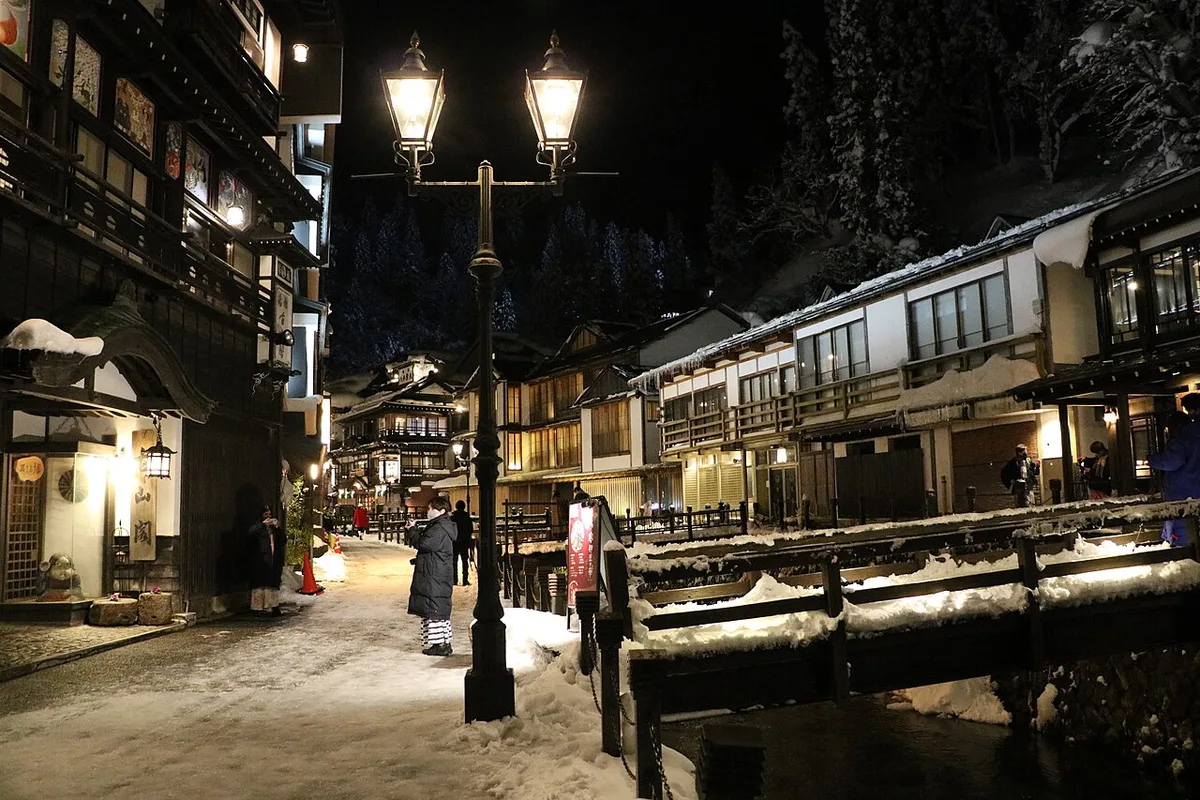
Izu-no-hana: The Village's Public Soba Dinner
Izu no Hana serves soba and other dishes during general hours of 11:00-18:00, with last order at 17:30. Its separate evening menu is available from 17:00 to 19:00, last order 18:30, and requires a reservation. That makes it an early, pre-arranged meal rather than a spontaneous late-night backup. Confirm the reservation and current menu before travel, then build lantern viewing and transport around the restaurant's actual closing time.
- Signature order: Age-nasu Oroshi Soba, cold soba topped with fried eggplant and grated daikon.
- General service: 11:00-18:00, last order 17:30.
- Evening menu: 17:00-19:00, last order 18:30, reservation required.
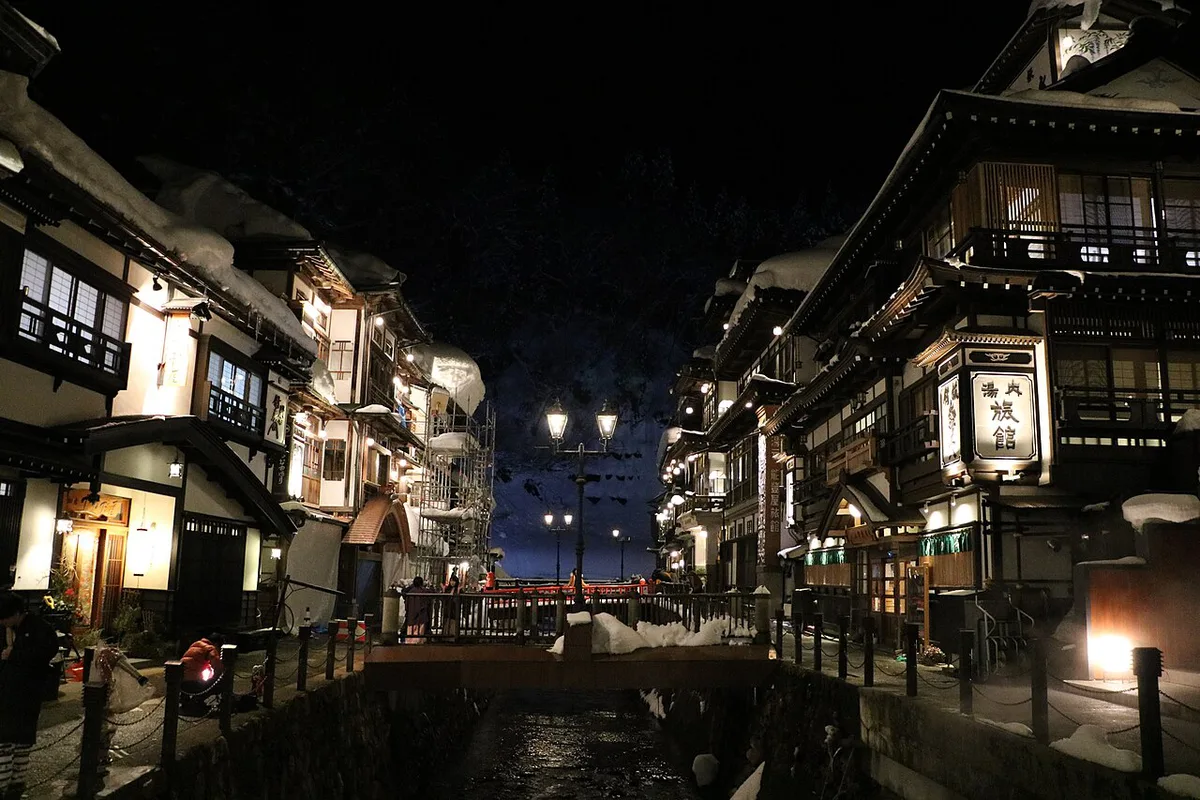
Takimikan and Other Back-of-the-Village Options
Takimikan sits toward the back of Ginzan Onsen, past the main row of ryokan along the river. Reaching it means a short uphill walk from the central bridge area, which matters if you're navigating snow or carrying luggage. Dinner service here leans toward the same reservation-first pattern as the village's ryokan kitchens, so a same-day walk-in isn't reliable. Call ahead or confirm through your accommodation earlier in the day if dinner at Takimikan is the plan. Otherwise, you risk discovering it's full after the walk up, which costs time you likely don't have if the last bus is also on your schedule. Treat Takimikan as a secondary option behind Izu-no-hana rather than a guaranteed backup, and confirm both before ruling either one out. Because it sits further from the bus stop than most of the village's dining options, factor the extra walking time into your evening schedule as well.
| Dining Option | Current Planning Window | Reservation Policy | Key Consideration |
|---|---|---|---|
| Izu no Hana | General service to 18:00; evening menu to 19:00 | Evening menu requires a reservation | Early meal, not a late-night walk-in backup |
| Takimikan | Confirm directly | Do not rely on a same-day walk-in | Uphill location; verify before making the walk |
| Curry bread | Hours and stock require confirmation | Counter service when available | Snack only, not an adequate dinner substitute |
Curry Bread and Other Snack Bridges
The village's curry bread stalls stay useful later into the afternoon than most kitchens. They work as a bridge if hunger hits before an evening restaurant opens. Treat curry bread as a snack, not a dinner substitute. It won't replace a seated meal if you're staying through blue hour and the lantern lighting. The village's cafes and sweets spots follow the same pattern, closing earlier than either Izu-no-hana or Takimikan and built around daytime visitors rather than evening diners. If a curry bread stop is part of the plan, treat it as something eaten while walking between viewpoints, not as the meal that gets you through the whole evening. Budget a proper sit-down option separately, even if it means eating earlier than feels natural on a day trip.
The Evening Escape: Buses, Taxis, and Parking After Dark
Seeing the gas lanterns lit at dusk and catching the last bus to Oishida Station often compete for the same half hour. Check the Obanazawa City Bus schedule for the specific last departure on the day you visit, since the times aren't fixed year-round and shift between seasons. If the last bus leaves before dinner service even starts, staying for a meal means arranging a taxi instead. Taxis from Ginzan Onsen to Oishida Station cost more than the bus fare, but they run later and don't depend on a fixed timetable. Ask at the village entrance or your accommodation desk for a current fare estimate before you commit to this option, since posted fares can lag behind actual pricing. Parking sits outside the village center for drivers. Non-staying visitors typically ride a shuttle van instead of walking the unlit approach road after dark, sometimes referred to locally as the Taisho Romankan shuttle. Confirm current parking and shuttle arrangements with the village association, since winter closures can shift where cars are allowed to stop and how the shuttle runs. Snow and ice make the unlit approach road genuinely harder to walk after dark, so factor that into whether the shuttle or a taxi is worth the extra cost. Build in a buffer of extra minutes for the walk from any restaurant back to the bus stop or taxi pickup point, since village paths narrow and slow down after dark.
- Bus: last departure changes by season, so check the Obanazawa City Bus schedule for your specific visit date.
- Taxi: costs more than the bus fare but runs later and doesn't depend on a fixed timetable; confirm the current fare locally.
- Shuttle and parking: non-staying drivers typically use a shuttle van rather than walk the unlit approach road after dark.
Eating Outside the Village: Oishida Station and the Early-Dinner Hack
If the village's evening options are unavailable, Oishida Station can be a backup, but check what is open rather than assuming a station-area meal. Yamagata City has more choices if the itinerary allows the extra travel. Inside Ginzan, a late lunch during confirmed daytime hours is more dependable than trying to improvise dinner. Izu no Hana's general service runs to 18:00 with last order at 17:30, while its evening menu must be reserved. The soba and lunch guide covers daytime options that avoid after-dark transport uncertainty.
Check the day's last bus or winter shuttle first. If you want to eat in the village, use confirmed daytime service or reserve Izu no Hana's 17:00-19:00 evening menu rather than assuming a late walk-in.
Night Visitor Essentials: Gear and Photography Timing
Waiting for a table outside a restaurant in winter means standing in snow. Pack boots with real tread, plus hand or foot warmers, rather than relying on warmth from the gas lanterns. Camera batteries drain faster in cold air, so carry a spare if photographing the lantern-lit streets is part of the plan. Split the evening into two blocks rather than trying to do both at once. Use one fixed window for photos around dusk, then another for dinner or the walk back. The village's food and drink overview covers lunch, cafes, and snack options beyond this evening-specific plan. Keep the photo block short and deliberate, since the same handful of viewpoints along the river get crowded quickly once the lanterns are lit.
Deciding Whether an Evening Visit Is Worth It
Weigh the trade-offs before committing to a full evening without a room. A day trip built around lunch and afternoon light avoids most after-dark dining problems. Staying through dusk adds value for photography but requires working backward from the current return transport and a confirmed meal. Reserve Izu no Hana's evening menu if it fits, verify another venue directly, or eat outside the village. An overnight half-board stay remains the most reliable route to a full dinner.
How This Guide Was Verified
Food availability, access details, seasonal rules, and the time-sensitive claims in this guide were checked on August 22, 2026 against the official sources below. Independent restaurant menus, prices, opening days, and sell-outs can change, so confirm the operator's same-day notice before making a special trip.
Frequently Asked Questions
Can you walk into a ryokan and pay for dinner without staying overnight?
Usually not. Ryokan kaiseki dinners need advance prep, often cited as 24 to 48 hours, so kitchens plan exact portions around their booked guests. The ryokan kaiseki guide covers how that booking process works if a full-course stay fits your plans instead.
Is there a convenience store in Ginzan Onsen?
No. Obanazawa holds the nearest konbini, so plan bottled drinks, snacks, and any last-minute backup food before heading into the village.
What's the best time to see the lights before the last bus?
Position yourself right at dusk, when the gas lanterns switch on and the light stays even for photos. Check the Obanazawa City Bus schedule for that day's specific last departure, then plan backward from it.
Are reservations required for Izu no Hana?
The separate evening menu requires a reservation and runs 17:00-19:00, last order 18:30. General service is 11:00-18:00 with last order 17:30. Do not treat the restaurant as a late walk-in dinner backup.
Does Ginzan Onsen charge day-trippers an entry fee in winter?
Current listings show no confirmed day-trip entry fee, though winter access rules can shift with snow depth and pedestrian-only stretches. Confirm closures or restrictions with the official Ginzan Onsen Association listings close to your visit date.
Can you just show up and hope for a table at dinner time?
It's possible but risky, especially in peak winter and on weekends when demand for the village's few public tables runs highest. Arriving as early in the evening as kitchens open improves the odds, and having a backup plan for Oishida Station or an early-dinner alternative protects the evening if every table is full.
Free guide: Japan's Hidden Gems
12 under-the-radar places beyond Tokyo & Kyoto — with the best season to visit each and a local tip you won't find in the guidebooks.
You might also like


Continue reading
More guides you'll find useful


