

What to Eat in Ginzan Onsen: 7 Best Foods to Try in 2026
Plan what to eat in Ginzan Onsen, from Obanazawa soba and curry bread to Yamagata beef, with realistic guidance for lunch and limited evening dining.
On this page
Last updated August 2026, this guide covers what to eat in Ginzan Onsen, from cold ita-soba in cedar boxes to the curry bread sold along the riverside street. Most cafes and shops close between 6:00 PM and 6:30 PM, and the village has almost no dinner options unless you are staying at a ryokan. Below, seven dishes worth planning around, plus the exact spots that still serve day-trippers after dark.
The Ginzan Onsen Food Landscape
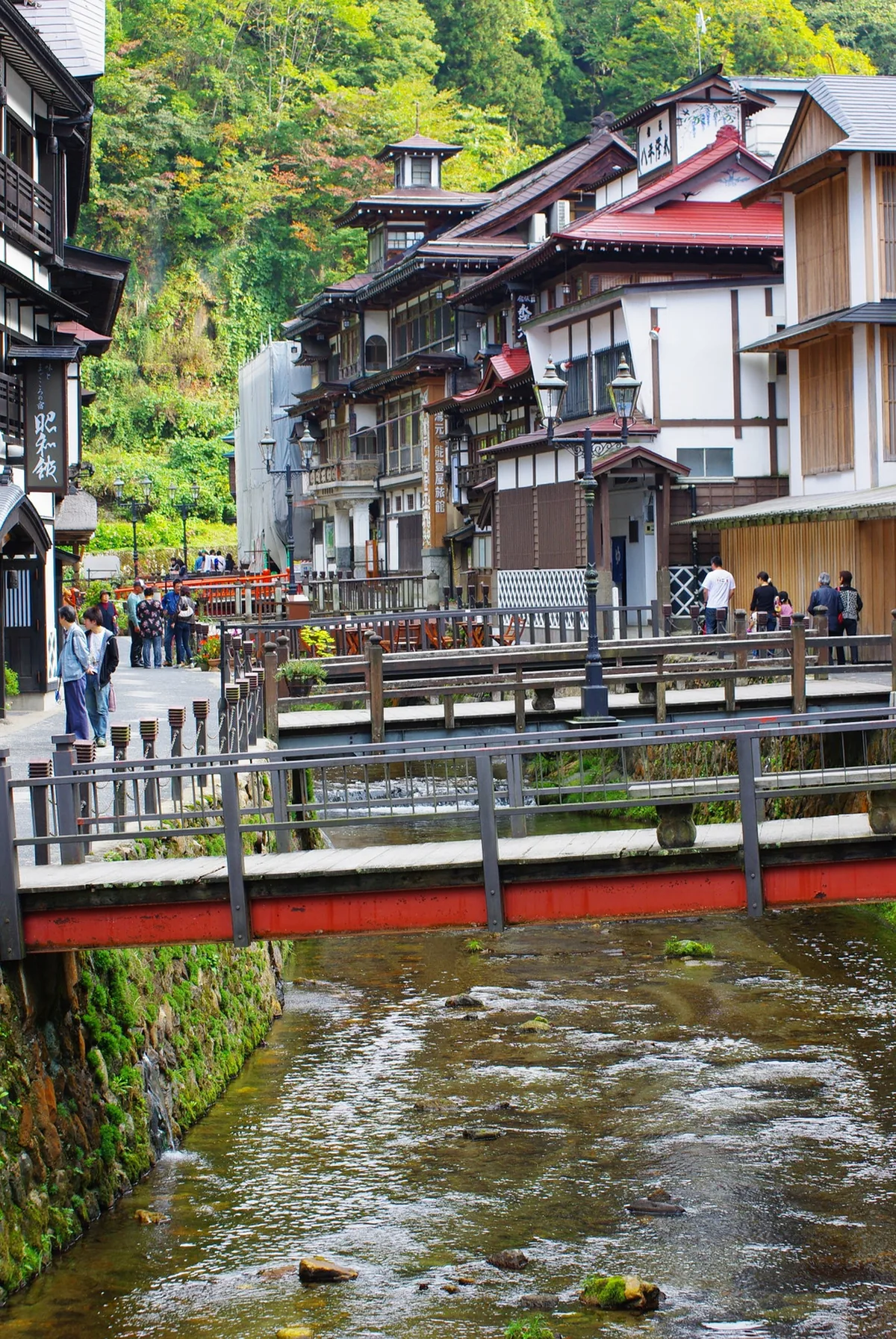
Ginzan Onsen sits in Obanazawa City, Yamagata Prefecture, where wooden ryokans line the Ginzan River near the Shirogane Bridge entrance. Wide temperature swings across the growing season give the region's soba and beef their character, and that same climate makes hot food matter here, especially in winter. Two different meals define a visit. A ryokan stay typically bundles an evening kaiseki course and breakfast into the room rate, so overnight guests rarely need to look for dinner elsewhere. Day-trippers, by contrast, have to sequence lunch, a snack, and sometimes dinner into a village where most doors close by early evening. Sightseeing fills the rest of a short visit. The village's attractions guide covers the footbaths and retro streets between meals.
Getting to Ginzan Onsen and Timing Your Meals
Ginzan Onsen is compact enough to walk end to end in about 15 minutes, which shapes how much eating actually fits into a visit. JR Oishida Station is the nearest rail hub, about 40 minutes away by bus or taxi. Only around five buses run each day, so check the Hanagasa Bus timetable before you plan a meal around it. Yamagata Airport sits roughly 75 minutes away by road. The Delicious Yamagata Airport Sightseeing Bus needs no reservation, while the Sightseeing Liner taxi service requires booking by 5:00 PM the day before. Bus-based day trips, including the Twilight Tour, typically leave visitors with roughly 60 to 80 minutes of free time in the village itself. A workable food plan matters more than a long restaurant wish list. Factor meal timing into the return trip either way, since a missed connection can strand you well after the last kitchen has closed.
Twilight Tour participants get roughly 60 to 80 minutes of free time, yet most cafes and shops close between 6:00 PM and 6:30 PM. Arriving without a dinner reservation means missing the day's only remaining meal option.
7 Best Foods to Eat in Ginzan Onsen
These seven dishes span the walk-and-eat snacks near the footbaths, the sit-down lunch specialties inside Izu no Hana, and the handful of options open late enough to count as dinner.
Obanazawa's celebrated soba owes to a swing of roughly 104°F between summer and winter—climate stress that concentrates flavor in the buckwheat and underlies why noodles dominate Ginzan Onsen's dining scene.
- Ita-Soba and Niku-Soba (Obanazawa Buckwheat Noodles)
- Ita-soba is cold buckwheat soba served in a shallow cedar box, a firm-textured Yamagata specialty historically served to large groups at community gatherings.
- Niku-soba comes topped with chicken and green onion in a hot or cold broth.
- Izu no Hana serves soba during its published service windows; check the current menu and the soba and lunch guide rather than assuming every dish is available all day.
- Haikara-San Curry Bread (Walk-and-Eat Street Food)
- Haikara-san sells curry bread from a Taisho-era-styled storefront on the main street, and it is the village's signature walk-and-eat snack.
- It works best for day-trippers with a short window, since you can eat it on the move instead of waiting for a table.
- For other quick bites and bakery stops, the curry bread guide maps the full walk-and-eat route.
- Nogawa Tofu: Yudofu and Nama-Age
- Nogawa specializes in yudofu, simmered hot tofu, and nama-age, tofu fried crisp outside and left soft inside.
- It has no fixed closing time and shuts for the day whenever the tofu sells out, so arrive earlier rather than later.
- It is cash-only, so carry yen in small bills before you get in line.
- Soba Soft Serve and Masu Box Parfaits
- Izu no Hana serves desserts within its current general hours of 11:00-18:00, last order 17:30.
- The soft serve uses buckwheat and is not suitable for someone with a buckwheat allergy.
- Its sister shop, Wamoyo, sells takeout sweets when open; check current hours in the cafes and sweets guide.
- Yamagata Beef
- Cattle raised in Yamagata grow over a longer period because of the region's wide temperature swings, giving the beef fine marbling and a sweet fat flavor.
- Most ryokans build it into their kaiseki dinners, so confirm it's on the menu when you book.
- The ryokan kaiseki guide covers a typical course for overnight guests, and Shirogane's set menu is the fallback if you're not staying over.
- Imoni (Taro and Beef Stew)
- Imoni simmers taro, beef, konjac, and green onion in a soy-and-sugar broth, a dish that traces back to riverside gatherings on the Mogami River in the mid-1600s.
- Some ryokans work it into their dinner menus, mostly from fall through winter, alongside communal imoni parties held across the wider Tohoku region.
- On a cold evening, pair it with hot sake to counter the walk between ryokans along the river.
- Shirogane's Late-Night Set Menu
- Shirogane sits at the far end of the hot spring district in a converted old private home and serves set menus built around local ingredients.
- It's the rare Ginzan Onsen restaurant open past 9:00 PM, with hours until 22:00 and last order at 21:30.
- It also has a takeout menu, though eating in is the better bet in winter, when the walk back to your lodging turns bitterly cold.
Where to Eat: Izu no Hana, Cafe Kurie, and Wamoyo
Three shops anchor most non-ryokan meals in Ginzan Onsen. Izu no Hana occupies a renovated 140-year-old private house and switches its menu through the day, from soba lunch to cafe desserts to a full dinner service. Beyond soba, the menu stretches to soy sauce ramen, rice bowls topped with tempura, and a Ginzan-style highball finished with gold flecks for photos. Staff do not speak English, though the restaurant says it will do its best to help regardless. Cafe Kurie, a second-floor cafe-bar, is the pick for a view over the hot spring district while you drink. The list runs to specialty highballs, beer, sake, and cocktails, best enjoyed from the window seats upstairs. Wamoyo, Izu no Hana's sister shop, focuses on takeout sweets, drinks, and Yamagata souvenirs for a quick stop between ryokan buildings. Its short menu centers on doramon and the same soba soft serve served at Izu no Hana, plus grab-and-go souvenirs.
| Venue | Hours | Closed |
|---|---|---|
| Izu no Hana | General service 11:00–18:00 (L.O. 17:30); reservation-only evening menu 17:00–19:00 (L.O. 18:30) | Wednesdays |
| Cafe Kurie | Until 18:00 (L.O. 17:30) | Monday and Tuesday |
| Wamoyo | Until 18:00 | Wednesday and Thursday |
| Shirogane | Until 22:00 (L.O. 21:30) | Select dates each winter — check current schedule |
- Wait for your full party
- Izu no Hana asks you to enter only once everyone in your group has arrived.
- Expect random seating
- Tables are assigned at random rather than chosen, and window seats need a reservation or a specific request.
- Order one dish per person
- Dishes are not meant to be shared, so each diner orders individually.
Obanazawa Soba Road and Yamagata's Ramen Habit
Obanazawa produces more soba than anywhere else in Yamagata Prefecture, and much of that comes down to climate. Local growers point to a swing of roughly 104°F between summer and winter, a stress that concentrates flavor in the buckwheat. Three soba roads run through Obanazawa, Oishida, and Murayama, and the Obanazawa stretch alone has more than ten soba shops. It's a taxi ride from Ginzan Onsen, so it only makes sense with a full day rather than a quick village stop. Obanazawa's noodle scene extends to ramen too. A national household survey found Yamagata spent more on dining out for Chinese-style noodles than any other prefecture in both 2022 and 2023. Many local soba shops double as noodle counters under the name chuka soba. If you visit around October, ask locally about the New Soba Festival; freshly harvested soba is only served after it each year.
Allergies and Dietary Notes
Buckwheat allergies need special care here. Izu no Hana's official guidance asks customers with a buckwheat allergy not to dine there, even if they would order udon, so a non-soba menu item is not an acceptable workaround. Ingredients in tofu dishes, sauces, and shared preparation also need direct confirmation before treating them as vegetarian or allergy-compatible. Carry a written Japanese allergy card and choose another venue when a kitchen cannot confirm safe handling.
The Twilight Tour Strategy: Eating in 60 to 80 Minutes
Bus tours such as the Twilight Tour typically transfer at Taisho Romankan, shuttle to Ginzanso Ryokan, and then leave about a five-minute walk into the village itself. From there, visitors usually get somewhere between 60 and 80 minutes of free time before the bus back to Tendo Onsen. That is not enough time for a full sit-down meal at a rule-heavy restaurant, so plan around speed instead. Public restrooms sit only at the far end of the hot spring district, so plan a stop there alongside a food break.
- With about 60 minutes
- Grab curry bread from Haikara-san and nama-age tofu from Nogawa, then eat both while walking toward the footbaths.
- With closer to 80 minutes
- Add a quick counter order at Izu no Hana's cafe side or a soba soft serve from Wamoyo before heading back to the shuttle.
- Skip the sit-down lunch
- Izu no Hana's random seating and one-dish-per-person rule can slow things down, so save a full lunch for a trip with more time.
Seasonal Eating: Winter Imoni vs Summer Fruit and Chilled Ramen
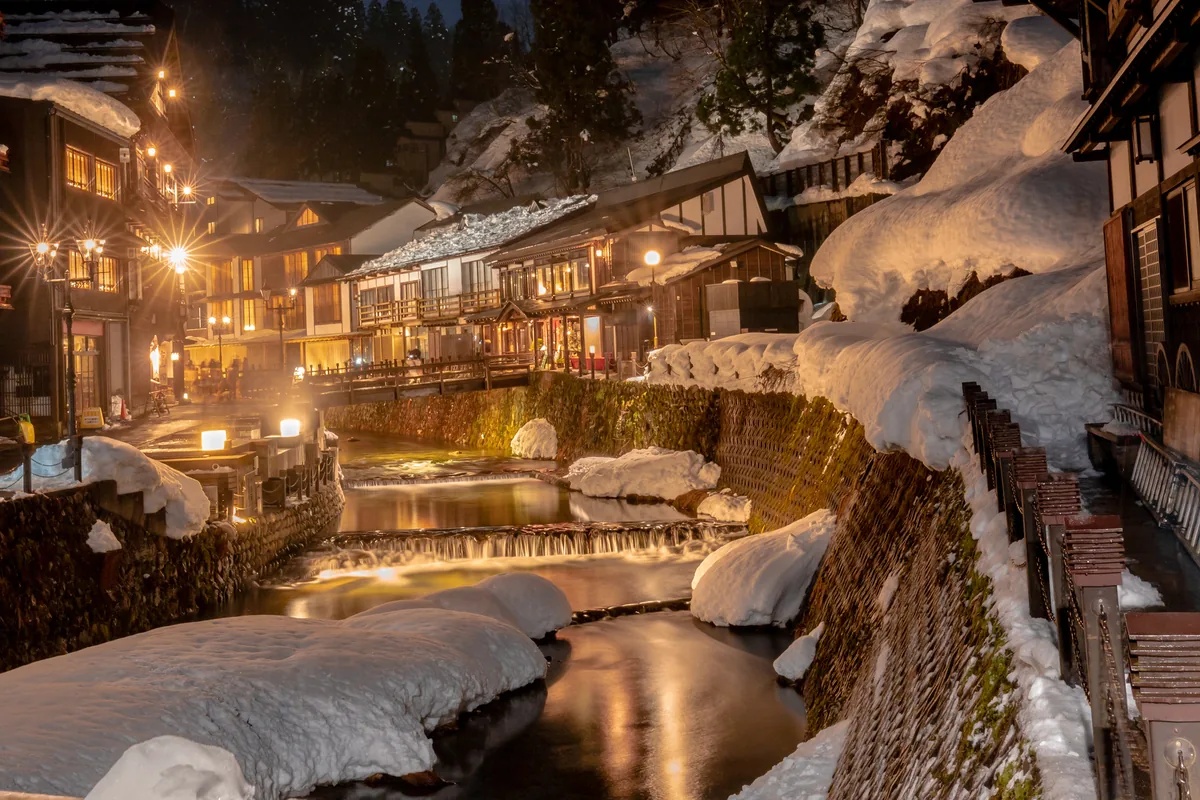
Ginzan Onsen's food shifts hard with the season. Winter cold pushes ryokan menus toward imoni and hot sake, both built to warm you up after a walk between buildings in the snow. Lingering outdoors for long stretches is genuinely uncomfortable in winter, which is part of why hot dishes matter so much on a ryokan menu. Early summer brings Sato Nishiki cherries into season from mid-June to early July, and dessert counters like Izu no Hana's parfait rotate the fruit to match. Obanazawa is also known for watermelon, and Izu no Hana's menu includes watermelon pesora pickles as a small side alongside the fresh fruit. Later in summer, look for hiyashi ramen, a chilled noodle dish served with cold broth and toppings like radish sprouts and tomato.
- Winter picks
- Imoni (taro and beef stew) and hot sake, usually served as part of a ryokan dinner.
- Early summer picks
- Sato Nishiki cherries, in season from mid-June to early July, showing up in seasonal parfaits.
- Summer picks
- Hiyashi ramen (chilled noodles) and Obanazawa watermelon, including the pesora pickle version sold at Izu no Hana.
The Dinner Desert: Where to Eat Without a Ryokan Booking
Most ryokans in Ginzan Onsen cook dinner for their own overnight guests. Izu no Hana's separate evening menu runs 17:00-19:00, last order 18:30, and requires a reservation; it is not a late walk-in option. Other evening venues publish their own dated schedules, so verify them directly before relying on dinner in the village. The non-ryokan dinner guide covers the early-meal and transport trade-offs. Overnight guests should confirm that kaiseki dinner is included in their room plan.
Mistakes to Avoid When Eating in Ginzan Onsen
A few planning slips, more logistical than culinary, account for most disappointing meals in Ginzan Onsen.
- Arriving after 5:00 PM with no dinner reservation
- Most shops close by 6:00 to 6:30 PM, and ryokan dinners are for overnight guests only, so a booking-free arrival after 5:00 PM can mean no real dinner option.
- Missing the last bus back to Oishida
- Only around five buses run to JR Oishida Station each day, so check the Hanagasa Bus schedule before settling into a long meal.
- Taxis exist as a backup, but one is not guaranteed to be waiting at the entrance.
- Assuming every shop takes a card
- Izu no Hana accepts major credit cards, but small stalls like Nogawa tofu are cash-only, so carry yen in small bills.
- Ignoring regular closing days
- Izu no Hana closes on Wednesdays, Wamoyo on Wednesday and Thursday, and Cafe Kurie on Monday and Tuesday, so one closed day can remove more than one option at once.
- Skipping a reservation call because of the language barrier
- Izu no Hana has no English-speaking staff, which can make a phone reservation feel intimidating.
- Asking ryokan staff to call ahead on your behalf solves this in most cases.
- Underestimating how cold waiting outside can get
- Winter temperatures make lingering outside for a long wait genuinely uncomfortable, and bus tour organizers specifically warn against staying outdoors the entire visit.
- Duck into a cafe or souvenir shop to warm up between food stops instead of queueing outside the whole time.
How This Guide Was Verified
Food availability, access details, seasonal rules, and the time-sensitive claims in this guide were checked on August 22, 2026 against the official sources below. Independent restaurant menus, prices, opening days, and sell-outs can change, so confirm the operator's same-day notice before making a special trip.
Explore food in other cities
Frequently Asked Questions
What is the most famous food in Ginzan Onsen?
Obanazawa soba, especially cold ita-soba served in a cedar box, is the dish most associated with the area. Haikara-san's curry bread and Yamagata beef come right after it on most visitors' lists.
Where can day-trippers eat dinner without a ryokan booking?
Izu no Hana offers a reservation-only evening menu from 17:00 to 19:00, last order 18:30. It is not a late walk-in restaurant. Verify any other venue's dated schedule directly or plan to eat outside the village.
What time do restaurants and cafes close in Ginzan Onsen?
Hours vary by venue and date. Izu no Hana's current general service is 11:00-18:00, last order 17:30, with a reservation-only evening menu from 17:00-19:00. Check each other shop's current listing rather than applying one closing time across the village.
Can you eat street food while walking around the village?
Yes. Curry bread from Haikara-san and nama-age tofu from Nogawa are both made to eat on the move, and Nogawa closes as soon as it sells out for the day.
Do restaurants in Ginzan Onsen accept credit cards?
Izu no Hana accepts major cards, but smaller stalls such as Nogawa tofu are cash-only. Keep yen in small bills on hand for those stops.
What's the best time of year to eat in Ginzan Onsen?
Early summer, from mid-June to early July, brings Sato Nishiki cherries into season and lighter desserts. Winter brings imoni and hot sake, better matched to the cold walk between ryokans.
Are there vegetarian-friendly options in Ginzan Onsen?
Nogawa's yudofu and nama-age tofu dishes are naturally vegetarian, and they're some of the easiest options for visitors avoiding meat. Confirm broth ingredients directly with staff, since menus can change.
What's the most photographed food in Ginzan Onsen?
The soba soft serve at Izu no Hana, served in a wooden masu box with brown sugar syrup, is the most photographed order. A gold-flecked Ginzan highball is a close second at dinner.
Explore Ginzan Onsen Food and Dining
Use these guides to compare local dishes, dining areas and practical food experiences in Ginzan Onsen.
Food and Dining Guides
Free guide: Japan's Hidden Gems
12 under-the-radar places beyond Tokyo & Kyoto — with the best season to visit each and a local tip you won't find in the guidebooks.
You might also like


Continue reading
More guides you'll find useful


