

Zao Onsen Soba Restaurants: Where to Eat Buckwheat Noodles
Find the best Zao Onsen soba restaurants, from handmade buckwheat noodles at Shinzaemon no Yu to family-run shops near the village ropeway.
On this page
Last updated August 2026. Zao Onsen soba restaurants turn a post-ski or post-soak stop into a full meal, using buckwheat noodles made with local mountain water. Yamagata Prefecture's soba tends to be firmer and chewier than noodles found elsewhere in Japan, and most shops sit within a short walk of the ropeway or bus terminal.
Top Zao Onsen Soba Restaurants to Try First
Three names come up first when locals talk about Zao Onsen soba restaurants: Yunohana Chaya, Soba Rian, and Soba Restaurant Yuyu-tei. Yunohana Chaya sits inside the Shinzaemon no Yu bathhouse and serves 100% buckwheat, or juwari, noodles made fresh each day. Soba Rian and Yuyu-tei are smaller, standalone shops closer to the village center, and both pour beer alongside their noodle sets. Any of the three works well as a first stop for a quick lunch between runs or a slower bowl after a soak. Choosing between the three mostly comes down to whether a soak or a beer sounds better with lunch.
- Yunohana Chaya: 100% buckwheat juwari soba plus a soak at Shinzaemon no Yu's open-air baths
- Soba Rian: hot or cold buckwheat noodles in a small, purist-favorite dining room
- Soba Restaurant Yuyu-tei: noodles with draft beer, close to the central onsens
Why Yamagata Soba Tastes Different
Yamagata's reputation for soba comes down to two factors: buckwheat quality and water. Local shops favor juwari, a 100% buckwheat grind, or ni-hachi, an 80% buckwheat and 20% wheat blend, and both appear on menus around the village. Juwari noodles carry a stronger buckwheat flavor and break more easily, while ni-hachi holds together for a chewier bite. Cold water from the surrounding mountains goes into the dough and the cooking. Shops here point to that water as the reason the noodles taste firmer than soba found farther south. Many restaurants pair the noodles with sansai, mountain vegetables gathered in the warmer months, served as a side or mixed into the broth. Imoni, a stew of taro and beef, is another common pairing, especially at restaurants attached to the hot springs. Zao's hot spring water is often described locally as among the most acidic in Japan, and several soba shops sit close enough to the baths to fold a soak into the same stop.
Hot or Cold: How to Order Soba in Zao Onsen
Cold soba, often called zaru or mori, comes with noodles chilled and a dipping sauce on the side, a common choice after a hot soak. Hot soba arrives in broth and works well straight off the slopes, when a warm bowl matters more than noodle texture. Shops around Zao Onsen add toppings like tempura chicken, shabu-shabu pork, or Yamagata beef, and several pair the noodles with Imoni stew on the side. If noodle texture is the priority, order juwari for a stronger buckwheat flavor, or ni-hachi if a heartier, more elastic bite is preferred. Neither style is objectively better; the choice comes down to temperature, appetite, and how much buckwheat flavor is wanted in the bowl.
Juwari's pure buckwheat brings a stronger flavor but crumbles more easily; ni-hachi's 80% buckwheat and 20% wheat blend offers a sturdier, chewier bite—choose based on your priority for taste versus texture.
Comparing the Top Soba Shops in Zao Onsen
Each shop below brings something different, from an onsen-side combo to a purist's small dining room. Walking times below are approximate. The resort's food directory places most central restaurants within a 5-10 minute walk of the Zao Base Center Jupeer or the main bus terminal. Use the table as a starting point, then match the pick to whether the priority is texture, atmosphere, or how far you want to walk from the ropeway.
The five shops all sit within 5-10 minutes' walk of the base, making them convenient lunch stops, but most close by mid-afternoon—arriving after 2:00 PM risks finding doors already closed.
| Restaurant | Signature Dish | Best For | Walk from Base Center |
|---|---|---|---|
| Yunohana Chaya | Juwari soba, Imoni stew | Onsen-and-soba combo | ~5-10 min |
| Soba Rian | Hot or cold buckwheat soba | Soba purists / solo travelers | ~5-10 min |
| Soba Restaurant Yuyu-tei | Soba with draft beer | Late lunch after a soak | ~5-10 min |
| Motte no Hoka | Handmade chewy buckwheat noodles | Families | ~5-10 min |
| Okumura Soba | Traditional, no-frills soba | Authentic, quiet atmosphere | ~5-10 min |
Yunohana Chaya at Shinzaemon no Yu: Soba After a Soak
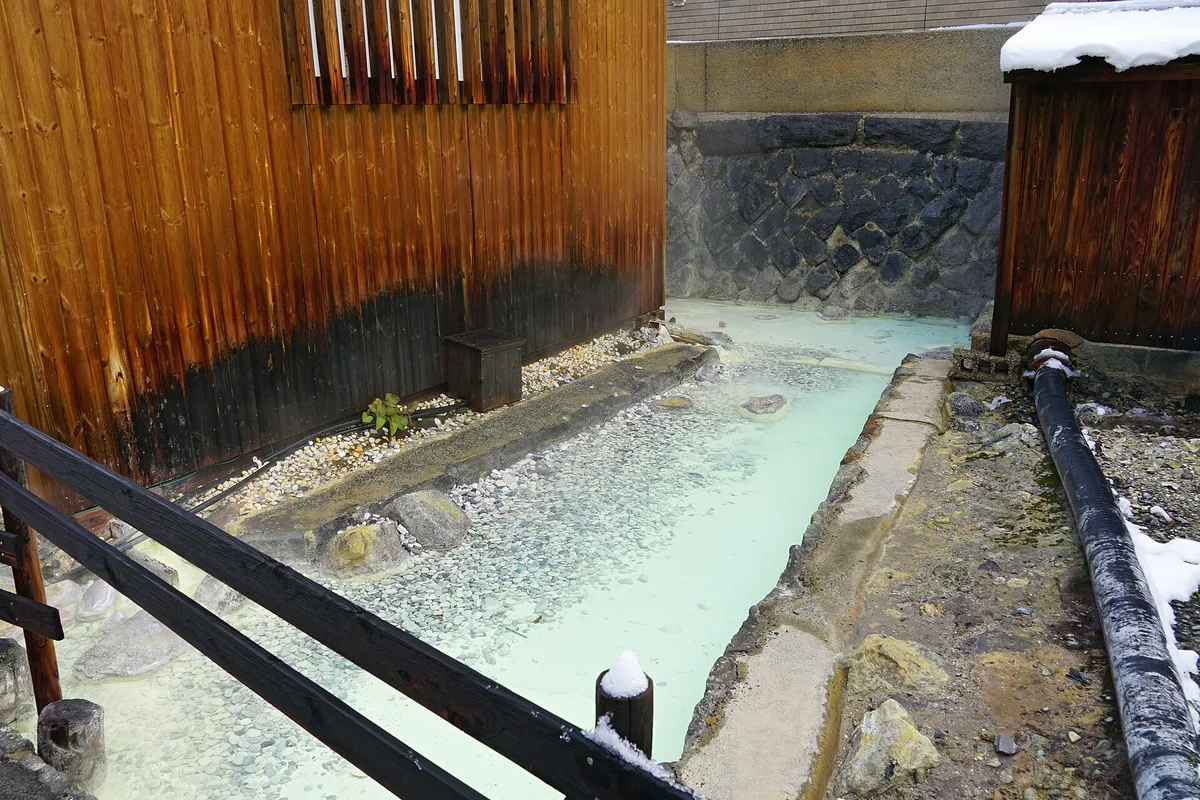
Yunohana Chaya operates inside Shinzaemon no Yu, a bathhouse with open-air baths fed by Zao's sulfurous spring water. The current facility listing gives hours of 10:00-18:00, last admission 17:30, and restaurant service of 11:00-15:30, last order 15:00. Bath admission is ¥1,000 for adults, ¥400 for children, and ¥200 for ages three and over below school age; a 12-ticket book is ¥10,000. The restaurant uses a meal-ticket machine and does not accept seat reservations. Closure dates are published on a dated calendar rather than guaranteed by a permanent Wednesday/Thursday rule, so check that calendar before visiting. The footbath is unavailable December through March.
Soba Rian and Yuyu-tei: Central Village Options
Soba Rian keeps a small, unhurried dining room that regulars point to as the village's purist pick for buckwheat noodles. Both hot and cold preparations are on the menu, so the dish can match the weather or how sore your legs feel after skiing. Locals point to Soba Rian's unhurried pace as a contrast to the busier lunch rush closer to the ropeway. Soba Restaurant Yuyu-tei sits closer to the central onsens and pours beer on tap, a fit for a post-soak lunch. Yuyu-tei's central location makes it an easy stop between a soak and an evening back at a ryokan. Order the noodles warm before heading back into the snow, or cold with dipping sauce after an afternoon spent indoors.
Motte no Hoka and Okumura Soba: Family-Run and No-Frills Picks
Motte no Hoka is a family-run shop that uses locally grown ingredients to make soft, chewy buckwheat noodles. Its dining room is small and the pace relaxed, which suits families traveling with kids who need a slower lunch. Motte no Hoka's noodles are milled in-house rather than shipped in, which locals point to as part of the chewier texture. Okumura Soba, listed on the resort's own food directory, is a traditional, no-frills option for a quiet local meal. Okumura Soba keeps a simple, unhurried dining room that draws visitors looking for a meal away from the busier central strip. Neither shop leans on English signage, so a translation app helps when reading the handwritten menu boards common at smaller Zao Onsen soba restaurants.
Beyond Soba: Pairing Noodles With Other Yamagata Dishes
Forest Inn Sangoro, on the Chuo Slope, pairs a mountain-lodge setting with heartier plates built around Yamagata beef. For dessert after a noodle lunch, Igamochi no Sato Sambe serves igamochi, grilled rice cakes made from pounded rice and beans. The Zao Onsen dessert guide covers more sweet stops in the village. Kikuchi mixes Chinese-style soba with Genghis Khan lamb barbecue, a fit for groups who can't agree on one cuisine. The Genghis Khan dining guide has more detail on lamb-barbecue spots around the village. All three sit within the same walkable core as the soba shops, so combining a noodle lunch with a dessert stop or a barbecue dinner takes little extra planning. For a wider view of every cuisine in Zao Onsen, from sushi to yakiniku, the Zao Onsen food guide rounds up the full list.
Practical Logistics: Hours, Seasons, and Getting There
Most Zao Onsen soba restaurants run as lunch spots, generally open from late morning into mid-afternoon. Dinner options are limited because many ryokans already include an evening meal for guests. Check the ryokan evening dining guide if a stay already covers dinner. The Zao Ropeway and the Juhyo snow-monster season draw crowds each winter. See the Zao Onsen attractions guide for exact operating windows before building a soba stop around either one. Lift-adjacent restaurants that only run in winter are covered in the ski season lunch guide. Building a rough plan around these hours avoids the most common frustration: arriving at a favorite spot mid-afternoon only to find the doors already closed.
- Timing: most soba shops are lunch-focused; plan to eat before mid-afternoon rather than after 2:00 PM.
- Seasonality: village-center soba shops tend to run year-round, while some slope-side restaurants operate winter-only during the ski season.
- Access on foot: central shops sit within roughly a 5-10 minute walk of the Zao Base Center Jupeer or the main bus terminal.
- Access by car: Shinzaemon no Yu offers free parking for 65 cars, though spaces fill on weekends.
Mistakes to Avoid When Planning a Soba Meal in Zao Onsen
A few planning slips repeat across Zao Onsen soba restaurants and cost travelers a meal. None of these are hard rules, but checking hours the same day avoids a wasted walk in the cold.
- Assuming a fixed weekly closure: Shinzaemon no Yu publishes dated closure information, so check the current calendar instead of relying on an old Wednesday/Thursday rule.
- Expecting English-only menus at smaller, family-run shops; a translation app smooths ordering at places like Motte no Hoka and Okumura Soba.
- Arriving after 2:00 PM for lunch, when several soba shops start winding down before evening ryokan dinners take over.
- Skipping a reservation call on peak ski weekends, when the shops closest to the ropeway fill quickly.
- Confusing ski-season-only slope restaurants with year-round village shops, and showing up in summer to a closed lift-side kitchen.
- Booking a large group without calling ahead, since several soba shops are small, family-run spaces.
How This Guide Was Verified
Food availability, access details, seasonal rules, and the time-sensitive claims in this guide were checked on August 22, 2026 against the official sources below. Independent restaurant menus, prices, opening days, and sell-outs can change, so confirm the operator's same-day notice before making a special trip.
Frequently Asked Questions
What is Yamagata soba, and how is it different from other regional soba?
Yamagata soba typically uses local mountain water and a high buckwheat ratio, giving it a firmer, chewier bite than softer regional styles. Juwari, 100% buckwheat, and ni-hachi, 80% buckwheat and 20% wheat, are the two ratios seen most often around Zao Onsen.
Which Zao Onsen soba restaurant is closed on Wednesdays?
Do not rely on a fixed Wednesday/Thursday rule for Yunohana Chaya and Shinzaemon no Yu. The facility publishes dated closures; check its current calendar before planning the combined soba-and-bath stop.
How much does a soba meal cost in Zao Onsen?
Standard soba sets in the village generally run from ¥1,000 to ¥2,000, depending on toppings like tempura or beef. Combo sets that pair noodles with Imoni stew or beer tend to sit toward the higher end of that range.
Can you get soba and an onsen soak in one stop?
Yes, at Yunohana Chaya inside Shinzaemon no Yu, where a soak in the open-air baths and a bowl of juwari soba share the same address. Adult bath admission is ¥1,000, and the facility offers free parking for 65 cars.
Is dinner easy to find at Zao Onsen soba shops?
Not always. Most soba restaurants lean toward lunch service, since many ryokans already include dinner for their guests. If a stay doesn't include dinner, it helps to check hours ahead rather than search for an open kitchen late in the evening.
Do any Zao Onsen soba spots close for the season?
Village-center shops like Soba Rian and Yuyu-tei tend to run year-round, but some slope-side restaurants operate only during the ski season. Confirm hours directly before a summer visit, since mountain-lift dining changes with the season.
What should you order alongside soba in Zao Onsen?
Imoni, a taro-and-beef stew, is a common side at soba restaurants around the village, especially those attached to the hot springs. Some shops also serve sansai, mountain vegetables gathered in the warmer months, either as a side dish or mixed into the noodles.
Is there parking near Zao Onsen soba restaurants?
Shinzaemon no Yu offers free parking for 65 cars for anyone visiting Yunohana Chaya. Most other central soba shops sit within a 5-10 minute walk of the Zao Base Center Jupeer or the main bus terminal, so a car isn't required once you're in the village.
Free guide: Japan's Hidden Gems
12 under-the-radar places beyond Tokyo & Kyoto — with the best season to visit each and a local tip you won't find in the guidebooks.
You might also like


Continue reading
More guides you'll find useful


