

Zao Onsen Dinner and Ryokan Meals: A Complete Dining Guide
Ryokan kaiseki or village izakaya? Compare Zao Onsen dinner options: Yamagata beef, Jingisukan, soba, and 15+ restaurant picks, plus 2026 booking tips.
On this page
Last updated August 2026, Zao Onsen dinner and ryokan meals split into two paths. One is a fixed-course kaiseki dinner bundled into your ryokan stay. The other is a walk into the village for soba, yakiniku, or an izakaya plate of Jingisukan.
Zao Onsen Dinner and Ryokan Meals: Which Path Fits Your Trip?
Zao Onsen's two dining paths pull in different directions. A ryokan kaiseki dinner is fixed and formal, included in a half-board room rate, arriving in courses at a set hour with little room to adjust the time. Village restaurants trade that structure for flexibility. You choose the hour, the noise level, and tonight's cuisine — soba, yakiniku, or an izakaya plate of Jingisukan. Village restaurants also carry a social charge that a private ryokan dining room doesn't. Shared counters at yakiniku tables and pub-style seating at Pub Seiwa put you next to other travelers comparing notes on the day's skiing. Neither path is objectively better. The choice comes down to handling the evening for you, or exploring Zao Onsen's dining scene on your own schedule. Travelers who spend a full day at Zao Onsen's attractions and on the slopes often prefer the ryokan's fixed schedule, since it removes one more decision from a tired evening. Yamagata Prefecture underpins nearly everything on the menu here. Yonezawa beef, a Yamagata specialty, comes only from cattle raised within the prefecture. Warmer months bring foraged mountain vegetables, or sansai, into soups, tempura, and pickled tsukemono sides. Some kitchens combine these ingredients into a beef-soba or ramen bowl, blending Yamagata produce with the region's noodle tradition. A beef-and-taro stew called imoni shows up across the village as local comfort food. Sake culture runs deep too, with more than 56 breweries operating across the prefecture.
Ryokan dinner times are property-specific. Confirm the selected plan's meal time and final arrival directly rather than applying a universal 18:00-19:00 window.
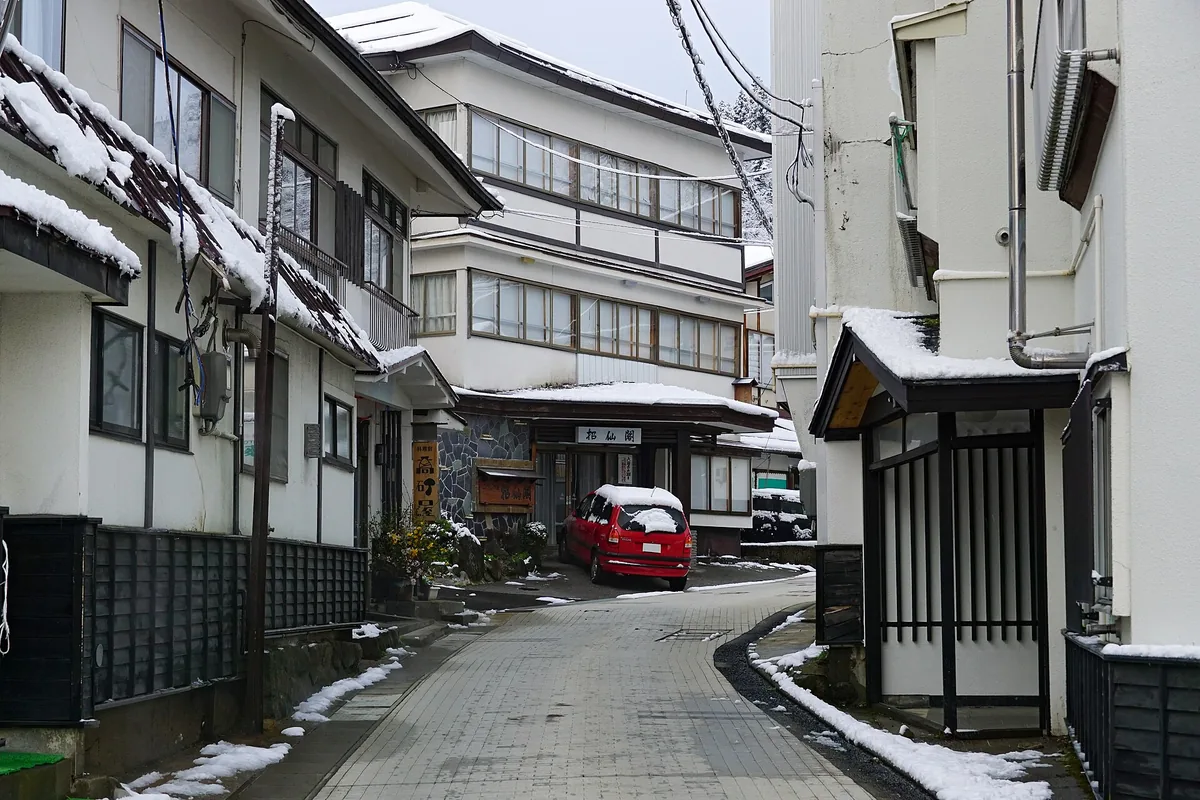
What to Expect at a Zao Onsen Ryokan Meal
Many Zao Onsen ryokans sell half-board plans that bundle dinner and breakfast into the room rate. Meal times and final arrival rules differ by property and plan, so confirm them before travel rather than assuming every inn serves only from 18:00 to 19:00. Plan an onsen soak or evening walk around the confirmed seating time. If you would rather eat in the village, ask whether a room-only or breakfast-only rate is available. Kaiseki generally arrives as a sequence of small courses rather than one plated meal, such as:
- A mountain-vegetable appetizer course
- A simmered or steamed dish
- A grilled course, often featuring local beef
- A closing rice or noodle course
Spotlight: Kaiseki at Oomiya Ryokan
Oomiya Ryokan illustrates what a higher-end Zao Onsen kaiseki dinner looks like in practice. Its autumn-only "Red Leaf Hunting" set menu arrives in a red lacquer box. The kitchen's centerpiece is the Snow Room Aged Wagyu Shabu Shabu. The beef ages in a snow cellar at roughly minus 20°C (-4°F) for three months before service. Staff describe the resulting marbling as similar to the frost crystals coating Zao's snow-covered trees. Guests dip thin slices in hot broth for a few seconds, then pair the beef with a yam paste. Three mountain-vegetable appetizers typically open the meal, continuing the same seasonal sourcing found throughout the set. Because the set menu changes with the season, confirm current availability and pricing directly with Oomiya Ryokan when you book your stay. Individual dishes also hide visual surprises inside familiar shapes, such as:
- A chawanmushi custard with ginkgo and chestnut paste hidden at the bottom
- A salt-grilled fish plated to resemble a leaping dragon
Village Dining: Zao Onsen's Best Soba Shops
Three soba houses define Zao Onsen's village dining beyond the ryokan table. Yunohana Chaya sits inside the Shinzaemon no Yu bathhouse and serves 100% buckwheat "juwari" soba made fresh each day, topped with tempura chicken or shabu-shabu pork. Its hot spring eggs are cooked directly in onsen water, a detail unique to the location. Motte no Hoka is a family-run shop that turns locally grown buckwheat into soft, chewy noodles. Soba Restaurant Yuyu-tei positions itself as a post-onsen stop, pairing a bowl of noodles with beer on tap. For a fuller comparison across the village, see the village's soba shops.
Yamagata Beef, Yakiniku, and Jingisukan in the Village
Two village restaurants specialize in Zao Onsen's signature meats. Hachiman Yakiniku serves Yamagata beef for tableside grilling; seating is limited, so confirm the current menu and reserve during busy ski periods. Toen Shuka is an izakaya associated with Jingisukan, but the official directory does not guarantee that it opens every day of the year. Check its current hours and closure notice before treating it as a backstop. For more on the dish, see the village's Jingisukan guide.
Oomiya's beef undergoes months of aging at minus 20°C for delicate shabu-shabu, while Hachiman's beef is grilled at the table, showing how the same Yamagata beef takes different preparations based on dining style.
Comfort Food and International Kitchens
Three kitchens serve travelers who want a break from Japanese courses. Bar Woodpecker, inside Lodge Scole, is known for a smashburger with special sauce and French fries. A baked cheesecake caps the meal, and travelers sometimes get a meet-and-greet with the owners' pet meerkat. Pension & Restaurant Putaro serves hearty Western-style meals built to warm you up after a day on snow. Petit Resort Hotel DerBarte is run by a French-trained chef who serves French course dinners in an alpine dining room. It also opens for lunch while you ski, unlike most village dinner spots. Reserve ahead for DerBarte's dinner seating, since the dining room is small and popular with couples. For daytime options along the runs, see slope-side lunch spots.
Fireplaces, Igloos, and Craft Beer: Atmosphere Picks
Forest Inn Sangoro is an A-frame lodge reached by crossing a snow-covered stretch of forest on the mountainside. Inside, a fireplace anchors the dining room, and the menu centers on Yamagata beef alongside mugs of mulled sake. It works as an apres-ski stop or a full dinner, and stays pleasant in the warmer months too. Confirm the current path and lighting situation with your ryokan before heading to Sangoro after dark, since the approach crosses forest terrain. KOTOBUKI seats guests inside a heated, igloo-style tent with only two tables, serving a beef sukiyaki hot pot that diners cook themselves. Confirm current opening months directly with the restaurant, since the format runs winter-only. Snow Dome, a log cabin-style restaurant, is known for cheesecake and curry rather than a full dinner menu. Oto Chaya pairs a deliberately unpolished interior with hearty curries, shaved ice in flavors like strawberry milk and cherry, and what many consider the best craft beer selection in Zao.
Sweets, Snacks, and a Late Drink
Four spots round out a Zao Onsen evening after dinner. Igamochi no Sato Sambe is a coffee shop serving igamochi, pounded rice cakes made with beans and served on bamboo leaves. Parlor Kamoshika, on the slopes of Mount Zao, operates through the winter season and is known for a cream brulee bun that mimics the crackable sugar top of the dessert. Pub Seiwa serves homemade pizza alongside a full drinks list. Kiraku Sushi, run by an elderly couple, is the village's only sushi restaurant. It also serves hot pot and fried fish for guests who want something other than raw fish. Between them, these four spots cover Zao Onsen's after-dinner options, from a sit-down dessert to a late pizza and a nightcap. For more on the village's dessert culture, see the village's igamochi and sweets.
Ryokan vs. Restaurant: A Quick Decision Matrix
Match the dinner style to the trip you're actually taking. Group size and mobility matter as much as budget. Families traveling with children tend to do best at Bar Woodpecker or Putaro, where the menu is familiar and the pace stays relaxed. Couples looking for a quieter, slower evening are usually better served by Oomiya Ryokan's kaiseki or DerBarte's French courses. Sangoro's fireplace dinner is worth the walk for travelers who don't mind crossing snow to reach it. If mobility is a concern, prioritize ryokan dining or village-center restaurants over Sangoro's forest walk or KOTOBUKI's snowy approach.
| Priority | Ryokan Kaiseki | Village Restaurants |
|---|---|---|
| Budget | Bundled into the room rate; the highest per-meal cost of the two paths | Lower cost at soba shops; yakiniku and izakaya plates cost more than a bowl of noodles |
| Best for | Couples and travelers who want a fixed, quiet evening, such as Oomiya Ryokan or Petit Resort Hotel DerBarte | Families and groups who want flexibility, such as Bar Woodpecker or Pension & Restaurant Putaro |
| Access | Served inside your own ryokan; no travel required | Village center is walkable; Forest Inn Sangoro requires crossing a snow-covered forest path |
| Reservations | Set automatically at check-in | Call ahead in peak ski season, especially for KOTOBUKI's two tables |
Reservations, Timing, and Cash: Evening Logistics
A handful of logistics decide whether dinner goes smoothly. Confirm the ryokan's meal time and the village restaurant's last order directly, because neither follows one valley-wide schedule. Tables get tight during peak ski season, so call ahead or ask the ryokan front desk for help. Smaller soba and sweets shops may be cash-only, making yen a useful backup. Do not assume Toen Shuka operates every day of the year or that another specialist will be open; check the current directory and operator notice. If a group splits between a ryokan dinner and a village meal, coordinate the confirmed times before arrival.
How This Guide Was Verified
Food availability, access details, seasonal rules, and the time-sensitive claims in this guide were checked on August 22, 2026 against the official sources below. Independent restaurant menus, prices, opening days, and sell-outs can change, so confirm the operator's same-day notice before making a special trip.
Frequently Asked Questions
Do Zao Onsen ryokans always include dinner?
Most Zao Onsen ryokans sell half-board plans that bundle dinner and breakfast into the nightly room rate. Ask directly whether a room-only rate is available if you'd rather eat in the village most nights.
What is Jingisukan, and where can you try it in Zao Onsen?
Jingisukan is a Yamagata-style lamb barbecue grilled tableside, most associated in the village with Toen Shuka. It's typically ordered alongside edamame or a hot pot, and pairs well with Zao's own cheese.
Do you need to book village restaurants in advance?
Yes, especially in peak ski season when walk-in tables are hard to find. KOTOBUKI's igloo dome seats only two tables, so call ahead or ask your ryokan to reserve it once your dates are set.
Which restaurant is the only sushi option in Zao Onsen?
Kiraku Sushi is the village's sole sushi restaurant, run by an elderly couple who also serve hot pot and fried fish. Confirm current hours before you go, since small, family-run kitchens can change them with little notice.
Are Zao Onsen restaurants cash-only?
Some smaller, family-run soba and sweets shops still operate cash-only. Carry yen even if your ryokan accepts cards, and confirm payment methods when you book a table.
Can you skip the ryokan dinner and eat in the village instead?
Many ryokans let you decline the dinner portion of a half-board rate for a lower nightly price. Confirm this option when booking, since not every property offers a room-only rate.
What's the best restaurant for a special-occasion dinner in Zao Onsen?
Oomiya Ryokan's kaiseki and Petit Resort Hotel DerBarte's French courses are the two most formal options in Zao Onsen. Book either well ahead, since both keep small dining rooms with limited seating.
Is Zao Onsen village walkable for dinner without a car?
Yes. The village center is compact enough to reach most restaurants on foot from typical ryokan locations. Forest Inn Sangoro is the exception, since it sits across a snow-covered forest path rather than a paved village street.
Free guide: Japan's Hidden Gems
12 under-the-radar places beyond Tokyo & Kyoto — with the best season to visit each and a local tip you won't find in the guidebooks.
You might also like


Continue reading
More guides you'll find useful


