

Ginzan Onsen Curry Bread: Haikara-san Street's Famous Stall
Find Ginzan Onsen's curry bread on Haikara-san Street, learn when it sells out, and pair it with Waraku Ashiyu foot bath and Nogawa Tofu Shop. Updated 2026.
On this page
Last updated August 2026: Ginzan Onsen curry bread is a freshly fried snack sold from one stall on Haikara-san Street. Haikara-san's Curry Bread uses Yamagata-grown Nebarigoshi wheat and a spiced curry filling, and it sells out most afternoons. This guide covers where the stall sits, when it runs out, and how to pair it with the Waraku Ashiyu foot bath and Nogawa Tofu Shop.
Where to Find Ginzan Onsen Curry Bread on Haikara-san Street
Haikara-san's Curry Bread is sold from a single stall at 451 Ginzan Shinhata. It sits near the entrance to Shirogane Park, at the far end of the hot spring town. Dark wood trim, hand-lettered signage, and gas lamps line the storefront, matching the rest of Ginzan Onsen's Taisho-era look. Part of the draw is the retro paper wrapper the bread comes in. Travelers photograph the packaging almost as often as the snack itself. Nebarigoshi, a wheat variety grown in Yamagata Prefecture, goes into the dough. A spiced curry filling gets wrapped inside and fried to order, not reheated. According to local accounts, the stall originally sold around 10 pieces a day. Word of mouth from visitors later pushed daily sales into the hundreds. That growth also explains the queues that can form on weekends and during winter. Shirogane-yu, a black-grid public bath designed by architect Kengo Kuma, sits at this same far end of the street. The stall's block also sits within Obanazawa City, the municipality that administers Ginzan Onsen. It works as a rough landmark if you are finding the stall for the first time. For how the stall fits into the town's broader dining options, the wider Ginzan Onsen food scene covers other stops along the same street.

Planning Your Visit: Hours, Cost, and Sell-Out Timing
The current Ginzan Onsen store directory does not confirm the frequently repeated 7:30 or 8:30 opening times, a standard sell-out hour, or a fixed online price for this curry bread. Check the operator's current notice or the counter on arrival. Treat it as a quick snack whose availability is not guaranteed, and keep another lunch option in mind rather than scheduling transport around an assumed morning batch.
Opening time and stock can change. Verify directly instead of assuming that the stall opens at 7:30 or that bread will remain available until mid-afternoon.
- Opening: confirm directly; the official town directory does not support a fixed 7:30 or 8:30 start.
- Sell-out risk: stock is limited, but no dependable official 14:00 sell-out rule is published.
- Nogawa Tofu Shop next door: confirm its current hours and stock at the shop rather than relying on a fixed 15:00 sell-out time.
- Weekdays: crowds may be lighter, but availability still is not guaranteed.
The Perfect Curry Bread Walking Route in Ginzan Onsen
Ginzan Onsen is compact, about 1 kilometer end to end. This three-stop route fits into well under an hour on foot, even with time to linger at the foot bath. Start at the far end of the street near Shirogane Park and work back toward the town entrance.
- Buy curry bread at Haikara-san's stall near Shirogane Park, at the far end of the street, and eat it while still warm from the fryer.
- Walk a few minutes to Waraku Ashiyu, the foot bath along the Ginzan River. Finish the snack there while soaking your feet; benches are angled for river views.
- Finish at Nogawa Tofu Shop for fresh tofu or namaage if it is open and stock remains; check at the shop rather than relying on a 15:00 cutoff.
Where to Eat It: Tabearuki Etiquette in Ginzan Onsen
Japan is stricter about tabearuki, eating while walking through public streets, than many travelers expect. Ginzan Onsen's narrow riverside lane is no exception. Eat the curry bread right outside Haikara-san's own stall, or at a seated spot such as Waraku Ashiyu. Avoid strolling past other ryokan with it in hand. Standing to eat directly in front of a different shop is generally treated as poor form on a street this small and close-set. Keep to the stall's own frontage or a public bench instead. Look for a trash bin at the stall itself or near the foot bath before you unwrap the bread. Ginzan Onsen has no convenience stores, unlike many Japanese towns, so do not expect a bin every few steps. Carry the wrapper out with you if you do not see one nearby, rather than leaving it on a windowsill or railing. Travelers who would rather sit down properly, with a drink alongside a sweet, can find that option in the town's sit-down cafes.
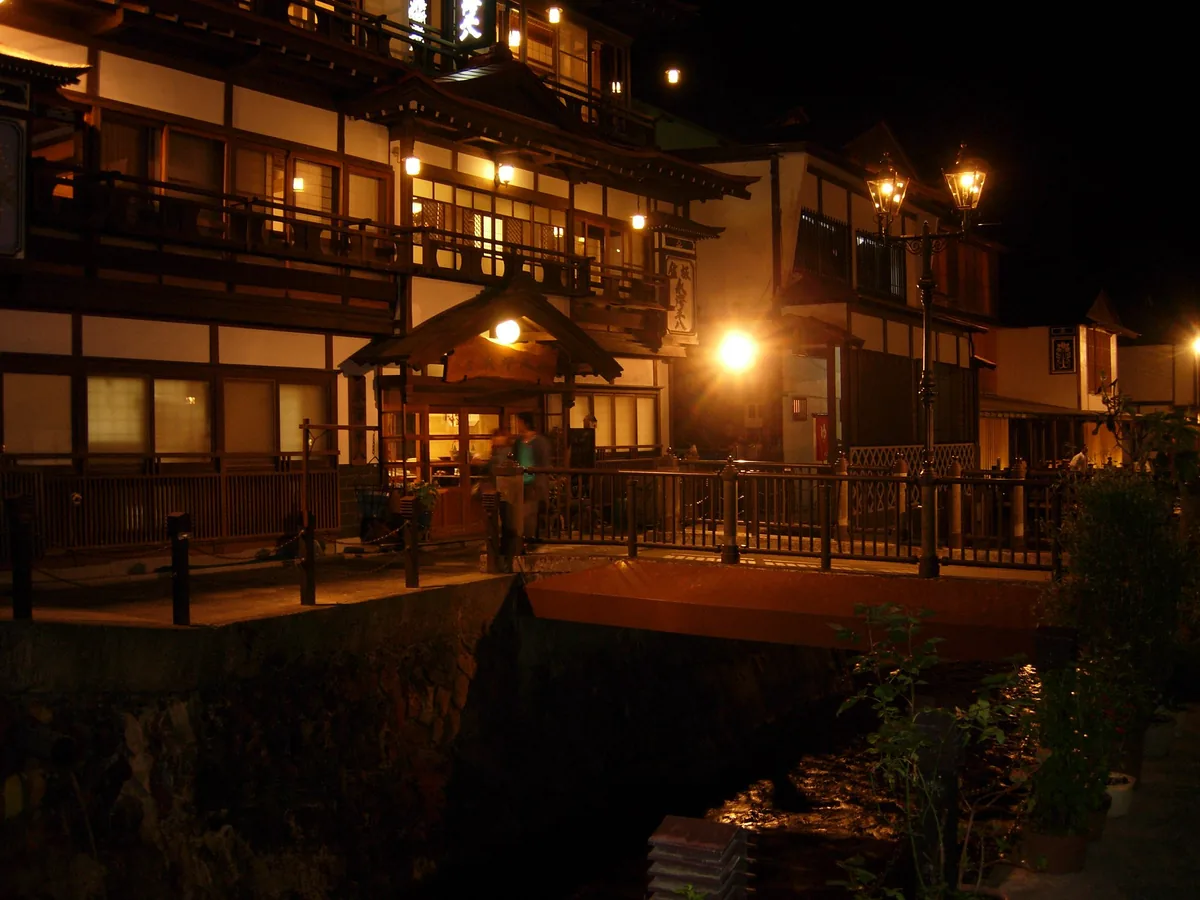
Curry Bread and the Taisho Romance Streetscape
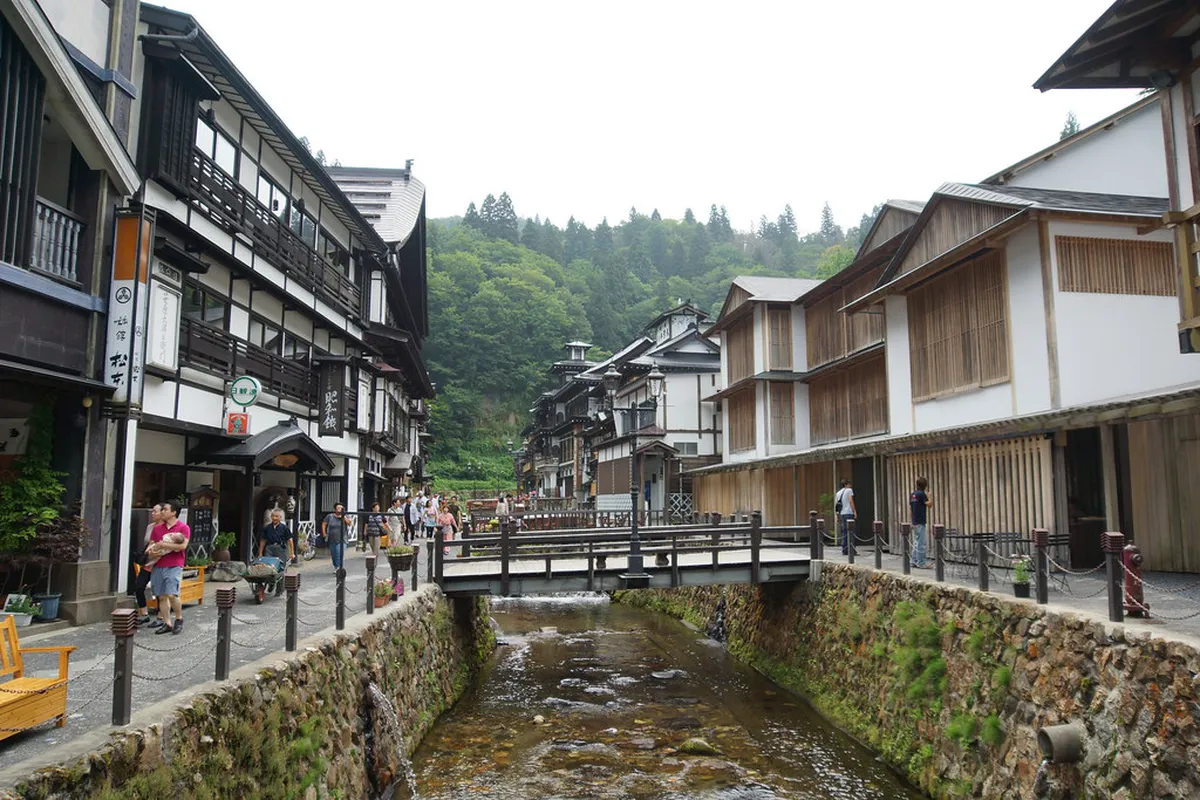
Ginzan Onsen's wooden ryokan were largely rebuilt in the early Showa period after Taisho-era flood damage between 1912 and 1926. Four-story balconies, latticed windows, and gas lamps along the Ginzan River give the street its retro look. Haikara-san's curry bread wrapper is designed to match that setting, with lettering and colors closer to an early-20th-century snack stand than a modern convenience store. Eating it while walking past the wooden balconies, with snow on the ground and the lamps lit, is the version of the experience most visitors picture. During the day, the same street looks plainer without the lamplight. A curry bread stop earlier in the day is more about the food than the atmosphere. Save photos of the lit street for an evening walk after dinner, once the shop itself has already closed for the day. The same contrast between snow and lamp light that appears in visitor photos online is often described as one of the town's defining winter scenes.
Local Attractions Near the Curry Bread Shop
This stall sits at the same end of town as several other stops covered in the Shirogane Falls and shrine walk. If a full soba lunch sounds better than another quick bite, Izu no Hana has served the town since 1952. It is covered separately in the soba and lunch guide. Combining the curry bread stop with one or two of these attractions keeps the outing focused, rather than turning a single snack into a full sightseeing itinerary.
The 60-minute costume rental is longer than the curry bread walking route, which takes well under an hour including a foot bath soak, so allocate them as separate time blocks if doing both.
- Shirogane Falls: a 30-meter waterfall at the far end of town inside Shirogane Park, reachable on foot from the curry bread stall.
- Yamanokami Shrine: a fertility shrine reached by a short uphill walk from the lower end of the street.
- Taisho-era clothing rental: costume shops offer a roughly 60-minute transformation course, a shorter 30-minute option, or an overnight rental from about 4:00 PM to 11:00 AM.
- Shirogane-yu public bath: a Kengo Kuma-designed bathhouse at the edge of town, for a full soak rather than just a foot bath.
Mistakes to Avoid and Practical Tips
Winter visits add a few extra logistics worth planning around. Snow piles up along the street, and indoor seating near the stall is limited. Eat quickly, or step under cover, such as the roofed area at Waraku Ashiyu, before the bread cools. Because the stall usually closes once it sells out, it does not reopen for dinner. Plan a separate evening meal instead. Guests staying overnight typically eat a kaiseki dinner at their ryokan, covered in the ryokan kaiseki guide. Day-trippers without a room booked can check the dinner without ryokan guide for other options. Confirm current hours for Shirogane-yu and the tofu shop directly, since small local businesses can adjust schedules without notice. Ginzan Onsen sits in Obanazawa City, Yamagata Prefecture, in Japan's Tohoku region. Most travelers reach it on the retro Ginzan Hanagasa-go bus from JR Oishida Station, which is served by the Yamagata Shinkansen.
How This Guide Was Verified
Food availability, access details, seasonal rules, and the time-sensitive claims in this guide were checked on August 22, 2026 against the official sources below. Independent restaurant menus, prices, opening days, and sell-outs can change, so confirm the operator's same-day notice before making a special trip.
Frequently Asked Questions
What time does the Ginzan Onsen curry bread shop open?
Confirm directly with the operator or at the counter. The current official town directory does not support a fixed 7:30 or 8:30 opening time, and no dependable mid-afternoon sell-out hour applies.
How much does Ginzan Onsen curry bread cost?
No fixed price is posted online, so check the amount at the counter when you buy. It is priced as a walking snack, cheaper than a sit-down soba lunch or a plate of namaage tofu nearby. Treat it as a low-cost add-on to whatever else you eat in town that day.
Where is the curry bread shop located?
Haikara-san's Curry Bread is at 451 Ginzan Shinhata, near the entrance to Shirogane Park. That is at the far end of the hot spring town, past the row of riverside ryokan. Shirogane-yu public bath sits at the same end of the street, so it doubles as a landmark.
Can you eat curry bread while walking around Ginzan Onsen?
Local etiquette favors eating near the stall or at a seated spot such as Waraku Ashiyu, rather than walking with food through the street. Look for a bin at the shop or the foot bath before you unwrap it. If none is visible, carry the wrapper with you until you find one.
How do you get to Ginzan Onsen for a curry bread trip?
A retro bus, the Ginzan Hanagasa-go, runs from JR Oishida Station, served by the Yamagata Shinkansen, into Ginzan Onsen. Ginzan Onsen itself is about 1 kilometer long, so the stall is a short walk from the bus stop. Confirm current schedules before you travel, since mountain-area services can shift with the season.
What makes the Nebarigoshi wheat in the bread different?
Nebarigoshi is a wheat variety grown in Yamagata Prefecture, and the shop uses it specifically for the curry bread dough. That regional sourcing is part of why the snack is marketed as a local specialty rather than a generic curry bun. It also ties the bread to the same Yamagata ingredients used at nearby soba and tofu shops.
Is the curry bread spicy?
Competitor accounts describe the filling as having a noticeable spicy kick rather than a mild, kid-friendly curry. Pair it with the milder namaage from Nogawa Tofu Shop if you want to balance the heat. Keep a drink on hand if you are sensitive to spice.
Is Ginzan Onsen curry bread available year-round?
Do not assume year-round daily availability. Check the operator's current opening notice and stock on the day, especially if this snack is a priority.
Free guide: Japan's Hidden Gems
12 under-the-radar places beyond Tokyo & Kyoto — with the best season to visit each and a local tip you won't find in the guidebooks.
You might also like


Continue reading
More guides you'll find useful


