14 Best Foods to Eat in Yamagata, Japan
What to eat in Yamagata: 14 regional dishes from Yonezawa beef to Ita Soba, with seasons, yen prices, and where to find each one in 2026.
On this page
Last updated August 2026, Yamagata Prefecture draws its kitchen from two directions: alpine farms to the east and the Sea of Japan to the west. Knowing what to eat in Yamagata means matching each dish to its season, since Imoni stew is an autumn tradition and Hiyashi Ramen is built for summer heat. This guide groups Yamagata's 14 defining dishes by region, from Yonezawa wagyu in the south to Shonai seafood on the coast, plus the seasonal and transit details needed to plan around them.
Yamagata's Food Geography: Why the Prefecture Cooks from Two Directions
Yamagata sits between a mountain ring and the Sea of Japan, and that split geography shows up on every menu in the prefecture. Central Yamagata, around the capital and Murayama, built its identity on soba and ramen, with soba houses radiating out along the Mogami River basin. Okitama, the southern region centered on Yonezawa, is wagyu country, raising cattle on strict routines that produce some of Japan's most marbled beef. Shonai, the coastal district around Sakata and Tsuruoka, runs on rice, sake, and seafood pulled straight from the Sea of Japan. Further north, the Mogami district around Shinjo leans on mountain vegetables, clean water, and chicken raised in its basin valleys. Rail and road links tie all four regions back to Yamagata City, which makes it the most practical single base for a multi-region food trip. According to JNTO's regional cuisine overview, that mix of mountain and coastal ingredients is what gives the prefecture its range.
14 Best Foods to Eat in Yamagata
The 14 dishes below run roughly south to north, from Okitama wagyu to Shonai seafood, with the season and best access noted for each one. Pair the list with the seasonal calendar further down the page before locking in travel dates.
Dondonyaki is described locally as a portable relative of okonomiyaki and remains a summer-festival snack across Yamagata. Accounts placing its origin in 1938 make it an established modern tradition, not yet a century old.
- Yonezawa Beef (米沢牛)
- Yonezawa Beef is registered for the Okitama production area and comes from never-calved Japanese Black female cattle meeting the brand's production rules.
- The official definition centers on origin and production criteria. Ask the restaurant for the exact beef and cut served.
- Sukiyaki and yakiniku are two common ways to order it, and pairing it with a bottle chosen from the sake and wine guide rounds out the meal.
- Imoni (芋煮)
- Imoni is Yamagata's autumn stew, built from taro root simmered with sliced beef, onions, and konnyaku in a soy-sauce broth.
- Yamagata City's version leans on beef and soy sauce, while the Shonai coast swaps in pork and miso, adding fried tofu and green onion.
- Locals gather riverside for imoni-kai parties each fall, and the regional breakdown by area lives in the imoni guide.
- Ita Soba (板そば)
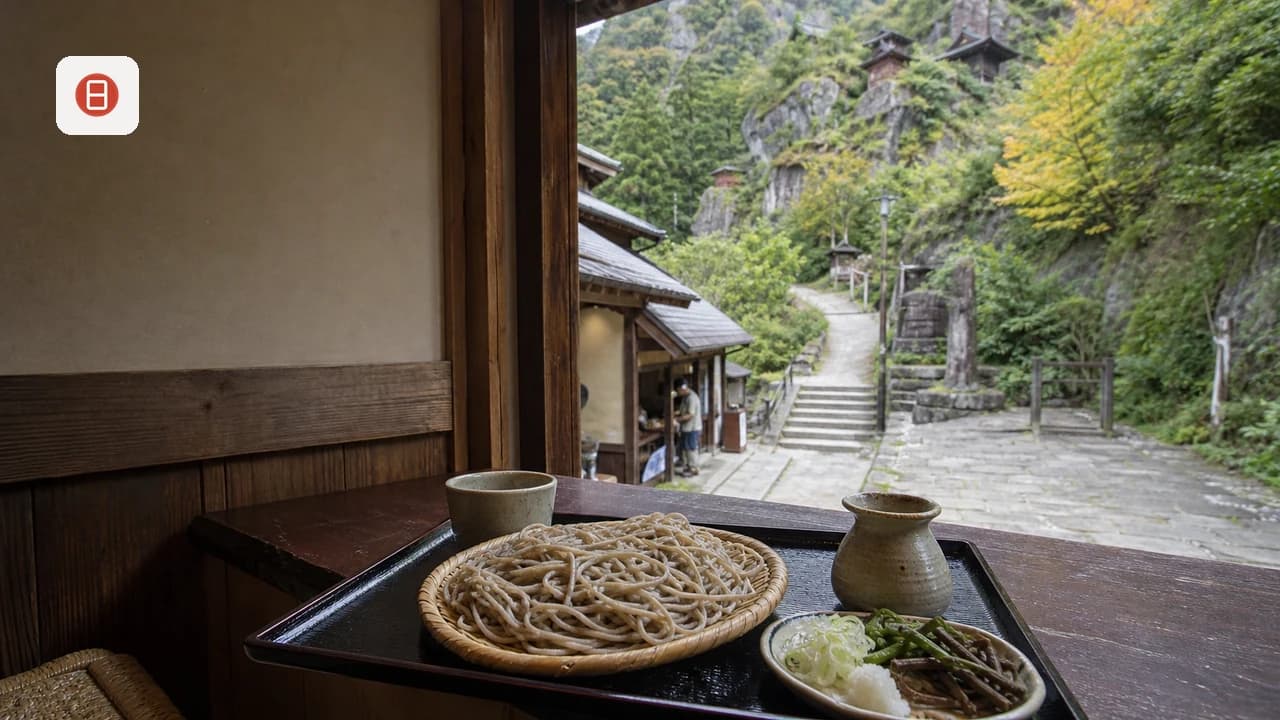
- Ita soba is buckwheat noodles made from unpolished flour and served in a shallow cedar box, giving it a darker color and a firmer, chewier bite than standard soba.
- The best-known shops cluster along the so-called Soba Highway through Murayama, Oishida, and Obanazawa, all set along the Mogami River basin.
- Route planning and shop picks by town are covered in the soba guide.
- Hiyashi Ramen (冷やしラーメン)
- Hiyashi ramen is a full bowl of soy-based ramen served cold, broth and all, not the sesame-and-vinegar hiyashi chuka found elsewhere in Japan.
- Sakaeya Honten in Yamagata City is credited with inventing the dish, chilling the broth with ice cubes made from the same soy stock so the flavor holds as they melt.
- It's built for summer heat, and it's one of the styles detailed in the ramen guide.
- Yonezawa and Sakata Ramen
- Yonezawa ramen uses a light shoyu broth built from chicken bones and dried sardines, with thin, wavy noodles left to mature for two to three days before cooking.
- Sakata ramen, from the coastal north, leans on kelp and dried sardines or flying fish for a seafood-forward broth, topped with thin wontons.
- Both differ sharply from Yamagata City's own ramen culture, where household ramen consumption ranks among Japan's highest, according to JNTO.
- Hippari Udon (ひっぱりうどん)
- Hippari udon comes from Murayama and is pulled straight from the cooking pot at the table, a name that roughly translates to 'to pull.'
- It's dipped in a sauce built from natto and canned mackerel, a texture and flavor combination that can catch travelers unused to fermented soybeans off guard.
- Order it as a change of pace from soba or ramen if that flavor profile sounds appealing rather than off-putting.
- Yamagata Dashi (だし)
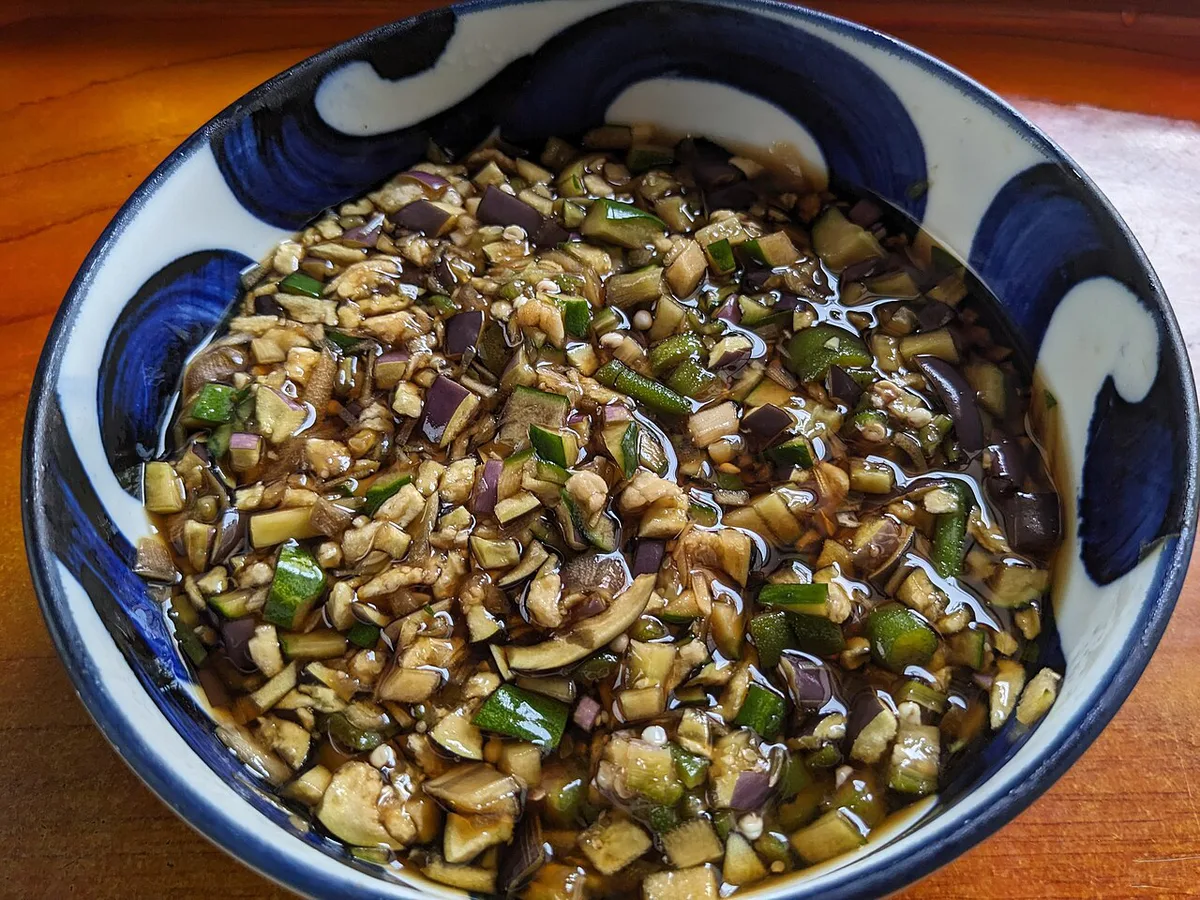
- In Yamagata, dashi is not soup stock; it's a chopped-vegetable relish of eggplant, cucumber, okra, shiso, and ginger buds, mixed with soy sauce, vinegar, and natto kelp.
- It's spooned over rice or cold tofu and stays strictly a summer dish, since it depends on fresh garden vegetables.
- Expect a slightly slimy texture from the natto kelp binder; that's normal, not a sign anything has gone wrong.
- Sato Nishiki Cherries
- Sato Nishiki is Yamagata's signature cherry variety, prized for its balance of sweetness and acidity.
- Official tourism guidance places the broader cherry season roughly from early June to mid-July, with exact harvest dates depending on the orchard and weather.
- Outside that window, look for cherry-flavored sweets instead, detailed in the fruit and desserts guide.
- Dadacha-mame (だだちゃ豆)
- Dadacha-mame is a Tsuruoka-grown edamame variety with smaller, fuzzier pods and a richer, sweeter aftertaste than standard edamame.
- Fresh pods are sold roughly from July through September; outside that window, look for it worked into mochi, dorayaki, or roll cakes.
- It grows in a small, defined pocket of Tsuruoka City, which keeps supply tighter than ordinary edamame.
- Shonai Coastal Seafood: Gandarajiru and Iwagaki
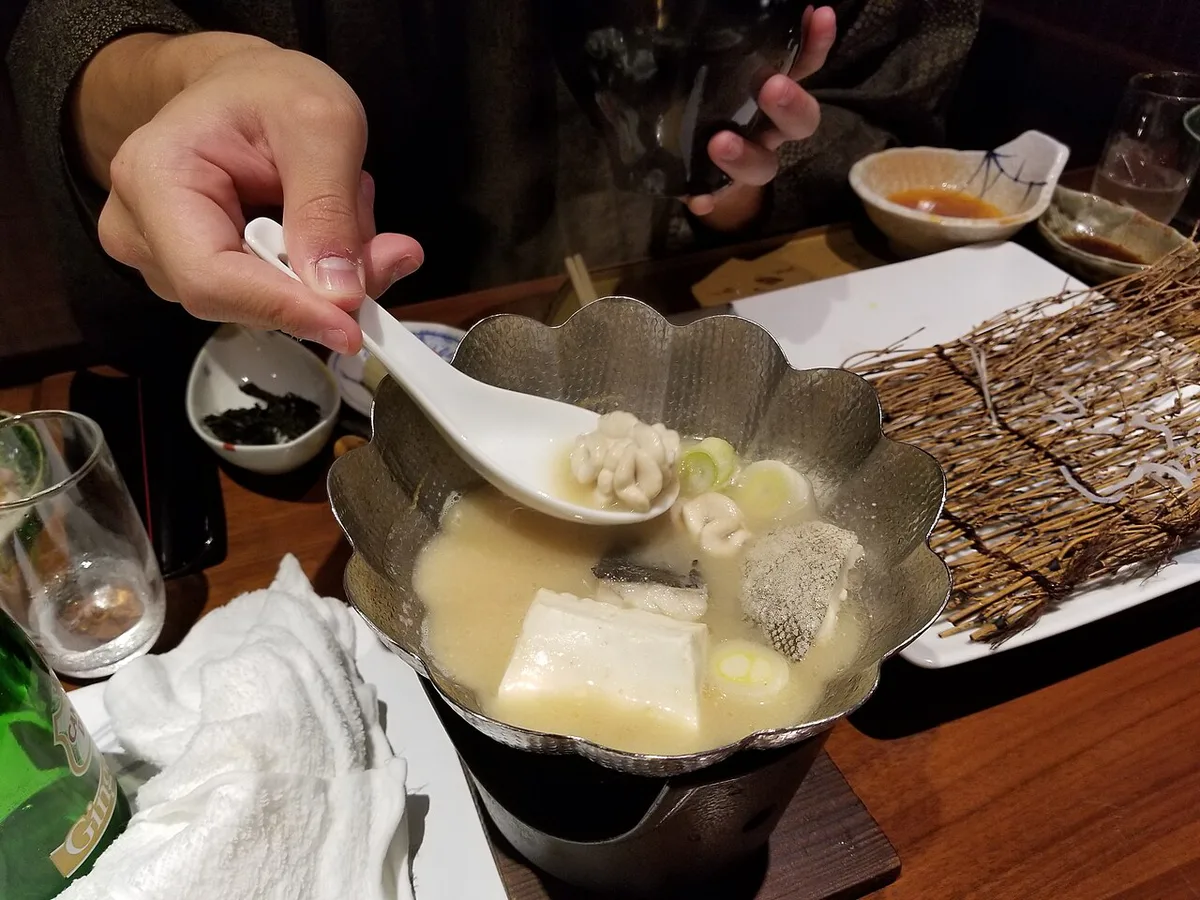
- Gandarajiru is a winter cod soup made from pacific cod, using the flesh, bones, and organs for the broth, and it's Shonai's answer to cold-weather comfort food.
- Iwagaki are wild rock oysters harvested in July and August, sometimes called 'summer oysters' since the season runs opposite the winter oyster harvest found elsewhere in Japan.
- Sakata and Tsuruoka are the two anchor towns for both dishes along the Shonai coast.
- Jingisukan (Zao Lamb)
- Jingisukan, thin-sliced grilled lamb cooked on a dome-shaped grill over vegetables, is usually associated with Hokkaido but has a following around Zao as well.
- The lamb's juices drip down to season the vegetables underneath as it cooks, and it's typically served as a set with rice and side dishes.
- Zao is better known for skiing and hot springs, so treat the grilled lamb here as a detour rather than the headline dish.
- Tama Konnyaku (玉こんにゃく)
- Tama konnyaku shapes konjac into small balls, skewers them, and simmers them for hours in a soy-sauce broth, finished with a dab of mustard.
- It's a festival-stall staple across the prefecture and a common izakaya order, typically priced at a few hundred yen per skewer at shops like Tanno Konnyaku.
- The texture leans gelatinous, closer to oden than to a typical snack, so the bite is more about the sauce than the konjac itself.
- Dondonyaki (どんどん焼き)
- Dondonyaki is Yamagata City's stick-mounted take on okonomiyaki, wrapped around a wooden skewer for eating on the move.
- It traces back to 1938, when Kamekichi Oba in the Murayama area rolled a firmer version of monjayaki around a stick for easier handling.
- Look for it heavily at summer festivals and near Kajo Park, usually topped with okonomiyaki sauce and mayonnaise.
- Fuuki Mame (ふうき豆)
- Fuuki mame is a simple souvenir sweet of green peas boiled with sugar until fluffy, eaten in Yamagata since the Meiji era.
- It's sold in shops rather than served in restaurants, and the freshest boxes last only about three days, so buy it close to departure.
- It travels well as a snack for the Shinkansen ride out of Yamagata Station.
When to Visit for Which Dish: Yamagata's Seasonal Food Calendar
Several Yamagata dishes peak in a season, so timing takes planning. Imoni culture is strongest in autumn, and the 38th Yamagata Imoni Festival is scheduled for September 20, 2026 on the Mamigasaki River. Hiyashi ramen, Yamagata dashi, dadacha-mame, and iwagaki oysters cluster in summer, while gandarajiru is tied to winter cod. Yonezawa beef, ita soba, tama konnyaku, and restaurant imoni can appear year-round; confirm the intended menu before travel.
| Season | Dishes | Note |
|---|---|---|
| Early summer (Jun-Jul) | Sato Nishiki cherries | Peak harvest; orchards open to visitors |
| Summer (Jul-Sep) | Hiyashi ramen, Yamagata dashi, dadacha-mame, iwagaki oysters | Built around fresh vegetables and the coastal oyster season |
| Autumn (Sep) | Imoni | Imoni-kai season, centered on the Autumn Imoni Festival |
| Winter (Dec-Feb) | Gandarajiru | Tied to the cold-weather pacific cod catch |
| Year-round | Yonezawa beef, ita soba, tama konnyaku, regional ramen | Available in restaurants throughout the prefecture |
Where to Base a Yamagata Food Trip
Four clusters cover most of this list without much backtracking. Around Yamagata Station, Shojiya serves both hot and cold soba, including ita soba portions, about a five-minute walk from the platforms. Sakaeya Honten, the shop credited with inventing hiyashi ramen, sits a short trip further into the city. On the Soba Highway, Murayama, Oishida, and Obanazawa hold the highest concentration of dedicated soba shops, and they're best reached by car or local bus rather than on foot. In Yonezawa, restaurants built around the local wagyu range from casual yakiniku counters to full sukiyaki courses, and a single overnight there is usually enough to fit in a wagyu dinner and a same-day return north. On the Shonai coast, Sakata Fish Market and the nearby roadside stations are the most direct route to iwagaki oysters and gandarajiru in season, and Tsuruoka's town center holds shops selling dadacha-mame sweets for travelers short on time to visit the fields directly. Near Zao, grilled-lamb restaurants sit alongside the ski and onsen area, making jingisukan an easy add-on to a hot-spring day. The attractions guide covers Yamadera and Zao logistics for pairing sightseeing with the food stops above. Confirm current hours before visiting, since opening days and seasonal menus change.
Budgeting for a Yamagata Food Trip
Yamagata does not run on one price tier. A skewer of tama konnyaku is generally a snack purchase, while Yonezawa beef, fruit gift boxes, and restaurant courses require current menu checks. Rail-pass prices are unrelated to food and can change, so confirm them directly with JR East rather than using an old amount as a meal-budget anchor. Building a day around noodles, snacks, and one larger restaurant meal keeps costs more predictable.
A JR East rail pass may help connect Yamagata City, Yonezawa, and the Shonai coast, but check the operator's current price, validity period, and coverage before purchase.
| Item | Local Price | Context |
|---|---|---|
| Tama konnyaku skewer | a few hundred yen | Festival stalls and shops like Tanno Konnyaku |
| JR EAST PASS (Tohoku area) | Check current JR East price | Verify current validity and coverage |
| Sato Nishiki cherries | Check current orchard or retailer price | Gift grades and pack sizes vary |
| Yonezawa beef dinner vs. Ita Soba lunch | no fixed figure available | Beef costs noticeably more, reflecting the 32-month fattening period |
Mistakes to Avoid When Eating Your Way Through Yamagata
A few local quirks trip up first-time visitors more than anything else on this list. Most are easy to plan around once you know they're coming. Reading through them before booking transit or restaurants avoids the most common frustrations.
- Confusing Yamagata dashi with soup stock
- Ordering 'dashi' expecting a broth gets a chopped-vegetable relish instead, since it's a topping for rice or tofu, not a soup base.
- The name overlap with standard Japanese dashi is a genuine source of confusion for first-time visitors.
- Chasing fresh cherries outside June and July
- Sato Nishiki season runs from roughly June into July, so an autumn or winter visit means looking for cherry-flavored sweets rather than fresh fruit.
- Orchards and gift shops still sell cherry sweets and drinks well outside the harvest window.
- Skipping transit planning for the Soba Highway
- Murayama, Oishida, and Obanazawa are strung along the Mogami River basin without dense train coverage, so a rental car or local bus beats trying to walk between shops.
- Building in transit time upfront avoids a wasted afternoon chasing a specific shop.
- Underestimating Hippari Udon's dipping sauce
- The natto-and-mackerel dip is a genuine local favorite, but its fermented smell and sticky texture catch first-time visitors off guard.
- Ordering a smaller portion first is a reasonable hedge if unsure about the flavor.
Yonezawa Beef vs. Yamagata Beef: What the Menu Label Means
Yonezawa Beef and Yamagata Beef are related, but they are not interchangeable labels. Yamagata Beef is a wider prefectural brand for carefully graded Japanese Black cattle raised in Yamagata Prefecture. Yonezawa Beef is the more tightly defined regional specialty from the Okitama area, centered on Yonezawa, Nanyo, and Takahata.
For travelers, the practical rule is simple: a menu advertising Yonezawa Beef should identify the cut or dish clearly. A menu saying only Yamagata Beef can still be excellent wagyu, but it does not automatically mean the beef qualifies as Yonezawa Beef.
- Choose Yonezawa Beef in Yonezawa for a destination-specific wagyu meal.
- Choose Yamagata Beef elsewhere for a broader local beef option.
- Ask whether the restaurant serves certified Yonezawa Beef when the wording is unclear.
Sukiyaki highlights the sweet fat and tender slices. Yakiniku works well when you want to compare individual cuts over the grill.
How This Guide Was Verified
Food availability, access details, seasonal rules, and the time-sensitive claims in this guide were checked on August 22, 2026 against the official sources below. Independent restaurant menus, prices, opening days, and sell-outs can change, so confirm the operator's same-day notice before making a special trip.
Explore food in other cities
Frequently Asked Questions
What is the single most iconic dish to eat in Yamagata?
Yonezawa beef and imoni are two dishes closely tied to Yamagata. Riverside imoni gatherings peak in autumn, while restaurants may serve imoni bowls and Yonezawa beef at other times of year. Confirm the intended menu.
Is Yamagata ramen one specific style?
No single style defines it; Yamagata ramen covers Yonezawa's light chicken-and-sardine broth, Sakata's seafood-forward bowls, and the city's own cold hiyashi ramen. Yamagata City itself records some of Japan's highest household ramen consumption.
When is the best time to try Imoni?
Imoni culture peaks in autumn. The 2026 Yamagata Imoni Festival is scheduled for Sunday, September 20 on the Mamigasaki River, while restaurants may offer bowls outside the festival season.
How much should travelers plan to spend on Yonezawa beef?
There's no single official menu price to quote, but a sukiyaki or yakiniku dinner featuring Yonezawa beef costs meaningfully more than an ita soba lunch on the Soba Highway. Treating it as the trip's one splurge meal, alongside cheaper days of noodles and festival snacks, keeps the overall budget reasonable.
Do travelers need a car to eat well in Yamagata?
A car helps for reaching rural soba areas, while Yamagata City, Yonezawa, Sakata, and Tsuruoka have rail access. Check current JR fares or pass terms directly with the operator rather than relying on an old fixed price.
How does Yonezawa beef compare to Kobe beef?
Both rank among Japan's best-known wagyu, but travel coverage describes Yonezawa beef as available at a notably more affordable price than Kobe beef, without a major gap in marbling quality. Sukiyaki and yakiniku remain the two most common ways to try it in Yonezawa itself.
What should vegetarians know about Yamagata's specialties?
Most signature dishes, including Imoni, Yonezawa beef, and the various ramen styles, are built around meat or fish broth, so options narrow quickly outside of tama konnyaku, dadacha-mame, and Yamagata dashi. Confirming ingredients directly with a restaurant is the most reliable approach, since broths often include fish or meat stock even when a dish looks plant-based.
Explore Yamagata Food and Dining
Use these guides to compare local dishes, dining areas and practical food experiences in Yamagata.
Food and Dining Guides
- Yamagata Imoni Guide: Riverside Stew, Regional Styles, and Festival Tips
- Yamagata Ramen Guide: 5 Regional Styles and Top Shops for 2026
- Yamagata Soba Guide: Ita Soba, Where to Eat & Soba-Making Workshops
- Yamagata Fruit and Desserts: A 2026 Guide to Orchards and Parfaits
- Yamagata Sake and Wine Guide: Breweries, Wineries, and Tastings
Free guide: Japan's Hidden Gems
12 under-the-radar places beyond Tokyo & Kyoto — with the best season to visit each and a local tip you won't find in the guidebooks.
You might also like


Continue reading
More guides you'll find useful