Yamadera Tama Konnyaku: The Power Snack of Risshaku-ji
Yamadera tama konnyaku (chikara-konnyaku): where stalls cluster, what a skewer costs, and what to ask before the 1,015-step climb.
On this page
Last updated August 2026. Yamadera tama konnyaku is the soy-simmered, ball-shaped konjac skewer sold along the stone path up to Risshaku-ji temple in Yamagata Prefecture. Vendors call it chikara-konnyaku, or power konjac, because generations of climbers eat a skewer before tackling the temple's 1,015 stone steps. This guide covers where the stalls cluster, what the broth actually contains, and what to check before you eat if you follow a vegetarian or gluten-free diet.
What Is Yamadera Tama Konnyaku?
Tama konnyaku means ball-shaped konjac: bite-sized spheres of konjac, roughly 3 centimeters across, simmered for hours in a soy-sauce broth. Vendors thread three balls onto a skewer and serve them hot from large iron pots. These pots line the approach to Risshaku-ji, the clifftop temple complex better known as Yamadera. Locals call the snack chikara-konnyaku, or power konjac, because it has become a customary bite before the temple's 1,015-step climb to the main hall. Texture comes first: a firm, springy bite gives way to broth that has soaked all the way through, with a mild sweetness under the soy. Round konjac balls also set Yamagata apart from the rectangular blocks and noodle-style konjac sold elsewhere in Japan. Menus at sit-down restaurants rarely list it as a headline dish; it belongs more to the walk up to the temple than to a formal meal. For a wider view of the town's food scene, check the Yamadera food guide.
Chikara-Konnyaku: The Power Snack for the Climb
The legend behind chikara-konnyaku traces to the monk Jikaku Daishi, also known as Ennin, who founded Risshaku-ji in the Heian period. Ennin brought konjac back from China, according to the Ministry of Agriculture, Forestry and Fisheries. He introduced it into the temple's vegetarian meals, and the practice spread to nearby villages over time. Shojin ryori, the Buddhist vegetarian cooking style used in temple kitchens, traditionally avoids meat, fish, and strong seasonings, which is part of why a plain, soy-simmered konjac fit the original recipe so well. That vegetarian origin makes the modern seafood-based broth an ironic twist worth knowing before you order. Pilgrims needed strength for the 1,015 steps to the summit, so the snack picked up its power-konjac nickname. Credit for the ball-shaped style goes to a specialty konjac shop at the foot of Mount Chitose, established in 1926. Tamakon is a registered trademark of Hiranoya Co. Watch the balls simmer in a soy broth until they darken to a deep tan-red. Longer simmering means a deeper color and a fuller flavor. Steam rising off the iron pots along the path is often the first sign of a stall, before the skewers themselves come into view. Eating one does not deliver a real energy boost. Konjac is mostly water and fiber, so the lift before the climb is more about mindset than fuel. That reputation eventually grew into a description of tama konnyaku as Yamagata soul food more broadly, though Yamadera is where the custom began.
Where to Buy Tama Konnyaku Along the Approach
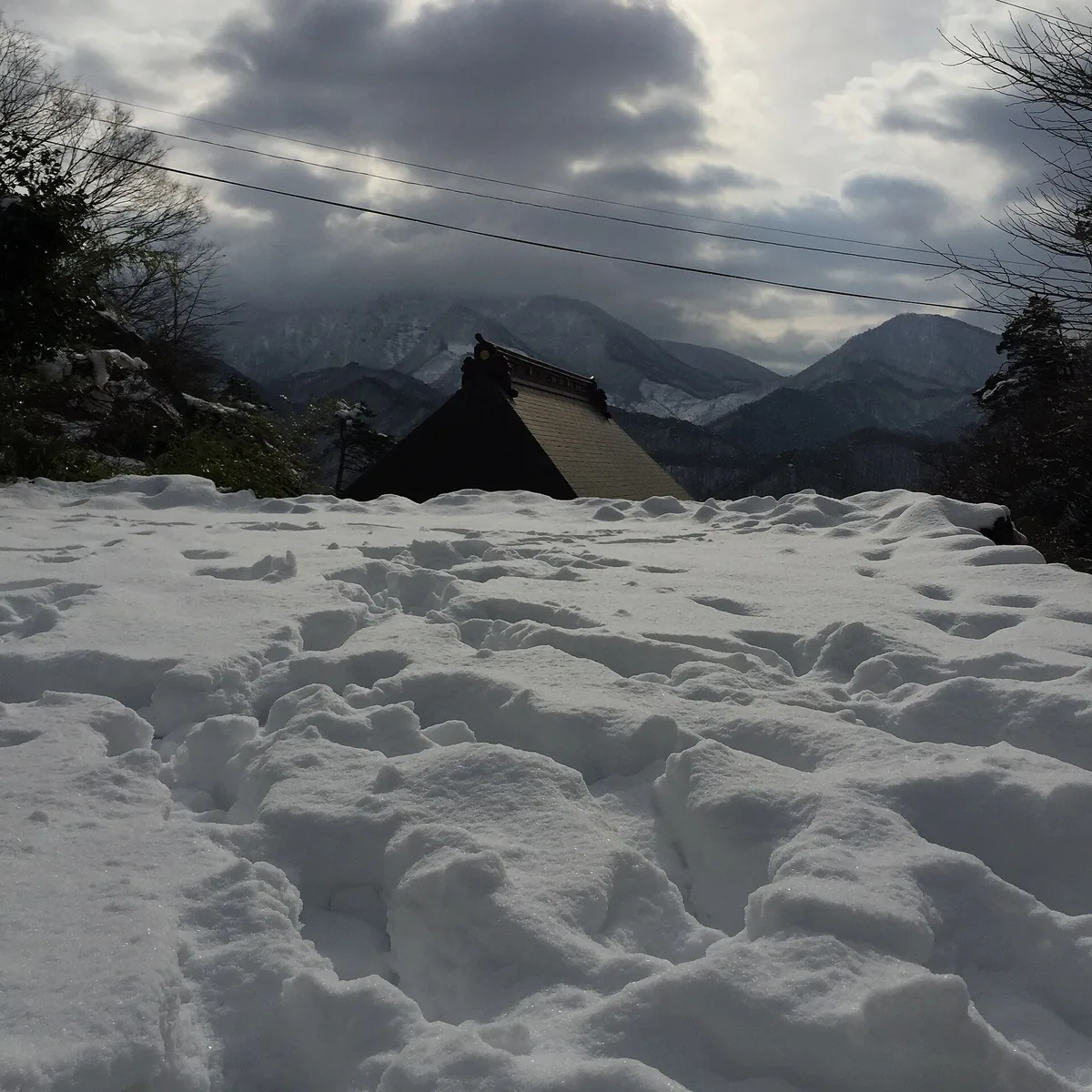
Stalls selling tama konnyaku cluster in three spots between JR Yamadera Station and the temple's Konpon Chudo main hall. Each stop has a different feel, worth knowing before you commit cash to a skewer. Look for the aroma of a soy-based hot pot drifting from a stall entrance. Darker konjac in the pot usually means a longer simmer and a deeper flavor. A stall with a steady line of local visitors, not only tour groups, is usually working through a fresh batch rather than a pot that has sat since morning. Near Hoju Bridge, Taimenseki serves ita soba alongside konjac dishes, with river views over the water. Enzou Yamadera, right by the station, also serves chilled tofu and other noodle dishes if you want more than a skewer before you start walking. Closer to the temple gate, stalls sell skewers as the last stop before the climb begins, and vendors there tend to keep pots going through the day during busy seasons. Hours at the smallest gate stalls shift with the season and weather, unlike the sit-down shops with posted hours.
| Area | What You'll Find | Practical Notes |
|---|---|---|
| Station approach (near JR Yamadera Station) | Enzou Yamadera, serving ita soba and local dishes | Confirm current hours, closing day, and konnyaku availability directly |
| Hoju Bridge area | Taimenseki, ita soba and dumpling dishes with river views | Confirm current hours and closing day directly |
| Temple gate stalls (before the 1,015 steps) | Seasonal skewers and snacks | Check the current price and payment method at the stall |
The Station-to-Temple Walking Route
Walking from the station to the summit follows one clear line, so it helps to know what comes in what order before you start.
Train and stall details can change. Check the current JR timetable and the vendor's displayed price rather than relying on an older ¥100-¥200 range.
- Exit JR Yamadera Station and head toward the river; the walk to the trailhead takes about 5 minutes.
- Reach the Hoju Bridge area, where Taimenseki and nearby shops serve ita soba, dumplings, and konnyaku with river views.
- Continue along the approach road toward the temple gate, where stalls run pots of tama konnyaku for the last stretch before the entrance.
- Eat the skewer at the gate stalls, then begin the 1,015-step climb to Konpon Chudo without food in hand.
Is Yamadera Tama Konnyaku Vegetarian or Gluten-Free?
Tama konnyaku looks plant-based at a glance, since konjac itself comes from a root vegetable and carries very few calories on its own. The broth is where the complication starts. Traditional recipes simmer soy sauce with dried squid, known as surume, for extra umami, a method MAFF's regional cuisine record lists among the standard ingredients for the dish. A default skewer at a given stall may not be vegetarian, even though nothing about its appearance signals seafood. That contrast matters most for visitors who assumed a temple-adjacent snack would automatically follow the temple's original vegetarian rules. Soy sauce itself typically contains wheat, so the broth is not reliably gluten-free either. Celiac travelers should treat any stall broth as suspect unless a vendor confirms otherwise. Karashi, the yellow mustard served alongside most skewers, also carries far more heat than Western yellow mustard. Start with a small dab on the edge of the skewer rather than a full coating, then add more only if you want the extra kick. Travelers who prefer to skip the uncertainty entirely can bring a packed lunch instead; picnic tables sit near the stalls for exactly that purpose.
| Diet | Watch For | What to Ask |
|---|---|---|
| Vegetarian or vegan | Traditional broth often simmered with dried squid (surume) for umami | Kore wa nan de dekite imasu ka? (What is this made of?) |
| Gluten-sensitive | Soy sauce broth typically contains wheat | Confirm with the vendor before ordering; carrying a backup snack is the safer option |
| Spice-sensitive | Karashi mustard is notably hotter than Western yellow mustard | Ask for a small dab, or request it on the side |
Cost, Cash, and Timing for Your Visit
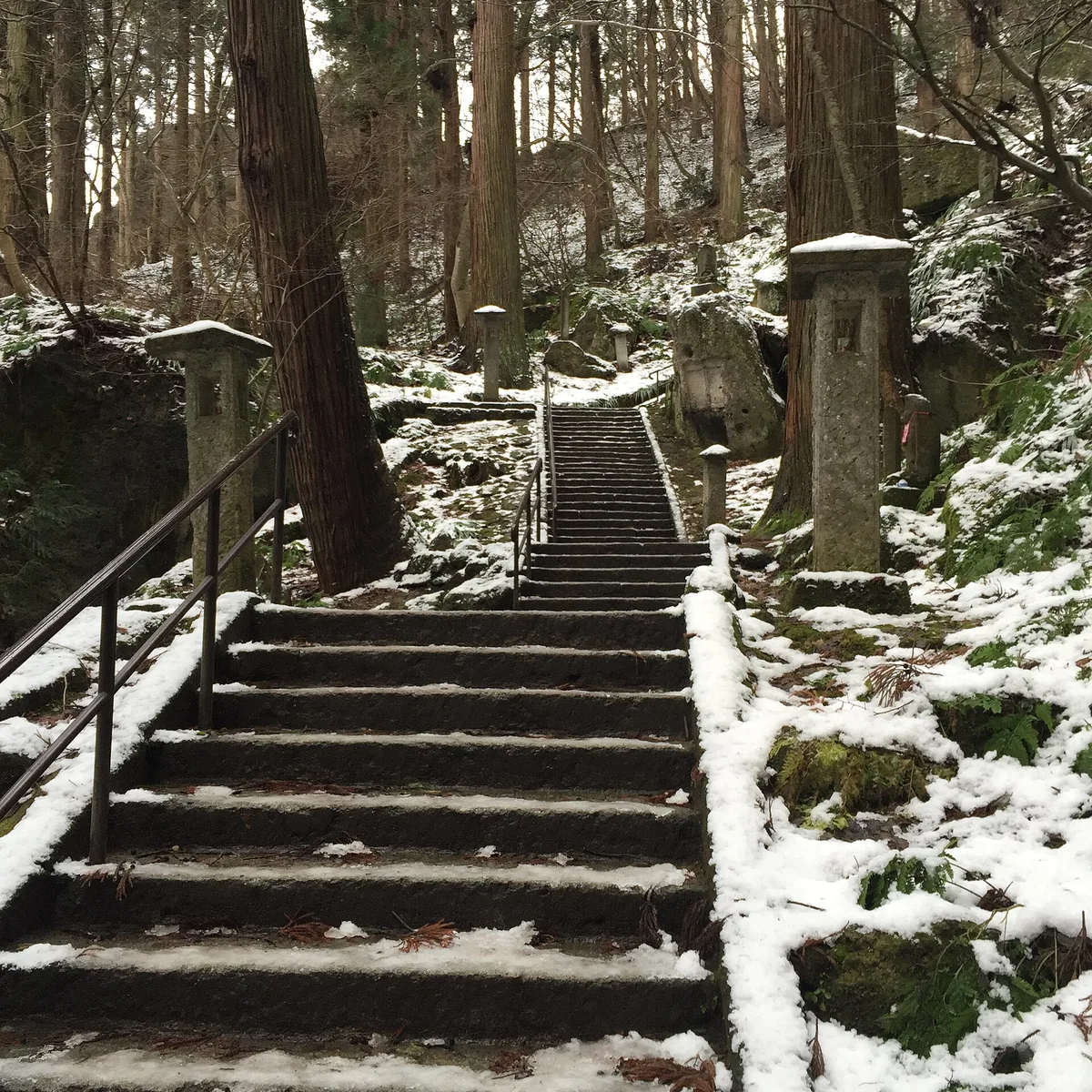
Budgeting for tama konnyaku is simple once you know the numbers. A short phrase also goes a long way at a small stall: Tama konnyaku wa arimasu ka, meaning do you have tama konnyaku, is usually enough to get a nod and a skewer. Travelers starting from Tokyo typically ride the Yamagata Shinkansen to Yamagata Station or the Tohoku Shinkansen to Sendai Station, then transfer onto the JR Senzan Line for the final leg. Eat the skewer before you start climbing rather than on the steps themselves. Risshaku-ji's stairway is a working pilgrimage route, and food on the move is discouraged there. Finish at the stall, then use its dedicated bin for the wooden skewer instead of carrying it up the mountain. Small stalls rarely accept cards, so carry coins and small bills before you set out from Yamadera Station.
Despite the 'power' nickname tied to the 1,015-step climb, a skewer provides only 10 to 20 kcal, so the real boost comes from mindset rather than nutrition.
- Price and payment: check the current stall notice; carry cash as backup
- Souvenir packs: price, ingredients, and storage life vary by producer
- Getting to Yamadera: about 18 minutes from Yamagata Station or roughly 70 minutes from Sendai on the JR Senzan Line
- On foot: about a 5-minute walk from Yamadera Station to the base of the stone steps
- Season: ask which stalls and products are available on your visit date rather than assuming year-round sales
Pairing Tama Konnyaku with the Rest of Yamadera's Menu
A single skewer rarely counts as a full meal, so most visitors pair it with something more substantial. Ita soba, a rustic buckwheat noodle served cold on a wooden board with a dipping broth, is the other dish tied to Risshaku-ji's history. Tradition calls for diluting the leftover dipping broth with noodle water and drinking it at the end of the meal, a custom you will see at most soba counters in the area. For a closer look at that noodle tradition, see the Yamadera Soba Restaurants: Where to Eat Before and After the Climb. Autumn travelers often add imoni, a taro-root stew cooked in a shared pot with other seasonal vegetables. Imoni gatherings, where a shared pot simmers outdoors, are a Yamagata autumn custom, and the stew pairs taro root with beef or pork depending on the recipe. The imoni and local dishes guide covers where to find it nearby. After the climb, several shops near the base sell frozen fruit pops and soft-serve in local flavors. Check the sweets and gelato guide for post-hike options. To plan a full midday stop around the temple, check the Where to Eat Lunch in Yamadera: 7 Best Spots Near Risshaku-ji. For the temple grounds themselves, the Yamadera attractions guide covers what to see beyond the food stalls.
How This Guide Was Verified
Food availability, access details, seasonal rules, and the time-sensitive claims in this guide were checked on August 22, 2026 against the official sources below. Independent restaurant menus, prices, opening days, and sell-outs can change, so confirm the operator's same-day notice before making a special trip.
Frequently Asked Questions
How many calories are in a skewer of Yamadera tama konnyaku?
A skewer runs roughly 10 to 20 kcal before sauce, since konjac is mostly water and dietary fiber with almost no starch or fat.
Can you buy tama konnyaku as a souvenir to take home?
Packaged versions may be available at supermarkets and roadside stations. Check the current price, ingredients, storage instructions, and use-by date on the product.
Is tama konnyaku chewy or soft?
It has a bouncy, firm bite, closer to dense gelatin than soft tofu. The soy broth usually soaks all the way through, so flavor comes with the texture.
Is Yamadera tama konnyaku vegetarian?
Not always: many traditional stalls simmer the broth with dried squid for extra flavor, so vegetarians should ask before ordering.
How much does a skewer cost, and do stalls take cards?
Prices, portions, and payment methods vary by stall. Check the current counter notice and carry cash as backup rather than relying on a fixed ¥100-¥200 range.
Does eating chikara-konnyaku actually give you energy for the climb?
Not in a measurable way: konjac is low in calories and mostly water, so the boost is more about mindset than fuel before the 1,015 steps.
Is it okay to eat tama konnyaku while walking up the steps?
Most vendors expect a skewer to be finished before the climb begins, since eating on the stairway is discouraged and a trash bin at the stall is the proper place for the used stick.
What does chikara-konnyaku mean, and is it different from regular tama konnyaku?
Chikara-konnyaku, or power konjac, is simply the Yamadera nickname for the same soy-simmered ball-shaped konjac sold elsewhere in Yamagata, tied specifically to the temple's 1,015-step climb.
Free guide: Japan's Hidden Gems
12 under-the-radar places beyond Tokyo & Kyoto — with the best season to visit each and a local tip you won't find in the guidebooks.
You might also like


Continue reading
More guides you'll find useful