

Yaeyama Soba in Ishigaki: Where to Eat It and How to Order
Yaeyama soba in Ishigaki: mild pork-bonito broth, round noodles, and condiments like piparts and koregusu, plus where to eat from downtown to Yonehara.
On this page
Last updated August 2026: Yaeyama soba is a wheat-noodle soup commonly made with pork-and-bonito broth and topped with pork and fish cake. Many specialist shops focus on lunch, but hours and sell-outs vary by day. This guide walks through the condiments, ordering logistics, and a shortlist of shops from downtown Ishigaki Port Terminal to the northern coast.
Yaeyama Soba in Ishigaki: What Makes the Bowl Different
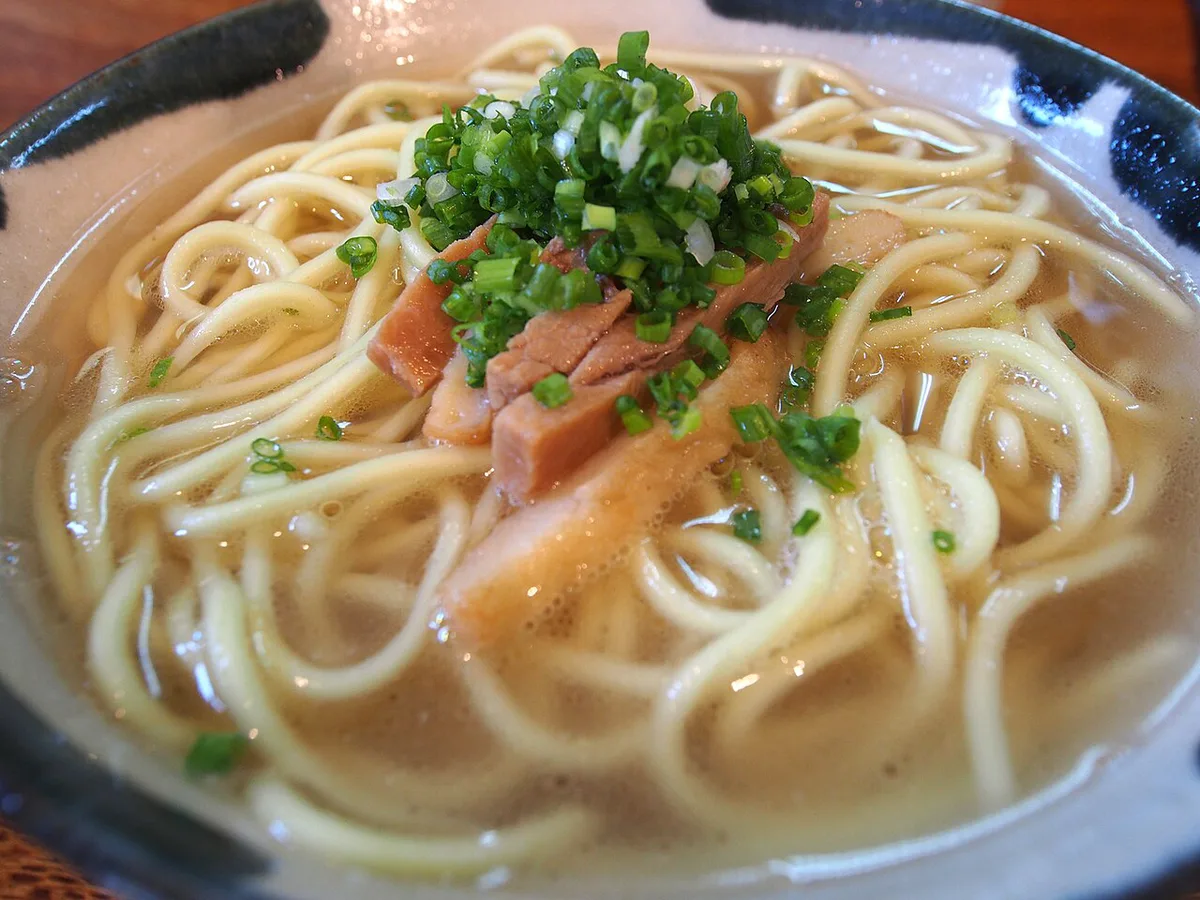
Yaeyama soba is Ishigaki's daily noodle staple, and it has nothing to do with buckwheat despite the name. The noodles are wheat-based, round, and thin, closer in texture to udon than to mainland Japanese soba. According to Visit Ishigaki's food guide, the broth blends skipjack tuna, pork bone stock, and konbu seaweed into a mild base. Locals top it with shredded pork and kamaboko fish cake rather than the thick pork slices used on Okinawa's main island. Sprinkle on island pepper or a chili condiment to adjust the heat yourself, since the kitchen keeps the base broth gentle.
Yaeyama Soba vs Okinawa Soba: Noodles, Broth, and Toppings
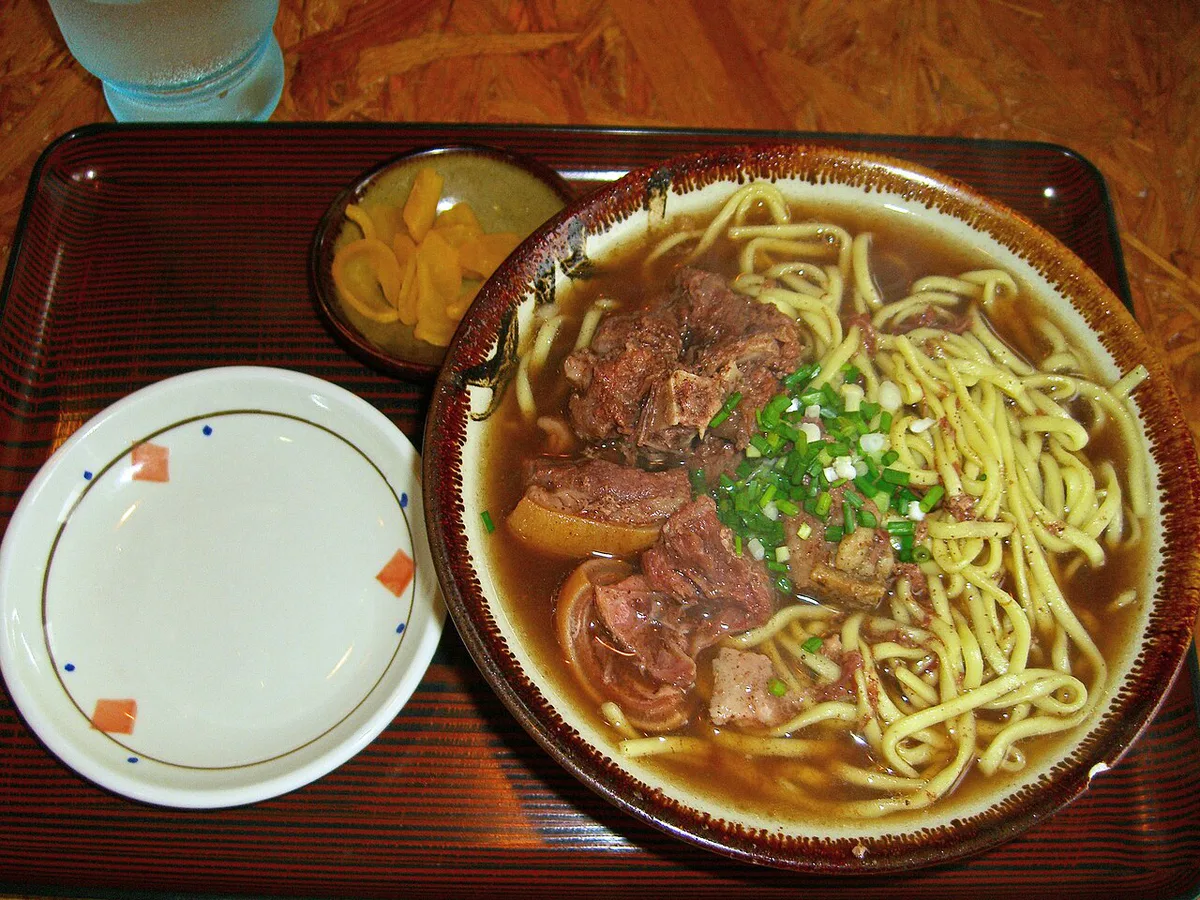
Yaeyama soba and Okinawa soba are often confused; both are wheat noodle soups from Okinawa Prefecture, but they diverge in three concrete ways. Noodle shape is the fastest tell, and it holds up even in a blind taste test. Toppings shift too, from Ishigaki's shredded pork and kamaboko to the thick pork belly or soki rib meat common on the main island. Condiments diverge as well, with island pepper standard in Yaeyama and red pickled ginger favored up north. Knowing the difference matters most when a menu just says soba without naming a style.
| Feature | Yaeyama Soba (Ishigaki) | Okinawa Soba (Main Island) |
|---|---|---|
| Noodle shape | Round, straight, thin | Flat, wide, slightly wavy |
| Toppings | Shredded pork and kamaboko fish cake | Thick pork belly (sanmai-niku) or soki rib |
| Broth base | Pork bone, bonito, and often seaweed | Heavy bonito- or pork-forward stock |
| Key condiment | Piparts island pepper | Red pickled ginger (beni shoga) |
How to Order: Piparts, Koregusu, and the Toppings Explained
Two condiments usually sit on the table, and both change the bowl more than a single shake would suggest. Piparts, also spelled pipachi, is a Yaeyama island pepper with a sweet aroma close to cinnamon and clove alongside its heat. A light dusting is enough; it's potent rather than subtle. Koregusu is a different animal entirely: dried island chilies steeped in awamori spirit, so it carries alcohol as well as heat. The chilies steep in the local spirit covered in the Ishigaki Awamori Tasting: Distilleries, Tours & What to Expect. A few drops go a long way, and a spoonful can overpower a mild broth in one pour. Kitchens shred the pork and kamaboko rather than slicing them thick, because thin strands wrap around the round noodles instead of sitting on top.
When to Go: Hours, Sellouts, and Getting There
Timing determines whether you get the bowl you came for. Most shops open between 10:00 and 11:00 in the morning, and several of the best-regarded spots serve lunch only, closing well before dinner service. Raikatsuyo, for one, stops serving at 14:00. A full loop of Ishigaki Island by rental car takes about three hours without stops, so a soba run to the north can double as a coastal drive.
- Downtown (Tonoshiro/Okawa): most shops sit within a 5 to 15-minute walk of Ishigaki Port Terminal.
- Northern coast (Yonehara and around Kabira): plan on a 30 to 40-minute drive by rental car.
- Budget: expect ¥700 to ¥1,200 per bowl; a set that adds jusi seasoned rice is usually the better value.
- Roadside stops near northern beaches serve a similar bowl for anyone combining soba with a coastal drive rather than staying in town.
The Scenic Pick: Yaeyama Kato Soba in Yonehara
Yaeyama Kato Soba sits in the Yonehara area on Ishigaki's north coast, roughly a 30-minute drive from the city center along National Route 79. It's about 10 minutes by car from Kabira Port and 3 minutes from Yonehara Campground. The restaurant occupies a renovated house with a red-tile roof and a terrace facing the East China Sea. Kato Soba makes its noodles fresh, boiling them only after you order rather than using pre-made dough. That's rare on an island where most kitchens rely on pre-made noodles. The shrimp soba is the house specialty, built on a shrimp-scented broth instead of the usual clear base. Pair it with more local seafood covered in the Ishigaki Seafood Restaurants: Where to Actually Eat Fresh Fish in 2026. Hours run 11:30 to around 16:00, and the shop closes on Wednesdays. Parking is limited to five spaces, and Tabelog reviewers rate it an average 3.34 out of 5 across roughly 141 write-ups. Yonehara Beach sits a few minutes away and appears in the Ishigaki attractions guide, so a soba stop pairs easily with a beach afternoon.
The Local Favorite: Kimi Shokudo's Miso Soba in Tonoshiro
Kimi Shokudo sits in the Tonoshiro district, directly across from the Maxvalu Ishigaki supermarket, and its lot doubles as convenient parking. Locals and taxi drivers point newcomers here when asked for a recommendation, even though the storefront carries only a small sign. The draw is a miso-based broth, a departure from the clear pork-and-bonito base found almost everywhere else on the island. A basic bowl of miso soba was priced at ¥700 when travel outlet SoraNews24 reported on the shop, with beef miso soba and curry soba also on the short menu. Reported hours vary by source, so confirm the current schedule before driving over; the shop is consistently listed as closed on Thursdays. The classic topping is a thick slice of sanmai pork, laid over shredded vegetables rather than tucked underneath.
Downtown Options Near Ishigaki Port Terminal
Several respected shops sit within walking distance of Ishigaki Port Terminal, making this district the easiest for anyone without a rental car.
- Raikatsuyo: about 15 minutes on foot from the port, with a near single-item soba menu; open 10:00-14:00 and closed Wednesdays, Thursdays, and Sundays.
- Island Soba Ichiban: roughly 5 minutes from the port, known for homemade noodles and a broth made without added chemical seasoning; open 10:30-15:30 and 18:00-21:30, with Thursday evenings closed.
- Uzumi-Numi: about 5 minutes from the port near Euglena Mall, serving an old-fashioned bowl alongside Okinawan zenzai dessert; open 11:30-17:00, closed Sundays.
- Maniya Soba: inside Euglena Mall, open since 1921 and still running long hours, 11:00-20:00 with no fixed closing day.
- Ichiba Shokudo: on the public market's upper floor at Euglena Mall, mixing Yaeyama soba with other stall dishes; open 11:00-14:30 and 17:00-20:00, closed Sundays. The Ishigaki Public Market Food Guide: What to Eat, Hours & How to Visit covers the rest of that floor.
Beyond Ishigaki: Soba on Taketomi and Kuroshima
A soba stop works well on a day trip to the outer islands too, though remote shops keep tighter hours. On Taketomi Island, Takenoko has served soba since 1975 and sits about 20 minutes on foot from Taketomi Port. It opens 10:30-15:30 and again 18:30-20:40, with no fixed closing day. On Kuroshima, Soba Cafe Undoya is one of the only places to eat on the island, about 15 minutes by bicycle from Kuroshima Port and open 11:00-14:00. Both islands are reachable by ferry from Ishigaki Port Terminal. Stores on the smaller islands close without notice more often than in the city, so check ahead before building a day trip around one bowl.
Mistakes to Avoid When Ordering Yaeyama Soba
A few small missteps are easy to avoid once you know about them. Confusing the dish for cold buckwheat soba is the most common; it's a hot wheat-noodle soup closer to udon or ramen than to Japanese soba. Skipping the closure check is the second mistake: shops rotate through Wednesday, Thursday, or Sunday closures with no shared pattern. Confirm before committing to a 30-minute drive north. Passing on jusi, the seasoned rice served alongside, means missing half of what a set meal is built around; order the set rather than the bowl alone when it's offered. Some diners swap in Ishigaki beef for a heartier version of the dish, and the Ishigaki Beef Restaurants: Where to Eat Wagyu on Ishigaki Island (2026 Guide) covers where that specialty shows up elsewhere on the island. Trusting a single hours listing is another pitfall. Sources disagree on details like Kimi Shokudo's closing time, so cross-check a second listing before driving out. Finally, spoon koregusu in slowly rather than all at once, since its awamori base can overpower a mild broth in a single pour.
Which Yaeyama Soba Shop Should You Choose?
Yaeyama Kato Soba in Yonehara is a scenic drive north, while shops near the port are easier without a car. Treat the listed shop schedules as planning leads, not guaranteed 2026 hours: check the restaurant's current notice before leaving, especially for a long drive. Whichever shop you pick, Yaeyama soba is one entry point into the wider menu covered in the Ishigaki food guide.
All three shop recommendations—scenic drive, downtown walk, or local favorite—share a critical timing dependency: most close well before evening service, making arrivals past 13:00 risky for broth availability across the island.
How This Guide Was Verified
Food availability, access details, seasonal rules, and the time-sensitive claims in this guide were checked on August 22, 2026 against the official sources below. Independent restaurant menus, prices, opening days, and sell-outs can change, so confirm the operator's same-day notice before making a special trip.
Frequently Asked Questions
What is Yaeyama soba made of?
It's a wheat noodle soup, not a buckwheat dish, built on a broth of pork bone, bonito, and konbu seaweed. The noodles are round and thin, and the usual toppings are shredded pork and kamaboko fish cake.
Is Yaeyama soba the same as Okinawa soba?
No. Yaeyama soba uses round noodles and lighter toppings, while mainland Okinawa soba uses flat noodles and thicker pork slices. Both come from the same wheat-noodle tradition, but shape, toppings, and the key condiment mark them apart.
What are piparts and koregusu?
Piparts is a Yaeyama pepper with a warm, sweet aroma. Koregusu is not a paste: it is island chilies infused in awamori, so it contains alcohol as well as heat. Add only a few drops, and avoid it if you must not consume alcohol.
How much does a bowl of Yaeyama soba cost in Ishigaki?
Budget roughly ¥700 to ¥1,200 for a bowl, with set meals that add jusi seasoned rice landing toward the top of that range. Kato Soba's average price runs ¥1,000 to ¥1,999 per Tabelog's review data, while Kimi Shokudo's basic miso soba was reported around ¥700.
What time should you plan to eat to avoid a sellout?
Aim for an early lunch. Many respected shops open between 10:00 and 11:00 and close in the early-to-mid afternoon, well before dinner service, so arriving past 13:00 risks a sold-out broth.
Do you need a rental car to try Yaeyama soba?
Not for downtown options: several well-regarded shops sit within a 5 to 15-minute walk of Ishigaki Port Terminal. Reaching the scenic northern shops, including Kato Soba near Yonehara Beach, takes a 30 to 40-minute drive by rental car.
Free guide: Japan's Hidden Gems
12 under-the-radar places beyond Tokyo & Kyoto — with the best season to visit each and a local tip you won't find in the guidebooks.
You might also like


Continue reading
More guides you'll find useful


