

5 Best Okinawa Soba Shops in Naha: Where Locals Actually Eat
Find the best Okinawa soba in Naha with this 2026 guide to five top shops, regional noodle styles, topping picks, prices, and how to avoid the sold-out rush.
On this page
Last updated August 2026, this guide narrows the best Okinawa soba in Naha to five shops locals actually queue for. Picks range from Maejima cafeterias to a Tsuji restaurant serving horse-meat noodles past midnight. Okinawa soba uses 100% wheat flour in a pork-and-bonito broth, not buckwheat, and most top shops sell out and close by early afternoon.
What Makes Okinawa Soba Different From Mainland Soba
Okinawa soba is not the buckwheat noodle mainland Japan calls soba. It is 100% wheat flour, kneaded with kansui-style brackish water, and cooked with a pork-and-bonito broth that traces back to Ryukyu Kingdom home cooking. The broth typically blends pork bone tonkotsu-style stock with katsuobushi bonito flakes, and the ratio between the two shifts the bowl from light to heavy. Okinawa's climate is hot and humid, so many shops boil the noodles once, then coat them in oil for storage. Older Naha shokudo still use this technique instead of keeping raw dough on hand. The dish grew out of everyday cooking from the era of the former Ryukyu Kingdom, before Okinawa became a Japanese prefecture. It remains a standard lunch order across Naha's shokudo today. Naha's soba culture spans neighborhoods from the harbor streets near Tomari Port to the hillside routes toward Shuri. For the wider dining scene beyond soba, see this Naha Food Guide: 10 Best Dishes and Dining Experiences (2026).
Soba Vocabulary: Soki, Sanmai-Niku, and Tebichi Toppings
Knowing the toppings makes ordering easier at any ticket machine or counter in Naha. Three cuts of pork show up most often on menus, plus a few common sides and garnishes worth trying. At most counters, you order and pay at a ticket machine near the entrance, then hand the ticket to staff. Learning these names before you arrive saves time when the machine has no English.
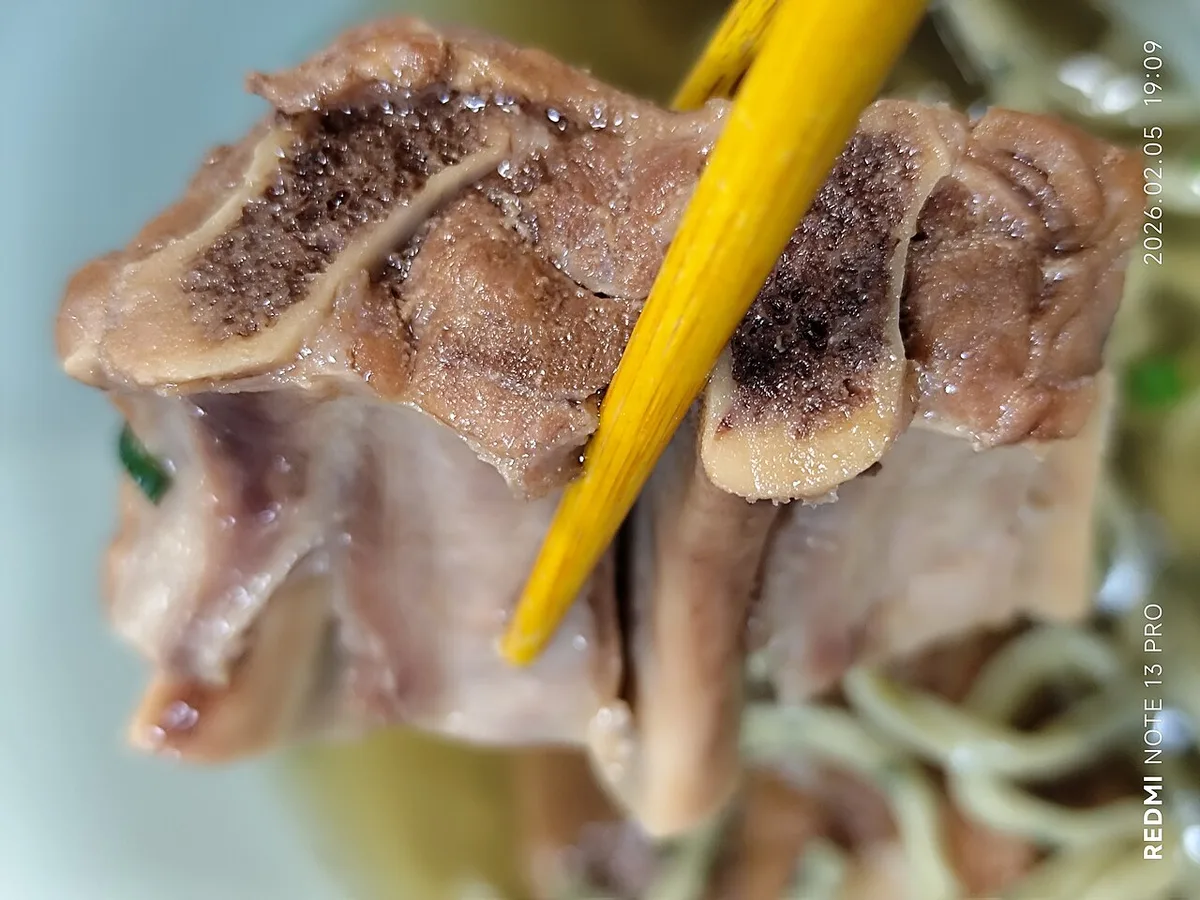
- Soki
- Braised pork spareribs, the topping used in the original Soki soba recipe from Nago and served today at Gabusoka Shokudo.
- Sanmai-niku
- Three-layered pork belly, a fattier cut than Soki, common as an alternative pork topping on Naha menus.
- Tebichi
- Simmered pig's feet, a gelatinous cut for diners who want more collagen texture than a rib provides.
- Jyu-shi and Koregusu
- Jyu-shi is Okinawan seasoned rice, a common side dish paired with Yaeyama-style soba.
- Koregusu is a chili-infused awamori condiment for stirring extra heat into the broth.
- Kamaboko and Beni-shoga
- Kamaboko is a steamed fish cake slice that tops most bowls for color and texture.
- Beni-shoga is red pickled ginger, a sharp garnish that cuts through the richness of the pork broth.
5 Best Okinawa Soba Shops in Naha
These five spots represent the range of Naha's Okinawa soba scene, from a cafeteria with roots in Nago's original Soki soba to a Tsuji restaurant that swaps pork for horse meat after dark. Meat quality drives the broth in every bowl, and readers who want to go deeper on the region's pork traditions can also check this Agu Pork Izakaya in Naha: 2026 Guide to Kumoji's Best Kitchens. Addresses, hours, and prices below reflect each shop's own posted information as of 2026. Most of these counters post their day's availability near the entrance, a quick way to check before you sit down.
- Gabusoka Shokudo (Maejima)
- Gabusoka Shokudo's Maejima branch traces its Soki soba back to the original shop in Nago City, the shop credited with first adding braised soki rib meat to the noodles.
- The broth runs richer and more collagen-heavy than most Naha bowls, and the handmade noodles carry a distinct brine chewiness rather than the springiness of Nago-style noodles.
- A large Original Soki Soba costs ¥800, and hours run 10:30am to 9:30pm, closed Tuesdays. This Maejima location is one of several Gabusoka Shokudo branches now open across Okinawa.
- Yaeyama Soba Jyune (Maejima)
- This long-established Maejima shop serves Yaeyama-style soba: a round, thin, straight noodle in a clear broth, topped with finely chopped ingredients instead of thicker cuts.
- The shop was recently refurbished and is kept clean and tidy. Staff recommend finishing the bowl with Pipachi, an Okinawan island pepper, alongside a side of Jyu-shi seasoned rice.
- A medium bowl costs ¥550, and the shop is open 11:30am to 6:00pm, closed Sundays.
- Highway Shokudo (Maejima)
- Set across Route 58 toward Tomari Port, this cafeteria-style shokudo occupies a former nightclub building, and the dining room still carries a decades-old, lived-in feel.
- Order the Nago Soba, made with noodles sent directly from Nago town. The texture is smoother and chewier than most Okinawa soba, closer to udon, and it comes with sweet simmered pork.
- A bowl costs ¥600, and the shop opens early, from 9:00am to 7:30pm, useful for a soba breakfast before the lunch crowd arrives.
- Akisoba (Tsuji)
- In Tsuji, Akisoba runs as a soba counter by day and an izakaya by night, with lunch from 11:00am to 3:00pm and dinner from 5:00pm to midnight, last order 11:30pm.
- The signature Bajiru Soba uses chewy Kamehama noodles, Kumamoto horse meat, and mugwort. The broth simmers four to five hours from pork bones and bonito flakes, and only 38 bowls are made each day.
- Lunch runs about ¥670, and the evening menu, including awamori and small Okinawan dishes, averages closer to ¥3,500. It also works as a late-night stop for readers checking this Naha nightlife guide.
- Yagiya (Yaese-cho, about a 30-minute drive)
- Yagiya sits outside the city center in Yaese-cho, about a 30-minute drive from Naha Airport. It occupies a Ryukyu-style building built shortly after World War II, with red roof tiles and a shisa statue on the roof.
- The signature Aasa Soba kneads seaweed into the noodles and pairs it with a naturally flavored dashi broth, a different route from the pork-heavy bowls found in Maejima.
- Hours run 11:00am to 4:00pm, last order 3:45pm, Monday and Wednesday through Sunday. The shop is closed Tuesdays, and bowls average around ¥1,000. Staff lean into hospitality-focused service here, fitting the sit-down pace of the historic building.
Comparing Naha's Soba Styles by Noodle and Broth
Each shop above leans toward a different regional style. Yaeyama soba uses round, thin noodles in a clear broth. Nago soba is smoother and closer to udon. Miyako soba is less common in Naha. It hides its toppings under the noodles instead of piling them on top. The table below lines up noodle type, broth weight, and signature topping so you can pick by craving rather than trial and error. Readers who want a heavier, meatier bowl should start with Gabusoka Shokudo's Soki soba. Anyone chasing a lighter, cleaner broth will prefer Yaeyama Soba Jyune. Travelers curious about Nago's udon-like texture should try Highway Shokudo. Adventurous eaters can order Akisoba's horse-meat Bajiru Soba instead of the usual pork. Yaeyama Soba Jyune, Highway Shokudo, and Gabusoka Shokudo all sit within a few minutes of each other in Maejima, an easy stop for Kokusai-dori shoppers heading toward Tomari Port. Akisoba fits travelers based nearer the harbor side of Naha in Tsuji. Yagiya suits anyone with a rental car headed toward the airport.
Yaeyama-style soba at ¥550 features the lightest, clearest broth with round thin noodles, while Soki-style at ¥800 delivers the heaviest, richest bowl—a pricing gradient that directly reflects the broth-density spectrum and helps diners choose by preference rather than trial and error.
| Shop | Noodle Style | Broth | Signature Topping | Neighborhood |
|---|---|---|---|---|
| Gabusoka Shokudo | Handmade, brine-chewy | Rich, collagen-heavy pork | Soki (braised ribs) | Maejima |
| Yaeyama Soba Jyune | Round, thin, straight | Clear, light | Pipachi spice, chopped toppings | Maejima |
| Highway Shokudo | Nago-style, flat, udon-like | Standard pork-bonito | Simmered pork | Maejima, near Tomari Port |
| Akisoba | Kamehama, chewy | Pork bone and katsuobushi, simmered 4-5 hours | Horse meat and mugwort (Bajiru Soba) | Tsuji |
| Yagiya | Seaweed-kneaded (Aasa) | Naturally flavored dashi | Aasa (seaweed) topping | Yaese-cho, about a 30-minute drive |
Timing Your Soba Run: Hours, Prices, and Getting There
Naha's soba scene runs on a lunch schedule more than a dinner one. Most Naha shops peak between 11:30am and 2:00pm, and the best-known counters can sell out of broth or noodles well before their posted closing time. Highway Shokudo is the exception, opening at 9:00am for an early bowl. Akisoba is the only pick here serving dinner, until midnight with last order at 11:30pm. For more low-cost places to eat near Kokusai-dori, this Naha budget eats guide covers additional options beyond soba.
During peak hours 11:30am and 2:00pm, Naha's ticket-vending machines can feel overwhelming; learning topping names like Soki, Sanmai-niku, and Tebichi beforehand lets you order swiftly without holding up the queue behind you.
- Typical prices (2026)
- Yaeyama Soba Jyune: ¥550 for a medium bowl.
- Highway Shokudo: ¥600 per bowl.
- Gabusoka Shokudo: ¥800 for a large bowl.
- Akisoba: ¥670 for lunch, about ¥3,500 for the evening izakaya menu.
- Yagiya: about ¥1,000 per bowl.
- Best time to arrive
- Arriving by 11:30am gives the best chance at a full menu, especially at Yaeyama Soba Jyune and Gabusoka Shokudo.
- After 1:00pm, some counters may already be down to a limited menu or sold out entirely.
- Getting there
- Yaeyama Soba Jyune, Highway Shokudo, and Gabusoka Shokudo are all within walking distance of Miebashi Station and the Kokusai-dori shopping strip.
- Akisoba is reached by getting off at Asahibashi Station, then heading north along the river toward Tsuji.
- Yagiya requires a car or taxi, about 30 minutes from Naha Airport.
- Payment
- Many Naha soba shokudo run on ticket-vending machines or cash only, so keep yen on hand even in 2026, since card acceptance is still not guaranteed at older counters.
Common Mistakes to Avoid When Ordering Okinawa Soba
A few habits separate a smooth soba lunch in Naha from a missed one.
- Arriving too late
- Several of the shops above sell out of broth or noodles before their posted closing time, so arriving after 1:00pm at the busiest counters risks an empty sign.
- Expecting card payment everywhere
- Many soba shokudo in Naha still run on ticket machines or cash only, so do not count on a card working at every counter.
- Confusing the dish with buckwheat soba or ramen
- Okinawa soba is 100% wheat flour in a pork-and-bonito broth, not the thin buckwheat noodle served on the Japanese mainland, and it is thicker and chewier than ramen.
- Assuming every branch is identical
- Gabusoka Shokudo now has multiple locations across Okinawa, and hours or menu details can vary by branch, so confirm the Maejima location specifically before visiting.
Pairing Your Soba Run With Makishi Market and Kokusai-Dori
A soba lunch pairs naturally with a walk through the surrounding neighborhood. After eating at any of the Maejima shops, the covered stalls of the Makishi Public Market are a short walk toward Kokusai-dori, with fresh seafood and produce to browse post-lunch. Round out the day with a stop at Naha's landmark sights, covered in this Naha attractions guide. Or continue toward Tsuji for an evening stop at Akisoba, which becomes an izakaya after dark. Kokusai-dori itself connects several of these soba stops to shopping and other restaurants, so a soba lunch fits naturally into a longer afternoon on foot.
Frequently Asked Questions
What is the difference between Okinawa soba and regular Japanese soba?
Okinawa soba is 100% wheat flour in a pork-and-bonito broth. Mainland Japanese soba is a thin buckwheat noodle in a different broth entirely, so the two dishes only share a name.
What's the difference between Soki and Sanmai-niku toppings?
Soki is braised pork spareribs, the topping used in the original Soki soba recipe. Sanmai-niku is three-layered pork belly, a fattier and softer alternative on the same menus.
What time should you eat Okinawa soba in Naha to avoid it selling out?
Aim for lunch before 1:00pm, since several top Naha shops sell out of broth or noodles well before their posted closing time. Highway Shokudo opens at 9:00am if you want to beat the rush entirely.
Do Naha soba shops take credit cards?
Not always. Many soba shokudo in Naha still run on ticket-vending machines or cash only, so carry yen and do not assume every counter accepts cards, even in 2026.
Which Naha soba shop is closest to Kokusai-dori?
Yaeyama Soba Jyune, Highway Shokudo, and Gabusoka Shokudo are all within walking distance of Miebashi Station and the Kokusai-dori shopping strip. Akisoba, in Tsuji, is a short trip from the harbor side of the city instead.
Can you get Okinawa soba for dinner in Naha?
Most Naha soba counters close after lunch. Akisoba is the exception, serving its Bajiru Soba alongside an izakaya menu until midnight, with last order at 11:30pm.
Is Yagiya inside Naha city?
No. Yagiya sits in Yaese-cho, about a 30-minute drive from Naha Airport, but its Ryukyu-style building and Aasa Soba make it a common day-trip pick from the city.
What is the difference between Nago soba and Yaeyama soba?
Nago soba uses a flatter noodle that many diners compare to udon, the style served at Highway Shokudo. Yaeyama soba uses a round, thin, straight noodle in a clearer broth, the style at Yaeyama Soba Jyune.
What should first-time visitors order at a Naha soba shop?
Start with a standard Soki soba to taste the classic pork-rib version. From there, branch into Yaeyama's round noodles or Nago's udon-like texture on a return visit.
Free: The Naha Essentials guide
Top things to do, where to stay, a perfect day plan, getting around, and the best time to go — a Naha mini-guide you can take offline.
You might also like


Continue reading
More guides you'll find useful


