

Naha Tug of War 2026: Dates, Route 58 Pull & How to Join
Plan the 2026 Naha tug of war: October 11 schedule, Route 58 road closures, how to join the pull, and where to watch on Kokusai-dori.
On this page
Last updated September 2026, the Naha tug of war returns on Sunday, October 11, 2026, drawing crowds to Route 58 near Kumoji Crossing for the main pull. Thousands of visitors also pack Kokusai-dori that morning for the hatagashira banner parade, part of a schedule that anchors Naha's festival calendar. This guide covers the 2026 dates, where to stand, and how to cut a souvenir piece of the rope once judges call the result.
What Is the Naha Tug of War?
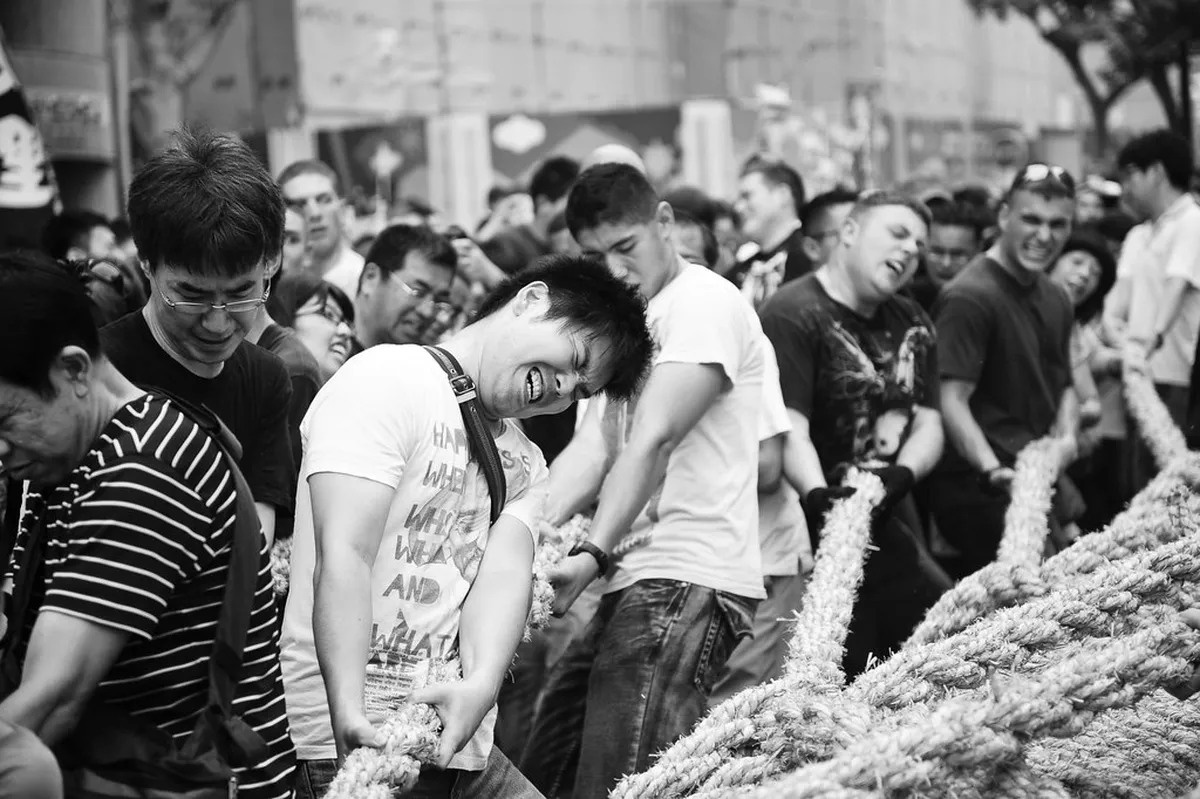
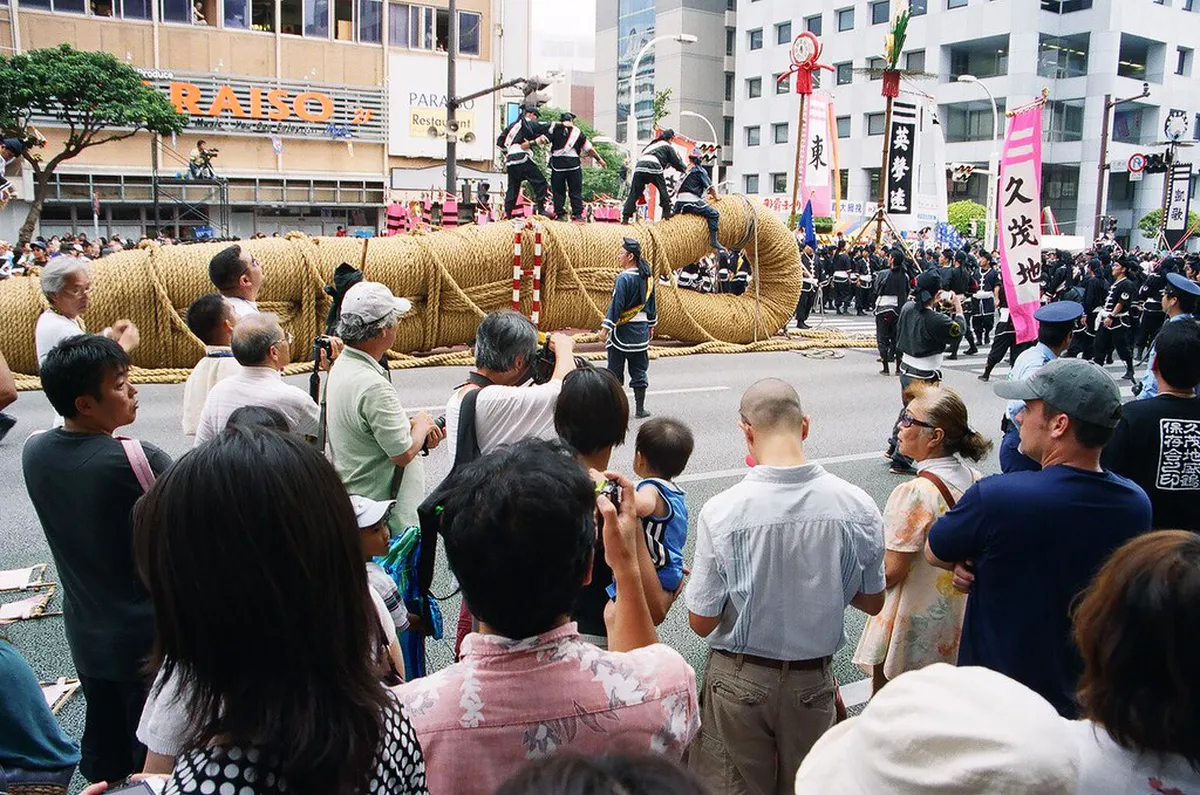
The Naha tug of war (Naha Dai Tsunahiki, 那覇大綱挽まつり) is an annual rope-pulling contest held on Route 58 in central Naha. Its roots trace to rural ceremonies in the mid-15th century Ryukyu Kingdom, when villagers prayed for rain and a good harvest. Organizers codified formal rules in an 1812 rulebook after disputes over how the contest should run. Local accounts describe the festival's continuous lineage as spanning more than 560 years, from those early rain rituals to today's civic celebration. Disrupted by a suspension beginning in 1935 and again during the Battle of Okinawa, the event returned in its traditional form in 1971, marking both postwar recovery and the 50th anniversary of Naha's modern municipal organization. Two rope sections, one from the east and one from the west, together stretch about 200 meters, or roughly 660 feet, and weigh over 40 tons, close to £88,000. Roughly 15,000 people take hold of the 280 branch ropes attached to the main line, while total attendance across the festival's three days has reached about 275,000 in past years. Naha's rope held a Guinness World Records title for the largest rice-straw rope used in a tug-of-war from 1995 to 2005. Organizers also logged the event itself in the Guinness Book of World Records in 1997, for the largest tug-of-war on record. Check the current Guinness listing before treating either title as still active. This history sits inside Naha's wider festival calendar, covered in full in our 10 Best Naha Festivals and Events 2026: A Local's Guide guide.
Naha Tug of War 2026 Schedule and Key Dates
Organizers hold the Naha tug of war on the Sunday before Japan's Sports Day holiday. That places the 2026 edition on October 11. Saturday, October 10, sets the tone with a Citizen Entertainment Festival and Traditional Performing Arts Parade before Sunday's larger crowds arrive. Stage shows run at Palette Kumoji Square, followed by a procession down Kokusai-dori. Sunday morning brings the hatagashira banner parade, running roughly from 11:30 a.m. to 2:00 p.m., with the main pull following on Route 58 that afternoon. Fourteen hatamochi banner teams, representing Naha's traditional districts, carry hatagashira flags 7 to 10 meters tall, about 23 to 33 feet, marching from Makishi Park and Tsuboya Elementary School toward the Okinawa Prefectural Office. Nearby, the RBC Citizens Festival at Onoyama General Sports Park runs across all three days with fireworks. October in Naha still runs warm, so check current conditions against our Best Time to Visit Naha: A Complete Seasonal Guide guide before you pack. For navigating the parade crowd itself, our Kokusai-dori guide covers the street layout and shopping arcades along the route.
Main pull runs 2:30 p.m.–5:00 p.m., but best spots fill an hour earlier; arrive before 1:30 p.m. to claim branch rope space.
| Day | Time | Event | Location |
|---|---|---|---|
| Sat, Oct 10 | Afternoon–evening | Traditional Performing Arts Parade | Kokusai-dori / Palette Kumoji Square |
| Sun, Oct 11 | 11:30 a.m.–2:00 p.m. | Hatagashira banner parade (karate, lion dance, drums) | Kokusai-dori |
| Sun, Oct 11 | 2:30 p.m.–5:00 p.m. | Main tug-of-war pull | Route 58, Kumoji Crossing |
| Sun, Oct 11 | 3:00 p.m.–7:00 p.m. | Route 58 closed to traffic | Kumoji Crossing area |
| Oct 10–12 (approx.) | All three days | RBC Citizens Festival: stage shows, fireworks | Onoyama General Sports Park |
The Ritual: East vs. West, Ozuna, and the Kanuchi-bou
Naha's rope splits into two halves that meet at Kumoji Crossing. Toward the airport side, the eastern team pulls the ozuna, or male rope. The western team, based toward Tomari, pulls the mezuna, or female rope. A wooden joining beam called the kanuchi-bou, weighing 365 kilograms, about £805, locks the two ropes into one before the pull begins. Along the rope's length, martial artists of different ages and groups of women performing a fan dance entertain the crowd beforehand. Just before the start, performers dressed as Ryukyu kings ride platforms carried down each side of the rope and stage a ritual sword contest with naginata blades over the join. At 4:20 p.m., the mayor of Naha, acting as chief judge, gives the signal to start with the traditional call, 'Pull happiness to you.' To win, one side must drag the center of the rope 5 meters, about 16 feet, past the victory line within 30 minutes. Pulling less than 3 meters, about 10 feet, counts as a draw. Related Ryukyu-era pageantry also shows up at the Shuri Castle festival, worth a look if the royal costumes and ceremony style pull you in.
How to Join the Naha Tug of War Pull
Anyone can take part in the Naha tug of war, and no advance registration exists for casual participants. Tourists, local residents, and members of the U.S. military community pull side by side every year. Look for open space along the 280 smaller branch ropes that extend off the main line. These branch ropes give latecomers a spot even after the center section fills up. At peak, the Route 58 viewing and pulling area alone holds an estimated 25,000 people, so arrive with a clear plan for where to stand. Wear closed-toe shoes with grip, since the road surface gets slick with foot traffic and spilled water. Bring a hat and a hand towel. The afternoon pull runs in full sun with little shade along Route 58. Skip anything you cannot carry through a dense crowd for the full 30-minute contest. For a fuller sense of how a festival day fits around Naha's sights, pair this with a 3-day Naha itinerary.
- Solo travelers and photographers: Kokusai-dori's morning parade route gives clear sightlines without the afternoon crush.
- Families with young children: watch the pull from the Kumoji Crossing sidelines rather than joining a branch rope, since the crowd there packs in tight.
- First-time participants: arrive at Route 58 before 1:30 p.m. to claim space on a branch rope before the center fills.
- Return visitors chasing a souvenir: stay near the rope's cut sections once the result is called, not at either end.
Getting to the Naha Tug of War: Transport and Road Closures
Take the Yui Rail monorail to Prefectural Office Station, about 170 meters, or roughly 560 feet, from the Route 58 pull site. Asahibashi Station sits about 0.6 kilometers away, close to 2,000 feet, and Miebashi Station is about 0.7 kilometers out, near 2,300 feet, both walkable if Prefectural Office gets crowded. Route 58 closes to vehicle traffic between 3:00 p.m. and 7:00 p.m. on festival day, a closure the City of Naha coordinates around the event. That closure also lets crews remove the median strip at Kumoji Crossing for the day, a rare step on a Japanese highway, so a paper kusudama ball can go up where cars normally drive. Confirm same-week updates on the official Naha tourism portal before you travel, since organizers can shift closure times. For the rest of your stay, our Getting Around Naha Okinawa: Complete Transportation Guide guide covers monorail passes and walking routes beyond festival day.
The Souvenir Ritual: How to Cut a Piece of the Rope
Once judges call the result, both teams climb onto the rope to celebrate, and the crowd moves in to claim a piece. Bring a pocket knife, folding scissors, or a small hacksaw, the tools past participants have used to cut through the thick rice-straw fiber. Cut only from the branch ropes rather than the main line, which runs over 1.5 meters, about 4.9 feet, in diameter and stays intact for teardown. A cut length works as a token for good health and prosperity, tracing back to the festival's origins as a harvest and rain prayer. Keep the piece small enough to pack. Airport security and hotel storage both handle short rope segments without issue. Road crews clear cut rope remnants ahead of Route 58 reopening to traffic at 7:00 p.m., so souvenir hunting works best in the hour right after the result. After the crowd thins, most people drift toward Onoyama Park, near Naha Airport, for Orion beer and food stalls as the festival's third day of stage events continues.
Where to Stay for the Naha Tug of War
Kokusai-dori puts you inside walking distance of both the morning parade and the afternoon pull, at the cost of the weekend's highest room rates and noise. Basing near Asahibashi Station trades a slightly longer walk for easier monorail access once the festival crowd clears. Day-tripping in from central or northern Okinawa is possible, since the main pull runs in the afternoon, but Route 58 closures and monorail crowding slow the return trip. Hotel rates across Naha typically climb for the festival weekend, so lock in lodging as soon as the October date is confirmed each year. If Naha is one stop on a wider Okinawa trip, our Naha attractions guide fills the days around the festival. Pair it with our 8 Best Day Trips from Naha: A Complete Okinawa Guide (2026) guide for options beyond the city center. Most visitors need at least two full days to cover both the Saturday prelude and Sunday's schedule without rushing. Our How Many Days In Naha Travel Guide guide breaks that pacing down further.
Common Naha Tug of War Mistakes to Avoid
Arriving at Route 58 right at 2:30 p.m. is the most common miscalculation, since the best spots along the branch ropes fill up a full hour earlier. Large bags, strollers, and rolling luggage do not fit through the pull-day crowd, and organizers do not provide a bag check. Skipping water is another problem, since the pull happens outdoors in October's lingering heat and humidity regardless of the forecast. Because the event is not seated, expect to stand for the stretch between the parade's 11:30 a.m. start and the pull's 5:00 p.m. finish if you stay for the full day. Since the event runs rain or shine outside of typhoon conditions, pack a lightweight poncho rather than a large umbrella that blocks other spectators' views. Treat the event like any other Okinawa festival on the calendar, not a fair-weather one, and watch for heat advisories rather than rain. Visitors combining the festival with other Okinawa traditions should also see our Eisa Festivals in Okinawa: 2026 Guide to Zento Eisa, Naha's Parade, and Eisa Nights for drum-dance events on a different calendar. For the wider festival calendar this event sits inside, our 10 Best Okinawa Festivals and Events to Experience in 2026 guide rounds out the year.
Choose Your Side Before the Pull Begins
Route 58 divides participants into east and west teams, so choose a side before the crowd closes around the branch ropes. The airport-facing side pulls the ozuna, or male rope. The Tomari-facing side pulls the mezuna, or female rope. Once the kanuchi-bou joins them, crossing through the center becomes difficult.
For a clear view without joining, stay on a sidewalk near Kumoji Crossing and arrive before the rope is fully surrounded. These edges are better for watching the royal performers, the joining ritual, and the opening signal. Do not expect an elevated view. The roadway fills quickly, and people behind the front rows may see little of the rope itself.
If you plan to pull, pick the side closest to your intended monorail exit and use a branch rope rather than pushing toward the central join. Tell companions which side you chose before entering the crowd. Mobile service and movement can become unreliable once the 30-minute contest is underway.
Frequently Asked Questions
Is the Naha tug of war free to attend?
Yes, both the Saturday prelude and Sunday's parade and pull are free to watch and free to join. Organizers do not sell tickets for the main event on Route 58.
Can tourists actually join the pull, or is it locals only?
Tourists pull alongside local residents at the branch ropes, and no separate registration process exists for casual participants. Show up near Route 58 before the 2:30 p.m. start and find an open branch rope.
How long does the tug-of-war actually last?
Pulls run for up to 30 minutes, or until one side drags the rope 5 meters, about 16 feet, past the victory line. In 2008 the contest finished in just 5 minutes and 56 seconds, though most years run closer to the full window.
Is the Guinness World Record still active?
Naha's rope held a Guinness World Records title for the largest rice-straw rope used in a tug-of-war from 1995 to 2005. Organizers also logged the event in the Guinness Book of World Records in 1997, for the largest tug-of-war on record. Confirm the current status directly with Guinness before repeating either claim as active.
Where is the best spot to watch without joining the pull?
Spectators wanting a calmer view should watch from the sidelines near Kumoji Crossing on Route 58. Kokusai-dori works well too, especially for the 11:30 a.m. hatagashira parade earlier in the day. Either spot puts you close to Prefectural Office Station on the Yui Rail for a quick exit afterward.
What happens to the rope after the festival ends?
Crowds cut sections of rope apart using pocket knives, scissors, or hacksaws once the result is declared. Each piece works as a good-luck token for health and prosperity. Crews clear the remaining rope material as Route 58 resets for regular traffic by evening.
What should travelers wear to the festival?
Closed-toe shoes with grip work best given the crowd and any spilled water on the road. Light, sweat-ready clothing suits Naha's warm and humid early October afternoons. Sun protection matters too, since Route 58 offers little shade during the 2:30 p.m. pull.
Is the festival manageable if you don't want to stand for hours?
Sidewalk viewing areas near Kumoji Crossing let you watch the pull without joining the rope line. Shaded seating is limited, so bring a folding stool if standing through the 2:30 p.m. to 5:00 p.m. window is difficult. The Saturday parade on Kokusai-dori tends to draw a lighter crowd than Sunday's main event.
Free: The Naha Essentials guide
Top things to do, where to stay, a perfect day plan, getting around, and the best time to go — a Naha mini-guide you can take offline.
You might also like


Continue reading
More guides you'll find useful


