

Makishi Public Market Naha: The Ultimate Visitor Guide
Plan your visit to Makishi Public Market in Naha with our guide to the 2023 facility, the Mochiage cooking system, and the best Okinawan seafood.
On this page
Makishi Public Market stands as the vibrant culinary heart of Okinawa's capital city. Known locally as the Kitchen of Okinawa, this bustling hub offers a deep dive into island flavors. You will find everything from colorful tropical fish to unique pork delicacies across its multiple floors.
The market recently underwent a massive transformation to better serve modern travelers and locals. This guide covers the fresh 2023 facility updates and the famous dining systems found inside. Whether you want to shop or eat, this landmark provides an unforgettable cultural experience.
Navigating the narrow aisles allows you to see the true spirit of Naha. You can interact with friendly vendors who have worked here for several generations. Prepare your appetite for a journey through the most authentic ingredients in the Ryukyu Islands.
Late morning (10:30–11:30) is the sweet spot for visiting — fish vendors are fully stocked, skylight photo light is ideal, and you can move straight into a Mochiage lunch without queuing. Avoid 12:30–13:30 if you dislike crowds.
| Mochiage Cooking Method | Approximate Fee (2026) |
|---|---|
| Standard (up to 3 preparations) | ~500 yen per dish |
| Sashimi cut and plating only | 300–500 yen (often free with drinks) |
| Steam, salt-grill, or boil (lobster/prawn) | 600–800 yen per dish |
| Stir-fry, butter-sauté, or deep-fry | 700–1,000 yen per dish |
| Steak or shabu-shabu (for 2 people) | 1,200–1,500 yen |
The market accepts IC cards (Suica, Pasmo, OKICA) and QR mobile payments at most stalls since the 2023 renovation, but a few older vendors still prefer cash — carry 5,000–10,000 yen in small notes as backup.
The History and 2023 Rebirth of Makishi Public Market
The market grew out of the chaotic post-WWII years, when residents gathered in informal stalls along Ichiba Hondori to trade rice, fish, and daily necessities. Naha City formally established it as a city-run market in December 1950, anchoring food supply for both city and prefecture residents during reconstruction. The roots reach further back into the Ryukyu Kingdom, when Naha thrived as a trading port across Asia, and you can still see that mercantile DNA in the way vendors negotiate and chat with customers.
After more than seventy years, the original 1972 building was aging badly. The market temporarily relocated nearby during construction and reopened on its original site in March 2023 as a brand-new three-story facility. The official name remains Naha City First Makishi Public Market, and Nahamachi Promotion Division spokesperson Yonashiro Miki has emphasized that the rebuild was designed to preserve Okinawan food culture for the next generation rather than chase a sleek tourist makeover.
The new building keeps the same dense, conversational atmosphere of the old market while solving the problems older travelers complained about most. Aisles are noticeably wider, lighting is bright but not harsh, and the air conditioning copes with Okinawa's June humidity. Vendor signage now appears in Japanese, English, traditional and simplified Chinese, and Korean, reflecting the surge of Asian visitors that Yonashiro notes has reshaped the customer base since reopening.
A First-Timer's Floor Map of the 2023 Building
The new facility runs across three floors and a basement, and a quick mental map saves a lot of confusion on arrival. The main entrance sits where Ichiba Hondori meets the market block, with a smaller side entrance from the Mutsumi-bashi Dori arcade for anyone walking in from the monorail. Escalators are located near the centre of each floor, and a lift on the east side serves wheelchair users, strollers, and shoppers carrying heavy ice-pack bags.
- Basement: cold storage and back-of-house — not open to visitors, but it is why the seafood looks fresher than at most Japanese markets.
- First floor: 75 stalls covering seafood, pork and beef, vegetables, dried goods, alcohol, and souvenirs.
- Second floor: 12 establishments — mostly Mochiage-participating restaurants plus a sata andagi shop, a gelato counter, and a couple of casual cafes.
- Third floor: a public cooking studio and multipurpose rooms used for Okinawan cuisine classes and community events.
If you are short on time, walk the full first-floor loop once before buying anything. Prices on the same fish or fruit can vary by 20–30% between stalls, and a single lap reveals which vendors are the freshest, which are tourist-priced, and which have the longest local queues. After that lap, head upstairs, scout your restaurant, then come back down to buy the ingredients the chef has agreed to cook.
First Floor: Fresh Seafood, Meat, and Local Produce
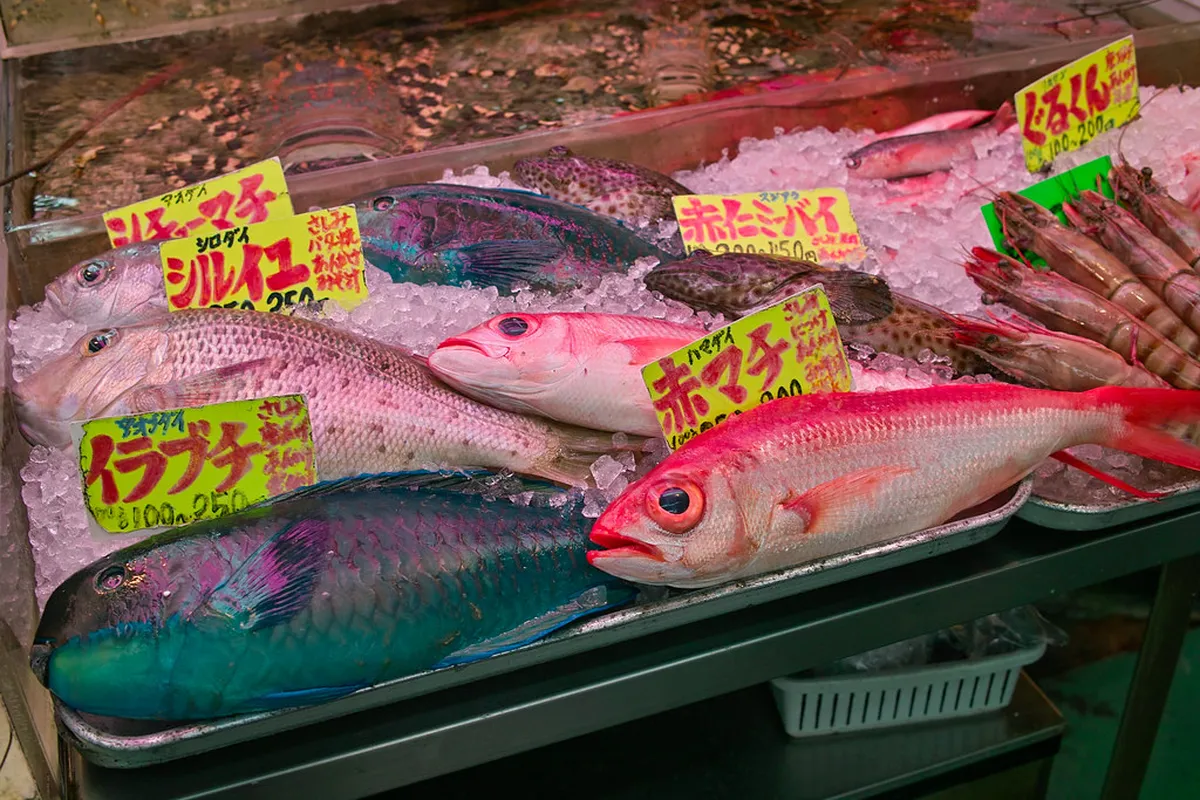
The ground floor is the engine of the market and the densest concentration of Okinawan food on the island. The seafood aisle along the south wall is the showpiece — electric-blue irabuchaa parrotfish, red mimiji snappers, spiny lobsters, giant tiger prawns, sazae turban snails, and the legendary mibai grouper line up across crushed-ice trays. Bluefin tuna and locally caught skipjack are filleted to order, and several stalls keep small live tanks of fish that get netted and bagged in front of you.
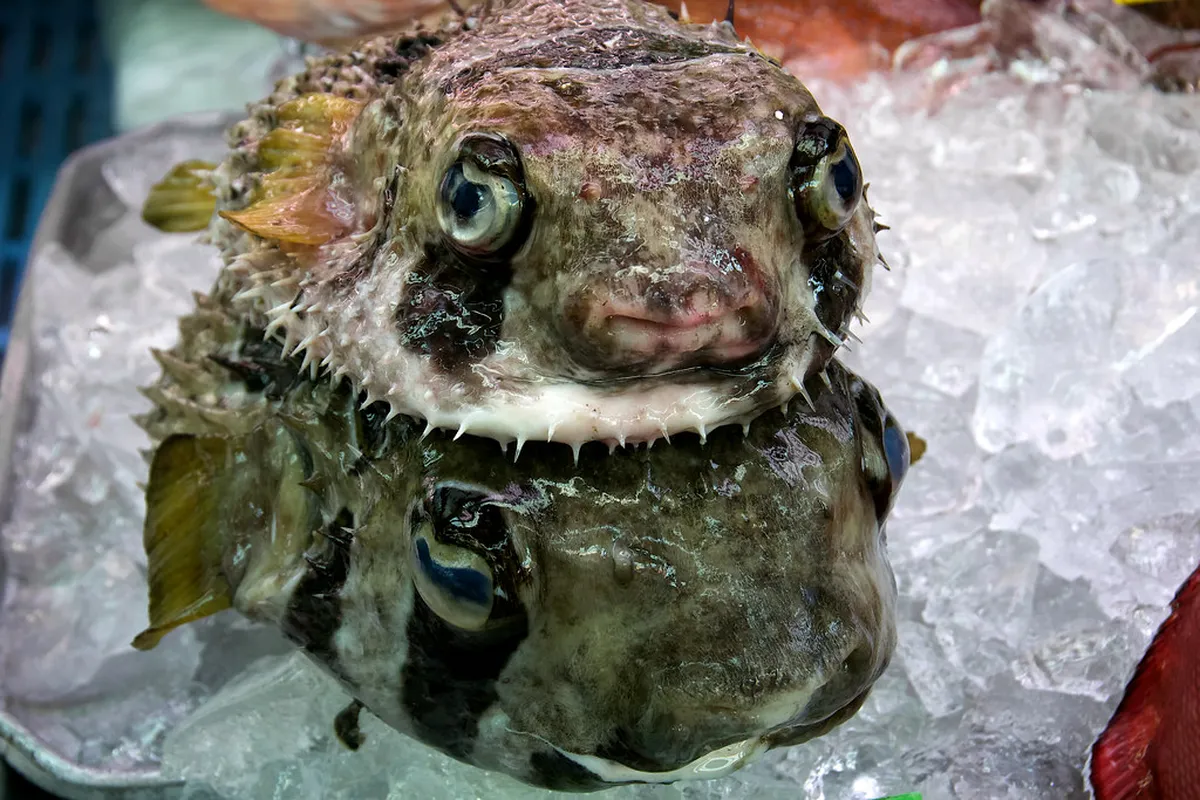
The meat section is dominated by Okinawan pork, which the island treats with near-religious thoroughness. You will see chiragaa (boiled and pressed pig's face), mimigaa (sliced pig's ear), tebichi (pig's trotter), and rafute belly already braised and ready to take home. A handful of vendors also stock smoked irabu sea snake, prized in Ryukyu Kingdom medicine and now expensive enough that most stalls keep it behind glass.
The produce side is where most travellers fall in love. Look for goya bitter melon, hechima sponge gourd, beni imo purple sweet potatoes, shima rakkyo island shallots in bunches with the soil still on, and dragon fruit, mango, and pineapple from northern Okinawa farms. Dried sections at the back of the floor sell mozuku, hijiki, kombu, and bonito flakes vacuum-packed for travel — much better souvenir value than the equivalent at Naha airport.
Second Floor: Dining and the "Mochiage" Cooking System
The second floor is the reason most travellers come, and the reason Makishi feels different from any other Japanese covered market. Twelve establishments share the floor — most of them small Okinawan eateries, plus Honen for sashimi-leaning sets, a sata andagi stall, and a gelato counter using Okinawan brown sugar and beni imo. Tables are shared, the volume is loud, and Orion beer flows from late morning onward.
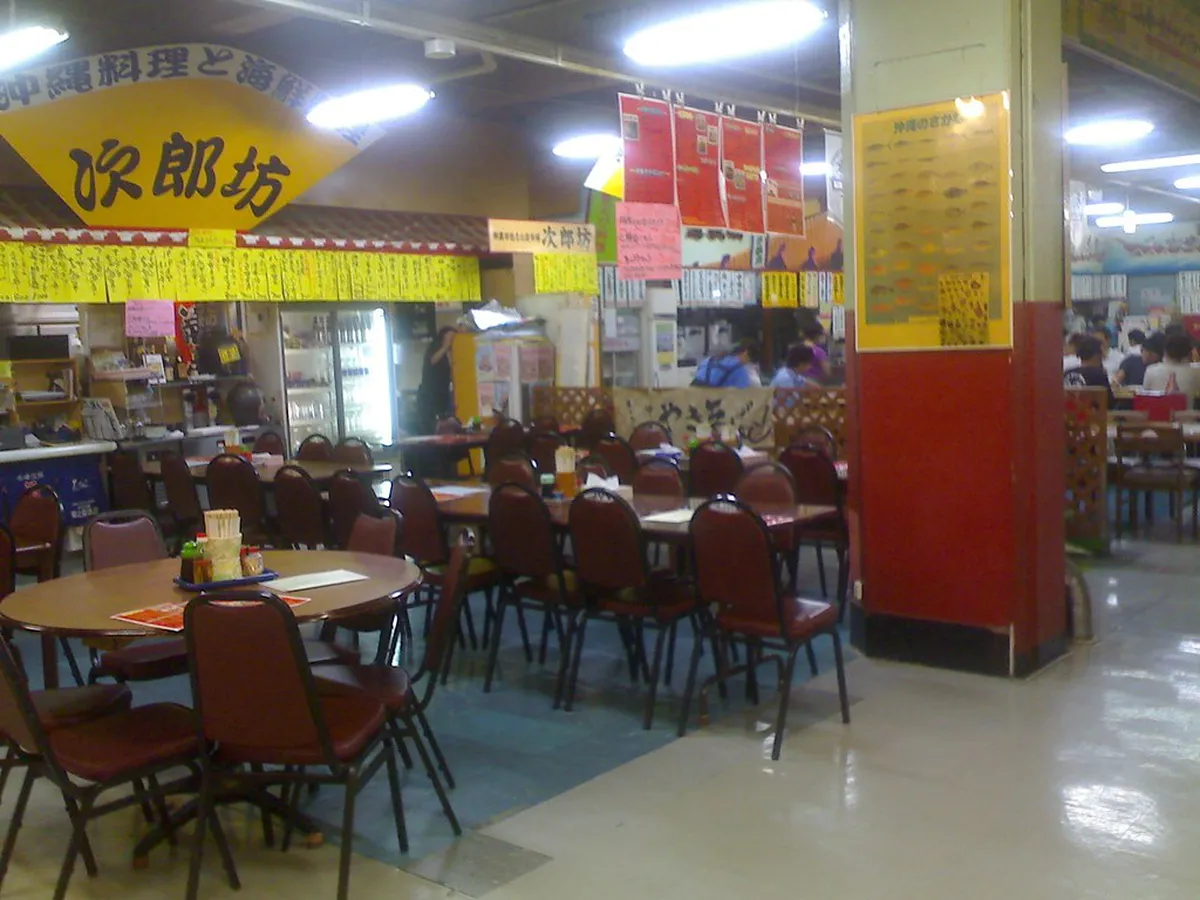
The Mochiage system was introduced in 1990, modelled on the buy-and-cook stalls common in Singapore and Malaysian hawker centres. The literal meaning is "carry up": you buy ingredients on the first floor, carry them upstairs, and a participating restaurant cooks them however you ask. If you tell the first-floor vendor what you want to eat, they will recommend a specific second-floor restaurant that handles that ingredient well — a quietly important step, because not every restaurant cooks every protein.
The cooking fee is not a single number, and that is where most blog posts get it wrong. Use this as a rough 2026 guide:
- Standard Mochiage fee: around 500 yen per dish for up to three preparations from one purchase.
- Sashimi cut and plating only: 300–500 yen, often free if you also buy drinks.
- Steam, salt-grill, or boil (lobster, prawn, mibai): 600–800 yen per dish.
- Stir-fry, butter-saute, deep-fry: 700–1,000 yen per dish.
- Steak or shabu-shabu setup with broth and vegetables: 1,200–1,500 yen for two people.
- Drinks, rice, miso soup, and side dishes: ordered separately from the restaurant menu.
So is buying raw and cooking via Mochiage actually cheaper than ordering off the menu? For a solo traveller eating a single dish it is usually a wash — a 1,800-yen sashimi set on the menu is roughly the same as 1,200 yen of fish plus a 500-yen plating fee. Mochiage wins clearly for groups of 3+, for splurge ingredients (a whole spiny lobster split between four people lands around 6,000–8,000 yen versus 12,000+ at a la carte restaurants), and for anyone who wants to taste an unusual fish like irabuchaa or mibai that rarely appears on tourist menus.
Must-Try Okinawan Specialties and Souvenirs
Umi budo, the so-called sea grapes, are the snack to start with. The tiny green spheres pop with a briny crunch and pair beautifully with a squeeze of shikuwasa citrus or a splash of ponzu. Most first-floor stalls sell small chilled cups for around 500 yen and full punnets for 1,000–1,500 yen, and they survive a few hours in a hotel fridge if you want to take them back for a balcony snack.
Shima rakkyo, the pungent island shallots, are sold raw, pickled in salt, or pre-battered for tempura. Order them as crispy tempura on the second floor with an Orion beer, and you will understand why Okinawans treat them as the perfect drinking food. Soki soba — wheat noodles in a rich pork-bone broth topped with braised spare ribs — is the other dish to try upstairs, and Honen and the smaller eateries near the escalator both make solid versions for around 800 yen.
For souvenirs, focus on what you cannot easily buy outside Okinawa. Look for vacuum-sealed rafute, jars of koregusu chili-pepper-and-awamori sauce, awamori miniatures from small Naha distilleries, chinsuko shortbread (sea salt, brown sugar, and beni imo flavours travel best), and pouches of Ishigaki-grown sea salt. Many of the souvenir-focused stalls sit closer to the Mutsumi-bashi side, near the Kokusai Dori Naha end of the building, which is convenient if you are walking back toward the main shopping street afterward.
Practical Visitor Tips: Access, Hours, and Etiquette
The market is a five-minute walk from Makishi Station on the Yui Rail monorail and roughly ten minutes from Kencho-mae if you start from the prefectural office area. From Kokusai Dori, turn south down Ichiba Hondori at the Don Quijote corner (the Japan National Tourism Organization's Naha food itinerary uses the same starting point) and you will reach the entrance in under three minutes. For anyone getting around Naha by car, paid coin parking lots ring the block, but expect 300–400 yen per hour and prefer the monorail if you can.
First-floor stalls run roughly 08:00–21:00, second-floor restaurants run 10:00–22:00, and many vendors close on the fourth Sunday of each month plus New Year. Late morning (10:30–11:30) is the sweet spot — fish vendors are fully stocked, photo light through the skylights is good, and you can move straight into a Mochiage lunch without queuing. Avoid 12:30–13:30 if you dislike crowds, and avoid Mondays after a long weekend when stocks can be uneven.
Etiquette is friendlier than at Tokyo's Tsukiji-style markets but follows two unwritten rules. Do not photograph a vendor or their stock without a smile and a quick "shashin ii desu ka" — most will say yes, often with a thumbs-up. The other rule lives in the spirit of "ichariba chode" (once we meet, we are family): asking a vendor for a sample is normal, but only after a real exchange — a question about the fish, a compliment on the produce, even a clumsy attempt at "kore wa nan desu ka". Vendors often add a little extra to your purchase, a custom called shibun in Okinawan dialect, and the right response is a warm "nifedebiru" (Okinawan for thank you), not a discount request.
Cards, IC cards (Suica, Pasmo, OKICA), and QR mobile payments are now accepted at most stalls thanks to the 2023 upgrade, but a few older vendors still prefer cash, so carry 5,000–10,000 yen in small notes. Coin lockers, free wifi, multilingual restrooms, accessible toilets, baby-changing rooms, and a prayer/quiet room sit on the first floor near the lift, which makes the rebuild meaningfully more usable than the old building for families and disabled visitors.
Combining Makishi with the Rest of Naha
Makishi works best as the lunchtime anchor of a wider Naha day rather than a standalone stop. A common pattern is morning at Shuri Castle, monorail down to Makishi for a Mochiage lunch around 13:00, and an afternoon browse along the souvenir shops and pottery lanes off Kokusai Dori. Many travellers slot the visit into day one or day two of their Naha 3-day itinerary and use it as the moment they "get" Okinawan food before fanning out to izakayas in the evening.
If you are choosing a hotel, anything within ten minutes of the Yui Rail line between Asahibashi and Miebashi puts you in walking range of Makishi for breakfast runs and late-evening sata andagi missions. The where to stay in Naha guide breaks down the trade-offs between Kokusai Dori convenience and quieter Tomari or Asahibashi options for travellers who want the market on their doorstep without nightlife noise.
One last context point: Okinawan cuisine deliberately does not taste like mainland Japanese food. The pork-heavy stews, bitter goya, brown sugar, and awamori distillates reflect centuries of trade with China, Southeast Asia, and the Pacific. Makishi is the most concentrated classroom for that history on the island, and a slow, curious two hours here will reshape how you read every menu for the rest of your trip across the Naha attractions circuit.
Frequently Asked Questions
What are the opening hours for Makishi Public Market in Naha?
The market typically operates from 8:00 AM to 9:00 PM daily. However, many stalls close on the fourth Sunday of each month. It is best to visit before 6:00 PM to see all the seafood vendors active. Check your Naha accommodation desk for any holiday closures.
How does the Mochiage system work at Makishi Public Market?
You first buy fresh seafood or meat from a vendor on the ground floor. Then, you take your items to the second-floor restaurants for cooking. The standard fee is roughly 500 yen per person for up to three dishes. This is the most authentic way to eat.
Is the Makishi Public Market worth visiting after the 2023 renovation?
Yes, the renovation has made the market much cleaner and more accessible for all visitors. It still retains the traditional charm and friendly vendors of the original building. The new air conditioning and escalators make it a very comfortable destination even in summer.
Where is the Makishi Public Market located in Naha?
The market is located in the Makishi district, just off the famous Kokusai Dori street. You can reach it by walking through the Ichiba Hondori arcade for about five minutes. The nearest monorail station is Makishi Station, which is a short walk away.
Makishi Public Market remains an essential destination for anyone visiting the Okinawa islands. It offers a perfect blend of historical significance and modern convenience for every traveler. From the fresh seafood on the first floor to the lively dining upstairs, there is much to see.
Make sure to try the Mochiage system for a truly unique and personalized meal. This experience allows you to taste the freshest ingredients prepared by local experts. You will leave with a full stomach and a better understanding of island culture.
Do not forget to explore other Naha attractions after you finish your market tour. The central location makes it easy to continue your adventure through this beautiful city. Enjoy your journey through the vibrant flavors and friendly faces of Naha.
For the wider city context, see our complete Naha attractions guide.
For related Naha deep-dives, see our Naha food guide and Kokusai-dori shopping guide.
Free: The Naha Essentials guide
Top things to do, where to stay, a perfect day plan, getting around, and the best time to go — a Naha mini-guide you can take offline.
You might also like


Continue reading
More guides you'll find useful


