

Toki No Kane Bell Of Time Kawagoe Travel Guide
Plan toki no kane bell of time kawagoe with top picks, neighborhood context, timing tips, and practical booking advice for a smoother trip.
On this page
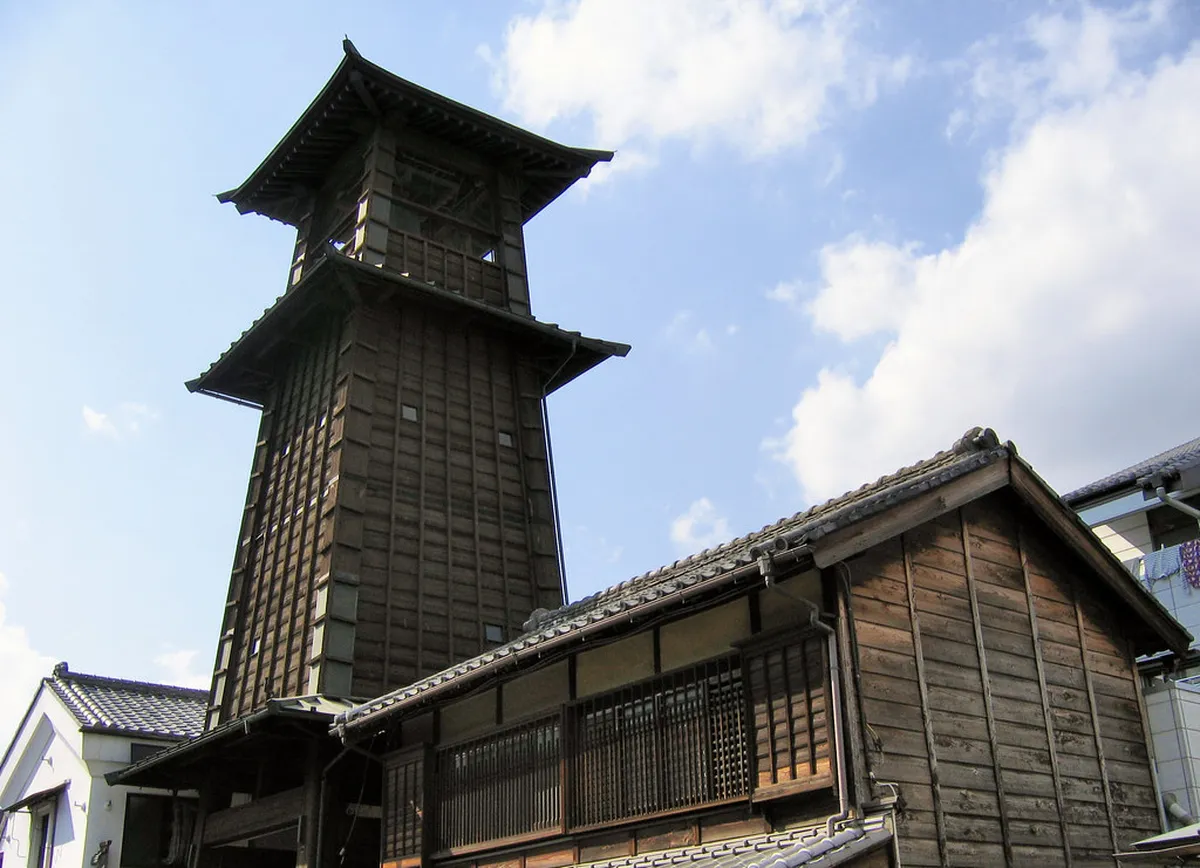
Kawagoe's toki no kane bell of time is one of the most recognisable wooden structures in the Kanto region. Standing 16 metres above the Kurazukuri warehouse district, it has marked the hours for the town since the early Edo period. This guide covers the bell tower itself, the surrounding sights, how to reach them from Tokyo, and the best ways to build a full day around this landmark in 2026.
The Bell Tower: History and Significance
The original Toki-no-Kane was founded during the Kan'ei era (1627–1634) under the order of Kawagoe lord Sakai Tadakatsu. That first bell rang over a town that had grown into one of the most prosperous merchant hubs north of Edo. The current structure is the fourth generation, rebuilt in 1894 — one year after the Great Kawagoe Fire destroyed much of the city — and has stood without major interruption ever since.
The bell rings four times daily at 06:00, 12:00, 15:00, and 18:00. Its sound was selected for Japan's "100 Soundscapes to Preserve" by the Ministry of the Environment, a designation that recognises acoustic environments considered part of Japan's cultural heritage. Few visitors know that distinction exists, which makes hearing the chime feel more significant once you do. Check the official Kawagoe city page for any temporary maintenance closures in 2026.
The address is 15-7 Saiwaicho, Kawagoe, Saitama 350-0063. Entry to view the tower is free at any hour. The chime times are fixed year-round; arrive a couple of minutes early to secure a clear spot on Kanetsuki-dori Street before the small crowd forms.
The Kurazukuri Warehouse District
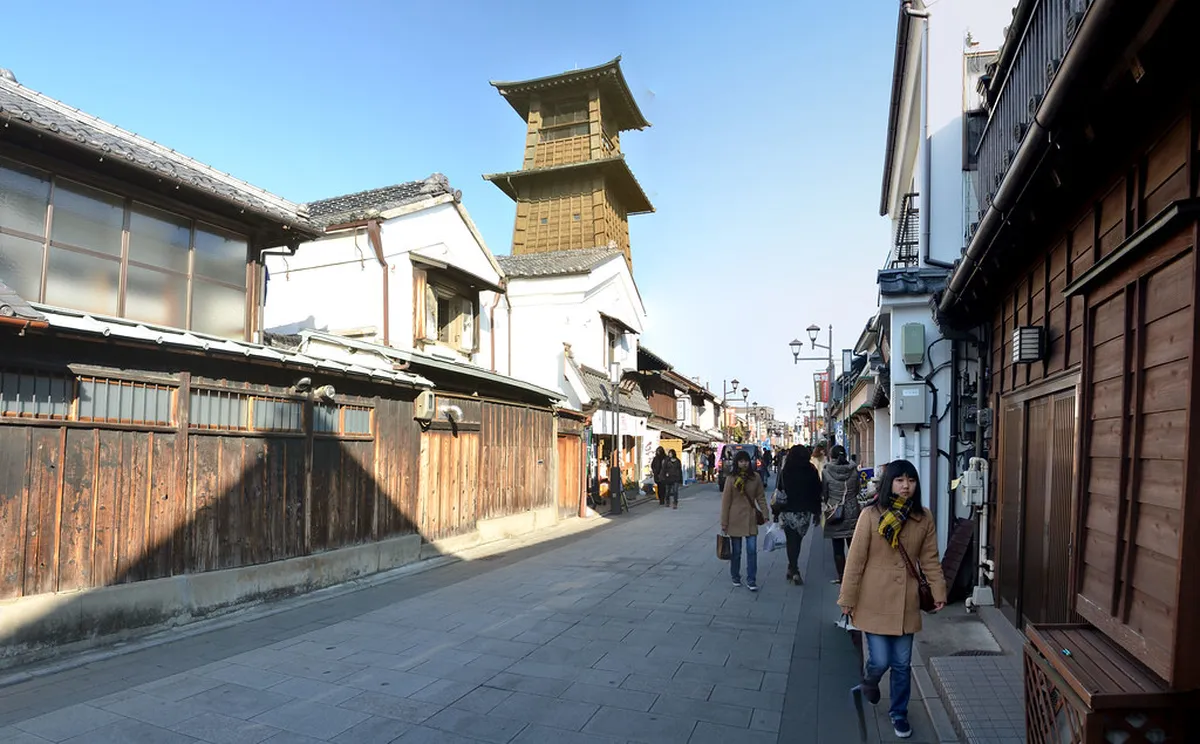
The bell tower sits at the north end of a 400-metre stretch of kurazukuri buildings — thick-walled, fire-resistant merchant warehouses built from the Edo through Meiji periods. In 1999 the district was designated a national Important Preservation District for Groups of Traditional Buildings, one of only a handful in the Kanto region. The street is officially known as Ichibangai (First Street), and most shops are clustered along it and the parallel lanes behind it.
The best photograph of the tower is taken from the southern end of Ichibangai looking north. From that angle the warehouse rooflines frame the wooden belfry cleanly, without utility poles or modern storefronts cutting into the shot. Morning light before 09:00 hits the front face directly; midday and afternoon light falls behind the tower and creates a silhouette. If you want depth-of-field shots with the street receding into the background, bring a slightly longer lens rather than shooting wide.
Today most kura buildings house souvenir shops, cafés, and small galleries. You can browse freely without obligation to buy. Weekdays are noticeably quieter; weekend crowds on the main street can make photography difficult between 11:00 and 15:00. The Kawagoe Kurazukuri Warehouse Street: 8 Things to Know guide covers individual shop recommendations in more detail.
Kashiya Yokocho: The Candy Alley
A five-minute walk south of the bell tower brings you to Kashiya Yokocho, a narrow lane lined with small dagashi candy shops that has operated continuously since the Meiji era. The alley retains a Showa-era atmosphere: low wooden storefronts, hand-painted signs, and bins of individually wrapped sweets priced from ¥20. It draws families, but the nostalgia resonates with adult visitors equally well.
The local specialty is fugashi, a long, spongy confection coated in brown sugar. It is light and not intensely sweet, and easier to snack on while walking than most sticky Japanese sweets. Purple sweet potato soft-serve cones are also sold near the entrance to the alley and are popular enough to sell out before closing. The alley is at its busiest around 13:00; arriving by 11:30 or after 14:30 means shorter queues. The 10 Best Shops in Kashiya Yokocho Candy Alley Kawagoe page has a full shop list and what each specialises in.
Kawagoe's sweet potato culture extends well beyond the alley. The city is historically one of Saitama's main sweet potato growing areas, and you will find imo (potato) flavours in beer, okowa sticky rice, manju buns, and even savory crackers throughout the warehouse district. Trying two or three of these while walking is one of the most efficient ways to sample the local food identity without sitting down for a full meal.
Kawagoe Castle Honmaru Goten and Kitain Temple
The Honmaru Goten is the only surviving palace building of Kawagoe Castle, which was originally built in 1457. The existing structure dates from 1848 and is one of only two surviving honmaru palace great halls in Japan — the other is at Kochi Castle. Admission is ¥100 for adults and ¥50 for high school and university students. The wide tatami corridors and sliding shoji screens give a clear sense of the samurai administrative world; allow about 45 minutes. It is roughly a 10-minute walk northwest of the bell tower.
Kitain Temple is the more historically layered stop. Founded in 830 CE and closely associated with the Tokugawa shogunate, its grounds contain two rooms physically relocated from Edo Castle itself after the 1657 Meireki Fire — the Birth Room of the third shogun Iemitsu, and the Powder Room of Lady Kasuga, his wet nurse. These are the only Edo Castle interior rooms to survive outside Tokyo and are designated Important Cultural Properties. The 536 stone rakan statues on the grounds, each carved with a distinct facial expression, are an unexpected highlight that most visitors underestimate until they slow down and look.
These two sites are about a 10–15 minute walk from each other and from the bell tower, making a logical triangle route possible without any transit. Combining the Honmaru Goten and Kitain with the warehouse district and candy alley covers the essential Kawagoe circuit in a single day.
Koedo Kurari and the Kawagoe Festival Museum
Koedo Kurari is the Kawagoe City Industrial Tourism Center, housed in three connected sake brewery warehouses near the main shopping street. The most popular section is the Kikizake-dokoro, where a wall of sake vending machines lets you pour small tasting glasses of dozens of local Saitama brews for around ¥100–¥300 each. This setup makes it easy to sample a range of styles without committing to a full bottle. The souvenir warehouse stocks local crafts and food items that are hard to find in Tokyo shops.
The Kawagoe Festival Museum sits nearby and focuses on the city's grand autumn festival, held on the third Saturday and Sunday of October. The museum's centrepiece is a full-size replica of one of the elaborately carved wooden festival floats (dashi) that parade through the streets during the event. The Kawagoe Festival is part of the UNESCO Intangible Cultural Heritage designation for Japanese float festivals, placing it alongside Gion Matsuri in Kyoto. If you cannot attend in October, the museum provides the next best sense of scale and craftsmanship.
Best Time to Visit Kawagoe in 2026
Kawagoe is a year-round destination, but two windows stand out. Late March to early April brings cherry blossoms along the Shingashi River; boat rides operate during peak bloom and the warehouses look particularly striking with blossoms in the foreground. Late October is festival season — the Kawagoe Matsuri on the third weekend fills the main street with float processions and draws the largest crowds of the year. Book accommodation well ahead if you plan to attend.
Summer (July–August) is hot and humid in Saitama, with temperatures frequently above 35°C. Kawagoe Hikawa Shrine holds a summer wind-chime corridor event that draws visitors specifically for the spectacle and the relative shade of the shrine precincts. Winter visits (December–February) are cold but uncrowded, and the wooden architecture of the warehouse district photographs cleanly against pale winter skies. The bell tower does not shut for any season.
Weekday mornings between 09:00 and 11:00 offer the most comfortable experience regardless of season. The main street empties of tour groups, the shops are just opening, and you have a realistic chance of photographing the bell tower without other tourists in frame. If you plan a Kawagoe Day Trip From Tokyo Travel Guide, aim for the earliest convenient train.
Family-Friendly and Budget-Friendly Options
The bell tower itself costs nothing to visit. The Honmaru Goten charges ¥100 for adults and ¥50 for students. Kashiya Yokocho sweets start at ¥20. Wandering the warehouse street and listening to the 12:00 chime costs nothing at all. A full Kawagoe day — including castle, temple, candy, and sake tasting — can be done comfortably for under ¥2,000 per person excluding meals and transport.
A kimono rental adds a memorable dimension for families and couples. Rental packages in the warehouse district run ¥3,000–¥5,000 and include dressing assistance; some shops add hair styling. The narrow lanes and kurazukuri backdrop make for strong photos. Most rental periods run 3–4 hours and you return the kimono before closing, typically by 17:00. The Kawagoe Kimono Rental: 1-Day Little Edo Itinerary page lists shops near the bell tower with current pricing.
For overnight stays, Kawagoe has a range of options from business hotels near the stations to small guesthouses inside the historic district. Staying overnight rather than day-tripping lets you experience the streets in early morning before the crowds arrive and in the evening when the warehouses are lit and largely empty. The 18:00 chime heard from the quiet street after the tour groups have left is a genuinely different experience from the midday one.
How to Get to Kawagoe from Tokyo
Three train lines serve Kawagoe from central Tokyo. The Tobu Tojo Line runs from Ikebukuro Station to Kawagoe Station in about 30 minutes by express (around ¥480). The JR Kawagoe Line connects Omiya Station to Kawagoe Station in roughly 20 minutes. The Seibu Shinjuku Line runs from Seibu-Shinjuku Station to Hon-Kawagoe Station in about 45 minutes by limited express (around ¥1,000 including the limited express surcharge). Hon-Kawagoe Station exits directly toward the main sightseeing area with a 15-minute walk or a 10-minute bus ride to Ichibangai.
From either Kawagoe Station or Hon-Kawagoe Station, the Koedo Loop Bus (¥200 per ride, or ¥500 for a day pass) connects all major attractions including the warehouse district, Kitain Temple, and Hikawa Shrine. The bus runs approximately every 15–20 minutes on weekdays and more frequently on weekends. It is the most practical option if you want to cover the triangle of the bell tower, Kitain, and Hikawa Shrine without backtracking on foot.
Driving is possible but not recommended on weekends. The expressway exit at Kawagoe IC (Kan-etsu Expressway) is about 15 minutes from the centre, but paid parking near the warehouse district fills by 10:00 on busy weekends. Buses and trains remove this friction entirely. Most visitors find a round-trip from Tokyo costs between ¥1,000 and ¥2,000 depending on which line they choose and whether they use the loop bus.
Consider a 12 Essential Tips and Things To Do In Kawagoe overview before finalising your itinerary — it maps the walking distances between key sites and identifies which combinations work best in a half-day versus a full day. A well-structured Kawagoe Itinerary: The Ultimate 1-Day Guide to Little Edo starting at the bell tower and moving clockwise through the district keeps backtracking to a minimum.
Frequently Asked Questions
What time is the Toki no Kane Bell?
The bell rings four times every day at 6:00 a.m., noon, 3:00 p.m., and 6:00 p.m. These times are consistent throughout the year, though maintenance may occasionally affect the schedule. It is best to arrive a few minutes early to find a good viewing spot on the street.
Where can I find Toki no Kane?
You can find the tower in the heart of the Kurazukuri warehouse district. It is located on Kanetsuki-dori Street, which is about a 15-minute walk from Hon-Kawagoe Station. The tall wooden structure is easy to spot from the main road as it rises above the surrounding buildings.
Is there an entry fee for the bell tower?
No, there is no fee to view or listen to the bell tower. It is a public landmark located on a city street, making it a perfect budget-friendly attraction. You can take photos from the sidewalk at any time of day without needing a ticket or reservation.
The toki no kane bell of time kawagoe remains the most recognisable symbol of Little Edo. Built four times across four centuries, it has survived fire and war and still marks the hours for anyone standing in the warehouse district. Pair it with Kashiya Yokocho, Kitain Temple, and the Honmaru Goten for a full day that covers Kawagoe's history from street level to shogunate.
For tickets, hours, and visitor details, see our Toki-no-Kane visitor guide.
Free guide: Japan's Hidden Gems
12 under-the-radar places beyond Tokyo & Kyoto — with the best season to visit each and a local tip you won't find in the guidebooks.
You might also like


Continue reading
More guides you'll find useful


