Welcome to the ultimate glover garden visitor guide for your next trip to Nagasaki.
This hillside open-air museum offers a stunning look at Japan's early modernization during the Meiji Restoration.
You will find historic mansions, lush greenery, and some of the best harbor views in the city.
Exploring this site is essential for anyone interested in the history of Nagasaki and its international roots.
Historical Significance of Glover Garden
Glover Garden holds profound historical significance as a symbol of Japan's rapid modernization during the Meiji period. The site marks the era when Nagasaki served as a primary gateway for Western influence and technology after the country's reopening to international trade in 1859. Walking the grounds feels like crossing back into a moment when two very different worlds met and began reshaping each other.
The park preserves Western-style buildings that once stood across the city's foreign settlement in the Minamiyamate district. Many of these homes were relocated here to protect them from urban development and wartime destruction. Each structure represents a different chapter of international cooperation that laid the groundwork for Japan's emergence as a modern industrial power.
The garden serves as a physical reminder of how profoundly foreign contributions shaped Japan's trajectory. Nagasaki's role as the lone trading port during the Edo period meant it absorbed Western technology, medicine, and commerce long before the rest of the country. Glover Garden makes that invisible historical influence tangible for every visitor who walks its paths.
Thomas Glover: The Scottish Merchant Who Shaped Nagasaki
Born in 1838 in Fraserburgh, Scotland, Thomas Blake Glover arrived in Nagasaki in 1859 at just 21 years old. He quickly became one of the most influential foreign residents in the city's history, operating across industries that would define modern Japan. His impact was far deeper than simple commerce.
Glover helped establish Japan's first modern shipyard in Nagasaki, a facility that evolved into Mitsubishi Heavy Industries. He developed the country's first Western-style coal mine at Takashima, introducing mechanized extraction techniques. He also supplied weapons to the Choshu and Satsuma clans during the political upheaval that led to the Meiji Restoration — a clandestine role he kept hidden by sheltering revolutionaries in the attic of his residence. Looking up at the ceiling in the main house, you can still see the small hatches where these men concealed themselves.
Beyond industry, Glover assisted in sending Japanese students to study abroad and facilitated cultural exchange between East and West. He married a Japanese woman named Tsuru Awajiya, a union that mirrors themes later explored in Puccini's opera Madame Butterfly. For his contributions, he was awarded the Order of the Rising Sun in 1908, becoming the first foreigner to receive this prestigious honor. He never left Nagasaki, and his life is inseparable from the city's story.
The Glover Residence: Japan's Oldest Western-Style Building
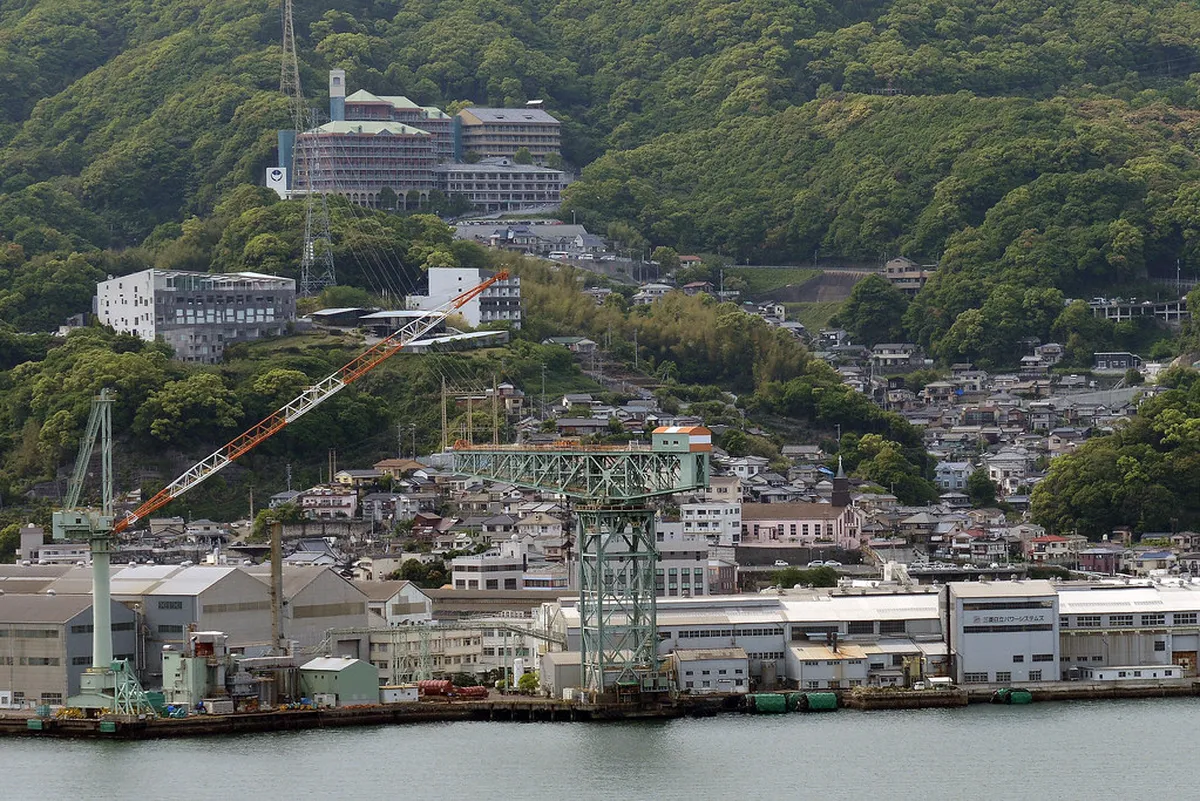
Built in 1863, the Former Glover Residence is the oldest surviving wooden Western-style house in Japan and a UNESCO World Heritage site. The building's distinctive circular floor plan was unusual for the era, and large verandas wrap around the structure to provide shade and ventilation through the summer heat. At first glance the house reads as purely Western, but its core construction follows traditional Japanese post-and-beam technique, with roof supports and stone foundations that reflect local craftsmanship.
The stone-floored verandas, latticed arches, and French windows signal clear Western influence, while the tile roof adorned with demon-headed tiles reflects Japanese tradition. This harmonious fusion of styles makes the residence a genuine architectural hybrid of the treaty port era. The interior remains carefully preserved with Victorian-era furniture and personal effects, and informational plaques in both Japanese and English explain each room's significance.
The garden surrounding the residence is equally impressive with its year-round floral displays and stone paths leading to harbor viewpoints. Most visitors spend at least thirty minutes exploring the residence and its immediate grounds. It is a quiet place to reflect on the enormous changes that started on this hillside more than 160 years ago.
Other Notable Buildings and Architecture
Beyond the main residence, the park houses eight other historic structures relocated from across the city to create this cohesive cultural museum. Each mansion reflects the specific tastes and circumstances of the families who once lived there, and taken together they paint a vivid picture of Nagasaki's cosmopolitan foreign settlement.
The Former Ringer House, built in 1865 for British merchant Frederick Ringer, stands out for an unusual construction detail: its foundation stones were shipped from Vladivostok, a small window into just how internationally connected Nagasaki's merchant community was. The Former Alt House, built for tea exporter William Alt, impresses with its grand Tuscan pillars and spacious interiors that reflect the high-end lifestyle of the era's most successful traders. Both buildings often host temporary exhibits about the city's maritime history.
The Former Mitsubishi No. 2 Dock House, dating from 1896, sits at the highest point of the park and originally served as a rest area for crew members whose ships were undergoing repairs at the nearby shipyard. It now offers the widest panoramic view in the garden, making it a prime photography stop. The Former Walker House, relocated in 1974, offers a more intimate British cottage atmosphere and a quiet corner to catch your breath. You can see how Western designs were adapted to local climate and materials across all of these structures. Architectural enthusiasts will also find similar historical contrasts at the Sofukuji Temple in the city center.
Cultural Connections: Madame Butterfly and Puccini
Glover Garden is often called the "Madame Butterfly House" setting, and while the opera's plot is fictional, the atmospheric connection to the site is real. The picturesque harbor view from the veranda of the Glover Residence strongly evokes the romantic atmosphere of Puccini's masterpiece. Glover's own cross-cultural marriage to Tsuru Awajiya has long fueled speculation that his life helped inspire the opera's themes of love across cultural boundaries.
Visitors can find a beautiful statue of the Japanese soprano Miura Tamaki, who became famous worldwide for her emotional portrayal of Cio-Cio-San. A monument to composer Giacomo Puccini also stands prominently in the garden, honoring his contribution to global culture. Both statues are positioned near some of the most picturesque flower beds in the park, with the view looking out toward Mount Inasa.
Even visitors unfamiliar with opera find this section of the garden memorable. The combination of sculptures, blooming gardens, and harbor views creates one of the most photographed spots in all of Nagasaki. You can often hear themes from the opera playing softly near the statues, adding a layer of atmosphere to the historic setting.
Top Highlights and Panoramic Views
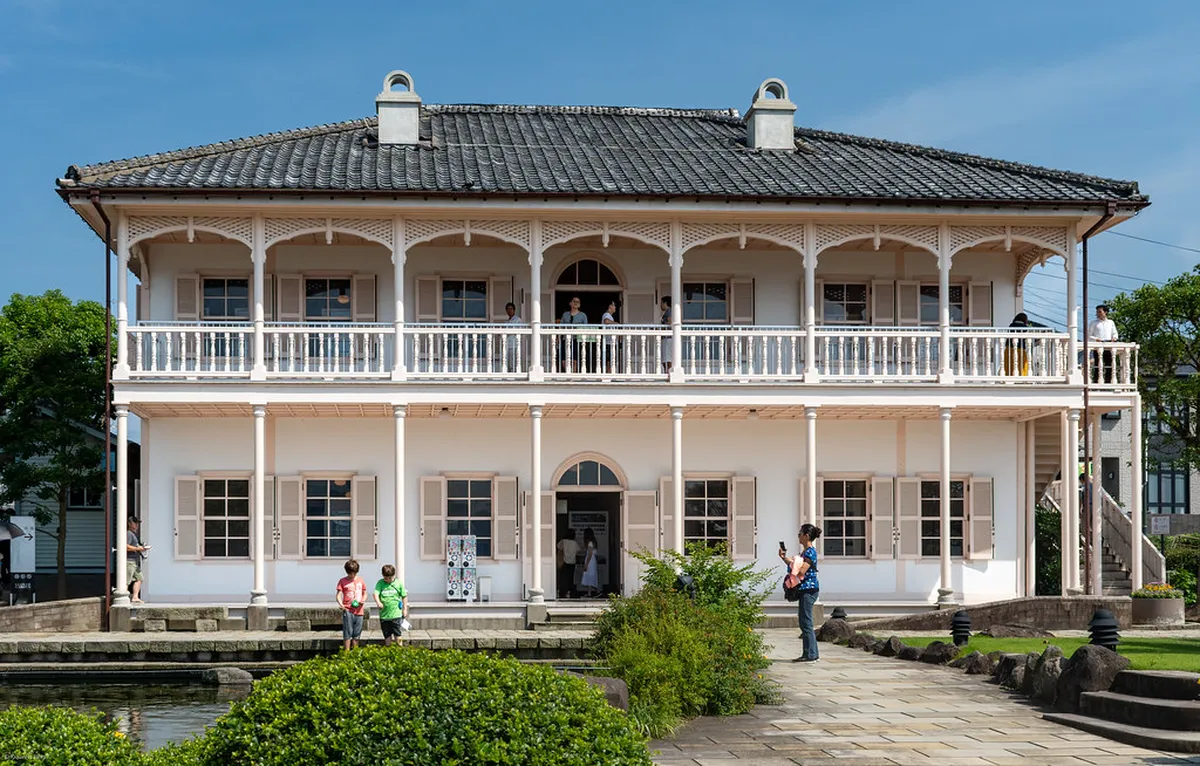
The park's location on a steep hillside provides unparalleled views of Nagasaki Port. From the Former Mitsubishi No. 2 Dock House at the summit, you can see the massive Mitsubishi shipyards across the water — a direct visual link between Thomas Glover's legacy and the industrial giant that grew from his work. Watching the sunset from this vantage point is a highlight for many visitors, as the city lights begin to appear across the harbor.
Searching for the hidden Heart Stones is one of the garden's most beloved activities for couples and families in 2026. At least two heart-shaped stones are embedded in the stone-paved paths; local legend says touching them brings luck in love. One is located near the Former Glover Residence, another near the rest house. The hunt itself encourages visitors to slow down and observe details of the path they might otherwise walk straight past.
Photography enthusiasts should visit the top observation areas in the last 90 minutes before closing. The late afternoon golden-hour light falls directly across the harbor and the shipyard cranes, producing warm, dramatic shots that midday light cannot match. The garden paths are also lined with seasonal flowers including azaleas in spring and hydrangeas through early summer, so each visit brings a different palette depending on when you arrive.
Essential Visitor Information and Logistics
Getting to the garden is simple using the local tram system. Take tram Line 5 to the Ishibashi terminus, the final stop on the green line. From there, follow the signs to the Glover Sky Road, a moving walkway and elevator system that carries you directly to the upper entrance of the park. This eliminates the steep uphill climb and is the recommended approach for all visitors, especially those with mobility concerns.
Admission for adults is ¥1,300 as of the April 2026 price revision. Students (elementary, junior high, and high school) pay ¥650. A reduced rate of ¥650 for adults and ¥320 for students applies with a disability handbook. An annual passport is available at ¥3,250 for adults and ¥1,620 for children, giving unlimited visits for a year. Standard opening hours are 08:00 to 18:00 daily, with the last admission accepted at 17:40. Hours extend during seasonal night openings — check the official Glover Garden site for the 2026 schedule.
| Ticket type | Price (¥) | Notes |
|---|---|---|
| Adult (15+) | 1,300 | Updated April 2026 |
| Student (elementary–high school) | 650 | — |
| Adult – disability discount | 650 | With disability handbook |
| Student – disability discount | 320 | With disability handbook |
| Annual passport (adult) | 3,250 | Unlimited visits for 1 year |
| Annual passport (child) | 1,620 | Unlimited visits for 1 year |
The garden is located at 8-1 Minamiyamatemachi in the southern part of the city, within walking distance of several other major sites. You can visit the Oura Church immediately after finishing your tour — it is a five-minute walk from the lower garden exit. Plan to spend at least 90 minutes to see everything comfortably; the site gets crowded from mid-morning when tour buses arrive, so an early start pays off.
Insider Tips for a Smooth Visit
Use the top-down route without exception. Take the Glover Sky Road elevator from Ishibashi to the uppermost entrance, then walk downhill through the garden toward the lower exit. This saves your legs for the long exploration ahead and means you reach the most dramatic viewpoints — at the summit near the Dock House — while you still have full energy. Walking uphill from the bottom entrance is exhausting and rarely recommended by repeat visitors.
Always enter from the top: take tram Line 5 to Ishibashi terminus, then use the Glover Sky Road elevator to the upper entrance. Walk downhill through the park — the reverse direction up from the lower gate is a very steep climb.
A detail most travel guides miss: the garden operates a dress rental service popular with social-media visitors. You can rent a period-appropriate kimono or a Western-style dress at the entrance area, then photograph yourself against the harbor backdrop and historic facades. If this appeals to you, arrive early and bring suitable shoes, as the rental counter fills up quickly on weekends. The souvenir shops near the lower exit are also worth a stop for Nagasaki castella (Portuguese-influenced sponge cake) and local glass ornaments, both of which are unique to the region.
Tour buses fill the garden from mid-morning onward. Plan to arrive at opening (08:00) or in the last 90 minutes before closing for the quietest visit and the best golden-hour light over the harbour.
Combine your visit with the nearby Dejima island for a full half-day Meiji history circuit. From Dejima you can walk the Dutch Slope, passing more well-preserved Meiji-era homes, then climb to Glover Garden via the Sky Road. This sequence runs roughly 4 hours and covers the core of Nagasaki's international heritage without requiring a taxi or extra tram trips. Many local restaurants along this route serve Nagasaki Champon noodles, the city's most famous dish.
The last hour before closing on weekday evenings is the quietest time to find the Heart Stones without crowds. Consider carrying a small amount of cash for the tram fare and snack vendors inside the garden — the coffee shop and tea house inside the park are convenient, though drinks are slightly cheaper at vending machines outside the gate.
Frequently Asked Questions
How do I avoid the steep climb at Glover Garden?
You should use the Glover Sky Road vertical elevator located near the Ishibashi tram stop. This takes you to the top entrance so you can walk downhill through the park. It is the best option for travelers with mobility concerns or those visiting in hot weather.
Where are the heart stones located in the garden?
There are two main heart stones hidden in the stone-paved walkways of the park. You can find one near the Former Glover Residence and another in front of the rest house. Legend says touching them brings luck in love and finding a partner.
Is Glover Garden worth visiting in 2026?
Yes, the garden remains a top attraction for its unique architecture and harbor views. The 2026 season offers updated exhibits and well-maintained grounds for all visitors. It provides a peaceful escape from the busier parts of the city like the Nagasaki city center.
Can I see the Mitsubishi shipyards from the garden?
The upper levels of the garden offer a direct view of the massive Mitsubishi shipyards across the harbor. This is a great spot to see where many of Japan's modern ships are built. The view is especially impressive when large vessels are docked for repairs or construction.
Glover Garden is a must-see destination that blends beautiful scenery with deep historical roots.
By following this glover garden visitor guide, you can maximize your time and avoid the steep climbs.
Whether you are hunting for heart stones or exploring Meiji architecture, this park will not disappoint.
Make sure to include this hillside gem in your next Nagasaki itinerary for an unforgettable experience.
For more ways to experience this historic city, explore our Nagasaki attractions guide.