Mount Inasa rises 333 meters above the sparkling harbor to offer one of the most iconic vistas in Japan. This peak holds one of only three official World's New Three Great Night Views certifications on the planet, placing it alongside Hong Kong and Shanghai. Travelers flock here to witness the famous 10-million-dollar night view that illuminates the entire city basin below.
Visiting Mount Inasa is a highlight for any traveler exploring the historic city of Nagasaki during their Nagasaki trip. The summit provides a stunning panorama that captures the unique geography of the harbor and surrounding mountains. Most people choose the evening for their visit to experience the world-famous night lights flickering across the water.
What Is Mount Inasa? Nagasaki's World-Renowned Night View Spot
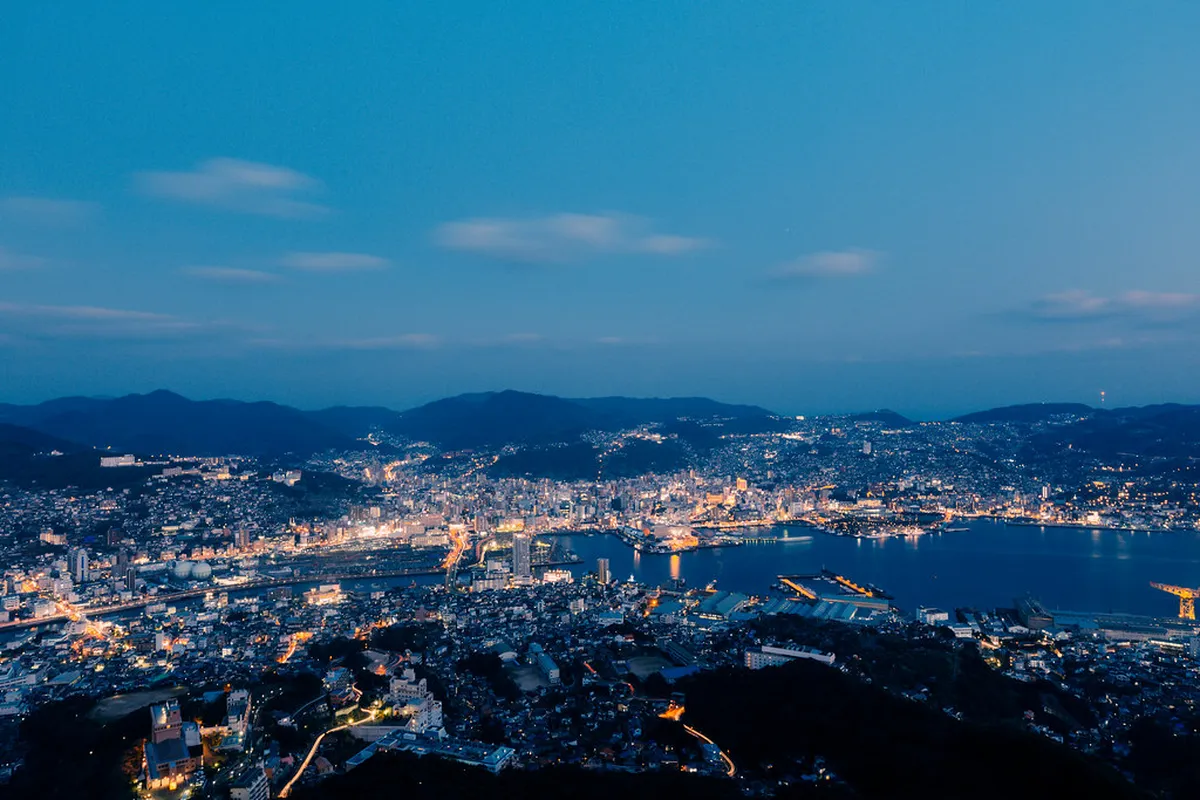
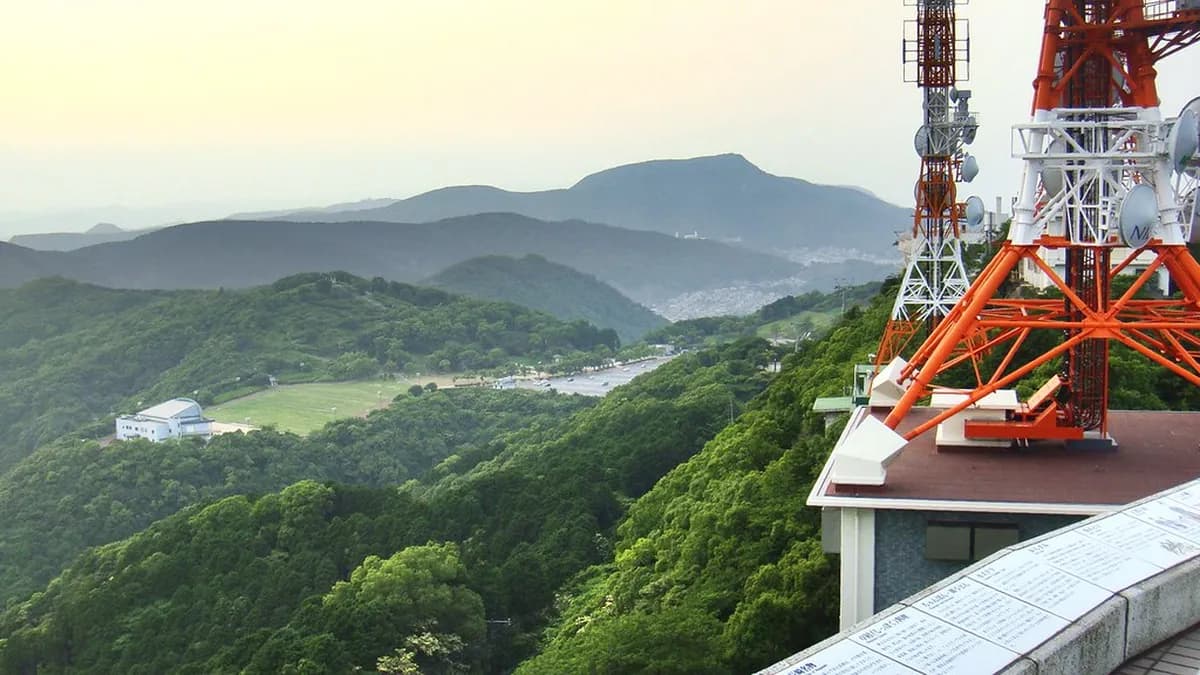
Mount Inasa, known locally as Inasayama, serves as the premier landmark for panoramic sightseeing in the region. Its 333-meter elevation provides a clear line of sight over the narrow harbor and the sprawling urban landscape, with views extending as far as the Goto Islands, Amakusa, and the Unzen volcanic peaks on exceptionally clear days. The summit was first certified as one of the "World's New Three Great Night Views" in 2012 and re-certified in 2021, confirming its enduring status alongside Hong Kong and Shanghai.
The term 10-million-dollar night view refers to the sheer density and beauty of the city lights seen from above. Because Nagasaki is built into a steep valley, the lights appear to climb the hillsides in every direction. This creates a shimmering bowl of light that looks spectacular from the glass-walled observatory deck — often described by visitors as a jewelry box spilled open.
Beyond the night views, the mountain offers a peaceful escape from the busy city streets below. The mountain remains a symbol of the city's resilience and its enduring beauty as a major international port. Arriving at the summit at dusk rewards you with three entirely different views — golden hour, blue hour, and full night — all from the same deck without moving a step.
Best Time to Visit Mount Inasa by Season
Arrive at the summit 20–30 minutes before sunset to catch golden hour, blue hour, and full night — three completely different views without moving a step. Winter (Dec–Feb) delivers the crispest, most vivid views as dry cold air maximises harbour visibility.
Timing your visit correctly is the most important step for achieving perfect photos and avoiding unnecessary crowds. Arrive at the summit 20 to 30 minutes before sunset to watch the sky transition from golden hour through blue hour into full night. This window is what photographers and repeat visitors return for, and it closes quickly once the sky turns fully black and the contrast between sky and city flattens.
Winter (December to February) delivers the crispest and most vivid night views because dry cold air maximizes harbor visibility. Sunset falls as early as 17:15 in January, so you can complete your visit by 19:00 on a weeknight with minimal crowds. Spring and autumn provide milder temperatures and comfortable waiting conditions on the outdoor deck; mid-November through early December adds vibrant autumn foliage on the surrounding hillsides and is particularly popular.
Summer evenings (June to August) are enjoyable but humidity can soften the distant harbor lights. The best overall window for view quality and crowd balance is October through February. Always check the local sunset time for Nagasaki before you depart — in spring sunset falls between 18:15 and 19:00, so board the ropeway by 17:45 to secure a good railing position before peak crowds arrive.
Top Things to See at the Summit
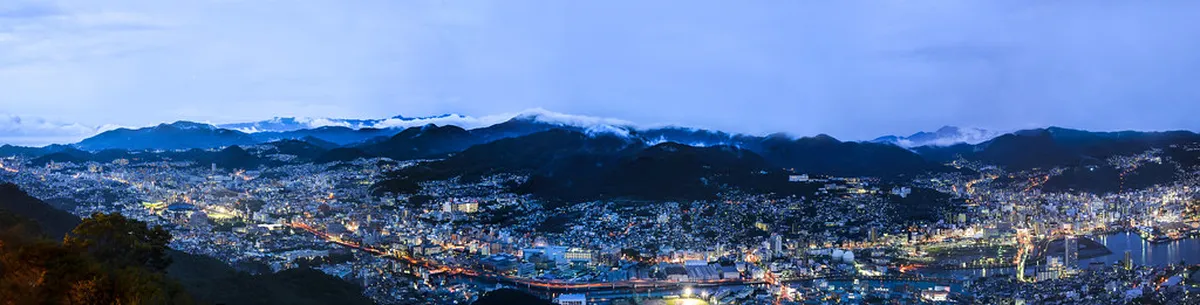
The main attraction at the summit is the glass-walled cylindrical observation building which features a 360-degree viewing area on both the indoor level and the open rooftop terrace. The rooftop is the better option for photography because it eliminates glass reflections entirely. Notably, the rooftop terrace stays open 24 hours, meaning you can visit by taxi or car after the ropeway closes at 22:00 if you want a late-night view with almost no crowds.
Restaurant ITADAKI on the second floor of the observatory offers a premium dining experience with floor-to-ceiling windows overlooking the entire harbor. It serves lunch from 11:30 and dinner from 17:00; window tables fill quickly during the sunset rush so reservations are strongly advised if you want to combine dining with the night view. On the ground floor, INASA CAFE operates from 10:00 to 21:00 and sells snacks and hot drinks for visitors waiting for the sky to darken.
Inasa-yama Park spreads across the slopes below the observatory and features walking trails, lawns, and an outdoor concert venue. Azaleas bloom beautifully here in late spring, and the park is also famous as the annual venue for the summer rock festival Sky Jamboree. Families often visit the park during the day to use the playground equipment and enjoy the fresh mountain air without the evening crowds.
Choosing Your Transport Method: Ropeway, Slope Car, or Bus
Travelers can choose between several transport methods depending on their budget and starting point. The Nagasaki Ropeway is the most traditional choice and offers a scenic five-minute ride from Fuchi Shrine Station to Inasa-dake Station at the summit. What many visitors do not know is that the gondolas were designed by Kiyoyuki Okuyama — the industrial designer behind several Ferrari models — and are affectionately named "Hoshi no Shizuku" (Star Drop) and "Tsuki no Shizuku" (Moon Drop). The fully glass-walled cabins provide a sweeping aerial preview of the city lights during the ascent.
Drivers should park in the free lower lot (approximately 400 spaces, located about 15 to 20 minutes on foot below the summit) and ride the Nagasaki Inasa-yama Slope Car to the top in about eight minutes. The slope car is less crowded than the ropeway during peak evening hours and is the most practical option for visitors arriving by rental car. Note that the summit parking area is small and closed to regular passenger cars on evenings, weekends, and public holidays — do not attempt to drive all the way up on busy nights.
Public buses are the cheapest option from the city center. Nagasaki Bus lines 3 and 4 run from Nagasaki Station to the "Ropeway-mae" stop (approximately 7 minutes, 190 yen one way), followed by a two-minute walk to Fuchi Shrine Station. In the evenings, a free shuttle loop bus also departs from major downtown hotels and drops you directly at the ropeway base — confirm availability with your accommodation before you visit, as the schedule varies by season.
Step-by-Step: How to Visit Mount Inasa Observatory
Follow these steps for a smooth journey from the city center to the mountain summit. If you are staying at a participating hotel, reserve a seat on the free shuttle bus in advance — it drops you off directly at Fuchi Shrine ropeway station with no transfers. Check the weather and the live camera feed at the ropeway station website before you leave to confirm summit visibility.
- Step 1 — Travel to Fuchi Shrine Station: Take bus lines 3 or 4 from Nagasaki Station (7 min, 190 yen) or the free hotel shuttle. The walk from the bus stop to the station entrance is about two minutes.
- Step 2 — Buy your ropeway tickets: Purchase at the counter or automated machines (IC cards accepted). Round-trip adult fare is 1,250 yen. Check the monitor at the station for current summit visibility before buying.
- Step 3 — Board the gondola: Gondolas depart every 15 minutes from 18:00–22:00 (every 20 minutes earlier in the day). Stand near the windows for the best aerial views on the ascent — the ride takes about five minutes.
- Step 4 — Walk to the observatory: From Inasa-dake Station, follow the lit path for about three minutes to the circular observation building. Do not stop at the car park.
- Step 5 — Access the rooftop deck: Take the elevator or stairs to the open-air rooftop. Claim a railing position at least 20 minutes before sunset on weeknights (40 minutes on weekends). Keep your return ticket safe.
Ticket Prices and Operating Hours (2026 Update)
The summit observation deck is free to enter. You only pay for transport to get there. All prices below are current as of 2026 — verify with the official website before visiting as fares may be revised.
| Transport option | Adult fare | Journey time | Notes |
|---|---|---|---|
| Ropeway – round trip | ¥1,250 | ~5 min each way | Daily 9:00–22:00; IC card accepted |
| Ropeway – one way | ¥1,040 | ~5 min | — |
| Slope Car – round trip (lower lot) | ¥1,000 | ~8 min each way | Free lower parking lot (~400 spaces) |
| Slope Car – one way | ¥600 | ~8 min | — |
| City bus (lines 3 & 4) to ropeway base | ¥190 | ~7 min from Nagasaki Station | Alight at Ropeway-mae stop |
| Taxi from Nagasaki Station | ~¥2,000 | ~15 min | Practical for groups of 3–4 |
The Nagasaki Ropeway operates daily from 9:00 to 22:00. Gondolas run every 20 minutes from 9:00 to 18:00 and every 15 minutes from 18:00 to 22:00. A round-trip adult ticket costs 1,250 yen; a one-way adult ticket costs 1,040 yen. Junior and senior high school students pay 940 yen round-trip; elementary school children and toddlers pay 620 yen round-trip. Ticket machines accept both cash and IC cards. Check the Mount Inasa Map Location to find the best walking route to the station.
The Slope Car from the free lower parking lot runs between 9:00 and 22:00. A one-way adult ticket costs 600 yen; a round-trip costs 1,000 yen. Bus lines 3 and 4 from Nagasaki Station cost 190 yen one way to the ropeway base. Taxis from Nagasaki Station reach the summit in roughly 15 minutes and cost around 2,000 yen one way — practical for groups of three or four splitting the fare. The observatory interior closes at 22:00, but the outdoor rooftop terrace remains accessible around the clock.
Photography Tips for the Best Night Shots
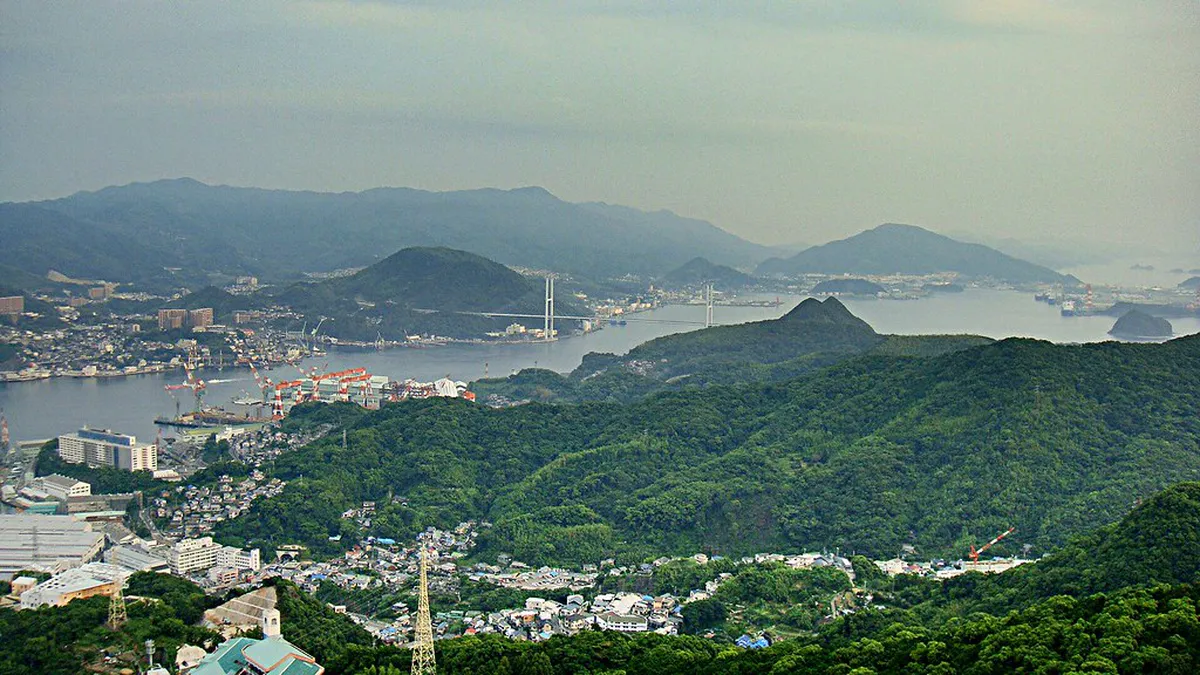
The open-air rooftop deck is the better shooting location because it eliminates glass reflections entirely. If you shoot from the indoor level, press your lens directly against the glass and switch off your flash — any reflection will ruin the image of the city lights below. The deck wraps fully around the building, so there is almost always an uncrowded section if you are willing to walk around it.
A compact travel tripod or gorilla-pod braced against the railing gives dramatically better results than shooting handheld. If you are traveling light, use the flat top of the rooftop railings as a makeshift stabilizer and fire the shutter with a self-timer or remote to eliminate camera shake. For camera settings: start with ISO 400–800, aperture f/4–f/8, and a shutter speed of 4–8 seconds, adjusting upward if the harbor lights look underexposed.
Thick fog can sometimes block the view entirely, often arriving without warning. Check the live camera feed displayed on the monitor at the ropeway base station before buying your ticket. If the summit is clouded over, consider visiting the Glover Garden or the nearby Dejima district until conditions improve, then check the live feed again before heading back to the ropeway. You can also review our Mount Inasa night view guide for additional photography insights.
Troubleshooting Common Visit Issues
The last ropeway gondola runs at 22:00. Set a phone alarm for 21:30 to avoid missing it. If you miss it, taxis usually wait near the summit parking area — do not attempt to walk down after dark.
Weekends and public holidays bring the longest queues for the ropeway gondolas. If you arrive at peak time and face a long wait, consider taking a taxi (about 2,000 yen from Nagasaki Station) directly to the summit parking area — taxis bypass the ropeway line entirely and drop you within a three-minute walk of the observatory. Alternatively, the Slope Car from the lower parking lot tends to be less crowded than the ropeway even on busy evenings.
Missing the last ropeway at 22:00 is a common mistake for first-timers absorbed in the view. If you miss it, taxis usually wait near the summit parking area. Walking down to the city is possible in daylight but steep and not recommended after dark. If you plan a late night, arrive by taxi or car rather than relying solely on the ropeway.
- Fog: Check the live summit camera at the ropeway station before buying tickets.
- Crowds: Visit on weekday evenings in autumn or winter for the shortest queues.
- Last ropeway: Gondolas stop at 22:00 — set a phone alarm for 21:30 to allow time to descend.
- Summit parking: Closed to regular passenger cars on evenings, weekends, and holidays — use the free lower lot instead.
- Maintenance closures: The ropeway occasionally suspends for scheduled maintenance; check the official website before your trip.
Nearby Recommended Spots in Nagasaki
Many visitors combine their mountain trip with a visit to the historic Glover Garden during the afternoon. This open-air museum features beautiful Western-style mansions and offers its own lovely views of the port. It is located just a short tram ride away from the ropeway base station.
You can also explore the man-made island of Dejima to learn about the unique Dutch trading history. The restored buildings provide a fascinating look at how Japan interacted with the world during its period of isolation. This site is conveniently located near the city center and the main shopping districts.
The Nagasaki Atomic Bomb Museum offers a powerful and moving look into the city's resilient past. Most travelers spend at least two hours here before heading toward the mountain for the evening view. A practical 2026 day itinerary runs: Peace Park and museum in the morning → Dejima and Glover Garden in the afternoon → Mount Inasa ropeway ride at dusk.
Preparation and Essential Visitor Checklist
The summit temperature is typically several degrees lower than the city below, and wind chill on the open rooftop can be surprisingly sharp even in summer. Bring an extra layer or windbreaker regardless of the daytime forecast. Comfortable walking shoes are also essential as you will cover the park paths, the observatory building, and the rooftop terrace on foot.
Ensure you have a reliable data connection by Comparing Prepaid SIM Cards for Travel in Japan before your arrival. A live data connection lets you check real-time weather, the summit camera feed, and the latest ropeway schedule on the go. Travelers using a rail pass should learn Which Japan Rail Pass To Choose for the best value on Kyushu routes.
- Warm jacket or windbreaker (essential even in summer)
- Fully charged camera or smartphone
- Compact travel tripod or gorilla-pod
- Cash for transport tickets (IC card also accepted at the ropeway)
- Comfortable walking shoes
- Offline map downloaded to your phone
- Mobile data for live summit camera check
- Return ticket kept safely in your pocket
Frequently Asked Questions
How much does it cost to visit Mount Inasa?
The observatory deck itself is free to enter for all visitors. However, you must pay for transport like the Nagasaki Ropeway, which costs about 1,250 yen for a round-trip ticket. Travelers can also see Hashima Island tours for other local activity costs.
Is there a free shuttle bus to the Mount Inasa Ropeway?
Yes, a free shuttle bus operates between several major downtown hotels and the Fuchi Shrine ropeway station. You must reserve your seat online in advance to guarantee a spot. The bus stops at locations like JR Nagasaki Station and Hotel Monterey for guest convenience.
What is the best time to visit Mount Inasa for night views?
The best time to visit is during the blue hour, which is about 30 minutes before sunset. This allows you to watch the city lights turn on as the sky darkens. Arriving early also helps you avoid the largest crowds that gather right after dark.
Can I drive my own car to the summit of Mount Inasa?
You can drive to the middle parking lot and take the slope car to the summit. Direct driving to the very top is restricted during peak evening hours to manage traffic. Using the middle lot is a great way to save money on ropeway fees.
Mount Inasa remains a must-see destination for anyone visiting Kyushu in 2026. The combination of easy access and world-class views — twice certified as one of the World's New Three Great Night Views — makes it a highlight of any Japanese itinerary. Plan your visit around the sunset to experience the full magic of the city lights.
Whether you choose the traditionally scenic ropeway or the budget-smart slope car from the lower parking lot, the experience is truly unforgettable. Arrive 20 to 30 minutes before sunset, secure a spot on the open rooftop terrace, and give yourself at least an hour at the top. Nagasaki's shimmering harbor awaits you at the summit of this spectacular mountain.