Nagasaki Peace Park is a free, open-air memorial in the Urakami district of Nagasaki, built on the site most severely affected by the atomic bomb dropped on August 9, 1945. It is open 24 hours a day with no admission charge, making it accessible to every visitor regardless of schedule or budget.
The park forms the northern anchor of a memorial complex that also includes the Nagasaki Atomic Bomb Museum, the Nagasaki National Peace Memorial Hall, and Hypocenter Park — all within a ten-minute walk of one another. Most visitors combine all four sites in a single half-day block.
This guide covers the key monuments, the museum, how to reach the park by streetcar, and the practical details that help you plan a respectful and meaningful visit in 2026.
Peace Park
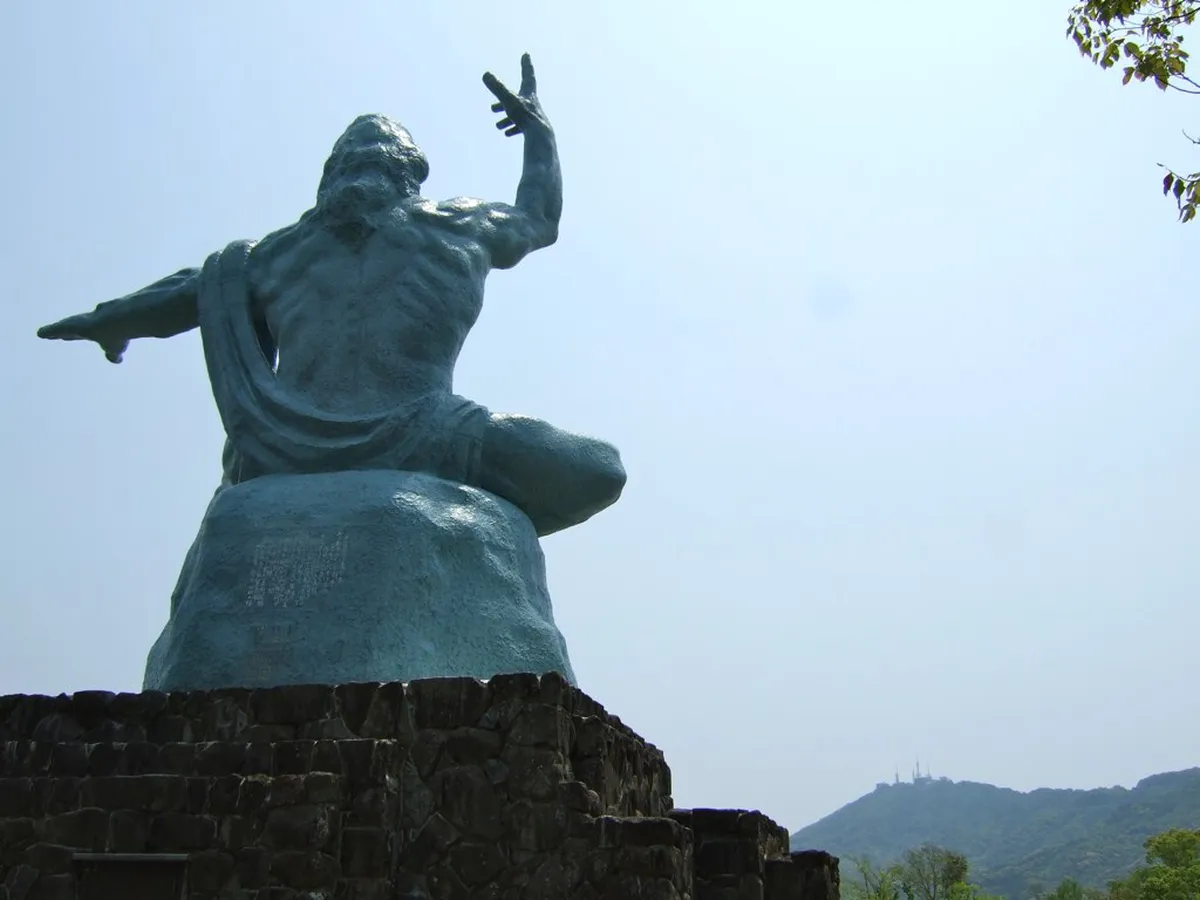
Nagasaki Peace Park sits on a low hill in Matsuyamamachi and is centered on the towering Peace Statue, created by sculptor Seibo Kitamura and unveiled in 1955. The statue stands 9.7 metres tall. Its raised right hand points skyward toward the threat of nuclear weapons, its outstretched left hand gestures toward eternal peace, and its closed eyes offer a silent prayer for the victims.
At the southern end of the park, the Fountain of Peace was built as an offering of water to those who died in agony searching for it after the blast. Its two arcing sprays are shaped to evoke the wings of a dove. Water is a recurring motif throughout the entire memorial complex — a deliberate reminder of what survivors most desperately sought.
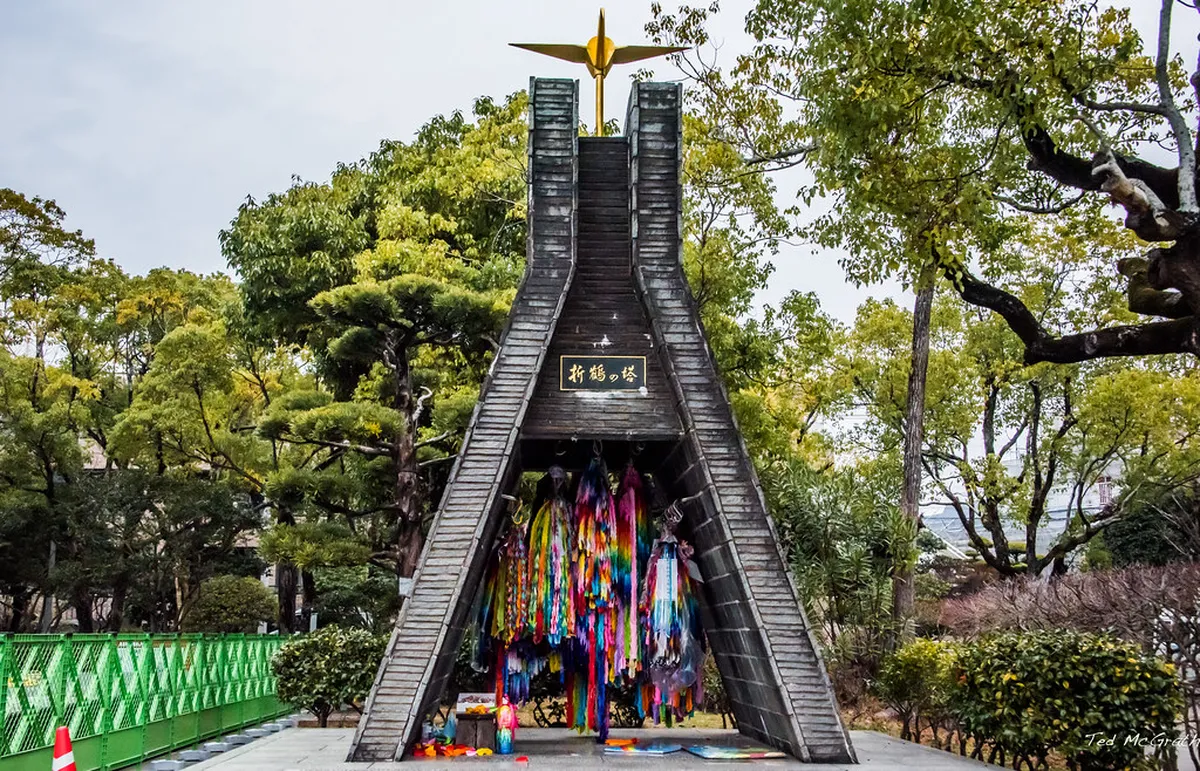
Surrounding the Peace Statue you will find monuments donated by governments and organisations from across the world. Each carries a distinct message of solidarity and a commitment to nuclear abolition. The Tower of Cranes nearby holds thousands of folded paper cranes brought by visitors and schoolchildren from Japan and abroad — a tradition rooted in the story of Sadako Sasaki, the twelve-year-old Hiroshima survivor who folded paper cranes until her death from leukemia caused by radiation exposure. You are welcome to bring your own cranes and leave them at the tower.
Every day at exactly 11:02, a mournful bell tone sounds through the park — the precise minute the bomb detonated in 1945. If you are present at that moment, pause. It is the most powerful minute you will experience here, and no monument conveys the same weight.
Every day at 11:02 a bell chime sounds through the park — the exact minute the bomb detonated in 1945. Any day you visit, that moment is worth stopping for. The park is free and open 24 hours; early morning on weekdays is the quietest time to visit.
Hypocenter Park and the Memorial Hall
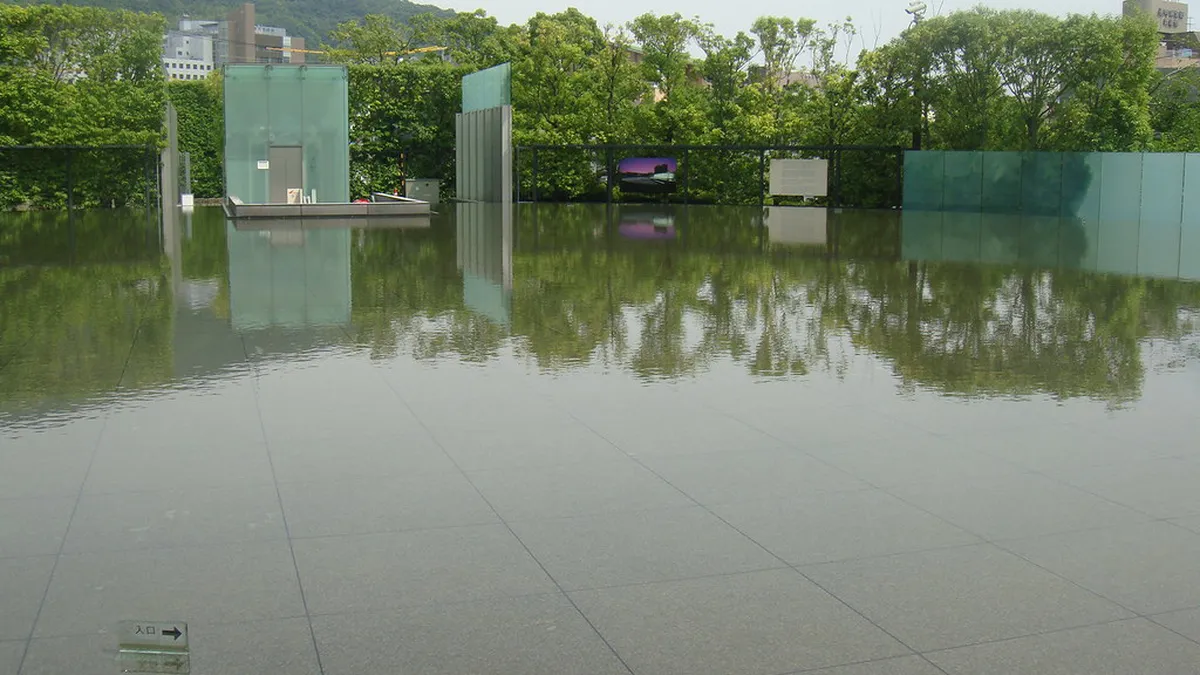
A five-minute walk downhill from the Peace Statue brings you to Hypocenter Park, where a simple black monolith marks the point directly below where the bomb detonated at an altitude of roughly 500 metres. The area is deliberately minimal — there is no monument competing for attention, only the quiet weight of what that spot represents.
Beside the monolith stands a damaged pillar from the former Urakami Cathedral, retrieved from the rubble. The cathedral stood just 500 metres from the epicenter and was destroyed in seconds. Its reconstructed successor can be seen from the park today. An open pit nearby exposes a cross-section of soil containing broken roof tiles, glass fragments, and bricks from the 1945 destruction — the only place in the memorial complex where you can look directly at physical evidence still in the ground.
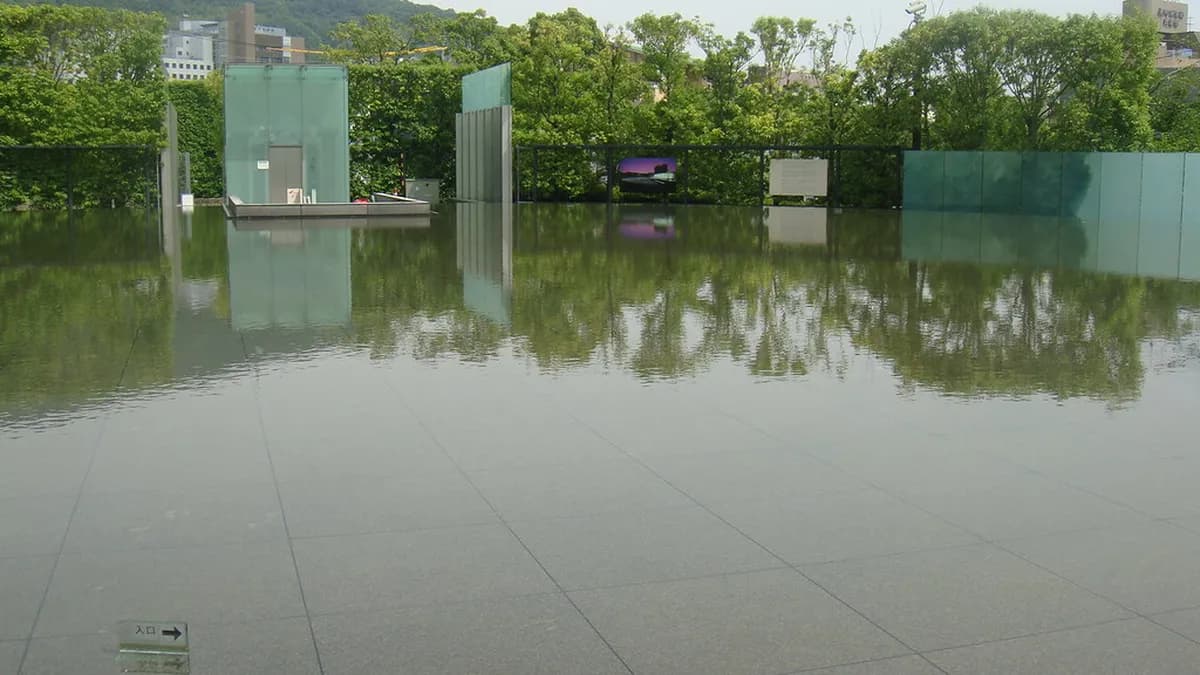
Adjacent to the museum is the Nagasaki National Peace Memorial Hall for the Atomic Bomb Victims, a quiet underground space designed around light and water. Books recording the names of all identified victims are held here, and visitors may leave personal messages of peace. Admission is free. It tends to be less crowded than the museum and rewards those who take the time to sit in silence for a few minutes.
The full loop — Peace Park, Hypocenter Park, Memorial Hall — takes roughly 45 minutes at a comfortable pace. Add 90 minutes for the museum. Plan a minimum of 2.5 hours for the entire complex, more if you want to read exhibits carefully.
Atomic Bomb Museum
The Nagasaki Atomic Bomb Museum sits on a hillside between the Peace Park and Hypocenter Park. It walks visitors through the city as it existed before August 9, 1945, then through the bombing itself, and finally through the long recovery. Four separate sections cover the pre-war city, the bomb and its immediate aftermath, the human cost, and the global case for nuclear abolition.
The exhibits include burned clothing, melted household objects, photographs of the destroyed city, and a reproduction of the Fat Man plutonium bomb. The remains of the Urakami Cathedral — once the largest Catholic church in East Asia — are among the most striking artifacts. Survivors of the bombing, now in their eighties and nineties, have given recorded testimonies shown in the lecture hall. These video accounts are the most emotionally demanding part of the visit and should not be rushed.
Admission is 200 yen for adults and 100 yen for children. Opening hours in 2026 are 08:30 to 17:30, with the last entry at 17:00. The museum closes on the last working day of December and on December 29 through 31. Arrive at opening time on weekdays to avoid groups; weekends and the week of August 9 draw significantly larger crowds.
The museum address is 7-8 Hiranomachi, Nagasaki City. From the streetcar stop at Hamaguchi-machi (lines 1 or 3), it is a five-minute uphill walk. The same stop serves both the museum and the Hypocenter Park, making it the logical starting point for visitors who want to work uphill to the Peace Statue rather than downhill.
The August 9 Peace Ceremony
Each year on August 9, Nagasaki holds the Nagasaki Peace Memorial Ceremony at the foot of the Peace Statue. The ceremony marks the anniversary of the bombing and includes a minute of silence at 11:02, a reading of the Peace Declaration by the mayor of Nagasaki, and speeches from representatives of nations attending the event.
Attendance is open to the public, but the park fills early and security measures are in place around the ceremony site. Arrive by 10:00 if you want a position near the statue. The surrounding streets and memorial complex remain accessible throughout the day. August 9 is the most emotionally charged day to visit, and also the most crowded — if you prefer a quieter experience, the days immediately before or after the anniversary are far less busy while the city remains in a reflective mood.
The 11:02 daily chime exists year-round, not only on August 9. Any day you visit, that moment is worth stopping for.
Colorful Origami Peace Doves and Murals
Throughout the Peace Park you will notice thousands of colorful paper cranes and doves displayed in glass cases and hung from memorial structures. These offerings arrive continuously from schools, community groups, and individual visitors across Japan and around the world. The practice of folding one thousand cranes — senninbari — carries the wish for peace and recovery. At Nagasaki it became inseparable from the park's identity.
Near the museum entrance you can also see murals and art installations that incorporate origami imagery alongside written prayers in multiple languages. The combination of color and solemnity gives this part of the complex a different tone from the stark Hypocenter monolith — more hopeful, more directed toward future generations.
If you fold your own cranes before visiting, the Tower of Cranes is the designated place to leave them. There is no ceremony required; you simply add them to the display. Many school groups do this as part of organized visits, so mornings in spring and autumn see the most activity around the tower.
Getting Around Nagasaki
The Peace Park sits in the Urakami district, roughly two kilometres north of Nagasaki Station — not within walking distance of the city centre, unlike most other major sights. The streetcar is the correct tool. Take line 1 or line 3 from Nagasaki Station toward the Urakami direction and get off at Matsuyamamachi stop for the Peace Park, or at Hamaguchi-machi for the Atomic Bomb Museum and Hypocenter Park.
The flat-rate fare is 140 yen per ride regardless of distance. A one-day tram pass costs 500 yen and covers unlimited rides; it pays for itself after four trips. Purchase the pass from the driver on your first boarding. Trams run approximately every five to eight minutes between 06:00 and 23:00. The tram network also connects to Glover Garden, Dejima, and the Oura Church district, so a single day pass handles the full tourist circuit.
Note that a transfer between lines sometimes requires changing at Shinchi Chinatown stop. Ask the driver for a transfer ticket (norikae-ken) when exiting at Shinchi Chinatown to avoid paying the flat fare twice. This is the only stop where transfers are necessary.
- Nagasaki Electric Tramway — 140 yen flat rate; 1-day pass 500 yen; lines 1 and 3 serve the Urakami memorial complex
- Local buses — useful for Mount Inasa ropeway access; take Route 3 or 4 to Ropeway-Mae stop
- Walking — the Peace Park, Hypocenter Park, Memorial Hall, and museum are all within a ten-minute walk of each other once you are in Urakami
Nagasaki Beyond the Memorial Complex
Beyond its tragic history, Nagasaki is a layered port city shaped by centuries of foreign trade with China, the Netherlands, and Portugal. That international heritage is visible in the architecture, the food, and the cultural sites scattered across the city's many hills.
You can explore the historic Dejima island to learn about the Dutch merchants who lived there during Japan's two centuries of isolation. The reconstructed warehouses, residences, and gates give the area a distinctly European texture. Nearby, the Meganebashi — the Spectacles Bridge — is the oldest stone arch bridge in Japan, originally built in 1634.
For the best view of the city, take the ropeway from Fuchi Shrine Station to the Inasayama observatory. The 360-degree night view of Nagasaki's harbor lights is consistently ranked among Japan's top three night views. The round-trip ropeway ticket is 1,250 yen for adults. The observatory is open 09:00 to 22:00.
Nagasaki's food culture is equally distinctive. Champon — thick udon noodles stir-fried with vegetables, meat, and seafood in a rich broth — is the city's signature dish and is best eaten in Chinatown, the oldest in Japan. Castella sponge cake, brought by Portuguese traders in the 16th century, is the most popular souvenir and available at every bakery near the major sights. The Sanno Shrine, a short walk from the Hypocenter, is worth a stop for its one-legged torii gate — the other half destroyed by the bomb blast, still standing after eighty years.
Practical Tips for 2026 Visitors
The park itself is free and open at all hours. The museum charges 200 yen for adults, 100 yen for children. The Memorial Hall is free. Bring cash for the museum — card acceptance is limited at smaller cultural sites in Nagasaki.
Wear comfortable shoes. The park sits on a slope, and the route between the Peace Statue, Hypocenter Park, and the museum involves uneven paving and stairs. The main upper plaza around the Peace Statue is largely flat and paved, manageable for wheelchair users, but some connecting paths between levels are steep. Elevators near the park entrance help with the elevation change from the streetcar stop.
Photography is permitted throughout the park and around the memorial structures. Inside the museum, photography rules vary by gallery — look for posted signs. Talking on the phone and loud conversation are strongly discouraged anywhere in the memorial complex. Most Japanese visitors observe a natural quiet without prompting; follow their lead.
August 9 is the busiest day of the year — arrive by 10:00 if you want a position near the Peace Statue for the ceremony. The days immediately before or after the anniversary are far less crowded while the city remains in a reflective mood.
The Nagasaki Atomic Bomb Museum and the nearby Nagasaki attractions hub page list current opening hours, which can change around national holidays and the August 9 anniversary. Check before you go.
Frequently Asked Questions
Which nagasaki peace park visitor guide options fit first-time visitors?
First-time visitors should prioritize the Peace Statue and the Atomic Bomb Museum. These sites provide the essential historical context needed to appreciate the city. You can find more details on our Nagasaki attractions page to help plan your day effectively.
How much time should you plan for a Nagasaki Peace Park visit?
You should allow approximately three to four hours to see both the park and the museum properly. This timing includes walking between sites and reading the informative plaques. Many travelers find that a half-day visit is sufficient for a meaningful experience.
What is the best way to get to the Peace Park from Nagasaki Station?
The easiest way is to take the blue or red streetcar lines to the Peace Park stop. The journey takes about 15 minutes and costs 140 yen per adult. From the tram stop, it is a short walk to the main entrance.
Is the Nagasaki Peace Park suitable for children?
Yes, the park is a safe and educational environment for families with children. While the museum contains some graphic content, the park itself is a peaceful space for reflection. It offers a valuable opportunity to teach children about the importance of peace.
Visiting Nagasaki Peace Park is a deliberate act. The park, the museum, the Memorial Hall, and the Hypocenter together form one of the most complete and sobering memorial complexes in the world — and admission to most of it is free. Budget a half-day minimum.
The 11:02 chime, the Tower of Cranes, the exposed soil at Hypocenter Park — these are the details that stay with visitors long after they leave. Nagasaki does not demand that you feel a particular way. It simply asks that you pay attention.
For more Nagasaki planning, see our Nagasaki itinerary and Peace Park visiting guide.