The Nagasaki Atomic Bomb Museum is one of the most important memorial sites in Asia. It documents the atomic bombing of August 9, 1945, with a depth and honesty that leaves a lasting impression on every visitor. Located in the Urakami district, it sits just minutes from the Hypocenter Park and the Nagasaki Peace Park, making the three sites a natural single-morning itinerary.
Admission is ¥200 for adults and ¥100 for schoolchildren. Children below elementary-school age enter free. The museum opens daily at 8:30 and closes at 17:30, with extended hours until 18:30 from May through August and until 20:00 on August 7 to 9 around the anniversary of the bombing. The museum is closed December 29 to 31 only.
This guide covers what to expect inside the exhibits, how the museum compares to Hiroshima, practical access from Nagasaki Station, and how to combine your visit with the surrounding peace sites. Whether this is your first visit or you have already been to Hiroshima, the museum offers a perspective you will not find anywhere else in Japan.
| Period | Opening hours | Last admission |
|---|---|---|
| Jan–Apr, Sep–Nov | 08:30–17:30 | 17:00 |
| May–Aug (standard) | 08:30–18:30 | 18:00 |
| 7–9 August (anniversary) | 08:30–20:00 | 19:30 |
| Dec 29–31 | Closed | — |
What to Expect Inside the Museum
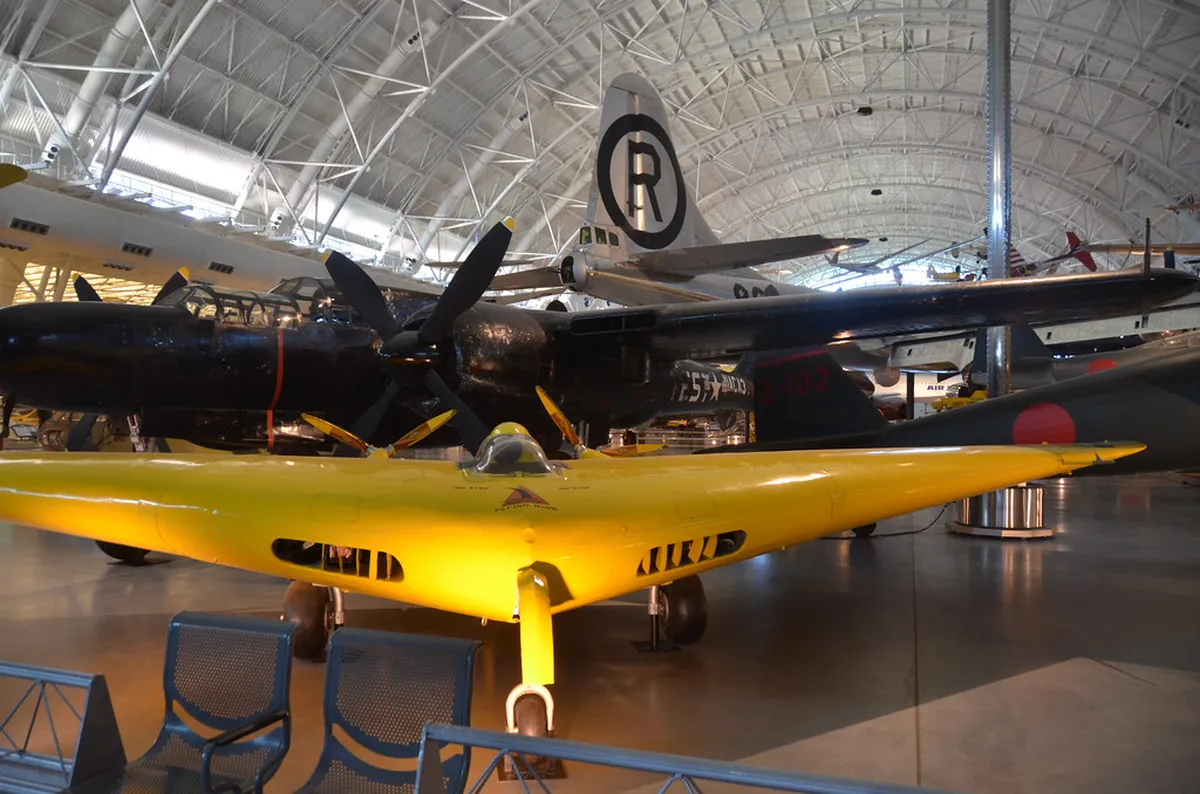
Most of the museum sits underground, beneath a distinctive glass dome that you enter by descending a ramp from the entrance plaza. The main exhibition is organized chronologically, moving from the moments before the detonation through to the city's long recovery and the broader global story of nuclear weapons. The pacing is measured and the bilingual labeling (Japanese and English) is consistent throughout.
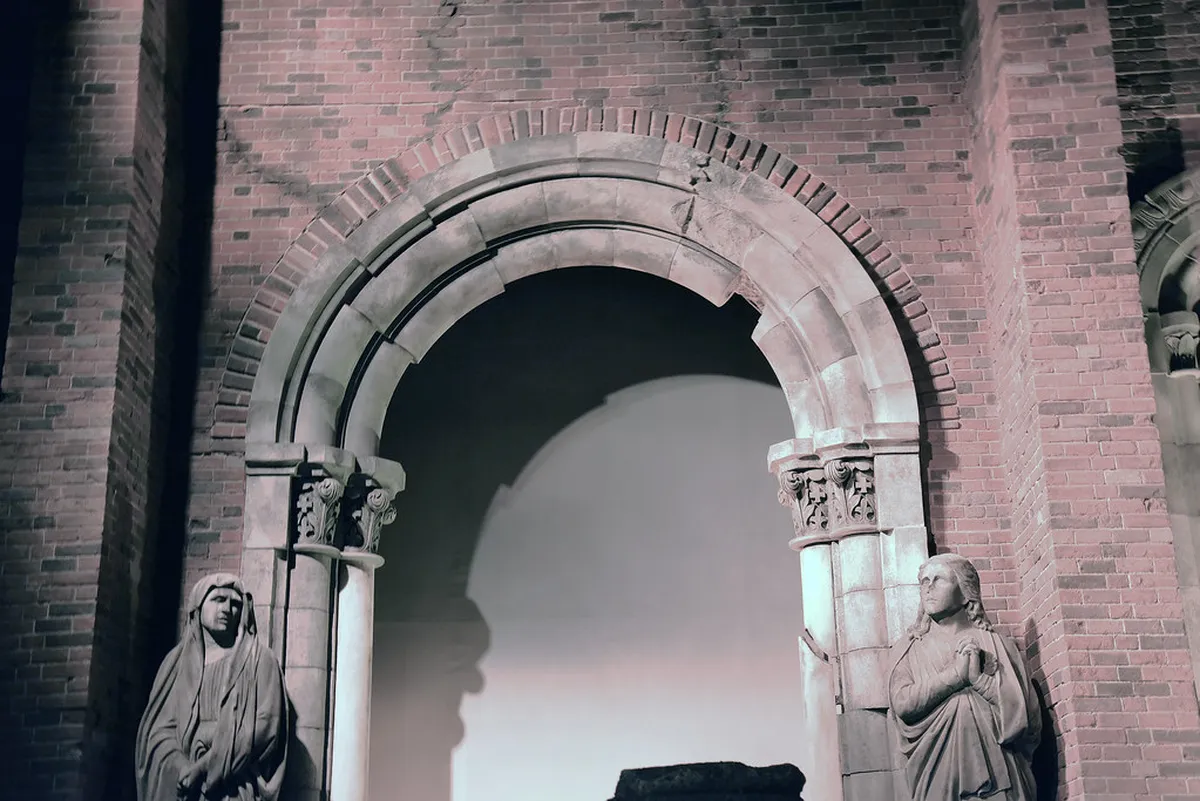
The first large hall is anchored by enormous artifacts. A reconstruction of the shattered front facade of Urakami Cathedral dominates one end of the room. Opposite it, a steel water tower bent by the blast wave and sections of twisted rail give a visceral sense of the explosion's force. Smaller objects — melted rosaries, stopped watches, charred roof tiles you can touch — bring the abstract scale down to something personal and human.
A "Fat Man" replica in the next room is displayed open at the back, exposing the cross-section of the plutonium implosion device. A detailed chart next to the model explains the physics of how the bomb worked. Adjacent to it, an interactive diorama of Nagasaki lets visitors trace the spread of the fireball, heat rays, blast, and radiation across the city grid. These two exhibits together make the physics of nuclear weapons clearer than any comparable display in Japan.
The final sections address the global nuclear age: Cold War proliferation, atmospheric testing, and disarmament appeals from Nagasaki and Hiroshima. Upstairs, a cinema room alternates two documentary films throughout the day. The shorter Anime-style film runs about 10 minutes; the longer documentary, "The A-bombing of Nagasaki," runs 20 minutes and is the more informative of the two. Both are in Japanese, but the imagery communicates the core message without translation. Plan for 90 minutes to two hours inside to see the exhibition without rushing.
Nagasaki vs Hiroshima: Is It Worth Visiting Both?
The most common question from visitors is whether the Nagasaki museum is worth the trip if they have already been to the Hiroshima Peace Memorial Museum. The answer is yes, without hesitation. The two museums cover the same catastrophic event from genuinely different angles, and they complement rather than repeat each other.
Hiroshima's museum is stronger on the history leading up to the bombings and on certain medical details. Nagasaki's museum is stronger on explaining the physics of the bomb, on post-war nuclear proliferation, and on the global scope of nuclear testing and its effects on civilian populations around the world — from Kazakhstan to Bikini Atoll. Its coverage of nuclear policy and disarmament is more comprehensive than what Hiroshima offers.
One detail that no other museum in Japan provides: Nagasaki includes survivor testimonies from Western prisoners of war. At the time of the bombing, roughly 200 Westerners — mostly Dutch and Australian, with some British and American prisoners — were interned near Nagasaki working in Mitsubishi factories. Their accounts appear in the exhibition and offer a perspective entirely absent from the Hiroshima museum. For non-Japanese visitors, these testimonies can feel particularly immediate. One documented survivor stated the bomb, as devastating as it was, had secured his own survival — he was certain he could not have lasted another six months of forced labor under the conditions of his internment.
If you can only visit one city, Hiroshima's museum is more internationally recognized and its Peace Memorial Park is larger in scale. But if your itinerary allows for Nagasaki, the museums are different enough that visiting both deepens your understanding considerably. Most travelers who make this comparison leave Nagasaki feeling they saw something the rest of the world under-reports.
Museums, Art, and Culture in Nagasaki
Adjacent to the Atomic Bomb Museum, the Nagasaki National Peace Memorial Hall for the Atomic Bomb Victims deserves a separate 20 to 30 minutes. Its underground Remembrance Hall is built around illuminated columns that rise through the ceiling into a sculpted basin at ground level. At the far end stands the register of victims' names. The space does not add much factual content beyond what the museum covers, but the atmosphere is profoundly different — quieter and more contemplative — and many visitors find it the more emotionally resonant stop of the two.
The Nagasaki Prefectural Art Museum near the waterfront is a strong contrast. Designed by architect Kengo Kuma, the building uses a canal running through its base to connect interior and exterior spaces. Its permanent collection includes a notable holding of Spanish paintings alongside works by Nagasaki artists shaped by the city's long history of foreign contact. Check the official peace-nagasaki.go.jp website for current exhibition schedules at the Peace Memorial Hall. Learn more about the museum's historical background on Wikipedia. Most cultural sites in the city open at 8:30 and run until 17:30, with last admission typically 30 minutes before closing.
Parks, Gardens, and Outdoor Spots in Nagasaki
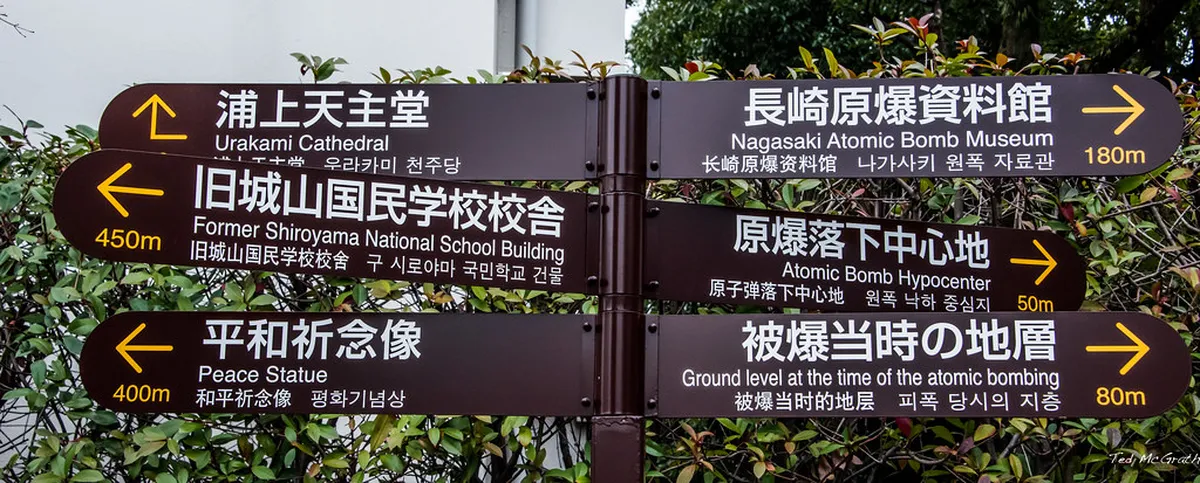
Nagasaki Peace Park sits on the hill directly north of the Hypocenter Park, about a five-minute walk from the museum. The bronze Peace Statue at its center — right hand pointing skyward toward the threat of nuclear weapons, left hand extended horizontally — was created by sculptor Seibo Kitamura and unveiled in 1955. The surrounding grounds hold stone monuments donated by nations from around the world. The park is free to enter and quiet in the early morning hours before tour groups arrive.
Hypocenter Park marks the exact point 500 meters above which the Fat Man bomb detonated. A simple black monolith stands at the center of an open plaza. A preserved section of the original ground surface nearby shows the compressed earth and debris layer from the moment of the blast. Standing at the hypocenter and then walking 10 minutes to the museum sets a powerful context before you enter the exhibits. Most visitors do it in that order rather than visiting the museum first.
Suwa Shrine, about 20 minutes south by tram, offers a grand wooded hillside with stone staircases and traditional Shinto architecture. It hosts the famous Nagasaki Kunchi Festival each October, one of the most visually striking festivals in Kyushu. The shrine grounds provide a cool, shaded retreat during the humid summer months.
Must-See Nagasaki Attractions
Glover Garden occupies a hillside in the Minamiyamate district and preserves the residences of Western merchants who shaped Nagasaki during the Meiji Restoration. The estate's elevated position gives panoramic views of the harbor. Entry costs ¥620 and the grounds reward at least an hour of wandering. Early morning or late afternoon light suits photography here far better than midday.
Dejima is the restored Dutch trading post that was Japan's only sanctioned window to the outside world during the Edo period. The reconstructed warehouses, residences, and gardens on the original footprint feel genuinely immersive. Admission is ¥520, and the on-site museum explains the mechanics of sakoku — the isolationist policy that made this small artificial island so historically significant. Find more highlights in our Nagasaki attractions guide.
Mount Inasa is consistently ranked among the top three night views in Japan alongside Hakodate and Kobe. A ropeway at ¥1,250 roundtrip carries you to the 333-meter summit. The observation deck is most spectacular after 19:00 when the city lights below reflect against the bay. Budget at least an hour for the experience, and go on a clear night — cloud cover on the hillsides is common and can eliminate the view entirely.
Family-Friendly and Budget-Friendly Options in Nagasaki
Nagasaki's tram network covers most major attractions for a flat fare of ¥150 per ride in 2026. A one-day tram pass costs ¥600 and pays for itself after four trips. Most hotels sell the pass at the front desk. Children pay half fare on the trams, and the Peace Park, Hypocenter Park, and most outdoor monuments are free. This makes a full day of meaningful sightseeing achievable for well under ¥2,000 per adult even before factoring in the low museum admission.
The Nagasaki Penguin Aquarium in the eastern part of the city is the standout choice for families with young children. It keeps over 200 penguins across nine species and occasionally allows timed beach walks near the enclosures. Entry is ¥520 for adults. Note that the Atomic Bomb Museum contains graphic imagery — photographs of burns, radiation injuries, and human remains embedded in artifacts — that is not appropriate for very young children. The Peace Park and Hypocenter are generally more suitable for families with small kids than the interior exhibits.
Budget travelers can build a strong day by combining free outdoor sites in the morning with the low-cost museum admission and tram travel in the afternoon. Nagasaki Champon noodles — a local specialty of thick noodles in a pork-and-seafood broth — cost between ¥900 and ¥1,200 at most local restaurants in the Urakami district near the museum, making lunch both cheap and genuinely regional.
How to Plan a Smooth Nagasaki Attractions Day
Arrive at 08:30 opening to beat the midday tour groups. Visit the Hypocenter Park first, then walk five minutes north to the Peace Park, then enter the museum — this sequence provides the most powerful emotional context before the exhibits.
Begin at the Hypocenter Park by 09:00. The site is quietest in the first hour after opening. Walk north five minutes to the Peace Park, then enter the Atomic Bomb Museum by 09:30. Spending 90 minutes inside brings you out before the large midday tour groups arrive. The adjacent Peace Memorial Hall is worth 20 minutes more before you head for lunch.
From the museum area, take the tram south toward the city center. Dejima is a convenient midday stop, with its exhibits ideal for a cooler indoor break during summer. Afterward, head uphill to Glover Garden in the mid-afternoon, when the light on the harbor is at its best for photography. You can find transit details and a full route map in our Nagasaki sightseeing list.
Save Mount Inasa for the evening. The ropeway runs until 22:00 and the view is most rewarding after sunset. A private guide joining you from the morning through the museum significantly changes the experience — guides who have personal family connections to the Urakami district, where many Catholic Christian families lived and died in the bombing, bring a layer of local testimony that placard text cannot replicate. Private car tours are also available for visitors with limited mobility, typically offering door-to-door service from Nagasaki Station or the cruise terminal.
Getting to the Museum
The museum contains graphic photographs of burn injuries and human remains embedded in artifacts — not suitable for very young children. The outdoor Peace Park and Hypocenter Plaza are more appropriate stops for families with small kids. Also note: the museum is underground below a glass dome; the large red-brick building visible from the road is a separate institution.
From Nagasaki Station, board the blue tram Line 1 or the red Line 3 toward Akasako. Exit at Hamaguchimachi — the stop is also signed as "Atomic Bomb Museum" in English — and pay the ¥150 flat fare as you exit at the front door. The ride takes 10 to 15 minutes. From the tram stop, cross the main road and walk uphill for about 200 meters to reach the museum car park and side entrance. The main entrance is slightly further around toward the glass dome.
A common first-timer mistake is entering the large red-brick building visible from the road. That building is a separate institution. The Atomic Bomb Museum is underground, below the glass dome structure. If you arrive by car, the museum has an adjacent parking lot. IC cards (Suica, Pasmo, or local Hayakaken) work on Nagasaki's trams and buses and save time at the fare box. You can top them up at convenience stores or JR Nagasaki Station.
The museum bookshop by the foyer stocks a 106-page "Nagasaki Peace Guidebook" for ¥300, which includes ground plans of both the museum and the surrounding area. A more richly photographed 50-page A4 brochure, "Records of the Nagasaki Atomic Bombing," costs ¥500 and contains many of the same images displayed in the main exhibition. Both publications have parallel English text and are worth picking up before you leave.
Keep Exploring
Gunkanjima Island is a hauntingly preserved abandoned coal mining settlement visible from Nagasaki harbor. Regular boat tours depart from the Nagasaki Port Terminal for ¥3,000 to ¥4,500 depending on operator. The crumbling concrete apartment blocks and industrial ruins earned the island UNESCO World Heritage status in 2015. Landing on the island is weather-dependent — tours sometimes circle the perimeter without docking if conditions are poor.
Unzen Onsen in Nagasaki Prefecture offers hot spring bathing at the foot of active volcanic terrain. The sulfurous bubbling jigoku (hells) in the town center are free to walk through and smell of sulfur strongly on calm days. Onsen ryokan in the area typically charge ¥12,000 to ¥25,000 per person per night including dinner, making it a comfortable half-day or overnight extension from Nagasaki city.
Sasebo, about 50 minutes north by express train, is home to the 99 Islands (Kujukushima) archipelago. Glass-bottomed boat tours and kayaking are both available. Sasebo is also credited with inventing the Sasebo burger — a thick American-influenced burger with fresh ingredients — introduced during the postwar US military presence and still a local institution worth seeking out.
More Nagasaki Attractions
Spectacles Bridge (Megane-bashi) is the oldest stone arch bridge in Japan, built in 1634 by a Chinese monk. When the water level is calm, the two arches and their reflections form the shape of a pair of spectacles. The bridge spans the Nakashima River in a quiet district of the old town and takes about 10 minutes to visit as a photo stop on a walking route through the city center.
Sofukuji Temple showcases authentic Ming-dynasty Chinese architecture, built in 1629 by Chinese residents of Nagasaki during the city's period of open trade with China. The bright red lacquered gates and intricately carved stone foundations are genuinely distinct from standard Japanese Buddhist temple aesthetics. The Nagasaki Confucius Shrine nearby, funded and built by the Chinese community in the late 19th century, holds rotating exhibitions of artifacts on loan from Beijing's National Museum of China.
Frequently Asked Questions
Which nagasaki atomic bomb museum visitor guide options fit first-time visitors?
First-time visitors should prioritize the main museum and the Peace Park. A self-guided walking tour using a digital map is often the best way to see these sites. You can find more planning tips at Discover-Nagasaki.com for a smooth first trip.
How much time should you plan for nagasaki atomic bomb museum visitor guide?
Plan for at least two to three hours inside the museum itself. If you include the Peace Park and the Memorial Hall, set aside a full morning. This allows you to process the information without feeling rushed through the emotional exhibits.
Is the museum suitable for young children?
The museum contains graphic imagery and somber themes that may be difficult for very young children. Parents should use their discretion when deciding which sections to visit. The outdoor Peace Park is generally more suitable for families with small kids to explore together.
What is the best way to get to the museum from Nagasaki Station?
Take the blue or red tram lines toward Akasako and get off at the Atomic Bomb Museum stop. The ride takes about 10 to 15 minutes from the main station. From the tram stop, follow the signs for a short five-minute walk to the entrance.
A visit to the Nagasaki Atomic Bomb Museum rewards time and attention. The exhibits are carefully sequenced, the bilingual coverage is thorough, and the artifacts carry an emotional weight that photographs and descriptions cannot fully replicate. Combined with the Peace Park and Hypocenter just steps away, the Urakami district gives visitors a concentrated encounter with one of history's most consequential moments.
Use this nagasaki atomic bomb museum visitor guide to plan your visit for 2026 with the right amount of time and a clear sense of what to prioritize inside. The museum opens early and the first 90 minutes of the day are the quietest. Whether you are visiting Nagasaki as a standalone destination or as part of a broader Kyushu itinerary, the museum is not simply a stop on a list — it is the reason many people make the trip.
For broader Nagasaki planning, explore our Nagasaki itinerary for multi-day trip options, and see our comprehensive atomic bomb museum guide for additional context.
Other essential Nagasaki stops nearby: our Nagasaki Peace Park and Glover Garden guides cover what to expect.