
Taiyuin-byo serves as the final resting place for the third Tokugawa shogun, Iemitsu. This site offers a peaceful atmosphere within the lush forests of Nikko. Many visitors prefer this mausoleum for its quiet beauty and intricate details. It provides a unique look at Edo period craftsmanship at a scale more intimate than the famous Toshogu Shrine next door.
The complex sits on a hillside surrounded by towering cedar trees. It balances grand architecture with a deep respect for the natural environment. 22 of its structures are designated National Treasures of Japan, making it one of the most significant concentrations of protected architecture in the country. The mausoleum is part of the Shrines and Temples of Nikko UNESCO World Heritage Site.
This taiyuin (taiyuin-byo mausoleum) visitor guide helps you navigate the historic grounds. We cover everything from the five gates and inner halls to practical transit and photography tips for 2026. Understanding the filial piety that shaped this site adds depth to every gate and lantern you pass.
Must-See Taiyuin Attractions
The Niomon Gate forms the vermilion entrance to the mausoleum. Two Nio guardian statues — Mishaku and Naraen — stand 3.2 meters tall and are among the largest guardian figures in the Nikko complex. Their fierce expressions are meant to ward off evil, and the bright red lacquer work makes this gate one of the most photographed spots on the grounds.
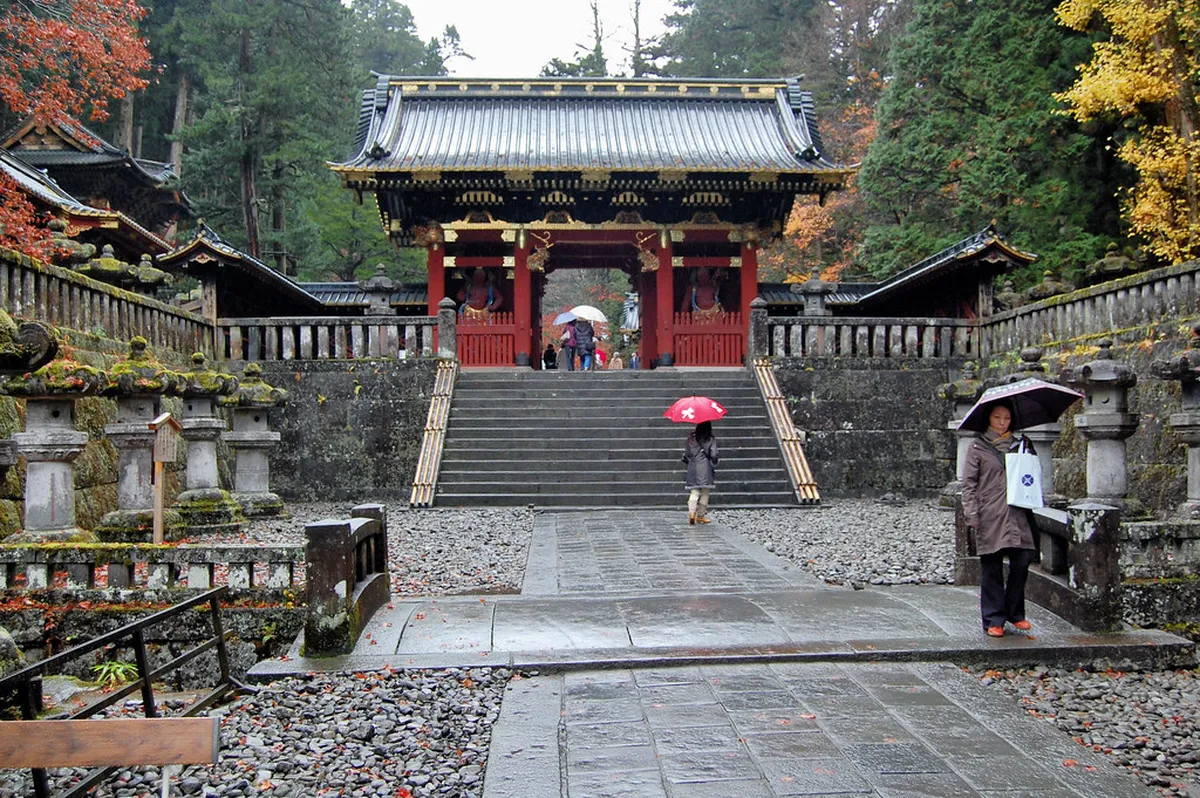
Further up the stone staircase is the Nitemmon Gate, one of the largest gates in all of Nikko. Four statues guard it: the red-skinned Komoku-ten (protector of the west sky) and the green Jikoku-ten (protector of the east sky) face you as you approach. The gods of Wind and Thunder stand behind them. Look up at the ceiling beams as you pass through — the detail carved into the rafters is easy to miss.
The Yashamon Gate, known as the Peony Gate, is decorated with carvings of peonies — a classical symbol of wealth and royalty. Beyond it, the Karamon Gate displays white dragon and white crane carvings in a Chinese-influenced style. The final gate, the Kokamon Gate, leads to Iemitsu's actual mausoleum and was nicknamed Ryugumon (Gate of the Dragon Palace) for its ornate castle-like profile.
- Niomon Gate: vermilion entrance with 3.2-meter Nio guardian statues — arrive at 08:00 to see it without crowds
- Nitemmon Gate: the largest gate in Nikko, guarded by the Four Heavenly Kings
- Yashamon Gate: peony carvings — Bell Tower (Shoro) and Drum Tower (Koro) stand on either side as Important Cultural Properties
- Karamon Gate: white dragon and crane carvings inspired by Chinese architecture
- Kokamon Gate: faces northwest toward Toshogu Shrine as an act of filial piety by Iemitsu
Venturing Inside Taiyuin-byo
After purchasing your ticket at the entrance, the first structure you encounter past the Niomon Gate is the Suibansha, or purification pavilion. Twelve granite pillars support this water ablution basin where visitors ritually cleanse their hands before proceeding. It is one of the most elaborate temizuya at any temple in Japan — take time to appreciate the gold and lacquer work before moving on.
The Bell Tower (Shoro) and Drum Tower (Koro) stand near the Yashamon Gate. In the Edo period these were sounded to mark time for temple ceremonies. The drum symbolizes birth; the bell symbolizes death. Together they represent the Buddhist cycle of reincarnation, and the pairing appears at major temple complexes across Japan — but few settings frame them as dramatically as this cedar-lined hillside.
The Prayer Hall (Haiden) is the interior highlight of the complex. Its ceiling is painted with over 140 dragons executed during the Edo period by artists of the Kano school — Kano Tanyu (1602–1674) and his brother Kano Yasunobu (1613–1685). Photography is not permitted inside the worship area; leave your camera down and simply look up. The Haiden and the Main Hall (Honden) are joined by a covered corridor in the Ishi-no-ma-zukuri style. The Honden itself is not open to the public, but its exterior ornamentation is visible from the courtyard.
Behind the main halls a blocked staircase winds up into the cedar forest toward Iemitsu's actual grave. The staircase is off limits to everyone except senior officials of the temple. Even so, the sight of stone steps disappearing into the ancient trees gives this final corner of the complex an atmospheric quality that many visitors find more moving than the gates themselves.
Architecture, Art, and Cultural History
The architecture of Taiyuin reflects a deliberate philosophy of modesty and filial respect. Iemitsu requested that his mausoleum not surpass the grandeur of Tokugawa Ieyasu's Toshogu Shrine. You can see this restraint in the choice of black lacquer over gold, and in the overall scale — rich in detail but composed rather than overwhelming.
The mausoleum blends Shinto and Buddhist traditions in a way that was characteristic of pre-Meiji Japan before the forced separation of the two faiths. Gates, purification rituals, and guardian statues from both traditions coexist within a few hundred meters of each other. The site functions as a sub-temple of the nearby Rinnoji Temple, and a combined ticket covering both is available for ¥900.
One detail that distinguishes Taiyuin-byo from almost every other shrine and temple in Japan is its orientation. Japanese sacred structures almost universally face south or east. Taiyuin-byo faces northwest — directly toward the Toshogu Shrine. Iemitsu apparently chose this configuration so that his spirit would forever bow in the direction of his grandfather, even at the cost of inviting the misfortune traditionally associated with a north-facing building. It is a quiet architectural act that says more about the man than any inscription.
The Cedar Forest and Stone Lantern Paths
The natural landscape is inseparable from the experience of Taiyuin-byo. Massive Japanese cedar trees (sugi) form a canopy above the stone staircases, filtering light onto mossy ground that feels entirely unchanged since the 17th century. The air stays cool even in July and August, making the site a practical refuge from summer heat as well as a spiritual one.
Hundreds of stone lanterns line the pathways between the gates. Each one was donated by a feudal lord (daimyo) as a demonstration of loyalty to the Tokugawa shogunate. Over centuries, thick green moss has colonized the lantern bases and the surrounding stonework. Walking through them feels more like moving through an ancient forest than visiting a conventional tourist site.
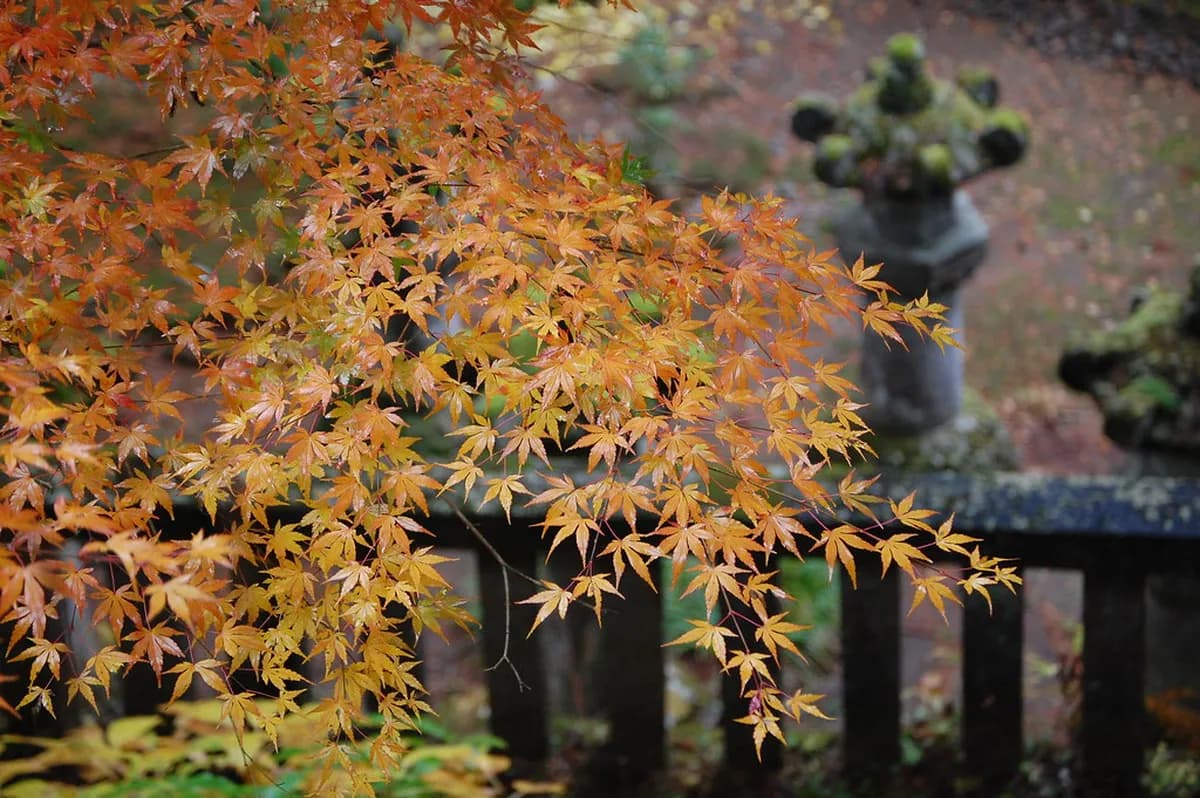
The autumn season (late October to early November) brings intense foliage color to the surrounding hills. The Shoyo-en garden adjacent to Rinnoji Temple — a short walk from Taiyuin-byo — is considered one of the best spots in Nikko for autumn leaf viewing and charges a small separate admission. Spring visits in April and early May offer cherry blossoms along the approach road, though the cedar canopy within the mausoleum grounds remains green year-round.
Best Time to Visit and Photography Tips
Because Taiyuin-byo faces northwest toward Toshogu Shrine, its main facade and gate fronts receive shade in the morning and direct light in the afternoon. For photography of the Niomon Gate and the Nitemmon Gate, arriving between 13:00 and 15:00 gives you the best natural light on the lacquerwork. This is the opposite of the advice you will often hear for Toshogu — so plan accordingly if you want to photograph both in the same day.
Photography inside the Haiden (Prayer Hall) is strictly prohibited — staff actively enforce this rule. Everything outdoors (gates, lanterns, cedar forest, staircase) can be freely photographed.
The opening hour of 08:00 is still worth targeting if you want the grounds to yourself. Large tour buses typically arrive from Tokyo between 09:30 and 10:30. Getting there at opening gives you the stone stairways and lantern paths in near silence, which is a different kind of reward than optimal light. Weekday visits in 2026 are noticeably quieter than weekends, particularly in May and October when Nikko draws its largest crowds.
Photography inside the Haiden (Prayer Hall) is prohibited without exception. Signs are clearly posted and staff enforce this rule. Everything outside — the gates, the lanterns, the cedar forest, the staircase to the grave — can be freely photographed. The best single shot in the complex is the view back down from the Yashamon Gate level, looking through the gate frames toward the valley below.
Tickets, Costs, and Family Practical Notes
Admission to Taiyuin-byo is ¥550 for adults and ¥250 for children (junior high school age and younger). The combined ticket covering Taiyuin and the Sanbutsudo hall at Rinnoji costs ¥900 for adults and ¥400 for children — a sensible option if you plan to visit both, which most visitors do. Tickets are purchased at the gate; there is no advance booking required or available.
| Ticket | Adult | Child (junior high and under) |
|---|---|---|
| Taiyuin-byo only | ¥550 | ¥250 |
| Taiyuin + Sanbutsudo (combined) | ¥900 | ¥400 |
| Opening hours (Apr–Oct) | 08:00–17:00 (last entry 16:30) | |
| Opening hours (Nov–Mar) | 08:00–16:00 (last entry 15:30) | |
The combined ticket (¥900 adult / ¥400 child) covers both Taiyuin-byo and the Sanbutsudo hall at Rinnoji Temple — a better value if you plan to visit both sites, which most visitors do on the same walk.
The site is manageable for families with children. The paths between gates are stone-paved and maintained, though the staircases can be steep in places. Younger children will need a hand on the higher steps. The whole complex takes 45 to 90 minutes at a relaxed pace, which sits comfortably within a family's attention span. Strollers are impractical on the stone stairs; a carrier is more useful here.
There are no food stalls inside the mausoleum grounds. The closest options are back near the main Toshogu approach, about a 10-minute walk. Bringing water is recommended, especially in summer. Small souvenir shops near the Toshogu entrance sell affordable local lacquerware and wooden items that are specific to the Nikko craftwork tradition.
Getting There and Planning Your Day
From JR Nikko Station or Tobu Nikko Station, take the World Heritage Bus (Tobu Bus) and get off at the Taiyuin-Futarasanjinja-mae stop. The journey takes roughly 10 minutes and costs ¥260. Alternatively, you can walk the shopping street from the station in about 35 to 45 minutes — the route passes the Shinkyo Bridge and gives you a ground-level feel for the scale of the hill the shrines occupy.
Most visitors combine Taiyuin-byo with the nearby Toshogu Shrine. The two sites are about 200 meters apart. The traditional approach is to visit Toshogu first — Iemitsu himself revered his grandfather and the ordering honors that relationship. After Toshogu, walk west through the forested path to reach the Taiyuin entrance. Allow a full half-day for both sites.
Wear comfortable shoes with grip. The stone paths are uneven and the staircases between gates are steep. Some inner areas require removing shoes before entering; wearing slip-on shoes saves time. Keep your voice low throughout — the site remains an active place of worship, not solely a tourist attraction. Follow all posted photography signs inside the halls.
Festival and Events in Nikko
The Yayoi Matsuri on April 16th and 17th features a mikoshi (portable shrine) procession at the nearby Futarasan Shrine. It is one of the oldest annual festivals in the Nikko area and marks the arrival of spring in the mountain region. Confirm exact dates before your visit as scheduling occasionally shifts.
The Toshogu Shrine Grand Festival on May 17th and 18th is the largest annual event in Nikko. Over 1,000 people dressed as samurai and feudal retainers re-enact the funeral procession of Tokugawa Ieyasu. The Autumn Festival on October 16th and 17th repeats the same procession format. Both events draw large crowds; booking accommodation well in advance is essential if you want to attend.
The autumn foliage season in late October and early November brings a different kind of spectacle to the Nikko hillsides. Several temples and shrines offer special evening illuminations during this period, casting the gates in warm artificial light after dark. These events run for a limited number of nights each year — check the Nikko Tourism Association website in September for confirmed dates for 2026.
Other Sightseeing Spots Near Taiyuin-byo
Taiyuin-byo sits within the densest concentration of historic monuments in Nikko, so combining sites is straightforward. The Futarasan Shrine is dedicated to the three sacred mountains of Nikko — Nantai, Nyoho, and Taro — and offers a quieter atmosphere than either mausoleum. Its forest paths connect directly to the other World Heritage sites and take about 10 minutes to walk.
The Shinkyo Bridge at the base of the hill marks the symbolic entrance to the sacred precinct. The vermilion lacquered bridge over the Daiya River is one of the most recognized images in Japanese travel photography. It costs ¥300 to walk across; viewing it from the riverside bank is free and gives you a better vantage point for photographs.
The Kanmangafuchi Abyss is a 20-minute walk from the shrine complex and is one of the least crowded spots in Nikko. Around 70 stone Jizo statues wearing red caps line the riverside path — local folklore holds that the number is uncountable and changes each time you try. The setting alongside the Daiya River and cedar forest makes it a compelling addition to any afternoon itinerary. For comprehensive planning, use our Nikko itinerary and Nikko travel guide to structure your visits to all the Nikko temples and shrines.
Where to Stay and How to Reach Nikko
Nikko is best reached from Tokyo via the Tobu Nikko Line from Asakusa Station, which runs limited express services that take about 110 minutes (Spacia limited express, reserved seating). JR trains from Shinjuku via Utsunomiya are an alternative for Japan Rail Pass holders, though the JR route involves a transfer and takes slightly longer. The Nikko Pass (sold by Tobu) covers the round-trip train and unlimited use of the World Heritage Bus for two days — a practical option if you plan to visit multiple sites.
Staying overnight in Nikko makes the early-morning quiet at Taiyuin-byo accessible without a predawn departure from Tokyo. Mid-range guesthouses and ryokan cluster around the station area and along the Daiya River. Rates on weekdays in 2026 run roughly ¥8,000 to ¥15,000 per person for a room with dinner and breakfast at a mid-tier ryokan. The town quiets significantly after 18:00, so an overnight stay also means you have the shopping street and river walks essentially to yourself in the evening.
Day trips from Tokyo are entirely feasible — most visitors manage Taiyuin-byo, Toshogu, and Shinkyo Bridge comfortably within six to seven hours. Leave Tokyo by 07:30 to arrive at the shrine complex by 09:30, spend three to four hours across the sites, and catch a late-afternoon train back. You can also add Lake Chuzenji or Kegon Falls by bus from the shrine complex if your schedule allows.
Frequently Asked Questions
How to get to Iemitsu Mausoleum?
You can reach the site by taking the World Heritage bus from JR Nikko or Tobu Nikko Station. Get off at the Taiyuin-Futarasanjinja-mae bus stop. The mausoleum is just a short walk from there. You can also walk from the nearby Toshogu Shrine in about ten minutes.
How much time should you plan for a visit?
Most visitors spend between 60 and 90 minutes exploring the grounds. This gives you enough time to see the major gates and the main hall. If you enjoy photography, you might want to stay longer. The peaceful atmosphere often encourages travelers to take their time.
What should travelers avoid when visiting?
Avoid wearing uncomfortable shoes because there are many stone steps to climb. You should also avoid loud talking to maintain the spiritual atmosphere. Do not take photos inside the main halls where signs prohibit it. Respecting these rules ensures a better experience for everyone.
Is Taiyuin worth including on a short itinerary?
Yes, it is definitely worth including even on a one-day trip. It offers a quieter and more spiritual experience than the busier shrines. Many people find the forest setting to be the highlight of their day. It provides a perfect balance to the more crowded tourist spots.
Taiyuin-byo is a masterpiece of Edo period architecture and a peaceful sanctuary. It offers a unique look into the life and legacy of Tokugawa Iemitsu. Visitors will appreciate the intricate art and the stunning natural surroundings. It remains one of the most significant historical sites in all of Nikko.
Planning your visit with this taiyuin (taiyuin-byo mausoleum) visitor guide ensures a smooth trip. Remember to wear comfortable shoes, arrive early for the quiet, and return in the afternoon for the best light on the gates. The mix of history, culture, and nature makes it a must-see destination in 2026.
Be sure to check out other local spots like the Kegon Falls and Ryuzu Waterfall during your stay. Nikko has so much to offer for every type of traveler. From ancient shrines to beautiful waterfalls, your journey will be full of wonder. Enjoy your adventure in the heart of the Tochigi prefecture.
For official details, visit the Taiyuin (Taiyuin-byo Mausoleum) official site.
