

Kanmangafuchi Abyss is a short riverside gorge in central Nikko where the Daiya River rushes past volcanic rock and a long row of weathered Jizo statues. It is close enough to the World Heritage shrine area to add to a first Nikko visit, but it feels quieter, greener, and more local than the main temple approach. In 2026, the best way to treat it is as a practical nature-and-culture stop rather than a standalone half-day destination.
This kanmangafuchi abyss visitor guide focuses on the decisions that matter on the ground: how to get there, when to go, how long to allow, what the path is like, and what mistakes to avoid. The walk is simple in dry daylight, but it is still a natural riverside trail with uneven patches, moss, roots, and limited facilities. Comfortable shoes and a realistic plan make a bigger difference here than advance booking.
The main reward is the contrast. After the ornate halls of Toshogu Shrine or the red crossing at Shinkyo Bridge, Kanmangafuchi Abyss gives you moving water, cedar shade, and stone figures that invite a slower pace. Visit early, keep the route compact, and leave time to pause instead of treating it as a quick photo detour.
Must-See Kanmangafuchi Attractions
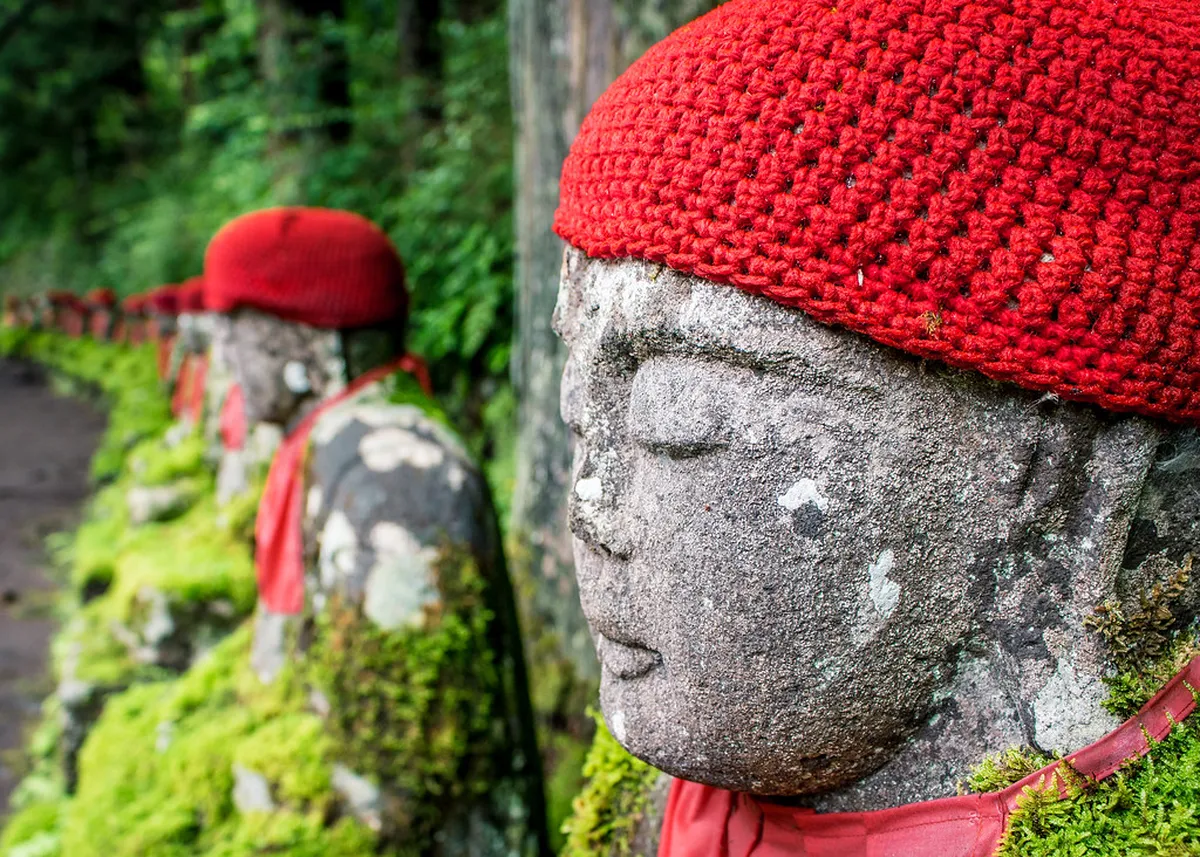
The essential sight is the row of stone Jizo statues beside the Daiya River. They are often called Narabi Jizo, and many visitors also know them as Bake Jizo because local folklore says their number changes each time you count them. Some figures are intact, others are worn down or moss-covered, and the red caps and bibs make the line easy to recognize even under deep shade.
The second attraction is the gorge itself. Lava from nearby Mount Nantai shaped the dark rock formations, and the river cuts through them with a strong current. The sound is constant, so this is one of the best places in Nikko for travelers who want a break from crowds without leaving town. The best views are usually from the clearer openings along the path rather than from the first approach.
Plan to walk slowly in one direction, then turn back once the path feels less scenic or starts pulling you away from your main Nikko route. The attraction is compact, and rushing to "finish" it misses the point. The strongest combination is the statues, the river, and the quiet residential approach from the shrine area.
- Top sights at the abyss
- Narabi Jizo: the main row of mossy stone statues
- Bake Jizo: the "ghost Jizo" counting legend
- Daiya River: fast mountain water beside the trail
- Volcanic rocks: dark formations shaped by Mount Nantai lava
- Riverside path: short shaded walk with photo stops
Museums, Art, and Culture in Kanmangafuchi
There is no formal museum inside Kanmangafuchi Abyss, so the cultural value is read through the landscape itself. The statues, river, stonework, and offerings show how Nikko's Buddhist traditions extend beyond temple buildings into natural places. This is why the abyss works well after a visit to Rinnoji Temple, where the religious context is easier to understand.
The red bibs and caps are not decorations for tourists. They are devotional items connected with Jizo's role as a protector, especially for children and travelers. Photograph them respectfully, but do not adjust, remove, or stage them. The same rule applies to small stones and offerings placed near the statues.
For travelers interested in art and photography, the best results usually come from details rather than wide shots: moss texture, repeated silhouettes, red fabric against gray stone, and the river visible through gaps in the trees. Overcast days can be useful because the softer light reduces harsh contrast on the shaded path.
Parks, Gardens, and Outdoor Spots in Kanmangafuchi
Kanmangafuchi Abyss is best understood as an outdoor stop, not a serviced park. The shade from cedar and broadleaf trees keeps the trail cooler than the shrine approach in warm months, while autumn color adds depth to the river views. Spring and early summer are good for fresh greenery, but the stone path can be damp after rain.
Nikko Botanical Garden sits nearby and pairs naturally with the abyss if you want a greener itinerary. The combination works well for travelers who have already seen the major shrines or who prefer quieter outdoor places. If you are short on time, prioritize the abyss first because it is the more distinctive Nikko attraction.
Accessibility is the main practical limitation. The route is mostly a gentle walk, but it is not a polished urban promenade. Expect uneven ground, occasional mud, narrow points, and no barrier between some viewpoints and the river. Strollers and wheelchairs may be difficult on the natural sections, especially in wet weather.
Family-Friendly and Budget-Friendly Options
One of the best features of the abyss is that it is completely free to visit. That makes it useful on a Nikko day when paid shrine admissions, meals, and buses can add up quickly. Families can keep the visit short, focus on the statues, and return toward town before younger children lose interest.
Children often enjoy counting the Jizo statues, but the "ghost Jizo" legend should stay playful rather than rushed. Keep kids close near the river edge and avoid climbing on rocks or touching the statues. The path is more comfortable for school-age children than for toddlers who need a stroller the whole way.
Bring water and small snacks before you enter the quiet riverside stretch, because there are no shops inside the abyss. Pairing the walk with Futarasan Shrine or Taiyuin Mausoleum gives families a balanced route: one calm nature stop plus one major cultural site.
How to Plan a Smooth Kanmangafuchi Attractions Day
To reach the Kanmangafuchi Abyss, the simplest approach is to start around Shinkyo Bridge and walk west through the quieter side of central Nikko. Allow about 20 minutes from the bridge area before you begin the riverside section. The route is manageable, but it is less obvious than walking between the main shrines, so keep a map open if you are visiting for the first time.
| Route | Travel Time | Notes |
|---|---|---|
| From Shinkyo Bridge on foot | ~20 minutes | Walk west through quieter side streets |
| From Nikko Station by bus + walk | ~15 min walk | Bus toward Chuzenji; alight at Sogokaikan-mae |
| Time on site (quick visit) | 30 minutes | Statues and river views |
| Time on site (photos + pauses) | 60–90 minutes | Recommended for first-time visitors |
| Admission | Free | No ticket gates; public outdoor trail |
Early morning visits give the quietest path and the best photography light. There are no shops inside the abyss, so bring water and small snacks before you enter the riverside stretch.
If you are coming directly from Tobu Nikko or JR Nikko Station, take a bus toward Chuzenji and get off at Sogokaikan-mae, then walk about 15 minutes. This saves time and energy compared with walking all the way from the station. Check 2026 bus times before you set out, especially if you are continuing to Lake Chuzenji or Kegon Falls later in the day.
The best time to visit is early morning or late afternoon in dry weather. Morning gives you the quietest path and easier photography; late afternoon works well if you want to decompress after the shrine area. Avoid arriving after dark, during heavy rain, or when you are already exhausted from a full temple circuit.
- Practical 2026 route check
- From Shinkyo Bridge: about 20 minutes on foot
- From Nikko Station: bus toward Chuzenji, then walk from Sogokaikan-mae
- Time on site: 30 minutes for a quick visit, 60 to 90 minutes if you pause for photos
- Difficulty: easy in dry daylight, less suitable after rain
- Cost: Free access
A First Encounter with the Jizo Statues of Kanmangafuchi
The first encounter with the Jizo statues is strongest when you approach without rushing. The row appears gradually along the river, not as a single grand monument. That gradual reveal is part of the atmosphere: one statue, then another, then a long rhythm of stone faces, moss, red cloth, and river sound.
Do not worry about finding one perfect viewpoint. The statues change character as you move, because the light, angle, and background shift every few steps. Some faces look clear and gentle; others are softened by weathering. This is why the walk feels more memorable than a single photo stop.
For first-time visitors, the best decision is to give the statues a dedicated 20 minutes before moving on. Count them if you want to connect with the legend, but also stop counting and simply look. Kanmangafuchi rewards attention more than speed.
The Ghost Jizos of Kanmangafuchi Abyss
The "ghost Jizo" story is the most famous piece of Kanmangafuchi folklore. Visitors say that if you count the statues on the way out and count them again on the way back, the number will not match. The legend is easy to understand once you are there: the line curves, some figures are damaged, and shadows can make one statue blend into the next.
This makes the abyss especially good for travelers who like quiet folklore, photography, and off-the-main-path places. The trade-off is that it is not a high-service attraction. There are no ticket gates, staff explanations, indoor exhibits, or dramatic viewpoint platforms. You bring your own context, move carefully, and let the place work slowly.
Best-fit visitors include repeat Japan travelers, shrine-area day trippers who want a calm break, photographers, and families with older children. Travelers with mobility concerns, very tight schedules, or a preference for fully paved attractions should treat it as optional rather than essential.
Planning a Trip to Japan Around Kanmangafuchi Abyss
For most Japan itineraries, Kanmangafuchi Abyss works best as a supporting stop within a Nikko day rather than the main reason to travel from Tokyo. Put the famous shrine and temple area first if this is your only Nikko visit, then use the abyss as the quieter second half of the route. This keeps the day balanced and prevents the walk from feeling like a detour.
A strong short route is Shinkyo Bridge, Toshogu Shrine, nearby temple or shrine stops, lunch, then Kanmangafuchi Abyss. A more nature-focused route is Kanmangafuchi Abyss in the morning, Nikko Botanical Garden nearby, then bus onward toward Lake Chuzenji if the weather is clear. In either case, leave buffer time because Nikko buses and mountain weather can slow a plan down. Use our Nikko itinerary guide to structure your full day trip from Tokyo.
The common mistake is trying to combine every Nikko highlight in one day: central shrines, Kanmangafuchi, Lake Chuzenji, Kegon Falls, and distant waterfalls. It is possible on paper, but it leaves little time to enjoy the abyss. If you only have one day, choose either a town-centered route or a lake-and-waterfall route, then add Kanmangafuchi only when it fits naturally. See our Nikko travel guide for realistic multi-day plans.
Interesting Facts About Kanmangafuchi Abyss
The geological history of the abyss is as important as its religious atmosphere. Lava from Mount Nantai flowed into the river valley and helped create the jagged rock formations along the Daiya River. That is why the landscape feels different from a simple riverside park: the water, rock, and narrow gorge all point back to Nikko's volcanic setting.
Avoid visiting after dark or during heavy rain — the path is unlit, and the riverside trail can become slippery and dangerous on wet stone. Strollers and wheelchairs may struggle on the natural, uneven sections.
A major flood in the early 20th century damaged or washed away some of the original statues. The surviving row is therefore not just picturesque; it also represents recovery, local care, and the long relationship between Nikko residents and this sacred riverside space.
The name Kanmangafuchi is often linked with Buddhist sound and legend. Local stories connect the water's roar with the sound of a chant, and the site has long been associated with religious practice outside the formal temple precincts. That combination of geology, folklore, and worship is what separates the abyss from a normal scenic walk.
Jizo Buddha, protector of children and travelers
Jizo is one of the most familiar figures in Japanese Buddhism. He is widely associated with the protection of children, expectant mothers, and travelers, which makes the statues at Kanmangafuchi especially resonant for people moving through Nikko on foot. The red bibs and caps are placed with devotional intent, not as props.
Red is traditionally connected with protection, and the small garments make the stone figures feel cared for rather than abandoned. You may also see small stones or offerings near the statues. Leave these items in place and avoid stepping into the statue row for a better photo angle.
This context changes how the walk feels. The Jizo are not just a visual landmark; they mark the abyss as a place where travel, mourning, protection, and local practice overlap. A respectful visitor can enjoy the scene while still treating it as an active spiritual landscape.
Kanmangafuchi Abyss and the Japanese tradition
Kanmangafuchi Abyss shows how Japanese religious practice often meets the natural world. In Nikko, sacred buildings, forested slopes, rivers, bridges, and stone markers all work together. The abyss is quieter than the major shrine precincts, but it belongs to the same cultural landscape.
That tradition affects visitor behavior. Speak quietly near the statue row, keep to the path, and do not touch the moss or stone figures. If you photograph people praying or tending offerings, give them space and avoid making the moment part of your own staging.
The most useful way to connect the abyss with the rest of Nikko is to visit Shinkyo Bridge, one or two major shrine or temple sites, and then Kanmangafuchi. The sequence moves from symbolic entrance, to formal worship architecture, to a natural riverside sacred place.
Frequently Asked Questions
Which kanmangafuchi abyss visitor guide options fit first-time visitors?
First-time visitors should focus on the walking route from Shinkyo Bridge to the abyss. This path is easy to follow and passes several local landmarks. You can find more details in our Nikko guide for a complete overview of the town's best entry points.
How much time should you plan for kanmangafuchi abyss visitor guide?
Most travelers should set aside about 60 to 90 minutes for a full visit. This allows enough time to walk the entire path and take photographs without rushing. If you plan to visit the nearby botanical garden, add another hour to your schedule.
What should travelers avoid when planning kanmangafuchi abyss visitor guide?
Avoid visiting during heavy rain as the riverside path can become quite slippery and dangerous. Do not touch or move the red bibs on the Jizo statues as they are religious offerings. It is also wise to avoid visiting after dark because the path is not illuminated.
Is kanmangafuchi abyss visitor guide worth including on a short itinerary?
Yes, it is highly recommended even for short trips because of its unique atmosphere and proximity to town. It offers a peaceful break from the more crowded tourist spots in central Nikko. The site is free and provides some of the best photo opportunities in the region.
Kanmangafuchi Abyss is most rewarding when you give it a clear role in your Nikko day: a quiet riverside walk, a meeting with the Jizo statues, and a practical pause between larger attractions. It is close to the central sightseeing area, free to enter, and easy to appreciate without a long checklist.
For the smoothest 2026 visit, go in dry daylight, wear shoes that can handle uneven ground, bring water, and keep the itinerary realistic. Respect the offerings and stone figures, leave the moss alone, and avoid treating the path as a shortcut after dark. With that approach, the abyss becomes one of Nikko's most memorable low-key experiences. Combine your visit with our Nikko hiking trails guide to build a full nature-focused day.
For official details, visit the Kanmangafuchi Abyss official site and Kanmangafuchi Abyss on Wikipedia.
