
Izumo Taisha, also known as the Izumo Grand Shrine, is one of Japan's oldest and most important Shinto shrines. It sits in Taisha, in the city of Izumo in Shimane Prefecture, and draws pilgrims from every corner of the country. The shrine is dedicated to Okuninushi, the deity of marriage, relationships, and good fortune. For any traveler exploring the San'in region, it is the single most essential stop.
People come here above all to pray for en-musubi, the tying of good relationships, whether in love, friendship, or business. The grounds are famous for a colossal sacred straw rope, an unusual four-clap worship etiquette, and a yearly gathering of Japan's gods. This izumo taisha visitor guide walks you through the shrine's meaning, its customs, and the practical details you need for a smooth trip in 2026. Best of all, entering the shrine grounds costs nothing at all.
What Makes Izumo Taisha So Important
Izumo Taisha ranks among the oldest and most revered Shinto shrines in all of Japan. Its deity, Okuninushi-no-Mikoto, is honored as the god of marriage, human relationships, and good fortune. Because of this, the shrine has become the leading pilgrimage site in the country for anyone seeking en-musubi, the blessing of good bonds between people. Visitors travel here to pray for love, but also for lasting friendships and successful partnerships of every kind.
The shrine's history stretches back into the earliest layers of Japanese mythology, which gives it a spiritual weight that few other sites can match. Its role in the old legends of the land makes it a cornerstone of Shinto belief. Walking the long, pine-lined approach toward the main halls, many visitors feel a genuine sense of stepping into sacred space. The atmosphere is solemn, unhurried, and deeply atmospheric.
For international travelers, Izumo Taisha offers a rare chance to experience a living religious tradition rather than a museum piece, as detailed on the official shrine website. Locals still come daily to pray, and the seasonal festivals continue much as they have for centuries. This blend of ancient myth and everyday devotion is exactly what makes the shrine so memorable. It is the flagship attraction of Izumo and the anchor of any itinerary through Shimane.
The Giant Shimenawa and What to See
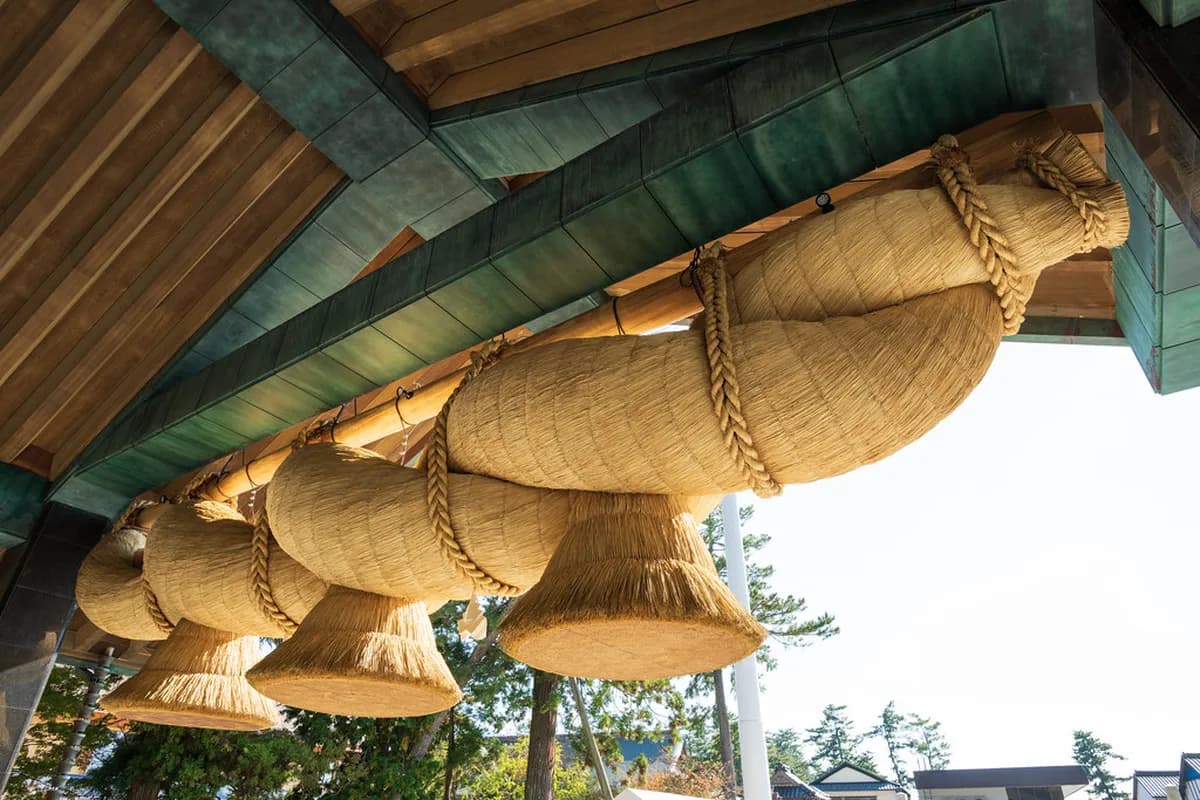
The single most striking sight at Izumo Taisha is its colossal shimenawa, a sacred twisted straw rope that marks off holy space in Shinto. The most famous one hangs at the Kagura-den, the shrine's worship hall, and it is among the largest in all of Japan. It measures roughly 13.5 meters long and weighs about 5 tons, a scale that is genuinely hard to believe until you stand beneath it. The sheer size of the rope has made it the shrine's signature image.
Almost every visitor pauses at the Kagura-den to admire the shimenawa before moving on to pray. It has become the shrine's most popular photo spot, and for good reason, as few structures in Japanese Shinto architecture make such an immediate impression. Standing below the thick coils of rice straw, you get a real sense of the craftsmanship and devotion behind it. Take your time here to appreciate its scale and detail.
Beyond the great rope, the shrine grounds reward slow exploration. The approach through towering pines, the main worship hall, and the quiet inner precinct each carry their own atmosphere. The wider complex also sits beside the Shimane Museum of Ancient Izumo, a good option for anyone who wants deeper context on the region's myths. If you want to keep exploring the coast afterward, the sacred sands of Inasa-no-hama Beach lie just to the west.
How to Worship: The Four-Clap Etiquette
Izumo Taisha follows a special worship etiquette that surprises many first-time visitors. While most Shinto shrines in Japan use the standard two claps, here the ritual is "two bows, four claps, one bow," known in Japanese as ni-rei, yon-hakushu, ichi-rei. You bow deeply twice, clap your hands four times, offer your prayer, and then bow once more to finish. This four-clap style is unique to Izumo.
The extra claps are said to double the standard offering of respect to the deity Okuninushi. The number four is also linked to blessings for happiness and for good relationships, which fits perfectly with the shrine's focus on en-musubi. Performing the ritual correctly is a simple way to show your appreciation for local custom. Move slowly, stand quietly, and let each step of the sequence feel deliberate.
Do not worry about getting it perfect on your first attempt, as staff and fellow worshippers are used to visitors learning the ritual. What matters most is sincerity and a respectful, unhurried manner. Many travelers find the four-clap rhythm makes the act of prayer feel more focused and meaningful. It is one of the small details that makes a visit to Izumo Taisha distinctive.
Kamiarizuki: When the Gods Gather
Izumo Taisha is renowned as the place where all of Japan's kami are believed to gather once each year. This period is called Kamiarizuki, which translates as "the month with gods." It falls in the tenth month of the traditional lunar calendar, which usually corresponds to roughly late October or November in the modern calendar. During this time the shrine becomes the spiritual center of the entire nation.
According to belief, the eight million kami of Japan leave their home shrines and convene at Izumo Taisha to discuss the coming year's affairs. They are said to decide matters of marriage, births, and other human fates. This is also why the same month is known elsewhere in Japan as Kannazuki, "the month without gods," because the deities have all departed for Izumo. Only here is it Kamiarizuki, "the month with gods," because this is where they are present, a tradition explored further in the shrine's Wikipedia entry.
Special festivals such as the Kamimukae-sai are held to welcome the gods ashore during this period. Visiting during Kamiarizuki is the most special time of year to experience the shrine, though it is also the busiest. If you can time your 2026 trip to coincide with these god-welcoming rituals, you will witness one of the most atmospheric events in the Shinto calendar. Just be prepared for larger crowds than usual.
Is Izumo Taisha Free? Hours and Admission
Yes, entry to Izumo Taisha is completely free. Access to the shrine grounds and the main worship halls requires no admission ticket at all. Only optional extras charge a separate fee, such as the adjacent Shimane Museum of Ancient Izumo, which costs about 620 yen, or the shrine's own treasure house. Visiting the shrine itself, including the great shimenawa and the worship halls, costs nothing.
The shrine keeps generous opening hours that shift slightly with the seasons. From March through October, the halls are open from 06:00 to 20:30, while from November through February the hours run from 06:30 to 20:00. The outer grounds remain accessible year-round, so you can stroll the approach and the wider precinct even outside the core hours. These long hours make it easy to fit a visit into almost any itinerary.
Because the grounds open so early, the shrine is well suited to a quiet morning visit before the day's crowds build. Early morning is widely considered the best time to arrive, as the atmosphere is at its most serene and the pine-lined approach feels almost private. Spring and autumn generally bring the most comfortable weather for walking the grounds. The free entry and early hours together make Izumo Taisha an outstanding value for travelers of any budget.
How to Get to Izumo Taisha
Reaching Izumo Taisha is straightforward from the main transit hub of the city. From JR Izumoshi Station you can take a bus bound for Izumo Taisha, which reaches the shrine in about 25 minutes. The bus drops you close to the grand entrance, making it the simplest option for most visitors. This is the route most international travelers will find easiest to follow.
A scenic alternative is the Ichibata Railway, a local line that many visitors enjoy for its own sake. Ride from Dentetsu-Izumoshi Station to Izumo-Taisha-mae Station, and from there the shrine's grand entrance is about a 10-minute walk along the approach. The stroll up the pine-lined path is a pleasant way to arrive, easing you into the sacred atmosphere. Both the bus and the railway are reliable and clearly signposted.
If you are flying into the region, Izumo Enmusubi Airport connects to the area as well, with buses and taxis serving the shrine. Once you have finished at Izumo Taisha, the surrounding coast is easy to explore, including the towering Hinomisaki Lighthouse a short bus ride away. For a full picture of the area, browse our roundup of the best Izumo attractions. The shrine makes an ideal base for a day of sightseeing.
Tips for Visiting Izumo Taisha
Arrive early to make the most of your visit, as the grounds open around 6:00 to 6:30 in the morning and are quietest before tour groups appear. The early light on the pine-lined approach is genuinely beautiful and makes for wonderful photographs. An early start also gives you unhurried time at the great shimenawa before other visitors gather. This is the single best piece of timing advice for the shrine.
Take a moment to learn the four-clap worship sequence before you reach the main hall so you can pray with confidence. Remember the order: two bows, four claps, your prayer, then one final bow. If you are visiting during Kamiarizuki in the lunar tenth month, plan for larger crowds and check the schedule of the god-welcoming festivals in advance. Outside that season, spring and autumn offer the most comfortable conditions for walking the grounds.
Set aside enough time to combine the shrine with nearby sights rather than rushing through. The Shimane Museum of Ancient Izumo sits right beside the shrine for deeper historical context, while the coast offers the sacred beach and the lighthouse within easy reach. Comfortable walking shoes are worth packing, as the approach and precinct cover a fair distance. With a little planning, Izumo Taisha can anchor a rewarding full day in Shimane.
Frequently Asked Questions
Is Izumo Taisha free to visit?
Yes. Entry to the shrine grounds and the main worship halls of Izumo Taisha is completely free, with no admission ticket required. Only optional extras such as the adjacent Shimane Museum of Ancient Izumo (about 620 yen) or the shrine's own treasure house charge a separate fee, but visiting the shrine itself costs nothing.
How do you worship at Izumo Taisha, and why do you clap four times instead of two?
Izumo Taisha follows a special etiquette of "two bows, four claps, one bow" (ni-rei, yon-hakushu, ichi-rei), unlike most Shinto shrines in Japan where the standard is two claps. You bow deeply twice, clap your hands four times, offer your prayer, then bow once more. The four claps are unique to Izumo and are said to double the standard offering of respect to the deity Okuninushi, with the number also linked to blessings for happiness and good relationships.
When is Kamiarizuki, the month when the gods gather at Izumo Taisha?
Kamiarizuki ("the month with gods") falls in the tenth month of the traditional lunar calendar, which usually corresponds to roughly late October or November in the modern calendar. During this period the eight million kami of Japan are believed to leave their home shrines and convene at Izumo Taisha to discuss the coming year's marriages, births, and other human affairs. Elsewhere in Japan this month is called Kannazuki ("the month without gods"), but in Izumo it is Kamiarizuki because the deities are present here, and special festivals such as the Kamimukae-sai welcome them.
What is the giant rope at Izumo Taisha?
The giant rope is a shimenawa, a sacred twisted straw rope that marks a holy space in Shinto. The most famous one at Izumo Taisha hangs at the Kagura-den (worship hall) and is among the largest in Japan, measuring roughly 13.5 meters long and weighing about 5 tons. It is a striking symbol of the shrine and a favorite photo spot; visitors traditionally stop here to admire its scale before praying.
How do you get to Izumo Taisha from Izumoshi Station?
From JR Izumoshi Station you can take a bus bound for Izumo Taisha (about 25 minutes) directly to the shrine. Alternatively, transfer to the Ichibata Railway: ride from Dentetsu-Izumoshi Station to Izumo-Taisha-mae Station, from which the shrine's grand entrance is about a 10-minute walk along the approach. Izumo Enmusubi Airport also connects to the area, with buses and taxis serving the shrine.
What is the best time to visit Izumo Taisha?
Early morning is ideal, as the grounds open around 6:00-6:30 am and are quietest and most atmospheric before tour groups arrive. The most special time of year is Kamiarizuki in the lunar tenth month (around late October to November), when the shrine hosts the god-welcoming festivals, though it is also the busiest. Spring and autumn generally offer the most comfortable weather for walking the pine-lined approach and exploring the wider precinct.
Izumo Taisha is far more than a single sightseeing stop; it is one of the spiritual hearts of Japan. From the colossal shimenawa to the unique four-clap prayer and the yearly gathering of the gods, every element of the shrine tells a story rooted in ancient belief. Whether you come to pray for en-musubi or simply to walk the pine-lined approach at dawn, the experience leaves a lasting impression. And because entry is free, it welcomes travelers of every budget.
Take your time, learn the local customs, and let the slow rhythm of the shrine set the pace of your day. Pair it with the nearby coast and museum for a full picture of what makes Izumo so special. For a broader exploration of the San'in region and how Izumo Taisha fits into the wider cultural landscape, consult our San'in region guide. We hope this izumo taisha visitor guide helps you plan a meaningful trip in 2026. Safe travels as you discover the grand shrine of marriage and the wider wonders of Shimane.