
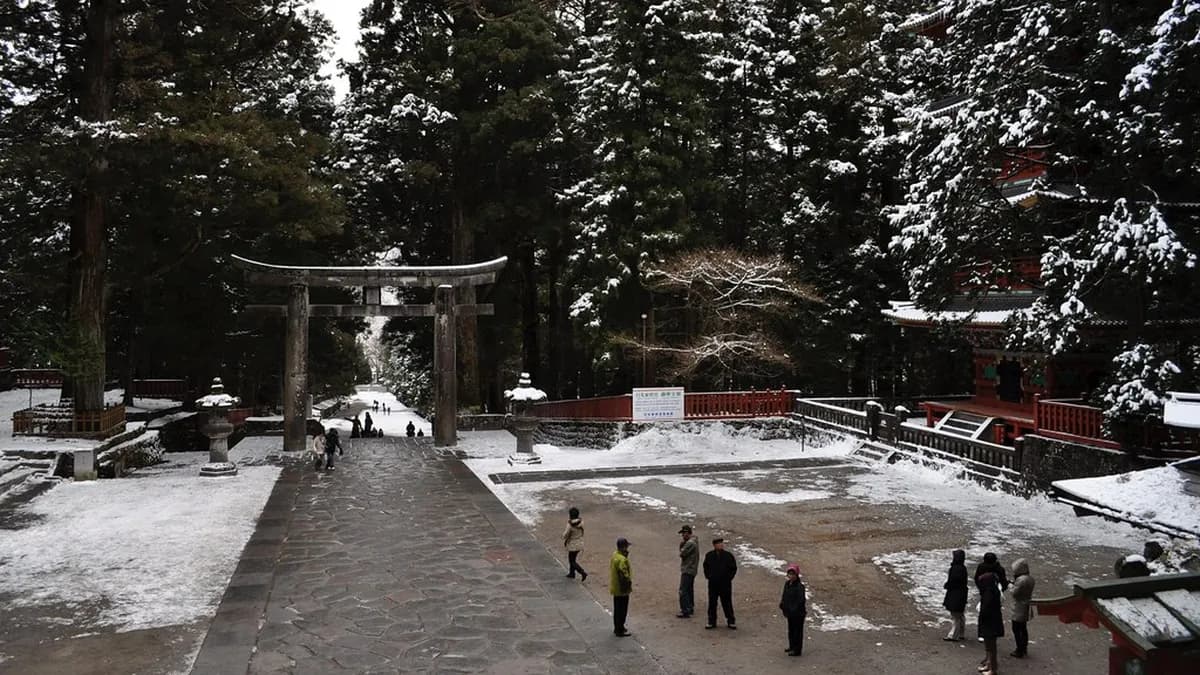
Nikko Futarasan Shrine stands as a cornerstone of Japanese spirituality within the lush forests of Tochigi Prefecture. This ancient site forms part of the famous UNESCO World Heritage complex alongside its more ornate neighbors. While many flock to see the gold leaf of Toshogu, this shrine offers a quieter and more natural atmosphere. Our comprehensive Nikko Futarasan Shrine visitor guide helps you navigate its sacred grounds and unique rituals.
The shrine complex is dedicated to the three sacred mountains that dominate the local landscape. Worshippers have visited these slopes for over a millennium to seek blessings for luck and relationships. You will find ancient cedar trees and moss-covered stone lanterns lining the peaceful walking paths. Exploring this area provides a deep look into the Shinto traditions that shape the identity of Nikko.
History and Spiritual Significance of Futarasan
The history of this sacred site began in 767 CE with a Buddhist monk named Shodo Shonin (735–817). He explored the forests of Nikko and founded both this shrine and the nearby Rinno-ji Temple, establishing Nikko as a center of mountain worship. The shrine honors the deities of three sacred peaks: Mount Nantai (2,486 m), Mount Nyoho, and Mount Taro. Pilgrims have revered these summits for over 1,200 years as divine guardians of the Kanto plain.
During the Edo period, Shogun Tokugawa Hidetada (1579–1632) sponsored a major rebuilding of the complex in 1619. The ruling Tokugawa family recognized the shrine as the spiritual anchor of the entire Nikko complex. Today, the architecture reflects restrained Shinto design alongside refined Edo-period craftsmanship. The site was collectively inscribed as a UNESCO World Heritage Site in 1999 alongside its more elaborate neighbors.
Futarasan is often overshadowed by the gilded spectacle of Toshogu, yet it is the true religious heart of Nikko. The shrine preserves ancient mountain worship traditions that predate the Buddhist influence that arrived in the 8th century. Okuninushi, the Shinto deity enshrined here, is widely venerated as the god of matchmaking and relationships. Families visit to pray for happy marriages, smooth childbirths, and prosperous friendships.
Key Highlights and Power Spots Within the Shrine
Once you pay the ¥300 admission to enter the Shinen Sacred Garden, you will find a cluster of power spots arranged along a short loop path. The bronze torii gate at the main entrance, cast in the early 1700s, is the first landmark. Morning light filters through the ancient cedars and strikes the gate directly between 08:00 and 09:00 — the best window for clean photographs before tour buses arrive.
The Bamboo Grass of Matchmaking (musubi-no-kumazasa) sits just inside the garden near the best-friend shrine (Shokomeimyoikochi). Buy a "knot tag" (musubifuda) at the shop for ¥500 — about the size of a business card — and write your wish for love or relationship harmony. Tie it around one of the bamboo stalks. The custom comes from a belief that tying grass together "binds" a connection, with these stalks originally transplanted from the sacred Takio Shrine further up the mountain.
Behind the bamboo grass, look for the Quoit of a Test of Luck (kachi-dori-wanage). For ¥200 you receive three small wooden rings. Toss them at the upright pegs about three meters away. Getting one ring over a peg is considered a good omen for work luck, wealth, or game fortune, depending on which peg you aim for — the shrine attendant will explain. Most visitors spend 10–15 minutes at these two spots combined.
The Sacred Cedar and the Shrine Garden Circuit
Many visitors complete the matchmaking bamboo grass and the quoit toss in fifteen minutes and then leave — missing the third power spot on the garden loop. The Sacred Tree Tainai Evasion (shinboku tainai kuguri) is a 550-year-old cedar that was struck hollow by age. The passage through the hollow trunk is about shoulder-width and low enough that most adults need to stoop. You enter while ringing a small Michito bell suspended at the entrance, make your wish, and exit the other side. The ritual is believed to purify the soul and allow you to emerge renewed. There is no extra charge; the cedar is included in the ¥300 garden admission.
Nearby, a "best-friend shrine" (Shokomeimyoikochi-sha) honors the deity of study and wisdom. Students preparing for university entrance exams make dedicated visits here, particularly in January and February — a quieter winter visit gives you an authentic look at this practice. The Shinen garden loop from the bamboo grass to the cedar and back to the gate takes about 25 minutes at a comfortable pace, including time at each spot.
When you finish the circuit, the small shrine cafe Bower operates inside the garden from 09:00 to 15:30. It serves coffee prepared with sacred spring water, powdered green tea, and warm amazake (a lightly sweet fermented rice drink). The cafe is run by shrine volunteers and the prices are modest. Sitting here in the cedar shade with a warm cup before walking to Toshogu is one of the small details that separates a rushed visit from a memorable one.
The Sacred Shinkyo Bridge
The iconic Shinkyo Bridge is administratively part of Futarasan Shrine, maintained and managed by shrine staff — it is not a separate tourist site. This distinction matters for your planning: shrine staff are responsible for its upkeep, and it features in processions during major festivals. The bridge spans the Daiya River with brilliant red lacquer, a color that signals sacred ground in Shinto tradition.
Legend holds that the deity Jinja Daiou created two giant serpents that arched across the river to allow Shodo Shonin to pass during his original mountain pilgrimage in 767. Walking across the bridge costs ¥300 and is said to bestow purification before entering the inner shrine complex. It is worth crossing rather than simply photographing: the view upstream from the centre of the bridge, framed by cedar forest, is exceptional.
The best photography angle is from the modern concrete road bridge 30 m downstream, shooting upstream with a wide lens. Autumn maples — typically peak color mid to late November in Nikko — surround both banks and make the red lacquer almost disappear into the foliage. Arrive by 08:00 to have the scene to yourself. By 10:00 most tour buses have deposited their groups, and the path becomes congested.
Mount Nantai and the Okumiya (Inner Shrine)
The Okumiya (inner shrine) rests at the 2,486-metre summit of Mount Nantai, the mountain the shrine is literally named for. The Chugushi mid-shrine near Lake Chuzenji serves as the gateway: registration is required there before you begin the climb. The mountain is open for pilgrimage each year from 5 May through 25 October, closed entirely outside this window due to snowpack and safety conditions.
The round trip takes roughly six hours for a fit hiker on a clear day. The trail gains about 1,200 metres of elevation over approximately 3 km of steep, rocky switchbacks. Carry at least 2 litres of water and wear ankle-supporting boots — the upper section becomes loose scree. At the summit you will find a bronze sword enshrined in the inner hall, and on clear days the panorama across Nikko National Park justifies every step of the effort.
For most day visitors the decision is straightforward: if your only day in Nikko is the shrine complex, stay at the main compound. The lower grounds offer the bronze torii, the matchmaking rituals, the Sacred Garden, and the adjacent UNESCO sites — enough for a full morning. Reserve the Nantai climb for a dedicated second day, ideally starting from Chugushi before 06:00 to reach the summit before afternoon clouds develop. Families with children under ten and visitors with limited mobility will find the main complex fully satisfying.
Mount Nantai is only open for pilgrimage from 5 May through 25 October — the mountain is completely closed outside this window due to snowpack and safety conditions. Registration at the Chugushi mid-shrine near Lake Chuzenji is required before you begin the climb.
Annual Festivals and Seasonal Events
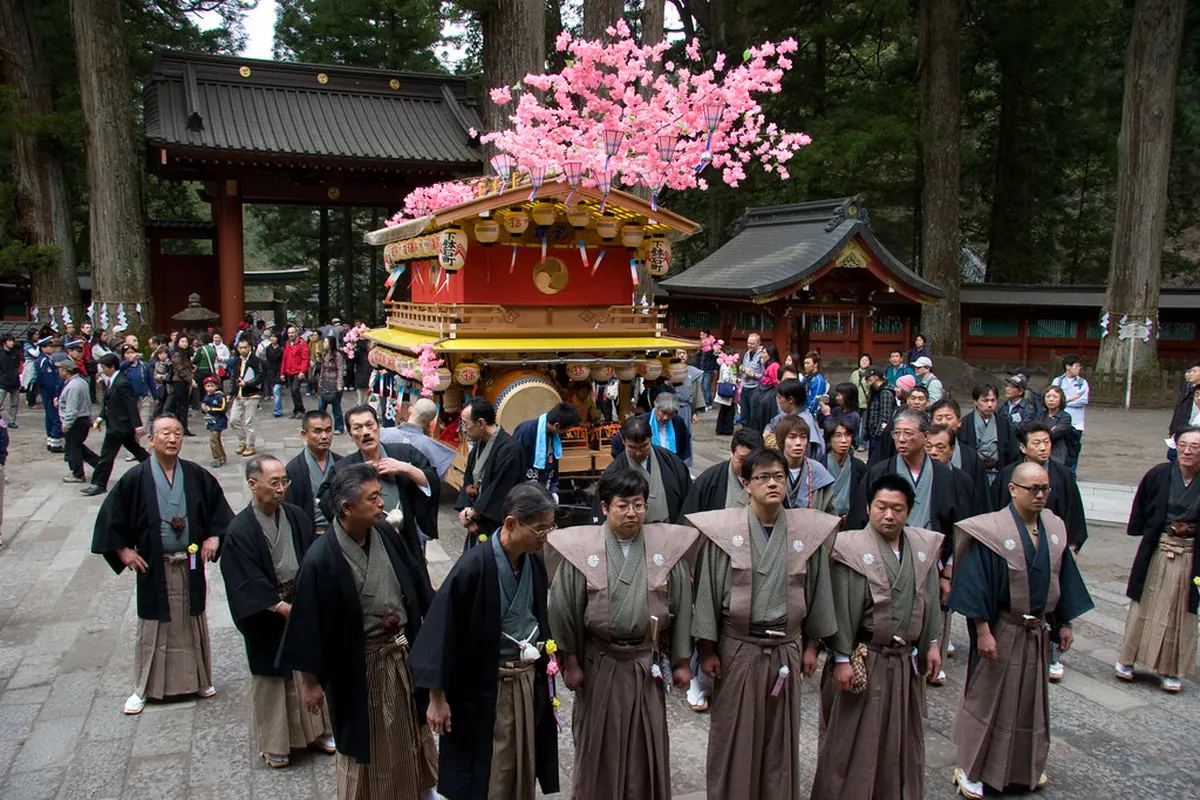
The Yayoi Matsuri on 16–17 April is Futarasan Shrine's most important annual festival. Mikoshi (portable shrines) and ornate floats decorated with artificial cherry blossoms are paraded through the town's main streets to honor the mountain deities. Local community groups in period costumes accompany the procession, making this a genuine community event rather than a staged performance. Arriving the evening before to watch float preparation gives you a quieter, more authentic look at the preparations.
In May, the Toshogu Grand Festival (17–18 May) fills the entire heritage precinct with a recreation of Tokugawa Ieyasu's funeral procession, including horseback archery (yabusame) and over a thousand participants in Edo-period warrior costume. While this festival centers on Toshogu, the procession passes through the Futarasan grounds. October brings the Shuki Reitaisai, a repetition of the May event — check the 2026 schedule on the official site to confirm dates, as exact days shift year to year.
Outside of festival season, each visit looks different depending on the month. Cherry blossoms frame the stone lanterns in early April. Deep summer brings lush green cedar canopy that keeps the grounds cool even on hot days. Autumn foliage typically peaks in mid-November, when the red buildings and orange maples create the most photographed version of the shrine. Winter visits (November through March, open 09:00–16:00) are uncrowded and extraordinarily quiet — the contrast between snow and the lacquered red structures is worth the shorter daylight window.
Practical Visitor Information: Hours and Fees
The main shrine grounds are free to enter year-round. The Shinen Sacred Garden — which contains the power spots, matchmaking bamboo grass, and quoit game — costs ¥300 per person, payable in cash at the ticket counter inside the gate. Opening hours run 08:00–17:00 from April through October (last entry 16:30), and 09:00–16:00 from November through March (last entry 15:30). Budget roughly ¥1,000 per person to cover garden entry, two ritual attempts, and a small amulet or knot tag.
| Item | Cost | Notes |
|---|---|---|
| Main shrine grounds | Free | No ticket required |
| Shinen Sacred Garden | ¥300 | Cash only; Apr–Oct 08:00–17:00, Nov–Mar 09:00–16:00 |
| Musubifuda knot tag | ¥500 | Write wish, tie to bamboo stalk |
| Quoit of a Test of Luck | ¥200 | 3 wooden rings; good-luck toss |
| Shinkyo Bridge crossing | ¥300 | Managed by Futarasan Shrine |
The ticket window and ritual stalls inside the Sacred Garden are cash only — keep at least ¥1,500 in small notes. The main souvenir counter near the exit does accept credit cards.
The shrine's small on-site cafe, called Bower (営業時間 09:00–15:30), sits inside the Sacred Garden and serves coffee brewed with sacred spring water, powdered green tea, and warm amazake (fermented rice drink). It is a genuine surprise for most visitors who expect only formal shrine activities. The drink prices are modest — typically ¥300–¥500 — and the seating area beneath the cedar canopy is peaceful. The cafe operates during busy season; confirm availability on the Nikko Futarasan-jinja Official site for the 2026 schedule.
Weekday mornings before 10:00 offer the quietest conditions. Most organized tour groups from Tokyo arrive mid-morning, turning the main path congested by 10:30. Credit cards are accepted at the main souvenir counter near the exit, but the ticket window and ritual stalls are cash only. Keep at least ¥1,500 in small notes to avoid difficulty at change.
How to Get to Futarasan Shrine from Tokyo and Nikko Station
From Tokyo, take the Tobu Railway Limited Express Revaty from Asakusa Station. The journey takes approximately 110 minutes and deposits you at Tobu-Nikko Station. Alternatively, JR Shinkansen to Utsunomiya followed by the JR Nikko Line reaches JR Nikko Station in a similar total time, though the Tobu route is usually cheaper. From either station, the World Heritage Bus (Nikko Kogen-go or Chuzenjiko-go lines) runs every 15–20 minutes and stops at the Shinkyo-hashi (Shinkyo Bridge) stop, a 5-minute walk from the shrine entrance.
Walking from the stations is enjoyable if you have time: the route is about 2 km uphill along the main Suginamiki (cryptomeria avenue), a long row of ancient cedar trees that is itself a UNESCO-listed cultural property. Shops selling yuba (tofu skin, a Nikko specialty) and wagashi line the final stretch. Allow 30–40 minutes on foot. Follow the World Heritage signage, which is clearly printed in Japanese, English, and Chinese.
Drivers should note that parking near the heritage complex is limited and fills quickly on weekends and public holidays between April and November. Use the Nikko Parking Map and aim to arrive before 09:00. Public transport is strongly recommended during autumn leaf season (October–November), when the Irohazaka Winding Road can back up for over an hour on weekends.
Recommended 2-Day Nikko Itinerary Integration
A two-day trip is the minimum to cover both the heritage complex and the natural landscape without rushing. On Day 1, start at Shinkyo Bridge before 08:30. Walk up to Futarasan, spend 90 minutes in the Sacred Garden doing the power-spot circuit, then move to Toshogu Shrine and Rinno-ji Temple in the afternoon. This sequence follows the historical pilgrimage path from the bridge inward and covers the UNESCO core before tour groups clog Toshogu's Yomeimon Gate. Overnight in a local ryokan to be positioned for an early Day 2 start.
On Day 2, take the 08:00 bus up the Irohazaka Winding Road to the Chuzenji lakeside. Visit Kegon Falls from the free upper observation deck or pay ¥570 for the underground elevator to the lower platform. From Chuzenji you can take a short walk to Ryuzu Waterfall in the afternoon. Active visitors who want to add the Nantai summit should treat that as a separate third day, departing Chugushi trailhead no later than 06:30.
Where to Stay: Ryokans and Hotels Near the Shrine
Staying within Nikko town is the best strategy for an early shrine visit. The Nikko Kanaya Hotel, opened in 1873, sits a short walk from the Shinkyo Bridge and has hosted royalty and visiting dignitaries. Its Western-Japanese hybrid architecture is charming, and the location puts you on-site before most day-trippers from Tokyo arrive. Several smaller guesthouses and business hotels in the station area provide reliable budget options from around ¥8,000 per night.
For an upscale onsen experience, Hoshino Resorts KAI Kinugawa occupies the Kinugawa hot-spring valley about 20 km from the UNESCO complex. The property offers private hot-spring baths, regional kaiseki cuisine, and a shuttle to the Nikko sightseeing area. Book at least three months ahead for peak autumn and spring cherry blossom dates, as it sells out quickly. This is the most polished luxury option if a full ryokan experience is part of your plan for the 2026 trip.
Nearby Attractions: Toshogu Shrine and Rinno-ji Temple
No visit to Futarasan is complete without seeing the spectacular Toshogu Shrine. This site is famous for its intricate wood carvings and the 'See No Evil' monkeys. It serves as the final resting place of the great shogun Tokugawa Ieyasu. The contrast between its gold decorations and the simplicity of Futarasan is striking.
You should also make time for Rinno-ji Temple during your walk. This temple features three massive gold-leaf statues of Buddhist deities inside the Sanbutsudo hall. The Shoyoen Garden nearby is a peaceful spot for a quiet stroll among the trees. Combined, these three sites form the core of the UNESCO World Heritage area.
If you want to escape the main tourist path, visit the Kanmangafuchi Abyss. This riverside walk features a long row of stone Jizo statues wearing red caps. Nature lovers might also enjoy the Urami-no-taki Falls as a quieter alternative to Kegon Falls. Nikko offers endless layers of history and nature for those who look beyond the main gates. For broader planning, consult our Nikko itinerary, Nikko travel guide, and Nikko temples and shrines guide to structure your day.
Frequently Asked Questions
Is Futarasan Shrine free to enter?
The outer grounds of the shrine are free for all visitors to explore. However, you must pay a small fee of 300 yen to enter the inner sanctuary and the treasure house. This fee helps maintain the historic UNESCO site. Check the official site for any price changes.
How much time should I spend at Futarasan Shrine?
Most visitors find that one hour is sufficient to see the main buildings and participate in a ritual. If you plan to hike to the mountain peak, you will need at least six hours. Allow extra time if you are visiting the neighboring Toshogu Shrine on the same day.
What are the best power spots at Nikko Futarasan?
The most famous power spots include the matchmaking bamboo grass and the luck-testing quoit game. The ancient cedar trees on the grounds are also considered sources of spiritual energy. Many people visit the bronze torii gate to mark a fresh start in their lives.
How do I get to Futarasan Shrine from Nikko Station?
The easiest way is to take the World Heritage Bus from Tobu-Nikko Station to the Shinkyo Bridge stop. From there, it is a short five-minute walk up the hill. You can also walk the entire way from the station in about thirty minutes along the main street.
Futarasan Shrine is quieter than its neighbors, but that is precisely its value. While Toshogu draws the crowds with its gilded carvings, this shrine preserves a more personal encounter with Japan's mountain worship traditions. The matchmaking bamboo grass, the hollow cedar passage, the Bower cafe, and the option of a full Nantai pilgrimage give visitors a genuinely layered experience. Plan your 2026 visit on a weekday, arrive by 08:00, and allow a full morning — you will not regret the unhurried pace.
Carry ¥1,500 in small notes, wear comfortable shoes, and check the official Futarasan site before you travel to confirm any temporary closures. The surrounding Kanmangafuchi Abyss makes an excellent late-afternoon addition if you finish the shrine complex by noon. Nikko rewards visitors who go slowly and look beyond the obvious, and Futarasan is the place to start.
For authoritative information, refer to the Nikko Futarasan Shrine official site and Nikko Futarasan Shrine on Wikipedia.
