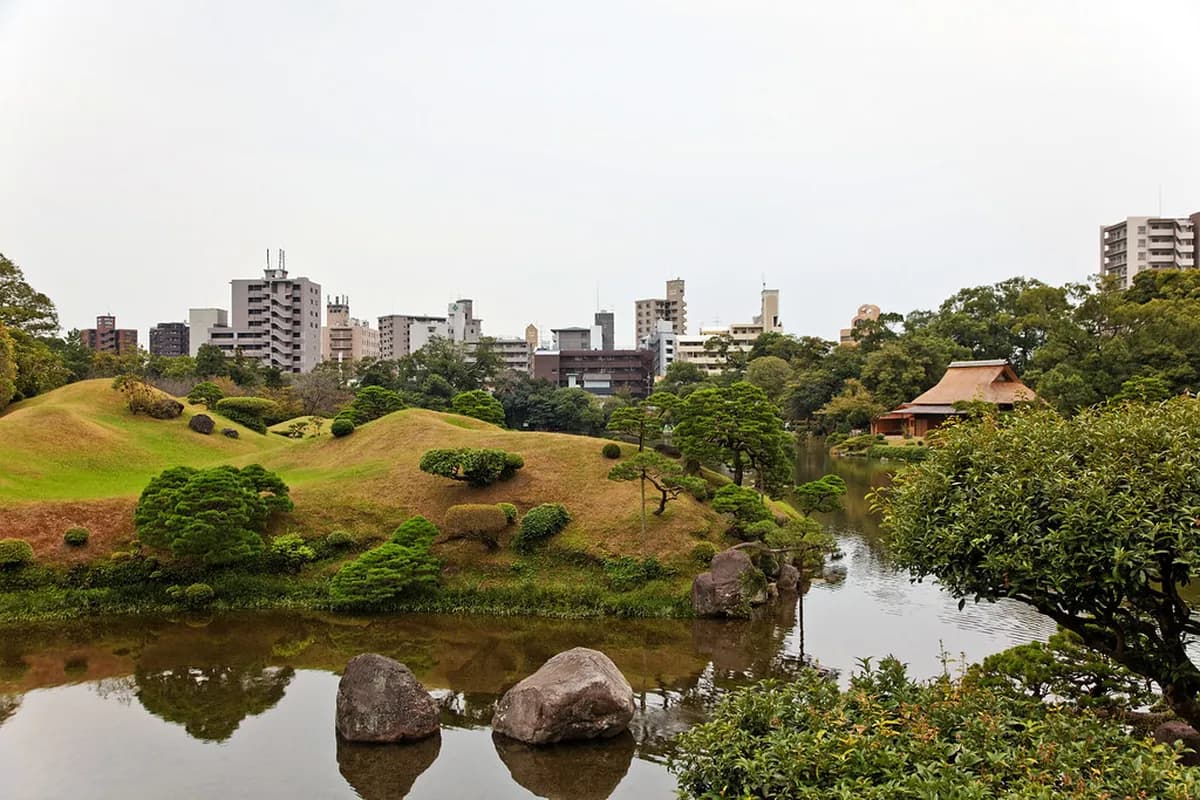
Suizenji Jojuen is Kumamoto's signature daimyo strolling garden: a compact, spring-fed landscape where a pond, pine trees, stone bridges, and a miniature Mount Fuji recreate scenery from the old Tokaido road. This suizenji jojuen garden visitor guide is built for 2026 travelers who need practical access, timing, family, and short-itinerary advice before they arrive.
The garden began as a Hosokawa clan retreat in the 17th century and still feels more like a calm circuit than a checklist attraction. Its value is strongest when you slow down, circle the pond, look at the Mt. Fuji mound from several angles, and pause at Izumi Shrine or Kokindenju-no-Ma instead of rushing through.
Planning a trip to Kumamoto should include Suizenji when you want a low-stress contrast to castles, shopping arcades, and busy station-area sightseeing. The garden is easy to reach by tram, works well with children, and is best visited early before tour groups make the narrow pond-side paths feel crowded.
The Suizenji Jojuen Garden Briefing
First-time visitors should treat Suizenji as a 45- to 90-minute cultural stop, not a full-day park. The main route is a pond-centered loop, so the visit works best when you want a quiet walk, classic garden views, a family decompression break, or a smooth pairing with central Kumamoto attractions.
The biggest planning mistake is arriving in the late morning on a warm day and expecting to shorten the loop once children or older travelers get tired. After you commit to the far side of the pond, the practical choice is usually to keep walking back to the main exit, so build in shade breaks near Izumi Shrine and avoid a rushed schedule.
- Best fit: first-time Kumamoto visitors, garden lovers, families needing a calm morning stop, and photographers who want the Mt. Fuji mound across the pond.
- Less ideal: travelers who need hands-on exhibits, long indoor breaks, or a high-energy attraction for the whole morning.
- Short itinerary verdict: worth including if you can arrive early and pair it with Kumamoto Castle, Sakuranobaba Josaien, or the central shopping arcades.
Must-See Suizenji Attractions
The miniature Mount Fuji mound is the garden's defining view. It is not just a photo prop; it anchors the whole design, changing shape as you move around the pond. Stop once near the entrance side, once from the opposite bank, and once near Kokindenju-no-Ma to see why this small hill is the garden's most recognizable feature.
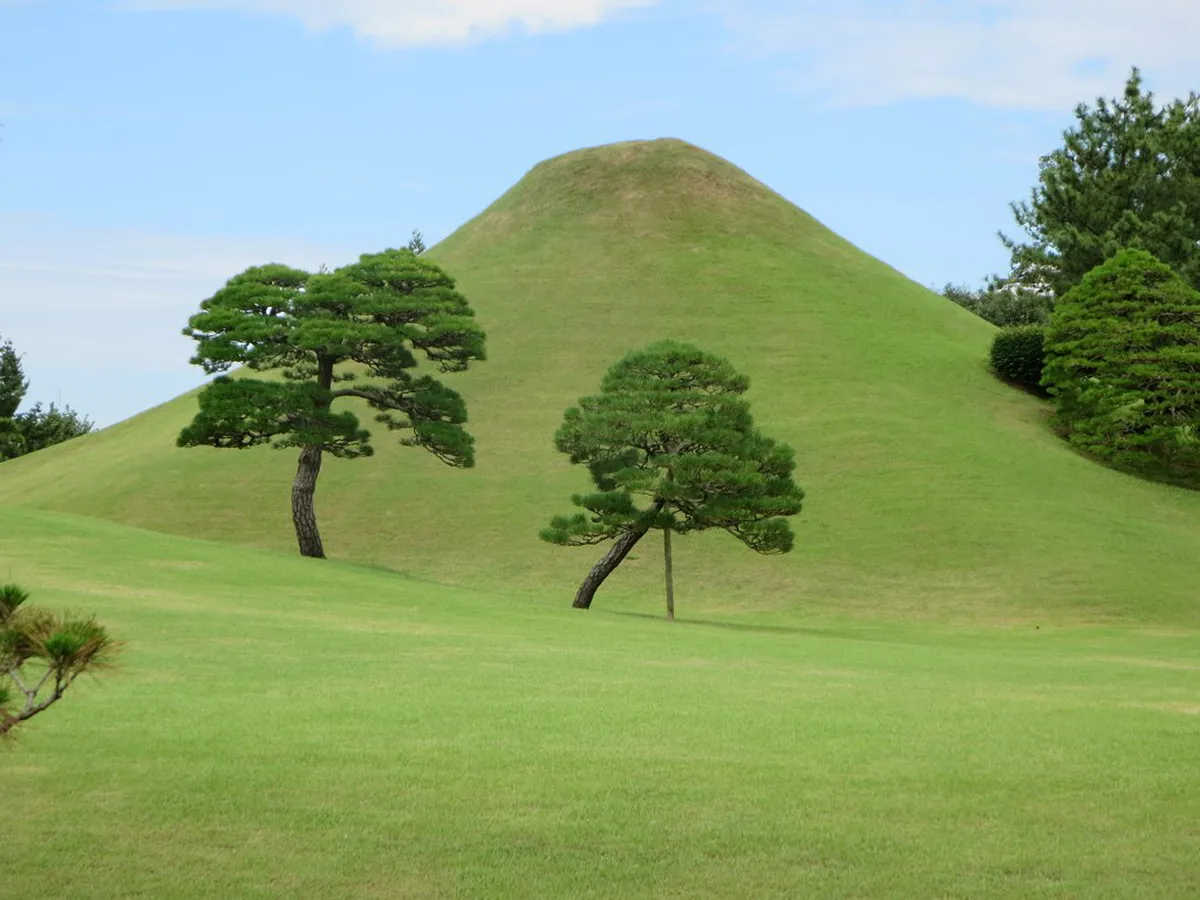
The garden also interprets the Fifty-three Stations of the Tokaido road through ponds, mounds, stones, pine trees, and walking paths. You do not need deep historical knowledge to enjoy it, but the visit is more rewarding if you explain the idea before entering: the loop is a miniature journey through famous scenery between Kyoto and Edo. Check the official Suizenji Jojuen guide before visiting for facility notes and access updates.
First-time visitors should prioritize the pond circuit, the Mt. Fuji mound, Kokindenju-no-Ma, Izumi Shrine, and the Noh stage area. If you only have a short Kumamoto morning, combine the garden with Kumamoto Castle rather than trying to add several distant attractions.
- Iconic landscape features
- Mount Fuji: miniature grass mound and strongest photo landmark
- Tokaido Road: represented through the garden's loop and landscape composition
- Central Pond: spring-fed water that gives the garden its calm character
- Kokindenju-no-Ma: traditional building with one of the best seated garden views
Museums, Art, and Culture in Suizenji
Izumi Shrine sits inside the garden and connects Suizenji to the Hosokawa family story. It is a natural midpoint for the loop: pause here for shade, a quieter atmosphere, and a change of rhythm before continuing around the pond. The shrine also helps visitors understand why the garden is more than a scenic lawn.
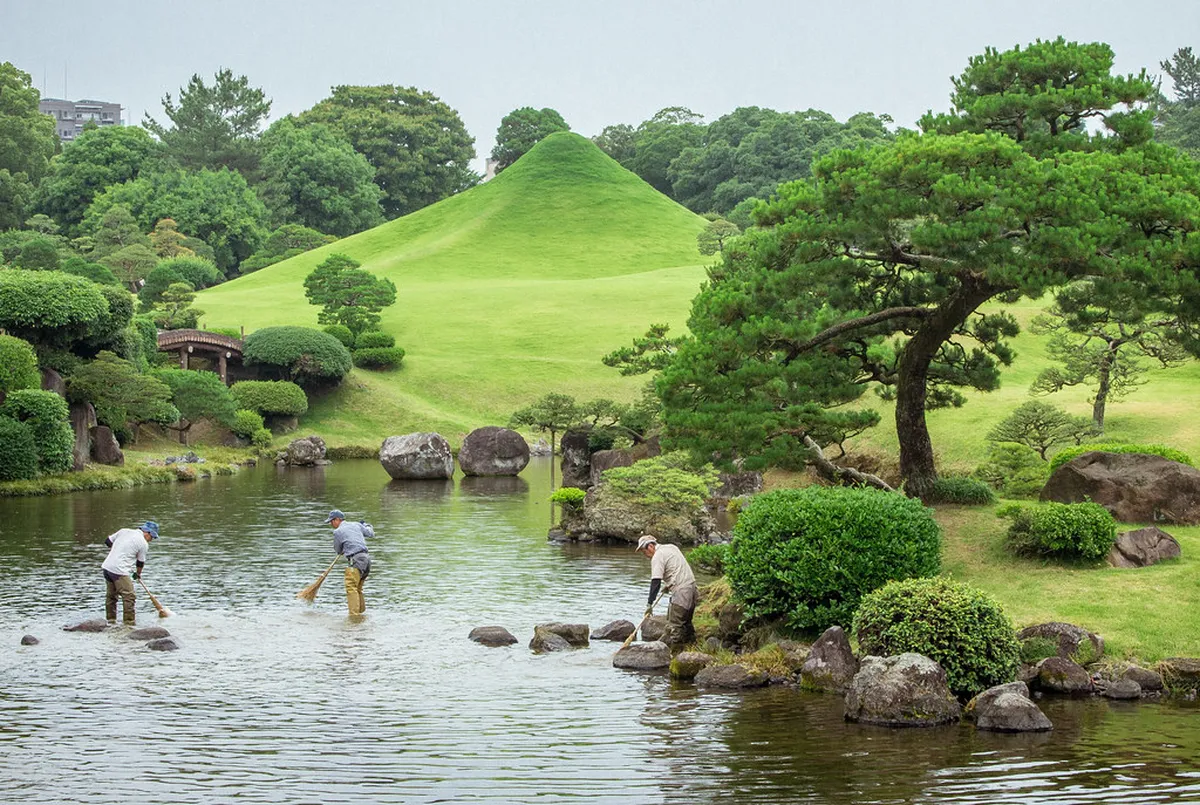
The Noh theater stage adds another cultural layer. Performances are occasional rather than something to expect on every visit, but the stage itself is worth noticing because it shows how garden, shrine, and performance traditions share the same grounds. Travelers interested in Kumamoto's spiritual history can pair this visit with Honmyoji Temple.
Kokindenju-no-Ma is the best place to turn the visit from a walk into a cultural pause. The building is associated with courtly literary culture and traditional tea, and its garden-facing view helps visitors appreciate the design from a seated perspective rather than only from the path.
Parks, Gardens, and Outdoor Spots in Suizenji
The garden is famous for spring water associated with the Mount Aso system. That water gives the pond its clarity and makes the koi, reflections, and stone edges a bigger part of the experience than they might seem on a map. Official destination details are available through Kumamoto Guide.
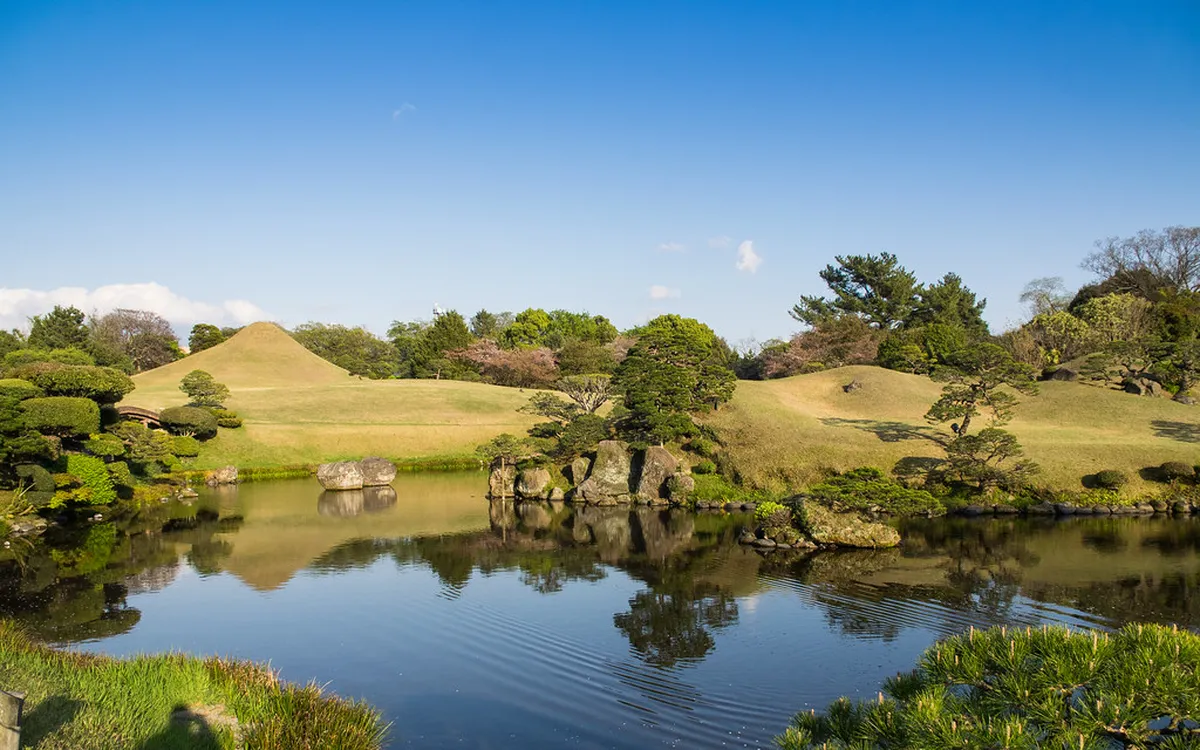
Suizenji's strolling style rewards slow movement. The path is not about reaching one viewpoint as quickly as possible; it is about how the scene changes as rocks, pines, water, and the Mt. Fuji mound shift in relation to one another. Wear comfortable shoes because the main route includes gravel and small changes in grade.
Seasonal color matters, but it should not be the only reason to visit. Spring brings blossoms, summer brings deep green lawns and strong heat-management needs, autumn brings foliage and clearer walking weather, and winter offers the quietest atmosphere. If you enjoy more unusual outdoor stops, add Reigando Cave on a separate half-day rather than forcing it into the same short garden visit.
Family-Friendly and Budget-Friendly Options in Suizenji
Children often engage with Suizenji through the koi, water edges, open views, and the simple goal of walking around the pond. The garden is quiet, but it is not fragile in the way some indoor cultural sites feel, so families can move at a child-friendly pace while still respecting the paths and lawns.
The main family caution is the low, open pond edge. Keep toddlers and impulsive children close, especially near koi-viewing areas, because the water is part of the scenery rather than fenced off like a modern urban park. Strollers can help younger children, but gravel may make lightweight wheels awkward.
The pond edges are open and unfenced throughout most of the garden. Keep young children and toddlers close near koi-viewing areas — the water is an integral part of the landscape, not a safely roped-off feature.
Entry fees for the garden remain very reasonable for international tourists and families. Discounts are often available for children and students with a valid ID card. For a very different family outing elsewhere in the prefecture, the Tsujunkyo Bridge is a good excursion when you have more time and transport flexibility.
How to Plan a Smooth Suizenji Attractions Day
Getting to the garden is simple using the Kumamoto City tram from JR Kumamoto Station. Ride toward Suizenji Koen, get off at the Suizenji Koen stop, and walk a few minutes to the entrance. This direct tram access is why Suizenji is one of the easiest central Kumamoto attractions to add to a first-time itinerary. Consult the Kumamoto attraction guide for more city context.
Arrive before 10:00 AM if possible. Morning gives you softer light, lower heat, and more space on the pond-side route. In summer, the early window is practical rather than cosmetic because exposed gravel paths can feel draining by midday.
Accessibility is good for the main route but not perfect. The official visitor information notes wheelchair rental at the main gate ticket booth, an AED, nursing room, ostomate facilities, coin lockers, and free WiFi in the rest area. Some side paths have uneven surfaces or steps, and the official guide currently directs visitors to use the Main Gate or North Gate while other gates are closed.
| Detail | Information |
|---|---|
| Transport | City tram line A or B to Suizenji Koen stop |
| Entry cost (adults) | ~¥500 (verify on arrival) |
| Entry cost (children) | ~¥200 (ages 6–15) |
| Recommended duration | 45–90 minutes |
| Best arrival time | Before 10:00 AM |
| Parking | No dedicated visitor parking lot — arrive by tram or taxi |
There is no dedicated visitor parking lot at Suizenji Garden. Arrive by city tram (Suizenji Koen stop) or taxi rather than renting a car for this stop.
Family-Friendly Hotels Near Suizenji Jojuen Garden
For families, the best hotel is usually not the closest hotel to the garden; it is the hotel that makes an early tram arrival easy. A central property on a direct tram route can be more useful than a quiet residential stay if you also plan to visit Kumamoto Castle, dinner areas, and the station.
Station-area hotels work well for Shinkansen arrivals and luggage logistics, while central city hotels reduce evening transit. Staying near Suizenji itself can be peaceful, but dining choices are more limited after the main sightseeing day winds down.
Check reviews for room size, stroller storage, laundry, breakfast timing, and whether the route to the tram stop is manageable with children. During cherry blossom season, autumn foliage periods, and Japanese holiday weekends, book earlier because the best family room types disappear before standard business rooms.
Latest launches and promotions in Suizenji Jojuen Garden
For 2026, treat Suizenji promotions and special experiences as optional add-ons rather than guaranteed garden-run offers. The official visitor guide notes that Japanese and English guided tours may be arranged by advance contact and that additional charges apply, so do not count on a walk-up English tour without checking first.
Third-party platforms sometimes package Suizenji with kimono rental, photo shoots, taxi tours, or broader Kumamoto sightseeing products. These can be convenient if you want a structured day, but independent travelers should compare the total cost, cancellation rules, meeting point, and whether the package actually improves access to the garden itself. Check Japan Guide and the official site close to your travel date for event-sensitive updates.
Luca And Nico’s Take On Suizenji Jojuen Garden
Younger travelers like Luca and Nico often enjoy Suizenji most when the visit has a simple mission. Ask one child to track how the Mt. Fuji mound changes shape around the pond, and ask another to look for koi, stone lanterns, bridges, and shrine details. That turns a quiet garden into a gentle observation game without needing loud activity.
Children who need movement usually do well because the route keeps them walking. Children who tire quickly need more support because the loop does not offer a clean mid-circuit exit. Parents should remind kids to stay on designated paths, keep clear of pond edges, and save snacks for appropriate rest areas rather than treating the lawns like a picnic park.
Suizenji Jojuen Garden Weather and Best Time
Spring is the most popular season, especially around late March and early April when blossoms add color to the pond and pine scenery. Expect more visitors during bloom windows, and use an early arrival if photography matters. Visit the Visit Kyushu site for broader regional planning.
Autumn is the easiest season for many travelers because temperatures are comfortable and the garden's red and gold foliage works well with the pond views. November is often the best foliage target, though exact timing varies by year.
Summer requires discipline: go early, wear breathable clothing, bring water, and avoid making Suizenji the middle stop after a tiring morning. Winter is the quietest season and can be excellent for travelers who value space and atmosphere over flowers.
Frequently Asked Questions
How much does it cost to enter Suizenji Jojuen Garden?
Adult tickets generally cost around 400 yen, while children can enter for about 200 yen. Prices are subject to change, so verify details on the official site. This remains one of the most affordable attractions in Kumamoto for families.
Is Suizenji Jojuen Garden wheelchair accessible?
Most of the main paths are flat and paved with gravel, making them accessible for many visitors. Some smaller side paths may have steps or uneven terrain. Staff members are usually available to help guide you toward the easiest routes.
Can you eat inside Suizenji Jojuen Garden?
While large picnics are not allowed on the lawns, you can enjoy tea and snacks at the tea house. There are also designated rest areas where light snacks can be consumed. Several restaurants are located just outside the main garden gates.
How do I get to the garden from Kumamoto Station?
The easiest way is to take the city tram Line A toward Kengun-machi. Get off at the Suizenji Koen stop after a roughly 30-minute ride. The entrance to the garden is a short, well-marked walk from the tram station.
Suizenji Jojuen Garden is worth including when your Kumamoto itinerary needs a calm, compact, culturally rich stop. Its spring-fed pond, miniature Mt. Fuji, Tokaido-inspired layout, Izumi Shrine, and tea-house views give visitors a clear sense of Edo-period garden design without requiring a long trip outside the city.
The best 2026 visit is simple: arrive early, use the tram, walk the full loop slowly, plan shade or rest breaks for children, and pair the garden with one nearby attraction instead of overloading the day. Kumamoto offers many treasures, and Suizenji Jojuen remains one of its easiest peaceful wins.
For authoritative information, refer to the Suizenji Jojuen Garden on Wikipedia.
For more Kumamoto trip planning, see our Kumamoto Attractions, Kumamoto 2-Day Itinerary, Suizenji Garden Guide guides.