

Kusatsu Maitake Soba and Udon: A Local Ordering and Restaurant Guide
Find where to eat Kusatsu maitake soba and udon near the Yubatake, how to order tempura versus seiro, and dashi and gluten notes for your 2026 trip.
On this page
Last updated August 2026, this guide covers where to find Kusatsu maitake soba and udon near the Yubatake and on the quieter backstreets toward Sainokawara Park. Gunma Prefecture is one of Japan's major maitake-growing regions, and Kusatsu Onsen is a hot-spring town within that prefecture. That local supply is why menus here treat the mushroom as a headline ingredient rather than a garnish.
Why Maitake Mushrooms Define Kusatsu's Noodle Scene
Maitake, also called hen-of-the-woods or Grifola frondosa, grows in overlapping frond clusters that separate into bite-sized pieces once cooked. Kusatsu Onsen sits inside Gunma Prefecture, one of Japan's major maitake-growing regions. That keeps the mushroom close to local kitchens, without the distance Tokyo restaurants deal with. This proximity is why menus here list maitake as fresher and more affordable than the same mushroom sold in Tokyo. Flavor-wise, maitake is earthy and slightly peppery, with a meatier chew than shiitake or enoki. Cooks favor tempura frying specifically because it keeps that texture intact, rather than boiling the mushroom soft. Portion sizes and frying styles can vary from one kitchen to the next, since each shop sources and prepares the mushroom independently rather than following one town-wide standard. Kusatsu Onsen's identity centers on hot-spring bathing, and the Yubatake functions as the town's central reference point, including for where noodle shops cluster. For a wider view of how maitake fits alongside konnyaku and other Gunma staples, see the Gunma local food guide. The broader Kusatsu Onsen food guide covers how a noodle lunch fits around ryokan dinners and onsen-town dining hours.
Where to Eat Kusatsu Maitake Soba and Udon Near the Yubatake
Mikuni-ya sits close to the Yubatake, the steaming hot-spring field at the center of town. It is one of the shops travelers name most often for maitake soba. That central location means Mikuni-ya can run waits of 60 minutes or more during the lunch peak. On the backstreets toward Sainokawara Park, quieter noodle shops serve the same maitake tempura style with shorter waits. Some of these shops sit uphill from the Yubatake, so budget extra time if you are walking straight from the bath. If Mikuni-ya's line looks long when you arrive, the backstreet alternative is a reasonable trade. It swaps a shorter wait for a table further from the main square. Travelers with only one lunch slot in Kusatsu should weigh Mikuni-ya's central position against the quieter Sainokawara-side wait. A busier shop is not automatically the better bowl. Between the two noodle types, soba pairs slightly better with maitake tempura for most diners. The buckwheat's nutty flavor doesn't compete with the mushroom's earthiness the way udon's plainer wheat base sometimes does. Udon still works well in the hot kake style, where a thicker broth carries the maitake flavor into every bite. Diners who want a heartier, more filling bowl often lean toward udon regardless of the mushroom pairing, since the noodle itself is thicker. Both noodle types are typically handmade fresh at these shops, which is part of why the daily supply runs out once a batch is gone. If you want a fuller sense of Kusatsu's food landscape beyond noodles, including manju and other local sweets, see the Kusatsu manju and sweets guide.
How to Order: Maitake Tempura, Seiro, and Kake Explained
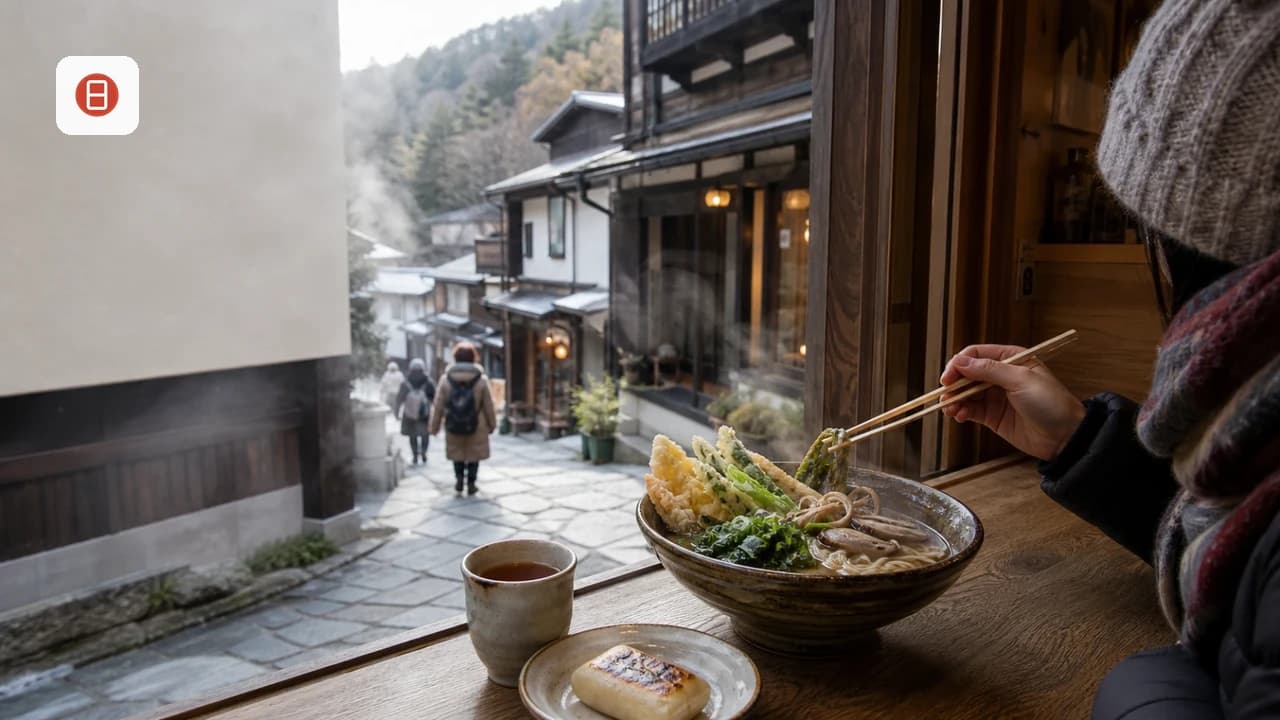
Menus around Kusatsu Onsen use a handful of consistent names for maitake noodle dishes, even though exact wording varies shop to shop. Maitake-ten, the tempura style, is the version most travelers order first, since the fried maitake fronds hold their shape and often cover much of the bowl. Maitake seiro serves cold noodles on a tray alongside a separate hot dipping broth loaded with mushroom pieces. Kake style skips the tempura and dipping ritual, delivering hot noodles directly in a maitake-infused broth for a faster, simpler lunch. Some shops add seasonal wild mountain vegetables, known as sansai, alongside the maitake when in season. Ask staff which sansai varieties are available if the picture menu doesn't specify, since the pairing changes through the year. Most Kusatsu noodle shops also post photos of each bowl near the entrance or register, which helps with ordering even without reading the menu in Japanese.
| Style | Noodle Temperature | Broth | Texture |
|---|---|---|---|
| Maitake-ten (tempura) | Hot or cold | On the side or poured over | Crisp fried mushroom against soft noodles |
| Maitake seiro | Cold | Separate hot dipping broth | Cold noodle chew against a hot, mushroom-forward dip |
| Maitake kake | Hot | Mushroom-infused broth poured over | Softest texture, the most broth-forward bowl |
- Maitake-ten (tempura): crisp-fried maitake, often a single fist-sized piece, served over hot or cold noodles. The standard order for a first visit.
- Maitake seiro: cold soba or udon on a tray, dipped into a separate hot broth thick with maitake pieces.
- Maitake kake: hot noodles served directly in maitake broth, with no separate dipping step and the fastest of the three to eat.
Costs, Hours, and the Wait-List System
A maitake tempura soba or udon set costs more than a plain zaru soba, since the mushroom tempura is priced as an add-on rather than folded into a base menu price. Exact prices are not standardized across shops, so check the menu board posted outside each restaurant before joining a line. Some lunch sets add a small side, such as pickles, though exact inclusions vary by shop. Many noodle shops in Kusatsu Onsen close by 3:00 PM, and some close earlier once the day's batch of handmade noodles sells out. A shop with its curtain, or noren, still hanging outside is generally still serving. A removed curtain usually signals the kitchen has closed for the day. That visual check can save a wasted walk uphill to a backstreet shop that has already closed. Arriving after early afternoon risks finding the noodles gone entirely, particularly at shops that make dough fresh each morning rather than stocking backup supply. At high-demand spots like Mikuni-ya, staff typically run a name-list system. Write your name and party size down, then wait nearby or explore the area until called. Parties are usually seated in signup order rather than arrival order. Stay within earshot, or ask staff how they plan to notify you. Arriving as early in the lunch window as your schedule allows is the most reliable way to shorten the wait at a name-list shop. If your ryokan dinner already includes a multi-course kaiseki meal, treat this noodle lunch as a standalone stop rather than a heavy pre-dinner dish. The ryokan kaiseki guide covers how much food a typical Kusatsu stay already includes.
The fist-sized maitake-ten portion is more filling than typical lunch, and with most shops closing by 3:00 PM, this meal demands advance scheduling rather than last-minute fitting into the day's itinerary.
Dietary Notes: Dashi, Gluten, and the Vegetarian Reality
Maitake is a plant-based topping, but the broth underneath it is often not vegetarian. Most soba and udon shops in Japan build their dashi from bonito flakes. A bowl that looks fully vegetarian can still carry fish stock unless a shop states otherwise. Ask directly whether a kombu-only or vegetable dashi is available before ordering if you avoid fish broth. Some shops can accommodate this, but it is not the default preparation. Gluten-free travelers face a separate constraint. Udon is a wheat noodle, so it is not gluten-free under any circumstance. Soba is traditionally buckwheat, but most commercial soba noodles in Japan are blended with wheat flour for texture. That blend often leaves meaningful gluten content even in a soba labeled as buckwheat. When gluten is a concern, ask specifically about the flour ratio at the counter. Shops that grind their own buckwheat may use a higher percentage than shops using pre-mixed noodle dough. Cross-contamination is also a factor, since a shop's boiling water is typically shared between buckwheat and wheat noodles throughout service. If ordering in Japanese feels difficult, pointing at the characters 舞茸 printed near a dish name usually communicates the maitake order clearly. For a broader rundown of vegetarian-friendly and budget options around Kusatsu Onsen, see the Kusatsu budget and vegetarian food guide.
Mistakes to Avoid When Timing a Maitake Noodle Lunch
Skipping the tempura is the most common misstep for first-time visitors. Maitake-ten is how the mushroom is eaten locally, and ordering plain soba or udon without it misses the dish that defines Kusatsu's noodle scene. Arriving late in the afternoon is the second common mistake. The day's handmade noodles can sell out well before dinner, and shops close once they do. Treat lunch as a fixed appointment rather than something to fit in whenever the schedule allows, especially if Kusatsu Onsen's attractions are also on the day's plan. Sainokawara Park and the Yubatake bracket most of the walkable dining area. A noodle stop fits naturally near either one. Build the noodle stop into the gap between a morning onsen visit and an afternoon walk. Don't save it for after a full day of sightseeing. Skipping the wait list at a popular shop to search for a table elsewhere can also backfire. Backstreet shops sometimes run out of noodles just as fast despite shorter lines, since batches are small everywhere in town. The fist-sized maitake-ten portion is more food than a typical light lunch, so pace the rest of your order, especially if more sightseeing follows.
Frequently Asked Questions
How much does maitake tempura soba cost in Kusatsu Onsen?
Exact prices vary by shop and are not posted online, so check the menu board outside each restaurant. A maitake-ten set generally costs more than a plain zaru soba. The tempura is priced as an addition, not folded into a base menu price.
Is Kusatsu maitake soba or udon vegetarian?
The mushroom topping is plant-based, but the broth underneath usually is not. Most shops make dashi with bonito flakes by default, so ask directly for a kombu-only or vegetable broth if you avoid fish stock.
Is soba in Kusatsu gluten-free?
Not by default. Most commercial soba noodles in Japan, including in Kusatsu, are blended with wheat flour, so they carry gluten even though buckwheat is the traditional base. Udon is a wheat noodle and is never gluten-free.
Where is the best place to eat maitake noodles near the Yubatake?
Mikuni-ya is the shop travelers name most often for maitake soba near the Yubatake, though waits of 60 minutes or more are common at lunch. For shorter lines, look toward the backstreets heading to Sainokawara Park, where quieter shops serve the same tempura style.
How much time should I plan for a maitake noodle lunch in Kusatsu?
Budget more time than a typical fast lunch, especially at popular shops that use a name-list wait system. Arrive earlier in the day rather than later, since many shops close by 3:00 PM or once the day's handmade noodles sell out.
Can you order maitake udon as well as maitake soba in Kusatsu?
Yes, most shops that serve maitake soba also offer a maitake udon version on the same menu. The choice mainly comes down to whether you prefer buckwheat's nuttier bite or udon's thicker, more filling noodle.
Free guide: Japan's Hidden Gems
12 under-the-radar places beyond Tokyo & Kyoto — with the best season to visit each and a local tip you won't find in the guidebooks.
You might also like

Continue reading
More guides you'll find useful


