8 Must-See Hirosaki Western Meiji Architecture Sites (2026)
Explore the best hirosaki western meiji architecture. Discover 8 iconic sites, the legacy of Horie Sakichi, and tips for an Aomori walking tour in 2026.
On this page
Hirosaki stands as a rare architectural time capsule in northern Japan. Our editors have explored these streets to map out the most significant Meiji and Taisho era landmarks. Last updated June 2026, this guide reflects the current preservation status and entry requirements for the city's historic wooden buildings. While nearby Aomori City faced heavy bombing during WWII, Hirosaki remained largely untouched. This preservation allows us to witness the unique Japanese-Western Eclectic Architecture that defined Japan's rapid modernization.
The city became one of Japan's earliest municipal bodies in April 1889. This status attracted foreign teachers and missionaries who brought Western design sensibilities to the Tsugaru region. Local master carpenters like Horie Sakichi adapted these foreign styles using traditional Japanese woodworking techniques. The resulting Giyofu style blends Gothic and Renaissance elements with local craftsmanship. We recommend starting your journey near the castle to see how these modern structures contrast with the older Nakacho Samurai District Hirosaki nearby.
Useful resources: Japan Guide's Hirosaki page and Wikipedia's Hirosaki overview have up-to-date access and background details.
Why Hirosaki's Buildings Survived — WWII and the Meiji Restoration
The survival of Hirosaki's western Meiji architecture is a fortunate historical anomaly. During World War II, Allied aerial raids destroyed approximately 70% of nearby Aomori City. Hirosaki escaped untouched because it had no heavy industrial plants, no major military production facilities, and no port infrastructure that would have made it a strategic target. That single accident of geography preserved an entire era's worth of buildings in amber.
The deeper reason for the city's architectural richness goes back to the Meiji Restoration of 1868. When Japan abolished the old feudal order, Hirosaki lost its role as a samurai castle town almost overnight. Rather than stagnate, the city reinvented itself as Aomori Prefecture's cultural and educational capital. The new Meiji government sent foreign advisors — engineers, teachers, and Christian missionaries — to help modernize the regional school system and agricultural sector. Those foreign residents needed places to live, teach, and worship, and they built them.
Check the when to visit Hirosaki guide to ensure you catch these buildings during clear weather and within the seasonal opening hours.
The Role of Foreign Missionaries and Teachers in Shaping the City
From the 1870s onward, foreign Protestant missionaries established schools, churches, and residences across Hirosaki. The Too-gijuku private academy — predecessor to Hirosaki Gakuin University — was founded under their influence and drew educators from the United States and Canada. These missionaries did not import finished designs or prefabricated parts. They worked with local carpenters and described what they needed, sharing illustrated pattern books and sometimes rough hand-drawn plans.
The result was a genuinely hybrid building tradition rooted in the Tsugaru region. Brick and stone were expensive to import and difficult to work in a city without a major port. Wood was plentiful, and local carpenters understood it completely. Foreign clients got their verandas, their pitched gabled roofs, and their arched windows. Local builders got the commission, and they delivered it in timber using skills passed through generations of shrine and temple construction. That negotiation between client expectation and builder expertise is exactly what produced the Giyofu style.
Giyofu Style: Why Wood, Not Brick
Hirosaki's approach to Western architecture diverges sharply from what you see in port cities like Hakodate or Otaru. Those cities built in stone and brick, materials that arrived cheaply by sea. Hirosaki, inland and connected only by road and later by rail, relied on the timber of Aomori's forests. The result is a body of architecture that looks Western from the street — octagonal towers, Renaissance cornices, Gothic spires — but is constructed entirely in the Japanese post-and-beam tradition.
The technical term for this style is Giyofu (擬洋風), meaning "pseudo-Western." It does not imply imitation in a diminishing sense. The carpenters producing these buildings were highly skilled professionals applying Western surface grammar to a structural language they had mastered. Under many of these buildings' Western exterior trim you will find traditional joinery: kibana (wooden nose brackets), the same decorative element used in Buddhist temple eave construction, hidden behind ornate cornices. The Former Hirosaki City Library, for example, presents Renaissance twin towers to the street while its interior framing relies heavily on these temple-derived techniques. You get a taste of Europe at the door and a Zen temple the moment you look up at the ceiling joinery.
This wooden construction also explains the buildings' remarkable survival. Timber is more flexible than brick under the seismic stress that periodically shakes the Tohoku region. Several of the city's brick-built neighbors in other prefectures cracked in the 1896 Meiji Sanriku and 1933 Sanriku earthquakes; Hirosaki's wooden Giyofu buildings flexed and held.
Horie Sakichi: The Carpenter Who Defined a City
Master carpenter Horie Sakichi played a pivotal role in this transformation. He lacked formal Western architectural training but possessed incredible spatial intuition and traditional skills accumulated over decades of shrine and temple work. Horie studied foreign buildings wherever he could find them — visiting Meiji-era exhibitions and examining imported illustrated pattern books — then returned to Hirosaki and replicated complex European motifs in timber. His family continued the practice across two more generations, meaning the Horie name spans nearly every significant public building the city raised between 1890 and the 1920s.
His legacy is most visible in the intricate carvings and sturdy frames of the city's most famous banks and libraries. Look closely at the decorative brackets under the eaves of the Former Hirosaki City Library: the proportions are Renaissance, but the cutting technique is the same one you would find on a 17th-century shrine in the mountains above the city. Horie never erased what he knew; he layered a new grammar on top of it. That layering is what makes Hirosaki's buildings feel alive rather than merely imitative.
8 Must-See Hirosaki Western Meiji Architecture Sites
The following sites represent the pinnacle of the city's architectural heritage. Most are located within walking distance of Hirosaki Castle and its park and the central park area. We have grouped these by their historical function, from religious missionary houses to grand financial institutions. Each site offers a distinct perspective on the Meiji era's eclectic tastes.
Visitors should note that some buildings require removing shoes before entry. Wear socks and comfortable walking shoes for this self-guided tour. Many locations offer English pamphlets and QR codes for deeper historical context. Most sites are open daily, though some close on Mondays or during the deep winter months.
1. Former Too-gijuku Missionary Residence (1903)
This elegant wooden home once housed foreign teachers invited to work at the local private academy. It features a wrap-around veranda and classic Western chimneys integrated into a traditional timber frame. The site sits inside Hirosaki Park and is free to enter between 09:00 and 18:00 daily. The first-floor cafe serves coffee in rooms furnished with Meiji-period reproductions — a practical stop mid-tour.
2. Former Hirosaki City Library (1906)
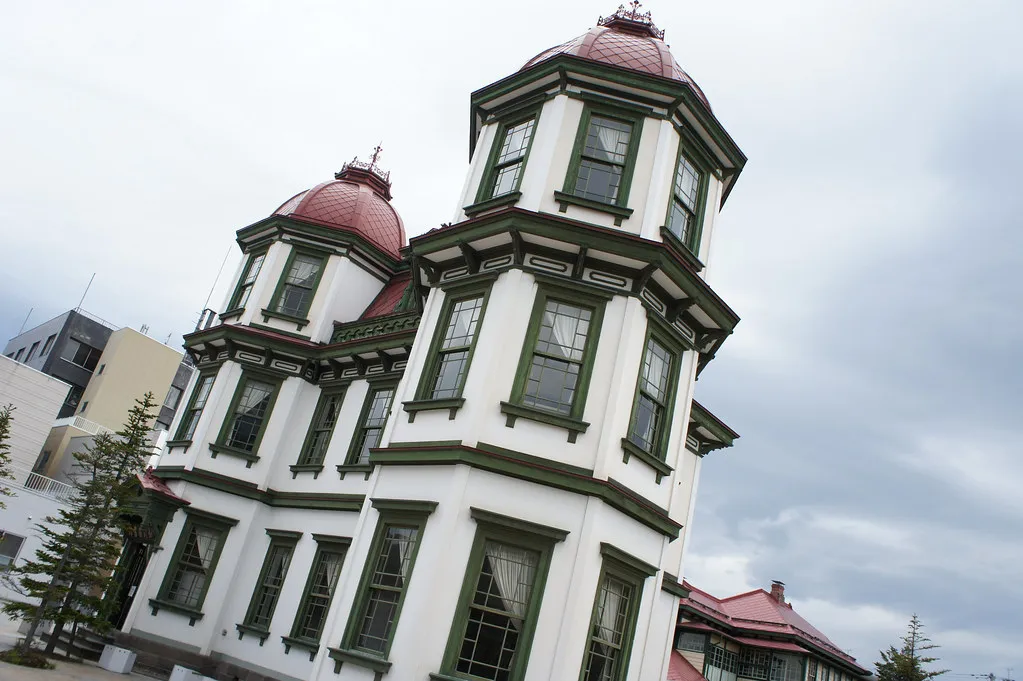
Designed by Horie Sakichi, this striking building features twin octagonal towers and a deep-red roof. It served as the main public library and now functions as a facility of the Municipal Museum of Local Literature, displaying local publications and literary materials. Entry is free and the building is open 09:00–17:00 most days. The second floor is particularly revealing: Renaissance proportions outside, traditional kibana bracket joinery inside. Climbing the creaky stairs past both worlds at once is worth the visit alone.
3. Aomori Bank Memorial Hall (former 59th Bank)
This Renaissance-style building was the first national bank established in Aomori Prefecture. Its interior features a ceiling of gold-leafed wallpaper imported from the United Kingdom, and a walk-in safe on the ground floor that showcases early 20th-century banking security. Adult admission costs approximately ¥200 (around €1.20) and the hall is open 09:30–16:30. It is located in the Dotemachi shopping district, accessible by the 100-yen loop bus.
4. Former Eighth Division Commander's Residence
This stately home was built for high-ranking military officials and features a distinctive geometric motif on its exterior. It represents a more sober and functional approach to Western design — closer to colonial government architecture than to the decorative exuberance of the library or the bank. Admission is approximately ¥300 (€1.80) and the building is open 09:00–16:30 daily. It sits near the castle's northern gate and provides a quieter alternative to the main tourist path.
5. Catholic Hirosaki Church
This Gothic-style church features sharp spires and stained glass windows that incorporate local apple harvest imagery — a detail that anchors a European form to its Aomori setting. It remains an active place of worship. Visitors are welcome for free outside of service hours, generally 09:00–16:00. Afternoon light through the apple-pattern glass is the best reason to plan your visit after lunch.
6. Hirosaki Gakuin Foreign Missionaries' Residence
Recognized as one of the oldest wooden missionary houses in the Tohoku region, this building sits on a quiet hilltop and showcases American colonial architecture interpreted in Japanese timber. The fireplace designs use local stone and plaster to mimic Western stone hearths at a fraction of the import cost — a pragmatic solution that became a characteristic detail. Admission is approximately ¥400 (€2.40), open 10:00–16:00.
7. United Church of Christ Hirosaki Church
Influenced by Gothic cathedral design, this church features a twin-tower wooden facade that was another significant project completed by the Horie family of builders. The wooden trusses inside combine Western structural logic with Japanese mortise-and-tenon joinery. Access is free and the building is typically open 10:00–16:00. It is located near the Aomori Bank, making it easy to combine both on a single loop.
8. Seibi-en Garden's Seibi-kan
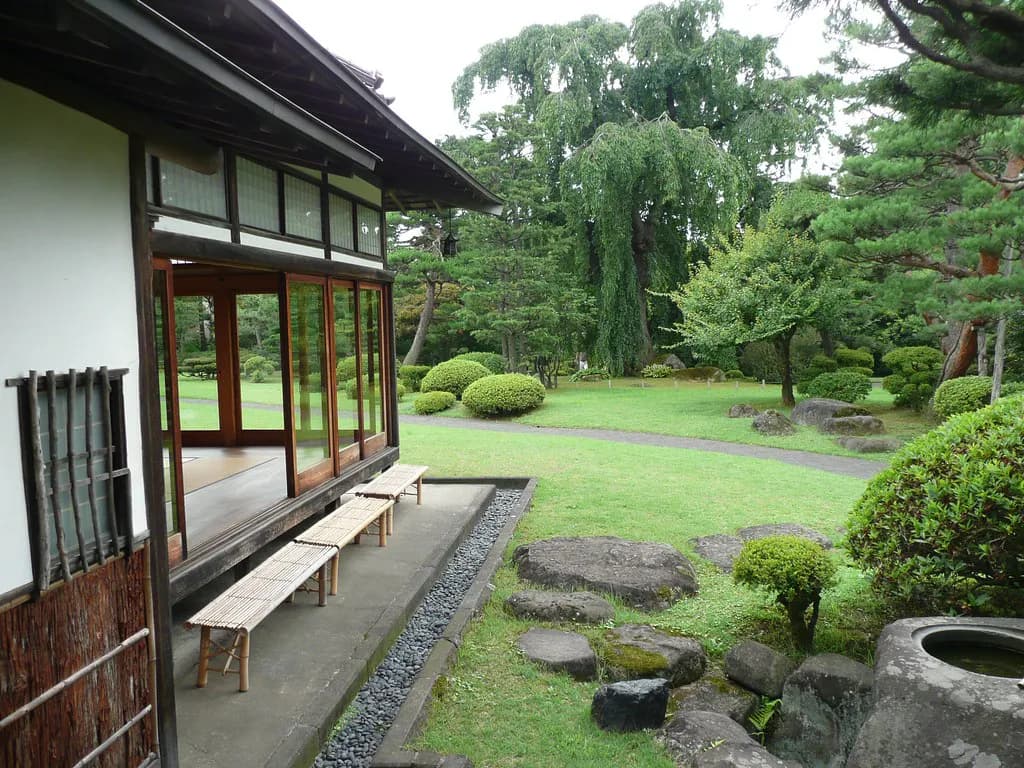
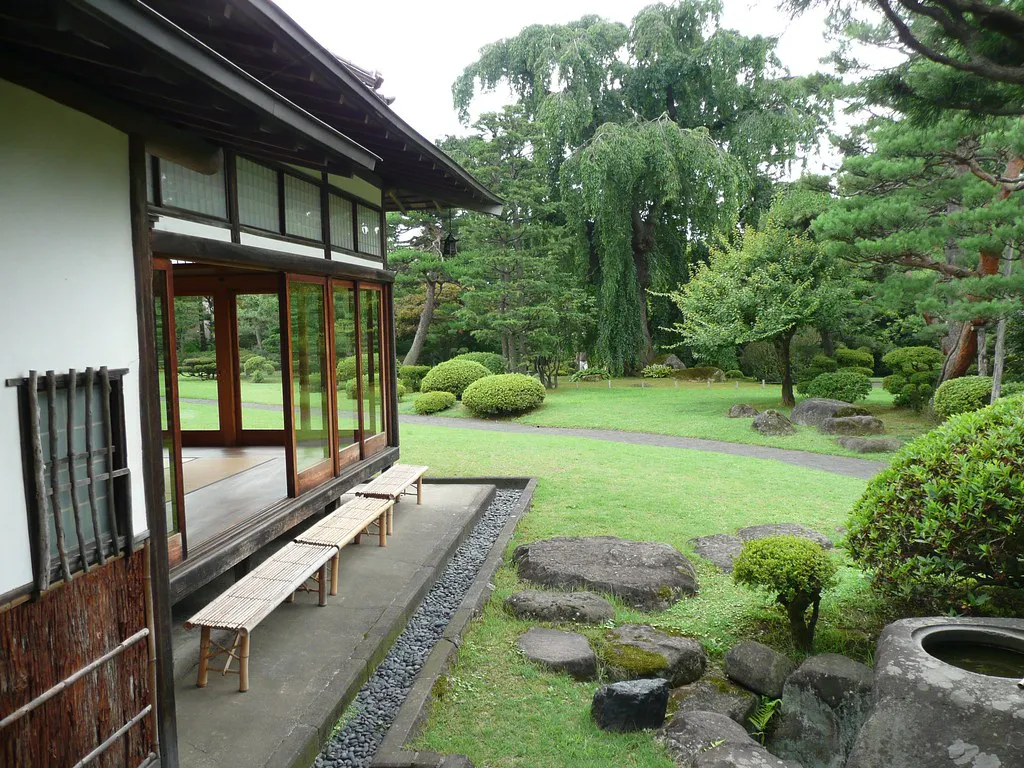
This building features a Western-style second floor perched directly on top of a traditional Japanese first floor — two architectural cultures in a single vertical stack. It is part of a strolling landscape garden that inspired Japanese artists and filmmakers. Admission to the garden and house is approximately ¥640 (€3.80), open 09:00–17:00. Morning visits reward you with mist over the pond before the crowds arrive.
Planning Your Hirosaki Architecture Walking Tour
Navigating the city is straightforward thanks to the 100-yen Dotemachi Loop Bus. This service connects JR Hirosaki Station with the major architectural clusters near the park. The bus runs every 10 minutes during peak hours, making it the most efficient way to travel between sites. A day pass is worth buying if you plan to stop at more than three locations.
For those who prefer walking, the main sites group into two primary clusters. One sits directly south and east of Hirosaki Castle, covering the library, the missionary residences, and the churches. The second cluster lies in the Dotemachi shopping district, anchored by the Aomori Bank Memorial Hall. You can cover both on foot in a single day if you start before 09:30. We recommend pairing your tour with a stop for Hirosaki apple pie and cider at one of the historic cafes between the two clusters.
Photography enthusiasts should aim for the early morning or late afternoon light. The unpainted timber of the Meiji buildings shows its grain and colour most richly in the hour before sunset. Tripods are often restricted inside the smaller buildings to protect the wooden floors. Always check signage or ask staff before setting up professional equipment.
The off-season — late October through March — is underrated for architecture visits. Autumn colour frames the wooden buildings without the April cherry blossom crowds. Winter snow resting on the ornate eaves and towers creates compositions that most travel photographers have not yet exhausted. Many interiors remain open year-round; confirm closures on the city's tourism site before you travel.
Hirosaki vs Hakodate and Otaru: Which to Visit for Meiji Architecture?
All three cities are often mentioned together as Japan's best destinations for Western Meiji architecture, but they offer meaningfully different experiences. Hakodate and Otaru were treaty ports; their Western buildings are primarily brick and stone, built by or for foreign merchants and consulates. The materials arrived cheaply by sea. The result is architecture that feels more authentically European in its mass and permanence.
Hirosaki is categorically different. Its Western buildings are entirely wooden, built by Japanese carpenters working from pattern books rather than from direct foreign supervision. The scale is more intimate, the ornamentation more handcrafted, and the interior blending of Japanese and Western techniques far more visible. If you want to understand how Japan actually absorbed Western design — rather than simply importing it wholesale — Hirosaki is the more instructive city. Hakodate and Otaru show you what European merchants built in Japan. Hirosaki shows you what Japan built when it decided to look Western on its own terms.
See our hirosaki tourism attractions guide for the broader city overview, including the castle park and the samurai district.
Frequently Asked Questions
Who was the primary architect of Hirosaki's Western buildings?
Horie Sakichi was the master carpenter responsible for many of Hirosaki's iconic Meiji-era structures. He adapted Western designs into a unique local style known as Giyofu, using traditional Japanese woodworking skills. His family continued this architectural legacy for generations.
Can you go inside the Western buildings in Hirosaki?
Yes, most of the historic Western buildings in Hirosaki are open to the public as museums or cafes. Some charge a small entry fee, while others like the library are free. Visitors should be prepared to remove their shoes at several locations.
How long does the architecture walking tour take?
A comprehensive tour of the eight major sites typically takes between four and six hours. Using the 100-yen loop bus can speed up the process significantly. We recommend a full day to include lunch and interior tours.
Hirosaki's western Meiji architecture provides a rare window into the soul of a nation in transition. The blend of Horie Sakichi's craftsmanship and foreign influence created a skyline unlike any other in Japan. Whether you are exploring the gold-leafed ceilings of the Aomori Bank or the quiet verandas of the missionary houses, the city offers endless discovery. We hope this guide helps you appreciate the preservation efforts that keep these wooden treasures standing today. Plan your trip from Aomori to experience this cultural capital firsthand.
Free guide: Japan's Hidden Gems
12 under-the-radar places beyond Tokyo & Kyoto — with the best season to visit each and a local tip you won't find in the guidebooks.
You might also like
Continue reading
More guides you'll find useful