Where to Stay in Aomori: 9 Best Areas and Tips (2026)
Discover where to stay in Aomori, from central city hotels to remote onsen. Our guide covers Hirosaki, Lake Towada, and essential winter travel tips for 2026.
On this page
Choosing where to stay in Aomori depends on why you are visiting and what season you are traveling in. Aomori Prefecture is vast, stretching from the coastal fishing city of Hachinohe in the east to the apple orchards around Hirosaki in the west, with a remote caldera lake and a string of volcanic mountains in between. Before you book, ensure you understand the logistics of getting to Aomori from major hubs like Tokyo, since the distances within the prefecture are larger than most visitors expect.
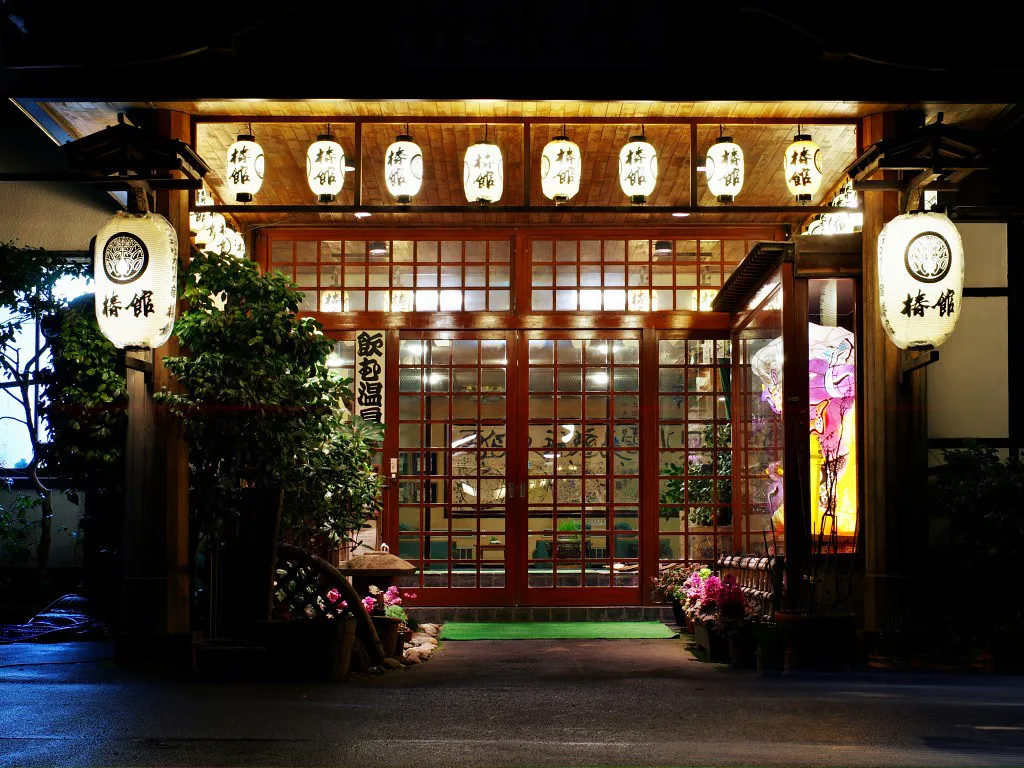
Most hotels in Aomori are utilitarian business hotels rather than the boutique or resort-style properties you find in Kyoto or Hakone. This is not a drawback — it keeps prices reasonable — but it does mean that the setting and the experiences you plan matter more than the hotel itself. The rare exceptions, like KAI Tsugaru near Hirosaki, sell out months in advance. Plan accordingly.
Useful resources: Japan Guide's Aomori page and Wikipedia's Aomori overview have up-to-date access and background details.
Best Areas to Stay in Aomori: An Overview
Aomori Prefecture has four main areas that travelers base themselves in. Aomori City is the primary transport hub and the best all-around choice for first-timers. Hirosaki, about 45 minutes southwest by train, is better suited to travelers interested in history, architecture, and cherry blossoms. Hachinohe on the Pacific coast is a fishing city with early-morning markets and a relaxed local atmosphere. Lake Towada and the Oirase Gorge are for nature-focused travelers who want forests, waterfalls, and hot springs over urban convenience.
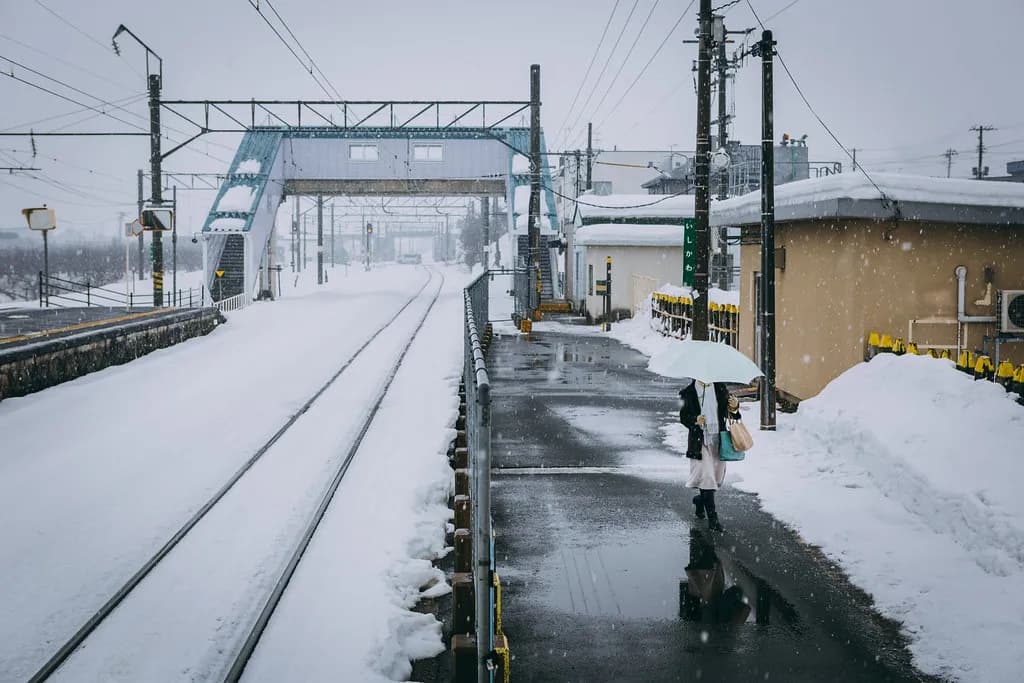
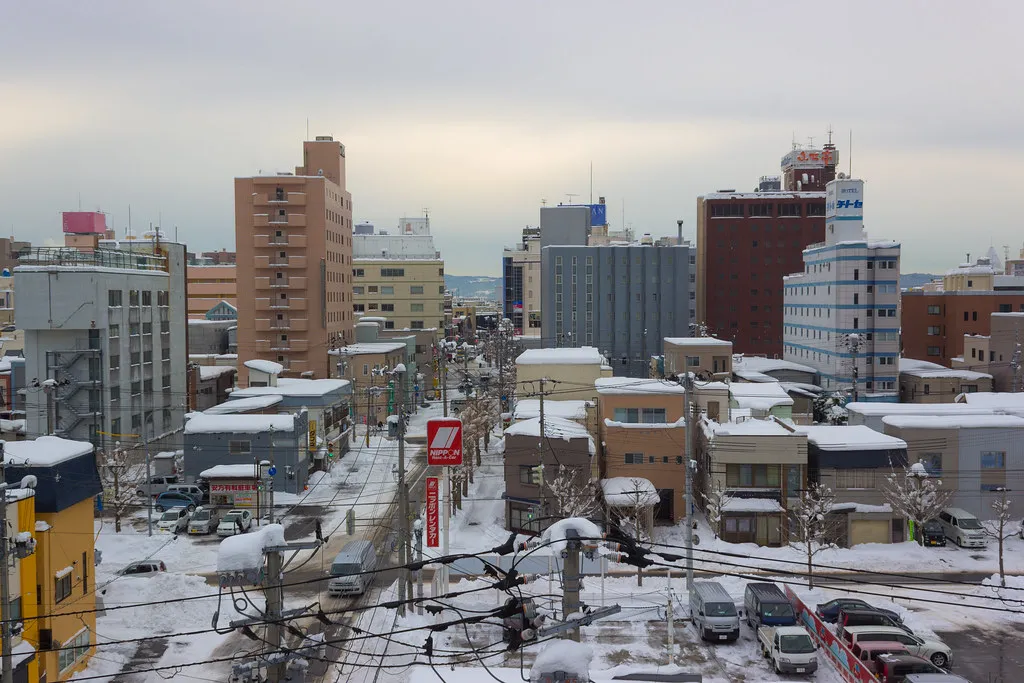
Understanding which area suits your trip is more important than picking a specific hotel. Distances inside the prefecture are large and public transport, while reliable, runs infrequently in rural zones. Winter travelers must stay close to a JR station without exception — the snowdrifts in Aomori can be several meters high and even a short walk with luggage becomes genuinely dangerous on uncleared side streets.
Check the peak travel seasons for Aomori before you book. Festival dates and cherry blossom windows drive demand sharply, and hotel inventory near the main attractions fills four to six months out. The JR East Tohoku Area Pass is the most cost-effective tool for moving between these scattered neighborhoods.
Aomori City: Best for First-Timers and Festivals
Aomori City is the gateway to the entire prefecture. The Shinkansen drops you at Shin-Aomori Station, and a six-minute local train connects you to the main Aomori Station, which is ringed by business hotels and within walking distance of the bay. The Nebuta Museum Wa·Rasse is a two-minute walk from the station, and the Furukawa Fish Market — home of the famous nokke-don bowl where you load your rice with fresh toppings — is open early every morning nearby.
If you are visiting for the Nebuta Matsuri in August, staying anywhere other than central Aomori City does not make sense. The parade routes and viewing areas are all within walking distance of JR Aomori Station. Book a room on the bay side if you can — the harbourfront at sunset is one of the best-free views in northern Japan. The pyramidal ASPAM Building at the waterfront is also worth a visit: it houses local craft shops and an observation deck with views across Mutsu Bay.
Hotels in Aomori City are almost entirely chain business hotels. Budget travelers should look at Toyoko Inn Aomori Ekimae (breakfast included, directly opposite the station exit). Mid-range travelers do well at the Daiwa Roynet Hotel Aomori, which has good central location and modern rooms. The Hotel JAL City Aomori is the top choice for comfort, offering bay views and accessible design features including facilities for elderly and mobility-impaired guests — parking is approximately 750 yen per night.
Hirosaki: Best for History and Culture
Hirosaki sits about 45 minutes southwest of Aomori City on the JR Ou Line and is one of the most attractive small cities in Tohoku. The castle park is the centerpiece: in late April and early May the moat fills with fallen cherry blossom petals, creating the "petal moat" effect that draws photographers from across Japan. In autumn the park turns gold and crimson. In winter, a snow lantern festival illuminates the grounds after dark. There is no bad season to visit Hirosaki, but spring is the busiest and requires the earliest booking.
Beyond the castle, Hirosaki has a well-preserved district of Western-style Meiji-era buildings, independent coffee shops, and apple-product stores. The city produces much of Japan's apple harvest and apple products — cider, wine, and jam — appear on menus everywhere. This is a quieter, more walkable experience than Aomori City, and most visitors find a night or two here deeply satisfying.
Hotel options in Hirosaki are more varied than in the city center. For budget travelers, Dormy Inn Hirosaki is an excellent choice with a rooftop onsen bath and complimentary ramen available late at night — an unusual perk that makes it one of the best-value stays in the entire prefecture. Mid-range travelers should look at Kobori Ryokan, a traditional inn about 16 minutes on foot from the castle. The Art Hotel Hirosaki City is the most comfortable business hotel option, right next to the station with reliable breakfast service. If budget allows, KAI Tsugaru just south of the city is the one true luxury ryokan in Aomori Prefecture and must be booked months in advance.
Hachinohe: Best for Seafood and Coastal Access
Hachinohe is Aomori's largest city on the Pacific coast and sits on the Tohoku Shinkansen line, making it the natural entry or exit point for travelers coming from the south. The city does not get the tourist attention that Aomori City and Hirosaki receive, which is part of its appeal. It has a strong local identity built around its fishing industry and its markets.
The Hasshoku Center morning market is the main draw for food-focused travelers — arrive before 08:00 for the freshest catch. The Kabushima Shrine sits on a small island just outside the city center, reachable by local train, and is surrounded by thousands of black-tailed gulls. Ne-jou Castle ruins offer a very different historical texture from the rebuilt castles further north. The Tanesashi Coast trail, starting just outside the city, is one of the quietest coastal walks in Tohoku.
Hachinohe is a practical place to stay with affordable options. Budget travelers do well at Comfort Hotel Hachinohe, which includes breakfast. Hotel Route-Inn Hon-Hachinohe Ekimae provides good mid-range value close to the station. For the most comfortable option, Hotel Grand Bach Hachinohe is a newer property with attentive service. Typical rates run 5,000–10,000 yen per night, well below Aomori City prices for equivalent quality.
Lake Towada and Oirase Gorge: Best for Nature Lovers
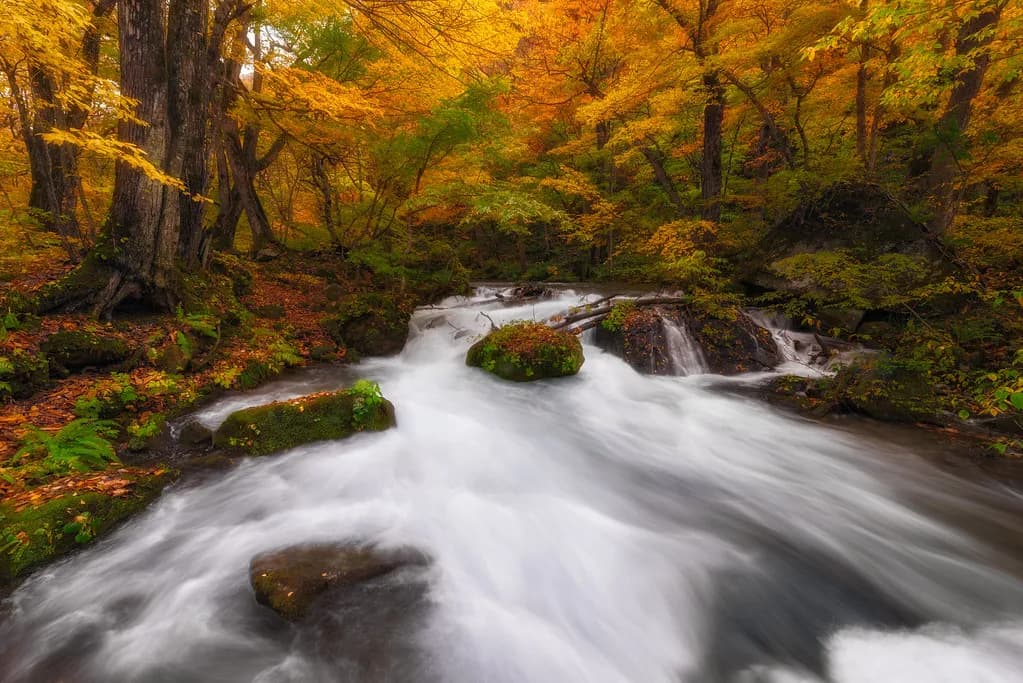
Lake Towada is a caldera lake in the mountains south of Aomori City, surrounded by beech and maple forest. The Oirase Stream runs from the lake's only outlet through a narrow wooded gorge for about 14 kilometers, passing a series of waterfalls and moss-covered rocks. In autumn — typically mid-October — the foliage here is among the most vivid in Japan and the area draws serious numbers of visitors. In winter, the frozen stream and snow-covered forest are equally dramatic but require careful transport planning as bus services thin out.
Staying in this area means you can walk the Oirase trail before the day-trip buses arrive from Aomori City, which makes an enormous difference. The trail runs along a narrow gorge road and becomes crowded by mid-morning. Most accommodation in the area is lakeside, concentrated in the Yasumiya village on the southern shore of Lake Towada.
Budget travelers can use Towadako Hostel, which has both shared and private rooms directly by the lake. The Towada Hotel offers mid-range comfort with lake views, good onsen facilities, and home-cooked meals. For a luxury experience, the Hoshino Resorts Oirase Keiryu Hotel sits directly on the stream itself and includes access to outdoor baths with waterfall views — rates run 40,000–70,000 yen per room including dinner and breakfast. Most facilities operate seasonally from late April through November; check winter availability before planning a cold-season trip. For an authentic onsen detour, Sukayu Onsen in the Hakkoda Mountains is on the bus route between Aomori City and Towada and is famous for its massive mixed-gender cedar bath accommodating up to a thousand bathers.
Which Area to Stay In, by Season
Aomori's character changes dramatically across the year, and the right base depends heavily on when you are visiting. Spring in Hirosaki means the castle's cherry blossoms and petal moat, typically at their peak in late April to early May — this is the season to book Hirosaki accommodation six months out. Summer means the Nebuta Matsuri in Aomori City in the first week of August, when the entire city center becomes a festival ground; staying within walking distance of the station is non-negotiable during this window.
Autumn is the season for Lake Towada and the Oirase Gorge, where the foliage peaks around mid-October. Staying lakeside for two nights gives you time on the trail before the day crowds arrive. Winter is Aomori's most extreme season and its most underrated: the city receives some of the heaviest snowfall of any city in the world, and the Hakkoda Mountains above the city become a powder ski destination. If you ski, basing yourself in Aomori City and taking the ropeway bus to Hakkoda is the most efficient approach. Non-skiers should consider a night at Sukayu Onsen to experience the snow-blanketed mountain landscape at its most surreal.
A simple way to think about it: Hirosaki for spring, Aomori City for summer, Lake Towada for autumn, and Hakkoda or Sukayu for winter. Any other arrangement wastes transit time on a prefecture where the distances are longer than they look on a map.
Planning Your Trip: Tokyo to Aomori Logistics
The Shinkansen Hayabusa is the fastest way to reach the region, taking approximately three hours from Tokyo Station. One-way tickets cost about 17,500 yen in standard class, making the JR East Tohoku Area Pass a very cost-effective choice if you plan to travel widely within Tohoku. The Hayabusa is an all-reserved train with no non-reserved seating, so buy your tickets before you arrive in Japan if possible.
Once you arrive at Shin-Aomori Station, a quick six-minute local train ride connects you to the main Aomori Station. Most city hotels are clustered around this secondary station, which is closer to the bay and the ferry terminals. Consult our Aomori itinerary guide to plan your daily movements between these different transit nodes.
For those traveling from Hokkaido, the Hokkaido Shinkansen provides access via Shin-Hakodate-Hokuto with a change at Shin-Aomori, or you can take the overnight ferry across the Tsugaru Strait for a slower, scenic crossing. Check the JR East website for any seasonal maintenance schedules that might affect the Hayabusa during your visit. Also note: the prefecture does not extend its rail pass coverage to Hokuriku or the Japanese Alps — Aomori is in Tohoku, not the Alpine region, and the two areas require separate pass products.
Safety and Accessibility Tips for Aomori Travelers
Aomori is one of the snowiest cities on Earth, receiving several meters of powder every winter season. Visitors must wear shoes with excellent grip or purchase clip-on spike attachments at local convenience stores to avoid slips on ice. The city installs heated pipes under some central sidewalks to melt snow, but these are limited to the immediate station and shopping district.
Accessibility is a priority in newer central hotels. Hotel JAL City Aomori offers specific design features for elderly and mobility-impaired guests, including appropriate room fittings and barrier-free corridors. Most major train stations in the prefecture have elevators and clear English-language signage. If you are driving, be aware that parking at central hotels like JAL City typically costs around 750 yen per night, and winter driving on mountain roads requires snow tires by law — usually from November through March.
The pyramidal ASPAM building at the Aomori waterfront is worth visiting for more than its architecture. The ground floor has a well-staffed tourist information center with real-time updates on road closures and bus delays, along with a large selection of local products. Always carry some cash: smaller ryokan, rural shops, and some onsen facilities in the prefecture do not accept cards.
Is Aomori Worth Visiting? (The Bottom Line)
Aomori is absolutely worth the journey if you appreciate raw natural beauty and deep-rooted cultural traditions. The region lacks the polished commercial feel of Kyoto or Tokyo, offering a more rugged and sincere Japanese experience. You can find some of the country's best attractions and museums dedicated to local art and history here.
Aomori City itself can feel industrial in parts and, outside the festival season, the city center is fairly quiet. The surrounding nature — the Hakkoda Mountains, the Oirase Gorge, the lake, the Pacific coastline — is where the prefecture earns its reputation. If you only have two or three days, focus on the Aomori City to Hirosaki corridor and make one excursion to nature.
Foodies should prioritize Aomori City for the Furukawa Fish Market and Hachinohe for the Hasshoku Center. Both experiences are in a different league from seafood markets in major tourist cities. Aomori apples, sold from farms and shops throughout the prefecture, are a consistent highlight regardless of which area you stay in.
Frequently Asked Questions
What is the best area to stay in Aomori for the Nebuta Festival?
Stay in the Aomori City center near the JR Aomori Station for the best festival access. This area is within walking distance of the parade route and the harbor. Book your room at least six months in advance to secure a spot.
How do I get from Tokyo to Aomori quickly?
The Shinkansen Hayabusa is the fastest option, reaching Shin-Aomori in about three hours. It is a comfortable journey that is fully covered by the JR East Tohoku Area Pass. Reservations are mandatory for all passengers on this line.
Is it better to stay in Aomori City or Hirosaki?
Aomori City is better for transport links and the bay area, while Hirosaki offers more history and charm. If you have three days, consider splitting your time between both. They are only 45 minutes apart by local train.
Aomori offers a unique blend of coastal beauty and deep cultural heritage that rewards the patient traveler. Whether you choose a central city hotel or a remote mountain onsen, the region's hospitality is consistently warm and welcoming. Remember to prioritize transit access if you visit during the snowy winter months to ensure a smooth trip.
By choosing the right base for the right season — Hirosaki in spring, Aomori City in summer, Lake Towada in autumn, Hakkoda in winter — you will see the best the prefecture has to offer without wasting time on long transfers. We hope this guide helps you navigate the diverse accommodation options in this incredible corner of northern Japan.
Free guide: Japan's Hidden Gems
12 under-the-radar places beyond Tokyo & Kyoto — with the best season to visit each and a local tip you won't find in the guidebooks.
You might also like

Continue reading
More guides you'll find useful