
12 Best Things to Do in Yufuin with Kids (2026)
Explore the best of Yufuin with kids! From the African Safari to the Floral Village, discover top family attractions, costs, and timing tips for 2026.
On this page
Yufuin is a rare onsen town that genuinely works for families. The main tourist path is flat, the town is compact, and the surrounding Oita region packs in safari parks, amusement parks, and aquariums within a 40-minute drive. Most visitors base themselves here for one or two nights and layer in the bigger adventure parks as day trips.
This guide covers the best things to do in Yufuin with kids in 2026, from the whimsical Floral Village on the main street to the lion-feeding Jungle Bus at African Safari. We have also included practical transport notes and honest takes on which attractions are worth the entry fee for different age groups. Planning a trip around the yufuin with kids experience requires a bit of strategy — read on for the full breakdown.
Is Yufuin Worth Visiting with Kids?
Many families wonder whether a town famous for hot springs can genuinely entertain energetic children. The honest answer is yes — with the right expectations. Yufuin's main appeal is atmosphere: slow-paced streets, mountain scenery, and quirky themed shops. Young kids tend to enjoy the novelty of the Floral Village and the street snacks, while older children often respond more to the outdoor parks nearby.
The town itself has limited high-octane attractions. Kinrin Lake, Yunotsubo Street, and the Showa Museum fill a solid half-day, but you will need to travel outside town for the safari park, aquarium, and zip-line courses. Families without a car can do Yufuin's core on foot and reach Beppu attractions by bus, though having a rental car significantly opens up the itinerary.
One practical caveat: many ryokans have quiet policies that can be stressful with toddlers during communal bath hours. We recommend booking a ryokan with a private onsen so your family can enjoy the water without worrying about traditional etiquette rules. This detail alone changes the overnight experience from tense to relaxed. Visiting on a weekday — ideally Tuesday to Thursday — also makes a measurable difference to crowd levels on the main street.
Yufuin's main tourist path is flat and stroller-friendly, making it one of the easiest Japanese onsen towns to navigate with young children.
How to Get to Yufuin
The most memorable option for families is the Yufuin no Mori scenic train from Hakata Station in Fukuoka. The journey takes about 2 hours and 10 minutes, and the emerald-green train has large windows, wooden interiors, and a children's stamp-collecting activity on board. Tickets cost roughly 4,400 yen per adult one-way and reservations are mandatory — book at least three to four weeks ahead during school holidays. Read our scenic train guide for seat selection advice and how to book the front-row observation spot.
The highway bus from Fukuoka Airport takes about 1 hour and 40 minutes and costs around 2,800 yen per adult. It is a practical fallback when the train is sold out, and babies under three typically ride free on both options. From Beppu, the drive takes around 30 minutes by car — many families combine Beppu and Yufuin in a single Oita road trip, which is the most efficient way to reach the out-of-town parks.
Within Yufuin, the town center is entirely walkable from the station. The Yufuin station area sits at one end of Yunotsubo Street, with Kinrin Lake at the other. Allow 15 to 20 minutes to walk the full length at a child's pace. For attractions outside town — African Safari, Kijima Kogen, Shidaka-ko Lake — a rental car or taxi is the only practical option unless you join a tour bus.
Must-See Yufuin Attractions
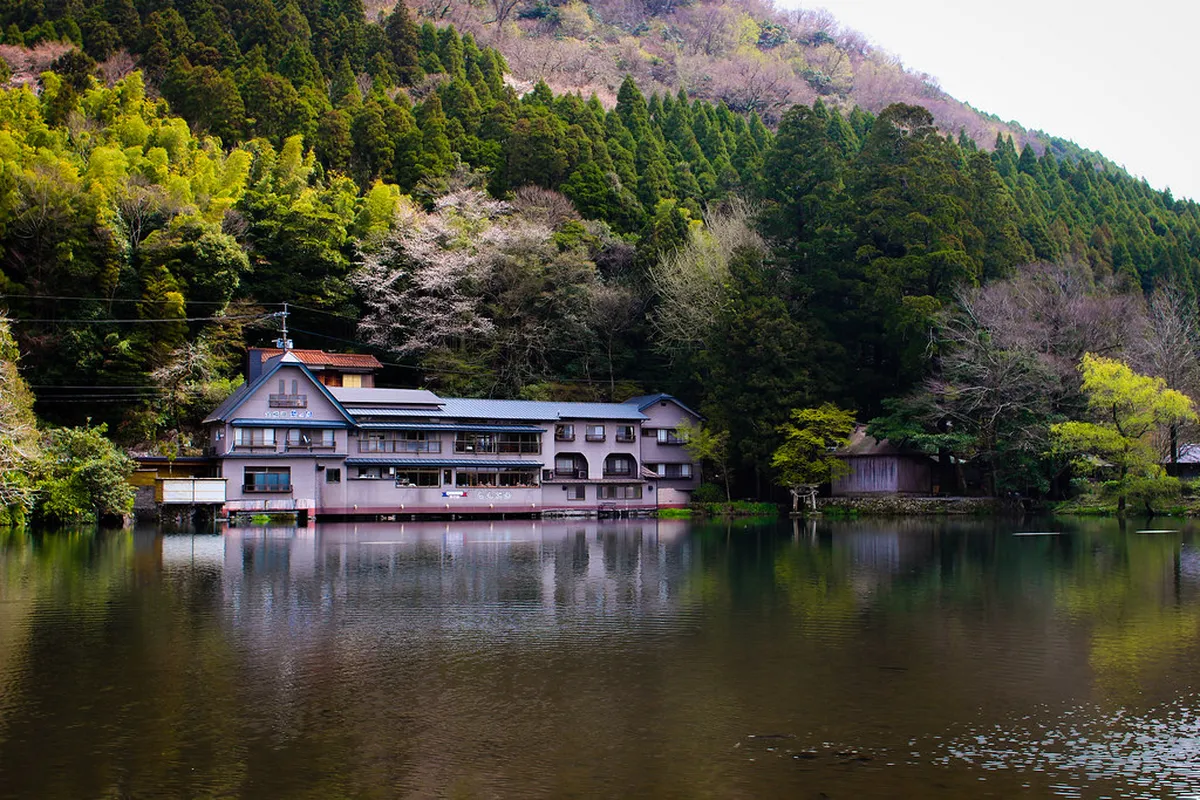
Kinrin Lake is the natural starting point for any Yufuin family visit. The lake is free to enter and offers a flat walking loop with clear water, carp visible from the banks, and a small stone torii gate that photographs well. Morning visits are best for seeing the thermal mist rising off the surface. A popular cafe, Cafe La Ruche, overlooks the water and is a good spot to settle young children while adults enjoy the scenery.
Yufuin Floral Village is the town's most famous family stop, a short 15-minute walk from the station. Entry to the main village is free, with small fees for the owl and cat cafes inside. Expect miniature stone cottages, floral displays, goats and rabbits in a small petting area, and a Miffy-shaped bakery. The Yufuin Floral Village skews heavily toward character merchandise in 2026 — Ghibli, Pokemon, Moomin — which children tend to love but parents looking for traditional crafts may find disappointing. Arrive before 10:00 to beat tour bus crowds.
Yunotsubo Kaido shopping street connects the Floral Village to the station and is lined with street food vendors selling honey ice cream, giant croquettes, and seasonal Oita specialties like toriten (tempura chicken). Walking the street is free; budget around 1,500 to 2,000 yen per person for snacks. Avoid the 12:00 rush when queues for popular items can stretch to 30 minutes. The Snoopy Chaya Yufuinten cafe on the main street has Snoopy-themed meals and matcha desserts that work well as a sit-down family lunch.
Museums, Art, and Culture in Yufuin
The Yufuin Showa Museum is one of the most underrated family stops in town. Admission is 1,400 yen for adults and 500 yen for children. The museum recreates everyday life in Japan's Showa era (1926–1989) through retro toys, household appliances, movie posters, and street-scene dioramas. Children who have no idea what a rotary phone is find it fascinating in the same way adults find antique shops compelling. It typically draws less of a crowd than the Floral Village and takes about 45 minutes. Multiple families visiting in 2025 and 2026 have cited it as the surprise highlight of their Yufuin day.
The COMICO ART MUSEUM YUFUIN is a modern art space designed by architect Kengo Kuma, with striking wooden lattice architecture and a rooftop garden offering clean views of Mount Yufu. Admission is around 1,200 yen. The museum suits families with older children or teenagers who enjoy design and contemporary art. Pre-book your time slot at the COMICO ART MUSEUM YUFUIN site — walk-ins are not always accepted during busy periods.
For hands-on creativity, several small pottery and glass-blowing studios operate near the river area west of the main street. Sessions typically run one hour and cost 2,000 to 3,500 yen per person, including a take-home piece. These studios usually require reservations and fill up on weekends. The Trick Art Museum near the end of Yunotsubo Street is a simpler option for younger children who enjoy posing for photos inside 3D optical illusion paintings.
Parks, Gardens, and Outdoor Spots in Yufuin
Shidaka-ko Lake sits at 600 metres above sea level in the mountains between Yufuin and Beppu, inside the Aso-Kuju National Park boundary. The lake has a maintained lawn area popular for camping, a pedalo hire service (swan and whale boats, up to 4 people including children under 100 cm), and a seasonal iris display in mid-June when around 15,000 iris plants bloom. The surrounding landscape is striking in every season — cherry blossoms in spring, vivid foliage in autumn, snow in winter. Entry to the lakeside area is free, and the pedalo hire is one of the better-value outdoor activities in the region for young children.
Forest Adventure Beppu is a zip-line and aerial climbing course set in natural forest, a short drive from Shidaka-ko Lake. The Canopy Course (1 to 8 metres off the ground, approximately 1 hour) is the family-friendly entry point and costs around 2,800 yen. A separate ground-level Monkey Rally Course is open to children from age 3 who are under 110 cm, at 1,000 yen per hour. The site is open on rainy days except in storm conditions. Reserve a slot at Forest Adventure Beppu in advance — the Canopy Course has capacity limits.
Kijima Kogen Amusement Park occupies a highland plateau between Yufuin and Beppu, with Japan's first wooden roller coaster as its headline ride. The park has around 40 attractions including a kids' driving school — a genuine mini driving school where children aged 3 to 12 complete a course, take a practical test, and receive an actual licence valid for use on the park's mini roads. This feature is unique in Japan and is a strong reason to visit with children over 5. Park entry is approximately 1,000 yen and a day ride pass is around 3,000 yen. Stroller rentals and free rest facilities are available on site.
Kyushu Natural Animal Park African Safari
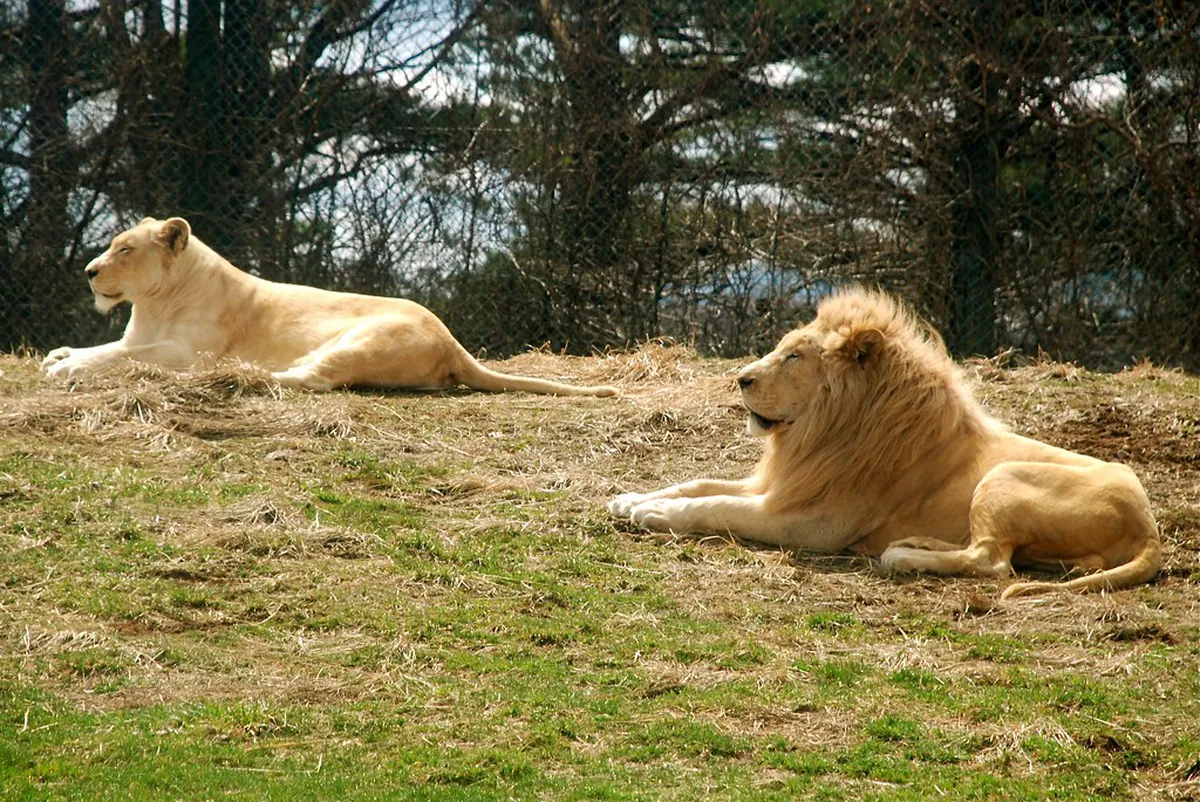
The African Safari is the single biggest draw for families visiting Oita. The park covers 1.15 million square metres and houses around 1,400 animals across 70 species. The main experience is the Jungle Bus, a reinforced vehicle that drives a 6-km route through the animal habitat while passengers feed lions, bears, elephants, and camels using long tongs through the wire mesh. The feeding is close-range — animals push directly against the mesh — and produces a level of excitement that is genuinely difficult to replicate at a standard zoo. The bus runs in all weather conditions.
The Contact Zone is a separate area where children can touch kangaroos, miniature horses, rabbits, and guinea pigs. This section is designed for smaller children who may find the Jungle Bus animals intimidating. The park also has a cat salon and dog salon for rainy-day indoor time. Four restaurants are on-site including a kids' menu. If you drive your own car you can self-drive the safari loop, though you cannot feed the animals from a private vehicle — the Jungle Bus is the only way to do that.
Budget 3 to 4 hours for a full visit. Bus and entry tickets range from 1,800 to 3,000 yen per person depending on age and seasonal promotions. The park is 30 minutes from Yufuin and 20 minutes from Beppu by car. Book your Jungle Bus time slot at African Safari before arriving, especially during school holiday periods when specific departure times sell out.
Beppu Attractions Worth Adding to Your Itinerary
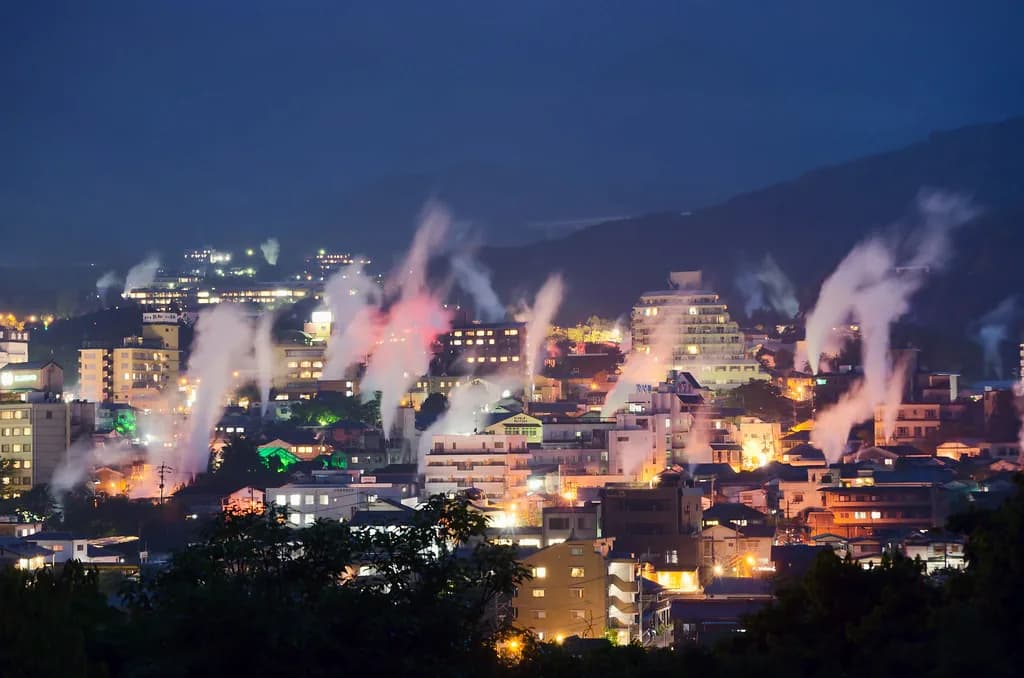
BEPPU Jigoku Meguri — the Hell Tour — visits seven spectacular geothermal springs that are too hot for bathing and instead function as dramatic viewing sites. A combined pass covering all seven hells costs around 1,500 yen for adults and 750 yen for children. Sites are open daily 08:00 to 17:00. The best stop for children is Oniyama Jigoku, where roughly 80 crocodiles are kept in pens heated by geothermal steam — a tradition that began in Japan in 1923. The cobalt-blue Umi Jigoku is the most photogenic and has a walking garden. Visiting all seven takes 2 to 3 hours; if time is short, do Umi Jigoku and Oniyama Jigoku only. Check the BEPPU Jigoku Meguri site for current opening details.
Beppu Rakutenchi — often called "Beppu easy tench" in local listings — is a retro amusement park founded in 1929, accessible by a cable car that provides great views over the bay. Entry is around 900 to 1,300 yen and the park is specifically designed for young children and toddlers. Highlights include a double Ferris wheel, a small zoo with penguins and monkeys, a seasonal cherry blossom display in spring, and a hot spring pool in summer. There is also a free public footbath on site. Visit the Beppu Rakutenchi website before visiting to check for maintenance closures, as the facility is older and occasional ride repairs are common.
The Oita Marine Palace Aquarium Umitamago is the most polished facility in the region and suits all ages. The dolphin show has both a poolside view from floor level and a balcony seat where you can watch from above through glass — the underwater view of a dolphin mid-jump is genuinely striking. An artificial sandy beach area called "I Play Chi" lets children walk barefoot, and on lucky days dolphins, fur seals, and penguins roam close by. Adult tickets are around 1,800 to 2,200 yen, with discounts for elementary and preschool students. Check the Oita tourism site for current show schedules.
Family-Friendly and Budget-Friendly Options in Yufuin
Several of Yufuin's best experiences cost nothing or very little. Kinrin Lake is free to walk around. The stretch of riverside path west of the main street sees almost no tourist traffic and is excellent for letting young children run without crowds. There is a small free playground on Yunotsubo Street near the Ghibli goods shop, positioned so adults can see Mount Yufu in the background while children burn energy.
Budget-conscious families can keep their in-town costs low by focusing on street food (1,000 to 2,000 yen per person for a satisfying snack lunch) and skipping the paid museums in favour of the free village walk. The Snoopy Chaya and Floral Village animal areas give young children an engaging 90-minute loop that costs less than 1,000 yen. For toddlers, the Floral Village rabbits and ducks often generate more excitement than any paid park.
The biggest cost variable for a family visit is accommodation. Budget guesthouses in Yufuin start around 8,000 to 12,000 yen per room, while standard ryokans with private onsen run 25,000 to 50,000 yen per night. If the private onsen ryokan is beyond budget, consider staying in Beppu — prices there are 20 to 30 percent lower — and day-tripping into Yufuin. The 30-minute drive or bus connection between the two towns makes this combination straightforward.
How to Plan a Smooth Yufuin Day with Kids
Start at Kinrin Lake as soon as it opens. Parking is on the lake side of town, and if you arrive before 09:30 you will have the path largely to yourself. Walk from the lake toward the station — this direction lets you do your shopping and snacking as a reward at the end, rather than exhausting children before the highlights. The total walk is under 2 km and takes about 2 hours at a relaxed family pace with stops.
Avoid the 12:00 to 14:00 window on the main street. This is when tour buses deliver the largest groups, and snack queues for popular items like croquettes and honey ice cream can reach 30 minutes. Either eat an early lunch around 11:00 or retreat to a sit-down restaurant like Snoopy Chaya during peak hour and return to street snacks afterward. The queues drop significantly after 14:00.
For the out-of-town parks, pick one per day rather than trying to combine them. African Safari alone needs 3 to 4 hours. BEPPU Jigoku Meguri needs 2 to 3 hours. Attempting both in a single day with children under 8 leads to overtired kids and rushed visits. If you have two days in the area, a sensible split is: Day 1 — Yufuin town, Kinrin Lake, Showa Museum, ryokan overnight. Day 2 — African Safari in the morning, one Beppu Hell plus Rakutenchi or Umitamago in the afternoon.
Avoid the main shopping street at 12:00 PM — snack queues for popular croquettes and honey ice cream can stretch to 30 minutes during peak tourist hours.
Our Yufuin Itinerary: What We Did and Our Honest Thoughts
On our most recent trip, we spent two days in the area. Day one was dedicated to the Yufuin town center — Kinrin Lake at 09:00, Cafe Duo for a 3D latte art breakfast at 10:00, the Floral Village before the crowds arrived, and then the Showa Museum after lunch. We found three hours was the right amount of time for the main street before the kids hit their limit, and the Showa Museum gave us an unexpectedly good 45-minute session to round out the afternoon.
Day two was the African Safari in the morning and a single Beppu Hell stop at Umi Jigoku on the way back. We deliberately skipped the full hell circuit with a young child — just one or two of the most visually striking hells is enough for under-5s. The Jungle Bus at African Safari was the undisputed highlight of the entire trip; the look on a child's face the first time a lion presses against the bus wire is something no aquarium or theme park can replicate.
Our biggest takeaway is that Yufuin rewards a slower pace. Don't try to combine the safari, the hells, the aquarium, and the town center in a single day trip from Fukuoka. Staying overnight in a family-friendly ryokan — ideally one with a private onsen — made the whole experience noticeably more relaxed. The onsen element, which might seem like an adult luxury, genuinely helps children wind down after a full activity day.
Frequently Asked Questions
Is Yufuin stroller-friendly for families?
Yes, the main tourist areas of Yufuin are very flat and stroller-friendly compared to other Japanese mountain towns. Most shops along Yunotsubo Street have level entrances, though the Floral Village can be slightly narrow during peak hours.
How long should I spend in Yufuin with kids?
We recommend at least two days to see both the town center and the nearby animal parks. A single day trip is possible but often feels rushed when traveling with younger children who need breaks.
What is the best way to get to Yufuin from Fukuoka?
The Yufuin no Mori scenic train is the most enjoyable option for children. However, the highway bus is often faster and cheaper if the train is fully booked during holiday periods.
Yufuin remains one of the most accessible and charming destinations in Kyushu for those traveling with children. The combination of the town's flat walkable streets, whimsical attractions like the Floral Village, and the nearby animal parks and outdoor adventures creates a genuinely broad itinerary for families of all ages. The Showa Museum is the kind of local gem that earns its entry fee and is routinely overlooked by first-time visitors — put it on your list. See our Yufuin Onsen guide to plan the rest of your trip.
By planning around weekday visits, splitting the out-of-town parks across two days, and booking a ryokan with a private onsen, families can have a low-stress 2026 trip that hits the town's genuine highlights without the crowd fatigue. Enjoy Oita, and safe travels.
Free guide: Japan's Hidden Gems
12 under-the-radar places beyond Tokyo & Kyoto — with the best season to visit each and a local tip you won't find in the guidebooks.
You might also like

Continue reading
More guides you'll find useful


