Yufuin in Winter: 10 Best Things to Do & Travel Guide
Discover the magic of Yufuin in winter. Our guide covers the 10 best things to do, from private onsens and morning mist at Lake Kinrin to winter travel tips.
On this page
Updated for 2026 from a January visit to this beautiful Oita onsen town. I visited Yufuin in winter and found the steaming baths truly magical in the cold air. Late January to early February is the best window for seeing snow and the morning mist at Lake Kinrin.
Many travelers look for the Best Time To Visit Yufuin Travel Guide for a peaceful escape. Winter delivers a quiet atmosphere that the busy spring and fall months simply cannot match. You will see fewer tourists on the main shopping streets during these colder weeks, and the onsens feel far more restorative when the air temperature drops toward freezing.
Expect temperatures between 0–8°C / 32–46°F during the day. Kyushu winters are chilly but rarely reach the extreme cold of northern Japan. That moderation is what makes Yufuin workable in winter — cold enough for dramatic mist, warm enough to walk the town between soaks.
How to Get to Yufuin
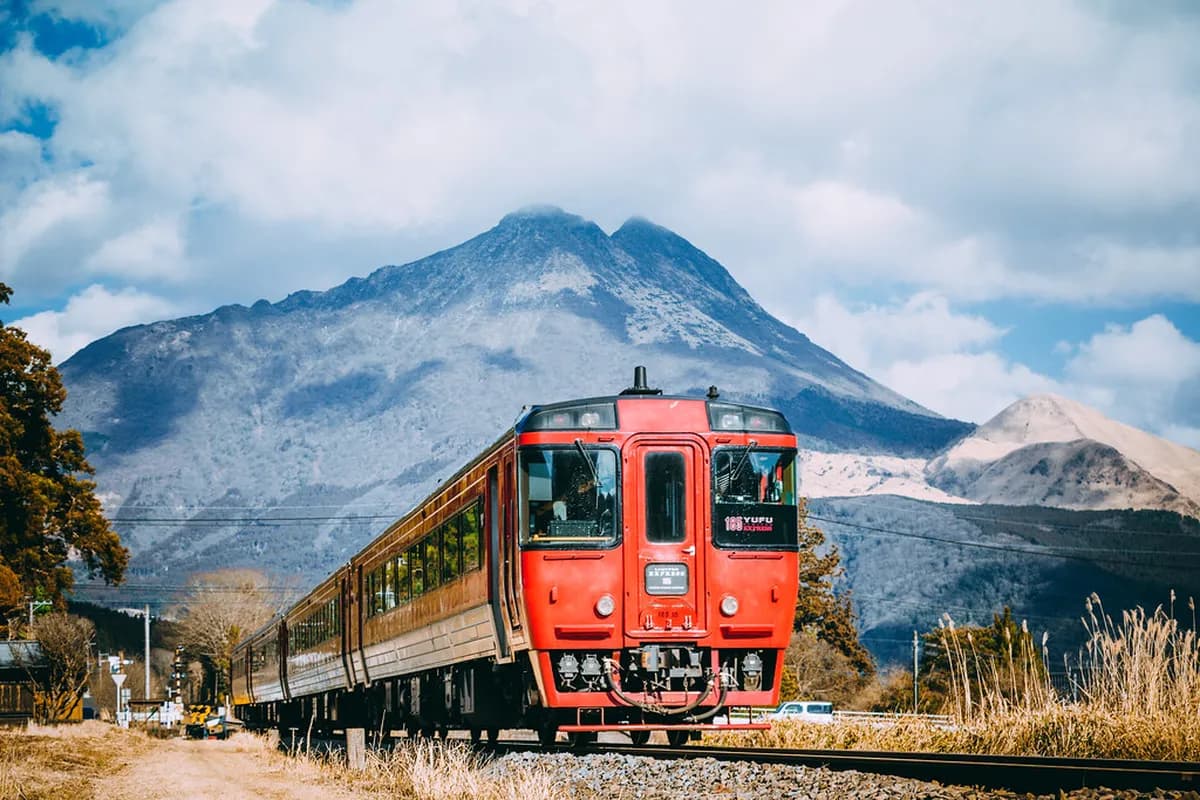
The most comfortable option is the Yufuin-no-Mori Limited Express train from Hakata Station in Fukuoka. The journey takes approximately 2 hours and 15 minutes and costs around ¥7,000 one-way. The train is famous for its wooden-panelled interior and panoramic windows — it is worth booking in advance because seats sell out quickly, especially on weekends. You can use a JR Kyushu Rail Pass to cover both the express fare and seat reservation at no extra cost.
From Beppu, the journey is shorter and cheaper. Take a train to Oita Station, then a second service to Yufuin — about 60 to 90 minutes and ¥2,300 to ¥3,400 depending on whether you choose the express or local train. A direct bus from Beppu Station (Bus 36) is even faster at under 55 minutes and costs ¥1,100, making it the budget pick for travelers already based in Beppu.
If you prefer driving, you can book a rental car through DiscoverCars or Japanese companies like Toyota Rentacar. One thing every competitor overlooks: request snow tires explicitly when booking for December through February travel. The mountain passes above Oita can ice over overnight and standard all-season tires struggle on the steeper bends. Most rental desks in Fukuoka stock winter tires for Kyushu mountain routes, but they are not fitted automatically — you must ask. Budget an extra ¥1,000–¥1,500 per day for the upgrade. The train remains the most relaxing option, but the car gives you access to smaller onsen villages that have no public transport.
If you are coming from Kumamoto, consider a stop at Nanzoin Temple in Sasaguri before heading into the mountains. The temple houses one of the world's largest reclining bronze Buddha statues, measuring 41 metres long. The crisp winter air sharpens the spiritual atmosphere considerably, and the surrounding cedar groves feel genuinely hushed in January. It adds less than 40 minutes to your journey from Hakata and is free to enter the main grounds.
Yufuin by Highway Bus and the Kyushu Odan Bus in Winter
The Yufuin-no-Mori train is not the only way in. If the express is sold out, or you would rather save money, the highway bus from Fukuoka is the main alternative. For a full comparison of every route, see our Fukuoka to Yufuin transport guide.
Fukuoka highway bus
- Route: Hakata Bus Terminal and Tenjin to Yufuin Station Bus Terminal, with no transfers.
- Time: about 2 hours 10 minutes to 2 hours 30 minutes. Expect the longer end after snow or on weekends.
- Fare: roughly ¥3,250 one way, well under half the express train price quoted above. Check the current fare when you book.
- Booking: reserve ahead for weekends and holidays. Winter weather can slow the final mountain stretch, so do not schedule a tight connection afterwards.
Kyusanko Kyushu Odan Bus
This long-distance service links Beppu, Yufuin, Aso and Kumamoto. It suits travelers who want to cross Kyushu rather than return to Fukuoka. Services are limited, and the Aso mountain section can be disrupted by ice and snow. Confirm the timetable and that your date is running before you plan around it. In January and February, keep a train or bus back to Oita as a fallback.
Which to choose: take the train for comfort and the panoramic windows, and the highway bus for price and the lack of transfers. Use the Kyushu Odan Bus only when Aso or Kumamoto is your next stop. If you are based in Beppu, the Bus 36 option above is still the simplest.
Lake Kinrin and the Winter Morning Mist
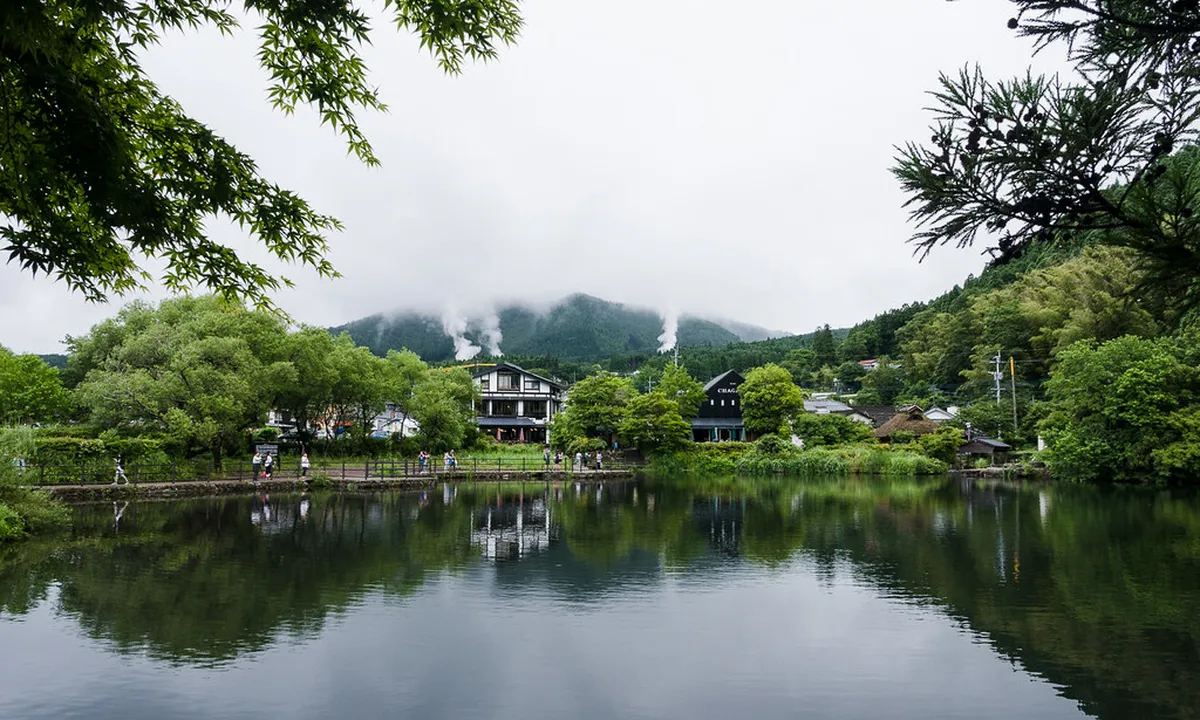
The morning mist at Lake Kinrin is the defining winter spectacle in Yufuin. The lake is fed partly by warm geothermal spring water, which sits at a stable temperature year-round. When cold winter air settles overnight and the surface water remains warm, the temperature differential causes condensation to rise off the lake as a dense, slow-rolling mist at sunrise. The effect lasts roughly 30 to 45 minutes after first light before the air warms enough to disperse it.
For December and January, sunrise occurs between 07:10 and 07:20 local time. Arrive at the lake no later than 07:00 to find your position before the mist peaks. The north bank near Tenso Shrine gives the best unobstructed angle with Mount Yufu in the background. Stone paths around the shrine can ice over overnight — wear waterproof boots with a firm grip rather than smooth-soled shoes. Thin ankle socks are a bad idea at these temperatures; thermal hiking socks make a real difference when standing still for 30 minutes on cold stone.
Photographers will want a tripod and a focal length of 35–85mm to compress the mist against the shrine torii gate. The soft, flat light in those first 20 minutes after sunrise is genuinely difficult to replicate at any other time of year. After the mist clears, the lake itself remains beautiful — koi fish are visible through the clear water, and cormorants often perch on the torii gate scanning for fish.
Things to Do in Yufuin: Yunotsubo Street and the Floral Village
Walking Yunotsubo Yokocho is the central daytime activity. The street runs roughly 1.2 km from just past the station toward Lake Kinrin and is lined with boutique shops, food stalls, craft stores, and a well-stocked Studio Ghibli merchandise shop called Donguri No Mori. In winter, the crowds thin considerably on weekday mornings. You can photograph the street with Mount Yufu visible at the far end without a wall of umbrellas blocking the frame.
Winter snacks on Yunotsubo Street are specific and worth seeking out. Look for the Yufuin Kinsho Croquettes — fried Bungo beef croquettes that are sold hot and are particularly satisfying when the temperature is near zero. The Purindora (a dorayaki pancake sandwich filled with custard pudding instead of red bean paste) at Yufuin Hanakoji Kikiya is another local specialty worth queuing for. Warm roasted chestnuts appear at a few stalls from late November onward. Many shops also offer small cups of complimentary hot tea to shoppers — accept all of them.
The Yufuin Floral Village looks considerably more photogenic under a dusting of snow than it does in any other season. The English Cotswolds-style architecture contrasts nicely with the surrounding Japanese mountain landscape in winter light. The owl forest and cat cafe inside are open year-round, and the animals are, if anything, more entertaining in cold weather. Entry to the village grounds is free; individual attractions within charge separately.
For indoor culture, the Yufuin Stained Glass Museum on the edge of town is a reliable wet-weather or cold-day option. The building itself is an interesting piece of architecture and the collection spans European ecclesiastical glass alongside contemporary Japanese pieces. Entry costs around ¥800. The Yufuin Showa Museum and the Trick 3D Art Museum are both within walking distance and give you another 60–90 minutes of warmth if the weather turns sharp.
Onsen Experience and Etiquette
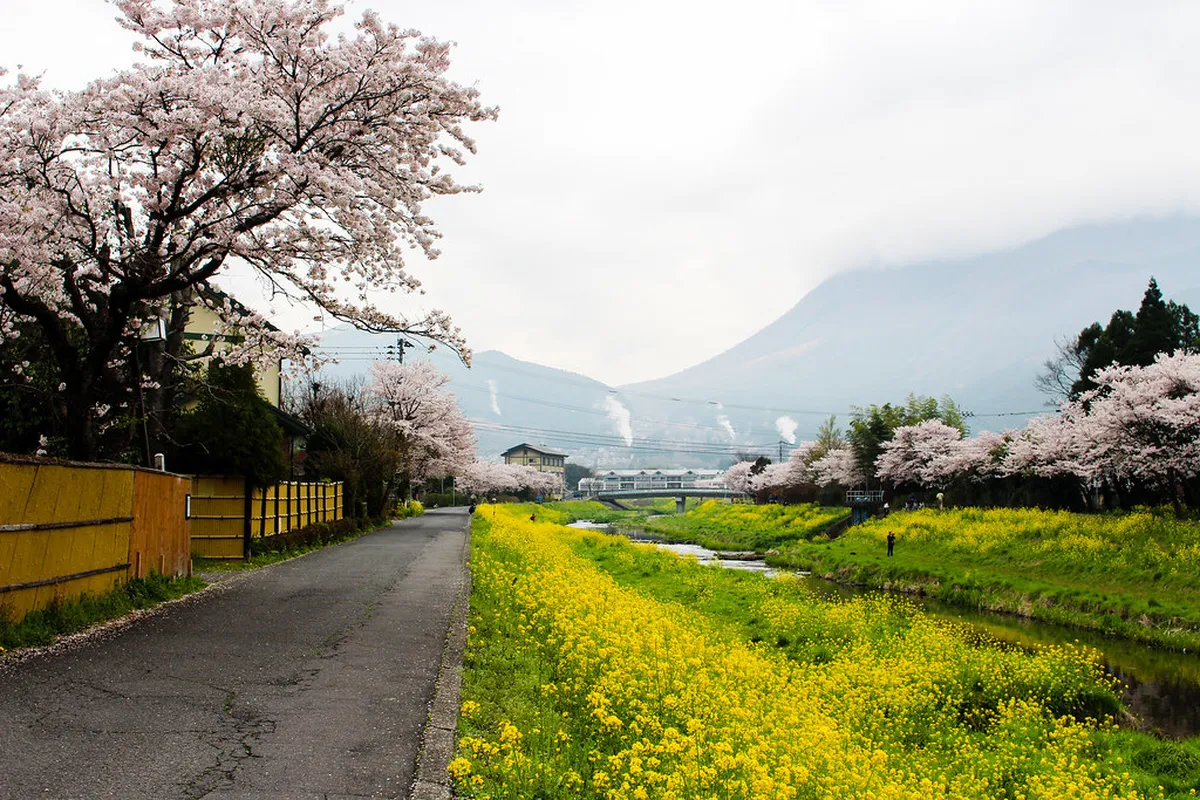
Yufuin's hot springs have the second-highest water flow volume of any onsen town in Japan. The water is mildly alkaline and is traditionally used for relief from fatigue, muscle pain, and arthritis. In winter, the water temperature of around 42–44°C contrasted against near-freezing air creates an immersive heat that feels more intense than the same bath in summer. Your first soak should be no longer than 10 minutes if you are not accustomed to high-temperature bathing.
The core etiquette rules apply in all seasons but matter more in winter when ryokans are operating at higher capacity. Wash your body thoroughly at the shower stations before entering any communal bath. Remove all clothing and jewelry — swimwear is not permitted in traditional onsens. Tie long hair up so it does not touch the water. Never submerge a towel in the bath; fold it on your head or leave it at the edge. Enter slowly, especially in cold air, as the thermal shock between outdoor temperatures and the bath water is significant.
Tattoos remain a sensitive issue. Most communal baths in Yufuin still prohibit visible tattoos, though the policy varies by property. If you have tattoos, book a private onsen room (kashikiri-buro) from the outset rather than hoping for an exception. Private onsen baths can be booked by the hour at many ryokans even if you are not staying overnight, typically for ¥1,500–¥3,000 per 45-minute session. Never enter any onsen after drinking alcohol — the combination of alcohol and high heat causes vasodilation that can lead to sudden low blood pressure and fainting. This warning is posted at every reputable property and should be taken seriously.
The best time to soak in winter is early morning, ideally just after the Lake Kinrin mist visit. Your body is already cold, the ryokan grounds are quiet before breakfast, and the outdoor bath steam catches the low morning light in a way that looks like a private version of the lake mist you just photographed.
Shitanyu Public Bath by Lake Kinrin: A Cheap Winter Soak
Not every soak has to happen at a ryokan. Shitanyu is a small, rustic public bath beside Lake Kinrin, housed in a thatched-roof hut. Entry costs only a few hundred yen. It is the most atmospheric low-cost bath in town, and it sits a few minutes from the lake mist viewpoint described earlier.
What to expect
- Facilities: very basic. Expect a simple changing area and no shower stations, so wash at your accommodation first. Bring your own towel.
- Location: on the lakeshore, so the bath is open to the cold air and the view across the water.
- Crowds: it is small and fills quickly at midday. Early morning, right after the mist, is the quietest slot.
- Tattoos: as with other communal baths, policies can change, so check the posted rules on site. A private bath is the safer option if you have visible tattoos.
Winter tips
The walk from the changing hut to the water is short but exposed, so carry a warm coat and slip-on shoes. Allow time to cool down before walking back along the icy lakeside path. Avoid soaking if you have been drinking, as covered above. Opening hours and prices can change seasonally, so confirm them locally.
For other communal options around town, including which ones suit first-timers, see our guide to the best public onsen baths in Yufuin.
Ryokan with a Private Onsen: Choosing Right for Winter
Booking a ryokan with a private onsen is the right call for a winter visit, but the selection criteria change in the colder months. Pay attention to whether the private bath is indoors, semi-enclosed, or fully open-air. Fully open-air baths (rotemburo) look stunning in snow but require walking across a cold courtyard, and some older properties have poor insulation between the changing area and the outdoor bath. Ask the ryokan specifically whether the dressing room is heated before confirming your booking.
Yufuin Baien has mountain views from its onsen area and serves complimentary self-service drinks in the lounge in the evening — a legitimate bonus after a cold day of walking. Ikkoten offers private villa-style rooms with open-air baths set in forested grounds, but it sits a significant distance from the town center, which matters more in winter when you may not want to walk back in the dark and cold. Yawaragi-no-Sato Yadoya is the most convenient pick for access to both Yunotsubo Street and Lake Kinrin on foot, at around a 15-minute walk from the station.
For winter dining, look for ryokans that include a kaiseki dinner in the room plan. Winter kaiseki in Oita typically features Bungo beef hot pot (where the region's wagyu is served shabu-shabu style in a kombu broth), seasonal root vegetables, and yudofu (tofu simmered in hot spring water). Some properties also serve local sake from the Oita valley. This is a genuinely different menu from what you will encounter in spring or autumn, and it is one of the stronger arguments for choosing winter specifically. Book your room at least three months ahead — popular properties in Yufuin fill their winter weekends by early autumn.
Beppu vs Yufuin vs Kurokawa: Which to Choose in Winter
All three towns draw winter visitors for onsen, but they offer very different experiences. Beppu is the largest and most varied — over 2,000 registered hot spring sources, the famous Jigoku Meguri (Hell Tour) viewing baths, and a full range of urban accommodation. It suits travelers who want scale and variety rather than quiet. Yufuin is boutique and walkable, built around aesthetics and a curated shopping street, with a town center designed for a slow two-day visit. Kurokawa, in Kumamoto Prefecture, is the most remote and the most secluded — a cluster of traditional ryokans in a forested gorge with almost no commercial development and strict limits on visitor numbers per day.
| Criteria | Beppu | Yufuin | Kurokawa |
|---|---|---|---|
| Winter atmosphere | Busy, urban | Quiet, scenic | Very secluded |
| Onsen variety | Highest (2,000+ sources) | Medium (private focus) | Lower (intimate) |
| Getting there | Easy (Shinkansen access) | Moderate (express train) | Harder (car best) |
| Town to explore | Full city | 1.2 km walkable street | Minimal |
| Price level | Budget to mid-range | Mid to high | High to luxury |
| Best for | Day trips + variety | Aesthetics + food | Pure retreat |
For most first-time visitors choosing between the three in winter, Yufuin wins on balance. It is easier to reach than Kurokawa, more atmospheric than Beppu, and the town actually has enough to fill two days without a car. If you can stay two nights, consider a Beppu Onsen and Yufuin Spa Town One Day Private Trip that covers both towns from Fukuoka — this gives you Beppu's variety and Yufuin's quiet in a single itinerary without the logistical overhead of independent travel between the two.
What to Eat in Yufuin in Winter
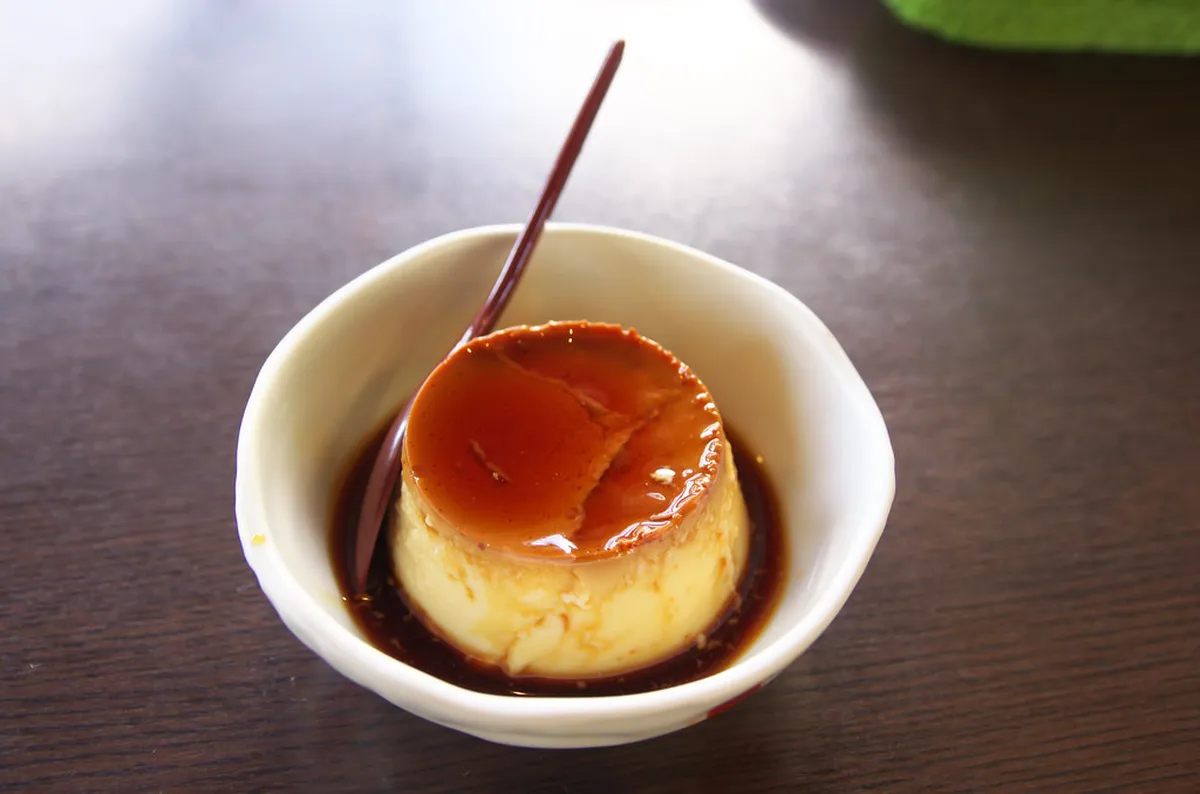
Oita Prefecture has one of Japan's most distinctive regional food cultures, and winter is when it shows best. Bungo beef is the local wagyu brand — less famous internationally than Kobe or Matsusaka but consistently ranked among Japan's top regional beef varieties. In winter, it appears most commonly as sukiyaki or shabu-shabu hot pot at ryokan kaiseki dinners and a handful of restaurants on Yunotsubo Street. The Yufu Mabushi Shin restaurant is a popular choice for claypot rice featuring local ingredients — expect a queue even in winter, so arrive before 11:30 for lunch or book ahead for dinner.
Kabosu, a local citrus fruit specific to Oita, is used as a condiment across nearly every dish in the prefecture in place of lemon or vinegar. You will encounter it squeezed over grilled fish, dropped into hot udon broth, and served alongside nabe hot pot. It has a sharper, more floral acidity than standard lemon and is worth ordering anything that features it. Kabosu udon at a small restaurant near Yunotsubo Street is a reasonable budget lunch at around ¥900–¥1,200.
For street food in cold weather, the Bungo beef croquettes and soft-serve pudding from the stalls on Yunotsubo Street are the standard recommendations, but the roasted sweet potato vendors (seen mainly outside the station area) are a quieter option that most guidebooks skip. A bag costs around ¥400 and is hot enough to serve as a hand warmer for the walk to Lake Kinrin.
How to Plan a Smooth Yufuin Winter Itinerary
Two nights is the right length for a winter visit. Arrive on day one in the early afternoon, check into your ryokan, and use the remaining daylight to walk Yunotsubo Street and reach the Floral Village before dusk (it closes around 17:00). Have your kaiseki dinner at the ryokan and soak in the private onsen in the evening. On day two, set the alarm for 06:30 and walk to Lake Kinrin for the mist window around 07:00–07:45. After breakfast, visit the U Nagi Hime Shrine near the lake, then spend the morning exploring shops and museums. Use the afternoon for a second onsen session before departure.
Start your broader trip by following a detailed The Perfect 2-Day Yufuin Itinerary: 10 Essential Stops and confirm How To Get To Yufuin Travel Guide based on your starting point. Winter train schedules on the Yufu-no-Mori line can be disrupted by heavy snowfall on the mountain section — check the JR Kyushu website for service alerts the morning of travel and allow an extra 30 minutes buffer when making onward connections.
Paths around Lake Kinrin and the shrine area can become icy overnight. Wear waterproof boots with good grip to avoid slipping on stone walkways and wooden bridges during early morning visits. Paths around Lake Kinrin and near Tenso Shrine are not salted regularly — test each stone step before committing weight in the dark.
If you plan to drive, book your rental car at least four to six weeks ahead for January travel. Winter-ready vehicles in Kyushu rent out fast from early December onward. Use the extra mobility to visit Tsukahara Hot Spring Crater on the slopes of Mount Yufu — a rougher, more medicinal onsen experience than anything in the town center, with sulfurous outdoor pools at around 1,100 metres elevation. It is only accessible by car and is largely off the tourist trail, making it a strong add-on for adventurous visitors who want something beyond the standard ryokan circuit.
Frequently Asked Questions
Does it snow in Yufuin in winter?
Yes, Yufuin receives snow several times between December and February. The mountain location makes snow more likely than in coastal Fukuoka. Expect a light dusting that creates a beautiful landscape for photography.
Is Yufuin too cold to visit in January?
January is cold with temperatures near 0°C / 32°F. However, the many hot springs make it a very comfortable destination. Proper layering and warm clothing will keep you cozy during your walks.
Yufuin in winter is a magical destination for anyone seeking a quiet retreat. The combination of hot springs and morning mist creates an unforgettable travel experience. Plan your trip carefully to enjoy the best of this cozy mountain town. See our Yufuin Onsen guide to plan the rest of your trip.
Whether you come for the food or the baths, winter is a special time. I highly recommend visiting during the colder months for the most peaceful atmosphere. Enjoy the warmth of the onsens against the crisp winter air of Kyushu.
Free guide: Japan's Hidden Gems
12 under-the-radar places beyond Tokyo & Kyoto — with the best season to visit each and a local tip you won't find in the guidebooks.
You might also like

Continue reading
More guides you'll find useful